
Deconstructing Your Premium Increases and Deductible Caps
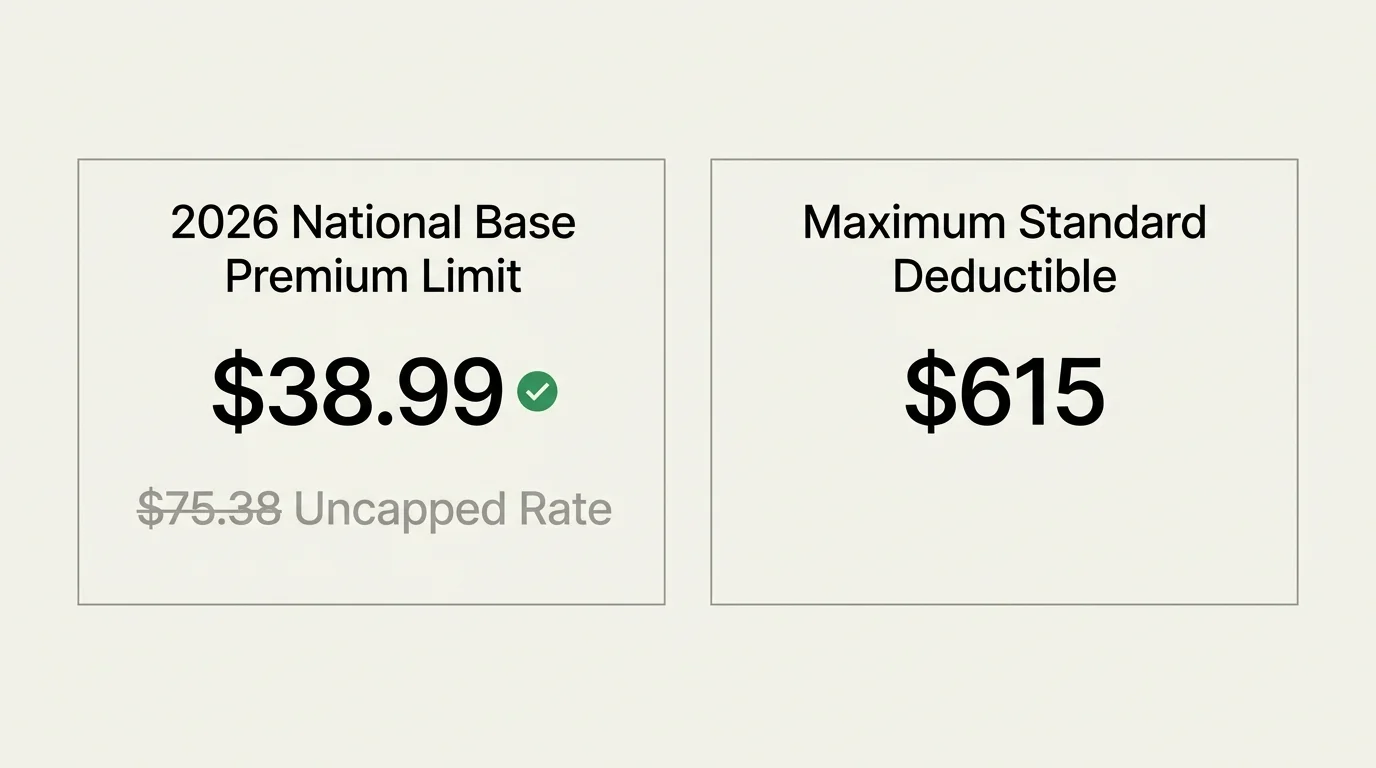
To prevent insurers from passing this massive cost shift directly onto seniors in a single year, federal law established a statutory cap on annual premium growth. Specifically, the base beneficiary premium cannot increase by more than 6% per year. For 2026, the national base beneficiary premium sits at $38.99, up from $36.78 in 2025. Without this protective 6% cap, calculations from the Centers for Medicare & Medicaid Services (CMS) show that the base premium would have jumped to $75.38.
However, the 6% cap applies only to the national base premium calculation, not necessarily to your individual plan’s total monthly bill. Insurance companies calculate your actual premium by combining the base figure with their specific plan bid. As a result, many retirees are seeing individual plan premiums rise far faster than 6%, with some standalone drug plans doubling or tripling their monthly fees.
In addition to raising premiums, carriers offset their liabilities by raising upfront costs. The maximum standard Part D deductible reached $615 in 2026, up from $590 in 2025 and $545 in 2024. Most plan providers now impose this full statutory deductible before paying a single dollar toward your prescription claims, particularly on Tiers 3, 4, and 5.
Further complicating matters is the scheduled conclusion of federal intervention programs. To cushion the transition during 2025 and 2026, CMS introduced a voluntary Part D Premium Stabilization Demonstration program. This initiative poured nearly $10 billion in federal subsidies into the market to keep standalone plan premiums artificially stable. However, CMS announced that this demonstration program will end after 2026. Without federal subsidy cushions in place, standalone Medicare drug plan costs face significant upward pressure in subsequent years.
“Never leave your healthcare expenses to chance in retirement; a small shift in plan terms can strip thousands of dollars from your fixed budget if you aren’t paying attention.” — Suze Orman, Financial Educator and Author









Inscribed me . This is terrible website every time I try you won’t let me do it
I’LL NEVER!!!! EVEN CONSIDER ANY OF YOUR PRODUCTS BECAUSE OF THIS!!!!