
You can build a steady income from home without standing on your feet or commuting. Modern digital platforms let you turn decades of professional knowledge into reliable earnings directly from your favorite armchair.
According to federal health data, mobility limitations affect approximately 40 percent of American adults aged 65 and older. Physical constraints, however, do not diminish your professional skills or financial goals.
This comprehensive guide details eleven flexible seated side hustles tailored for retirees seeking dependable cash flow on their own terms.

The Changing Face of Retirement Work
Retirement no longer requires an all-or-nothing choice between full-time corporate labor and complete leisure. Many older adults seek flexible income to combat inflation and maintain sharp mental acuity.
The Centers for Disease Control and Prevention reports that mobility impairments affect 12.2 percent of all American adults. For adults aged 65 and older, that number jumps to nearly two in five individuals.
Traditional retirement jobs—such as retail merchandising or greeting at hardware stores—demand hours of continuous standing. Those physical burdens often make standard part-time positions impractical or painful.
Fortunately, high-speed internet and remote business tools have transformed the freelance marketplace. Businesses now actively hire experienced adults for seated, intellectual contributions rather than manual tasks.
Organizations like the National Council on Aging emphasize that economic security and social engagement remain vital components of healthy aging. Remote work delivers both benefits safely.
“Retirement is not the end of the road. It is the beginning of the open highway, where work becomes an intentional choice rather than a financial necessity.” — Mitch Anthony, Author of The New Retirementality

11 Flexible Side Gigs for Retirees With Limited Mobility
1. Remote Customer Support Representative
Customer support roles no longer require working inside crowded call centers. Today, businesses route customer inquiries directly to home-based representatives equipped with a computer and headset.
In this role, you answer incoming questions through live web chat, email ticketing systems, or phone calls. You help customers track packages, reset account passwords, and navigate product instructions.
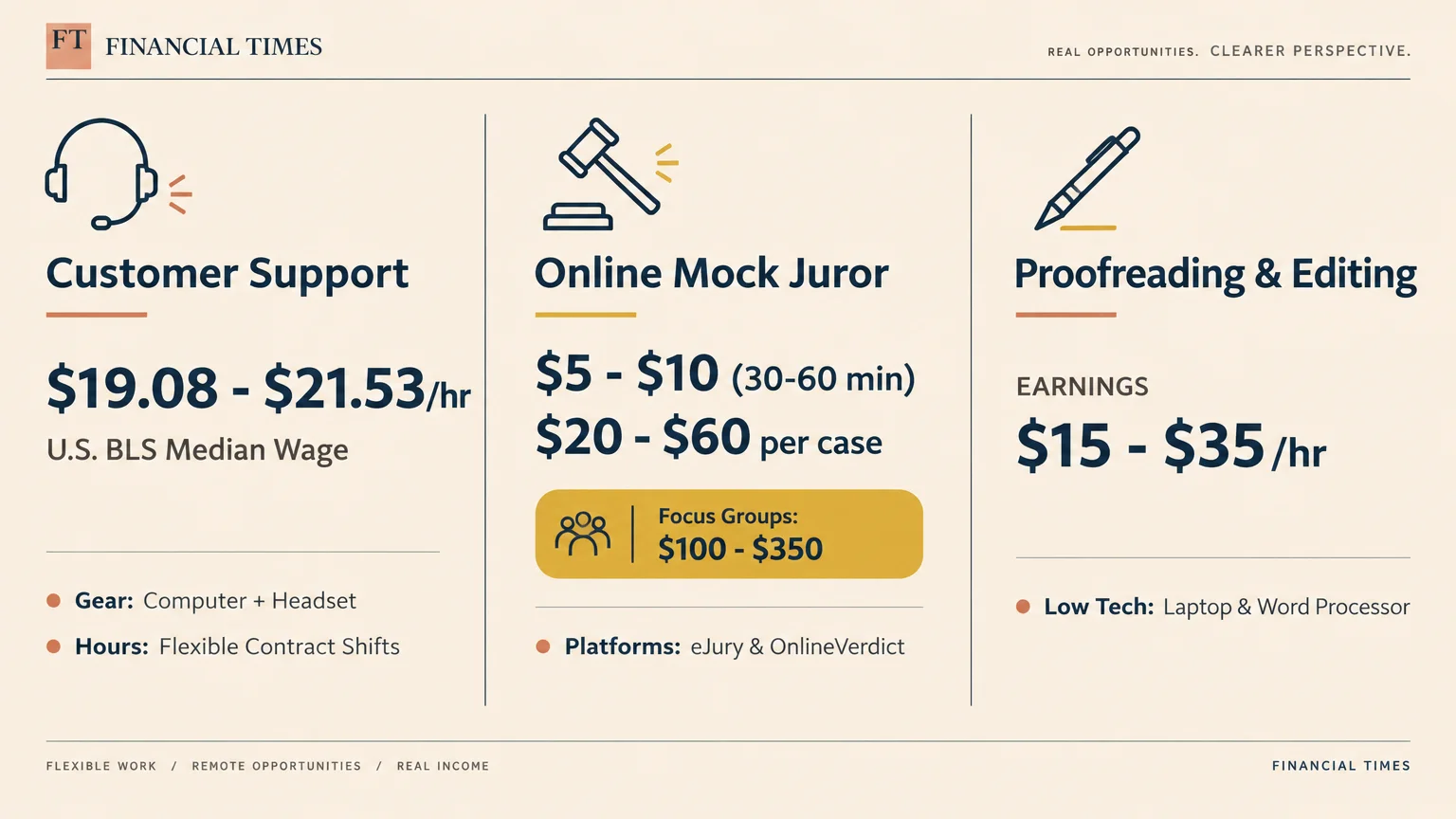
Data from the U.S. Bureau of Labor Statistics shows that customer service representatives earn a national median hourly wage between $19.08 and $21.53. Many firms specifically seek dependable seniors who handle client frustrations with patience and empathy.
Companies like Liveops, Working Solutions, and Arise offer contracted customer service positions where you choose your weekly hours. You work entirely from your desk on a schedule that fits your daily energy levels.
2. Online Mock Juror and Focus Group Participant
Litigation attorneys routinely test their courtroom arguments before presenting them to a live jury. They pay everyday citizens to review case summaries, listen to recorded testimonies, and render verdict opinions.
As a mock juror, you evaluate evidence from your home computer. You read digital briefs, view evidentiary photographs, and answer guided questionnaires regarding liability and financial damages.
Platforms like eJury generally pay between $5 and $10 per case review, which typically takes 30 to 60 minutes. It serves as an engaging, low-pressure way to make spending money while watching legal disputes unfold.
For higher compensation, platforms such as OnlineVerdict pay $20 to $60 for structured case assessments. They also offer interactive, video-based focus groups that pay between $100 and $350 for half-day deliberations.
3. Freelance Proofreader and Copy Editor
If you possess an eagle eye for grammar, punctuation, and style, proofreading provides a quiet and profitable seated enterprise. Authors, business executives, and digital marketers constantly seek external editors before publishing materials.
Unlike copywriting, proofreading does not require generating creative concepts from scratch. You simply review existing drafts to eliminate typos, fix awkward formatting, and correct grammatical errors.
The Editorial Freelancers Association benchmark survey notes that freelance proofreaders earn median rates between $35 and $45 per hour. Project rates typically range from $0.015 to $0.03 per word.
You can locate consistent assignments on freelance networks like Upwork and Fiverr. Specialized proofreading agencies like ProofreadingServices.com also hire remote home-based editors regularly.
4. Virtual Bookkeeper
Small business owners frequently struggle with daily financial organization. If you have an accounting background or a knack for numbers, virtual bookkeeping provides steady recurring revenue.
Your responsibilities include reconciling bank accounts, categorizing monthly receipts, tracking accounts receivable, and generating basic profit-and-loss statements. Cloud software like QuickBooks Online and Xero allows you to complete everything remotely.
According to federal wage data, bookkeeping clerks earn a median hourly wage between $22.81 and $23.66. Independent freelance bookkeepers routinely bill small business clients between $25 and $45 per hour.
Managing just two or three small clients can generate $600 to $1,200 per month. Best of all, you perform the tasks at whatever hour suits your schedule.
5. Audio and Video Transcriptionist
Transcription converts recorded audio into polished, readable text documents. Podcasters, academic researchers, video producers, and insurance claims adjusters rely on transcription services daily.
Beginner platforms like Rev and GoTranscript pay between $0.30 and $1.10 per recorded audio minute. Because transcribing audio takes longer than listening to it, effective beginner pay averages $10 to $18 per hour.
You can increase your hourly yield significantly by purchasing an ergonomic foot pedal and specialized transcription playback software. Fast typing speeds and a sharp ear for regional accents also boost your earnings.
If you possess a background in legal proceedings or healthcare administration, seek specialized transcription contracts. Medical and legal transcriptionists command premium rates well above general transcription levels.
6. Online English or Academic Tutor
Decades of career experience make older adults exceptional tutors and conversational partners. You do not need a formal teaching degree to assist non-native speakers with conversational English.
Global tutoring platforms like Cambly and Preply connect native English speakers with students worldwide. You simply log on, engage in friendly dialogue, and gently correct vocabulary or pronunciation.
Conversational language platforms generally pay between $10 and $15 per hour for informal practice. For academic subject tutoring through portals like Wyzant, rates frequently exceed $30 to $50 per hour.
You select your availability down to the exact hour. Sessions occur through simple video chat software, allowing you to teach comfortably without ever leaving your chair.
7. Voiceover Artist for Audiobooks and Commercials
The explosive popularity of audiobooks, podcasts, and corporate training videos has created immense demand for distinct vocal talent. Publishers actively look for mature, warm, and authoritative voices to narrate non-fiction and historical titles.
Getting started requires a basic USB microphone, pop filter, free audio recording software like Audacity, and a quiet corner of your home. You record auditions and upload finished audio chapters directly to client portals.
Through Amazon’s Audiobook Creation Exchange (ACX), narrators earn either fixed production rates or 50 percent royalties on retail sales. Fixed rates typically pay $50 to $200 per finished audio hour.
Voice work allows you to sit comfortably at your microphone and read compelling material. You can pace your recording sessions to protect your voice and accommodate your daily stamina.
8. Virtual Assistant for Small Businesses
Solo entrepreneurs and real estate agents often become overwhelmed by basic administrative chores. A virtual assistant manages the organizational tasks that business owners lack the time to handle themselves.
Your responsibilities might involve organizing crowded email inboxes, scheduling client consultations, coordinating travel itineraries, and updating customer records. You handle everything via your computer and internet connection.
Virtual assistants generally charge between $20 and $35 per hour depending on their technical competence. Specialized tasks, such as managing social media schedules or email marketing campaigns, command higher fees.
The AARP frequently highlights virtual assistance as one of the best home-based roles for retirees. It leverages lifetime organizational skills while avoiding heavy physical requirements.
9. Digital Product and Printable Designer
If you prefer creative projects that generate passive income, consider designing downloadable digital files. You create a digital asset once, upload it to an online marketplace, and sell it repeatedly without packing a single box.
Popular digital downloads include retirement budgeting spreadsheets, printable weekly planners, knitting blueprints, and cross-stitch patterns. Free graphic design software like Canva makes creating clean, attractive templates simple.
You can list your designs on digital marketplaces such as Etsy. When a customer purchases your item, the platform automatically delivers the download file and deposits your royalty.
While building initial inventory requires patience, digital sales eliminate shipping runs and physical inventory storage. You manage your online shop entirely from a seated desk at your leisure.
10. Genealogy and Family History Researcher
Genealogy appeals to retirees who enjoy historical puzzles, archival records, and investigative work. Many families want detailed family trees but lack the time or research skills to decipher old public registries.
As a freelance family history researcher, you examine digital census records, military muster rolls, immigration manifests, and land deeds. You then compile these historical discoveries into comprehensive, illustrated family records.
Independent genealogical researchers charge clients between $25 and $60 per hour for archival projects. You conduct the majority of your investigations online through portals like Ancestry.com and FamilySearch.
This side gig provides profound intellectual stimulation without physical stress. You work at your own pace, helping families discover their ancestral roots through careful digital sleuthing.
11. Remote Appointment Setter and Dispatcher
Local service trades—such as HVAC contractors, roofers, and plumbers—spend their days on ladders and under sinks. They desperately need reliable, seated professionals to answer incoming customer calls and schedule service visits.
As a remote dispatcher, you answer incoming service calls, collect customer details, and enter appointments into cloud scheduling software. You coordinate service routes to ensure field technicians reach client homes efficiently.
Contract dispatchers generally earn $16 to $22 per hour. Many local trade companies prefer hiring mature adults from their community because customers appreciate a courteous, reassuring voice during home emergencies.
This gig requires only a dependable telephone, a laptop, and reliable internet access. You can handle scheduling calls while seated comfortably at your kitchen table or desk.
Side Gig Comparison: Pay, Tech Requirements, and Flexibility
Selecting the right side hustle depends on your technical comfort, available weekly hours, and earnings goals. The table below compares the physical requirements, startup needs, and earning potential for each role.
| Side Gig | Typical Pay Range | Physical Demands | Key Equipment Needed |
|---|---|---|---|
| Customer Support Rep | $19.08 – $21.53 / hour | 100% seated | Computer, USB headset, high-speed internet |
| Online Mock Juror | $5 – $60 / case ($100–$350 focus groups) | 100% seated | Computer, webcam, stable internet |
| Freelance Proofreader | $35 – $45+ / hour | 100% seated | Computer, word processing software |
| Virtual Bookkeeper | $22.81 – $45.00 / hour | 100% seated | Computer, accounting software (QuickBooks) |
| Transcriptionist | $10 – $18 / effective hour | 100% seated | Computer, quality headphones, foot pedal |
| Online ESL / Academic Tutor | $10 – $50+ / hour | 100% seated | Computer, webcam, microphone |
| Voiceover Artist | $50 – $200 / finished hour | Seated or standing | USB/XLR microphone, recording software |
| Virtual Assistant | $20 – $35 / hour | 100% seated | Laptop, smartphone, calendar/email apps |
| Digital Product Designer | Variable passive royalties | 100% seated | Computer, Canva or spreadsheet software |
| Genealogy Researcher | $25 – $60 / hour | 100% seated | Computer, genealogy database access |
| Remote Dispatcher | $16 – $22 / hour | 100% seated | Phone headset, laptop, dispatch software |

Social Security and Tax Rules You Must Know
Earning extra money in retirement provides peace of mind, but you must navigate federal tax and benefit thresholds carefully. Failing to account for Social Security earnings limits or self-employment taxes can create costly year-end surprises.
If you collect Social Security benefits before reaching your Full Retirement Age (FRA), the retirement earnings test applies to your wages. Earning more than the annual limit leads to temporary benefit withholdings by the Social Security Administration.
For 2024, the annual exempt earnings limit before your FRA is $22,320 ($1,860 monthly). For 2025, that threshold rises to $23,400 ($1,950 monthly).
The SSA withholds $1 of your benefits for every $2 you earn above those limits. Keep your side gig earnings under this ceiling if you want to avoid benefit reductions while claiming early.
In the calendar year you reach your FRA, the earnings limit increases significantly. The limit sits at $59,520 for 2024 and climbs to $62,160 for 2025, with $1 withheld for every $3 earned above the limit.
Once you reach your official Full Retirement Age, the earnings test disappears entirely. You can earn an unlimited amount of money from any side gig without sacrificing a single penny of your Social Security check.
Tax obligations represent another crucial consideration for freelance retirees. The Internal Revenue Service requires you to file a tax return and pay self-employment tax if your net side gig earnings reach $400 or more in a calendar year.
The federal self-employment tax rate is 15.3 percent, which covers your Medicare and Social Security contributions. Additionally, any client paying you $600 or more during the year must submit Form 1099-NEC to both you and the IRS.
Set aside roughly 25 to 30 percent of your gross freelance earnings in a separate savings account. This practice ensures you have sufficient funds ready to cover quarterly estimated tax payments without stress.
Setting Up an Ergonomic Home Workspace
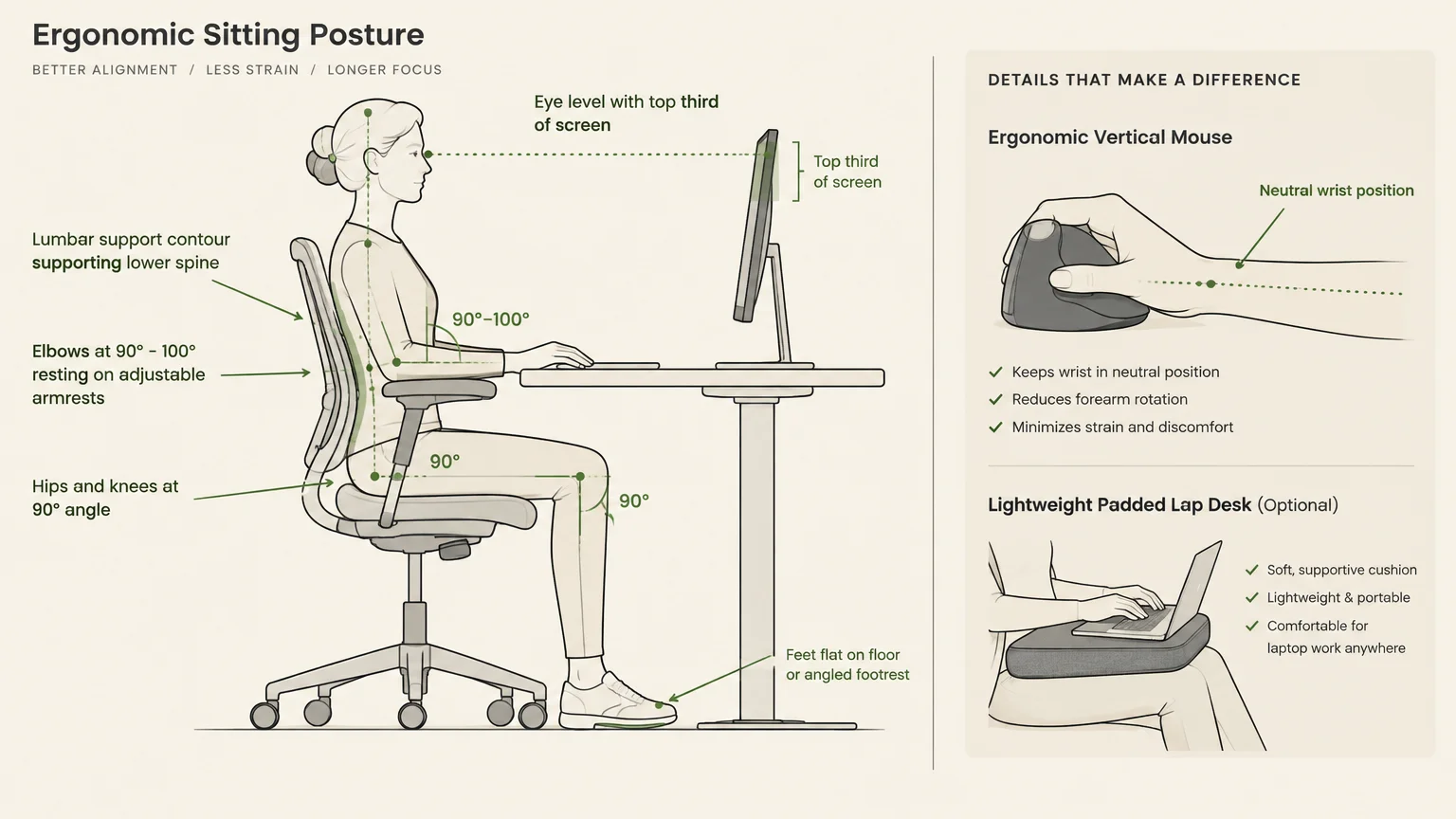
Working from home protects your mobility, but poor posture can cause unnecessary pain. Creating an ergonomic, comfortable workstation preserves your spinal alignment and prevents repetitive strain injuries.
Invest in an adjustable office chair that provides dedicated lumbar support. Your feet should rest flat on the floor or on an angled footrest, with your knees bent at a comfortable 90-degree angle.
Position your computer monitor directly at eye level, roughly an arm’s length away. Looking downward at a laptop screen strains your neck muscles and can trigger tension headaches over time.
If arthritis or joint stiffness makes typing painful, explore adaptive peripheral equipment. Trackball mice, ergonomic split keyboards, and padded wrist rests significantly reduce pressure on your joints.
You can also use built-in voice-dictation software to produce written content without typing. Both Windows and macOS offer powerful speech-to-text tools that convert your spoken words into documents effortlessly.

Common Mistakes to Avoid
Entering the freelance marketplace can be empowering, but specific missteps can compromise your financial gains. Watch out for these four common pitfalls as you launch your home-based venture.
- Falling for work-from-home job scams: Legitimate employers never ask you to pay upfront fees for job placement, training kits, or software licenses. Never wire funds, cash mysterious checks, or purchase gift cards for a prospective client.
- Overlooking quarterly estimated taxes: Independent contractor earnings do not have taxes withheld automatically. Make timely quarterly estimated tax payments to the IRS to avoid late-payment penalties at tax time.
- Exceeding early Social Security earnings caps: If you claim Social Security before your Full Retirement Age, track your gross monthly wages diligently. Accidentally crossing the annual threshold can cause painful benefit clawbacks.
- Neglecting your physical posture: Sitting for prolonged periods without changing positions can aggravate back and hip stiffness. Schedule short standing, stretching, or seated movement breaks every 45 minutes to encourage healthy blood circulation.
Frequently Asked Questions
Can I work a side gig while receiving Social Security Disability Insurance (SSDI)?
Yes, but you must remain strictly below the Substantial Gainful Activity (SGA) threshold. Earning above the SGA limit can jeopardize your ongoing disability qualification, so speak with your local claims office before accepting work.
Do I need an LLC to start a seated side gig from home?
No, you do not need a formal LLC to begin freelancing. Most retirees operate as sole proprietors initially, reporting freelance income and deductible home-office expenses directly on Schedule C of their standard Form 1040.
What basic computer skills do I need for seated freelance work?
Most home gigs require only fundamental digital skills. If you can send emails, browse websites, download documents, and participate in basic video calls, you have the necessary baseline to succeed.
How do I avoid getting scammed by fake online employers?
Always verify company credentials through independent business directories and professional networks like LinkedIn. Avoid any job listing that guarantees enormous earnings for minimal effort or conducts interviews exclusively via anonymous messaging apps.
The information in this guide is meant for educational purposes. Your specific circumstances—including income, health needs, tax situation, and goals—may require different approaches. When in doubt, consult a licensed professional.
Last updated: March 2026. Retirement benefits, tax rules, and healthcare regulations change frequently—verify current details with official sources.









Leave a Reply