
If you plan on working while collecting benefits, new rules will allow you to keep significantly more of your monthly check. The Social Security Administration announced adjusted earnings limits for 2027 that give early retirees extra breathing room.
Beneficiaries under full retirement age can earn more money from employment without triggering automatic benefit withholdings. This change creates fresh opportunities for part-time workers, consultants, and phased retirees alike.
Understanding these updated thresholds protects your hard-earned wages and ensures you maximize your cash flow throughout the year.
The Core 2027 Change: Higher Retirement Earnings Limits
The annual retirement earnings test limit increases notably in 2027. This adjustment directly benefits working retirees who claim benefits prior to reaching their full retirement age.
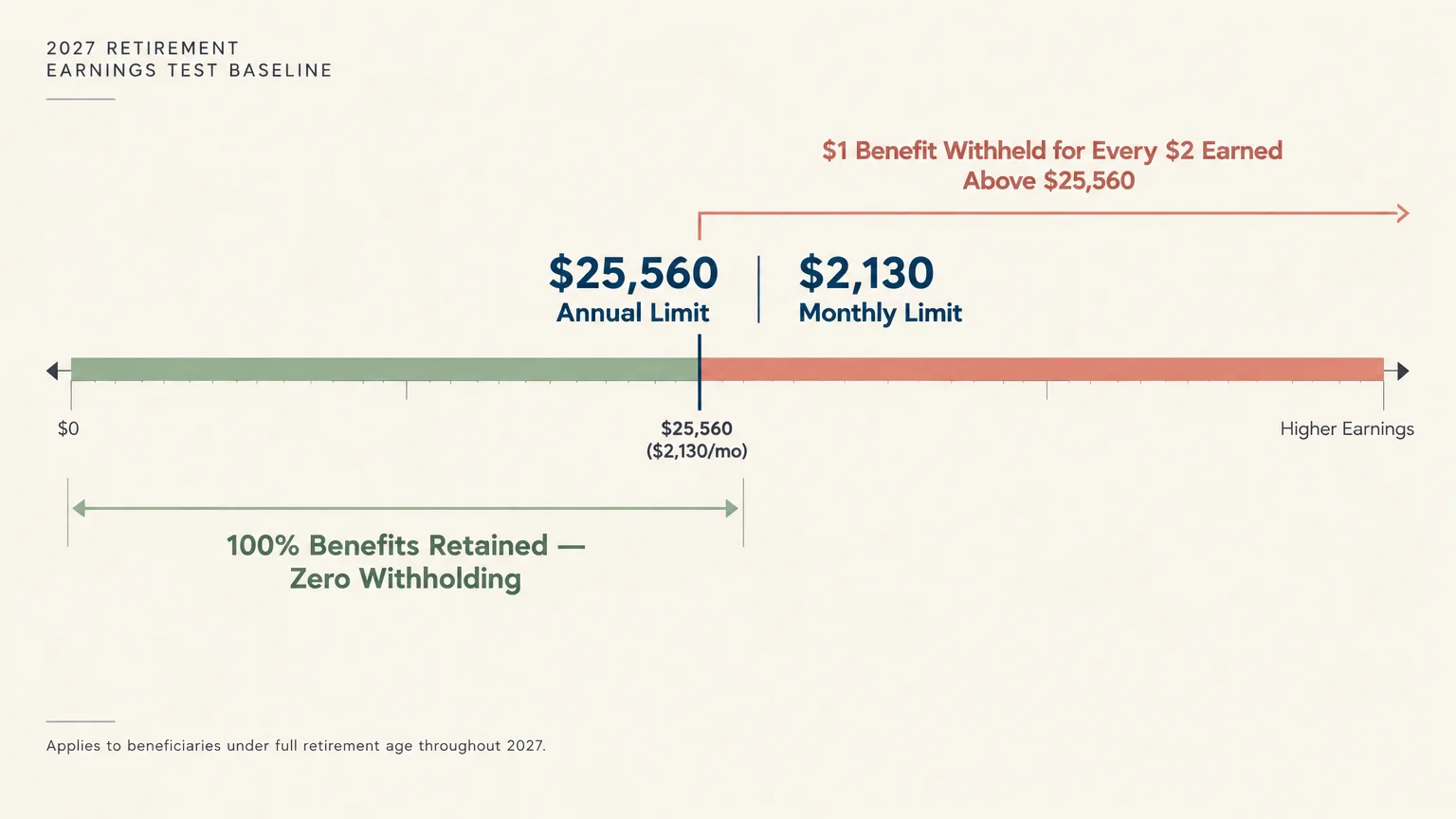
Starting in January 2027, the baseline earnings limit rises to $25,560 per year. This marks a meaningful jump from the 2026 limit of $24,480.
On a monthly basis, you can now earn up to $2,130 before facing any benefit withholding. In 2026, that monthly threshold stood at $2,040.
If you earn more than this cap, the withholding rule remains steady. The agency holds back $1 in benefits for every $2 you earn above $25,560.
This higher ceiling allows you to work additional hours or accept modest wage increases without losing a portion of your monthly check. For millions balancing living costs, this reform provides vital financial flexibility.
You can verify your personal earnings records and track annual adjustments through the official portal at the Social Security Administration.
Reaching Full Retirement Age in 2027: A Generous Exception
A far more generous rule applies if you reach your full retirement age during calendar year 2027. Under federal law, full retirement age for anyone born in 1960 or later is exactly 67.
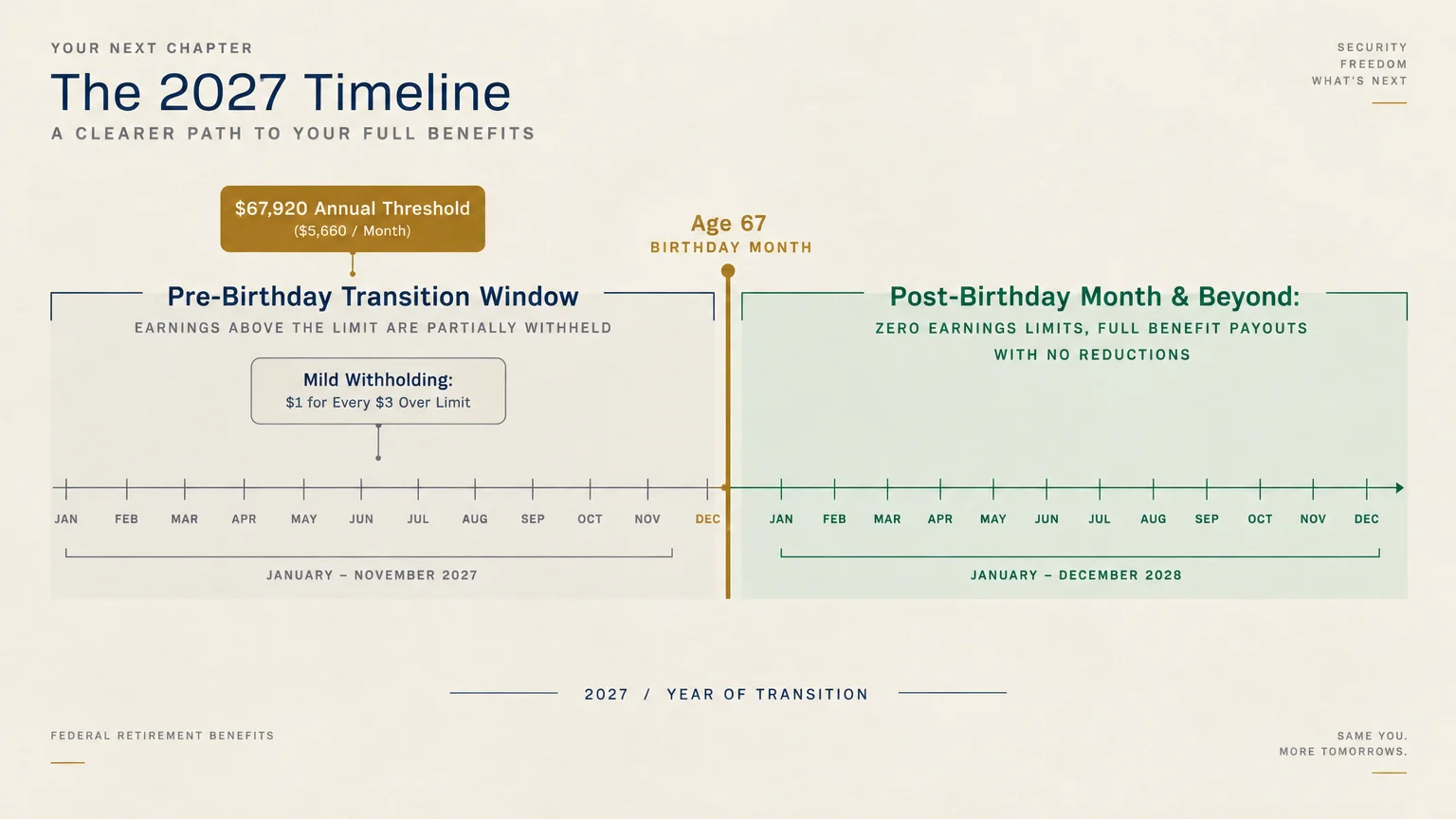
For workers attaining age 67 in 2027, the earnings test threshold jumps to $67,920. That is an increase from the $65,160 limit set for 2026.
Broken down by calendar months, this higher limit allows you to earn up to $5,660 per month without penalty. The 2026 monthly equivalent was $5,430.
The withholding penalty in this transition year is also significantly milder. The government withholds only $1 for every $3 you earn above the threshold.
Crucially, the agency counts only the money you earn before the exact month you celebrate your 67th birthday. Any dollars you earn during or after your birthday month face zero retirement earnings test penalties.
This distinct rule gives near-retirees an incentive to stay employed during their final transition months without fearing massive benefit losses.
What Counts as Earnings (and What Does Not)
Many working retirees forfeit income unnecessarily because they misunderstand how the government defines earnings. The earnings test focuses strictly on active labor.
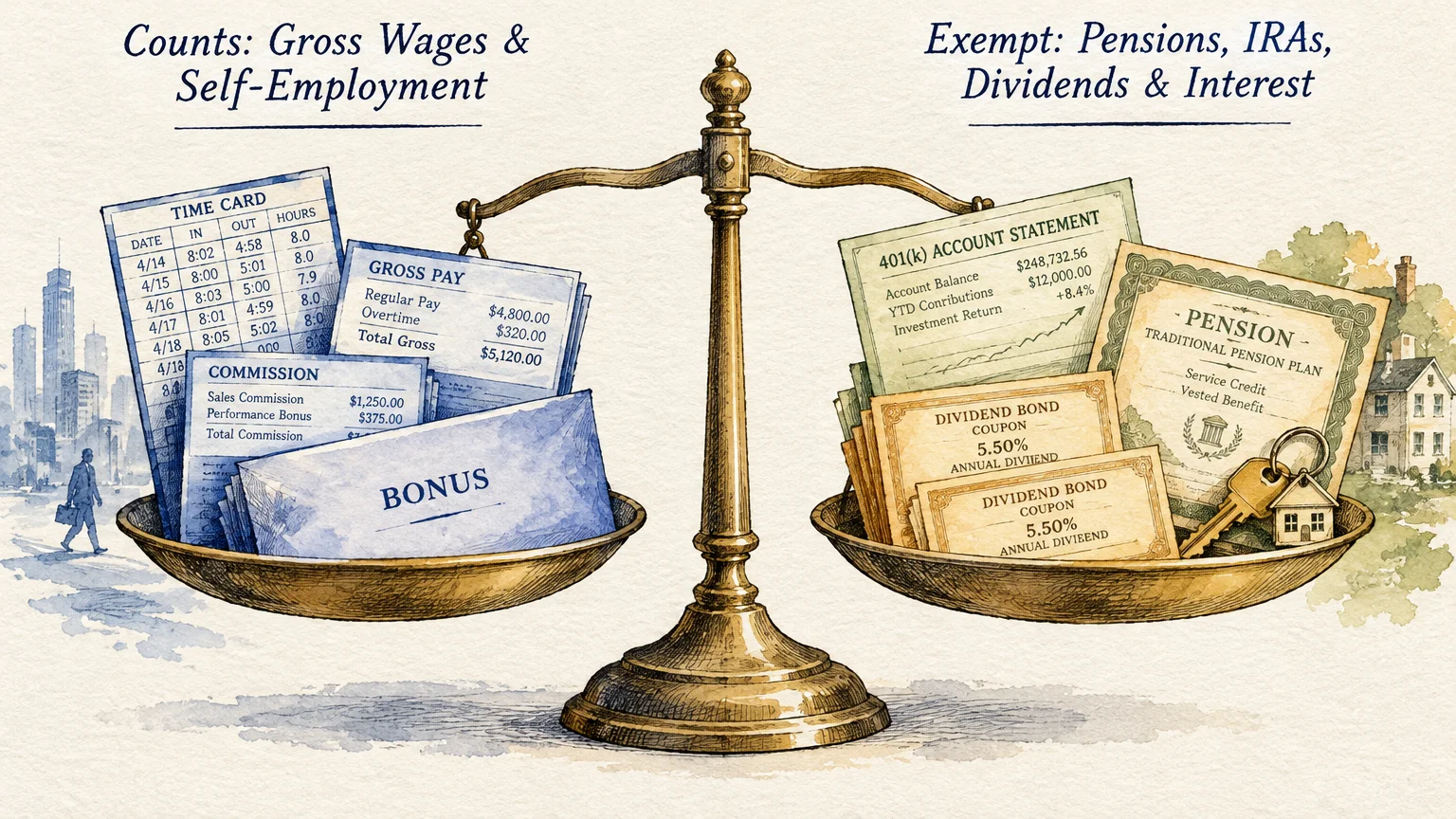
The government counts only gross wages from an employer or net earnings from self-employment. Bonuses, commissions, tips, and accrued vacation payouts also count toward your annual ceiling.
However, unearned income does not affect your retirement benefits under the earnings test. You can collect substantial investment returns without triggering benefit reductions.
The following sources of income do not count toward the 2027 social security earnings limit:
- Traditional pension payments and defined benefit annuities
- Distributions from traditional 401(k), 403(b), or IRA retirement accounts
- Roth IRA distributions and inherited account withdrawals
- Stock dividends, mutual fund capital gains distributions, and bond interest
- Rental property income, provided you are not a real estate professional
- Interest accumulated in certificates of deposit and high-yield savings accounts
- Severance payments received for past service rendered
Separating your wage income from investment cash flow is essential for strategic planning. You can structure your lifestyle distributions to keep wage income below $25,560 while drawing additional cash from your savings.
“Working in retirement can be wonderful for your health and your wallet, as long as you know the rules before you start earning.” — Jean Chatzky, Financial Educator
Comparing 2026 and 2027 Social Security Rules
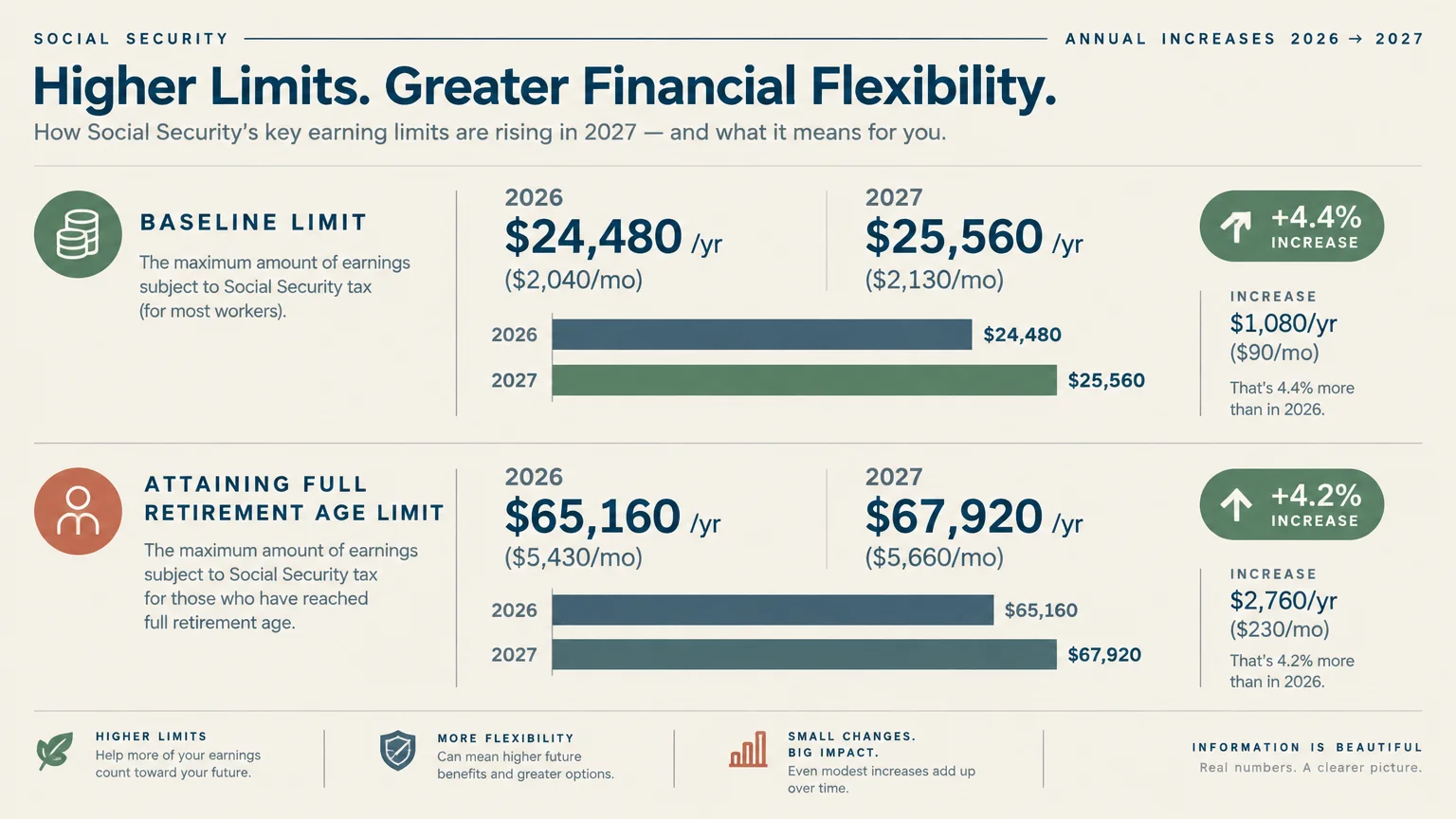
Reviewing key thresholds side-by-side helps you grasp the broader scope of social security 2027 changes. Multiple inflation-adjusted metrics shift simultaneously each January.
| Program Provision | 2026 Limit | 2027 Limit | Impact on Working Beneficiaries |
|---|---|---|---|
| Earnings Limit (Under FRA All Year) | $24,480 / year ($2,040 / month) | $25,560 / year ($2,130 / month) | Allows an extra $1,080 in annual earnings before benefit withholdings begin. |
| Withholding Rate (Under FRA) | $1 withheld per $2 over limit | $1 withheld per $2 over limit | Rate remains unchanged for early claimants. |
| Earnings Limit (Year Reaching FRA) | $65,160 / year ($5,430 / month) | $67,920 / year ($5,660 / month) | Allows an extra $2,760 in earnings prior to your birth month. |
| Withholding Rate (Year of FRA) | $1 withheld per $3 over limit | $1 withheld per $3 over limit | Only applies to earnings prior to the month you reach age 67. |
| Cost-of-Living Adjustment (COLA) | 2.8% | 3.6% | Increases monthly benefit checks across the board starting in January 2027. |
| Average Monthly Retired Worker Check | $2,095 | $2,170 | Represents an average boost of $75 per month for retired workers. |
| Maximum Taxable Wage Cap | $184,500 | $192,300 | Higher earners pay the 6.2% payroll tax on an additional $7,800 of wage income. |
| Earnings Required per Work Credit | $1,890 | $1,970 | Workers need $7,880 in annual earnings to earn the maximum four coverage credits. |
| Maximum Benefit at Full Retirement Age | $4,152 / month | $4,188 / month | Applies to workers retiring at full retirement age with top career earnings. |
These adjustments reflect broader economic data evaluated by federal actuaries. They balance inflation pressures against the financial obligations of the trust funds.

The Myth of Lost Benefits: How Withholding Actually Works
One of the most persistent misconceptions among working retirees social security recipients is that withheld benefits vanish forever. That belief is incorrect.
When the government holds back benefits due to the earnings test 2027 rules, it simply delays payment. The money is not a fine, a penalty, or an added tax.
Once you reach your full retirement age, the agency recalculates your benefit amount automatically. They adjust your monthly payment upward to credit you for every month a check was withheld.
For instance, suppose you claimed benefits at age 62, accepting an initial permanent reduction of 30 percent. If your wages cause the agency to withhold 12 full checks before you reach 67, your reduction factor changes.
At age 67, the agency recalculates your check as if you claimed four years early instead of five. Your ongoing monthly benefit increases permanently to make up for the earlier withholdings.
“Social Security is the financial foundation of your retirement, so do not let misunderstandings about working while claiming rob you of your peace of mind.” — Suze Orman, Personal Finance Expert
Over an average lifespan, you often recoup the full value of the withheld funds. Knowing this removes much of the anxiety surrounding working while collecting benefits.

How the SSA Withholds Payments in Practice
The mechanics of withholding surprise many early retirees. The government does not deduct partial amounts from your check every single month.
Instead, the agency withholds entire monthly payments until your excess earnings liability is fully covered. Once the liability is settled, normal monthly payments resume.
Consider an example where you earn $30,000 in 2027 while under full retirement age all year. Your earnings exceed the $25,560 threshold by $4,440.
Applying the $1 withholding for every $2 earned over the cap results in an annual withholding amount of $2,220. If your monthly benefit check is $1,500, the agency cannot withhold $185 per month.
Instead, the agency holds back your entire January check and your entire February check. That covers $3,000 in withheld benefits, satisfying your $2,220 obligation.
The agency then reimburses the $780 overpayment later in the calendar year. However, going two consecutive months without a check can strain your cash flow if you do not budget in advance.

The First-Year Special Rule: The Monthly Earnings Test
People who retire mid-year often face an awkward timing dilemma. If you earn $70,000 between January and June, then retire in July, your annual income already crushes the limit.
Fortunately, federal guidelines include a special rule for your first year of claiming benefits. Under this provision, you can use an alternative monthly earnings test.
During your initial calendar year of retirement, the agency cannot withhold benefits for any month you earn less than the monthly cap. In 2027, that monthly threshold is $2,130.
Even if you made six figures earlier in the year, you receive full checks starting in July as long as your new monthly earnings stay below $2,130. Self-employed individuals must also prove they do not perform substantial services in their business.
The agency generally defines substantial services as spending more than 45 hours per month working in your business. For highly skilled occupations, spending between 15 and 45 hours can still count as substantial service.
This exception exists to help older Americans transition smoothly into partial retirement without sacrificing income earned prior to their claim date.

Working Past Full Retirement Age: Zero Restrictions
Once you reach full retirement age, the earnings limit evaporates entirely. You can earn any amount of money from wages or business profits without losing a dime of your benefit.
Someone earning $200,000 per year at age 68 receives their entire monthly check on schedule. Furthermore, continued employment can actually boost your future payments.
Social Security calculates your baseline benefit using your highest 35 years of wage-indexed earnings. Many people earn peak salaries in their sixties and seventies.
If your 2027 earnings outpace an earlier, lower-earning year in your top-35 work record, the agency recalculates your primary insurance amount. This calculation runs automatically in the background each autumn.
When an adjustment occurs, the agency sends you a retroactive lump sum for the difference and raises your future checks. Working later in life offers genuine mathematical advantages.
Tax Implications of Working While Collecting Benefits
While the 2027 earnings test limits offer relief, you must still monitor the federal income taxation of your benefits. Earning wages often exposes your monthly benefits to income taxes.
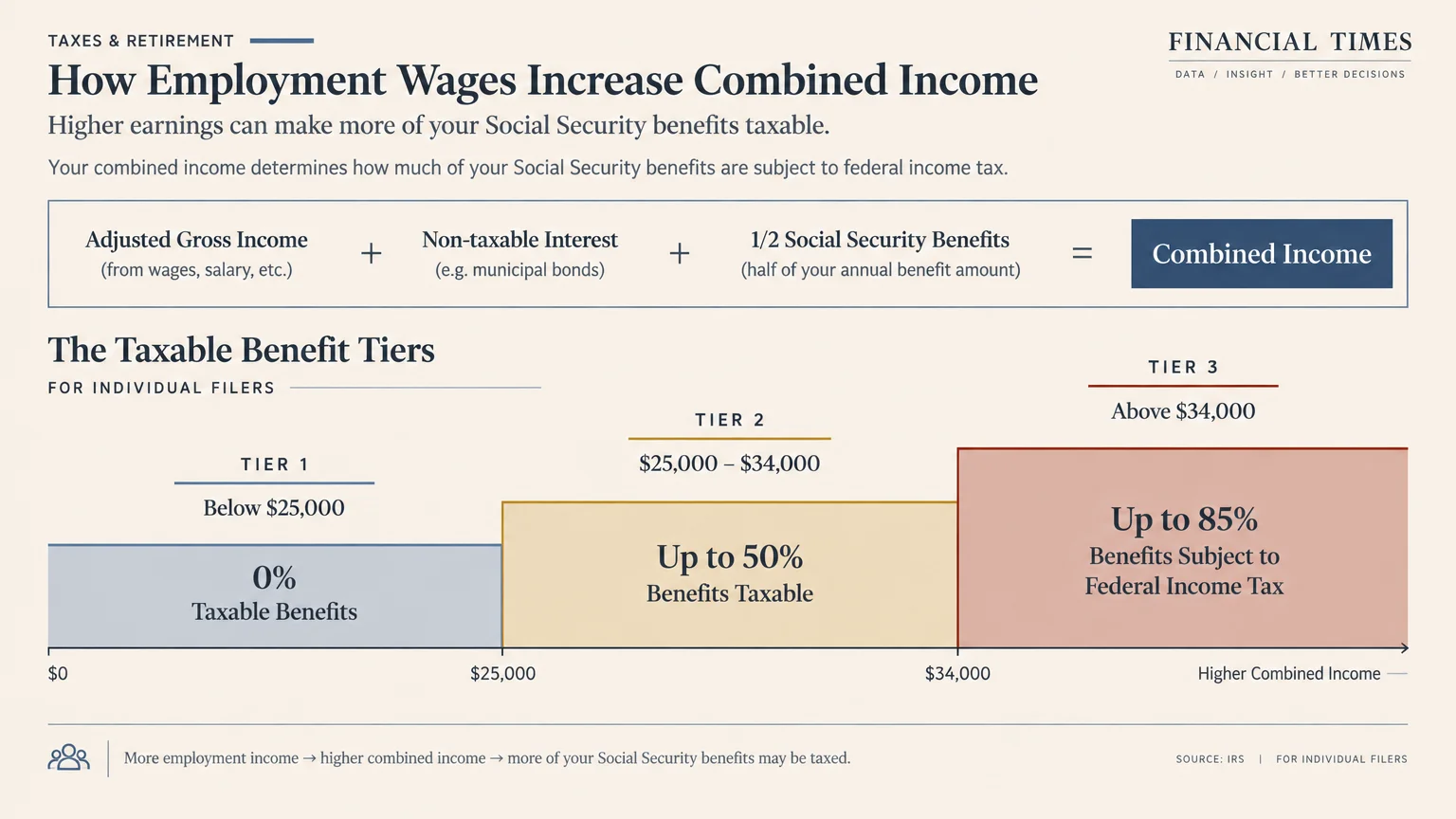
The Internal Revenue Service determines benefit taxation using a metric called provisional income. You calculate provisional income by adding your adjusted gross income, tax-exempt municipal interest, and half of your annual Social Security check.
Federal tax thresholds for provisional income remain unindexed for inflation, making them easy to trigger:
- Single filers with provisional income between $25,000 and $34,000 pay tax on up to 50 percent of their benefits.
- Single filers above $34,000 pay income tax on up to 85 percent of their benefits.
- Married couples filing jointly with provisional income between $32,000 and $44,000 pay tax on up to 50 percent of their benefits.
- Married couples filing jointly above $44,000 pay income tax on up to 85 percent of their benefits.
When you earn wages alongside your benefits, you can quickly cross into the 85 percent taxation tier. This scenario is widely known as the retirement tax torpedo.
To avoid tax season surprises, you can complete Form W-4V to elect voluntary federal withholding from your monthly Social Security check. Setting aside 10 or 12 percent helps maintain predictability.
Medicare Surcharges for Higher-Earning Working Retirees
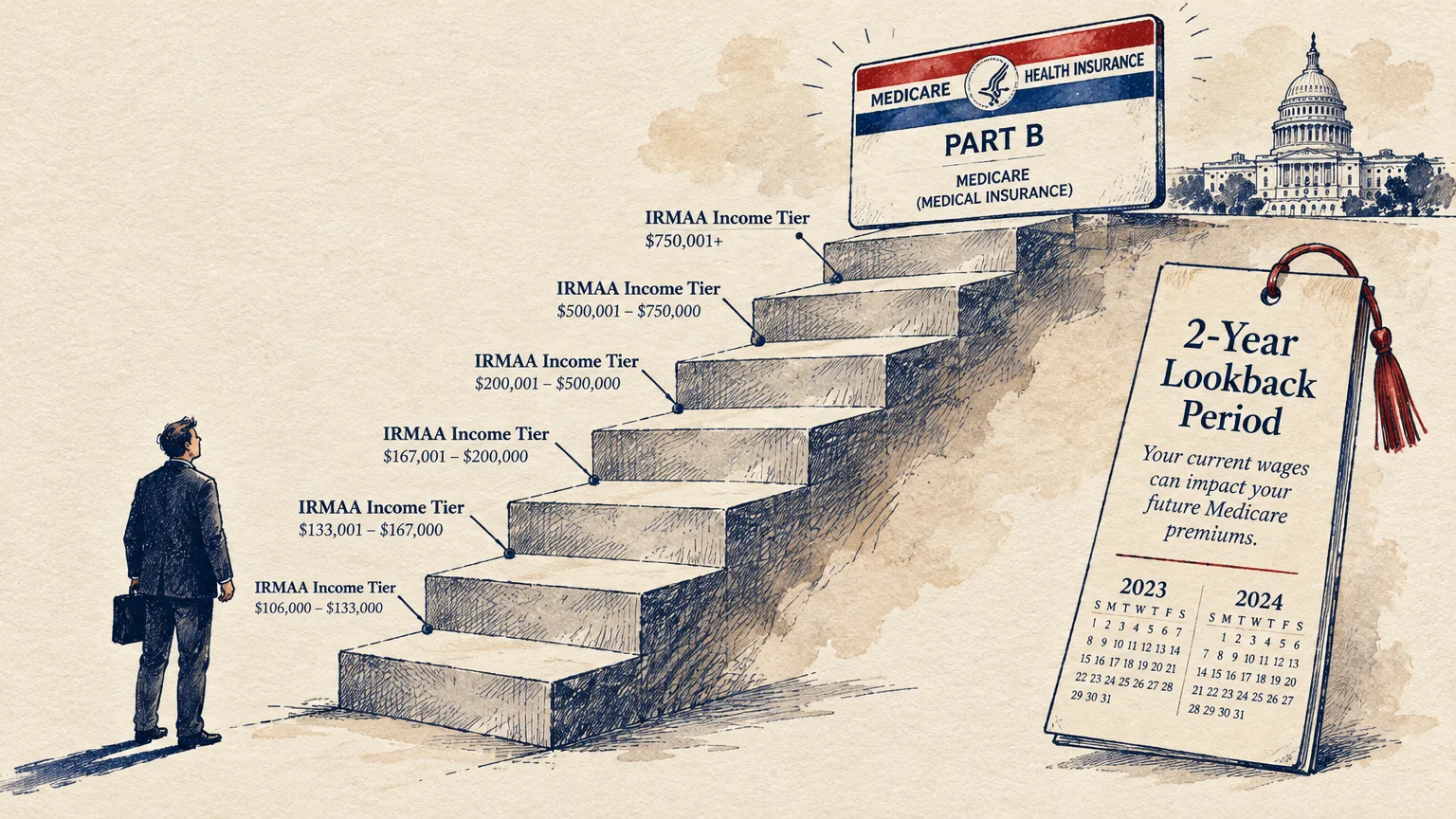
High earners who work while collecting benefits must also watch out for Medicare premiums. If your wages push your total income upward, you might face the Income-Related Monthly Adjustment Amount, or IRMAA.
IRMAA applies an added surcharge to your standard Medicare Part B and Part D premiums. The program evaluates your modified adjusted gross income using tax returns from two years prior.
Wages earned in 2027 directly impact your Medicare premiums for calendar year 2029. Crossing an IRMAA bracket by even one single dollar triggers the entire surcharge tier for that calendar year.
You can track updated baseline premiums and bracket cutoffs through Medicare.gov as you structure your annual earnings. Combining high wages with benefit claims demands coordinated planning across tax and healthcare systems.
2027 Updates for Working SSDI Beneficiaries
The 2027 update also includes vital threshold changes for individuals receiving Social Security Disability Insurance (SSDI). These individuals face different work limits than standard retirement claimants.
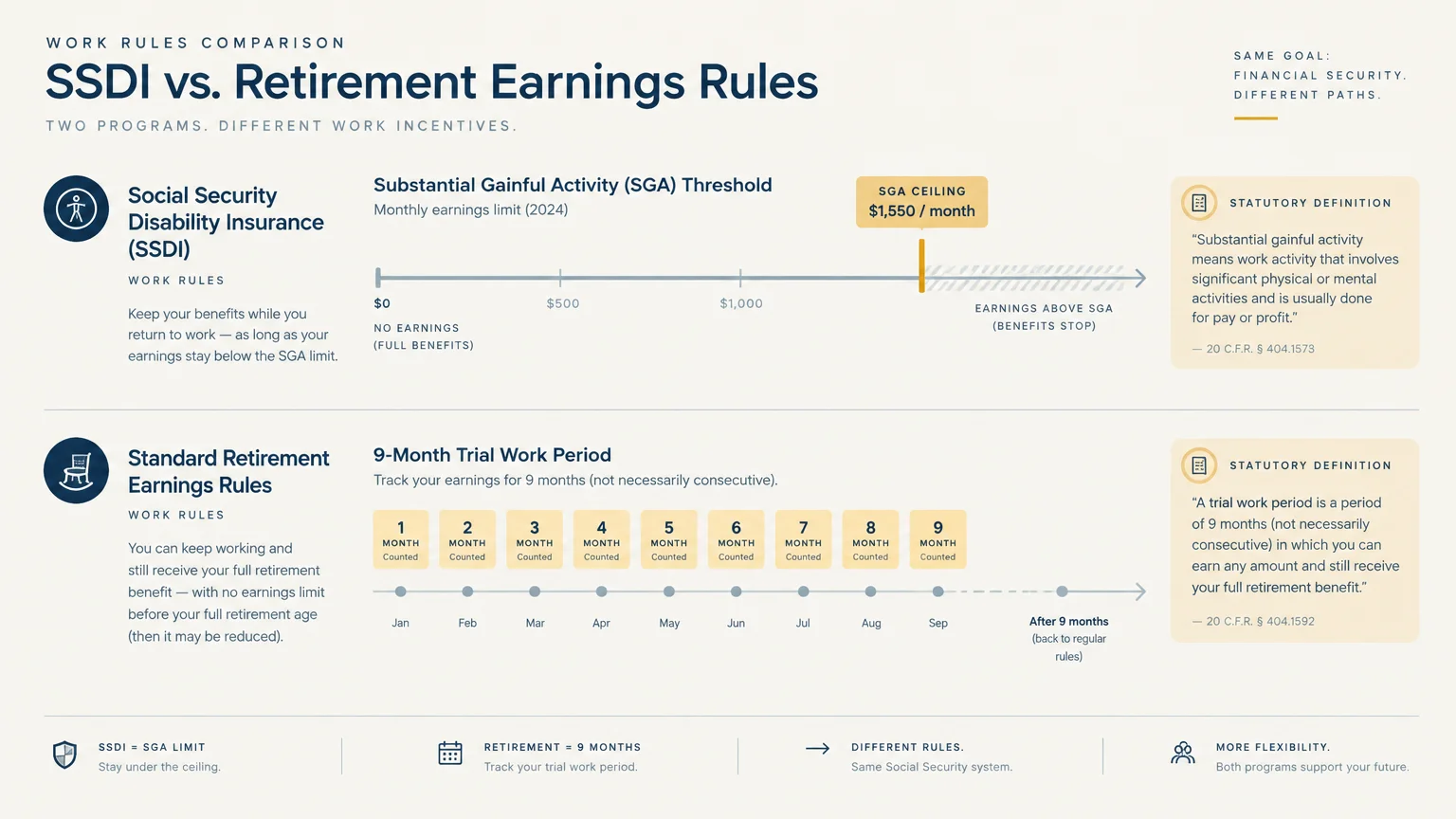
The Substantial Gainful Activity (SGA) threshold measures your ability to engage in competitive employment. For non-blind disability beneficiaries, the SGA limit rises to $1,770 per month in 2027, up from $1,690 in 2026.
For blind disability beneficiaries, the 2027 SGA limit rises to $2,950 per month, compared to $2,830 in 2026. Earning above these levels can jeopardize your ongoing disability eligibility.
Meanwhile, the Trial Work Period (TWP) limit increases to $1,270 per month in 2027, up from $1,210. A trial work month is triggered whenever your gross earnings exceed this monthly benchmark.
Understanding these specific metrics allows disability recipients to test their capacity for employment without accidentally losing critical safety-net benefits.
Strategic Scenarios: Navigating the 2027 Numbers
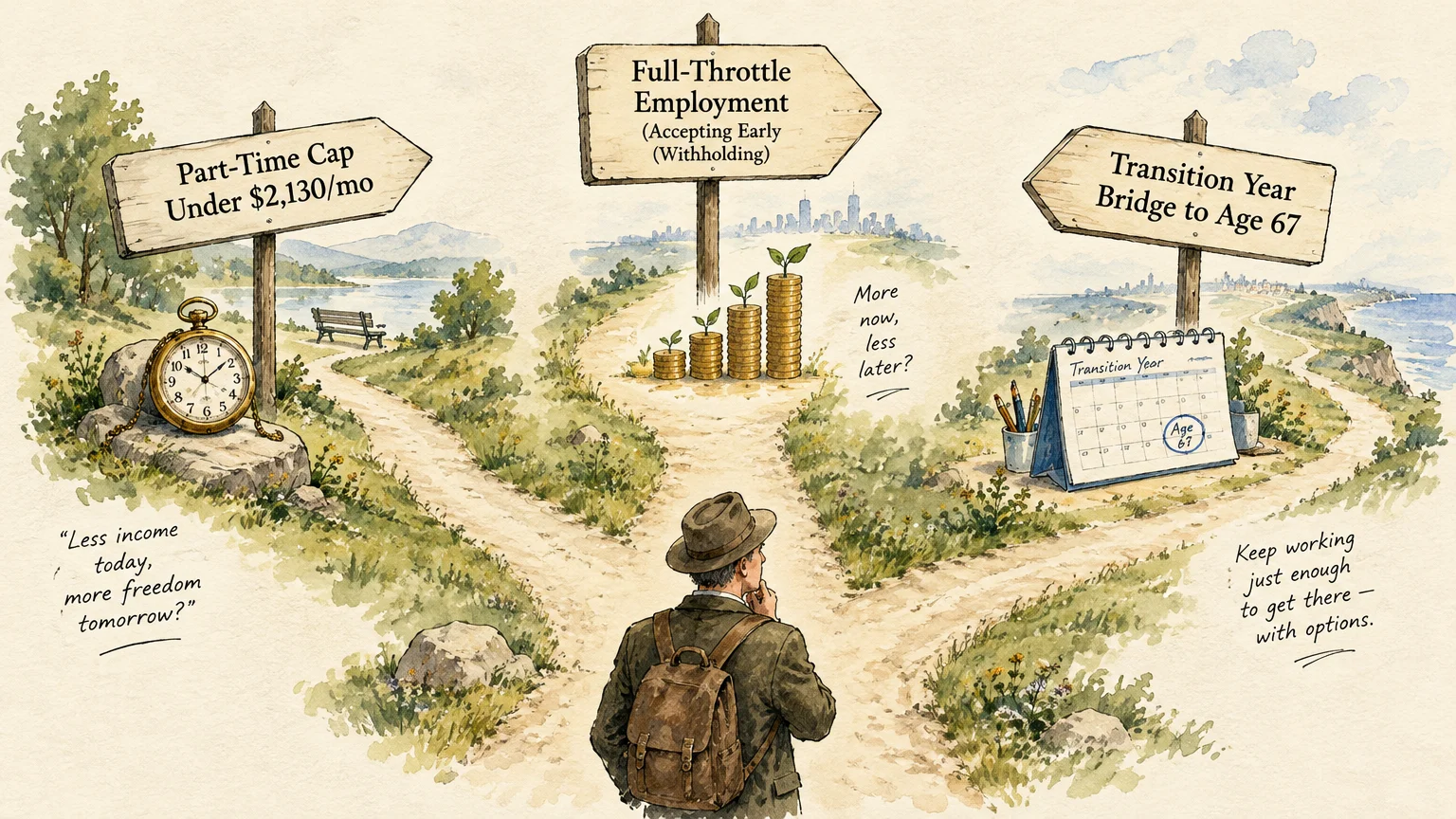
Evaluating practical scenarios shows how different workers can capitalize on the updated 2027 limits. Individual circumstances dictate the best claiming and earning strategy.
Scenario 1: The Part-Time Consultant Under FRA
Sarah is 63 and claimed benefits at 62. In 2026, she held her consulting hours down to avoid exceeding the $24,480 cap.
In 2027, the limit increases to $25,560. This adjustment allows Sarah to bill an extra $1,080 over the course of the year without penalty.
She earns exactly $2,130 per month, collecting her full consulting fee alongside her complete monthly benefit check. Her careful balance prevents unexpected check withholdings.
Scenario 2: The Mid-Year Transition to Age 67
David turns 67 in August 2027. He plans to work full-time through July, earning $8,000 per month, and then retire completely on his birthday.
Between January and July, David earns $56,000. Because this total falls below the 2027 transition limit of $67,920, the agency withholds zero benefits from his checks.
When he turns 67 in August, the earnings test ceases entirely. David successfully collects both his corporate salary and seven months of Social Security checks without any withholding.
Scenario 3: The Sole Proprietor Managing Net Profit
Elena operates a small graphic design practice while receiving early benefits at age 64. She projects gross client billings of $35,000 for 2027.
Because the government counts net business profit rather than gross revenues for self-employed individuals, Elena tracks deductible business expenses closely. She deducts software subscriptions, home office use, and professional insurance.
Her legitimate deductions total $9,800, bringing her net profit down to $25,200. Because her net profit sits below the $25,560 threshold, she protects her benefits from withholding.

What Can Go Wrong
Operating under the retirement earnings test without careful preparation can trigger serious setbacks. Avoiding common missteps protects your financial stability.
Failing to notify the Social Security Administration about unexpected raises or performance bonuses is a frequent error. If you exceed the earnings cap without alerting the agency, an overpayment notice will arrive later.
The government requires prompt repayment of overpaid funds, often demanding thousands of dollars on short notice. Communicating projected earnings changes early prevents this jarring disruption.
Another common mistake involves confusing gross pay with net take-home pay on your paystubs. The earnings test evaluates gross wages before taxes, 401(k) contributions, or health insurance premiums are deducted.
Assuming that retirement account distributions count toward the earnings test is an equally costly misconception. Some retirees unnecessarily avoid taking required minimum distributions or IRA withdrawals, falsely believing it will trigger benefit penalties.
Finally, self-employed retirees often forget that self-employment taxes still apply to all net earnings. Even if your earnings remain under the earnings test ceiling, you still owe Medicare and Social Security payroll taxes.

When to Consult a Professional
Navigating the intersection of employment income, benefit claiming strategies, and tax law can become overwhelming. Certain situations clearly warrant customized professional advice.
You should consider consulting a qualified financial advisor, CPA, or CFP under the following conditions:
- You own a business with complex revenue streams, inventory, or independent contractors where separating active wages from passive profit is difficult.
- Your combined wage and retirement income approaches the next Medicare IRMAA surcharge tier, potentially triggering steep premium spikes.
- You want to model whether suspending your benefit upon reaching full retirement age will sufficiently rebuild your delayed retirement credits.
- You are coordinating spousal benefits, survivor benefits, or dependent claims alongside your earned income strategy.
Consumer educational materials published by the AARP Public Policy Institute can also provide supplemental context as you evaluate your options. Professional guidance ensures you make decisions aligned with your complete financial picture.
Frequently Asked Questions
Does the earnings test apply to my spouse’s wages?
No, the retirement earnings test evaluates only your own personal wage earnings against your benefit. Your spouse’s employment income does not reduce your individual retired worker benefit check.
What happens if I stop working mid-year after exceeding the limit?
You should notify the Social Security Administration immediately when your employment terminates. The agency can apply the monthly earnings test to ensure your checks resume promptly for the remainder of the year.
Can working while collecting benefits lower my monthly payment in future years?
No, working never decreases your primary insurance amount. If your current earnings are lower than your historical career average, the agency simply ignores them and leaves your benefit unchanged.
Do contributions to a traditional 401(k) lower my income for the earnings test?
No, the agency measures gross wages before any voluntary retirement contributions or salary deferrals are subtracted. Pre-tax contributions reduce your income tax liability, but they do not lower your earnings test total.
When does the Social Security Administration adjust my check for previously withheld benefits?
The agency recalculates your monthly benefit upon reaching your full retirement age. Your new, permanently increased monthly amount takes effect starting with the check you receive in the month you turn 67.
Next Steps for Working Retirees
The 2027 Social Security adjustments offer practical advantages for older Americans who choose to remain in the workforce. By allowing you to earn up to $25,560 without penalty, the program accommodates the modern reality of phased retirement.
Take time to review your expected employment earnings, budget needs, and claiming timeline before the new year arrives. Clear knowledge of these rules ensures you capture every dollar you have earned.
This article provides general retirement education and information only. Every retiree’s situation is unique—what works for others may not work for you. For personalized advice, consider consulting a qualified financial professional such as a CFP or CPA.
Last updated: October 2026. Retirement benefits, tax rules, and healthcare regulations change frequently—verify current details with official sources.









Leave a Reply