2027 Updates for Working SSDI Beneficiaries
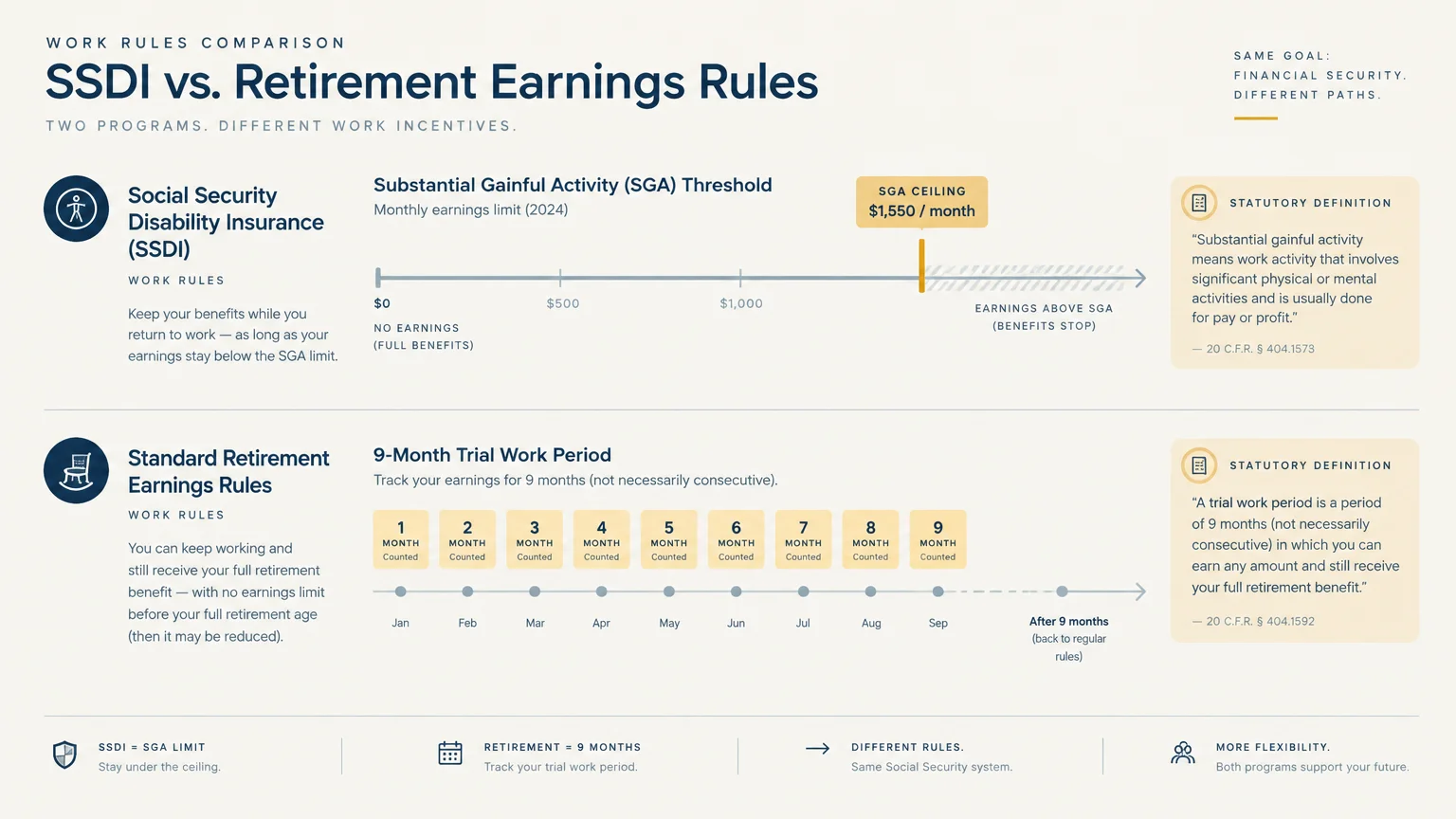
The 2027 update also includes vital threshold changes for individuals receiving Social Security Disability Insurance (SSDI). These individuals face different work limits than standard retirement claimants.
The Substantial Gainful Activity (SGA) threshold measures your ability to engage in competitive employment. For non-blind disability beneficiaries, the SGA limit rises to $1,770 per month in 2027, up from $1,690 in 2026.
For blind disability beneficiaries, the 2027 SGA limit rises to $2,950 per month, compared to $2,830 in 2026. Earning above these levels can jeopardize your ongoing disability eligibility.
Meanwhile, the Trial Work Period (TWP) limit increases to $1,270 per month in 2027, up from $1,210. A trial work month is triggered whenever your gross earnings exceed this monthly benchmark.
Understanding these specific metrics allows disability recipients to test their capacity for employment without accidentally losing critical safety-net benefits.
Strategic Scenarios: Navigating the 2027 Numbers
Evaluating practical scenarios shows how different workers can capitalize on the updated 2027 limits. Individual circumstances dictate the best claiming and earning strategy.
Scenario 1: The Part-Time Consultant Under FRA
Sarah is 63 and claimed benefits at 62. In 2026, she held her consulting hours down to avoid exceeding the $24,480 cap.
In 2027, the limit increases to $25,560. This adjustment allows Sarah to bill an extra $1,080 over the course of the year without penalty.
She earns exactly $2,130 per month, collecting her full consulting fee alongside her complete monthly benefit check. Her careful balance prevents unexpected check withholdings.
Scenario 2: The Mid-Year Transition to Age 67
David turns 67 in August 2027. He plans to work full-time through July, earning $8,000 per month, and then retire completely on his birthday.
Between January and July, David earns $56,000. Because this total falls below the 2027 transition limit of $67,920, the agency withholds zero benefits from his checks.
When he turns 67 in August, the earnings test ceases entirely. David successfully collects both his corporate salary and seven months of Social Security checks without any withholding.
Scenario 3: The Sole Proprietor Managing Net Profit
Elena operates a small graphic design practice while receiving early benefits at age 64. She projects gross client billings of $35,000 for 2027.
Because the government counts net business profit rather than gross revenues for self-employed individuals, Elena tracks deductible business expenses closely. She deducts software subscriptions, home office use, and professional insurance.
Her legitimate deductions total $9,800, bringing her net profit down to $25,200. Because her net profit sits below the $25,560 threshold, she protects her benefits from withholding.
What Can Go Wrong
Operating under the retirement earnings test without careful preparation can trigger serious setbacks. Avoiding common missteps protects your financial stability.
Failing to notify the Social Security Administration about unexpected raises or performance bonuses is a frequent error. If you exceed the earnings cap without alerting the agency, an overpayment notice will arrive later.
The government requires prompt repayment of overpaid funds, often demanding thousands of dollars on short notice. Communicating projected earnings changes early prevents this jarring disruption.
Another common mistake involves confusing gross pay with net take-home pay on your paystubs. The earnings test evaluates gross wages before taxes, 401(k) contributions, or health insurance premiums are deducted.
Assuming that retirement account distributions count toward the earnings test is an equally costly misconception. Some retirees unnecessarily avoid taking required minimum distributions or IRA withdrawals, falsely believing it will trigger benefit penalties.
Finally, self-employed retirees often forget that self-employment taxes still apply to all net earnings. Even if your earnings remain under the earnings test ceiling, you still owe Medicare and Social Security payroll taxes.