Reaching Full Retirement Age in 2027: A Generous Exception
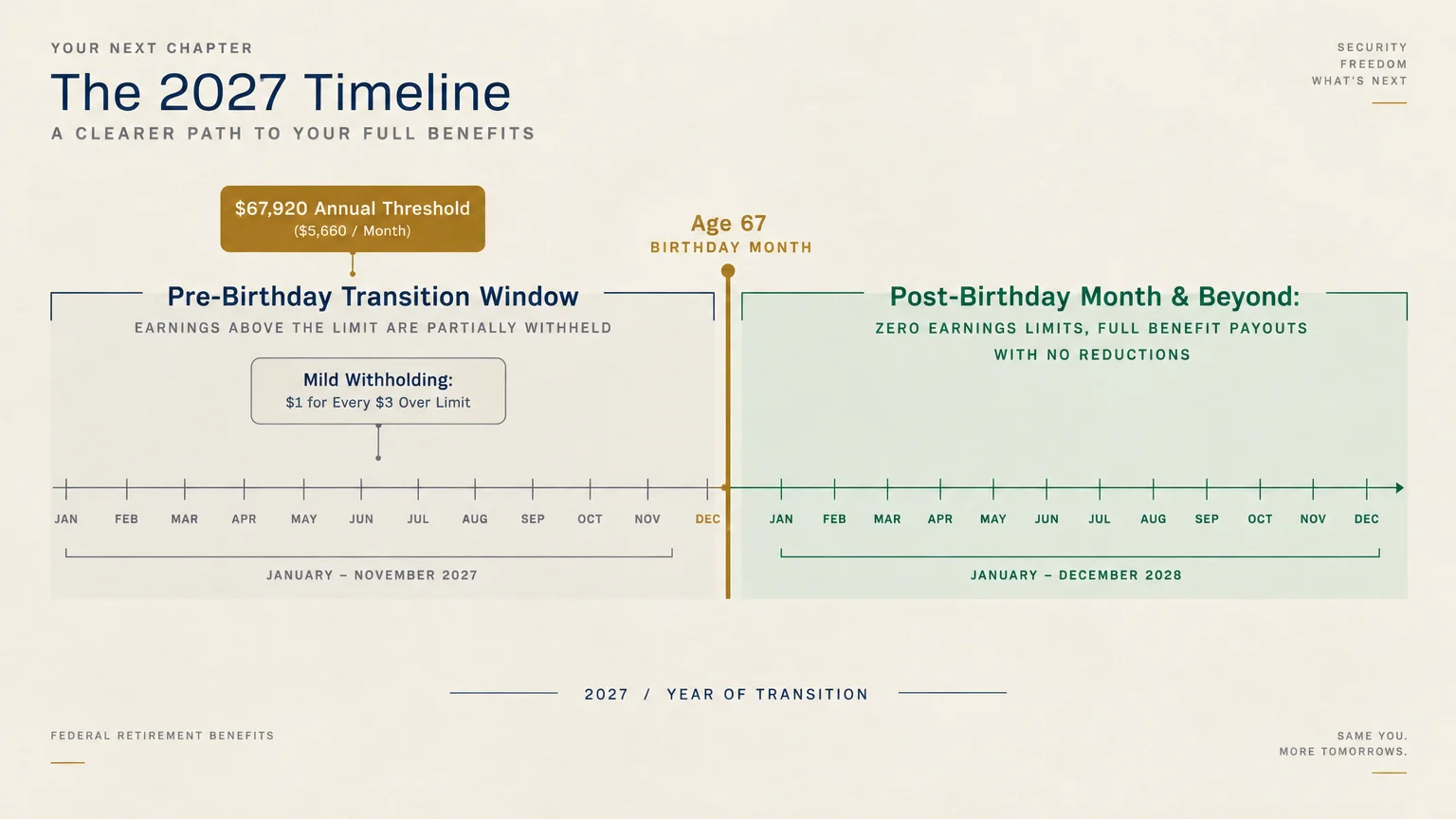
A far more generous rule applies if you reach your full retirement age during calendar year 2027. Under federal law, full retirement age for anyone born in 1960 or later is exactly 67.
For workers attaining age 67 in 2027, the earnings test threshold jumps to $67,920. That is an increase from the $65,160 limit set for 2026.
Broken down by calendar months, this higher limit allows you to earn up to $5,660 per month without penalty. The 2026 monthly equivalent was $5,430.
The withholding penalty in this transition year is also significantly milder. The government withholds only $1 for every $3 you earn above the threshold.
Crucially, the agency counts only the money you earn before the exact month you celebrate your 67th birthday. Any dollars you earn during or after your birthday month face zero retirement earnings test penalties.
This distinct rule gives near-retirees an incentive to stay employed during their final transition months without fearing massive benefit losses.
What Counts as Earnings (and What Does Not)
Many working retirees forfeit income unnecessarily because they misunderstand how the government defines earnings. The earnings test focuses strictly on active labor.
The government counts only gross wages from an employer or net earnings from self-employment. Bonuses, commissions, tips, and accrued vacation payouts also count toward your annual ceiling.
However, unearned income does not affect your retirement benefits under the earnings test. You can collect substantial investment returns without triggering benefit reductions.
The following sources of income do not count toward the 2027 social security earnings limit:
- Traditional pension payments and defined benefit annuities
- Distributions from traditional 401(k), 403(b), or IRA retirement accounts
- Roth IRA distributions and inherited account withdrawals
- Stock dividends, mutual fund capital gains distributions, and bond interest
- Rental property income, provided you are not a real estate professional
- Interest accumulated in certificates of deposit and high-yield savings accounts
- Severance payments received for past service rendered
Separating your wage income from investment cash flow is essential for strategic planning. You can structure your lifestyle distributions to keep wage income below $25,560 while drawing additional cash from your savings.