
Missing key Social Security payment days or filing deadlines disrupts your monthly cash flow and costs you real money. Your 2027 benefits bring higher payment amounts, shifted holiday distribution dates, and long-awaited statutory milestones you must plan around immediately.
Staying ahead of the official Social Security calendar protects your household budget from unexpected banking delays and tax surprises. It ensures you collect every dollar you earned without bureaucratic friction.
Marking these nine essential 2027 benefit dates empowers you to coordinate your living expenses, tax filings, and Medicare choices with total confidence.
Why the 2027 Social Security Calendar Demands Your Attention
The year 2027 represents a landmark transition in the history of the Social Security program. Decades of gradual legislative changes culminate this year alongside regular calendar anomalies that directly shift your payment schedule.
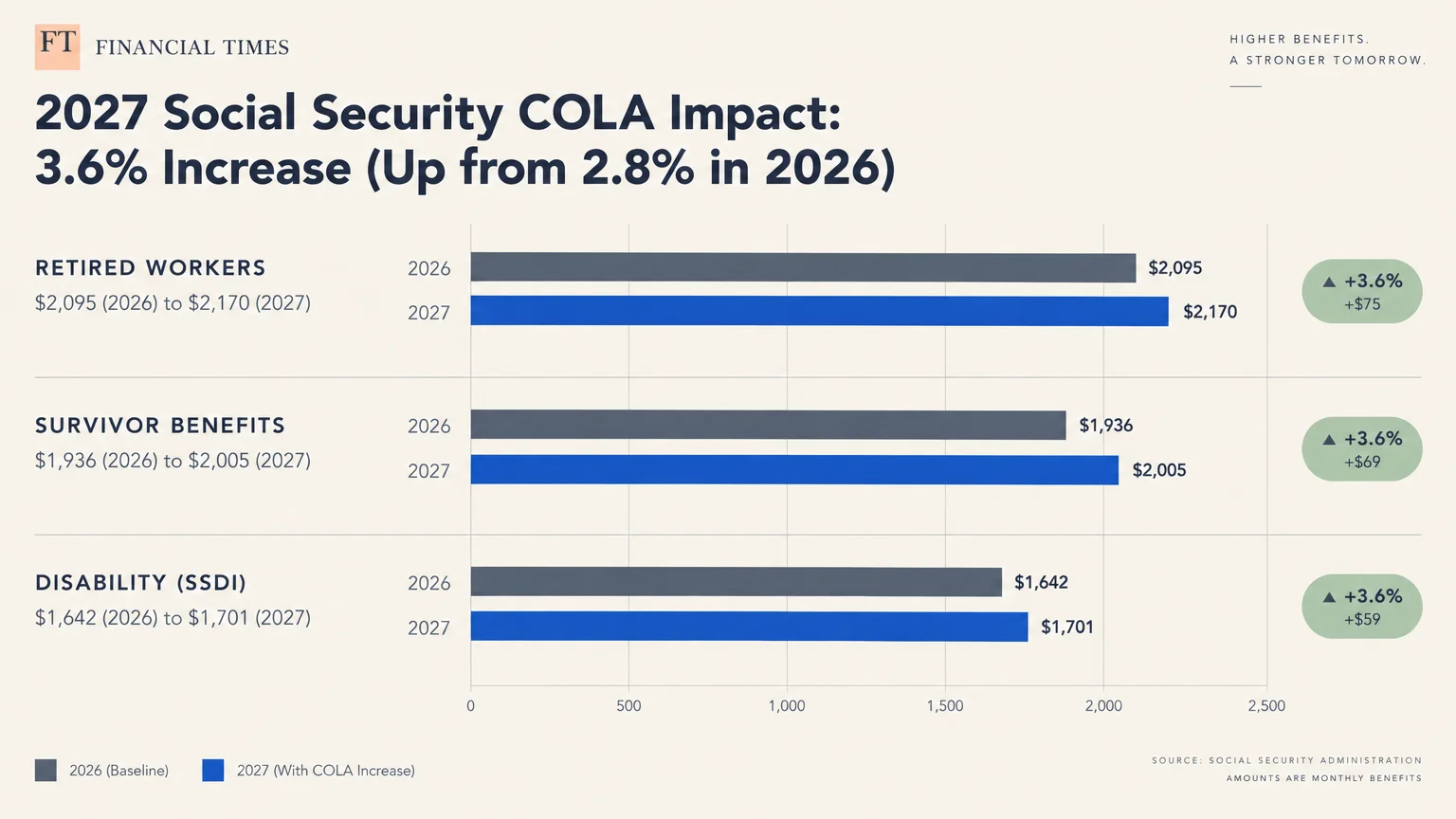
The Social Security Administration announced a 3.6% cost-of-living adjustment (COLA) for 2027, rising from 2.8% in 2026. This adjustment pushes average monthly retired worker checks from $2,095 up to $2,170.
Average survivor benefits for widows and widowers rise from $1,936 to $2,005 per month. Meanwhile, average monthly Social Security Disability Insurance (SSDI) payments increase from $1,642 to $1,701.
These larger payments arrive according to strict federal banking rules. Whenever regular payment dates fall on weekends or federal holidays, the Treasury releases funds on the preceding business day.
Failing to track these calendar movements can leave you expecting money that arrived days earlier or scrambling when bills arrive before checks deposit. Knowing your exact timeline ensures steady, predictable cash flow throughout the entire year.

Date 1: December 31, 2026 – The Early COLA Deposit for SSI and Pre-1997 Beneficiaries
Your 2027 benefit updates technically start before the new year arrives on the calendar. Supplemental Security Income (SSI) beneficiaries and long-tenured retirees see their updated checks on Thursday, December 31, 2026.
The standard SSI payment date is always the first day of each month. Because January 1 is a federal holiday, the Treasury moves your January 2027 funds to the final business day of December 2026.
Retirees who claimed benefits before May 1997 normally receive their deposits on the third day of the month. Because January 3, 2027, falls on a Sunday, your deposit cannot arrive on that date.
Under federal processing rules, Friday, January 1, is New Year’s Day, and Saturday, January 2, is a banking holiday. Consequently, the government shifts your payment all the way back to Thursday, December 31, 2026.
This payment includes your full 3.6% cost-of-living increase. You will receive two separate deposits during December 2026 and zero standard benefit payments during the calendar month of January 2027.
Budget this deposit carefully. Your household must stretch that final December deposit across more than thirty days until your next scheduled distribution arrives in February.

Date 2: January 1, 2027 – The Full Retirement Age Milestone and Tax Cap Reset
New federal thresholds taking effect on January 1 reshape how much workers pay into the system and how much beneficiaries keep. This date marks the final phase-in of the historic 1983 Social Security Amendments.
Starting January 1, 2027, workers born in 1960 or later face a maximum Full Retirement Age (FRA) of exactly 67. The forty-year transition from age 65 to age 67 is now fully complete.
If you turn 62 in 2027 and choose to claim benefits immediately, you face a permanent benefit reduction of roughly 30%. Waiting until age 67 grants you 100% of your earned primary insurance amount.
Working professionals also encounter a higher payroll tax ceiling on this day. The maximum amount of earnings subject to the 6.2% Social Security payroll tax increases to $192,300, up from $184,500 in 2026.
Earnings above $192,300 remain exempt from the 6.2% Old-Age, Survivors, and Disability Insurance (OASDI) tax. High-earning workers will see payroll taxes deducted from their compensation for longer into the year before hitting this cap.
January 1 also resets the Retirement Earnings Test limits. Beneficiaries working while collecting benefits under full retirement age can earn up to $25,560 in 2027 before the SSA withholds any benefits.
Date 3: January 13, 2027 – The First Standard COLA Payout Arrives
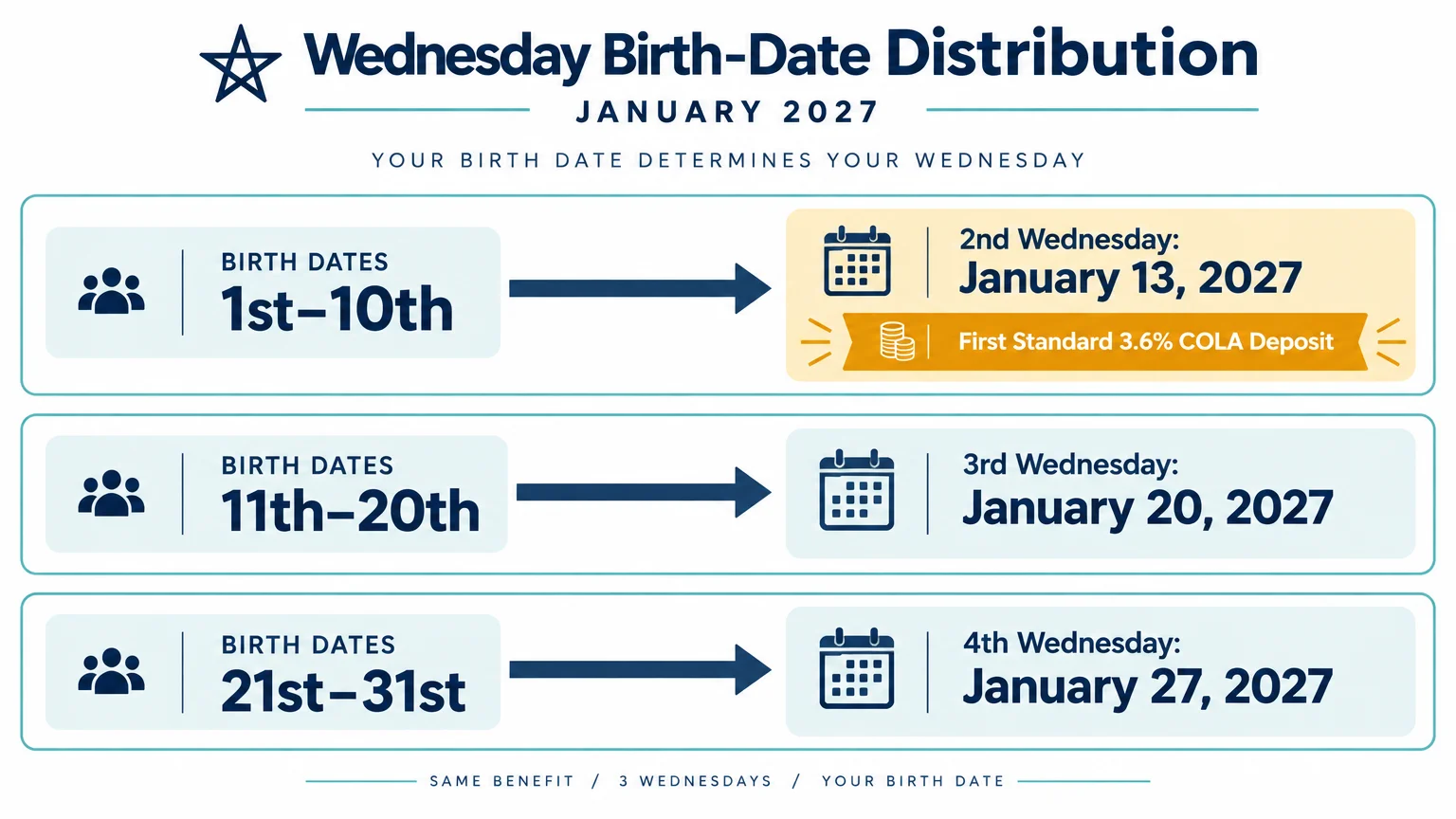
For most retirees who filed for benefits after April 1997, payment schedules revolve around birth dates. The second Wednesday of January marks the first distribution of higher checks under the standard payment rotation.
If your birthday falls between the 1st and 10th of any given month, Wednesday, January 13, 2027, is your primary target. Your bank account will reflect your base monthly payment adjusted upward by 3.6%.
Retirees born between the 11th and 20th receive their initial 2027 checks on the third Wednesday, January 20. Beneficiaries with birthdays from the 21st through the 31st receive deposits on the fourth Wednesday, January 27.
Verify your net deposit amount on your designated payout day. Your actual check reflects the 3.6% gross increase minus any deductions for Medicare Part B premiums and voluntary federal tax withholding.
Log into your personal account at the official Social Security Administration website to compare your net direct deposit against your official award breakdown.

Date 4: January 31, 2027 – Form SSA-1099 Tax Statements Arrive
Federal regulations require the Social Security Administration to mail Form SSA-1099 (Social Security Benefit Statement) by January 31, 2027. This document details the exact total benefits paid to you during the 2026 tax year.
You cannot accurately complete your federal and state income tax returns without this tax form. It itemizes your gross benefits, any repayments made, and the total Medicare premiums deducted from your checks throughout 2026.
If you opted into electronic notices by November 18, 2026, you can download Form SSA-1099 directly through your online portal starting in early January. You do not need to wait for physical mail delivery.
Examine Box 3 on Form SSA-1099 closely. It displays the gross benefits paid, while Box 4 details deductions or adjustments. Keep this statement stored with your permanent tax files.
If you do not receive your form by early February, print a verified replacement directly from the agency website. Never estimate your annual benefit total on tax returns, as minor discrepancies trigger automatic processing delays.
Date 5: March 31, 2027 – Medicare Enrollment Deadline Impacting Net Benefits
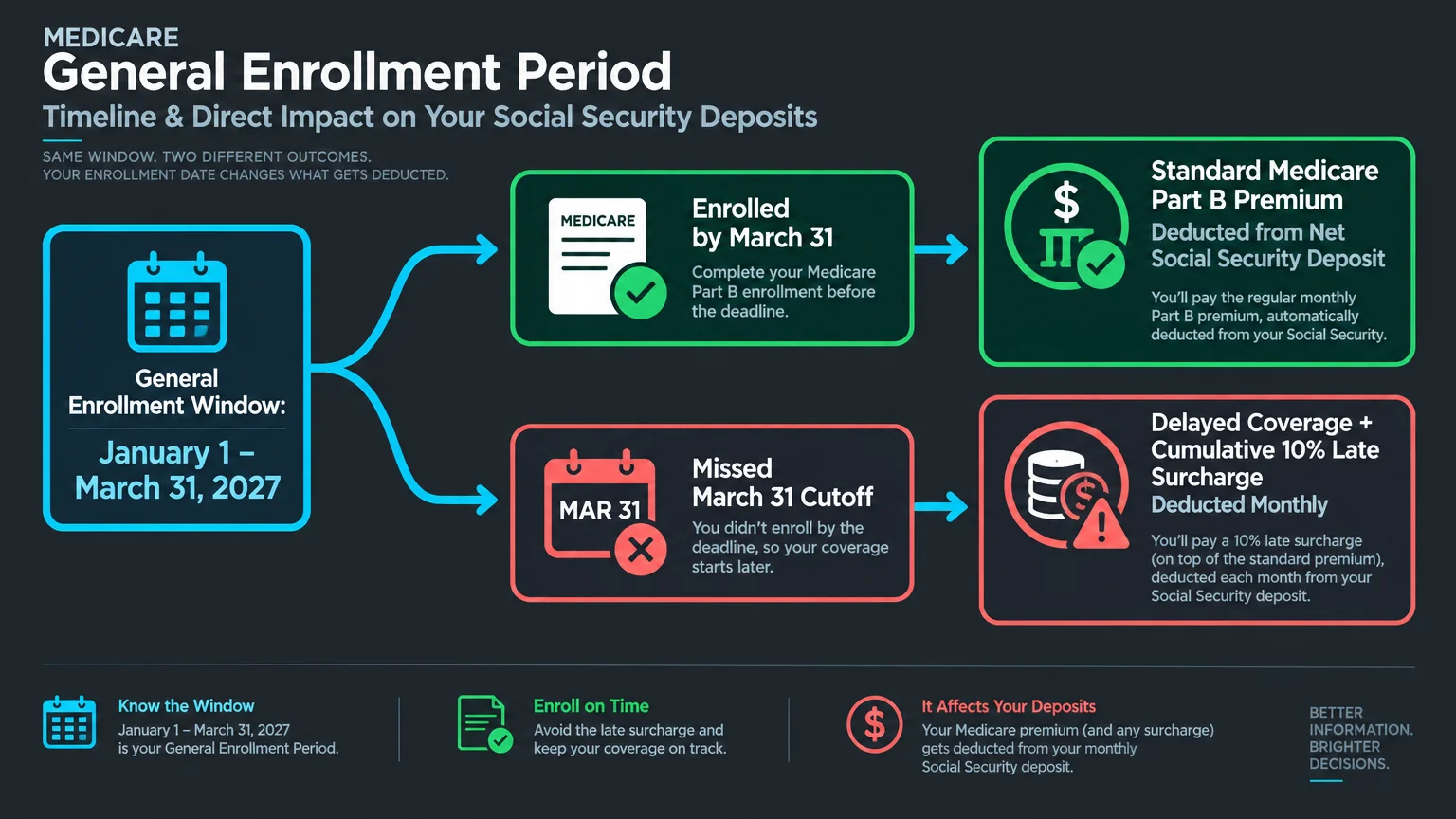
March 31 marks the conclusion of two critical healthcare enrollment periods that directly alter your take-home Social Security check. These are the Medicare General Enrollment Period and the Medicare Advantage Open Enrollment Period.
Because the government deducts Medicare Part B and Part D premiums straight out of your Social Security payments, enrollment shifts directly impact your net income. Any coverage changes finalized during this quarter take effect on the first day of the following month.
Review your options carefully on Medicare.gov before March 31 to confirm that plan adjustments match your health needs. Switching out of an expensive Medicare Advantage plan or dropping optional riders can recover valuable disposable cash.
If you delayed enrolling in Medicare Part B without qualifying employer coverage, signing up during this period resolves your status. However, late enrollment penalties permanently inflate your monthly premium deduction.
Monitoring this deadline protects your monthly budget from unexpected deductions. A sudden rise in Part B premiums can absorb a meaningful portion of your annual COLA raise if left unchecked.

Date 6: April 15, 2027 – Federal Tax Filing and Provisional Income Reckoning
Tuesday, April 15, 2027, is the national tax deadline for filing your 2026 federal income tax return. This date is critical for retirees who mistakenly believe Social Security payments are entirely tax-free.
The Internal Revenue Service calculates benefit taxation based on your “provisional income.” You determine provisional income by adding half of your total annual Social Security benefits to your adjusted gross income and nontaxable interest.
If you file as an individual and your provisional income falls between $25,000 and $34,000, up to 50% of your benefits are subject to federal income tax. Cross $34,000, and up to 85% of your benefits become taxable.
For married couples filing jointly, provisional income between $32,000 and $44,000 exposes up to 50% of benefits to taxation. Joint income exceeding $44,000 subjects up to 85% of your Social Security income to federal rates.
Because Congress never indexed these provisional income thresholds to inflation, annual COLA increases push thousands of additional retirees into taxable territory each year. Check your liability guidelines on the official Internal Revenue Service website.
If you owe substantial taxes on April 15, file Form W-4V with the Social Security Administration immediately. This form instructs the agency to withhold 7%, 10%, 12%, or 22% from future monthly checks to prevent future tax shocks.

Date 7: April 30 and July 30, 2027 – The SSI Mid-Year Payment Shifts
Calendar configurations in 2027 create significant payment shifts during the spring and summer for Supplemental Security Income beneficiaries. Knowing these shifts prevents mistaken beliefs that the government issued duplicate payments or missed a delivery.
The standard May 1 payment date falls on a Saturday. By law, the SSA releases funds on Friday, April 30, 2027, resulting in two distinct SSI payments landing in April and none in May.
A nearly identical situation unfolds three months later. August 1, 2027, falls on a Sunday, shifting the August SSI disbursement forward to Friday, July 30, 2027.
Dual-eligible retirees who receive both Social Security and SSI must track two concurrent calendars. Beneficiaries receiving regular checks based on pre-May 1997 rules also experience weekend shifts in April and July.
Their scheduled April 3 payment shifts to Friday, April 2, because April 3 falls on a Saturday. Similarly, their July 3 payment arrives on Friday, July 2, 2027.
Recognizing these early deliveries ensures you manage your household cash balance accurately. The early payment in late April must cover all living costs until your June check deposits on Tuesday, June 1.

Date 8: Mid-October 2027 – Bureau of Labor Statistics Triggers the 2028 COLA
Around October 14, 2027, the Bureau of Labor Statistics releases the official Consumer Price Index for Urban Wage Earners and Clerical Workers (CPI-W) data for September 2027. Within hours, the Social Security Administration calculates and announces the official 2028 COLA.
Federal law bases the annual adjustment on the percentage change between third-quarter average CPI-W numbers from the previous year and the third-quarter numbers of the current year. The months of July, August, and September provide the data.
This mid-October announcement establishes the baseline for your retirement budget for the subsequent year. It outlines anticipated changes to monthly checks, the taxable earnings cap, and earnings penalty thresholds.
Retirees should watch this announcement closely to prepare financial strategies before January arrives. Healthcare analysts also evaluate this number to estimate Part B premium adjustments, which Medicare announces shortly afterward.
Take this opportunity to review your household budget against inflation. Anticipating your upcoming raise allows you to adjust automatic withdrawals from your private investment and retirement accounts accordingly.
“Social Security is the financial foundation of your retirement, so understanding exactly when your money arrives protects your dignity and your independence.” — Suze Orman, Personal Finance Author and Educator

Date 9: December 30, 2027 – The Year-End Payment Calendar Compression
The year 2027 closes with a double payment anomaly that catches many retirees off guard. New Year’s Day on Saturday, January 1, 2028, alters the payment timetable for the upcoming calendar year.
Because New Year’s Day is a federal holiday falling on a Saturday, the federal government officially observes the holiday on Friday, December 31, 2027. Commercial banks and federal administrative offices remain closed.
Under federal regulations, the January 1, 2028, SSI deposit cannot process on Friday, December 31. Therefore, the Treasury processes and deposits the payment on Thursday, December 30, 2027.
This payment delivers your initial 2028 benefit amount, complete with the newly announced 2028 COLA increase. You receive two full SSI disbursements during December 2027: one on December 1 and one on December 30.
Pre-May 1997 Social Security recipients also see their timeline affected. Their January 3, 2028, disbursement shifts forward to avoid processing conflicts, arriving on Friday, December 31, 2027.
Treat this final December payment strictly as January income. Spending this extra year-end deposit on holiday expenses creates a serious financial shortfall when no check arrives in early January.

Master 2027 Social Security Payment Schedule
Understanding the standard Wednesday rotation simplifies your monthly cash management. Beneficiaries receiving payments based on work records established after April 1997 follow this predictable birth-date calendar.
Unlike 2026, no second, third, or fourth Wednesday in 2027 falls on a federal holiday. Juneteenth falls on Saturday, June 19, and Veterans Day lands on Thursday, November 11.
| Month | Birthdays 1st–10th (2nd Wednesday) | Birthdays 11th–20th (3rd Wednesday) | Birthdays 21st–31st (4th Wednesday) | Pre-May 1997 / Dual Eligible (3rd of Month) | SSI Beneficiaries (1st of Month) |
|---|---|---|---|---|---|
| January 2027 | January 13 | January 20 | January 27 | Dec 31, 2026* | Dec 31, 2026* |
| February 2027 | February 10 | February 17 | February 24 | February 3 | February 1 |
| March 2027 | March 10 | March 17 | March 24 | March 3 | March 1 |
| April 2027 | April 14 | April 21 | April 28 | April 2* | April 1 |
| May 2027 | May 12 | May 19 | May 26 | May 3 | April 30* |
| June 2027 | June 9 | June 16 | June 23 | June 3 | June 1 |
| July 2027 | July 14 | July 21 | July 28 | July 2* | July 1 |
| August 2027 | August 11 | August 18 | August 25 | August 3 | July 30* |
| September 2027 | September 8 | September 15 | September 22 | September 3 | September 1 |
| October 2027 | October 13 | October 20 | October 27 | October 1* | October 1 |
| November 2027 | November 10 | November 17 | November 24 | November 3 | November 1 |
| December 2027 | December 8 | December 15 | December 22 | December 3 | December 1 |
*Denotes an early disbursement caused by a weekend or observed federal banking holiday. Source: SSA Publication No. 05-10031.
Working While Receiving Benefits: Navigating the 2027 Earnings Test
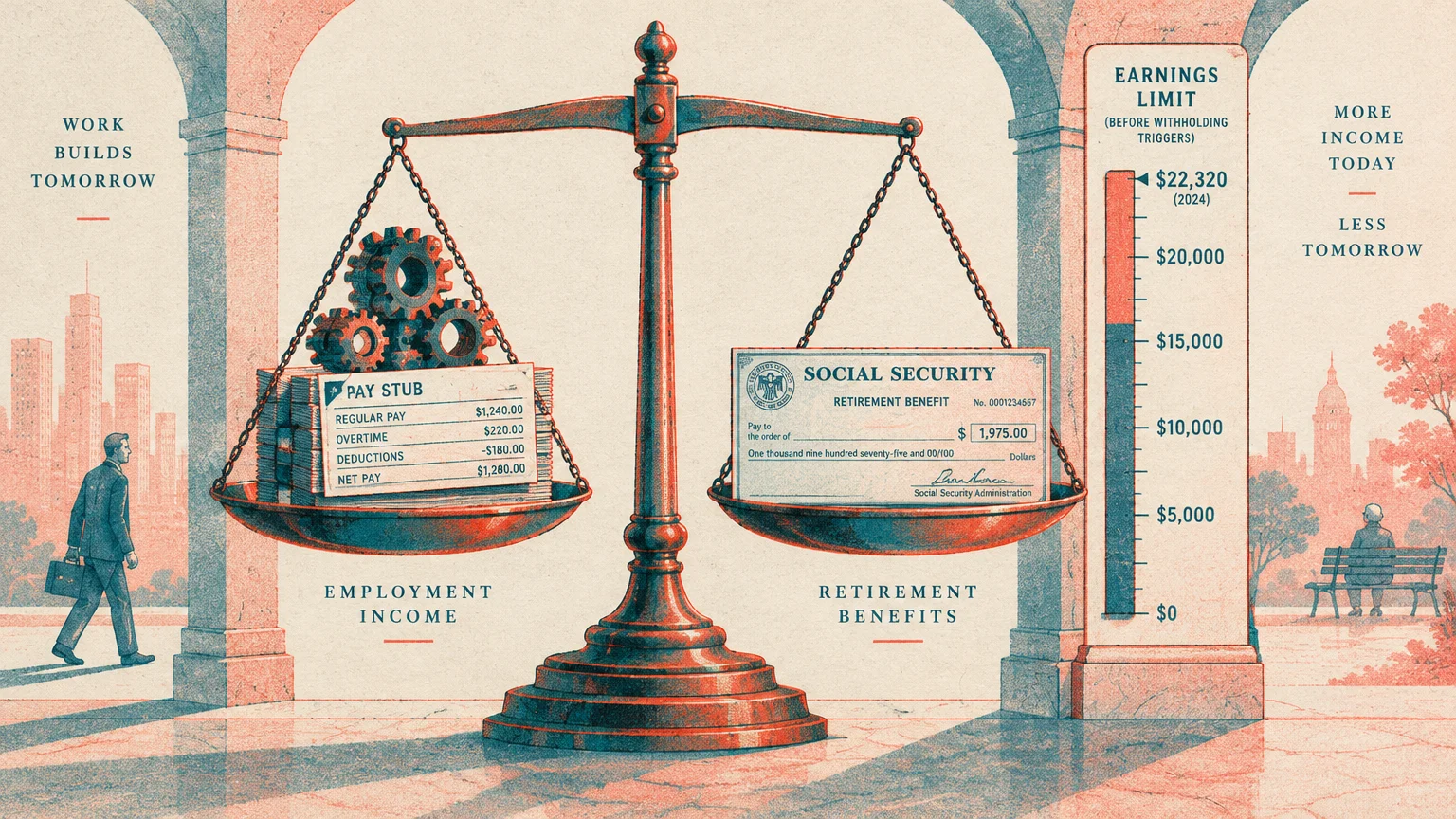
If you collect Social Security before reaching full retirement age and continue to work, federal earnings limits apply directly to your compensation. Exceeding these statutory thresholds leads to withheld benefits.
For beneficiaries who remain under Full Retirement Age throughout all of 2027, the annual earnings limit rises to $25,560. The agency withholds $1 in benefits for every $2 earned above that cap.
A separate, more generous rule applies during the calendar year you reach Full Retirement Age. In 2027, this applies to individuals born in 1960 reaching age 67.
For those reaching age 67 during 2027, the earnings threshold jumps to $67,920. The SSA withholds $1 for every $3 earned above this limit, counting only earnings generated before the month you turn 67.
The month you reach your full retirement age of 67, the earnings cap vanishes entirely. You can earn unlimited wages from employment without losing a single dollar of your monthly Social Security benefit.
Remember that withheld benefits are not permanently forfeited. When you attain full retirement age, the agency recalculates your monthly benefit upward to credit you for the checks withheld during working years.

Professional vs. Self-Guided: Managing Your Benefit Timeline
Deciding whether to handle benefit management on your own or hire a financial professional depends on your family structure, health, and income complexity. Consider these practical scenarios to select the right approach.
- Scenario 1: Single Filer with Fixed Income. If Social Security represents your primary income source alongside small savings, self-guiding through the official online portal works well. Tracking payment dates on your calendar provides sufficient control.
- Scenario 2: The Working Early Claimer. If you claim benefits at 62 while earning substantial wages, consult a CPA or financial planner. Professional modeling ensures you avoid surprise withholding penalties and unexpected tax bills.
- Scenario 3: Married Couples with Divergent Earnings. Navigating spousal benefits, survivor benefits, and optimal claiming ages requires strategic analysis. A fee-only financial planner can calculate how staggered claiming dates maximize lifetime household wealth.
- Scenario 4: High Net Worth Retiree Facing Taxation. If you draw income from pensions, traditional IRAs, and taxable investments, partner with a tax specialist. They will structure withdrawals to keep provisional income beneath punitive Social Security taxation thresholds.
“An ounce of prevention is worth a pound of cure.” — Benjamin Franklin
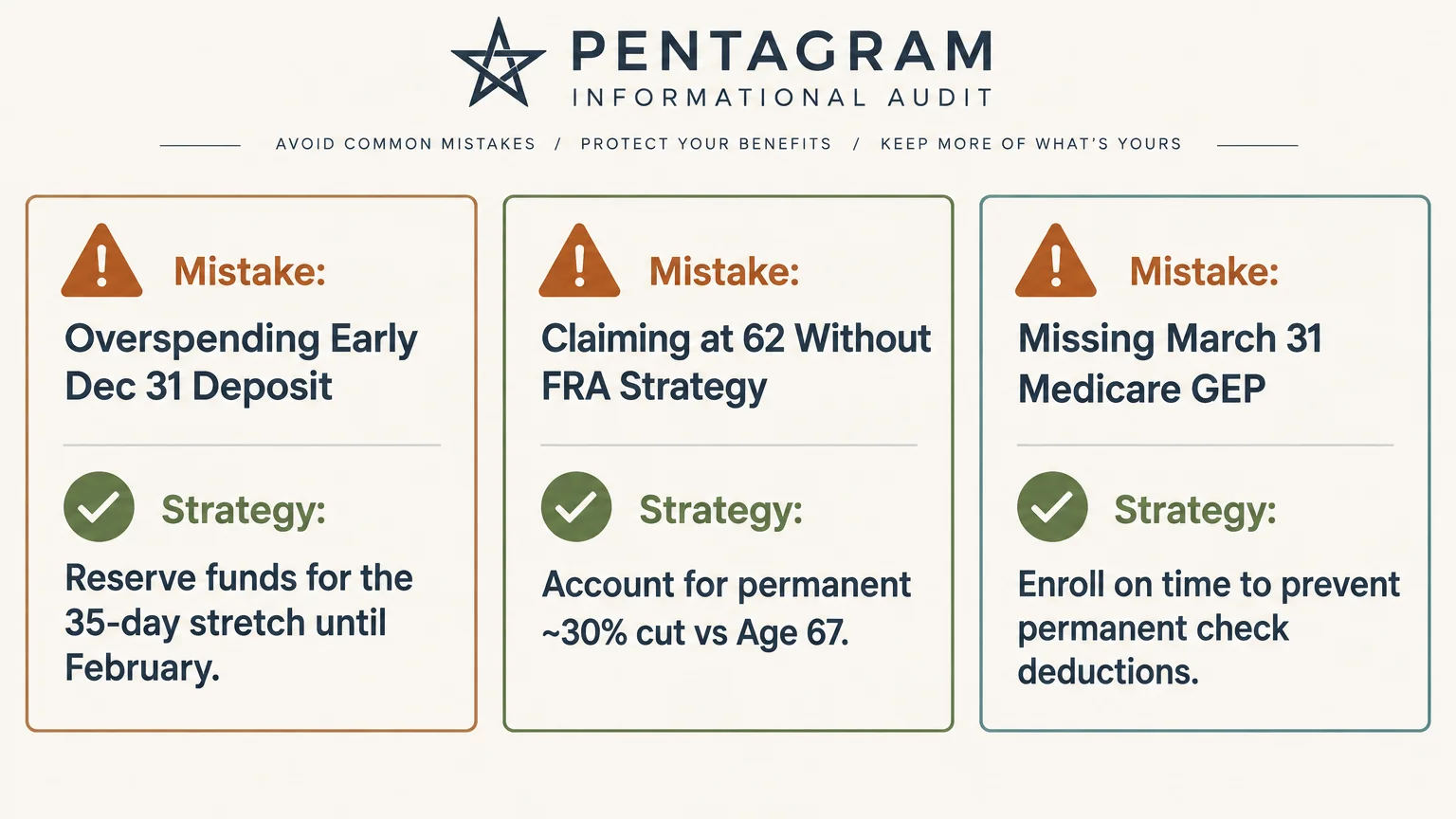
Common Mistakes to Avoid With Your 2027 Benefits
Managing Social Security effectively requires proactive planning rather than passive observation. Avoid these four common missteps that undermine retirement budgets every year.
- Mistaking Early Deposits for Free Bonus Checks. When calendar shifts deliver two checks in April, July, or December, beneficiaries frequently overspend. Remember that an early check simply covers your expenses for the upcoming month.
- Ignoring the Taxable Base Cap on Earnings. High-earning workers often fail to account for the payroll tax cap rising to $192,300. Anticipate continued payroll deductions deeper into the year before realizing take-home pay bumps.
- Failing to Withhold Taxes on Benefits. Receiving gross Social Security checks can produce painful surprises on April 15. Submitting Form W-4V creates automatic tax withholding and eliminates sudden tax season penalties.
- Claiming Early Without Modeling FRA Reductions. With Full Retirement Age now set at 67 for everyone born in 1960 or later, filing early locks in steep permanent reductions. Ensure your savings cannot bridge the gap before locking in lower lifetime checks.
Frequently Asked Questions About 2027 Benefit Dates
Why does my Social Security check arrive on a different day than my spouse’s check?
The Social Security Administration issues retirement payments based on the worker’s day of birth. If you and your spouse were born on different dates across the month, your checks process on different Wednesdays.
Spouses receiving payments based on the primary earner’s record receive deposits according to the primary earner’s birthday. If both partners claim benefits under their own individual work records, each follows their own separate birth date cycle.
What should I do if my scheduled 2027 deposit does not arrive?
First, verify the 2027 calendar for weekend or holiday shifts that may have moved your payment forward. Next, contact your banking institution to verify whether pending electronic transfers exist on your account.
The Social Security Administration requests that you wait three business days past your scheduled deposit date before calling customer support. If your funds remain missing after that window, call the national helpline at 1-800-772-1213.
How does the 3.6% COLA get applied to my Medicare Part B deduction?
The SSA automatically calculates your gross 3.6% COLA increase before deducting your mandatory monthly Medicare Part B premium. The remaining balance represents the net direct deposit transferred into your checking account.
Under federal statutory “hold harmless” protections, your net Social Security check generally cannot decrease year-over-year due to standard Part B premium hikes. Your final December notice confirms your exact net deposit.
Does my Full Retirement Age change if I was born in 1960 or later?
No, age 67 represents the permanent statutory maximum Full Retirement Age under current federal law. Anyone born in 1960 or subsequent years reaches full retirement status at exactly 67 years of age.
You may still elect to claim reduced retirement benefits as early as age 62 or delay your claim until age 70. Delaying past age 67 earns delayed retirement credits that boost your monthly checks by 8% per year.
Next Steps for Your 2027 Social Security Strategy
Take charge of your retirement finances today by transferring these key payment shifts and deadlines to your wall calendar or smartphone. Tracking dates ahead of time prevents budget stress and protects your monthly purchasing power.
Log into your personal account at SSA.gov to verify that your contact details, direct deposit information, and earnings records remain fully accurate. Staying organized ensures you enjoy the retirement security you spent decades building.
This article provides general retirement education and information only. Every retiree’s situation is unique—what works for others may not work for you. For personalized advice, consider consulting a qualified financial professional such as a CFP or CPA.
Last updated: March 2026. Retirement benefits, tax rules, and healthcare regulations change frequently—verify current details with official sources.









Leave a Reply