
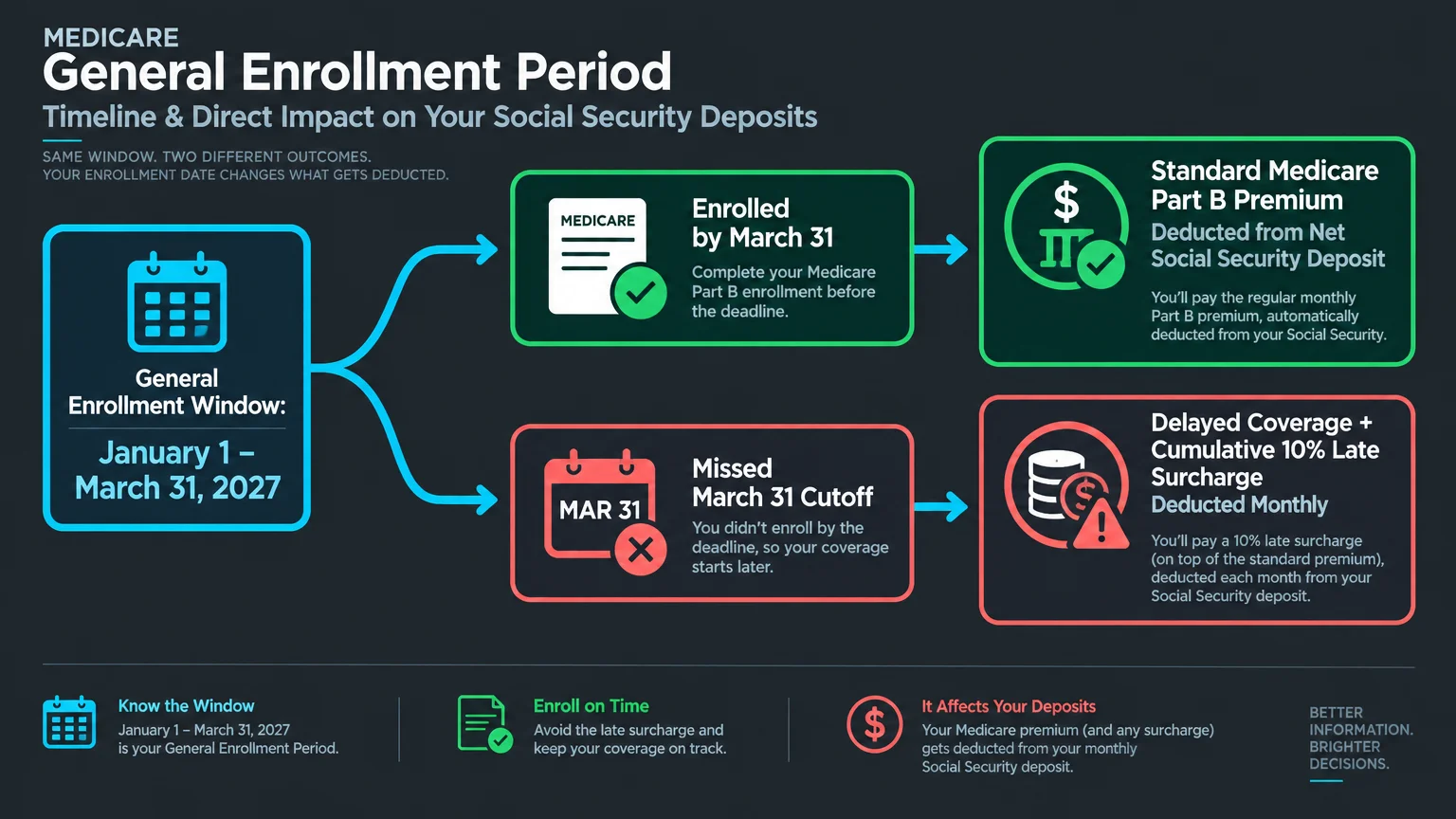
Date 5: March 31, 2027 – Medicare Enrollment Deadline Impacting Net Benefits
March 31 marks the conclusion of two critical healthcare enrollment periods that directly alter your take-home Social Security check. These are the Medicare General Enrollment Period and the Medicare Advantage Open Enrollment Period.
Because the government deducts Medicare Part B and Part D premiums straight out of your Social Security payments, enrollment shifts directly impact your net income. Any coverage changes finalized during this quarter take effect on the first day of the following month.
Review your options carefully on Medicare.gov before March 31 to confirm that plan adjustments match your health needs. Switching out of an expensive Medicare Advantage plan or dropping optional riders can recover valuable disposable cash.
If you delayed enrolling in Medicare Part B without qualifying employer coverage, signing up during this period resolves your status. However, late enrollment penalties permanently inflate your monthly premium deduction.
Monitoring this deadline protects your monthly budget from unexpected deductions. A sudden rise in Part B premiums can absorb a meaningful portion of your annual COLA raise if left unchecked.
Date 6: April 15, 2027 – Federal Tax Filing and Provisional Income Reckoning
Tuesday, April 15, 2027, is the national tax deadline for filing your 2026 federal income tax return. This date is critical for retirees who mistakenly believe Social Security payments are entirely tax-free.
The Internal Revenue Service calculates benefit taxation based on your “provisional income.” You determine provisional income by adding half of your total annual Social Security benefits to your adjusted gross income and nontaxable interest.
If you file as an individual and your provisional income falls between $25,000 and $34,000, up to 50% of your benefits are subject to federal income tax. Cross $34,000, and up to 85% of your benefits become taxable.
For married couples filing jointly, provisional income between $32,000 and $44,000 exposes up to 50% of benefits to taxation. Joint income exceeding $44,000 subjects up to 85% of your Social Security income to federal rates.
Because Congress never indexed these provisional income thresholds to inflation, annual COLA increases push thousands of additional retirees into taxable territory each year. Check your liability guidelines on the official Internal Revenue Service website.
If you owe substantial taxes on April 15, file Form W-4V with the Social Security Administration immediately. This form instructs the agency to withhold 7%, 10%, 12%, or 22% from future monthly checks to prevent future tax shocks.






It is a DENIAL for benefit aid as everything goes up EXCEPT amount to qualify for extra help. Rent UP, Food UP, Clothing UP, Healthcare UP-DISCONTINUED OR DROPPED, In 2027, many healthcare providers won’t be in network costing people who need specific coverage to PAY making them poorer or sicker due to no real healthcare coverages. That BIG BEAUTIFUL BILL is a POWDER KEG of stoppages for citizens care from Cancer to Dialysis to prosthetics to needful surgeries for children.