
Your 2027 social security check receives a 3.6% cost-of-living boost in January, yet your actual bank deposit could still fall short of expectations. Several automatic deductions and federal withholding rules can quietly trim that raise before the money reaches you.
Rising Medicare premiums, unindexed benefit tax rules, and aggressive overpayment clawbacks all chip away at monthly retirement income. Even a modest jump in earnings or investment income can trigger steep surcharges.
Understanding these six hidden reductions now gives you time to act before January payments roll out. You can review your official notice, challenge unfair deductions, and protect more of your monthly cash flow.
What the 2027 Social Security COLA Actually Delivers
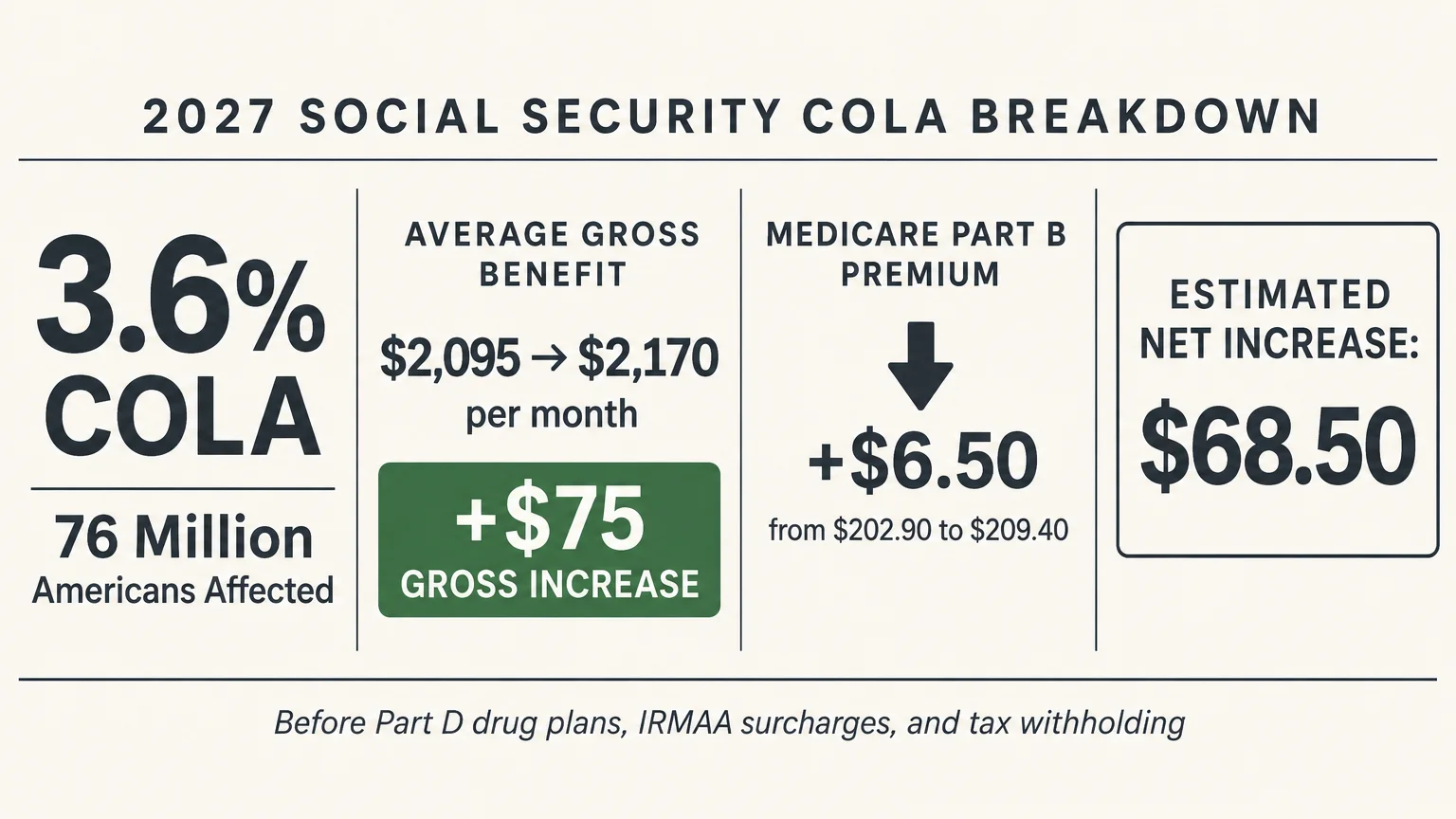
The Social Security Administration (SSA) announced a 3.6% social security cola 2027 increase on October 14, 2026, affecting 76 million Americans. That adjustment raises the average retired worker’s monthly benefit by roughly $75, moving from $2,095 to $2,170.
Nearly 72 million Social Security beneficiaries will see higher payments starting in January 2027. Roughly 7.3 million Supplemental Security Income (SSI) recipients begin receiving the 3.6% increase a day early on December 31, 2026.
If you retire at Full Retirement Age (FRA) in 2027, the maximum monthly benefit climbs to $4,188, up from $4,152 in 2026. Meanwhile, workers still paying into the system face a higher payroll tax cap of $192,300 in 2027.
A 3.6% raise looks solid on paper compared to the 2.8% COLA paid in 2026. However, your gross benefit is rarely the amount that lands in your checking account.
To see your exact numbers early, sign in to your account at SSA.gov. Beneficiaries who selected paperless notices by November 18, 2026 can view their personalized one-page 2027 COLA notice in late November, while paper copies arrive by mail in December.
Focus on your net deposit—not your gross COLA percentage—because automatic healthcare, tax, and recovery deductions come out before you can spend a dime.
01 Higher Medicare Part B Deductions and IRMAA Surcharges
For most retirees, the single biggest bite out of a 2027 social security check comes from automatic healthcare premiums. On November 17, 2026, the Centers for Medicare & Medicaid Services (CMS) set the standard 2027 Medicare Part B deduction at $209.40 per month.
That represents a $6.50 monthly increase, or 3.2%, over the $202.90 standard premium in 2026. The annual Part B deductible also climbs by $9, rising from $283 in 2026 to $292 in 2027.
If you receive an average $75 COLA increase, losing $6.50 leaves you with $68.50 in net growth before other deductions. Most standard enrollees also have federal protection against losing ground entirely.
Under the Social Security Act’s hold-harmless rule, a standard Part B premium hike cannot reduce your net Social Security check from one year to the next. If your dollar COLA is smaller than the Part B increase, your premium rise shrinks to match your raise.
Unfortunately, the hold-harmless rule leaves out several large groups of retirees. You lose that protection if you are a new Medicare enrollee in 2027, pay Part B bills directly instead of through Social Security, or owe high-income surcharges.
How 2027 IRMAA Cliffs Multiply Your Deduction
Higher-earning retirees face an Income-Related Monthly Adjustment Amount (IRMAA) on top of the $209.40 standard Part B rate. CMS calculates your 2027 surcharge using your 2025 Modified Adjusted Gross Income (MAGI) from your federal tax return.
IRMAA brackets work like steep cliffs rather than gradual tax tiers. Exceeding any threshold by just $1 triggers the full monthly surcharge for the entire year, and married couples each pay separately.
| 2025 MAGI (Single) | 2025 MAGI (Married Filing Jointly) | 2027 Part B Monthly Total | 2027 Part D Monthly IRMAA |
|---|---|---|---|
| $112,000 or less | $224,000 or less | $209.40 | $0.00 |
| $112,001 to $141,000 | $224,001 to $282,000 | $293.10 | $15.40 |
| $141,001 to $177,000 | $282,001 to $354,000 | $418.80 | $39.70 |
| $177,001 to $212,000 | $354,001 to $424,000 | $544.40 | $64.00 |
| $212,001 to $499,999 | $424,001 to $749,999 | $670.00 | $88.30 |
| $500,000 or more | $750,000 or more | $711.80 | $96.40 |
Married couples who file separately and lived together during 2025 face even tighter brackets. Income over $112,000 and under $388,000 triggers $670.00 for Part B and $88.30 for Part D IRMAA, while $388,000 or more jumps to $711.80 and $96.40.
Because IRMAA uses two-year-old tax data, a 2025 home sale, Roth conversion, or final year of high salary can slash your 2027 benefit. Even crossing into the first IRMAA tier adds $99.10 per month in combined Part B and Part D surcharges, wiping out an average COLA raise.
You do not have to accept an outdated surcharge if your finances have changed since 2025. When your income drops due to retirement, work reduction, divorce, or a spouse’s death, file Form SSA-44 with the SSA to request a fresh calculation using current income.

02 Rising Medicare Part D and Drug Plan Premiums
Even if your income stays safely below IRMAA thresholds, your drug coverage could quietly consume more of your 2027 social security check. Many beneficiaries have stand-alone Part D or Medicare Advantage premiums deducted straight from monthly benefits.
A temporary federal Part D premium stabilization program expires after 2026, shifting more costs back onto plans and enrollees. According to an October 30, 2026 KFF analysis of CMS data, average enrollment-weighted stand-alone Part D premiums could jump 50%—from $34 in 2026 to $51 in 2027—for people who keep the same plan.
An extra $17 per month for drug coverage, combined with the $6.50 Part B increase, consumes nearly a third of the average $75 COLA bump. Couples who both carry stand-alone plans could see even larger household reductions.
Broader Part D cost benchmarks set by CMS in April and July 2026 are also moving higher for 2027:
- The Part D national base beneficiary premium rises from $38.99 in 2026 to $41.33 per month in 2027, increasing late-enrollment penalties.
- The maximum standard Part D deductible climbs $85, moving from $615 in 2026 to $700 in 2027.
- The annual Part D out-of-pocket cap increases from $2,100 in 2026 to $2,400 in 2027.
Unlike standard Part B premiums, Part D plan premiums receive no hold-harmless protection. Compare your Annual Notice of Change against competing 2027 plans on Medicare.gov during Open Enrollment—or review CMS.gov updates—before auto-deductions lock in.
03 Working Before Full Retirement Age Under the 2027 Earnings Test
Returning to part-time consulting or keeping a job while collecting early benefits can shrink or even pause your 2027 deposits. Under the SSA Retirement Earnings Test, earning above annual wage caps triggers mandatory benefit withholding if you have not reached Full Retirement Age.
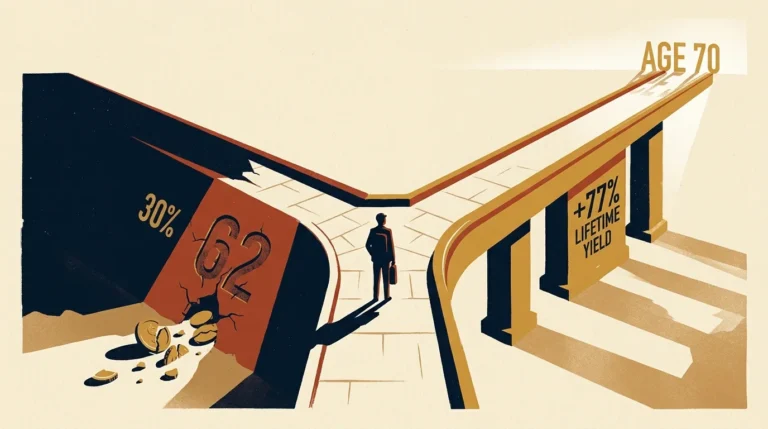
For anyone born in 1960 or later, Full Retirement Age is 67, making 2027 the first year people born in 1960 reach full retirement. Claiming early at age 62 with an FRA of 67 already locks in a permanent 30% benefit cut before earnings rules apply.
Two different earnings limits apply in 2027 depending on your birthday:
- Under FRA for all of 2027: You can earn up to $25,560 per year ($2,130 per month), up from $24,480 in 2026. Above that cap, the SSA withholds $1 in benefits for every $2 you earn.
- Reaching FRA during 2027: A higher cap of $67,920 per year ($5,660 per month) applies to earnings before your birth month, up from $65,160 in 2026. The SSA withholds $1 for every $3 earned above that limit.
Consider how quickly this adds up for a 64-year-old retiree earning $35,560 at a part-time job in 2027. Because those wages exceed the $25,560 limit by $10,000, the SSA withholds $5,000 in benefits—wiping out more than two average monthly checks.
Once you hit your Full Retirement Age month, the earnings test disappears completely. You can earn unlimited wages without losing a dollar of benefits, and the SSA eventually recalculates your check upward to credit back months withheld earlier.
Still, the SSA often withholds full monthly checks up front until the excess amount is covered rather than shaving a small slice off each month. Estimate your 2027 wages early and report changes promptly so a sudden multi-month benefit pause does not derail your budget.
04 Taxes on Social Security and Voluntary Withholding
Higher gross benefits can push you across federal tax thresholds that never adjust for inflation. Because those rules remain frozen, taxes on social security affect a growing share of retirees every time a COLA takes effect.
The IRS calculates whether your benefits are taxable using provisional income, also called combined income. You figure it by adding your adjusted gross income (excluding Social Security), any nontaxable interest, and half of your annual Social Security benefits.
If you file as a single taxpayer or head of household, provisional income between $25,000 and $34,000 makes up to 50% of your benefits taxable. Above $34,000, up to 85% of your benefits become subject to federal income tax.
For married couples filing jointly, the 50% tier runs from $32,000 to $44,000 in provisional income. Crossing $44,000 makes up to 85% of your combined benefits taxable at your ordinary federal rate.
A new tax break helps soften the blow on your overall tax return, though it does not eliminate benefit taxation. Enacted in July 2025 for tax years 2025 through 2028, taxpayers age 65 and older can claim an extra $6,000 senior bonus deduction ($12,000 for joint filers if both are 65+).
According to IRS Tax Tip 2026-14, that bonus deduction phases out above $75,000 MAGI for singles or $150,000 for joint filers. While it lowers your final taxable income on Form 1040, it leaves the provisional income formula for Social Security benefits untouched.
How Social Security Withholding Affects Monthly Cash Flow
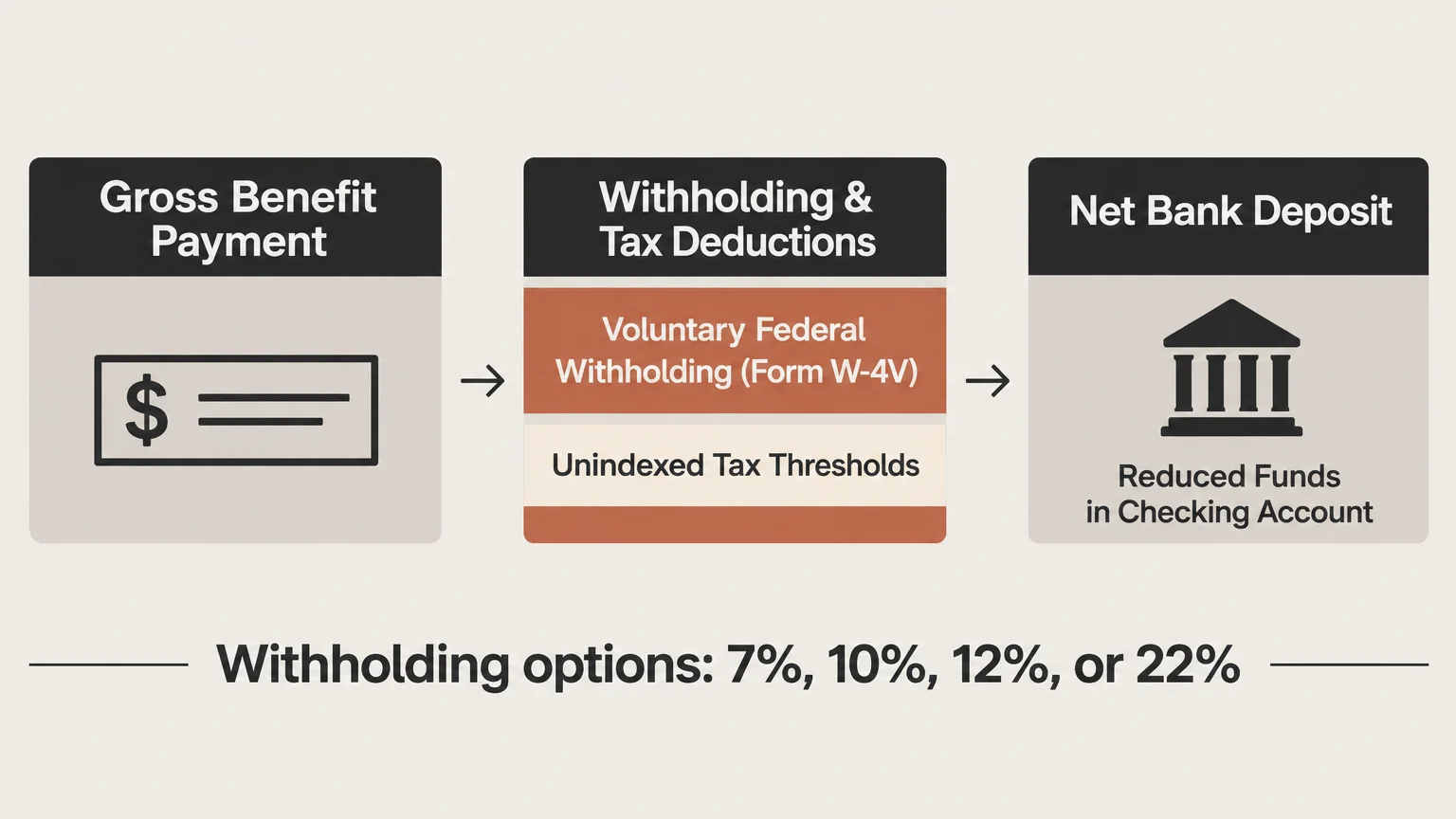
Federal income taxes do not come out of your monthly check automatically unless you request social security withholding. Many retirees submit IRS Form W-4V to avoid writing large quarterly estimated tax checks.
Form W-4V restricts you to four flat federal withholding rates: 7%, 10%, 12%, or 22%. Because the deduction is percentage-based, your 3.6% COLA automatically increases the dollar amount sent to the IRS every month.
For example, a retiree with a 22% W-4V election sees $16.50 of a $75 COLA increase immediately diverted to federal taxes. Worse, if a small COLA nudges your income into a higher tax bracket, your chosen flat rate might still leave a balance due in April.
Remember also that Form W-4V withholds nothing for state income taxes. While 42 states and Washington, D.C. exempt Social Security completely, eight states still tax benefits in some form for 2026 returns filed in 2027:
- Colorado
- Connecticut
- Minnesota
- Montana
- New Mexico
- Rhode Island
- Utah
- Vermont
Most of these eight states provide age-based or income-based exemptions that protect lower- and middle-income seniors. Check your state revenue rules before assuming your COLA boost is completely yours to keep.
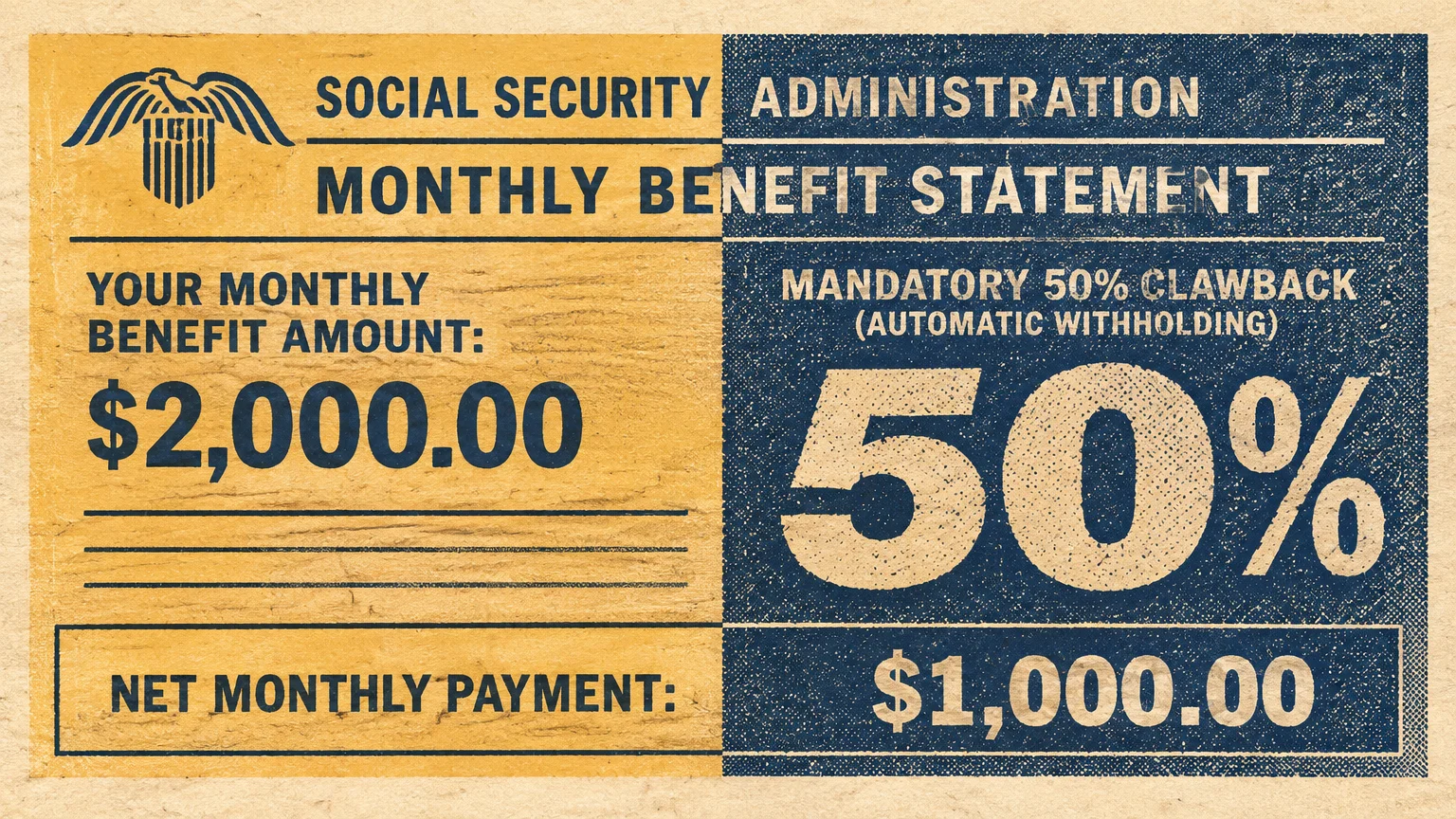
05 SSA Overpayment Clawbacks at the 50% Default Rate
Nothing shocks a household budget faster than opening a bank app and finding half your monthly retirement income missing. Under an SSA policy effective April 25, 2025, the default withholding rate for Title II overpayment recovery is 50% of monthly benefits.
That 50% default rate applies to Retirement, Survivors, and Disability Insurance overpayment notices issued on or after April 25, 2025. By comparison, overpayment recovery for SSI beneficiaries remains capped at 10% of the monthly check.
Overpayments often happen through no intentional wrongdoing—such as delayed wage reporting, a misunderstood family maximum rule, or administrative processing lags. Yet once the SSA sends an overpayment notice, the clock starts ticking fast.
You have at least 30 days from the date on the notice before the agency begins slicing your 2027 social security check in half. Acting inside that 30-day window gives you three practical tools to protect your cash flow:
- File an appeal or waiver within 30 days: Submitting a reconsideration request or waiver pauses withholding while the SSA reviews your case. Use Form SSA-632-BK if the overpayment was not your fault and repaying it would cause financial hardship.
- Use the streamlined phone option for smaller balances: If the overpayment totals $2,000 or less and was not your fault, you can request a waiver directly by calling 1-800-772-1213.
- Request a lower monthly repayment rate: When you do owe the money back but cannot survive on half a check, submit Form SSA-634 with income and expense details to negotiate a smaller monthly deduction.
Never ignore an orange or white letter from the SSA simply because you think a mistake is obvious. Filing your form before day 30 keeps your full monthly deposit flowing while the agency sorts out the numbers.
06 Federal Debt Offsets and IRS Tax Levies
While private credit card companies and medical debt collectors generally cannot garnish Social Security, federal agencies play by different rules. Through the Treasury Offset Program and IRS collection authority, unpaid government obligations can directly shrink your 2027 check.
Federal law allows benefit offsets for overdue federal income taxes, past-due child support or alimony, and certain nontax federal debts. Under the IRS Federal Payment Levy Program, the government can continuously take a portion of your monthly Social Security payment until back taxes are settled.
Past-due family support orders follow even stricter state and federal garnishment limits. Depending on whether you support another spouse or child and how long arrears have lasted, court orders can claim a substantial share of your net check.
Defaulted federal student loans are also legally eligible for Treasury offsets against Social Security. However, as of November 2026, involuntary collections for defaulted federal student loans remain temporarily paused following the U.S. Department of Education’s January 16, 2026 delay announcement, with no confirmed restart date.
Do not treat that temporary student loan pause as permanent forgiveness. Keep your contact information current with Federal Student Aid and explore income-driven repayment or loan rehabilitation options before offsets eventually resume.
If you owe back IRS taxes, setting up an installment agreement or requesting Currently Not Collectible status can stop an automated levy before January. Resolving federal debts proactively keeps your monthly benefit intact and avoids sudden Treasury deductions.

Common Mistakes to Avoid When Checking Your 2027 Benefit
Small misunderstandings in November and December often turn into painful cash-flow surprises in January. Watch out for these frequent errors as you review your 2027 numbers:
- Assuming the hold-harmless rule protects every retiree: High-income IRMAA payers, new 2027 Medicare enrollees, and people billed separately for Part B can see net checks drop or lag behind expectations.
- Ignoring two-year-old income spikes: Failing to file Form SSA-44 after retiring leaves you stuck paying 2027 IRMAA surcharges based on higher 2025 working wages.
- Forgetting to shop Part D plans during Open Enrollment: Letting an existing drug plan auto-renew could trigger steep premium hikes as federal stabilization subsidies expire after 2026.
- Waiting past 30 days on an overpayment notice: Delaying your waiver or rate-reduction request allows the 50% Title II withholding rate to kick in automatically.
- Overlooking voluntary tax withholding math: Leaving a 12% or 22% W-4V election untouched without checking whether the $6,000 senior deduction lowers your 2027 tax bill can tie up cash unnecessarily.
Checking your personalized COLA letter line by line catches these issues weeks before your January deposit arrives. Compare your gross benefit, Part B deduction, IRMAA surcharge, Part D deduction, and tax withholding side by side.
Professional vs. Self-Guided: Deciding When to Get Help
Many retirees can verify their 2027 Social Security numbers on their own in under an hour. Others face intersecting tax, Medicare, and debt rules where a single misstep costs thousands of dollars.
When a Self-Guided Review Works Well
You can comfortably manage your own checkup if your income stays well below IRMAA cliffs and your taxes are straightforward. Logging into your SSA account, comparing Part D drug plans online, and adjusting Form W-4V take minimal time when you have one or two income sources.
When to Consult a Qualified Professional
Consider working with a Certified Financial Planner (CFP), Certified Public Accountant (CPA), or elder law specialist in these specific scenarios:
- You sit within a few thousand dollars of an IRMAA cliff: A CPA or CFP can coordinate Roth conversions, capital gains, and IRA withdrawals so $1 of extra income does not trigger an extra $1,000-plus in annual Medicare surcharges.
- You received a large SSA overpayment notice: An experienced benefits advocate or legal aid attorney helps you document financial hardship for Form SSA-632-BK or negotiate an affordable plan on Form SSA-634 within the 30-day window.
- You plan to keep working before age 67 while collecting benefits: A planner can model whether suspending or delaying benefits makes more sense than triggering the 2027 earnings test while paying taxes on up to 85% of benefits.
- You face an active IRS levy or multiple federal debts: A tax resolution specialist or enrolled agent can negotiate an IRS installment agreement or hardship pause before Treasury offsets hit your January check.
Paying for a focused one-hour consultation often pays for itself within a few months if it prevents an unnecessary IRMAA tier or stops a 50% overpayment clawback.
Frequently Asked Questions About 2027 Social Security Checks
Can my net 2027 Social Security check actually be lower than my 2026 check?
Yes, your net deposit can drop if you fall outside the hold-harmless rule. Paying 2027 IRMAA surcharges, switching into a costlier Medicare Advantage or Part D plan, crossing the 2027 earnings test cap, triggering a 50% SSA overpayment clawback, or facing an IRS tax levy can all reduce your net payout below 2026 levels.
Why is my Medicare Part B deduction higher than $209.40 in 2027?
If more than $209.40 comes out of your monthly check for Part B, you likely owe an IRMAA surcharge based on your 2025 MAGI. Two-year-old income above $112,000 for single filers or $224,000 for joint filers adds between $83.70 and $502.40 per month per person to your Part B bill.
Does the $6,000 senior deduction stop taxes on Social Security?
No, the $6,000 bonus deduction for taxpayers age 65 and older ($12,000 for eligible joint couples) reduces your overall taxable income through 2028, yet it does not change the provisional income formula. Up to 85% of your benefits can still be counted as taxable income before deductions are applied.
How do I stop or reduce a 50% SSA overpayment deduction?
Act within 30 days of your notice date by filing an appeal or a waiver request using Form SSA-632-BK—or calling 1-800-772-1213 if the overpayment is $2,000 or less and not your fault—to pause collection. If you cannot prove waiver eligibility, file Form SSA-634 to request a lower monthly withholding amount based on your living expenses.
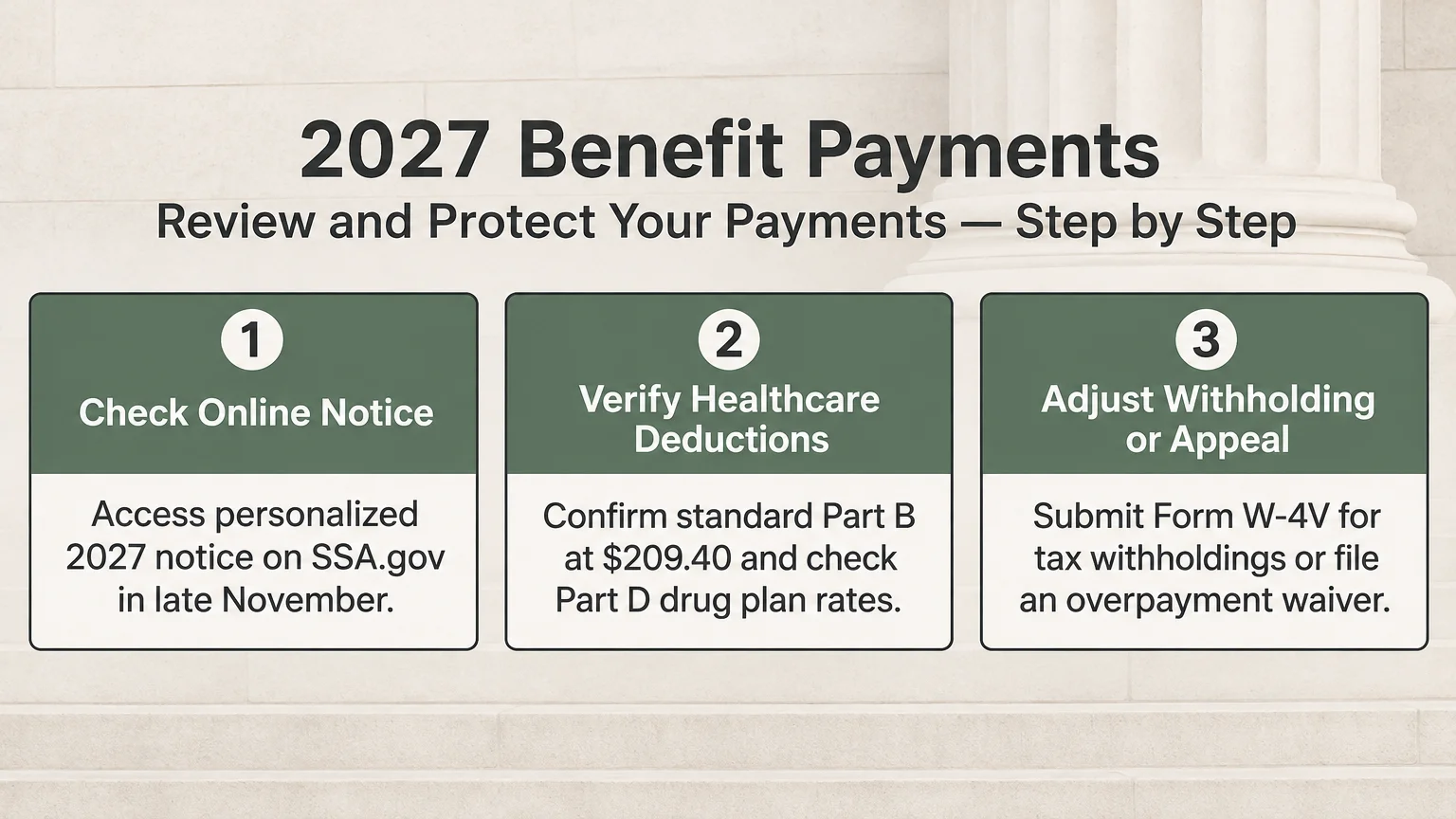
Practical Next Steps for Your 2027 Deposit
Pull up your 2027 COLA notice on SSA.gov or watch your mailbox in December to verify every deduction before January arrives. Compare your Medicare drug plan options, review your 2025 MAGI for surprise IRMAA surcharges, and adjust your Form W-4V withholding if the $6,000 senior deduction lowers your federal tax bill.
Taking thirty minutes this week to audit those six deduction categories helps ensure your 3.6% raise supports your retirement budget instead of disappearing silently. This article provides general retirement education and information only. Every retiree’s situation is unique—what works for others may not work for you. For personalized advice, consider consulting a qualified financial professional such as a CFP or CPA.
Last updated: November 2026. Retirement benefits, tax rules, and healthcare regulations change frequently—verify current details with official sources.