

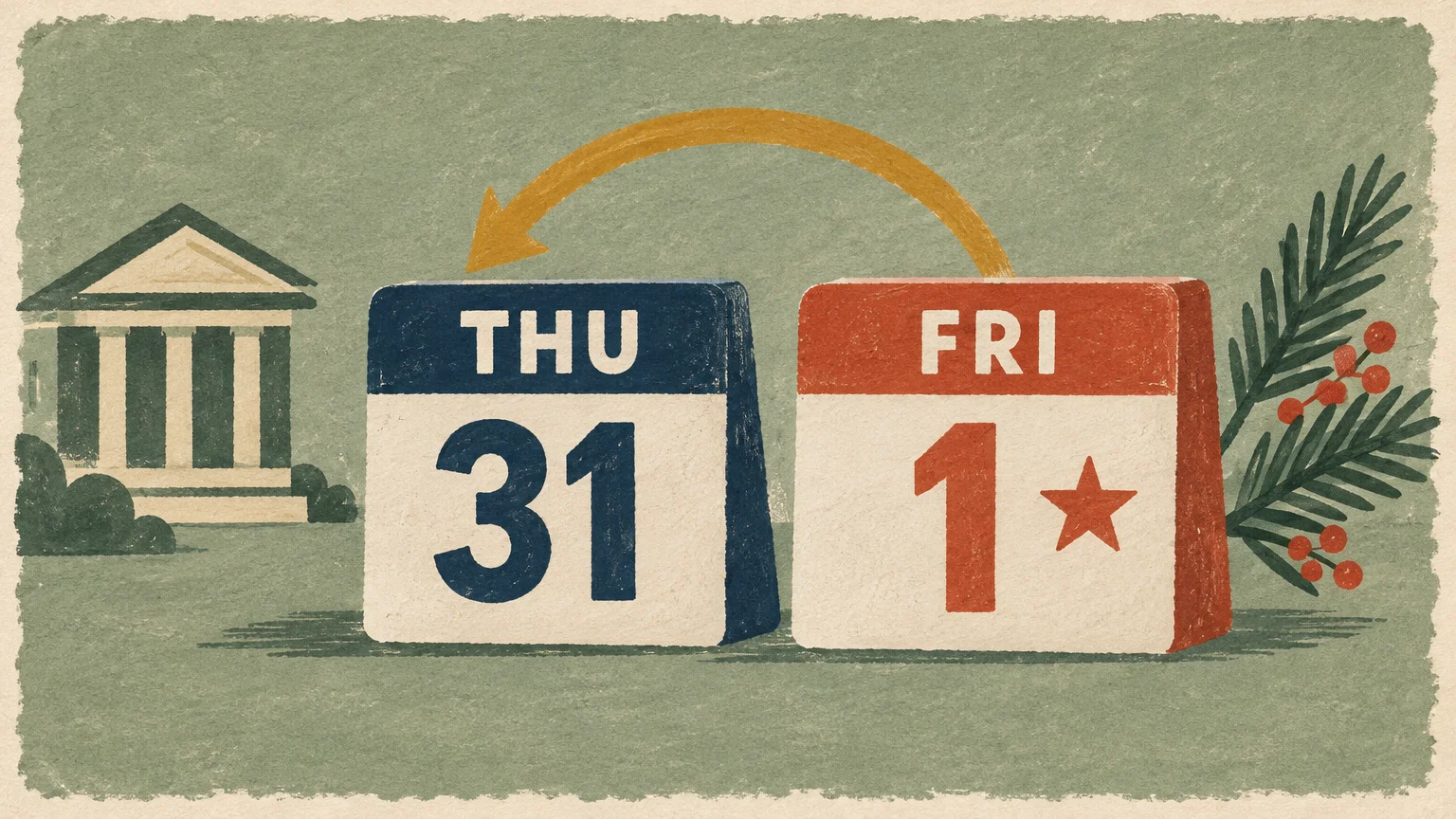
If you rely on Supplemental Security Income or certain Social Security benefits, your first payment reflecting the 2027 cost-of-living adjustment lands early. A federal calendar quirk moves your January 2027 check forward to Thursday, December 31, 2026.
This calendar shift delivers your payment with the 3.6% COLA increase just before the new year begins. However, this early deposit is not bonus money or an extra stimulus check.
Because this deposit covers your January living costs, you will receive zero payments throughout January 2027. Careful budgeting ensures you bridge that 32-day gap smoothly.
Why Your January 2027 Benefit Arrives in December
Federal law dictates how the Social Security Administration (SSA) handles banking holidays. Section 708 of the Social Security Act requires benefits due on a holiday or weekend to arrive on the preceding business day.
Friday, January 1, 2027, is New Year’s Day, an official federal holiday. Consequently, the SSA delivers all January SSI benefits on Thursday, December 31, 2026.
A similar shift affects retirees who receive checks on the third of each month. Because January 3 falls on a Sunday and January 1 is a holiday, payment moves to December 31.
About 7.3 million SSI recipients and millions of retirement beneficiaries will see their funds arrive early.
Who Receives the December 31 Early Payment
Not all Social Security beneficiaries receive their money on the final day of December. The early delivery specifically targets SSI recipients and select Social Security groups.
You will receive your deposit on December 31 if you meet specific eligibility criteria:
- Supplemental Security Income recipients, who are normally paid on the first of the month.
- Beneficiaries who began receiving Social Security benefits before May 1997.
- Dual recipients who collect both SSI and Social Security benefits simultaneously.
- Beneficiaries living abroad or enrolled in a state Medicare Savings Program.
Most retirement beneficiaries follow the standard Wednesday schedule based on birth dates. These individuals will receive their first 2027 COLA check during January.
If your birthday falls between the 1st and 10th, your check arrives Wednesday, January 13, 2027.
Birthdays between the 11th and 20th receive funds on Wednesday, January 20, 2027. Birthdays from the 21st through the 31st receive payment on Wednesday, January 27, 2027.
How the 3.6% COLA Changes Your Monthly Check
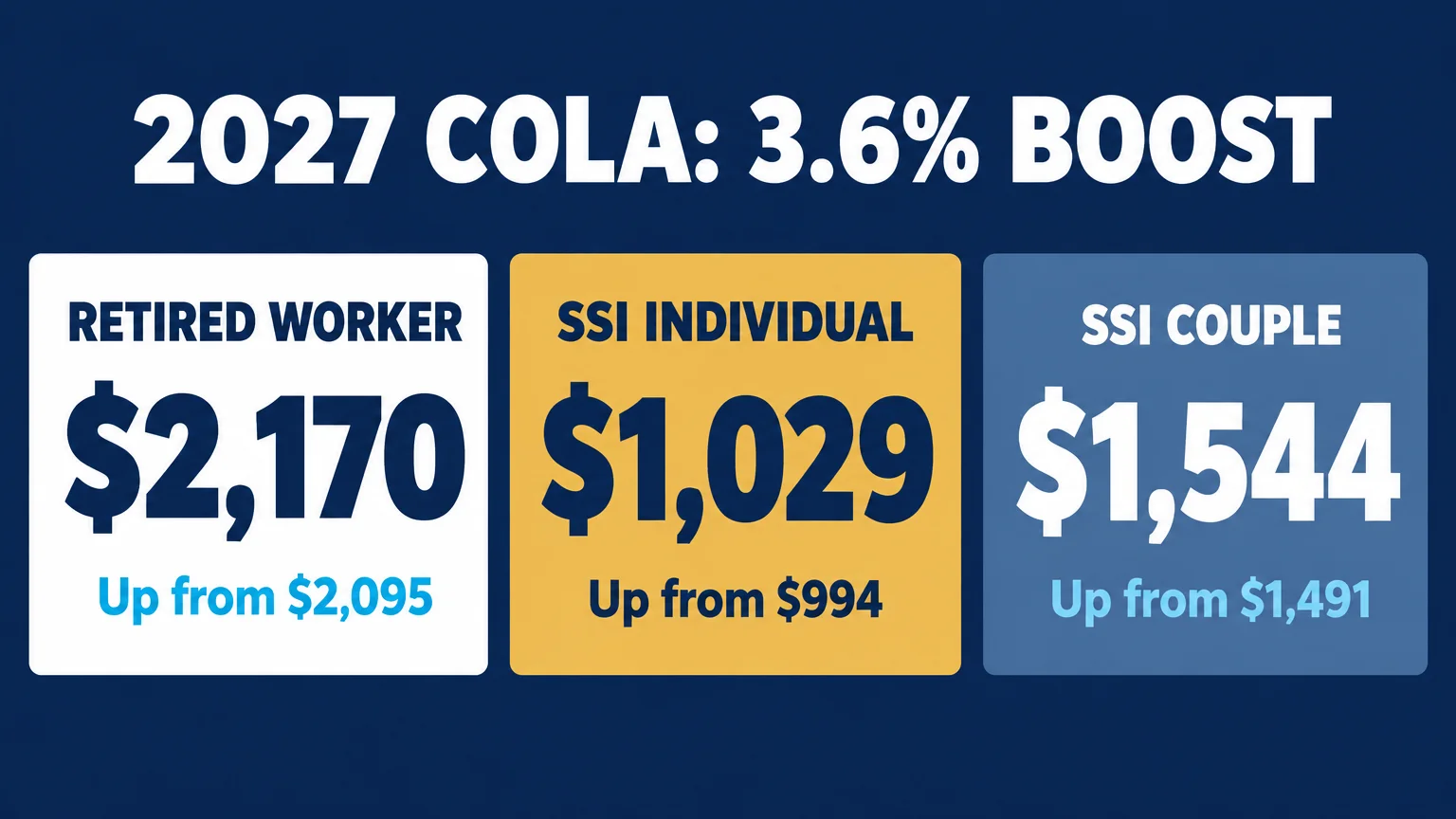
On October 14, 2026, the SSA announced a 3.6% cost-of-living adjustment. This rate outpaces the 2.8% boost from 2026 and the 2.5% increase from 2025.
For the average retired worker, monthly benefits climb by about $75, rising from $2,095 to $2,170. An average couple receiving joint benefits sees payments rise from $3,238 to $3,355.
Maximum federal SSI payments increase as well. Eligible individuals receive up to $1,029 monthly, while eligible couples can collect up to $1,544.
Here is how key monthly benefit benchmarks change heading into 2027:
| Benefit Category | 2026 Monthly Rate | 2027 Monthly Rate (3.6% COLA) |
|---|---|---|
| Average Retired Worker | $2,095 | $2,170 |
| Average Aged Couple | $3,238 | $3,355 |
| Maximum Federal SSI (Individual) | $994 | $1,029 |
| Maximum Federal SSI (Couple) | $1,491 | $1,544 |
| Average Disabled Worker (SSDI) | $1,642 | $1,701 |
| Maximum Retirement Benefit at Full Retirement Age | $4,152 | $4,188 |
You can review your personalized benefit adjustment online through your personal account. Beneficiaries who opted into paperless notifications received digital notices in late November 2026.

Managing the January Budget Gap and Medicare Costs
Receiving two payments in December creates a temporary illusion of extra wealth. You receive your regular December check early in the month, followed by the January check on December 31.
Your subsequent check will not arrive until February 2027. SSI recipients wait until Monday, February 1, while Social Security recipients wait until Wednesday, February 3.
That creates a 32-day gap with zero income deposited during January. Household expenses, rent, and utility bills must come entirely from the funds delivered on New Year’s Eve.
Rising healthcare expenses will also claim a portion of your raise. The Centers for Medicare & Medicaid Services (CMS) announced the standard Medicare Part B premium rises to $209.40 monthly.
This $6.50 increase is deducted directly from monthly Social Security checks. Furthermore, official Medicare guidelines confirm the annual Part B deductible increases from $283 to $292 for 2027.
“A cost-of-living increase is meant to protect your purchasing power, not expand your lifestyle spending.” — Suze Orman, Personal Finance Author and Host
Common Mistakes to Avoid
Navigating payment shifts requires careful attention to avoid budget shortfalls. Many households make predictable errors when benefits arrive ahead of schedule.
- Treating the December 31 deposit as holiday spending money rather than next month’s living expenses.
- Calling the SSA to report an accidental double payment, which clogs phone lines unnecessarily.
- Forgetting that no check will arrive in January, leading to missed bill payments.
- Exceeding SSI resource caps by holding extra cash across bank account statement dates.
Avoid these mistakes by immediately separating your rent and grocery funds. Treating the early check as January funds protects your financial security.
Taxes and SSI Resource Rules
Beneficiaries often worry that two payments in December create higher tax liabilities. Under Section 708 of the Social Security Act, that concern is unfounded.
Payments delivered early due to holidays remain credited to their normal calendar year. Your 2026 Form SSA-1099 will reflect twelve payments rather than thirteen.
SSI recipients face strict asset ceilings that require extra vigilance. Individual recipients cannot hold more than $2,000 in countable resources, while married couples are limited to $3,000.
While the SSA does not penalize advance deposits, unspent funds rolling into subsequent months could jeopardize eligibility. Spend benefit funds on necessary living expenses promptly.
Professional vs. Self-Guided Cash Management
Navigating benefit changes can be straightforward or complex depending on your situation. Here is how to decide whether to handle this yourself or seek guidance.
- Straightforward Retirement: If you only collect Social Security retirement benefits and have predictable expenses, a self-guided budgeting app or calendar reminder is sufficient.
- SSI and Medicaid Beneficiaries: If you balance SSI with Medicaid asset limits, consulting a benefits specialist at your local Area Agency on Aging prevents inadvertent disqualification.
- Working Retirees: If you work while collecting benefits, a tax professional helps you navigate the 2027 earnings limit of $25,560 before reaching full retirement age.
- High-Income Households: If your retirement involves taxable investments and Social Security, a Certified Financial Planner helps model your provisional income and tax brackets.
Electronic Payments Transition
The SSA completed its transition to electronic payments under Executive Order 14247. Nearly all beneficiaries now receive their funds through direct deposit or Direct Express cards.
Electronic delivery eliminates delay and mail theft risks. If you recently changed banks, update your direct deposit details promptly through the SSA portal.
Frequently Asked Questions
Is the December 31 check an extra bonus from the government?
No, it is not a bonus. It is your advance payment for January 2027, delivered early due to federal banking holidays.
Will I receive another Social Security check during January 2027?
If you receive SSI or qualify for third-of-the-month Social Security benefits, you receive zero checks in January. Your next payment arrives in February.
Does the 3.6% COLA apply to the December 31 payment?
Yes. Because this check represents your January 2027 entitlement, it includes the complete 3.6% cost-of-living increase.
When will my February benefit arrive?
SSI recipients receive their next benefit on Monday, February 1, 2027. Third-of-the-month Social Security beneficiaries receive their payment on Wednesday, February 3, 2027.
Preparing Your Household for the Calendar Quirk
Take a moment to adjust your personal calendar before the holidays arrive. Knowing that your December 31 check covers January expenses gives you control over your household cash flow.
Mark February 1 or February 3 as your next pay date to prevent budgeting shortfalls. A proactive plan keeps you financially steady through every calendar quirk.
This article provides general retirement education and information only, as every retiree’s unique situation requires personalized planning. For specific guidance, consider consulting a qualified financial professional such as a CFP or CPA.
Last updated: November 2026. Retirement benefits, tax rules, and healthcare regulations change frequently—verify current details with official sources.