
Working while collecting early Social Security gets easier in 2027. You can now earn up to $25,560 per year without forfeiting a single dollar of your monthly retirement checks.
This threshold represents a $1,080 increase over the 2026 cap. It provides vital breathing room for workers under full retirement age who want supplemental wages alongside their monthly benefits.
If your wages surpass that baseline, the earnings test temporarily pauses a portion of your checks. Fortunately, those withheld funds are never lost forever; they permanently increase your monthly check later.
Understanding the 2027 Social Security Earnings Test Rules
The retirement earnings test applies exclusively to individuals who claim benefits before reaching their full retirement age. For anyone born in 1960 or later, full retirement age is exactly 67.
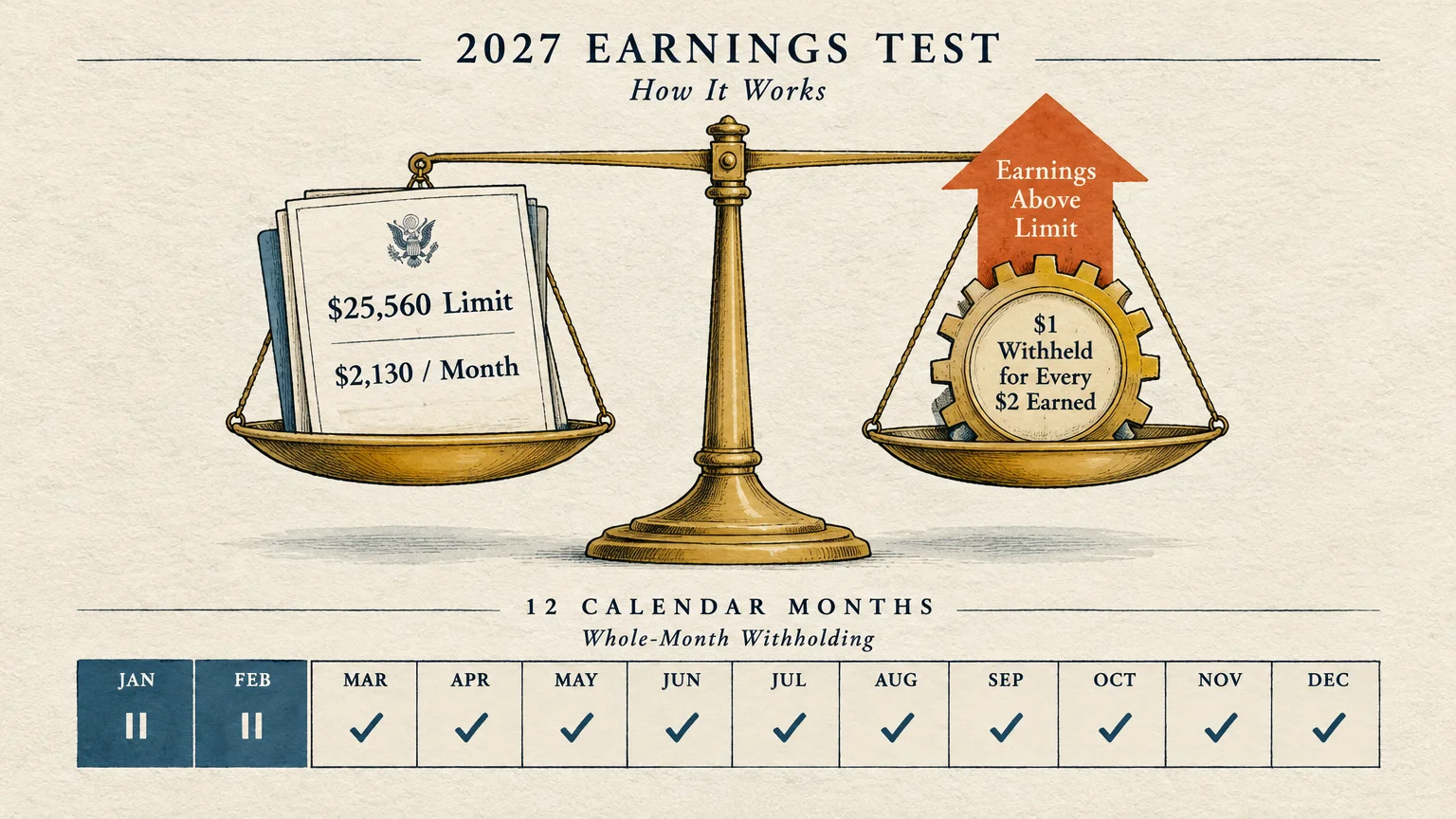
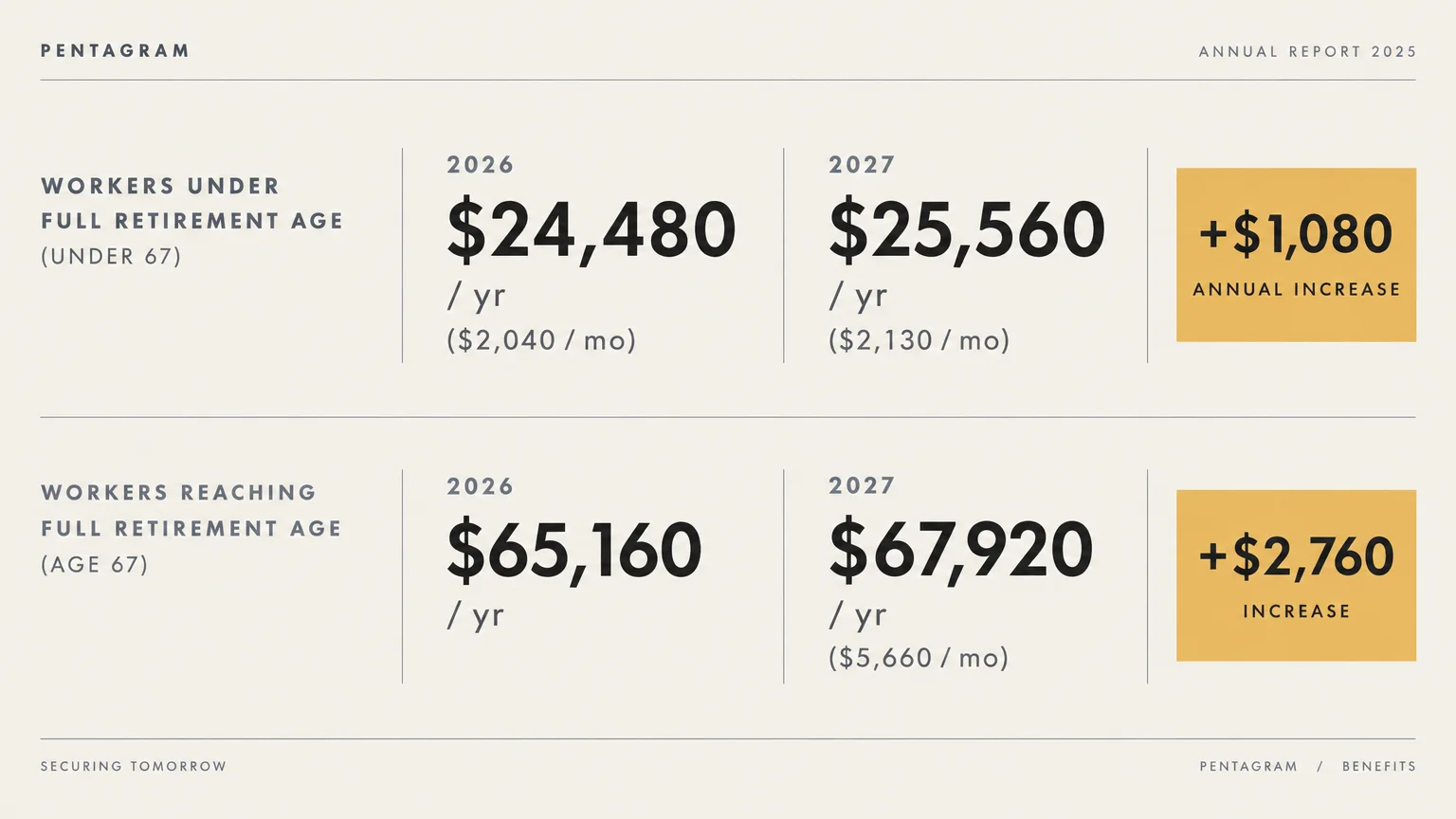
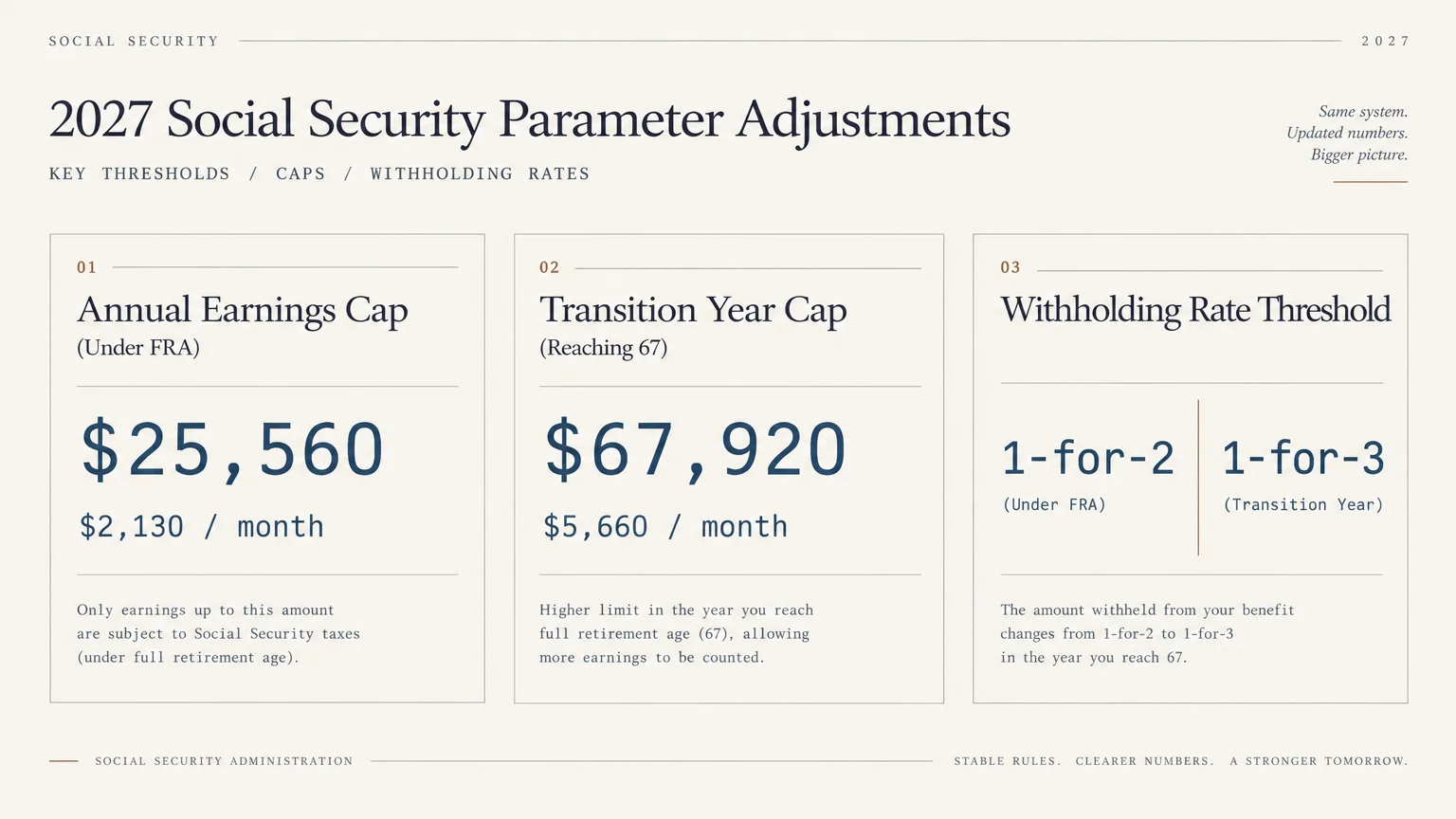
In 2027, the baseline annual earnings limit rises to $25,560, which breaks down to $2,130 per month. This figure marks an increase from the 2026 limit of $24,480, or $2,040 per month.
If you remain under full retirement age throughout 2027, the withholding formula is straightforward. The Social Security Administration holds back $1 in benefits for every $2 you earn above $25,560.
The agency deducts whole monthly payments rather than trimming partial amounts from each check. Consequently, your monthly benefit stops completely for certain months until the agency recovers the required offset.
Consider a practical calculation to see how this reduction operates in real life. Suppose you claim early retirement benefits at age 63 and earn $31,560 in wages during 2027.
Your total wages exceed the annual $25,560 threshold by exactly $6,000. Applying the one-for-two withholding rule means Social Security must withhold $3,000 of your annual benefits.
If your monthly check equals $1,500, the agency holds back your payments for January and February. Beginning in March, your full monthly benefits resume for the remainder of the calendar year.
You can track your earnings records and monitor claiming guidelines directly on the Social Security Administration website.
The Higher Limit for Retirees Reaching Full Retirement Age in 2027
The government eases these withholding rules significantly during the calendar year you reach full retirement age. Beneficiaries born in 1960 reach their full retirement milestone of age 67 during 2027.
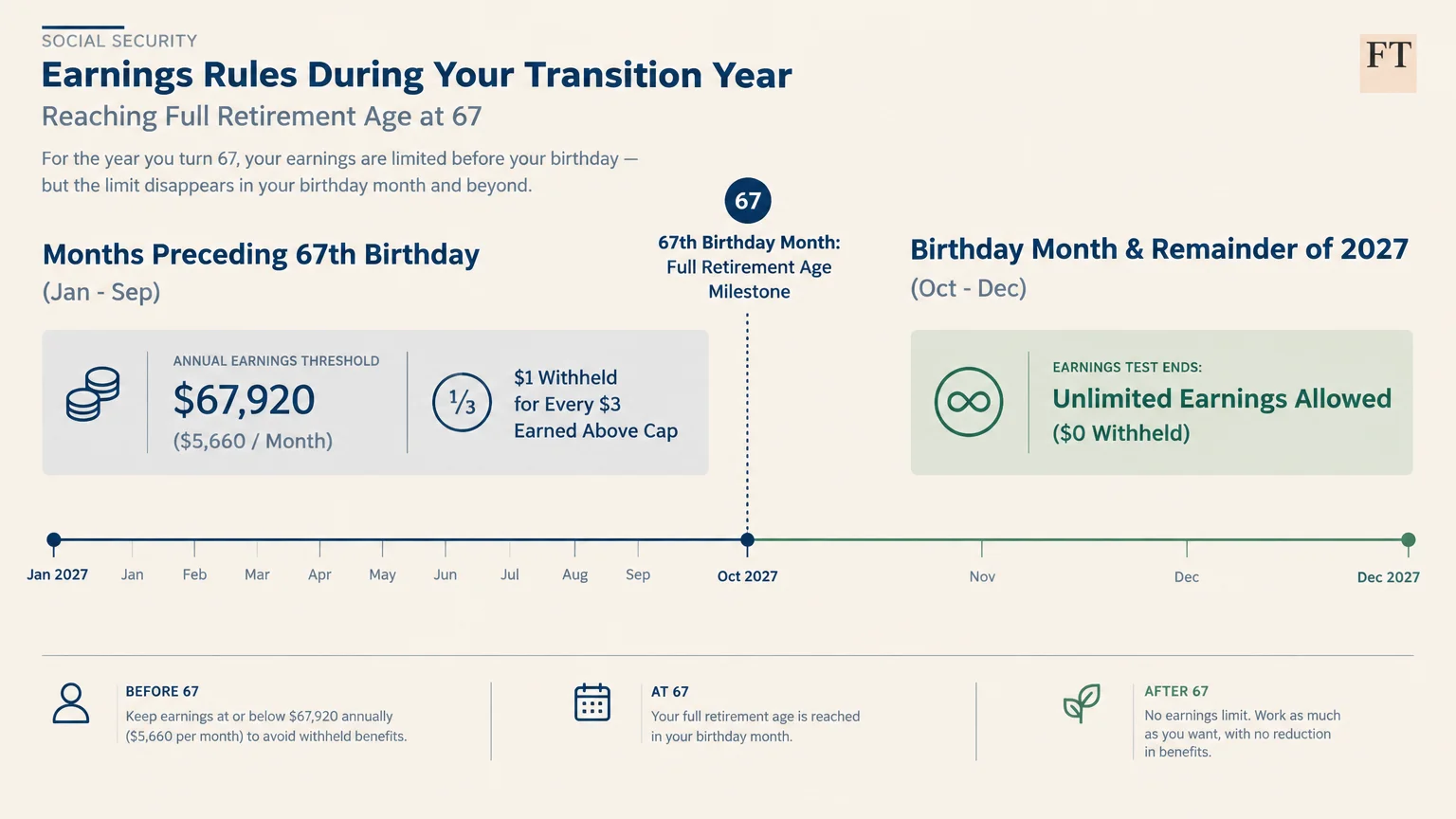
For these workers, the 2027 earnings test ceiling jumps to $67,920 per year, or $5,660 per month. This marks a notable jump from the 2026 threshold of $65,160.
The withholding penalty softens as well during your transition year. The agency withholds only $1 in benefits for every $3 you earn above the $67,920 threshold.
Crucially, the agency counts only the money you earn in the months preceding your 67th birthday. Any income you earn during or after your birthday month faces zero earnings penalties.
Suppose you turn 67 on October 15, 2027, and you earn $73,920 between January 1 and September 30. Your pre-birthday earnings exceed the $67,920 cap by $6,000.
Under the one-for-three formula, the agency withholds $2,000 in total benefits across those initial nine months. Starting on October 1, you can earn an unlimited salary without losing any benefits.
“Retirement is no longer an all-or-nothing finish line; it is an ongoing blend of meaningful work and personal freedom.” — Mitch Anthony, Retirement Coach and Author
What Counts as Earnings (and What Doesn’t)
Navigating the earnings test requires a clear grasp of what the government classifies as earned income. The test considers only active compensation from work rather than overall cash flow.
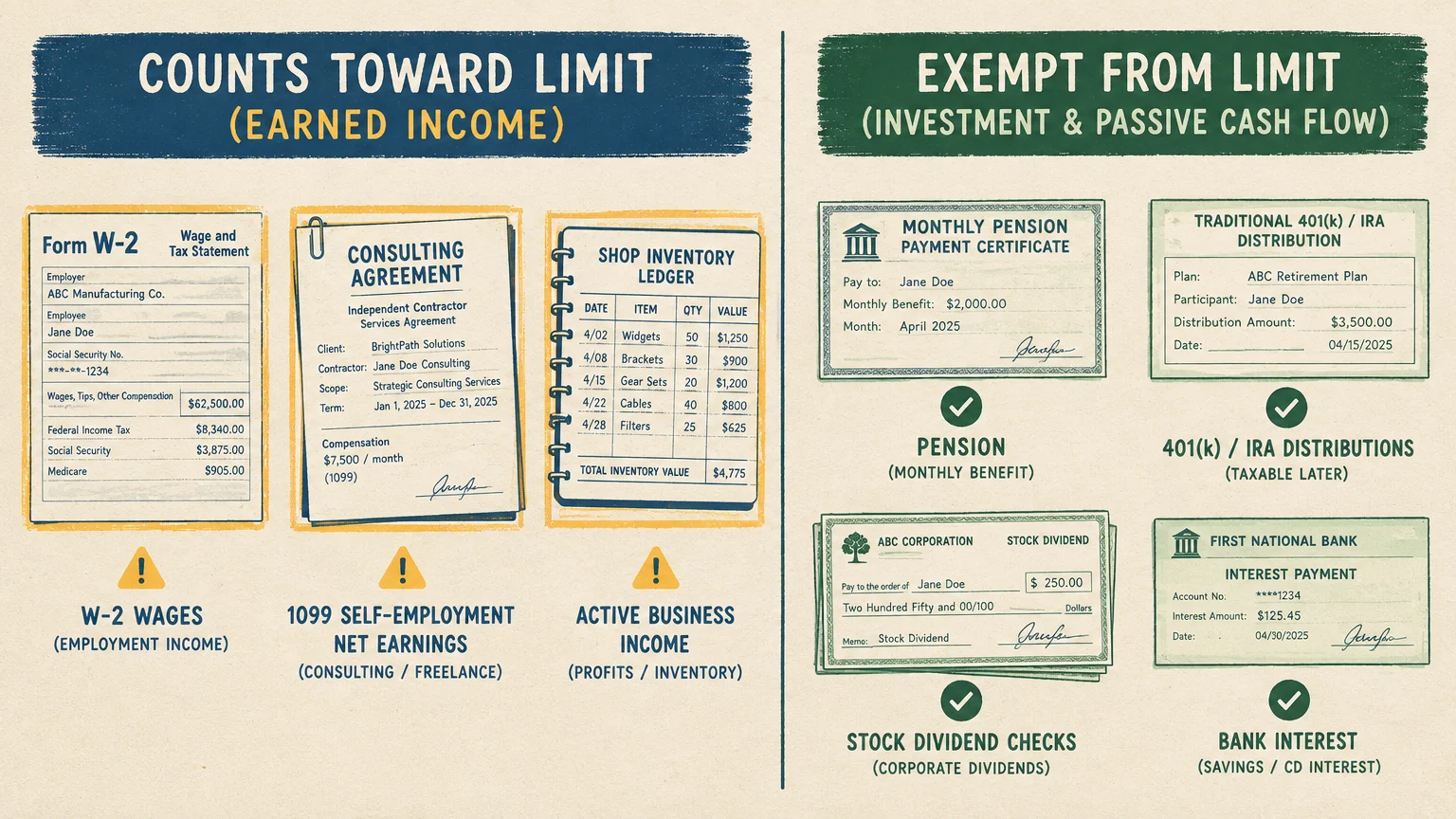
Gross wages from an employer on Form W-2 count entirely toward the threshold. If you work as an independent contractor or run a business, net earnings from self-employment count.
Many retirees worry that their investment dividends or retirement account distributions will trigger benefit cuts. The law completely exempts passive revenue streams from the earnings test.
- W-2 wages: Gross hourly wages, salaries, bonuses, commissions, and tips count toward the limit.
- Self-employment income: Net business profit reported on Schedule C counts toward the limit.
- Pensions and annuities: Monthly employer pensions and private annuity payouts do not count.
- Retirement distributions: Withdrawals from traditional IRAs, 401(k) plans, and Roth IRAs do not count.
- Investment income: Interest, stock dividends, capital gains, and rental income do not count.
- Government support: Veterans benefits, unemployment checks, and workers’ compensation do not count.
You can cross-reference taxable wage definitions with publications provided by the Internal Revenue Service. Keeping these income streams separated protects you from unexpected withholding surprises.
Comparison Table: 2026 vs. 2027 Earnings Test Limits
Reviewing annual adjustments side by side helps you schedule your working hours and manage project income efficiently. The table below outlines key parameter shifts between 2026 and 2027.
| Program Provision | 2026 Baseline | 2027 Updated Rule | What This Means for You |
|---|---|---|---|
| Under FRA Annual Earnings Limit | $24,480 | $25,560 | You can earn $1,080 more each year before benefit withholding begins. |
| Under FRA Monthly Limit | $2,040 | $2,130 | The monthly safe-harbor allowance increases by $90 each month. |
| Under FRA Withholding Ratio | $1 withheld per $2 over limit | $1 withheld per $2 over limit | The withholding formula remains unchanged for early benefit claimers. |
| Year of FRA Annual Limit | $65,160 | $67,920 | Workers turning 67 can earn $2,760 more before their birthday month. |
| Year of FRA Monthly Limit | $5,430 | $5,660 | The monthly threshold rises by $230 during your transition year. |
| Year of FRA Withholding Ratio | $1 withheld per $3 over limit | $1 withheld per $3 over limit | A lighter reduction applies to earnings accumulated before your 67th birthday. |
| Post-FRA Earnings Limit | No earnings limit | No earnings limit | You can earn unlimited income beginning the exact month you turn 67. |
| COLA Benefit Adjustment | 2.8% | 3.6% | Monthly payments rise to offset ongoing consumer price increases. |
| Maximum Taxable Wage Base | $184,500 | $192,300 | High earners pay payroll tax on an additional $7,800 of annual wages. |
| Social Security Work Credit | $1,890 | $1,970 | Part-time employees need slightly more earnings to secure quarterly credits. |
These upward adjustments mirror steady national wage growth. They allow you to retain more income without sacrificing your monthly financial stability.

The Special First-Year Monthly Rule Explained
A sudden mid-year retirement creates a unique trap under the standard annual test. If you retire in July after earning $80,000, your annual wages would wipe out benefits for the rest of the year.
Congress created the special monthly earnings test to prevent this unfair outcome. This provision applies exclusively during your first calendar year of claiming retirement benefits.
Under this rule, Social Security ignores your total annual earnings prior to your retirement date. The agency instead looks at your individual monthly earnings after you claim checks.
In 2027, you are considered fully retired in any month where your gross wages drop to $2,130 or less. You receive your complete benefit check for that month regardless of past salary.
If you turn 67 during 2027, the monthly safe-harbor earnings ceiling rises to $5,660. As long as you stay under that monthly threshold, your checks arrive without interruption.
Self-employed individuals must satisfy an additional requirement under the monthly test. The agency evaluates the actual hours you dedicate to your commercial enterprise each month.
You cannot perform substantial services, which the agency generally defines as more than 45 hours of work per month. For highly skilled or specialized trades, spending between 15 and 45 hours can still trigger benefit withholding.
Why Withheld Benefits Are Not Lost Forever
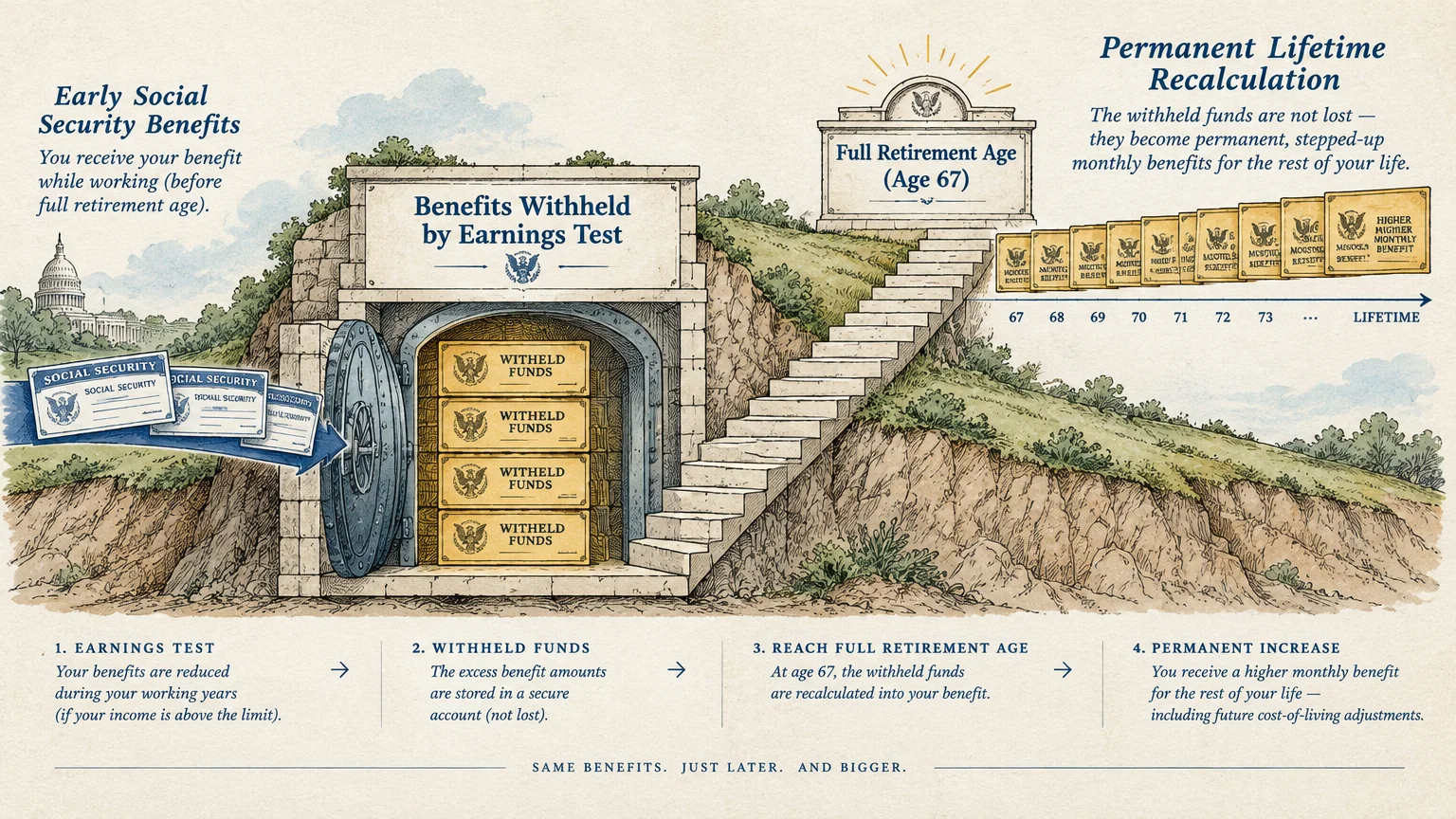
Many retirees believe that withheld Social Security benefits disappear into government coffers permanently. This pervasive myth leads thousands of seniors to turn down lucrative part-time work.
In reality, the earnings test operates as a forced deferral rather than a true tax or penalty. The agency credits every withheld dollar back into your account when you attain full retirement age.
When you reach age 67, the agency automatically recalculates your primary insurance amount. They adjust your monthly payment upward to reflect every month in which benefits were withheld.
Assume you claimed benefits at age 62, accepting an initial 30 percent lifetime reduction on your checks. Over the following five years, your steady part-time wages caused the agency to withhold 12 total monthly payments.
When you turn 67, Social Security recalculates your payment as if you claimed at age 63 rather than 62. Your monthly payment increases permanently for every single check you receive thereafter.
Over an average lifespan, this automatic upward recalculation restores the withheld value. You trade smaller early checks for substantially larger checks in your 70s and 80s.
“Claiming Social Security early reduces your baseline benefit permanently, but working through retirement gives you financial resiliency.” — Suze Orman, Personal Finance Author
Advocacy groups like AARP frequently emphasize this recalculation mechanism when educating older workers. Knowing this fact empowers you to pursue supplemental income without fear of permanent losses.
Impact on Family and Auxiliary Benefits
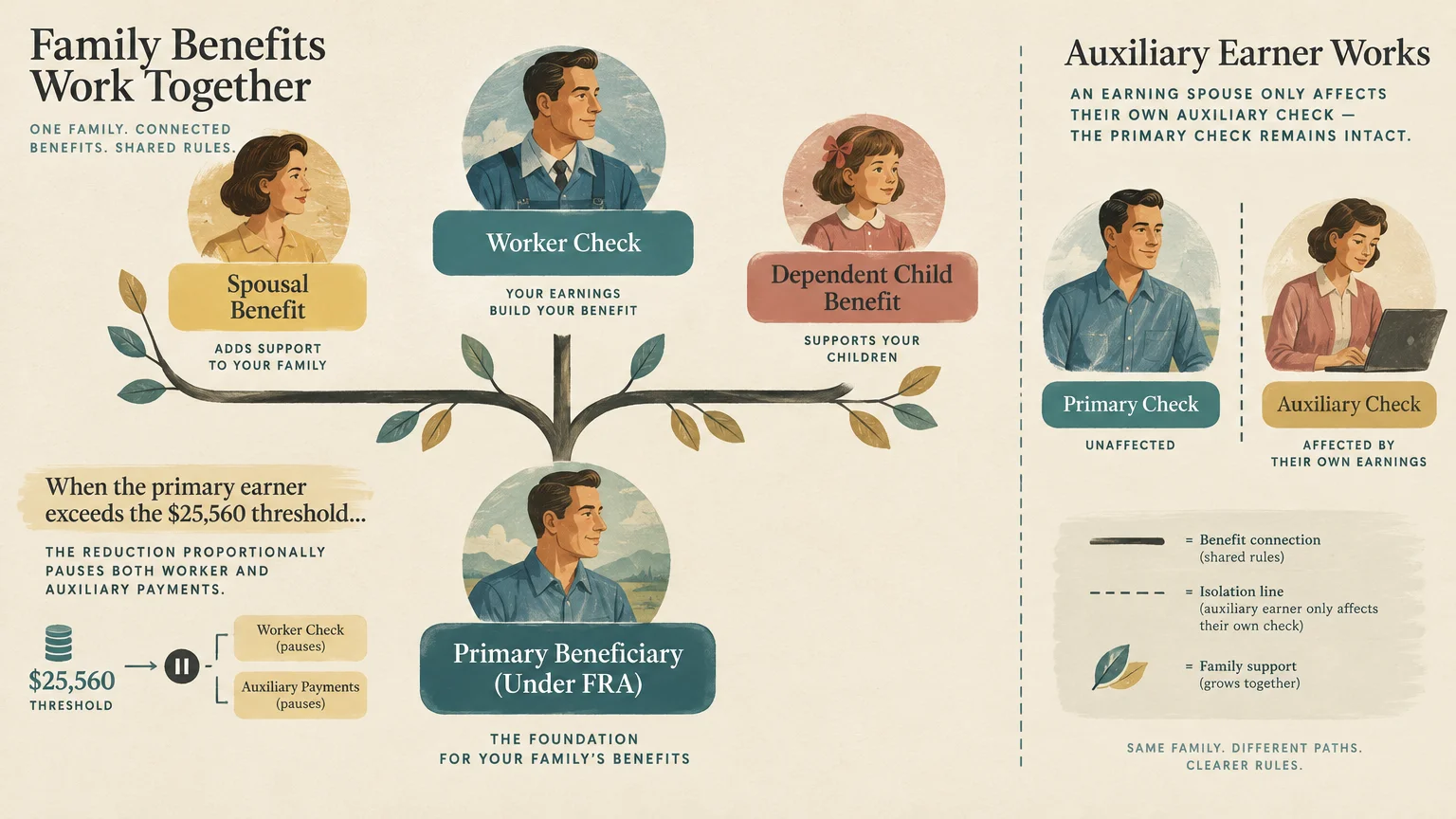
Working while collecting early retirement benefits does not affect your personal checks in isolation. Your earned income can also trigger benefit withholding for dependent family members receiving checks on your record.
If a spouse or minor child receives auxiliary payments tied to your work history, your excess earnings apply to the entire household payout. The agency holds back checks until total family withholdings satisfy the offset.
Consider an early retiree whose wages exceed the 2027 cap by $4,000, creating a $2,000 required withholding. If both the worker and spouse receive benefits, the agency can withhold checks from either or both parties.
The rules operate differently when a spouse generates independent employment income. If your spouse works while collecting spousal benefits on your record, their wages affect only their own auxiliary check.
Their excess earnings will never decrease or pause your primary retirement benefit check. Understanding this distinction prevents unexpected household cash-flow disruptions when one spouse continues full-time work.
Broader 2027 Changes: COLA, Wage Caps, and Credits
The 2027 earnings limit adjustment arrived alongside broader systemic updates announced on October 14, 2026. These interconnected metrics alter retirement planning across every age group.
Beneficiaries will receive a 3.6% cost-of-living adjustment starting in January 2027, outpacing the 2.8% boost from 2026. This adjustment increases the average retired worker’s monthly benefit by roughly $75, from $2,095 to $2,170.
Meanwhile, the maximum taxable earnings cap climbs to $192,300 in 2027, up from $184,500 in 2026. High-income earners must pay the 6.2% Social Security payroll tax across this expanded base.
Workers retiring exactly at their full retirement age in 2027 see their maximum potential benefit rise to $4,188 per month. This figure represents an increase over the 2026 ceiling of $4,152.
Finally, earning one Social Security work credit requires $1,970 in gross wages in 2027. You need $7,880 in annual covered earnings to secure the maximum four credits per calendar year.
Avoiding Common Errors
Managing wages alongside early retirement checks requires consistent communication and attention to detail. Committing simple reporting errors can trigger aggressive clawback notices from the government.
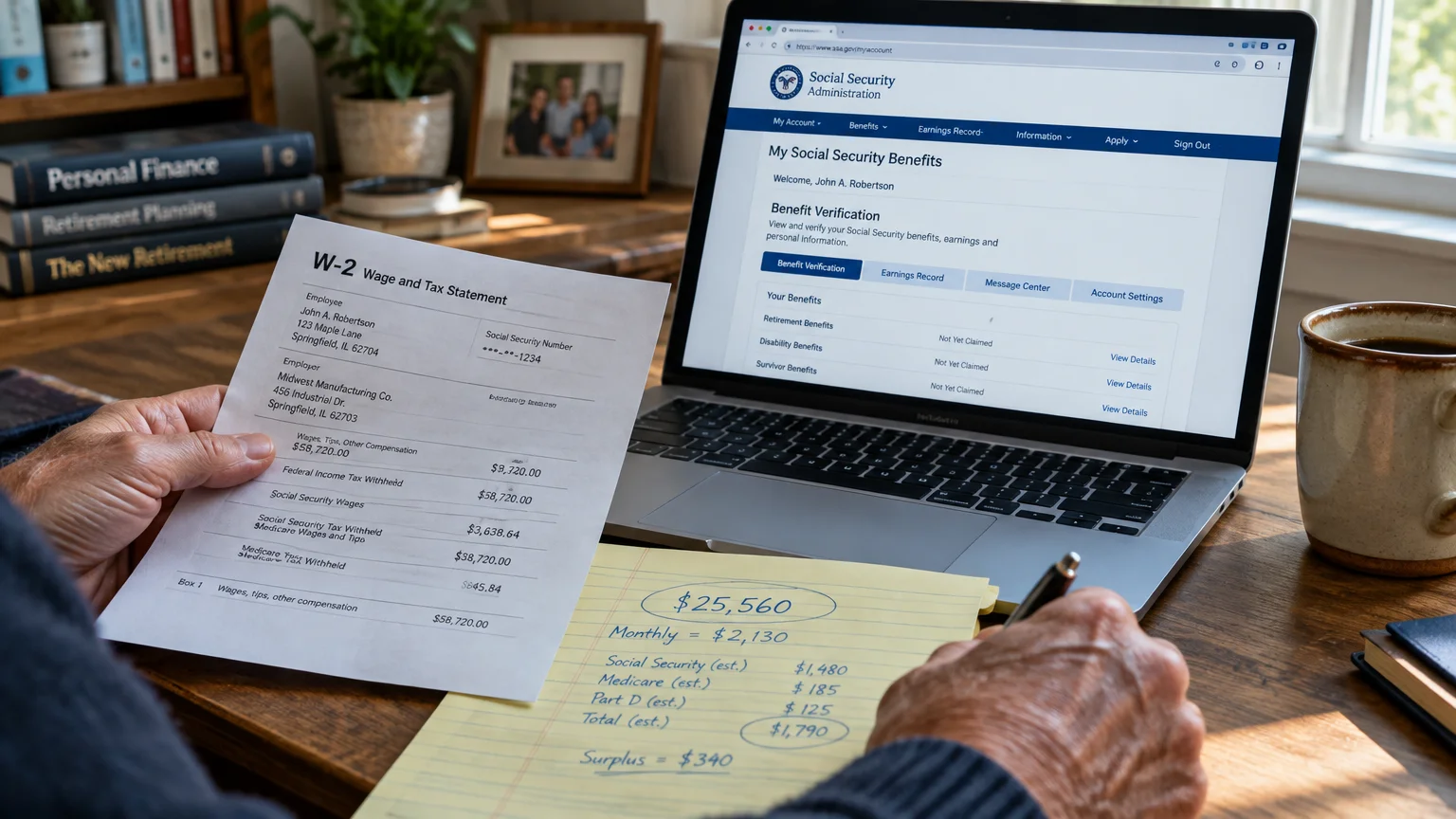
The most common error involves failing to update the Social Security Administration when your earnings spike. If you accept a bonus or land a contract, inform the agency immediately to adjust your withholdings.
If you fail to notify the agency, automated IRS wage data matches will catch the discrepancy months later. The agency will then demand an immediate refund or halt your monthly benefits entirely.
Another widespread mistake is confusing tax liability with the earnings test. Even if your earnings fall below the $25,560 threshold, your total income might still push your Social Security checks into taxable territory.
The IRS taxes up to 85 percent of your benefits once your provisional income surpasses $34,000 for singles or $44,000 for married couples. You must account for income taxes separately from earnings test deductions.
Retirees also make the mistake of turning down great jobs out of earnings penalty fears. Since withheld benefits return via higher monthly payments at age 67, earning extra income almost always strengthens your overall net worth.

When DIY Isn’t Enough
While many individuals manage part-time retail or consulting wages easily, complex financial structures demand personalized expertise. You should consider consulting a certified financial planner or tax professional under specific conditions.
Operating an S-Corporation or LLC creates challenging reporting requirements under the earnings test. The agency closely scrutinizes officer compensation and shareholder distributions to identify disguised earned income.
Receiving deferred compensation, stock options, or severance packages while claiming early benefits requires careful timing. You must document whether these payments compensate prior years of service or current employment activities.
Navigating Medicare premiums alongside employment wages creates another layer of friction. Wage increases can inadvertently trigger Medicare Part B and Part D Income-Related Monthly Adjustment Amounts, creating sudden surcharge penalties.
Coordinating claiming timelines with a younger spouse or disabled child also benefits from professional modeling. An advisor can evaluate whether delaying your benefits outweighs the temporary convenience of claiming early checks.
Frequently Asked Questions About the 2027 Earnings Limit
What happens to my Social Security checks if I earn more than $25,560 in 2027?
The Social Security Administration will withhold $1 from your benefit payments for every $2 you earn above $25,560. They hold back full monthly checks until the required offset amount is satisfied.
Do withdrawals from my 401(k) or traditional IRA count toward the earnings limit?
No, distributions from retirement accounts do not count toward the earnings test. The test applies exclusively to gross wages from employment and net profit from self-employment.
When does the earnings test permanently end?
The earnings test ends the exact month you reach your full retirement age, which is age 67 for individuals born in 1960 or later. From that point forward, you can earn unlimited wages without reductions.
Are my withheld benefits gone forever?
No, withheld benefits are not permanently lost. When you reach full retirement age, the government recalculates your monthly benefit upward to credit you for every month a check was withheld.
Can I use the monthly earnings rule multiple times?
No, you can only use the special monthly rule during a single calendar year, typically your first year of retirement. After that year, the annual earnings threshold governs your benefits.
Moving Forward with Confidence
The increase in the 2027 earnings limit to $25,560 gives working retirees greater flexibility to generate supplemental income. By understanding how the thresholds, monthly exemptions, and future recalculations function, you can confidently build an active and secure retirement.
Take the time to assess your projected annual wages, review your tax brackets, and report income changes promptly. This proactive approach ensures you maximize your earnings while safeguarding the retirement benefits you worked a lifetime to earn.
This is educational content based on general retirement and financial principles. Individual results vary based on your situation. Always verify current benefit rules, tax laws, and eligibility requirements with official sources like SSA, Medicare.gov, or the IRS.
Last updated: November 2026. Retirement benefits, tax rules, and healthcare regulations change frequently—verify current details with official sources.









Leave a Reply