
Talking to adult children about money often creates quiet friction across generations. You want to preserve your personal independence without leaving your family completely unprepared for future life events.
True financial transparency is never about surrendering control of your assets. Instead, open communication protects your hard-earned nest egg while preventing painful family misunderstandings during sudden healthcare crises.
Proactive discussions replace awkward guesswork with practical facts about your everyday budget and estate goals. Here are ten vital truths regarding retirees finances kids should know to maintain harmony and security.

1. Our Nest Egg Is Not an Emergency Fund for Grown Adults
Many adult children view parental retirement accounts as accessible safety nets for sudden debts, weddings, or business ventures.
Withdrawing lump sums disrupts a systematic distribution schedule built to provide dependable income for thirty years or longer.
When you liquidate assets during retirement, you cannot easily replace those capital reserves through new employment wages.
Preserving your portfolio ensures you will not become a financial burden to your children in your eighties.
Adult children must recognize that saying no to loan requests protects the entire family from long-term financial distress.

2. Fixed Incomes Demand Deliberate Spending Boundaries
Adult children often mistake accumulated portfolio wealth for unlimited liquid purchasing power.
In reality, sustainable retirement living requires disciplined budgeting around Social Security, pensions, and conservative annual withdrawal rates.
Pressure to finance expensive multi-generational vacations or elaborate holiday gifts can quickly destabilize an annual cash plan.
Clear financial transparency helps your children understand why you turn down certain luxury expenses.
Setting firm spending limits preserves your nest egg while keeping family gatherings stress-free and authentic.
3. Medicare Does Not Cover Long-Term Custodial Care
A widespread assumption among adult children is that government programs fund all late-life medical care.
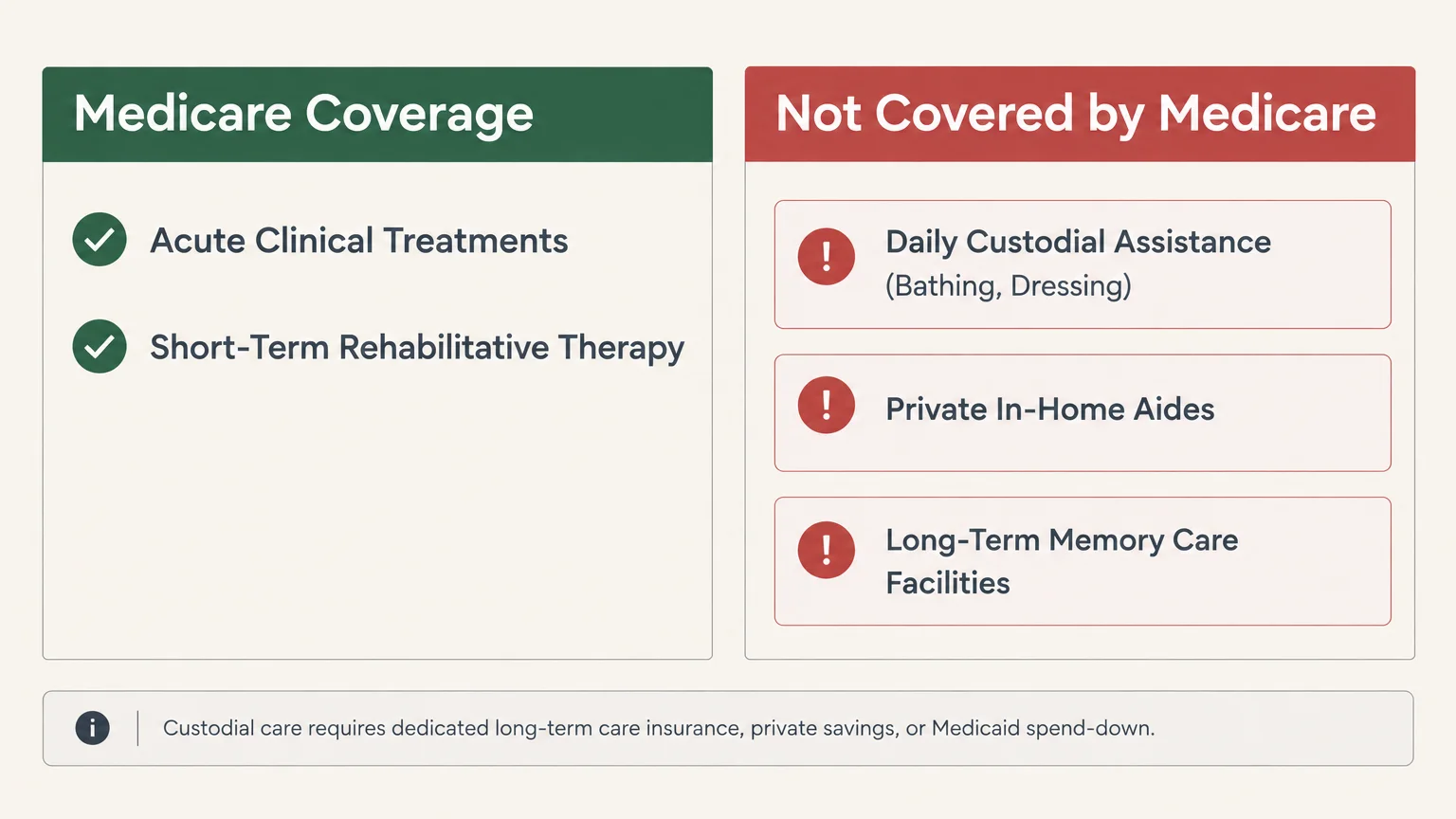
Standard coverage through Medicare pays for acute clinical treatments and short-term rehabilitative therapies only.
It does not cover daily custodial assistance, private in-home aides, or long-term memory care facilities.
Custodial care requires personal cash reserves, dedicated long-term care insurance policies, or complex Medicaid spend-down qualification.
Initiating honest conversations early allows families to plan for potential caregiving expenses before a physical crisis strikes.
“You cannot afford to put your children’s financial desires ahead of your own retirement security.” — Suze Orman, Personal Finance Author

4. Downsizing Is a Strategic Choice, Not an Emotional Defeat
Grown children often cling to their childhood residence out of deep nostalgia and sentimentality.
However, maintaining a large, aging house brings rising property taxes, major repair expenses, and dangerous fall hazards.
Selling a family house frees up trapped home equity while substantially reducing recurring monthly utility bills.
Relocating to a single-story home or an active community supports aging in place safely.
Adult children should view downsizing as an empowering lifestyle upgrade rather than the tragic loss of family heritage.

5. Home Equity May Fund Late-Life Medical Care
Many adult heirs assume a paid-off family residence is a guaranteed future inheritance asset.
In practical family financial planning, residential equity serves as a vital reserve for late-life medical interventions.
Home equity lines of credit or reverse mortgages often fund private in-home caregiving, preventing premature nursing home placement.
Explaining this plan prevents heirs from budgeting around real estate value that may be liquidated for healthcare.
Your property serves first and foremost as your personal security anchor, not an untouched legacy vehicle.

6. We Prioritize Independence Over Leaving a Windfall
Some adult children quietly build their long-term wealth projections around an expected parental inheritance.
Most retirees prefer using their hard-earned assets to live comfortably, purchase quality healthcare, and enjoy active longevity.
An inheritance should always be treated by the next generation as an unexpected bonus rather than an entitlement.
Maintaining financial self-reliance so your children never have to support you is the greatest legacy you can give.
Adult children should build their own financial independence assuming an inheritance balance of zero dollars.

7. Taxes Take a Substantial Bite Out of Withdrawals
A one-million-dollar traditional retirement account does not equal one million dollars of spendable money.
The Internal Revenue Service taxes traditional IRA and 401(k) withdrawals as ordinary income at your marginal tax bracket.
Taking large withdrawals to assist family members can elevate your tax bracket and trigger costly Medicare Part B surcharges.
Helping your children grasp these tax mechanics explains why you cannot casually liquidate lump sums on short notice.
Coordinated tax planning protects your purchasing power and extends the lifespan of your retirement accounts.

8. Investment Risk Looks Entirely Different in Retirement
Younger investors have decades of future earnings ahead to absorb and survive severe stock market downturns.
Retirees face sequence-of-returns risk, where sharp market declines early in retirement permanently deplete portfolio longevity.
The educational resources on Investor.gov highlight why older investors deliberately prioritize capital preservation over aggressive growth.
Conservative investments like cash equivalents and short-term bonds defend your everyday living expenses from market volatility.
Children must realize that defensive asset allocation is a prudent mathematical necessity, not unnecessary stubbornness.

9. Elder Financial Fraud Is an Aggressive, Constant Threat
Modern cybercriminals target older Americans using sophisticated artificial intelligence voice cloning, spoofed phone numbers, and urgent imposter scams.
Consumer alerts from the Consumer Financial Protection Bureau show billions of dollars stolen annually from retirees through aggressive fraud.
Retirees welcome technical support and fraud monitoring from their adult children without wanting their personal autonomy undermined.
Establishing shared banking alerts and credit freezes creates effective defenses without embarrassing anyone involved.
Collaborative protection preserves financial independence while keeping criminal predators at bay.

10. Estate Documents Must Be Accessible Long Before an Emergency
A comprehensive estate plan provides little protection if family representatives cannot locate critical legal documents during an emergency.
Transparent estate conversations clarify the physical and digital locations of healthcare proxies, living wills, and durable powers of attorney.
Organizing your digital account passwords, insurance policies, and financial deeds in a secure registry prevents legal delays.
Sharing your administrative road map ensures your designated agents can execute your explicit wishes without family confusion.
Proactive preparation removes logistical burdens from grieving loved ones during challenging moments.
“Talking to adult children about money isn’t just about figures; it’s about sharing your values and preparing them for reality.” — Jean Chatzky, Financial Journalist

Retiree Financial Reality vs. Adult Child Assumptions
Misunderstandings between generations often stem from differing perspectives on assets, safety nets, and obligations.
| Financial Area | Common Child Assumption | Retiree Reality |
|---|---|---|
| Retirement Savings | Flexible emergency capital available for family needs. | Strictly managed longevity fund designed to last decades. |
| Long-Term Healthcare | Fully funded by Medicare and supplemental insurance. | Custodial care is paid out-of-pocket or via Medicaid. |
| Home Ownership | A permanent family heirloom passed down to heirs. | A liquid financial asset available to fund health needs. |
| Retirement Portfolios | Underperforming because investments are too conservative. | Deliberately defended against sequence-of-returns risk. |
| Estate Planning | A distant chore needed only in extreme old age. | An urgent set of living documents required right now. |

Avoiding Common Errors
Generational financial discussions require tact, consistency, and clear boundaries to remain constructive.
Maintaining Complete Secrecy Out of Pride
Hiding your financial situation out of modesty or pride creates logistical nightmares during sudden medical events.
You do not need to reveal exact balances to share who holds power of attorney and where accounts reside.
Operating as an Unregulated Family Bank
Lending money without formal written terms breeds sibling resentment and frequently leads to unpaid family debts.
If you choose to give financial gifts, treat them as outright transfers rather than informal loans with ambiguous expectations.
Delaying Essential Healthcare Directives
Postponing healthcare proxy designations leaves critical medical decisions vulnerable to courtroom guardianship proceedings.
Execute your living will and durable medical powers of attorney while your health and cognition remain clear.

When DIY Isn’t Enough
While open family discussions solve many interpersonal misunderstandings, certain complex situations demand qualified professional guidance.
- Medicaid Long-Term Care Planning: Navigating the complex five-year lookback period requires guidance from a dedicated elder law attorney to protect family assets legally.
- Blended Family Estate Distributions: Second marriages and stepchildren require sophisticated trust structures to avoid disinheriting children from previous relationships.
- Sudden Cognitive Decline: When cognitive impairment appears, an independent fiduciary financial advisor helps transfer power of attorney smoothly while mitigating family disputes.
- Tax-Efficient Legacy Transfers: Managing required minimum distributions and multi-generational tax exposure warrants collaboration with a certified public accountant.
Frequently Asked Questions
How do I start talking to adult children about money without causing panic?
Frame the conversation around organization and emergency readiness rather than illness, mortality, or financial difficulties.
Focus first on sharing the location of vital estate documents, insurance policies, and designated professional contacts.
Should I disclose my exact portfolio balance to my children?
You are under no obligation to reveal specific dollar amounts to adult children if doing so feels uncomfortable.
Provide contact details for your estate attorney, financial advisor, and accountant so representatives know who to call during an emergency.
What is the best way to say no when an adult child requests a loan?
State clearly that your retirement income operates under strict mathematical boundaries designed to prevent you from becoming dependent on others.
Offer emotional encouragement, career mentorship, or non-cash assistance rather than jeopardizing your core retirement portfolio.
Which legal documents must my adult children be able to access immediately?
Your children should know the location of your durable power of attorney, healthcare proxy, living will, and primary health insurance cards.
Keep these documents updated and ensure your appointed agents understand the responsibilities outlined in each record.
Initiating honest conversations about your finances safeguards your dignity and simplifies your children’s future responsibilities.
This is educational content based on general retirement and financial principles. Individual results vary based on your situation. Always verify current benefit rules, tax laws, and eligibility requirements with official sources like SSA, Medicare.gov, or the IRS.
Last updated: March 2026. Retirement benefits, tax rules, and healthcare regulations change frequently—verify current details with official sources.








Leave a Reply