
Downsizing your home often comes down to choosing between condominiums and housing cooperatives. While condos remain popular, savvy retirees increasingly favor housing co-ops to stretch fixed incomes and secure predictable monthly living expenses.
A housing co-op trades traditional real estate deed ownership for corporate shares and a proprietary lease. This unique structure unlocks lower purchase prices, tighter community control, and collective buying power that preserves your nest egg.
Choosing between these condo alternatives requires weighing financial predictability against personal autonomy. Exploring why housing co-op retirees make this strategic transition will help you determine if cooperative living fits your retirement roadmap.
Understanding the Structural Difference: Co-Ops vs Condos
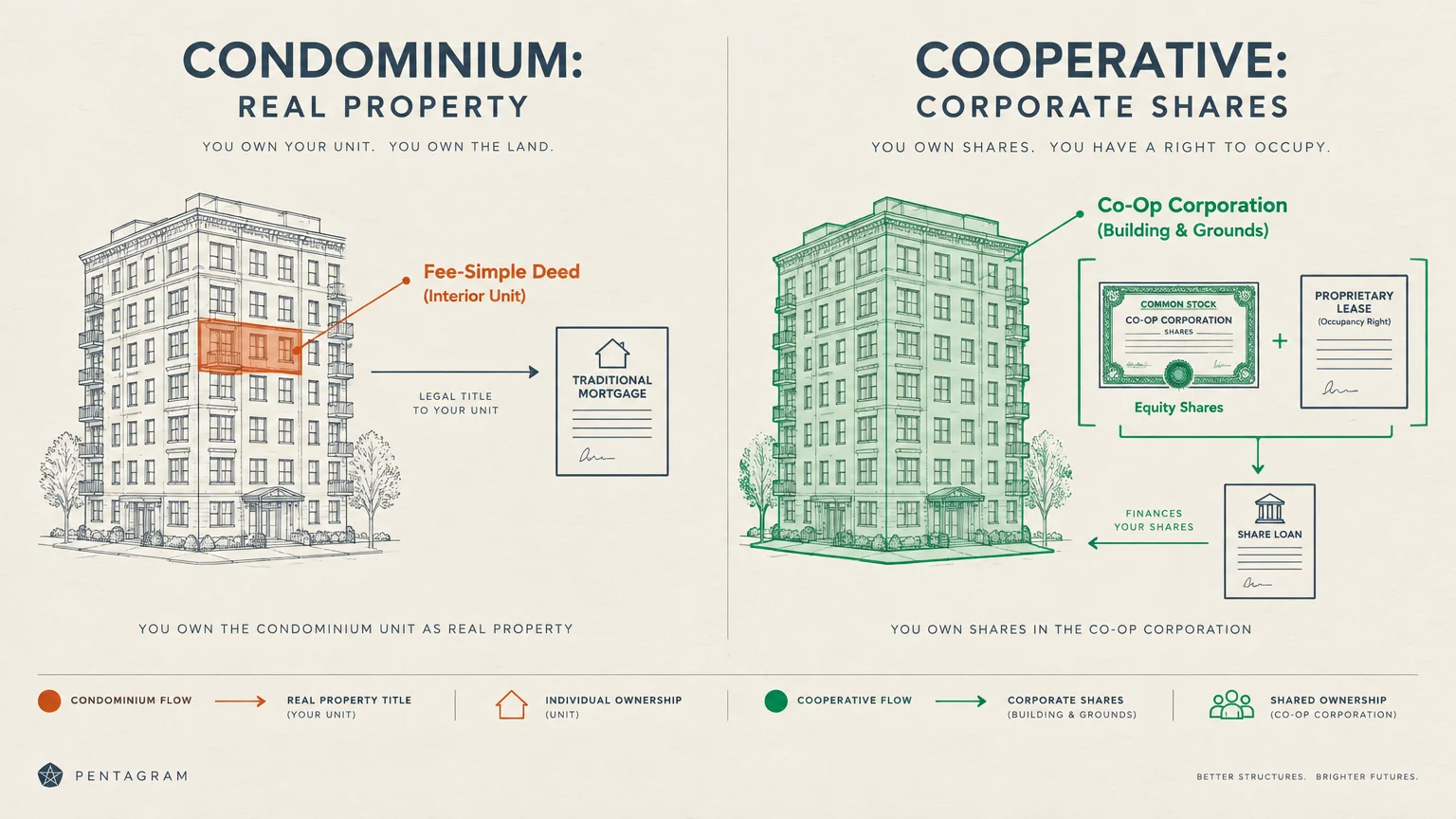
When you purchase a condominium, you acquire fee-simple title to real property. You own the interior space of your unit directly, alongside a shared percentage of common structural areas.
In contrast, purchasing a housing cooperative means buying equity shares in a corporation. That non-profit corporation holds title to the building, grounds, and all common infrastructure.
Your share certificate pairs with a long-term proprietary lease granting you exclusive occupancy rights to a specific apartment. This corporate structure fundamentally alters legal ownership, property tax assessments, and everyday governance.
Condominium buyers secure traditional real estate mortgages registered as liens against the property deed. Co-op purchasers obtain share loans, which represent personal property financing secured by corporate stock.
You can research share loan consumer protections and lending disclosures through the Consumer Financial Protection Bureau (CFPB) before beginning your property search.
1. Significantly Lower Purchase Prices and Upfront Capital Requirements
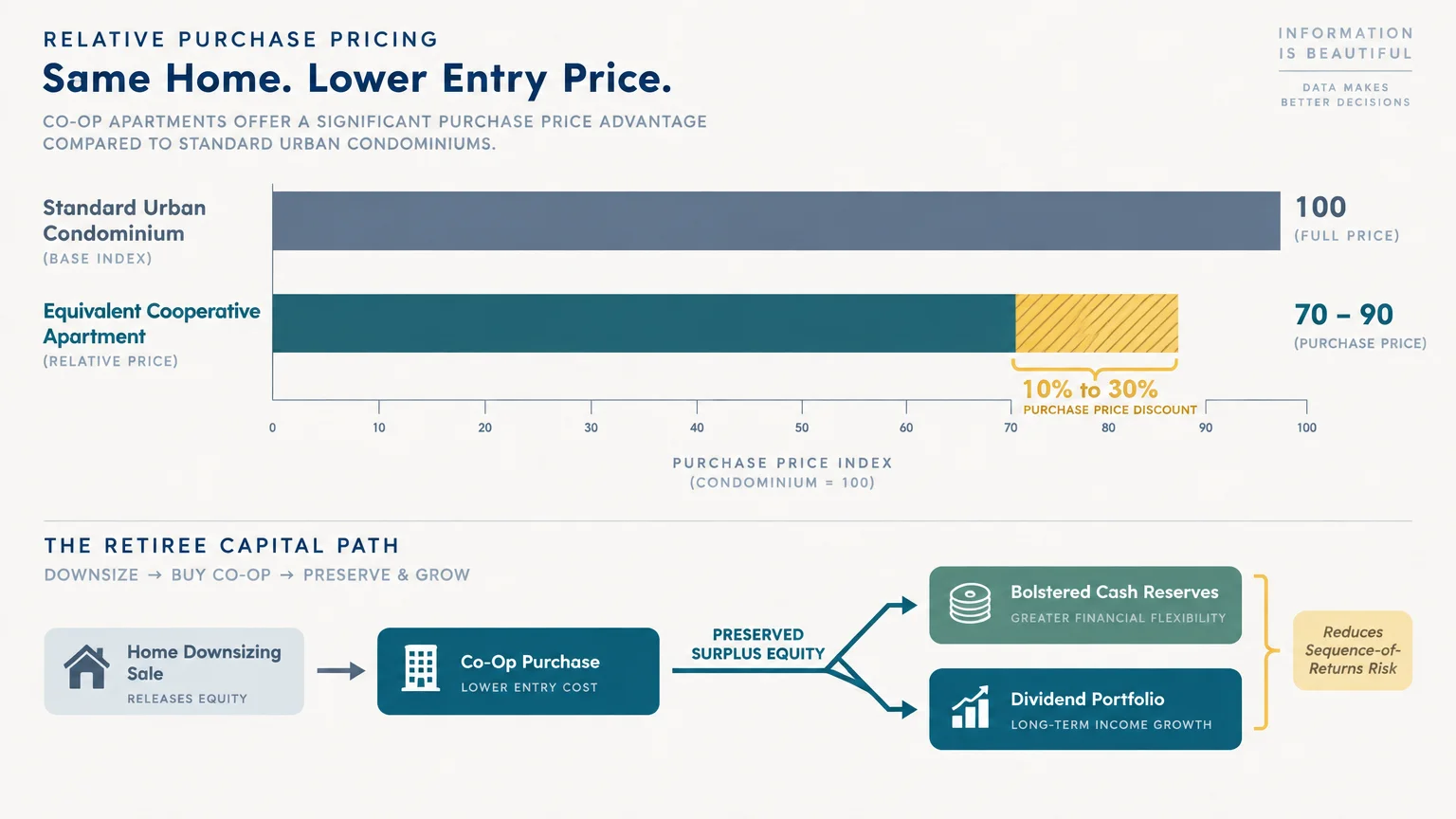
The primary financial attraction of co-ops vs condos is the upfront purchase price. In major housing markets, cooperative apartments regularly sell at a 10% to 30% discount compared to equivalent condominiums.
This pricing gap occurs because co-op boards restrict outside investors and forbid speculative house flipping. Restricting the buyer pool to owner-occupants keeps share prices tethered to practical residential value.
Retirees trading a large suburban home for a cooperative apartment can bank substantial surplus equity. This extra liquidity bolsters your cash reserves or expands your income-generating dividend portfolio.
Preserving your principal capital directly reduces the annual withdrawal demand placed on your retirement portfolio. Lower portfolio withdrawals reduce sequence-of-returns risk during vulnerable early retirement years.
“Downsizing your living costs frees up capital, giving your retirement portfolio the breathing room it needs to weather market volatility.” — Jean Chatzky, Financial Journalist and Author
2. Predictable, All-Inclusive Monthly Maintenance Fees
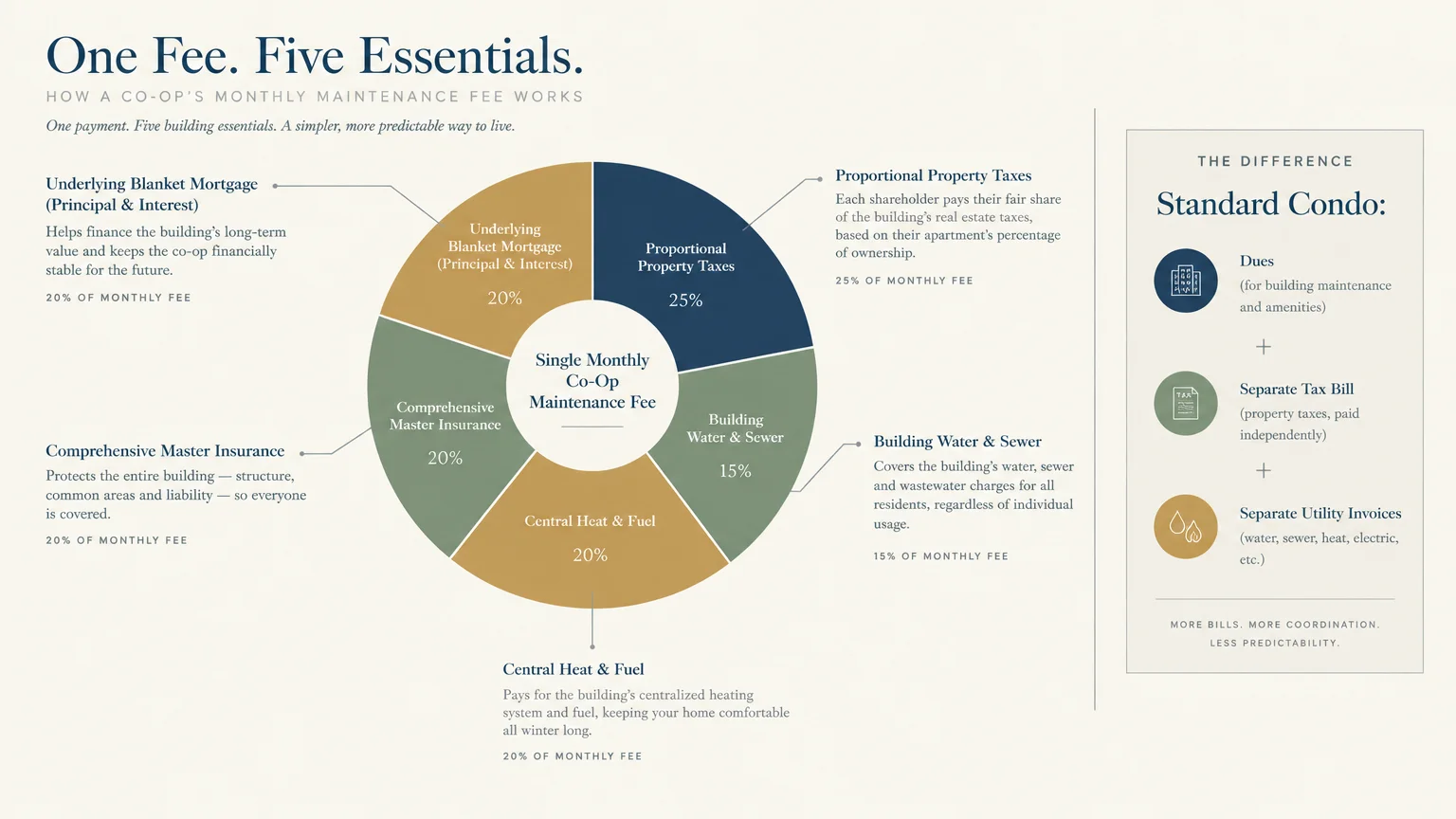
Managing a predictable cash flow is vital when transitioning from salaried employment to fixed retirement income. Co-op maintenance fees consolidate several major homeownership expenses into a single monthly payment.
Unlike standard condo association dues, co-op monthly maintenance fees bundle your proportional share of property taxes. Many co-op fees also cover heating, water, sewer, and comprehensive building insurance.
If the co-op corporation carries an underlying blanket mortgage, your monthly maintenance fee includes your portion of principal and interest. This single payment eliminates the hassle of tracking separate tax and utility bills.
Because housing cooperatives operate on a cost-recovery non-profit model, maintenance fee adjustments reflect actual operational costs. This transparent financial budgeting shields retirees from sudden, unexplained fee spikes.

3. Rigorous Financial Vetting Protects Community Solvency
Condominium communities face severe fiscal strain when individual unit owners default on mortgages or monthly HOA fees. When delinquencies accumulate, remaining owners must absorb the shortfall through unexpected special assessments.
Housing cooperatives actively prevent community insolvency through exhaustive pre-purchase financial vetting. Every prospective buyer must submit detailed tax filings, bank statements, employment verifications, and credit reports to the board.
Most co-op boards enforce strict debt-to-income limits, capping total monthly housing and personal debt payments below 25% or 30%. In addition, boards routinely mandate that buyers demonstrate one to two years of post-closing liquid reserves.
While this financial screening demands extensive paperwork, it establishes an exceptionally solvent community. Mortgage defaults and maintenance fee arrearages remain virtually nonexistent in well-managed cooperatives.
This collective fiscal strength ensures that capital reserve funds stay well-funded for future elevator replacements and roof repairs.

4. Strict Subletting Rules Ensure a Stable Residential Community
Many condominium complexes have evolved into semi-commercial hotels due to the proliferation of short-term vacation rentals. A continuous influx of transient visitors increases wear on elevators, strains parking, and disrupts security.
Cooperative corporations combat this turnover by enacting strict subletting restrictions within their proprietary leases. Most co-ops permit subleasing only after a shareholder has occupied the unit for several consecutive years.
Even when permitted, sublets are commonly limited to a lifetime maximum of two or three years. Cooperatives also require prospective subtenants to undergo formal background vetting and board interviews.
Some cooperatives prohibit rentals entirely, guaranteeing that every single resident holds an equity interest in the property. This structural policy creates quiet hallways, enhanced building security, and deep neighbor familiarity.
Retirees seeking peaceful living conditions find that co-op restrictions protect their daily quiet enjoyment far better than permissive condo associations.
5. Lower Property Tax Assessments and Collective Tax Savings
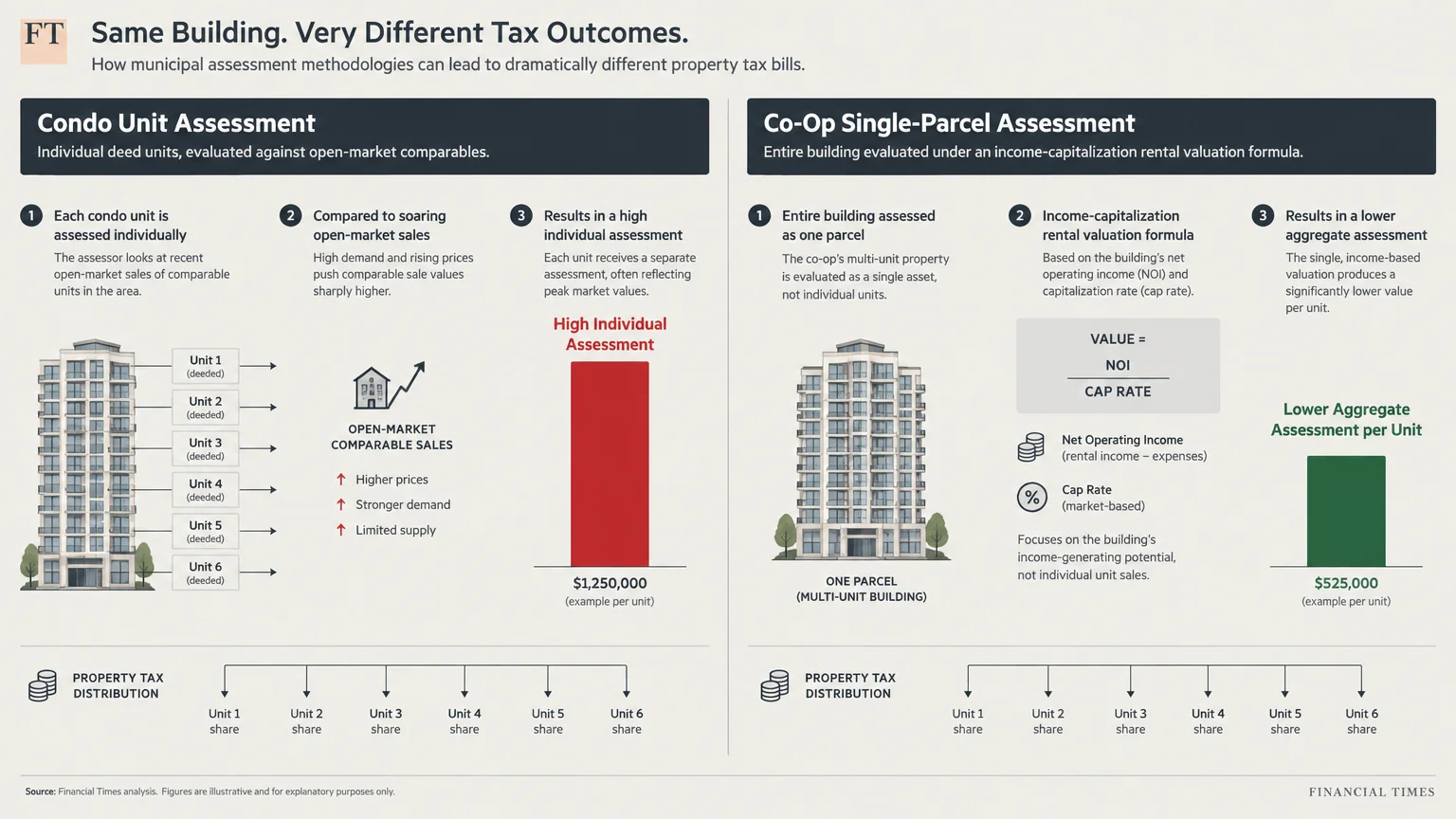
Property taxes represent an escalating burden for older Americans living on fixed Social Security and pension incomes. Cooperatives frequently enjoy lower effective property tax assessments than comparable condominium developments.
Local tax assessors evaluate co-ops as single multi-family rental buildings rather than individual fee-simple real estate parcels. This commercial assessment formula often yields lower taxable valuations than individual market sales comparisons.
The resulting property tax savings flow directly to shareholders through lower monthly carrying costs. You can explore tax rules for cooperative housing corporations at IRS.gov.
Under Internal Revenue Code Section 216, co-op shareholders can deduct their proportionate share of corporate real estate taxes and blanket mortgage interest. These deductions pass through directly on your annual tax return.
For retirees who itemize deductions, these pass-through write-offs provide meaningful relief against taxable retirement account distributions.

6. Greater Resident Control and Stronger Social Connection
Chronic loneliness and isolation present severe physical and cognitive health risks as adults transition into retirement. The collaborative nature of cooperative housing nurtures built-in social connections and peer engagement.
Co-ops function through democratic governance where every shareholder holds a direct stake in community decisions. Residents vote on building policies, elect peers to the board, and direct physical improvements.
Many co-ops organize volunteer committees covering landscaping, building aesthetics, sustainability, and community social gatherings. Participating in these committees provides retirees with a renewed sense of purpose and neighborhood contribution.
Shared amenities such as community gardens, library lounges, and communal kitchens foster organic daily interactions among neighbors. Residents look out for one another, creating informal mutual support systems that make solo aging far safer.
The AARP emphasizes that maintaining strong community relationships and social networks serves as a critical buffer against cognitive decline in older adults.

7. Collective Bargaining on Building Repairs and Utilities
Condominium owners must independently hire private contractors for plumbing repairs, appliance replacements, and electrical maintenance. Managing multiple independent repair personnel can prove stressful and expensive for aging homeowners.
Cooperatives leverage collective purchasing power to negotiate discounted bulk service agreements across the entire property. Co-op corporations secure building-wide commercial contracts for heating fuel, electricity, internet access, and pest control.
Most mid-sized and large cooperatives employ dedicated, full-time on-site superintendents and maintenance technicians. When a plumbing fixture leaks or a radiator requires bleeding, building staff handles the problem promptly.
Because basic mechanical support is included in your monthly maintenance fee, you avoid predatory service calls and inflated hourly rates. This shared staffing model protects your household budget from unexpected emergency maintenance charges.
“A fixed income demands fixed, predictable living expenses. When you eliminate housing surprises, you secure your peace of mind.” — Suze Orman, Financial Educator and Author

8. Senior-Specific Co-Ops Tailored for Aging in Place
Senior housing cooperatives represent a dynamic, rapidly expanding model within modern retiree housing options. These 55-plus cooperative communities combine the financial benefits of homeownership with age-friendly architectural design.
Senior co-op developments feature single-level layouts, roll-in showers, zero-step entryways, wide doorways, and illuminated emergency pull cords. These universal design elements ensure you can age in place safely without expensive future home renovations.
Unlike expensive continuing care or assisted living communities, senior co-ops do not charge exorbitant monthly healthcare fees. Residents manage their own healthcare while enjoying a supportive, peer-led independent living environment.
Shared facilities typically include fitness studios, woodworking shops, heated underground parking, and fully furnished guest suites for family visits. You retain equity growth and tax benefits without the physical burden of exterior property maintenance.
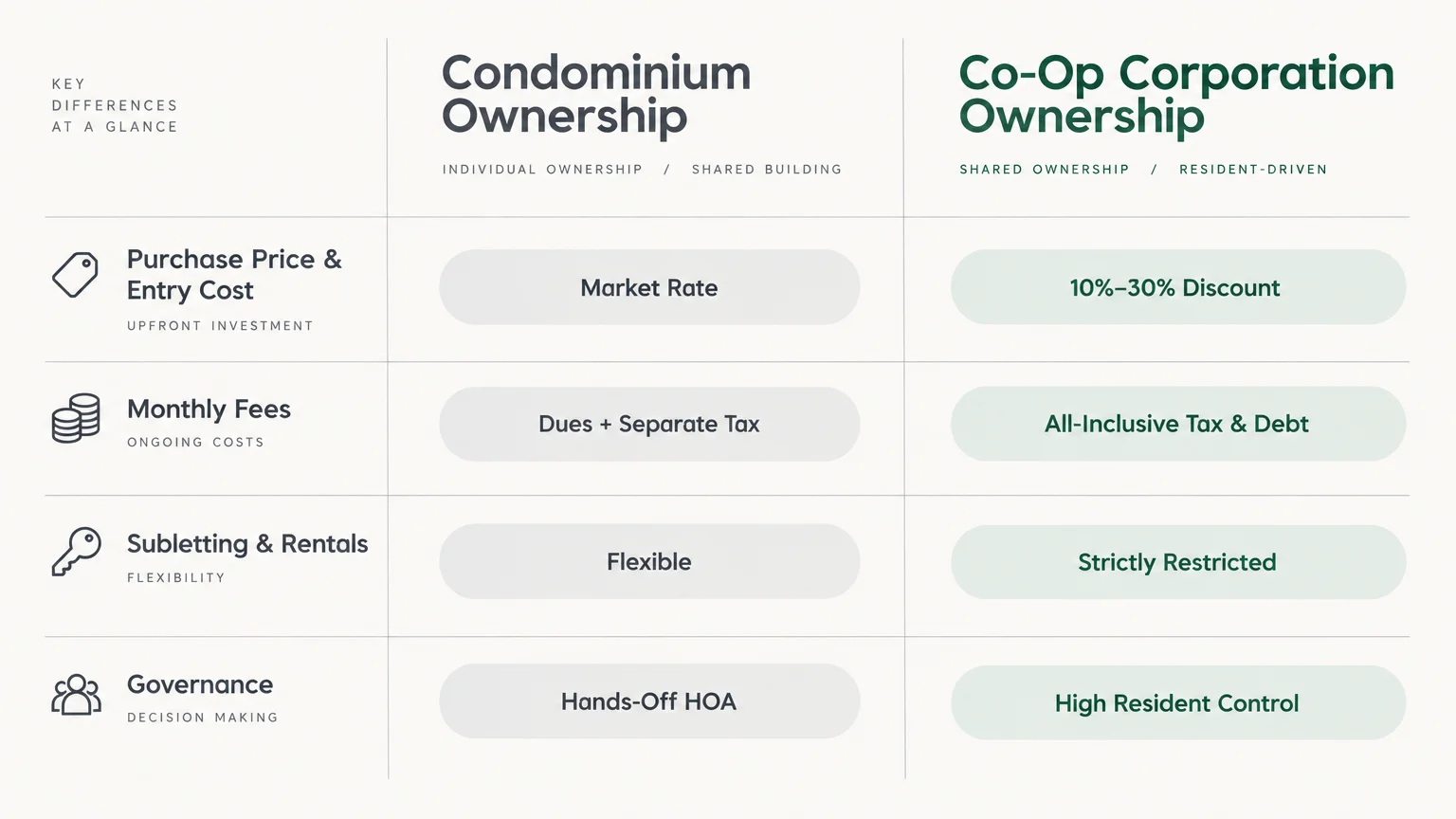
Co-Ops vs Condos: A Direct Financial and Lifestyle Comparison
Choosing between cooperative housing and condominiums requires evaluating governance, legal rights, and financial obligations side by side. The comparison table below highlights key functional differences between both homeownership paths.
| Feature | Housing Cooperative (Co-Op) | Condominium (Condo) |
|---|---|---|
| Legal Structure | Corporate equity shares paired with a proprietary lease | Fee-simple real estate deed for interior unit |
| Purchase Price | Typically 10% to 30% lower than comparable market units | Reflects full open-market real estate pricing |
| Monthly Fee Inclusions | Property taxes, blanket mortgage, maintenance, select utilities | Common area upkeep, building insurance, exterior reserves |
| Financing Method | Personal property share loans; higher down payment typical | Traditional real estate mortgages; flexible down payment options |
| Subletting Rules | Strict limitations or full prohibitions on leasing | Generally permissive leasing policies; investor-friendly |
| Buyer Approval Process | Exhaustive board vetting, interviews, and liquidity checks | Standard mortgage underwriting; rare board rejection |
| Community Atmosphere | High owner-occupancy with active peer governance | Higher tenant turnover and transient renter presence |
For current data comparing interest rates on cooperative share loans versus traditional mortgages, check market benchmarks on Bankrate.
Keep in mind that share loan lenders evaluate both your personal credit and the cooperative corporation’s balance sheet before issuing loan approval.

Pitfalls to Watch For
While co-op apartment benefits are extensive, cooperative ownership introduces distinct limitations that require careful evaluation. Understanding these operational friction points helps you avoid costly retirement mistakes.
First, the cooperative board interview process can feel intrusive and stressful. Boards hold sweeping legal discretion to reject prospective purchasers without disclosing their specific financial or personal reasoning.
Second, cooperative down payment rules are substantially higher than conventional condo mortgage thresholds. Many co-op corporations require minimum down payments between 20% and 30%, while some prestigious buildings demand 100% cash.
Third, exiting a cooperative can involve unique transaction fees known as flip taxes. A flip tax is a transfer fee paid to the co-op corporation upon the sale of shares.
Flip taxes typically range from 1% to 3% of the gross selling price, or a set percentage of capital profits. These fees replenish building reserve funds but reduce your net liquidation proceeds.
Finally, co-op apartments generally take longer to sell than condominiums due to restrictive buyer criteria. If you anticipate needing rapid capital liquidity for assisted medical care, a condominium offers faster liquidation potential.

Getting Expert Help
Purchasing cooperative shares involves distinct corporate and real estate legalities that differ from traditional home sales. You should engage qualified professional specialists under the following specific circumstances:
- Analyzing Co-Op Financial Audits: Hire a certified public accountant or experienced real estate attorney to scrutinize the co-op’s annual audited financial statements, operating reserves, and upcoming capital expenditure schedules.
- Evaluating Blanket Mortgage Terms: Consult a financial planner to assess the co-op’s underlying blanket mortgage maturity date and interest terms, ensuring the corporation faces no looming refinancing crisis.
- Navigating Share Loan Approval: Partner with a specialized mortgage broker who maintains established relationships with cooperative lenders familiar with share loan underwriting criteria and recognition agreements.
- Structuring Estate and Inheritance Plans: Work with an elder law estate attorney to draft proprietary lease transfer provisions, ensuring your cooperative shares pass seamlessly to heirs without triggering board rejection.
Securing specialized professional guidance before submitting your board package protects your earnest money deposit and ensures a smooth closing process.
Frequently Asked Questions
Below are clear, direct answers to common questions retirees ask when evaluating co-ops vs condos for their next home.
Can you get a reverse mortgage on a housing co-op?
Standard federally backed Home Equity Conversion Mortgages (HECMs) do not cover cooperative apartments because there is no recorded real estate deed. However, select private specialty lenders now offer proprietary reverse share loans in select states.
Always verify whether your cooperative corporation bylaws allow reverse share loans before assuming you can convert home equity into tax-free cash.
What happens if a fellow co-op shareholder stops paying maintenance?
The co-op corporation remains legally obligated to pay municipal taxes and the building blanket mortgage regardless of individual non-payments. The board utilizes corporation operating reserves to cover short-term collection deficits.
Unlike protracted condominium mortgage foreclosures that can take years, co-op boards can swiftly cancel proprietary leases and auction delinquent shares. This rapid enforcement mechanism protects solvent shareholders from absorbing lingering debts.
How does inheritance work with co-op apartment shares?
You can legally transfer co-op shares and your proprietary lease to your heirs through a will or family trust. However, the co-op board must still approve the heir before they can physically occupy the unit.
If the board denies occupancy based on financial criteria, the heir may sell the shares on the market and receive the full net financial proceeds.
Why do co-op boards require so much post-closing liquidity?
Co-op boards require extensive post-closing liquid reserves to ensure shareholders can comfortably withstand sudden healthcare costs or economic shifts. Boards prioritize the collective financial solvency of the building above individual sales volume.
Maintaining one to two years of total living expenses in liquid bank or brokerage accounts satisfies board underwriters and demonstrates enduring financial resilience.
Strategic Housing Choices for Your Retirement Future
Choosing a housing co-op allows retirees to reduce acquisition costs, control monthly living expenses, and enjoy a close-knit, owner-occupied community. Cooperative ownership turns neighbors into partners, creating collective stability that single-family homes and condos rarely match.
Take time to review corporation financial statements, attend informational meetings, and weigh board policies against your personal independence. Selecting a home that matches your long-term budget preserves both your capital and your peace of mind.
This is educational content based on general retirement and financial principles. Individual results vary based on your situation.
Always verify current benefit rules, tax laws, and eligibility requirements with official sources like SSA, Medicare.gov, or the IRS.
Last updated: March 2026. Retirement benefits, tax rules, and healthcare regulations change frequently—verify current details with official sources.









Leave a Reply