
Moving to Florida has long been the classic American retirement dream, but longtime residents know sunny postcards omit serious financial realities. Escalating expenses, extreme weather, and strained infrastructure now catch thousands of relocating seniors completely off guard.
Before you sell your family home and pack your bags, you must understand the genuine daily trade-offs. Local retirees face mounting pressures that can quickly derail a carefully planned nest egg.
Examining the firsthand downsides of retiring in Florida will help you protect your retirement budget before making an irreversible move. Here is what Floridians want you to know.
1. The Crippling Homeowners Insurance Crisis
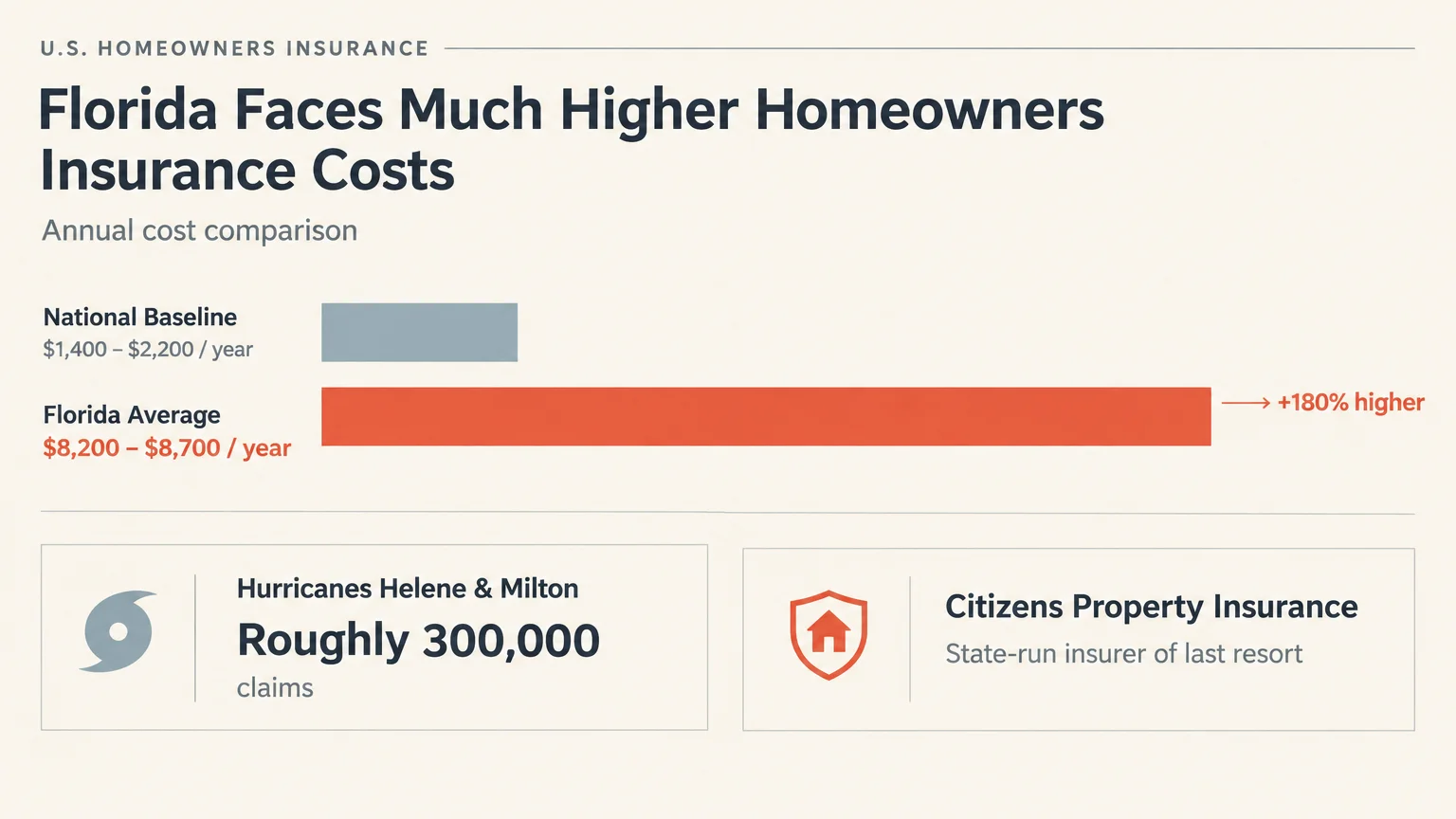
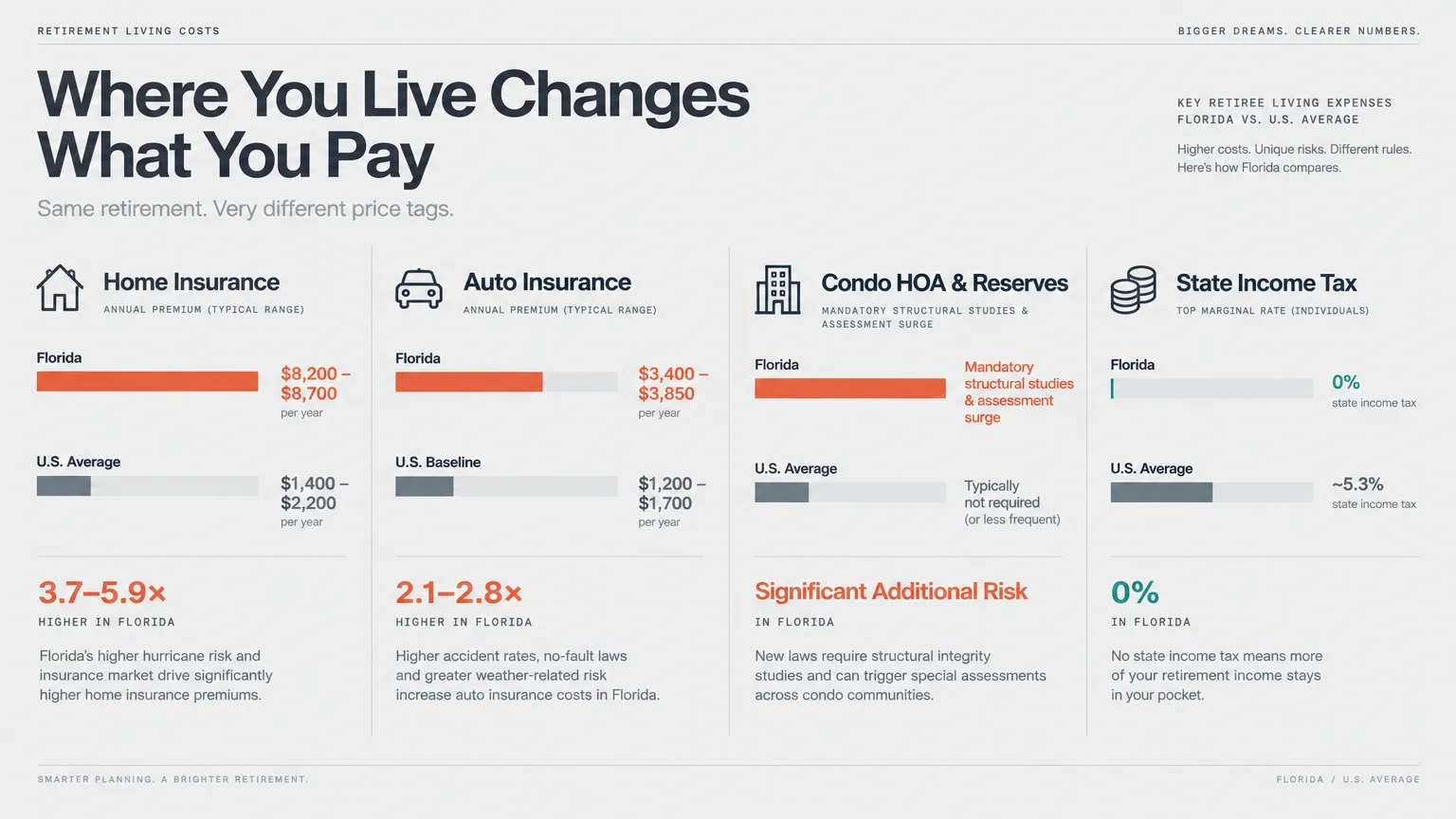
Florida homeowners pay an average annual home insurance premium between $8,200 and $8,700. That is roughly 180% higher than the national baseline of $1,400 to $2,200 per year.
Back-to-back storms like Hurricanes Helene and Milton generated roughly 300,000 claims, pushing private insurers out of the state entirely. Consequently, hundreds of thousands of retirees must rely on Citizens Property Insurance Corporation, the state-run insurer of last resort.
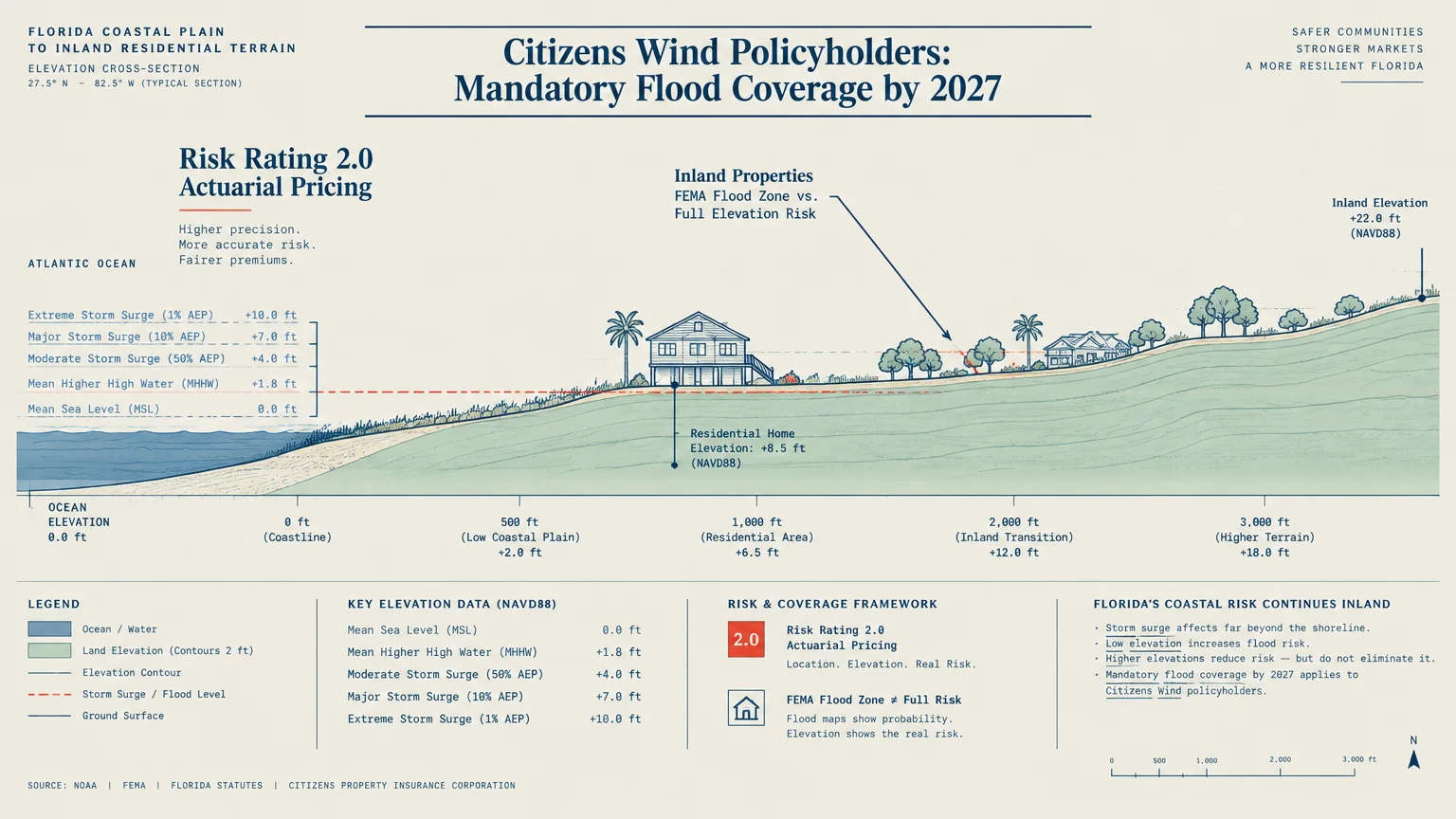
Under state regulations, Citizens policyholders with wind coverage must also purchase separate flood insurance by 2027. This mandate applies even if your property sits far away from a designated FEMA flood zone.
When researching Bankrate data on regional housing costs, you will find insurance often exceeds mortgage principal and interest payments. Many fixed-income seniors find these relentless annual premium hikes unsustainable.
2. Devastating Condo Special Assessments and Fee Surges
Buying a low-maintenance coastal condominium used to be the gold standard for Florida retirees. Recent legislative reforms under Senate Bills 4-D and 154, however, fundamentally reshaped the financial landscape for condo owners.
Buildings three stories or higher reaching 30 years of age—or 25 years near the coastline—must complete milestone structural inspections. Associations must also complete mandatory Structural Integrity Reserve Studies to fund future structural repairs.
Crucially, condo boards can no longer vote to waive or underfund reserve accounts for critical components like roofs and foundations. This change took effect for all budgets on or after December 31, 2024.
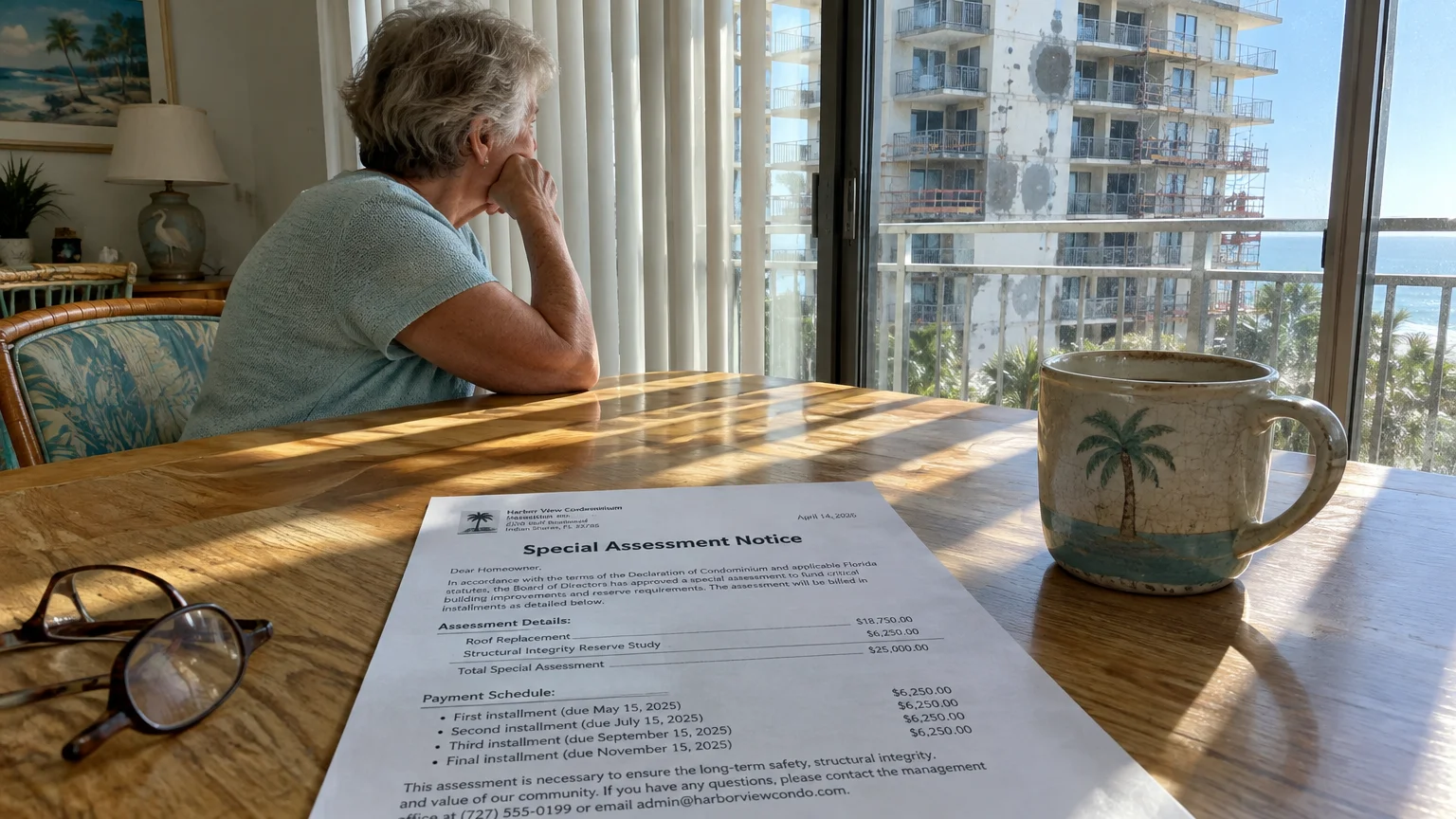
As a result, monthly association dues have doubled or tripled across the state. Even worse, many retirees face surprise special assessments ranging from $10,000 to over $100,000 per unit to fund deferred maintenance.
These sudden cash-flow shocks force many seniors on fixed incomes to sell their units at steep discounts. What seemed like carefree community living often turns into a major financial trap.
3. Nation-Leading Auto Insurance Premiums
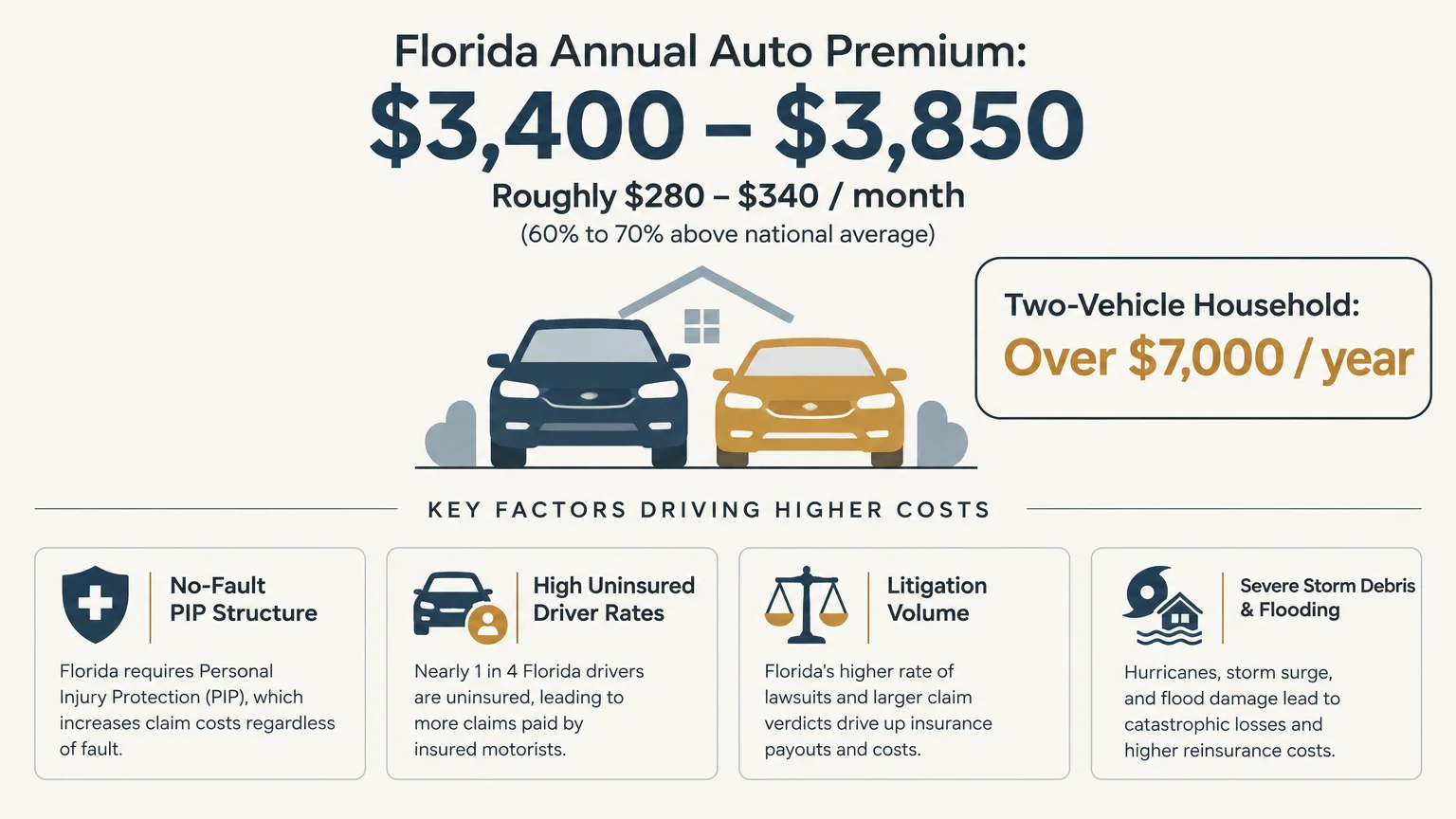
Florida consistently ranks as one of the two most expensive states in the nation for car insurance. Drivers pay an average full-coverage premium between $3,400 and $3,850 annually, or roughly $280 to $340 per month.
That expense sits 60% to 70% above what you would pay in most other states. Florida’s no-fault Personal Injury Protection structure, high uninsured driver rates, and heavy litigation volume drive these elevated rates.
Severe storms also cause frequent comprehensive claims from localized flash flooding and falling debris. If your household maintains two vehicles, you might easily spend over $7,000 every year just keeping them insured.

4. The Property Tax “Reset Shock” for Newcomers
Florida has no state individual income tax, which attracts many tax-conscious retirees. However, local county governments collect substantial revenue through county property taxes instead.
Longtime residents benefit from Florida’s Save Our Homes amendment, which caps annual homestead assessment increases at 3% or the rate of inflation. This protection keeps property taxes predictable for established homeowners over decades.
When you buy a home as a newcomer, that valuation cap disappears instantly. On January 1 following your purchase, the county property appraiser resets the assessed taxable value to full market value.
Consequently, you could pay double or triple the taxes of your next-door neighbor living in an identical property. Reviewing the seller’s past tax bill will give you a dangerously inaccurate estimate of your future tax burden.
5. Severe Senior Healthcare and Caregiver Shortages
Floridians aged 65 and older make up over 22% of the state population, compared to roughly 18% nationally. This top-heavy demographic concentration places intense pressure on local hospitals, clinics, and primary care physicians.
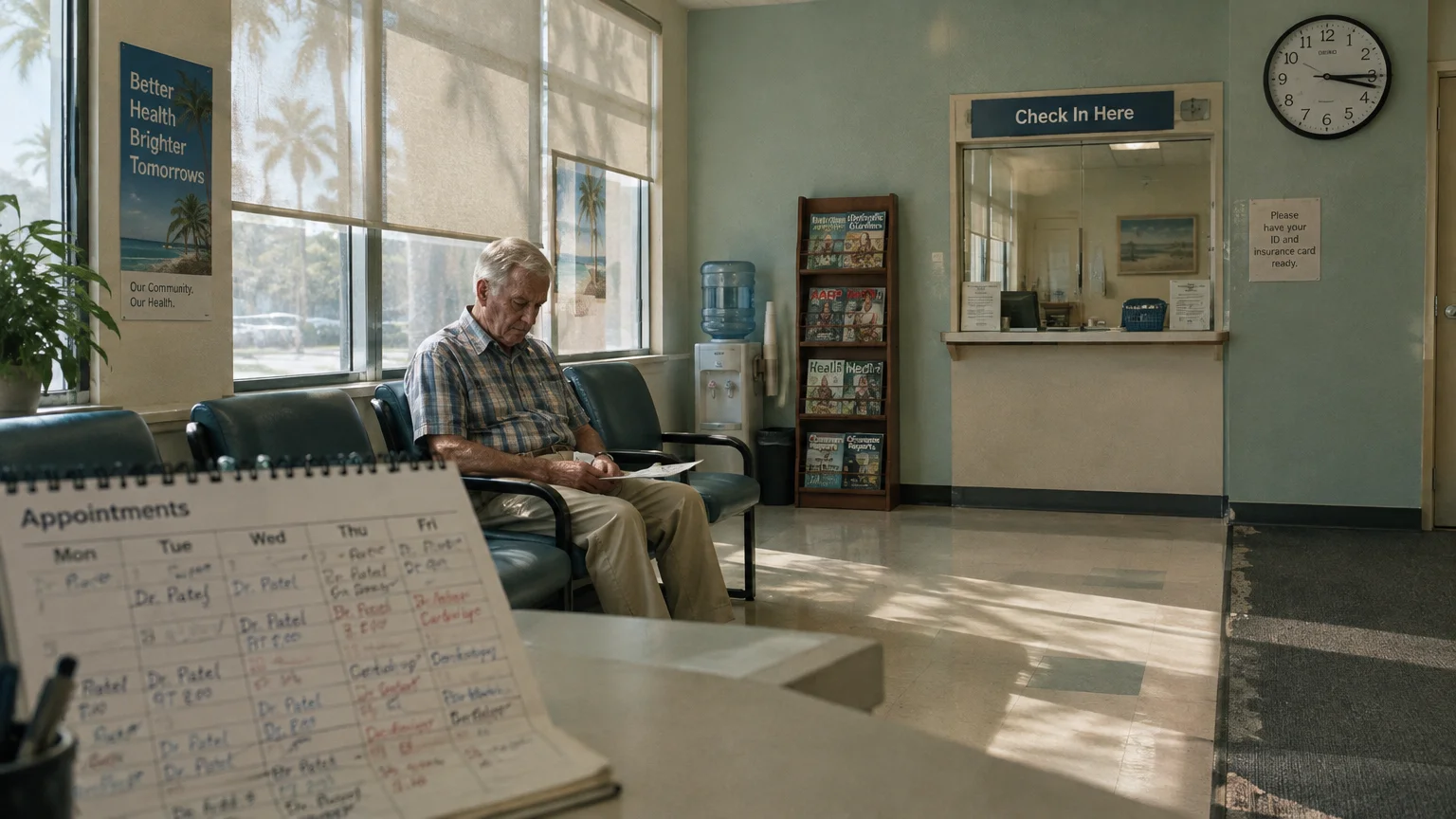
Florida faces an estimated 27% deficit in geriatricians, making specialized senior care difficult to schedule. You may wait months to secure an appointment with a new medical specialist or primary physician.
In-home care presents an even steeper hurdle. According to the United Health Foundation’s America’s Health Rankings Senior Report, Florida ranks 50th nationwide in home health care worker availability.
Florida provides only 17 home health aides per 1,000 older adults, compared to the national average of 65 workers. Finding reliable assistance to age in place safely often proves difficult and expensive.
The National Institute on Aging emphasizes that planning for long-term supportive care is essential for healthy aging. In Florida, however, the supply of qualified caregivers falls critically short of demand.
6. Skyrocketing Flood Insurance Under Risk Rating 2.0
Federal flood insurance pricing rules changed drastically under FEMA’s Risk Rating 2.0 framework. Premiums no longer rely on simple broad flood zones; they reflect individual structural elevation, distance to water, and actual rebuild costs.
While annual rate increases for primary residences face an 18% statutory cap, premiums continue marching upward every year. Many coastal and low-lying inland properties face eventual baseline flood premiums between $4,000 and $7,000 annually.
Remember that standard homeowners insurance policies never cover damage caused by rising storm surges or flash floods. If you purchase in a waterfront or coastal community, this separate policy is essential.
Adding several thousand dollars of mandatory flood coverage on top of your primary property policy strains retirement cash flow. These combined insurance bills can easily exceed your annual food or medical budget.
7. Extreme Summer Heat and Indoor Confinement
Many people move south to escape freezing winter snowstorms and icy roads. In Florida, however, brutal summer conditions simply create a reverse version of winter cabin fever.
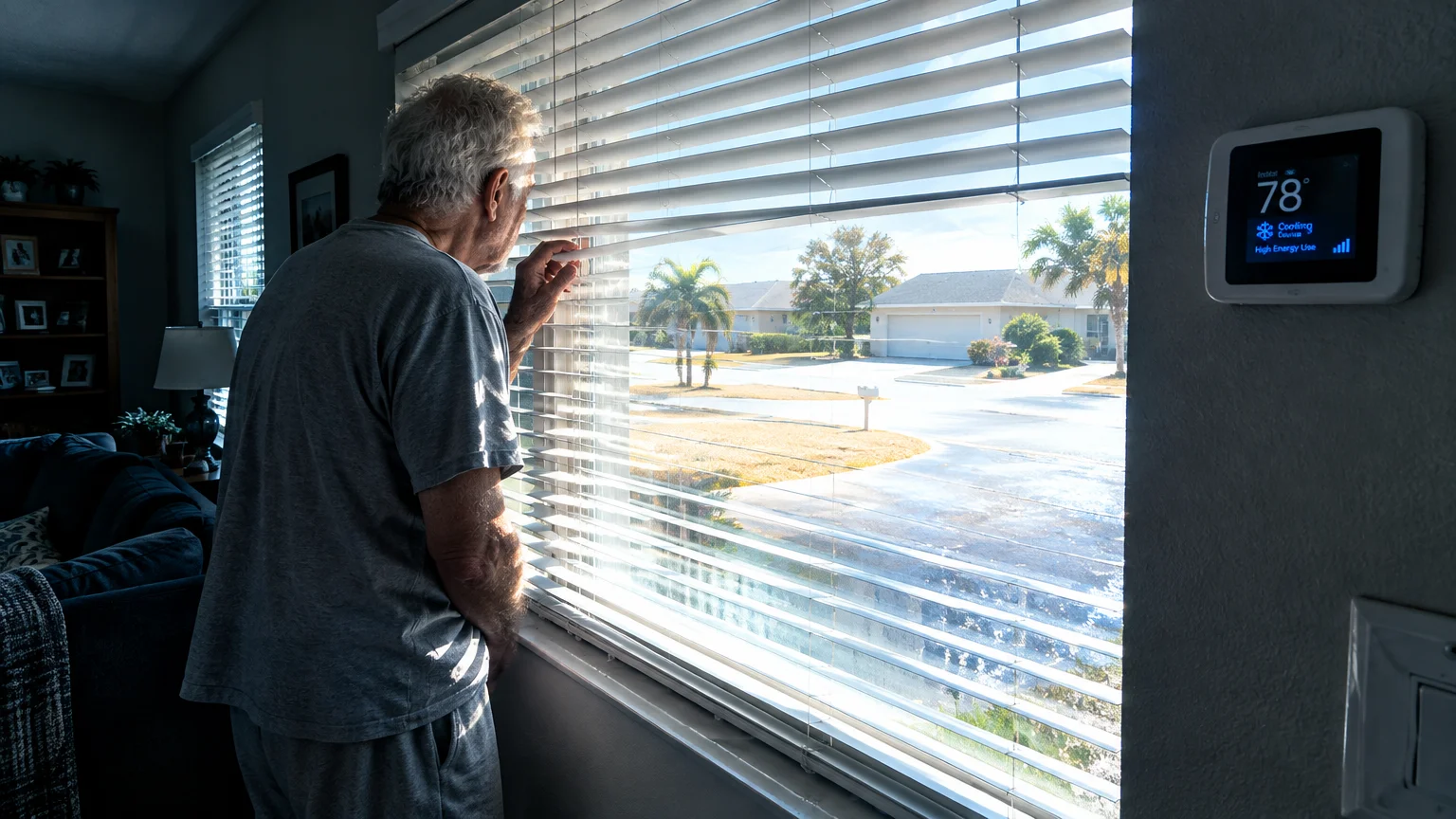
Most regions log between 60 and 100 days per year with heat index values exceeding 100°F to 105°F. Intense humidity and dangerous ultraviolet radiation make midday outdoor exercise, gardening, or walking unsafe for older adults.
Seniors with cardiovascular issues, respiratory ailments, or heat-sensitive medications must remain indoors in air-conditioned spaces for months. Running cooling systems continuously drives electric utility bills to peak levels throughout the extended summer.

8. Massive Out-of-Pocket Hurricane Deductibles
Many newcomers assume their property insurance carries a standard flat deductible of $500 or $1,000. In Florida, property policies almost universally mandate separate percentage-based hurricane deductibles.
These deductibles typically range from 2% to 5% of your dwelling coverage limit. For a home insured at $450,000, a 5% deductible means you must pay $22,500 out of pocket before coverage starts.
Meeting that requirement requires keeping substantial cash reserves readily available in a liquid bank account. If you rely strictly on monthly Social Security income, covering that upfront deductible after a storm can create severe hardship.
“A big mistake retirees make is relocating based solely on warm weather without stress-testing their true living expenses.” — Suze Orman, Personal Finance Expert
Comparing Florida Living Costs to the National Average
Evaluating the financial trade-offs requires looking at hard numbers rather than promotional brochures. Here is how Florida compares to national baselines across essential retirement cost categories.
| Expense Category | Florida Average | National Baseline | Impact on Retirees |
|---|---|---|---|
| Homeowners Insurance | $8,200 – $8,700/year | $1,400 – $2,200/year | Severe annual budget strain |
| Auto Insurance (Full Coverage) | $3,400 – $3,850/year | $2,000 – $2,300/year | 60%–70% higher transportation cost |
| Median Home Price | $410,000 – $430,000 | ~$412,000 | 80%+ price surge since 2019 |
| Home Health Aides (per 1,000 65+) | 17 workers (50th nationally) | 65 workers | Severe in-home caregiver shortages |
| Property Tax Basis for New Buyers | Resets to current market value | Varies by jurisdiction | Removes legacy assessment caps |
| Typical Storm Deductible | 2% to 5% of insured value | Flat $500 to $1,500 | Requires $8,000 to $25,000+ liquid cash |
Pitfalls to Watch For
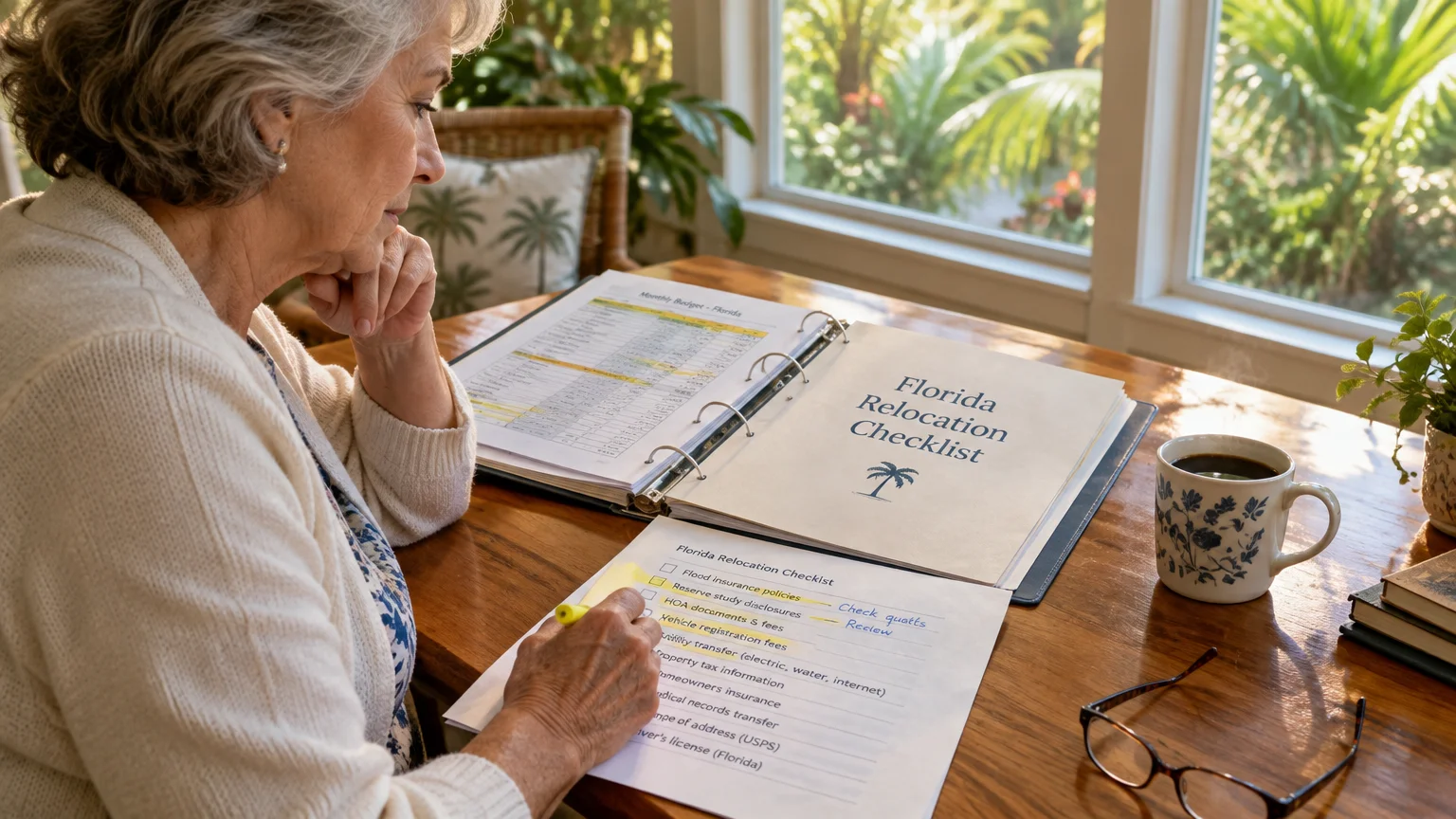
Relocating during retirement involves complex choices that carry lasting financial consequences. If you are still weighing reasons not to retire in Florida, avoid these common missteps.
- Trusting the seller’s property tax bill: Basing your budget on current property taxes overlooks the immediate post-sale assessment reset.
- Purchasing an older condominium without reserve data: Buying a unit without examining the Structural Integrity Reserve Study risks catastrophic special assessments.
- Neglecting separate flood insurance requirements: Assuming standard homeowners policies cover storm surges leaves your life savings vulnerable.
- Depleting liquid cash for a down payment: Spending all your liquid capital leaves you unable to cover large percentage-based hurricane deductibles.
The Consumer Financial Protection Bureau recommends stress-testing major housing transitions against unexpected emergency expenses. Planning ahead keeps temporary weather shocks from destabilizing your permanent retirement savings.
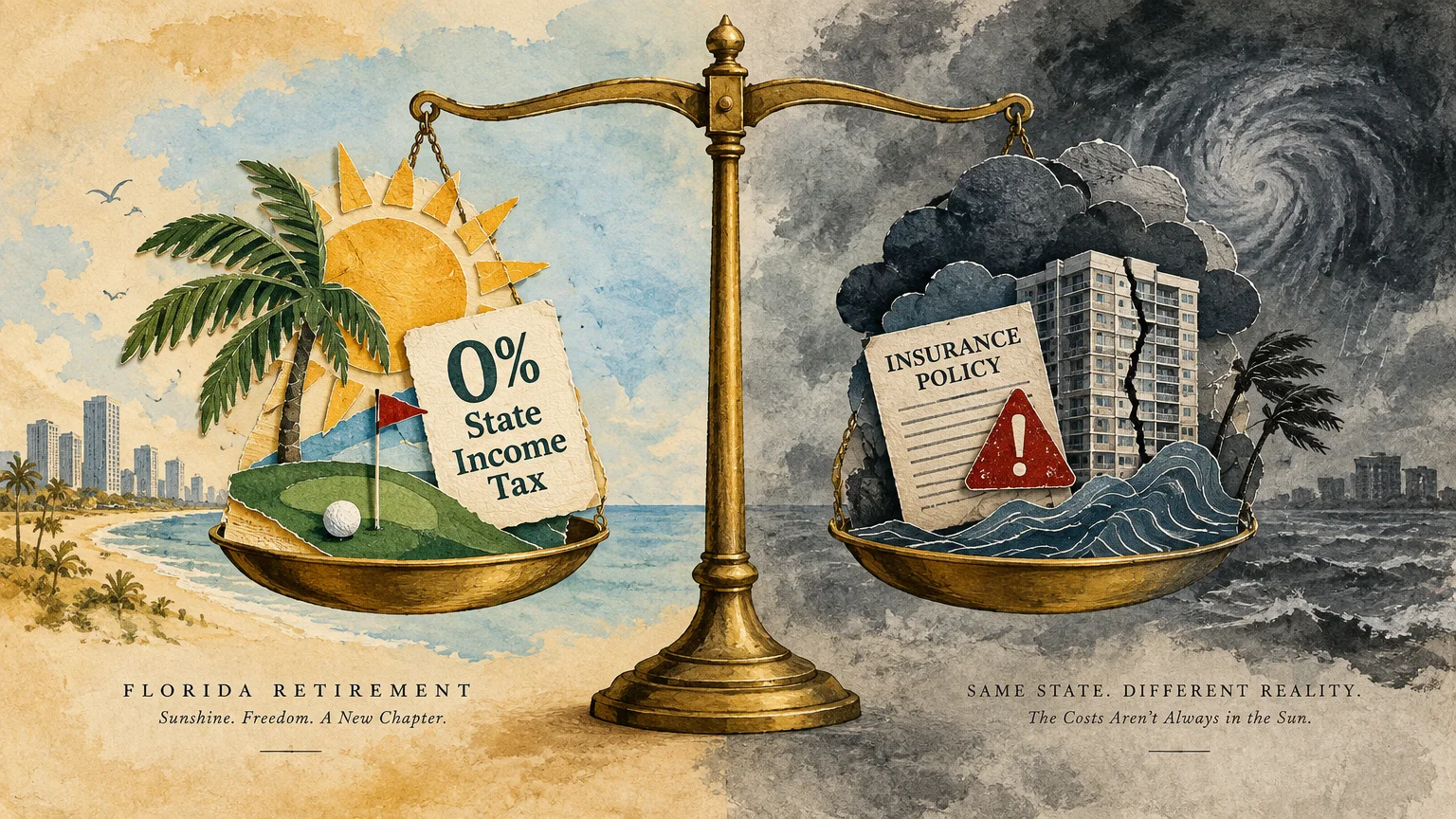
Florida Retirement Pros and Cons: Is Florida Bad for Retirees?
Deciding if Florida is bad for retirees depends on your personal financial resilience and lifestyle priorities. The state still offers zero personal income tax, vibrant senior communities, and abundant sunshine.
However, serious Florida retirement drawbacks often catch modest-income households off guard. If your retirement relies primarily on fixed pension checks or Social Security, unexpected insurance and maintenance hikes can easily erase your flexibility.
The key is balancing the sunshine against true operational living costs. You can review national aging resources through AARP to weigh regional cost-of-living differences before selling your current residence.

Getting Expert Help
Navigating an interstate retirement move requires objective professional guidance to avoid costly surprises. Consider consulting licensed advisors across these specific scenarios before committing to a relocation.
- Tax assessment projections: Hire a Florida CPA to model your accurate post-purchase property tax obligations under current millage rates.
- Insurance feasibility reviews: Consult an independent insurance broker to obtain binding home, auto, and flood quotes before signing a purchase contract.
- Condo association document audits: Retain a real estate attorney to evaluate HOA reserve balances, recent engineering inspections, and pending assessments.
- Long-term care availability planning: Work with an elder care specialist to identify local healthcare networks and evaluate home caregiver capacity.
Frequently Asked Questions
Why is homeowners insurance so expensive in Florida?
Florida rates average over $8,200 annually due to frequent severe hurricanes, high reinsurance costs, and private insurer insolvencies. High litigation expenses and storm claims have driven dozens of private carriers out of the state.
How does the Florida property tax reset work for new buyers?
While longtime owners enjoy a 3% assessment cap, buying a home resets its taxable value to full market value on January 1. Newcomers often pay two to three times more tax than adjacent longtime neighbors.
What are the new Florida condo inspection rules?
State laws mandate milestone structural inspections for buildings three stories or taller at 30 years of age. Associations can no longer waive maintenance reserves, triggering major fee spikes and special assessments.
Can you retire comfortably in Florida on Social Security alone?
Retiring solely on Social Security in Florida has become exceptionally difficult due to rising rents, high utilities, and steep insurance costs. Most retirees require supplementary pensions or substantial investment savings to maintain stability.
Take time to visit prospective Florida communities during the peak summer months, and request actual insurance estimates on target properties before committing. Renting for a year offers an effective way to experience local climate, traffic, and healthcare firsthand without risking your capital.
The information in this guide is meant for educational purposes. Your specific circumstances—including income, health needs, tax situation, and goals—may require different approaches. When in doubt, consult a licensed professional.
Last updated: March 2026. Retirement benefits, tax rules, and healthcare regulations change frequently—verify current details with official sources.









Leave a Reply