
Your taxable income rarely stays flat in retirement, and unexpected shifts can abruptly bump you into a higher marginal tax rate. Spotting financial triggers early gives you time to protect your nest egg before year-end deadlines pass.
Major milestones like starting required withdrawals, claiming Social Security, or changing your filing status often reshape your tax liability overnight. Knowing these patterns helps you anticipate changes and preserve your savings.
Here are seven critical warning signs that your retirement tax bracket will change next year—and the exact steps you can take today.

At a Glance: Key Tax Shifts to Monitor
Retirement taxes operate under complex rules where small income adjustments can produce massive changes in your annual bill. Understanding your forward-looking tax profile allows you to stay in control of your distributions.
- Required Minimum Distributions: Age triggers that force taxable withdrawals from traditional accounts.
- Social Security Taxation: Income additions that push your benefits into taxable territory.
- The Income Valley: A temporary drop in earnings between your retirement date and mandatory distributions.
- Filing Status Changes: Surviving spouses shifting from joint to single filing brackets.
- Medicare Surcharges: Income cliffs that increase Part B and Part D premiums.
- Asset Sales or Roth Conversions: Planned transactions that artificially elevate your taxable income.
- Inflation and Legislative Adjustments: Annual IRS revisions that alter bracket thresholds.
1. You Reach Age 73 and Mandatory RMDs Begin
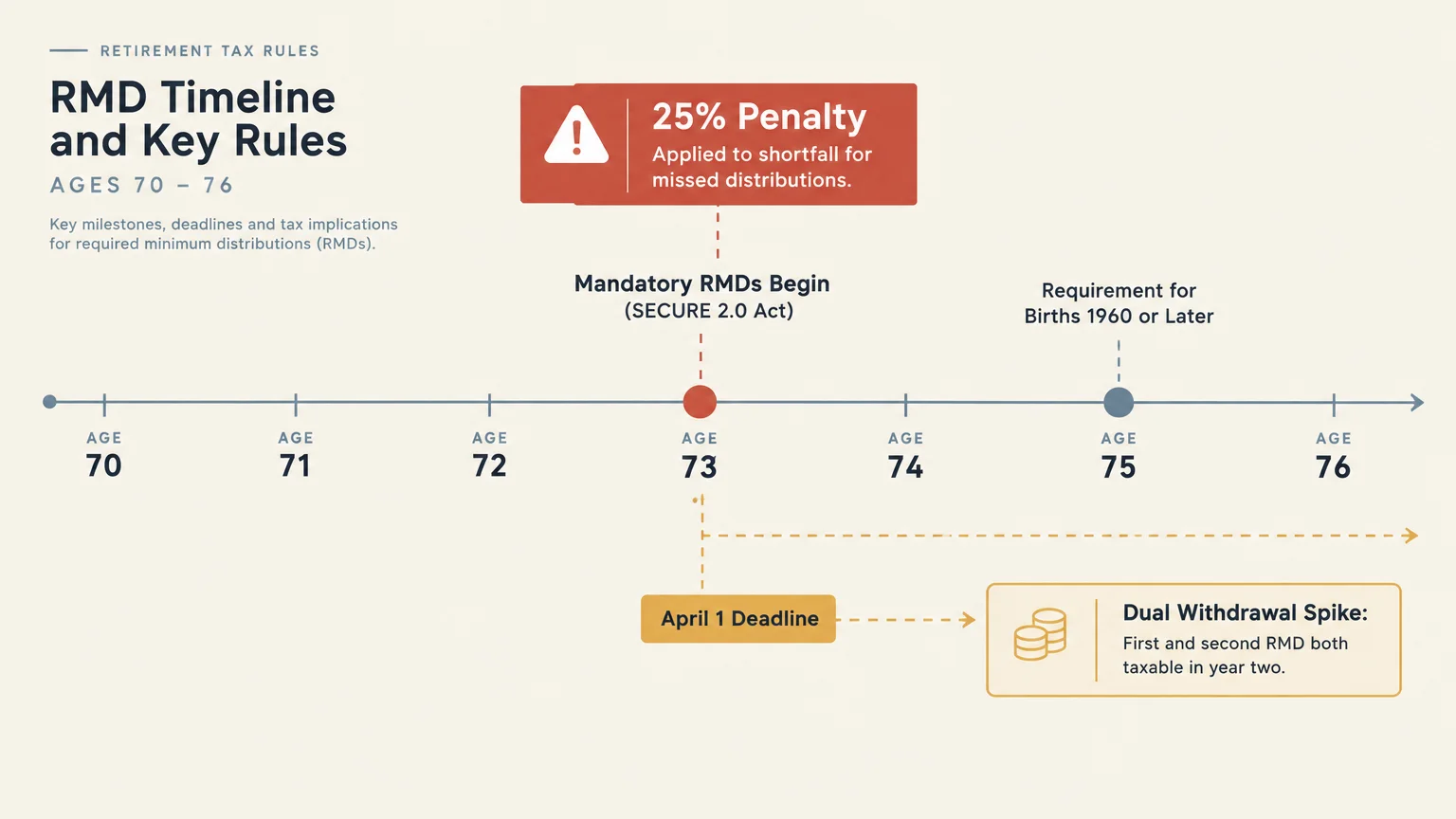
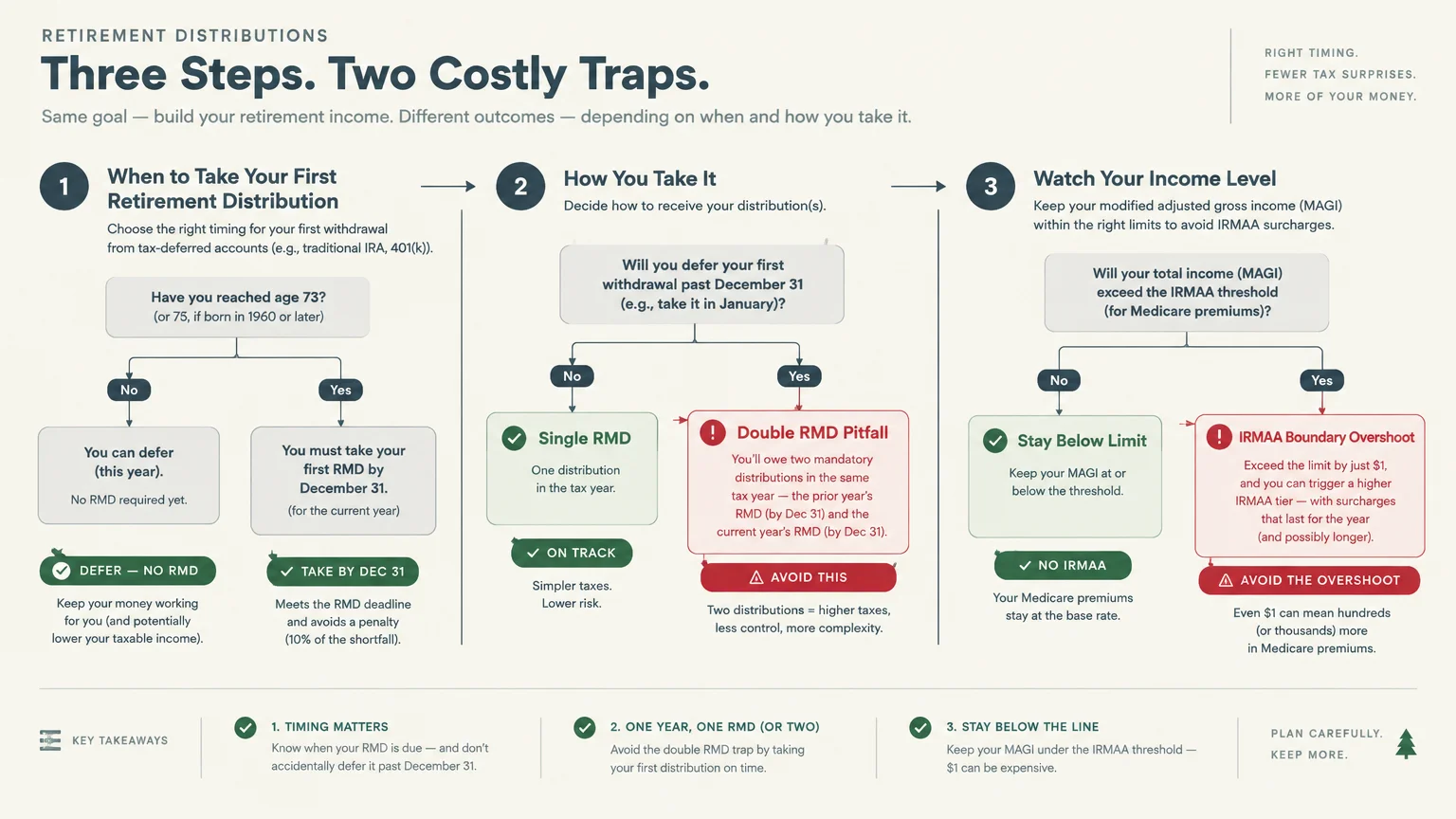
Under the SECURE 2.0 Act, you must start taking Required Minimum Distributions (RMDs) from traditional IRAs and 401(k) plans at age 73. If you were born in 1960 or later, that requirement begins at age 75.
Every dollar distributed from a traditional pre-tax account counts as ordinary income. When you evaluate how RMDs affect taxes alongside your pensions and Social Security, the combined total often pushes you into a higher bracket.
You can review withdrawal calculations directly through the Internal Revenue Service (IRS) to determine your exact distribution amounts. Failing to withdraw the full required amount carries a steep 25% penalty.
You may delay your first RMD until April 1 of the year following your 73rd birthday. However, doing so requires taking two distributions in that single tax year; this dual withdrawal frequently spikes your bracket.

2. You Start Claiming Social Security and Trigger the Tax Torpedo
Starting your monthly retirement benefits introduces the statutory concept known as provisional income. The federal formula calculates this metric by adding half of your annual benefits to your Adjusted Gross Income.
Because Congress never indexed these thresholds to inflation, single filers with provisional income over $34,000 must pay tax on up to 85% of their benefits. Joint filers reach the 85% threshold at just $44,000.
You can monitor your expected monthly payout on the Social Security Administration (SSA) portal. Adding non-Social Security income pushes more of your benefits into taxation, creating an effective marginal rate far higher than your stated bracket.
Financial planners call this sudden spike the tax torpedo. A modest withdrawal from your traditional IRA can inadvertently make an additional 85 cents of your benefit taxable.
3. You Retire and Enter an Income Valley
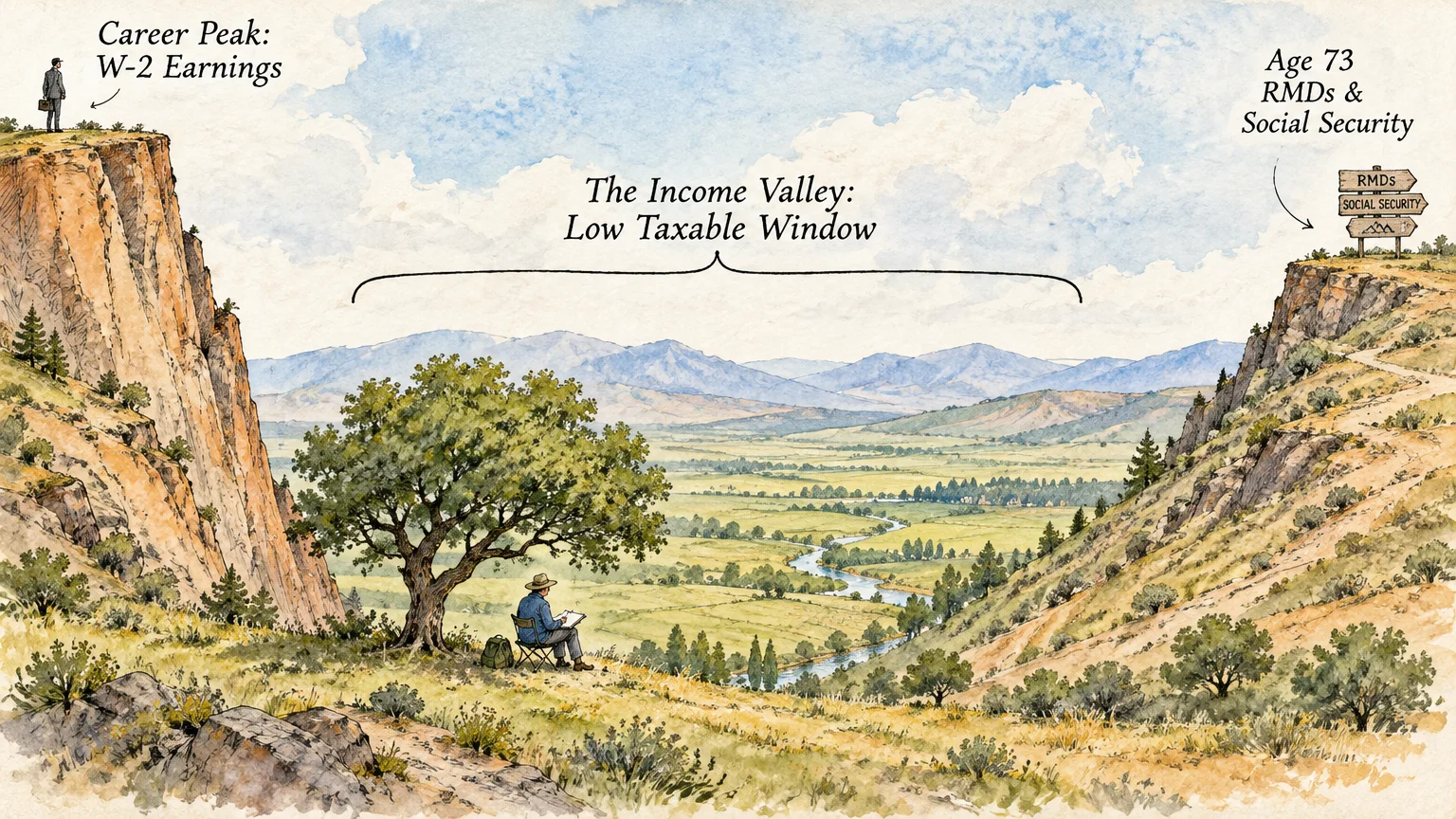
Leaving your career causes an immediate plunge in earned W-2 income. If you pause before claiming Social Security and have not reached RMD age, your taxable income drops significantly.
This transitional window represents an income valley. Instead of your taxes rising, your retirement tax bracket plunges into the 10% or 12% marginal tier.
Savvy retirees treat this low-income phase as a prime tax-planning window. You can systematically convert pre-tax balances into a Roth IRA at historically low tax rates before mandatory withdrawals commence.
Taking advantage of these lower rates prevents future tax spikes. You pay lower rates now so you never pay 24% or more on those funds later.

4. You Face the Widow’s Penalty After a Filing Status Shift
Losing a spouse brings profound grief, but it also delivers an unexpected financial shock known as the widow’s penalty. While you file jointly in the year of death, you must file as Single thereafter.
Single tax brackets are half the width of married filing jointly brackets. Furthermore, the standard deduction drops from $32,200 to $16,100, removing a substantial portion of your tax protection.
Meanwhile, your household income rarely drops by 50%. A surviving spouse typically retains the higher Social Security benefit, substantial RMD obligations, and surviving pension distributions.
This combination compresses substantial income into much narrower brackets. As a result, your effective tax bracket change surges even though your total cash flow remains the same or decreases.
5. Your Income Exceeds a Medicare IRMAA Surcharge Cliff
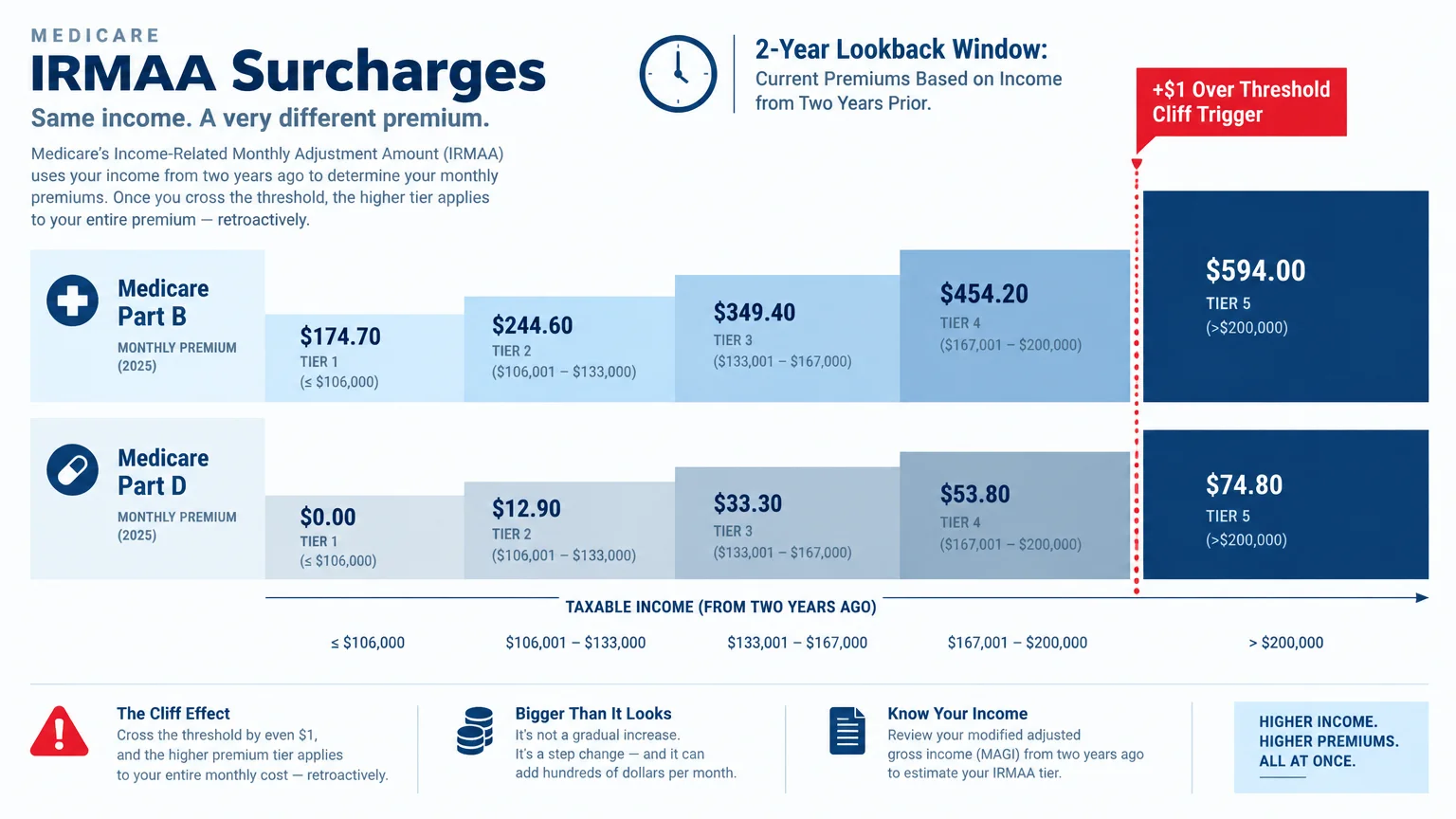
Medicare Part B and Part D premiums include an Income-Related Monthly Adjustment Amount (IRMAA) for higher earners. The government determines these surcharges using a mandatory two-year lookback on your Modified Adjusted Gross Income.
For example, the income you report on your 2025 tax return determines the healthcare premiums you pay in 2027. You can check current healthcare baseline costs directly through Medicare.gov.
Unlike progressive income tax brackets, IRMAA thresholds operate as steep financial cliffs. Exceeding a single tier limit by just one dollar triggers the full monthly surcharge for the entire calendar year.
Recognizing an impending IRMAA breach allows you to adjust year-end withdrawals. Avoiding that extra dollar of income can save you thousands of dollars in annual premium penalties.
6. You Plan a Major Asset Sale or Roth Conversion
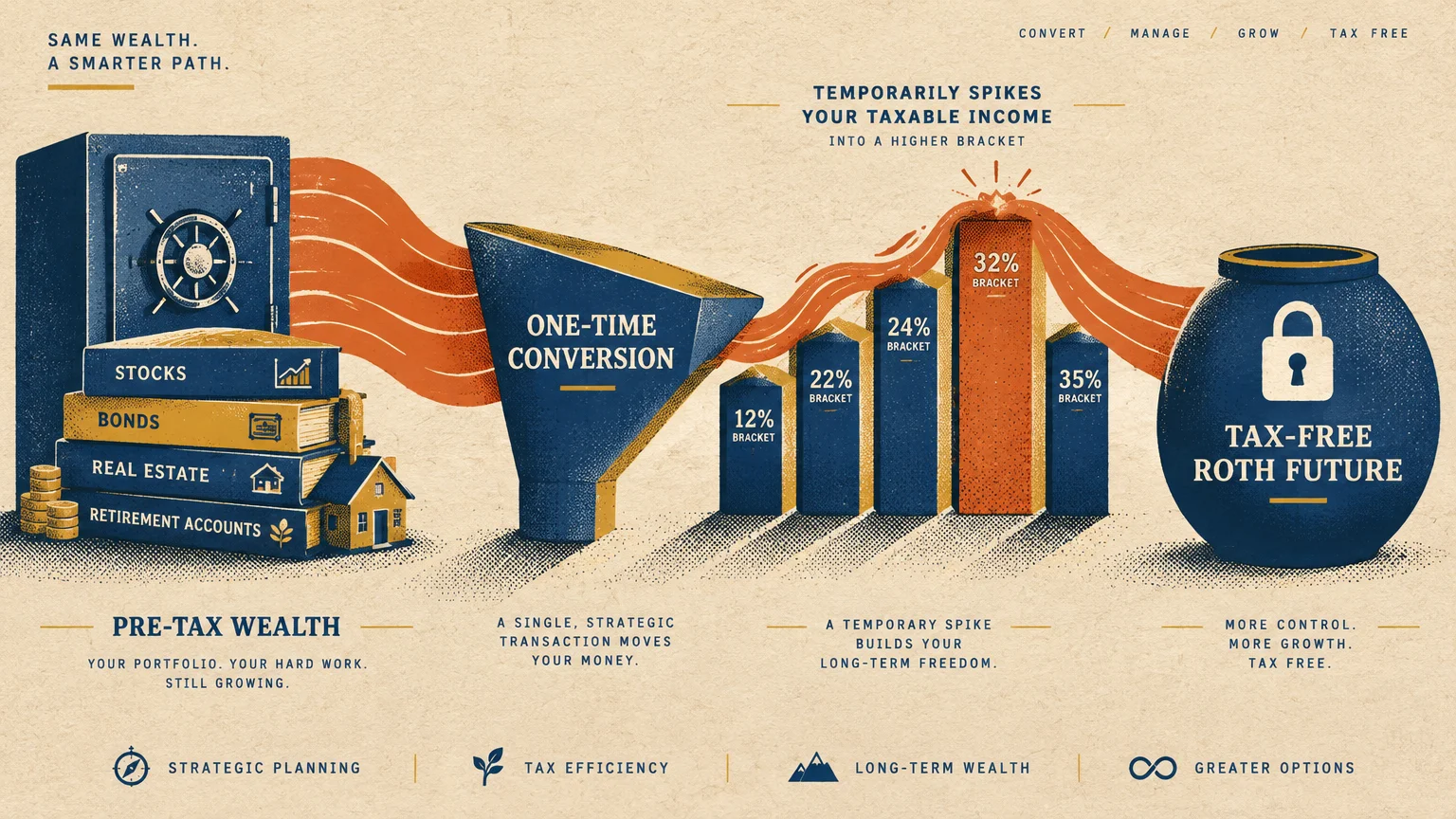
Selling a vacation home, liquidating taxable investments with substantial capital gains, or executing a large Roth conversion directly influences your tax bracket. These transactions create an artificial income surge in a single year.
While long-term capital gains receive preferential tax rates, they still expand your Adjusted Gross Income. This extra income can elevate your ordinary income into higher tax brackets and trigger additional surcharges.
Large taxable events also expose your investment returns to the 3.8% Net Investment Income Tax (NIIT). Failing to plan for these sales beforehand leaves you with an uncomfortably large bill come April.
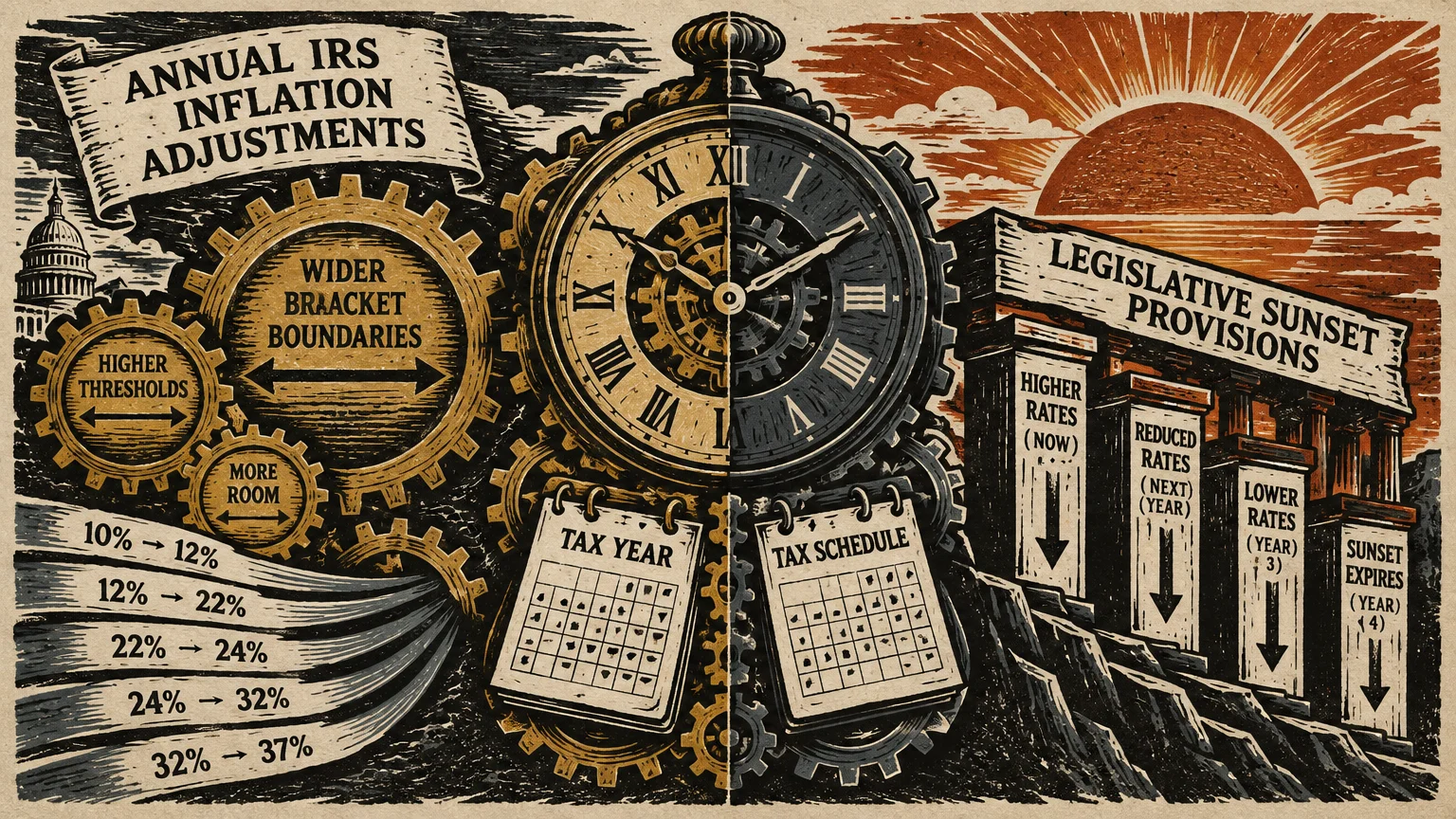
7. Annual Inflation Adjustments and Legislative Sunset Provisions
The IRS recalibrates marginal brackets each year using the Chained Consumer Price Index to protect filers against bracket creep. These annual cost-of-living adjustments expand bracket thresholds and raise the standard deduction.
In addition to standard inflation shifts, retirement savers must focus on tax planning for next year and future legislative changes. Upcoming congressional actions frequently alter deductions and individual income brackets.
Understanding the statutory landscape allows you to anticipate whether 2027 tax brackets will shift your liabilities upward. Proactive tax management requires watching Washington policy just as closely as your portfolio.
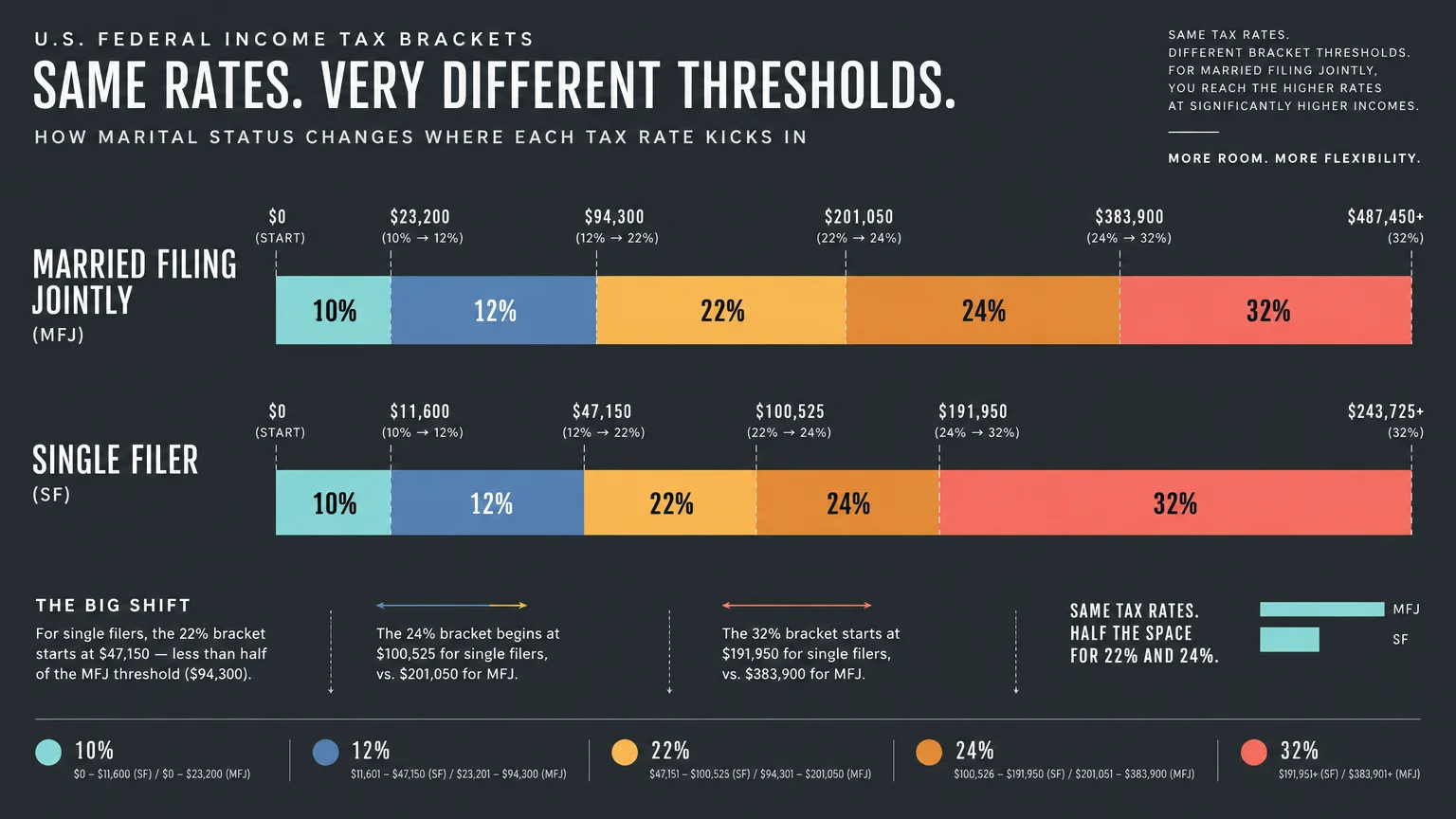
Comparing Single vs. Joint Filing Status Impacts
The structural difference between joint and single filers illustrates why your tax bracket change can occur without any change in your spending. The following table highlights the critical thresholds retirees must navigate.
| Tax Metric | Married Filing Jointly | Single Filer | Key Planning Consequence |
|---|---|---|---|
| Standard Deduction (2026 Baseline) | $32,200 | $16,100 | Surviving spouses lose half their deduction shelter immediately. |
| Social Security 85% Tax Threshold | $44,000 Provisional Income | $34,000 Provisional Income | Single filers cross the threshold with modest retirement income. |
| Top of 12% Ordinary Income Bracket | ~$96,950 (Taxable Income) | ~$48,475 (Taxable Income) | Income over this limit jumps directly into the 22% marginal tier. |
| Medicare IRMAA Lookback Trigger | Tier 1 Cliff (Joint MAGI) | Tier 1 Cliff (Single MAGI) | Going $1 over the limit triggers full 12-month Part B surcharges. |

Expert Perspective on Retirement Tax Planning
Managing your tax exposure requires an ongoing, proactive mindset rather than reactive scrambling every spring. Financial leaders emphasize that what you retain matters far more than what you formally withdraw.
“A big mistake people make is not considering taxes when they save for retirement. You must plan for what you get to keep, not just what you accumulate.” — Suze Orman, Personal Finance Author
Orman’s observation underlines a universal truth for retirees: your tax bracket is not fixed. You possess the legal tools to reshape your taxable distributions before mandatory thresholds dictate terms.
Strategic Solutions: How to Protect Your Bracket
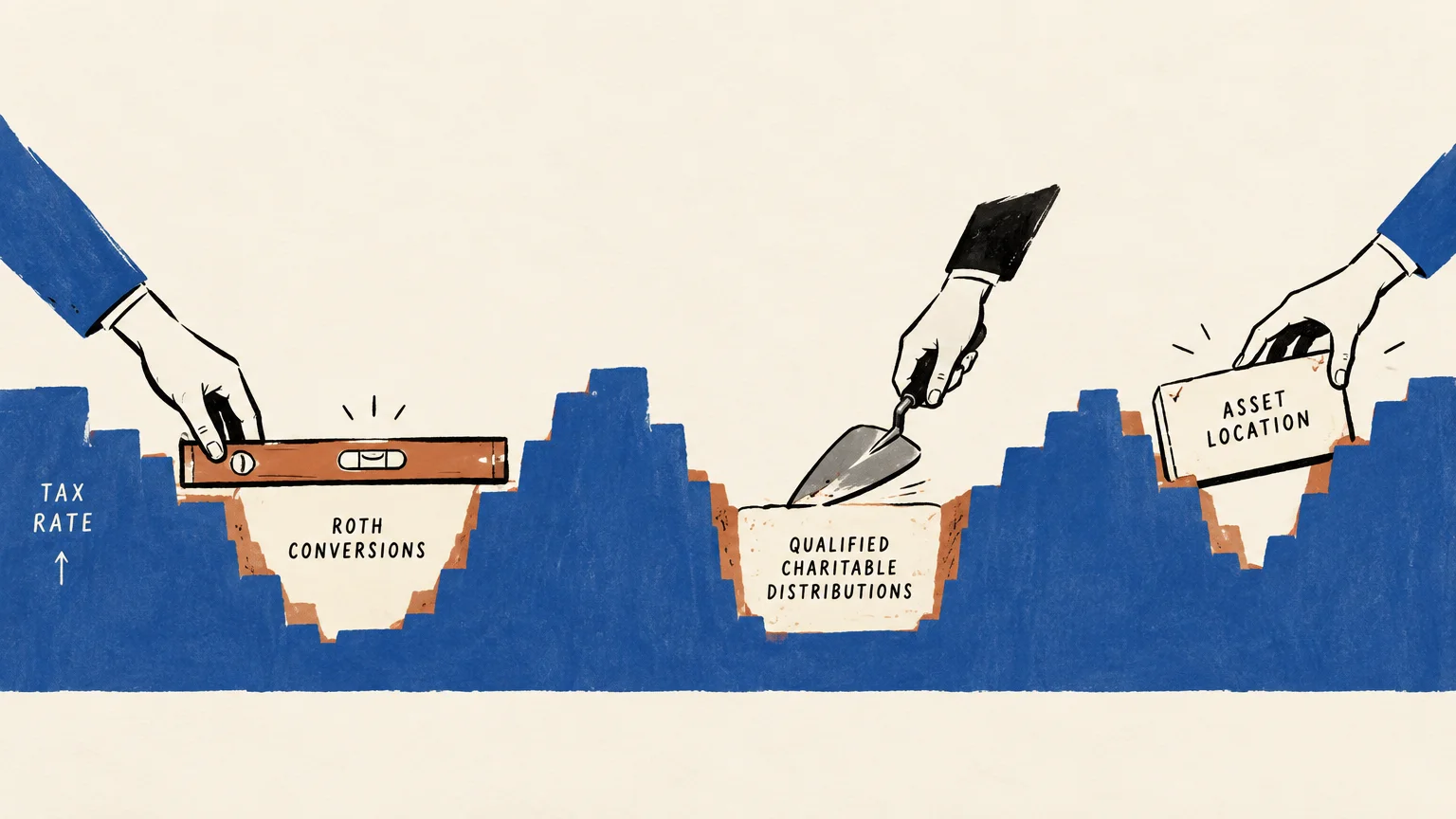
Once you recognize the signs of a shifting bracket, you can take deliberate defensive steps. Several proven wealth preservation strategies help blunt the impact of higher income tiers.
- Qualified Charitable Distributions (QCDs): If you are age 70½ or older, you can donate up to $111,000 directly from your traditional IRA to a qualified charity. This distribution satisfies your RMD but completely bypasses your Adjusted Gross Income.
- Bracket-Topping Roth Conversions: Convert traditional IRA funds up to the exact ceiling of your current marginal bracket without spilling into the next tier.
- Tax-Efficient Asset Sequencing: Coordinate withdrawals across taxable brokerage accounts, tax-deferred IRAs, and tax-free Roth accounts to keep reported income below critical IRMAA and Social Security thresholds.
- Health Savings Account (HSA) Withdrawals: Utilize accumulated HSA reserves for qualified medical expenses to fund healthcare needs completely tax-free.
Avoiding Common Errors
Retirees often stumble into avoidable tax traps by misinterpreting IRS timelines or underestimating income interaction. Watching out for these common errors protects your retirement income.
Delaying RMDs to April 1: While legal, postponing your first RMD compresses two full annual distributions into a single calendar year. That double distribution frequently pushes you into a significantly higher bracket.
Ignoring the Two-Year Lookback: Many retirees make large withdrawals without remembering that Medicare checks tax returns from two years prior. A large withdrawal this year can trigger surprise healthcare surcharges two years down the road.
Overlooking State Income Taxes: Federal tax planning captures headlines, but state tax treatment of pensions and Social Security varies widely. Neglecting state-specific brackets can disrupt an otherwise sound withdrawal plan.
Failing to Project RMD Sizes: Assuming RMDs will remain small often backfires after decades of compounded market gains. Large tax-deferred balances create massive required withdrawals starting at age 73.

When DIY Isn’t Enough
While basic tax rules are straightforward, overlapping retirement provisions often produce unexpected consequences. Seeking qualified professional guidance makes sense under specific, high-stakes circumstances.
- Navigating the Loss of a Spouse: Transitioning from joint to single filing requires restructuring asset drawdowns and re-evaluating survivor pension options to minimize the widow’s penalty.
- Multi-Year Roth Conversion Modeling: Complex spreadsheets that balance conversion amounts against Social Security taxation and IRMAA cliffs benefit from professional tax modeling software.
- Large Concentrated Asset Sales: Selling a primary residence or family business requires advanced structuring to harvest losses, offset capital gains, and manage ordinary income tiers.
- Coordinating Multiple Fixed Income Streams: Juggling private pensions, federal annuities, Social Security, and substantial traditional IRAs demands customized distribution sequencing.
Frequently Asked Questions
Retirees frequently encounter specific tax rules as they transition between working years and distributions. Here are clear answers to the most common tax questions.
How do RMDs affect taxes if I continue working past age 73?
If you continue working and do not own more than 5% of the company, you can typically delay RMDs from your current employer’s 401(k). However, you must still take RMDs from all traditional IRAs.
Can a Roth conversion permanently change my tax bracket?
A Roth conversion increases your tax bracket only in the calendar year you execute the transfer. In future years, withdrawals from your Roth IRA are completely tax-free and will not increase your bracket.
What is the best way to prevent the Social Security tax torpedo?
You can reduce provisional income by drawing funds from Roth IRAs or taxable brokerage accounts with high cost basis. Qualified Charitable Distributions also prevent RMD income from triggering benefit taxation.
How do the 2027 tax brackets factor into my current planning?
Tax brackets adjust annually for inflation, but major statutory provisions also evolve over time. Evaluating your distributions today ensures you maximize lower current marginal rates before future legislative shifts take effect.
Taking Control of Your Future Tax Bill
Your retirement tax bracket is not an uncontrollable fate; it reflects the timing and structure of your withdrawals. Recognizing upcoming transitions gives you the power to implement defensive strategies well before tax season arrives.
Take time this month to review your expected income streams, evaluate upcoming milestones, and adjust your distribution withholdings accordingly.
This is educational content based on general retirement and financial principles; individual results vary based on your situation. Always verify current benefit rules, tax laws, and eligibility requirements with official sources like SSA, Medicare.gov, or the IRS.
Last updated: March 2026. Retirement benefits, tax rules, and healthcare regulations change frequently—verify current details with official sources.








Leave a Reply