
Spotting warning signs of retirement money trouble early can save you tens of thousands of dollars and preserve your independence for decades. Managing a fixed income while balancing market fluctuations, tax changes, and rising healthcare expenses requires vigilant oversight; ignoring subtle financial red flags in retirement often leads to compounding losses that become difficult to reverse. By recognizing unsustainable withdrawal rates, unexpected tax traps, and enrollment penalties before they escalate, you can take immediate action to safeguard your nest egg. Whether you retired recently or have been navigating post-career finances for years, addressing these subtle indicators protects your lifelong autonomy and financial security.
1. Consistently Withdrawing More Than 4% Annually
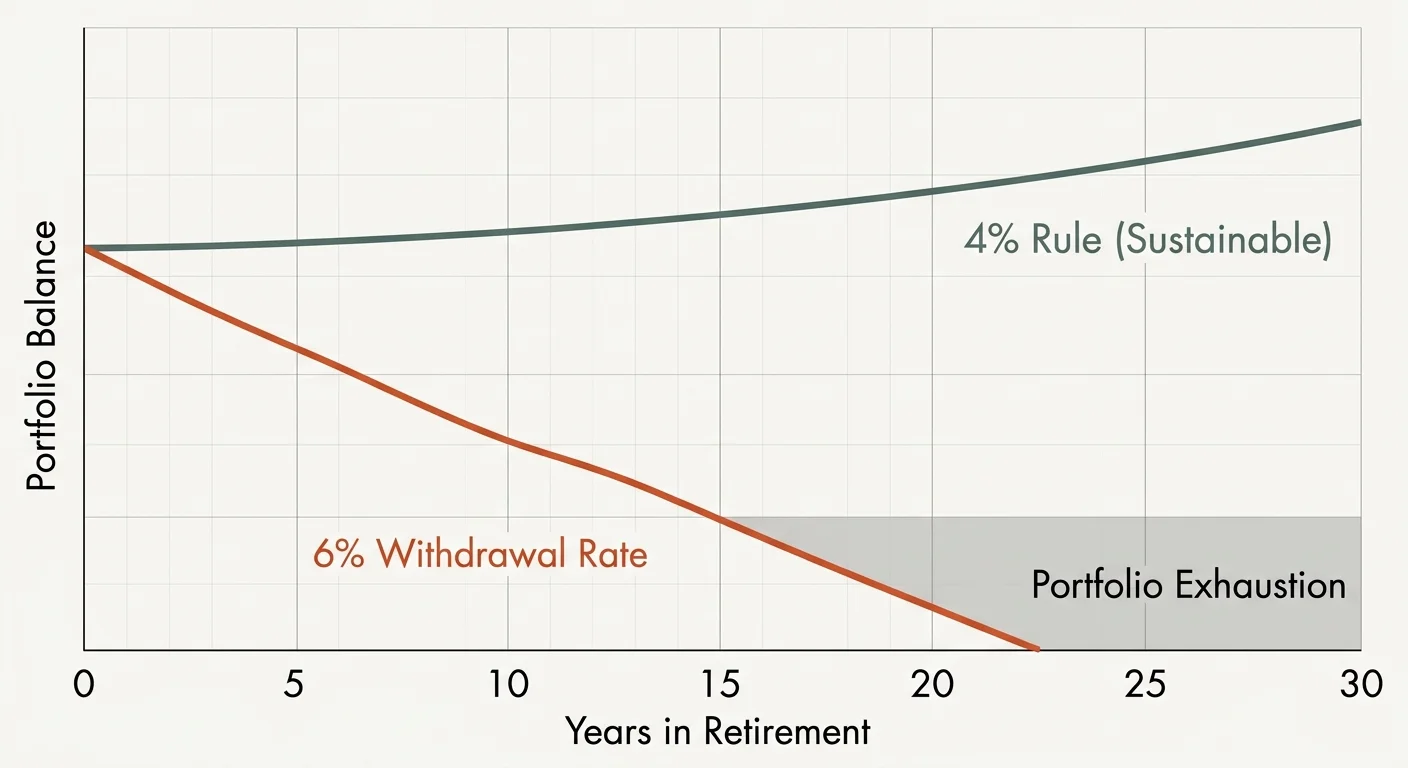
Drawing down your investment portfolio too quickly represents one of the primary warning signs of retirement money trouble. While the traditional 4% rule serves as a general guideline, pulling 6%, 7%, or more from your portfolio during market downturns creates irreversible damage. This compounding drain—known as sequence-of-returns risk—forces you to sell investments when prices drop, liquidating significantly more shares to generate the same income.
To evaluate your personal drawdown safety, calculate your annual distribution total and divide it by your current portfolio balance. If your non-discretionary withdrawals consistently outpace safe historical benchmarks without a planned short-term reason, you face an elevated risk of exhausting your assets prematurely.
- Track your spending rate monthly: Calculate exact cash outflows rather than relying on estimates.
- Separate essential expenses from optional spending: Ensure fundamental costs stay covered by guaranteed income sources like Social Security or annuities.
- Implement dynamic spending rules: Reduce portfolio withdrawals during down market years to give equities time to recover.

2. Carrying High-Interest Debt into Retirement
Carrying revolving debt into retirement severely undermines your monthly budget. High-interest credit card balances, personal loans, and high-rate car payments extract vital cash flow that should support your cost of living. Paying a 18% or 24% annual percentage rate on debt while your investment portfolio earns single-digit returns creates an immediate financial leak.
While holding a low-interest fixed mortgage may fit into a sound plan, unmanaged high-interest obligations quickly turn into critical retirement financial mistakes. Prioritize aggressive debt elimination strategies, such as the debt avalanche method, to eliminate high-rate liabilities before withdrawing funds for lifestyle spending.
3. Overlooking Required Minimum Distribution (RMD) Timelines
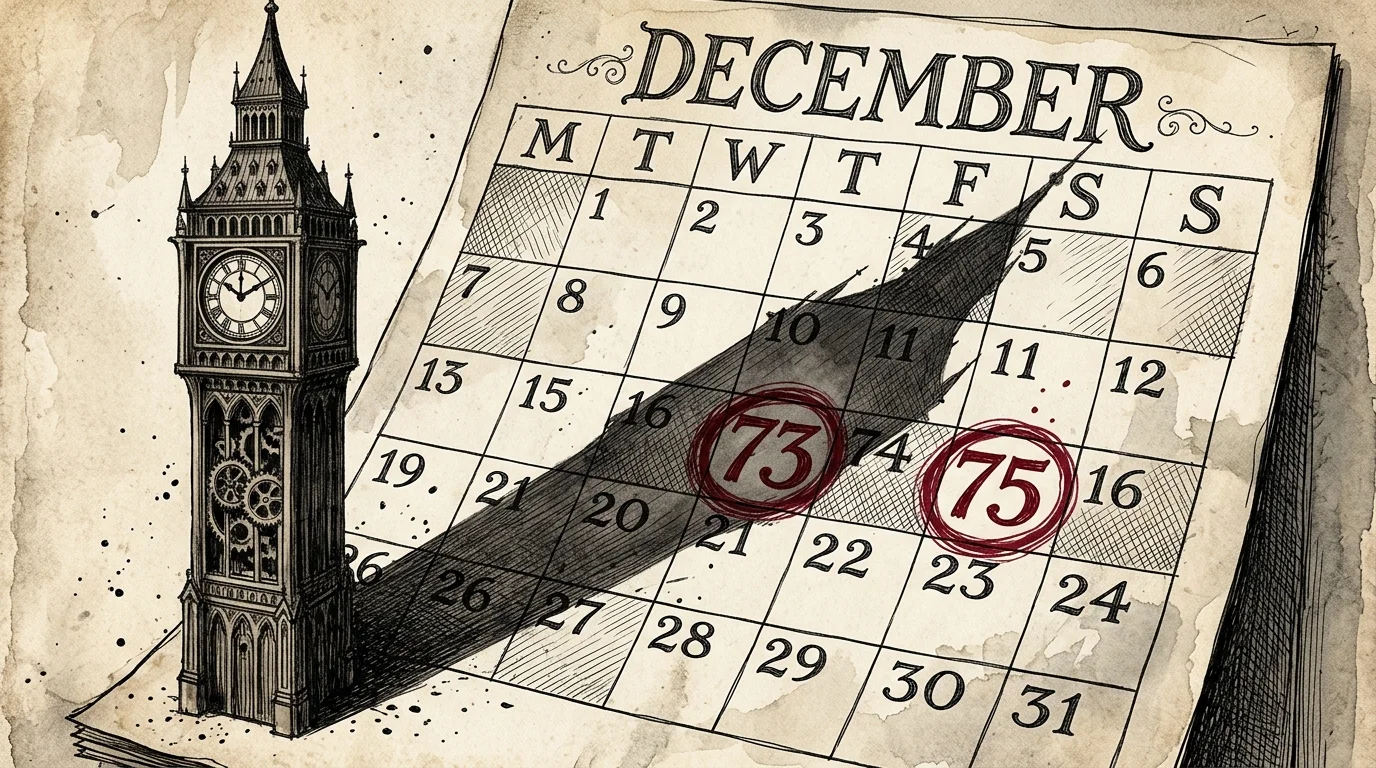
Failing to take Required Minimum Distributions from tax-deferred accounts can trigger hefty penalties from the federal government. Under the SECURE 2.0 Act, the RMD age is 73 for individuals born between 1951 and 1959, and it rises to age 75 in 2033 for those born in 1960 or later. Ignoring these deadlines forces you to pay severe tax consequences on money you worked decades to save.
Under SECURE 2.0 rules, missing an RMD results in a 25% penalty tax on the unwithdrawn amount. However, if you correct the error and take the required distribution within the two-year IRS correction window, the penalty drops to 10%. Additionally, starting in 2024, designated Roth workplace plans like Roth 401(k)s no longer require lifetime RMDs, bringing them into alignment with Roth IRAs. Always check distribution guidelines directly with the Internal Revenue Service to verify your required deadlines and asset calculations.
4. Missing Key Medicare Enrollment Windows
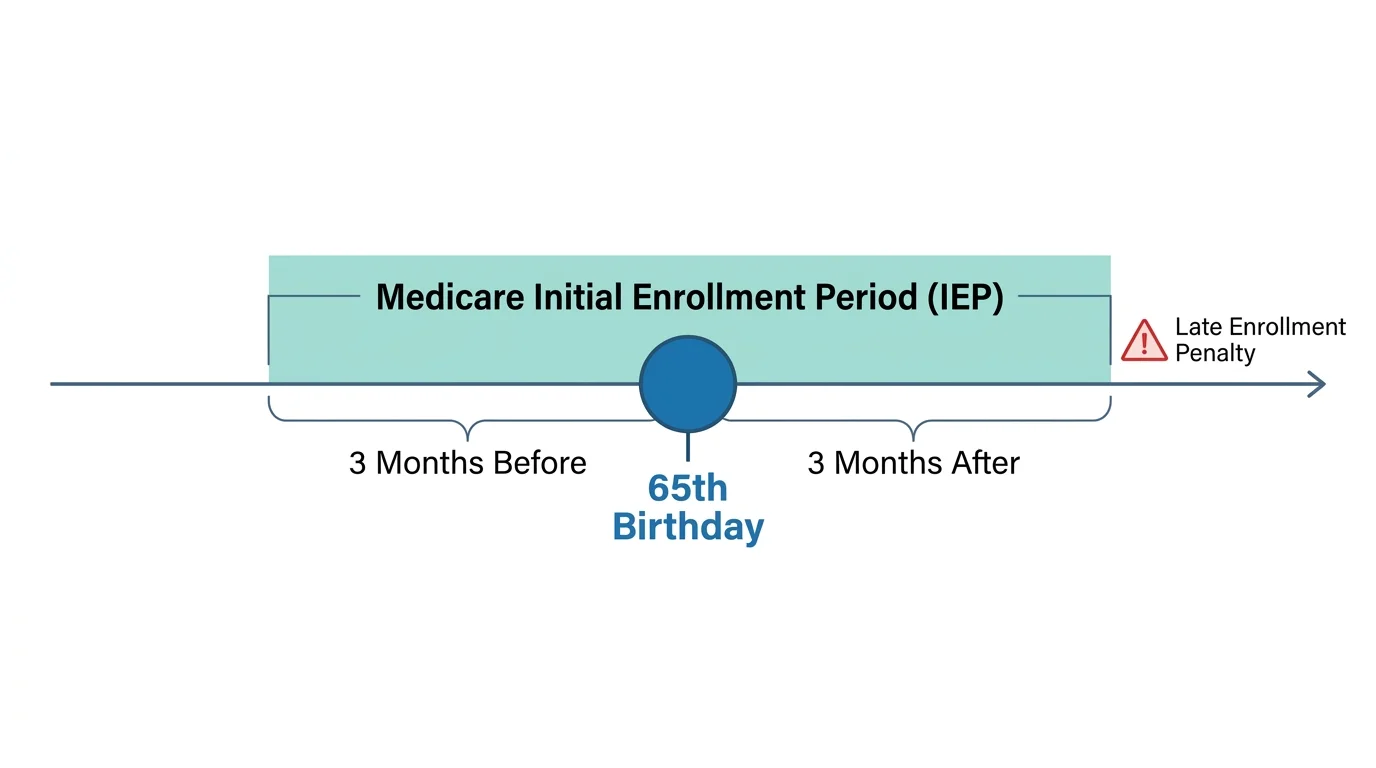
Assuming Medicare enrollment occurs automatically or missing your initial enrollment timeline creates permanent financial penalties. Unless you maintain qualifying creditable coverage through an active employer, failing to sign up for Medicare Part B when you first qualify incurs a lifetime late enrollment penalty. The penalty adds a permanent 10% surcharge to your monthly Part B premium for every full 12-month period you delayed enrollment.
A similar rule applies to Medicare Part D prescription coverage. Delaying Part D without creditable coverage triggers a permanent monthly penalty calculated as 1% of the national base beneficiary premium multiplied by your total uncovered months. Review official rules at Medicare.gov to ensure you register on time and avoid lifelong cost increases.
“A instinct to help your children is natural, but risking your own retirement security to support adult family members puts everyone at financial risk.” — Suze Orman, Personal Finance Author and Educator
5. Claiming Social Security Early Without a Strategic Plan
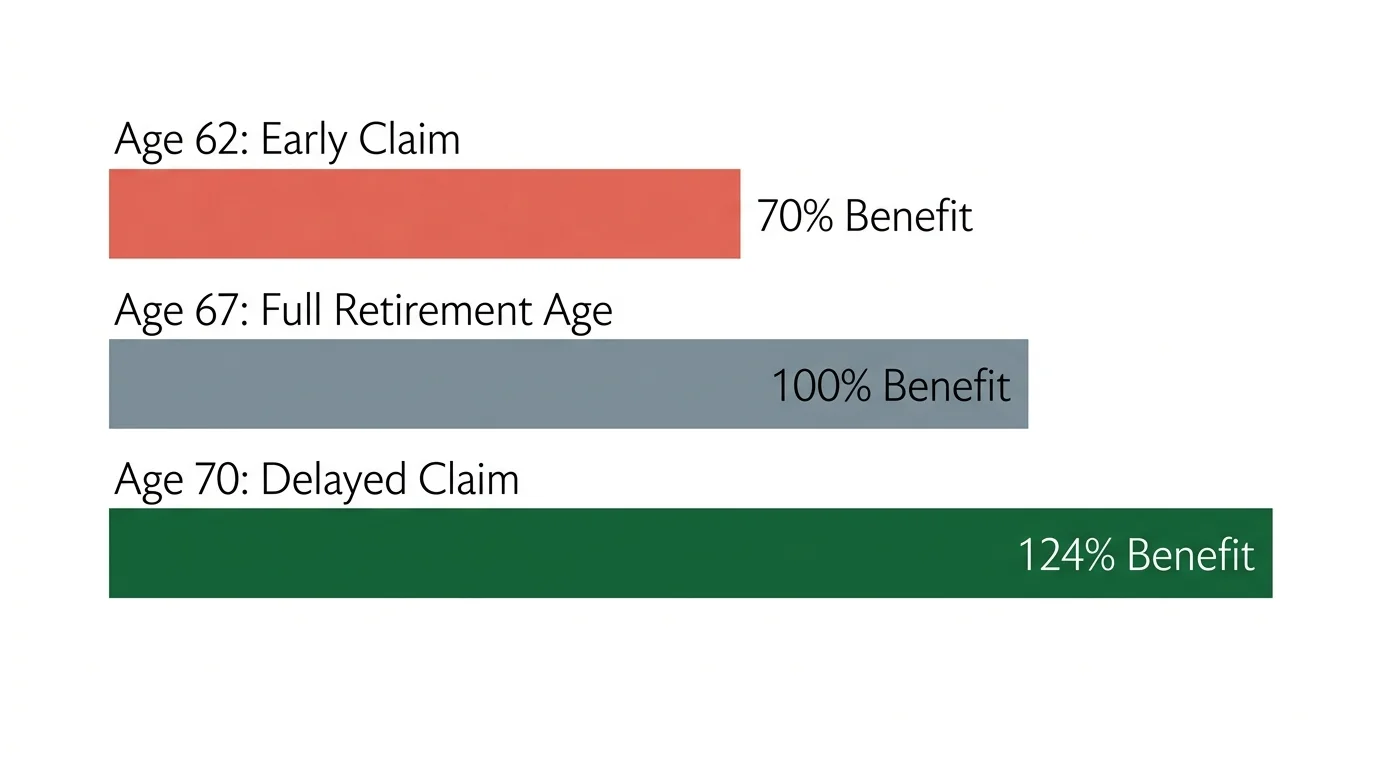
Claiming Social Security benefits as soon as you reach age 62 offers immediate cash, but it locks in a permanent lifetime reduction. For Americans born in 1960 or later, Full Retirement Age (FRA) is 67. If you claim at age 62 instead of waiting for your FRA, the Social Security Administration permanently reduces your monthly payout by up to 30%.
Conversely, delaying your claim past your FRA earns Delayed Retirement Credits, increasing your monthly benefit by 8% per year until you reach age 70. This creates a cumulative benefit boost of up to 24% over your base amount. Unless health concerns or immediate income requirements dictate early claiming, taking early benefits without analyzing spousal impact and long-term inflation protection remains one of the top signs of financial trouble retirees face later in life.

6. Lacking a Liquid Cash Emergency Reserve
Maintaining insufficient liquid savings forces you to make emergency withdrawals from taxable or tax-deferred investment accounts at bad times. Unexpected home repairs, vehicle replacements, or sudden medical out-of-pocket costs can break your monthly budget if you lack cash reserves.
Retirees should keep 12 to 24 months of essential non-discretionary expenses in high-yield savings accounts or short-term certificates of deposit. This cash buffer prevents you from selling equities during market downturns, protecting your capital and giving your long-term portfolio room to recover.

7. Falling Victim to Unscreened Investments and Exploitation
Financial scams and high-fee, complex financial products actively target older Americans. The FBI’s Internet Crime Complaint Center (IC3) 2025 Annual Report reveals that Americans aged 60 and older lost over $7.7 billion to fraud across more than 201,000 complaints. Investment schemes represented the single costliest category, accounting for over $3.5 billion in total reported retiree losses.
Protect your capital by verifying credentials and avoiding investments that promise unrealistically high guaranteed returns. Consult consumer resources like the Consumer Financial Protection Bureau to understand common elder fraud tactics, verify advisor registrations, and report suspicious solicitations immediately.
“A simple rule dictates my buying: Be fearful when others are greedy, and greedy when others are fearful.” — Warren Buffett, Chairman and CEO of Berkshire Hathaway

8. Over-Gifting and Supporting Adult Family Members Unchecked
Providing open-ended financial support to adult children or family members often destabilizes an otherwise solid retirement plan. Co-signing loans, funding expensive lifestyle choices, or routinely subsidizing family bills extracts essential capital from your long-term accounts. These ongoing expenditures quickly show up as retirement budget red flags.
Set clear boundaries with loved ones regarding your personal financial limits. Explain that your retirement nest egg must last your lifetime, and offer assistance through financial coaching, budgeting guidance, or modest seasonal gifts rather than ongoing monthly subsidies.

9. Underestimating Healthcare and Long-Term Care Expenses
Assuming Medicare covers all medical necessities creates severe long-term financial strain. Original Medicare excludes standard dental care, routine vision exams, hearing aids, and long-term custodial care—the non-skilled personal assistance required during extended illnesses or cognitive decline.
A major health event or nursing home stay can wipe out savings in a short time. Explore hybrid long-term care insurance policies, evaluate Medicare Advantage or Supplemental (Medigap) plans, and factor health-specific inflation adjustments directly into your annual expense projections.

10. Maintaining an Imbalanced Portfolio Allocation
Holding extreme asset allocations exposes you to unnecessary market or purchasing-power risks. Placing 100% of your money in stocks subjects your nest egg to severe volatility during market crashes; placing 100% in cash guarantees that persistent inflation erodes your purchasing power over time.
Maintain a diversified asset allocation that aligns with your income needs, longevity timeline, and risk tolerance. Rebalance your holdings once or twice a year to maintain appropriate proportions of equities, fixed-income securities, and cash equivalents.
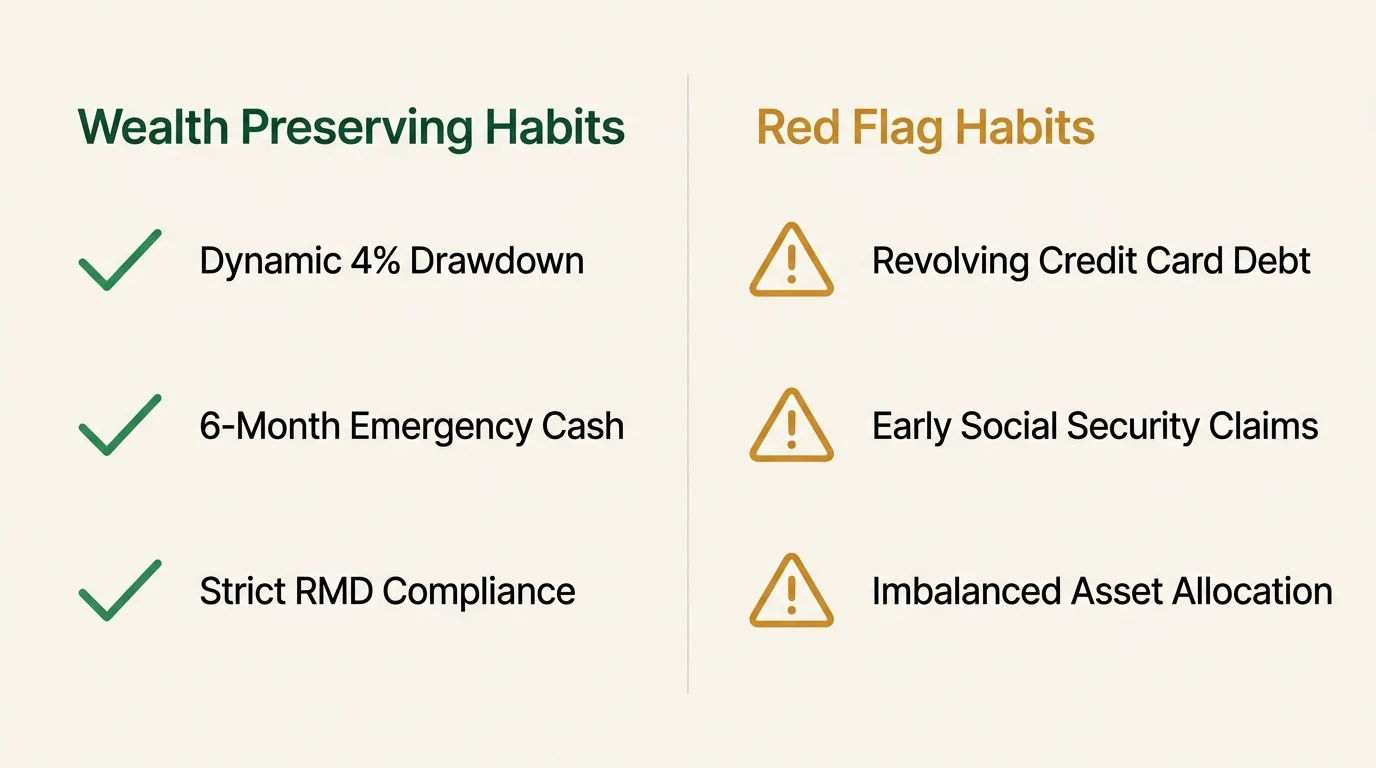
Comparing Retirement Financial Habits
Evaluating how your current choices stack up against proven wealth-preservation practices helps you correct financial red flags in retirement before they threaten your lifestyle.
| Red Flag Behavior | Primary Risk Introduced | Proactive Financial Solution |
|---|---|---|
| Withdrawing 6%+ from portfolio annually | Sequence-of-returns capital depletion | Cap baseline withdrawals near 4% and adjust during market downturns |
| Missing Medicare Part B / D windows | Permanent lifetime premium penalties | Enroll during your Initial Enrollment Period or verify employer creditable coverage |
| Ignoring RMD deadlines | 25% IRS tax penalty on unwithdrawn funds | Automate annual RMD withdrawals across tax-deferred traditional accounts |
| Claiming Social Security at age 62 without plan | Permanent 30% reduction in monthly base payout | Delay claiming toward age 70 to accumulate 8% annual delayed credits |
| Uncapped gifting to adult relatives | Premature exhaustion of retirement reserves | Establish clear family budget boundaries and limit recurring subsidies |
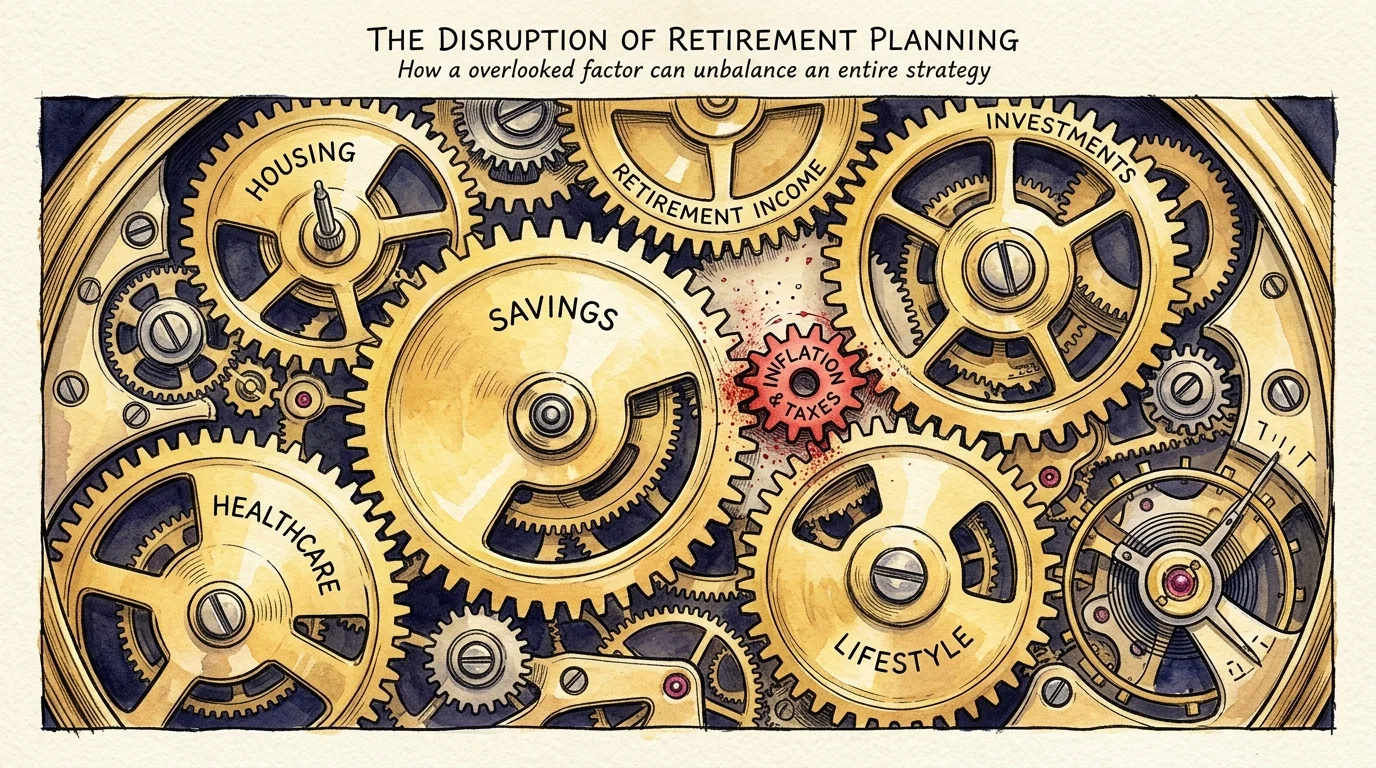
What Can Go Wrong
Ignoring financial warning signs creates compounding damage across your entire financial life. For example, missing an RMD while simultaneously drawing an high withdrawal rate forces you into a higher income tax bracket while draining your remaining balance. This reduces your portfolio’s earning power, making it mathematically impossible for your capital to keep pace with basic inflation.
Furthermore, late enrollment surcharges from Medicare permanently increase your monthly overhead, squeezing your cash reserves during your later years when healthcare demands peak. Unchecked debt payments, combined with unvetted investment decisions or financial fraud, can eliminate decades of hard-earned wealth within months, taking away your independence when you need it most.

When to Consult a Professional
While self-monitoring works well for routine household spending, specific financial decisions require guidance from an expert. Consider partnering with a fee-only Certified Financial Planner (CFP) or certified public accountant in these situations:
- Coordinating multi-account RMDs: Managing tax brackets and distribution sequences across traditional IRAs, 401(k)s, and taxable brokerage accounts.
- Structuring long-term care plans: Protecting core estate assets while funding potential nursing home or home-health assistance costs.
- Managing market downturns: Adjusting income withdrawal strategies during severe economic contractions to avoid selling depressed assets.
- Optimizing Social Security claiming strategies: Maximizing spousal, survivor, or combined household retirement benefits.
Frequently Asked Questions
What is the penalty for missing a Required Minimum Distribution?
Under the SECURE 2.0 Act, the penalty tax for failing to take a timely RMD is 25% of the required amount that was not distributed. If you correct the mistake and withdraw the funds within the IRS two-year correction window, the penalty drops to 10%.
How much cash should a retiree hold in an emergency fund?
Most financial experts recommend holding 12 to 24 months of essential non-discretionary living expenses in cash or liquid cash equivalents. This buffer keeps you from needing to liquidate stocks or long-term investments during market dips.
Does Medicare cover long-term nursing home care?
No. Original Medicare does not cover long-term custodial care if that care consists primarily of assistance with daily living activities like bathing, dressing, and eating. Medicare only pays for short-term skilled nursing care following a qualified hospital stay.
How does claiming Social Security at age 62 impact my benefit?
Claiming Social Security at age 62 permanently reduces your monthly check by up to 30% compared to waiting for your Full Retirement Age of 67. Conversely, delaying your claim up to age 70 increases your monthly benefit by 8% for each year you wait past your Full Retirement Age.
Taking Control of Your Financial Future
Spotting and addressing warning signs early gives you control over your long-term security. Take time this week to review your current portfolio withdrawal rate, verify your Medicare and Social Security timelines, check your cash reserves, and calculate your upcoming RMD obligations.
Addressing these critical areas keeps your nest egg intact and ensures your retirement plan supports your lifestyle goals. Take a practical, proactive approach to your finances so you can spend your time enjoying your post-career life with confidence.
This is educational content based on general retirement and financial principles. Individual results vary based on your situation. Always verify current benefit rules, tax laws, and eligibility requirements with official sources like SSA, Medicare.gov, or the IRS.
Last updated: March 2026. Retirement benefits, tax rules, and healthcare regulations change frequently—verify current details with official sources.









Leave a Reply