
Carrying unpaid healthcare bills past your working years can quietly dismantle decades of careful financial planning. When paychecks stop and fixed incomes take over, past medical balances quickly crowd out everyday living expenses.
More than one in five Americans aged 65 and older carries medical debt into their post-career lives. Leaving these balances unaddressed forces painful compromises between your physical health and basic economic stability.
Understanding the legal boundaries protecting your retirement nest egg gives you the upper hand against aggressive collectors. Knowing your rights ensures your hard-earned assets remain shielded from healthcare creditors.
1. Your Fixed Income Loses Immediate Purchasing Power
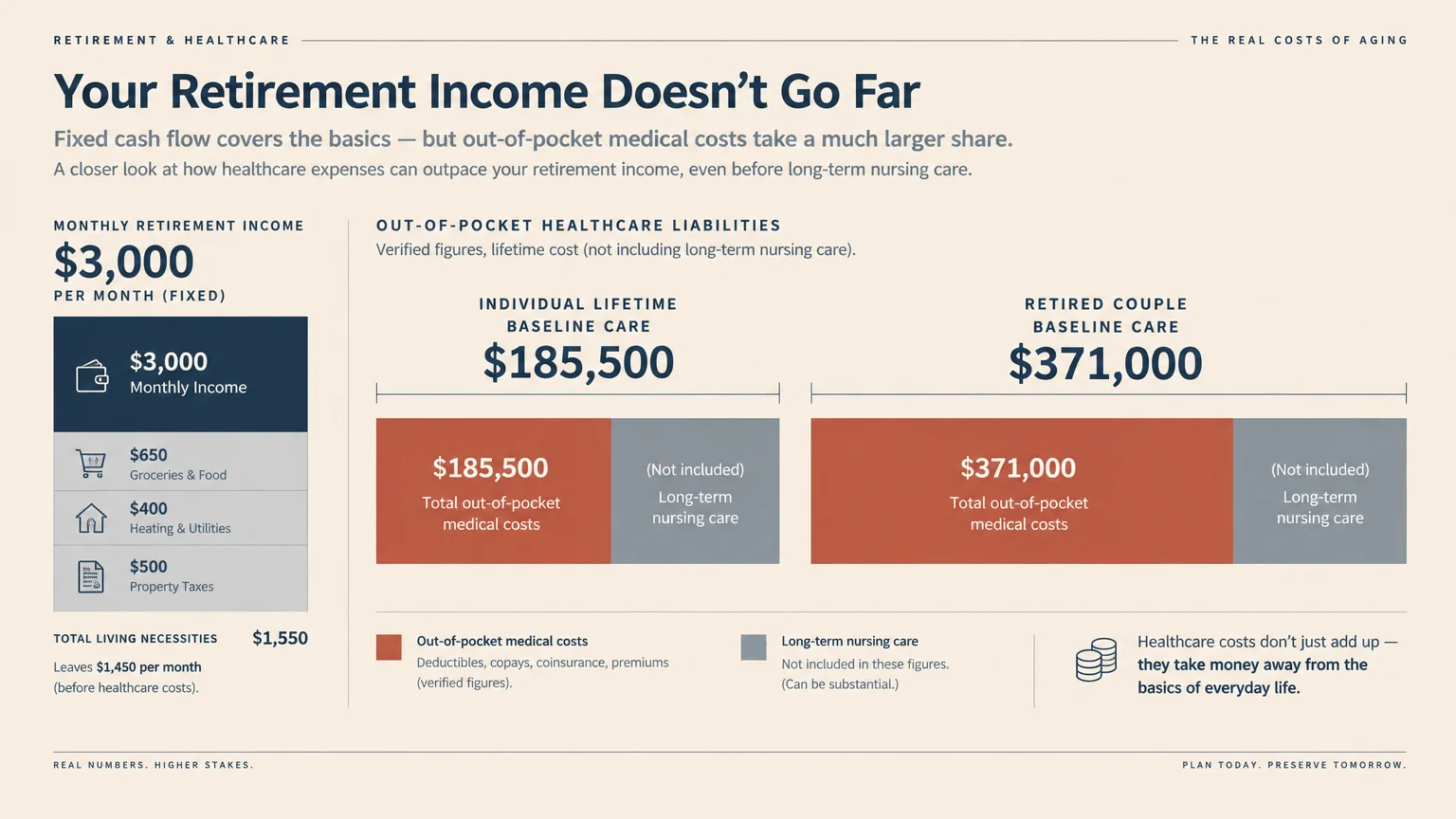
When you transition from a salary to fixed monthly income, your cash flow narrows significantly.
Diverting monthly checks toward past medical invoices leaves less room for essential needs like groceries, heating, and property taxes.
According to Fidelity, a 65-year-old retiring today needs an estimated $185,500 after taxes just to fund baseline healthcare costs. An average retired couple requires approximately $371,000 for standard care.
Those figures cover Medicare premiums and typical cost-sharing, but they entirely exclude long-term nursing care.
When prior medical balances siphon off cash, managing healthcare costs in retirement becomes an uphill struggle. Every dollar sent to past providers is a dollar lost to current living expenses.

2. Forced Nest Egg Withdrawals Trigger Surprise Tax Penalties
Facing aggressive collection notices, many retirees instinctively pull lump sums from traditional IRAs or 401(k) accounts.
Liquidating tax-deferred savings creates an immediate taxable event that raises your Adjusted Gross Income (AGI).
A large, unplanned withdrawal can bump you into a higher marginal income tax bracket for the year.
Elevated AGI can also trigger taxes on your Social Security benefits, subjecting up to 85% of your monthly checks to taxation.
Higher income also triggers the Income-Related Monthly Adjustment Amount (IRMAA). This federal surcharge increases your Medicare Part B and Part D monthly premiums two years later.
“You cannot take a loan out for your retirement. You have to protect your nest egg first.” — Suze Orman, Personal Finance Author
3. Aggressive Collectors Try to Intimidate Your Protected Benefits
Third-party collection agencies often rely on intimidation to extract payments from older adults.
Many seniors with medical debt do not realize their primary income sources enjoy robust statutory shields.
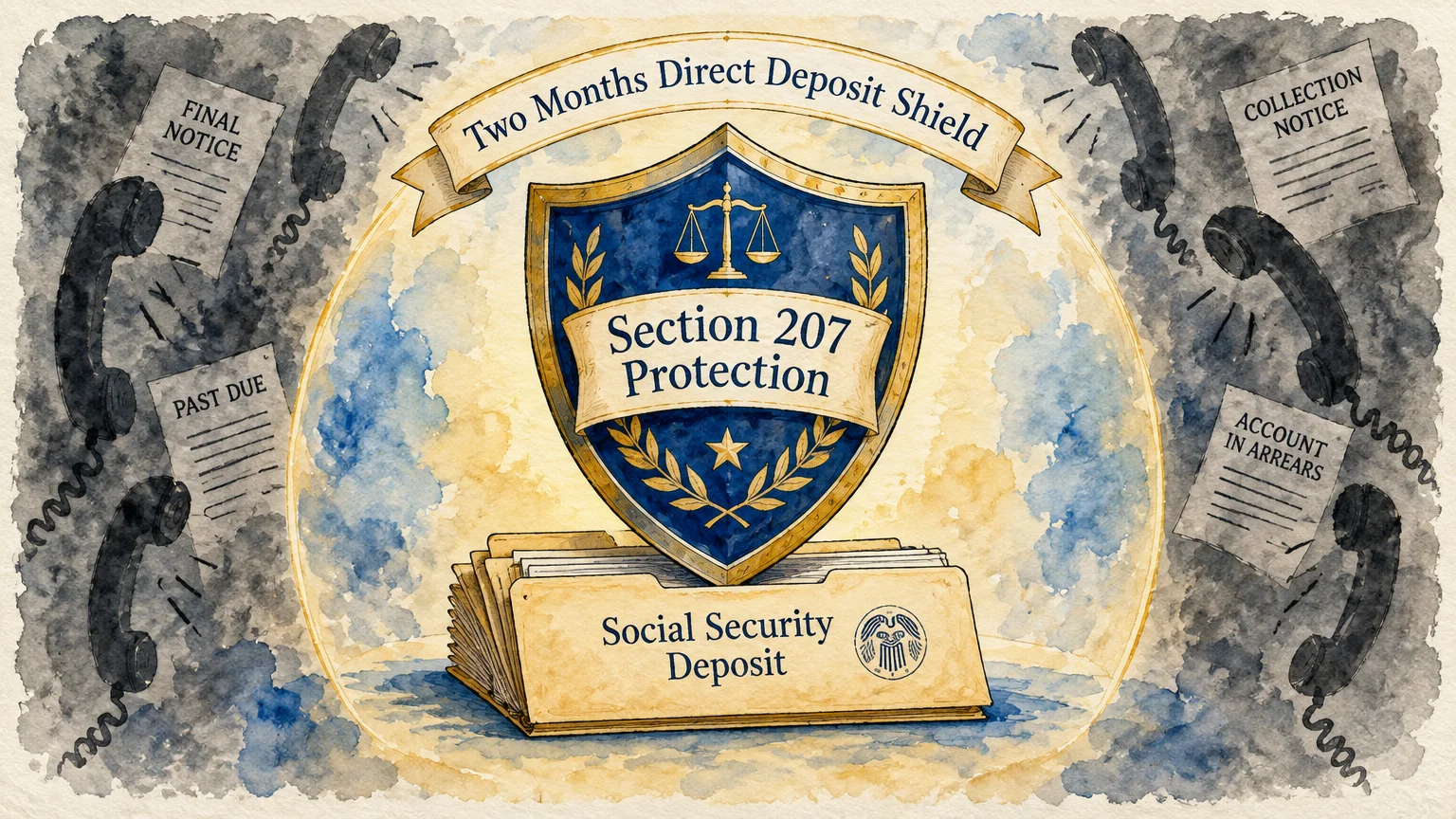
Under Section 207 of the Social Security Act, private creditors cannot seize, levy, or garnish your Social Security benefits for consumer healthcare debts.
Federal regulations enforced by the Treasury Department require banks to protect two months of directly deposited benefits automatically from garnishment orders.
You can verify these protections through the Social Security Administration (SSA). Collection agents cannot touch these funds, regardless of the threats they make over the phone.

4. Prescription Rationing and Deferred Care Accelerate Health Risks
Seniors carrying past-due balances frequently delay follow-up treatments to avoid accumulating additional bills.
Research from the Kaiser Family Foundation shows that 22% of older adults carry unpaid medical or dental debt. Routine diagnostic testing and doctor visits account for the vast majority of these liabilities.
Skipping essential appointments or rationing maintenance medications often causes manageable chronic conditions to spiral into medical emergencies.
Federal legislation has established essential safeguards to help manage these costs. Under the Inflation Reduction Act, Medicare Part D caps out-of-pocket prescription expenses at $2,000 per calendar year.
Retirees can also use the Medicare Prescription Payment Plan to spread prescription drug costs into predictable monthly installments. Learn more about these programs directly through Medicare.gov.

5. Medical Liens Threaten Your Home Equity
While creditors cannot access your Social Security, they may pursue remedies through state civil courts.
If a healthcare provider wins a judgment against you, they can place a judicial lien against your personal residence.
Homestead exemptions in many states prevent forced home sales, but the lien clouds your property title.
You cannot sell your home, transfer it to heirs, or refinance your mortgage without satisfying the underlying debt first.
This encumbrance restricts your ability to downsize or tap home equity if your long-term health needs change.
6. Credit Report Damage Restricts Housing and Borrowing Options
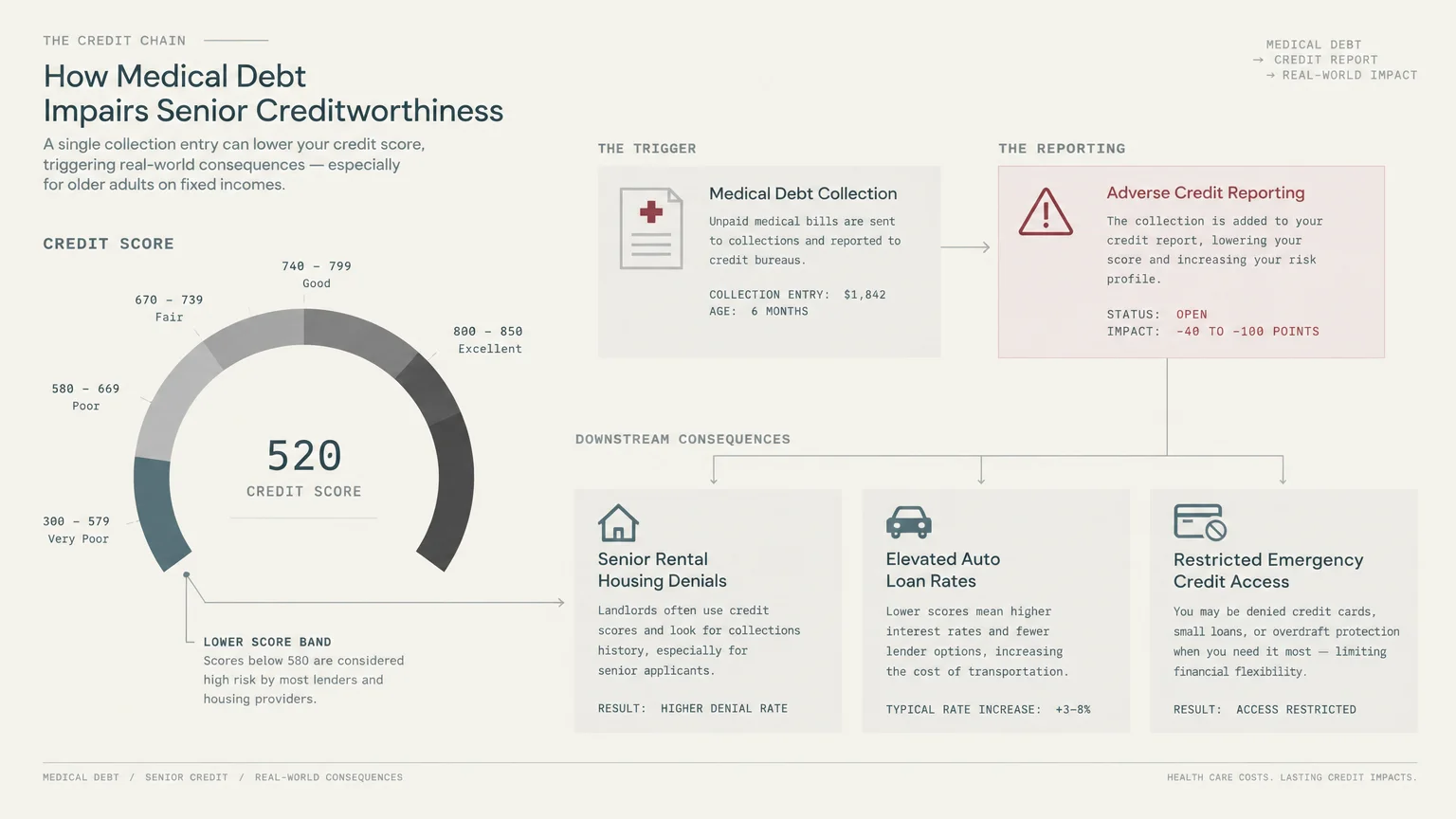
Unpaid hospital charges over $500 can appear on consumer credit reports after a mandatory 365-day grace period.
Equifax, Experian, and TransUnion exclude all medical debts under $500 and remove paid medical debts completely.
While a proposed federal rule sought to ban all medical reporting, a federal court vacated that regulation in 2025.
The Consumer Financial Protection Bureau (CFPB) continues to monitor unlawful debt reporting practices nationwide.
A lower credit score can prevent you from securing favorable vehicle financing or leasing a senior apartment if you decide to downsize.

7. Chronic Financial Stress Compounds Physical and Cognitive Decline
Persistent financial anxiety causes measurable physiological damage to aging bodies.
Constant worry over hospital bills triggers sustained releases of cortisol, which elevates resting blood pressure.
Prolonged hypertension increases the long-term risk of cardiovascular disease, heart attacks, and strokes among seniors.
Chronic psychological stress also reduces cognitive resilience, accelerating memory loss and diminishing daily quality of life.

8. Your Estate and Inheritances Shrink Rapidly
Healthcare debts do not vanish when an individual passes away; they attach directly to the deceased person’s estate.
Estate executors must settle valid medical claims using available estate assets before distributing inheritances to heirs.
While children do not inherit parental medical debts personally, estate obligations can consume the family home or bank accounts.
Assets that name designated beneficiaries, such as life insurance policies and IRAs, bypass probate and transfer directly to heirs outside creditor claims.

9. Surviving Spouses Face Potential Legal Debt Liability
A deceased spouse’s unpaid hospital charges can jeopardize the financial independence of the surviving partner.
In community property states, debts incurred during the marriage generally become the joint responsibility of both spouses.
Many other states enforce the “doctrine of necessaries,” a legal principle holding spouses liable for necessary healthcare expenses.
Collection agencies frequently exploit these statutes to demand payment from grieving spouses who are already adjusting to lower household income.
10. You Overlook Legally Mandated Hospital Charity Care Discounts
Many retirees exhaust their personal savings to pay medical bills that hospitals are legally obligated to forgive.
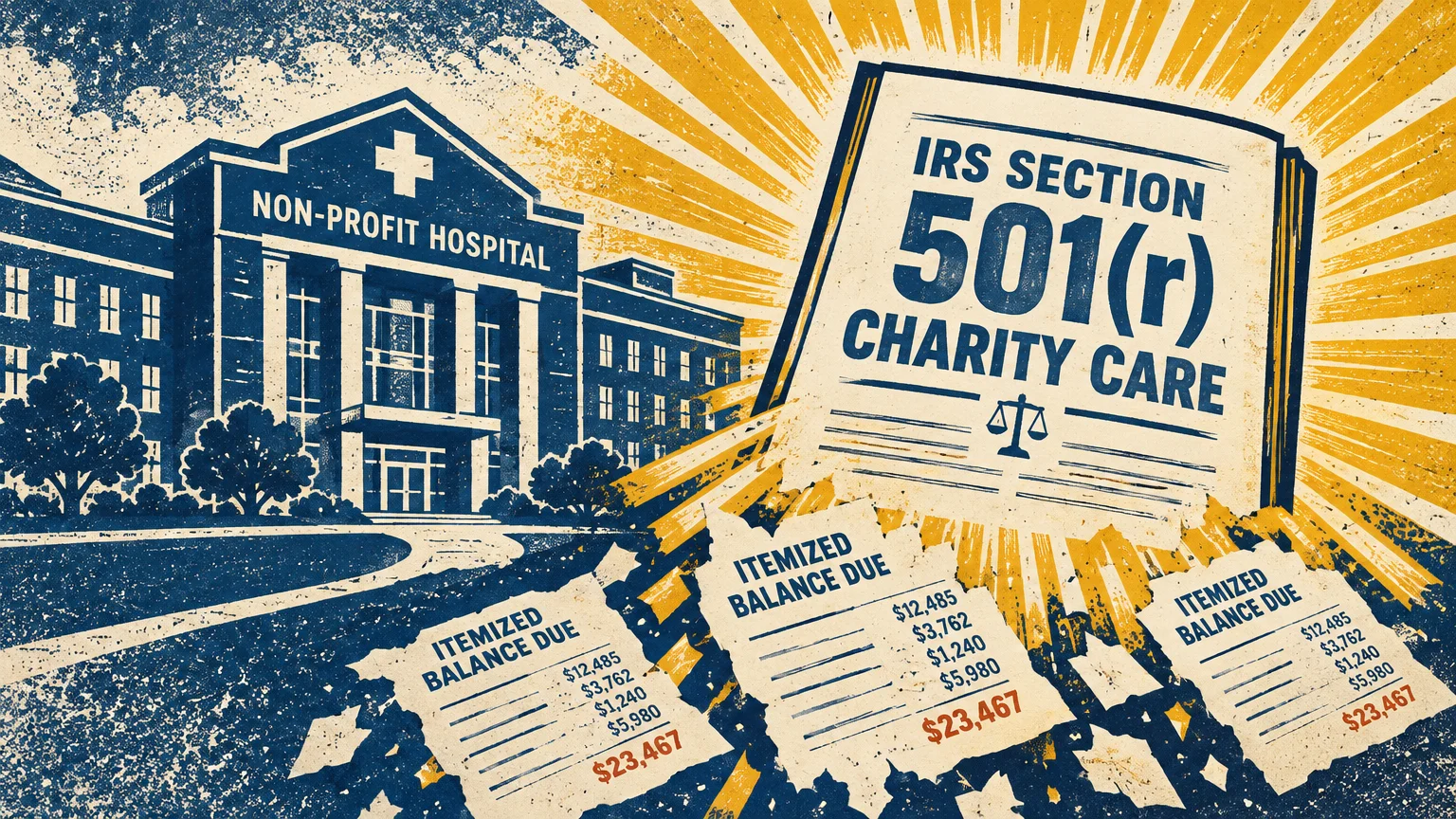
Under Internal Revenue Code Section 501(r), tax-exempt nonprofit hospitals must maintain written Financial Assistance Policies (FAPs).
These facilities must provide free or significantly discounted care to patients earning within 200% to 400% of the Federal Poverty Level.
Federal law prohibits nonprofit hospitals from taking aggressive collection actions before making reasonable efforts to assess your eligibility for charity care.
“Nobody should go broke because they got sick.” — Elizabeth Warren, U.S. Senator and Consumer Advocate
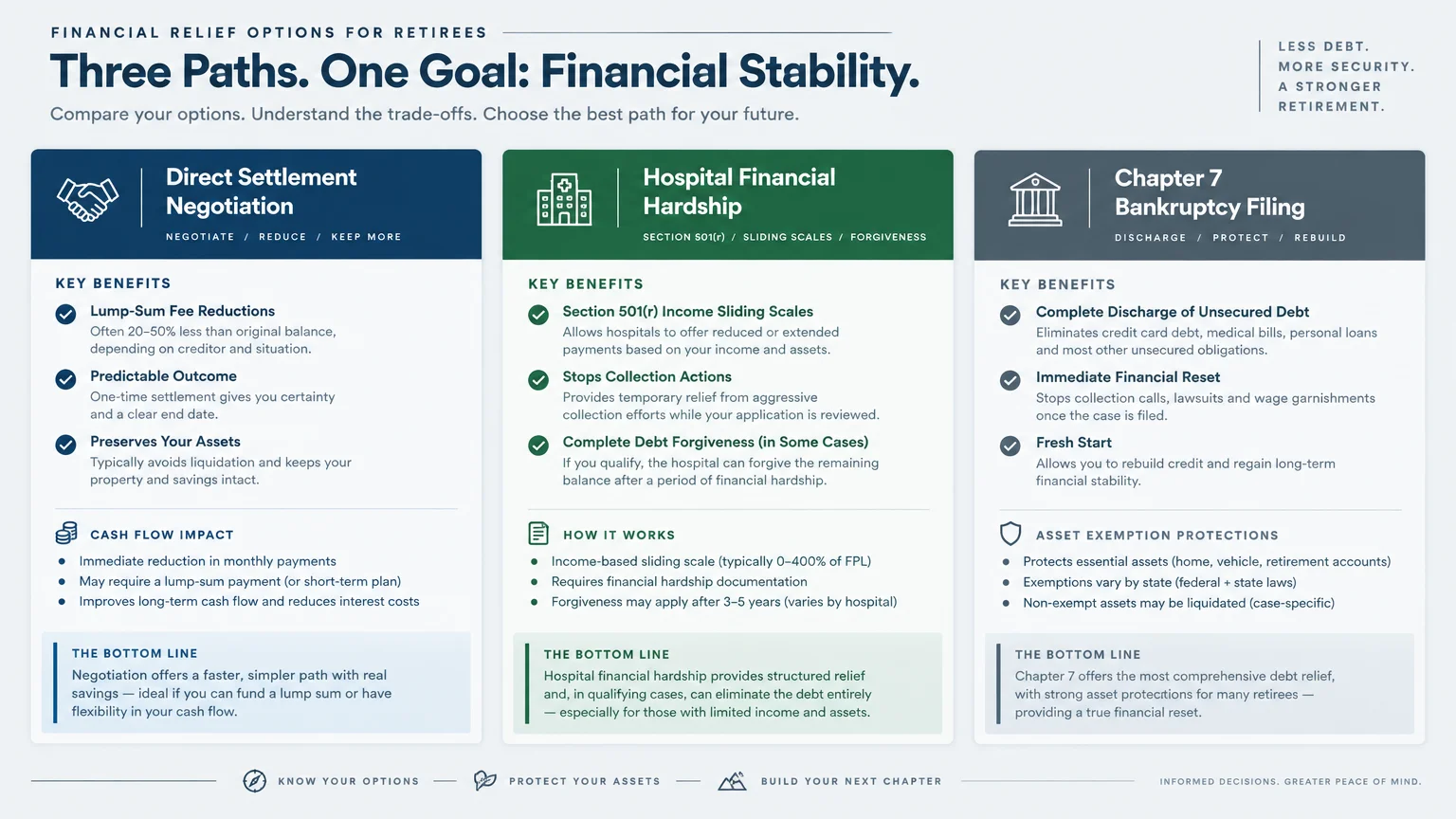
Comparing Your Medical Debt Relief Options
Evaluating medical debt relief options requires weighing asset protection against potential credit impacts.
The right approach depends on whether your income falls within charity guidelines or requires formal legal protection.
| Relief Strategy | Primary Benefit | Key Limitation | Best For |
|---|---|---|---|
| Hospital Charity Care | Completely eliminates or reduces balance under Section 501(r) | Only applies to nonprofit hospital facilities and emergency care | Low-to-moderate income retirees with large hospital bills |
| Lump-Sum Settlement | Resolves debt for 20% to 50% of the total balance | Requires ready cash and may trigger taxable debt cancellation | Retirees with modest cash reserves outside protected accounts |
| Prescription Payment Plan | Spreads Part D drug expenses into monthly payments | Does not reduce the underlying out-of-pocket cost | Retirees managing expensive monthly prescription medications |
| Chapter 7 Bankruptcy | Completely wipes out unsecured medical debt | Damages credit score for up to ten years | Retirees whose debts exceed assets and who have no home equity |
Pitfalls to Watch For
Retirees often make reactive choices that convert protected debt into unprotected legal exposure.
Avoid these common mistakes when managing medical debt in retirement:
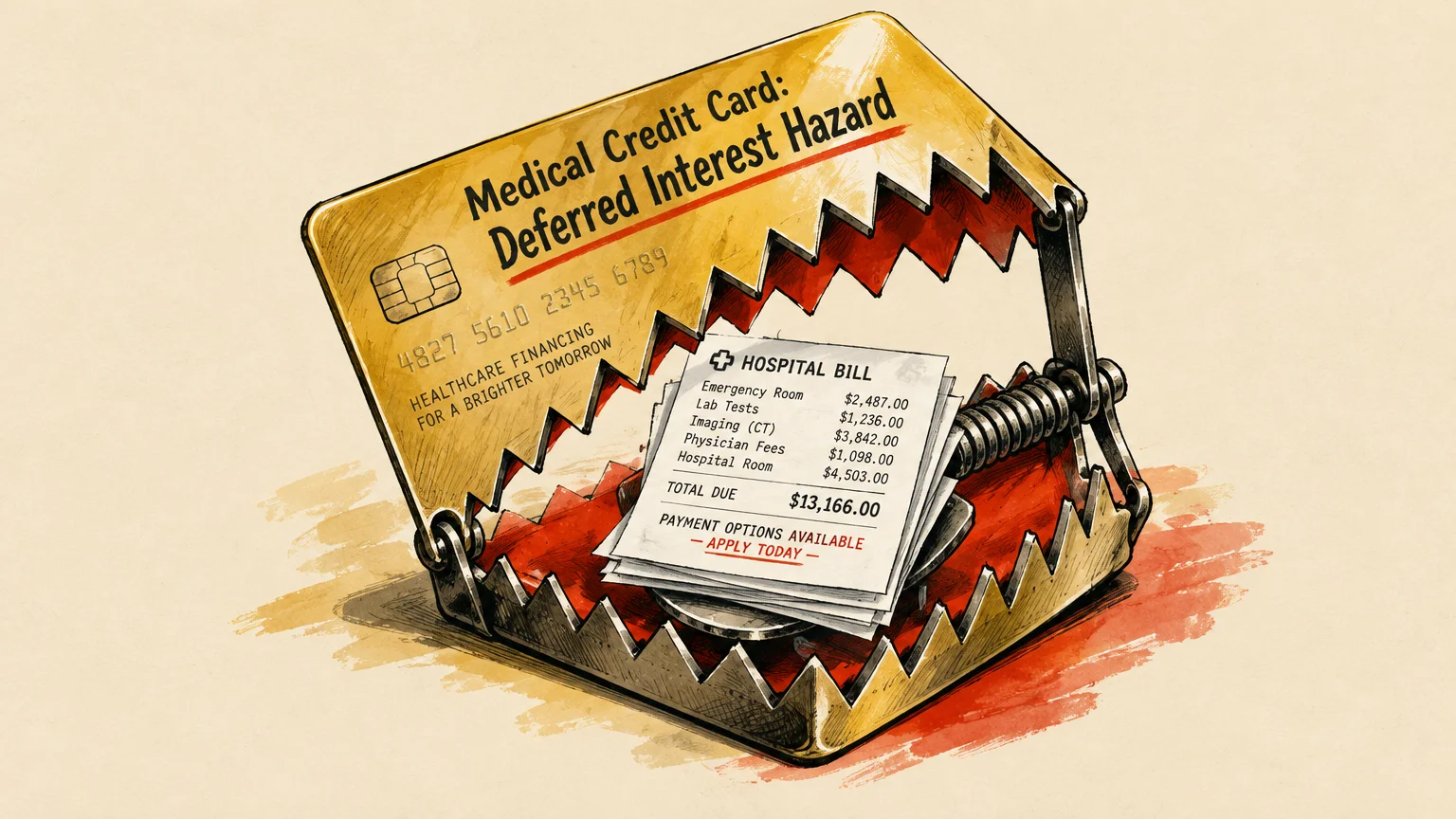
- Paying Medical Bills with Credit Cards: Charging balances converts low-interest medical liabilities into high-interest consumer debt that lacks hospital charity care protections.
- Draining Protected ERISA Accounts: Employer 401(k) and 403(b) accounts enjoy unlimited federal creditor protection under ERISA; never empty them to pay medical creditors.
- Ignoring Collection Summons: Disregarding a formal court summons results in an automatic default judgment, enabling creditors to place liens on your property.
- Overlooking Tax Deductions: The Internal Revenue Service (IRS) permits you to deduct qualified, unreimbursed medical expenses that exceed 7.5% of your Adjusted Gross Income if you itemize deductions.
- Believing Phone Collectors: Never authorize automatic bank withdrawals over the phone; collectors cannot take your Social Security without your consent.

Getting Expert Help
Navigating healthcare billing systems can overwhelm even the most financially disciplined retirees.
Seek qualified professional assistance when facing these specific financial challenges:
- You Receive a Court Summons: Contact an elder law attorney or legal aid specialist immediately to assert your statutory income exemptions in court.
- A Hospital Refuses Charity Care: Work with an accredited medical billing advocate to audit your charges and appeal arbitrary financial aid denials.
- Unreimbursed Expenses Exceed 7.5% of Income: Consult a CPA or enrolled agent to ensure you properly calculate medical deductions on IRS Schedule A.
- Debts Overwhelm Living Expenses: Meet with a non-profit credit counselor certified by the National Foundation for Credit Counseling (NFCC) to structure a realistic repayment plan.
Frequently Asked Questions
Can medical debt collectors take my Social Security check?
No, private medical creditors cannot garnish your Social Security benefits under Section 207 of the Social Security Act. Banks must automatically protect two months of directly deposited benefits.
What happens to unpaid medical bills when a retiree dies?
The debt becomes an obligation of the deceased person’s estate and must be settled during probate. Remaining balances generally do not pass to children unless a family member signed a financial guarantee.
Are 401(k) and IRA assets safe from medical creditors?
Qualified employer 401(k) plans have unlimited protection against private creditors under federal ERISA statutes. Traditional and Roth IRAs are protected in federal bankruptcy up to indexed limits, though state laws govern non-bankruptcy claims.
Does medical debt affect my credit score in retirement?
Medical debts under $500 and paid debts do not appear on credit reports. Unpaid balances exceeding $500 can appear on your credit file once a mandatory one-year waiting period expires.
Protecting Your Financial Future
Medical debt in retirement presents complex challenges, but federal and state laws provide significant asset protections. Knowing which resources are legally shielded prevents you from making rash financial decisions that harm your retirement security.
Address healthcare charges promptly by requesting itemized bills, applying for hospital charity care, and maintaining your protected accounts. Taking control of your medical bills safeguards both your health and your independence.
This article provides general retirement education and information only. Every retiree’s situation is unique—what works for others may not work for you.
For personalized advice, consider consulting a qualified financial professional such as a CFP or CPA.
Last updated: March 2026. Retirement benefits, tax rules, and healthcare regulations change frequently—verify current details with official sources.








Leave a Reply