
Relocating during retirement can stretch your fixed income further than staying put in an expensive metropolitan suburb. Several forward-thinking American towns now offer substantial cash stipends, free land, and cultural perks to attract active new residents.
These financial incentives range from free municipal home lots in the Heartland to $50,000 down payment assistance grants. Both traditional retirees and semi-retirees running independent consulting businesses can capitalize on these municipal programs in 2027.
Securing these benefits requires understanding the specific eligibility guidelines and tax implications behind each municipal offer. Here is how you can claim these valuable community incentives to build a fulfilling, affordable retirement lifestyle.
How Relocation Incentives Work for Retirees and Semi-Retirees
Communities across the United States face shifting demographics and declining rural populations. Local economic development boards create relocation packages to attract stable, community-minded households.
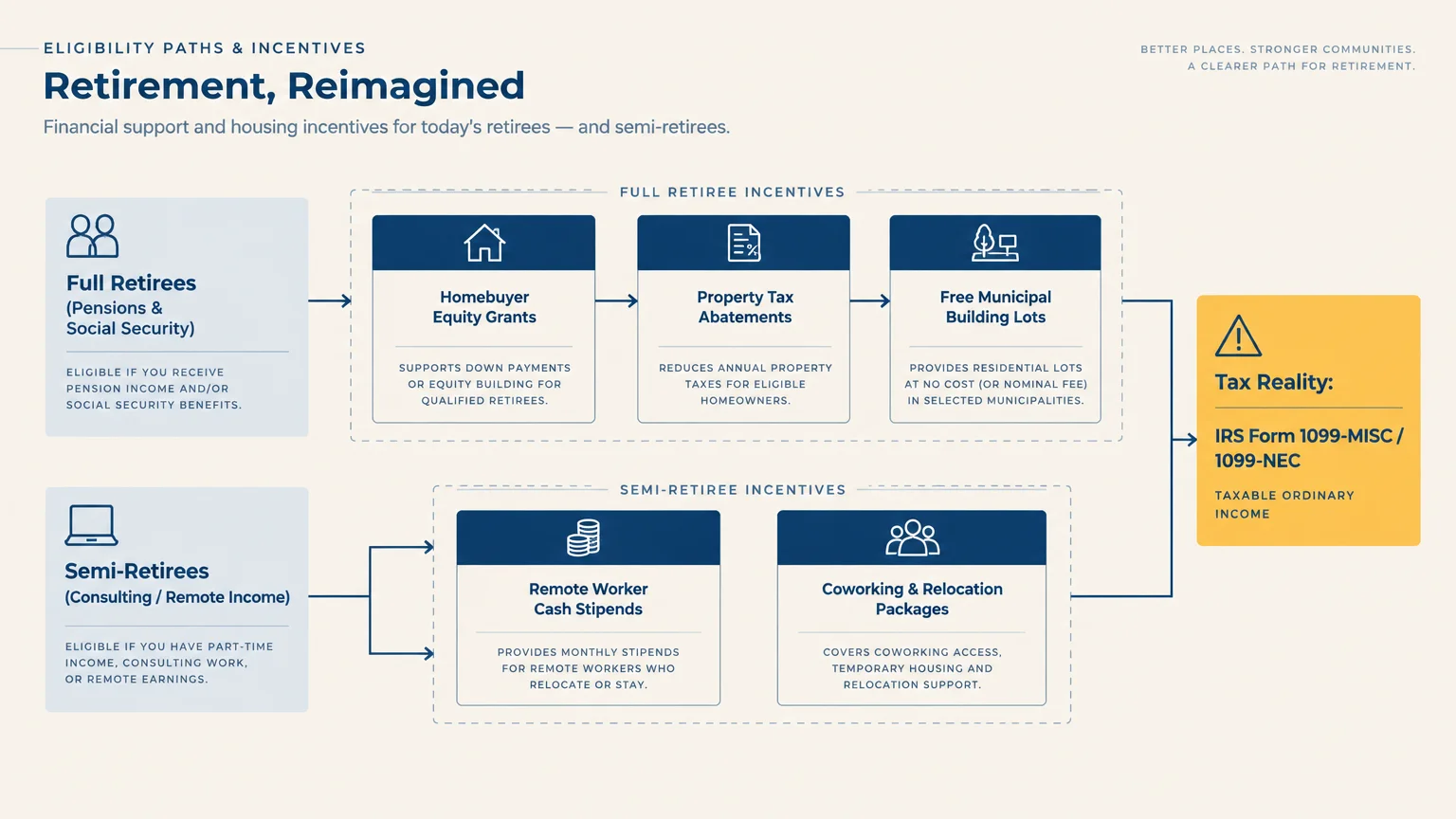
Understanding the distinction between full retirement and semi-retirement is critical before applying for any town incentive. Your daily employment status determines which funding streams you can legally access.
Most publicized municipal cash programs require verified full-time remote employment or self-employment income. These initiatives target workers who spend salaries earned elsewhere within local grocery stores, pharmacies, and small businesses.
Fully retired individuals who rely solely on pensions and Social Security cannot qualify for remote-worker cash stipends. However, traditional retirees qualify directly for generous municipal homebuyer grants, property tax abatements, and free building lots.
If you maintain a semi-retired lifestyle—earning independent income through freelance writing, online consulting, or bookkeeping—you qualify for remote worker programs. A modest schedule of consulting clients can unlock tens of thousands of dollars in relocation assistance.
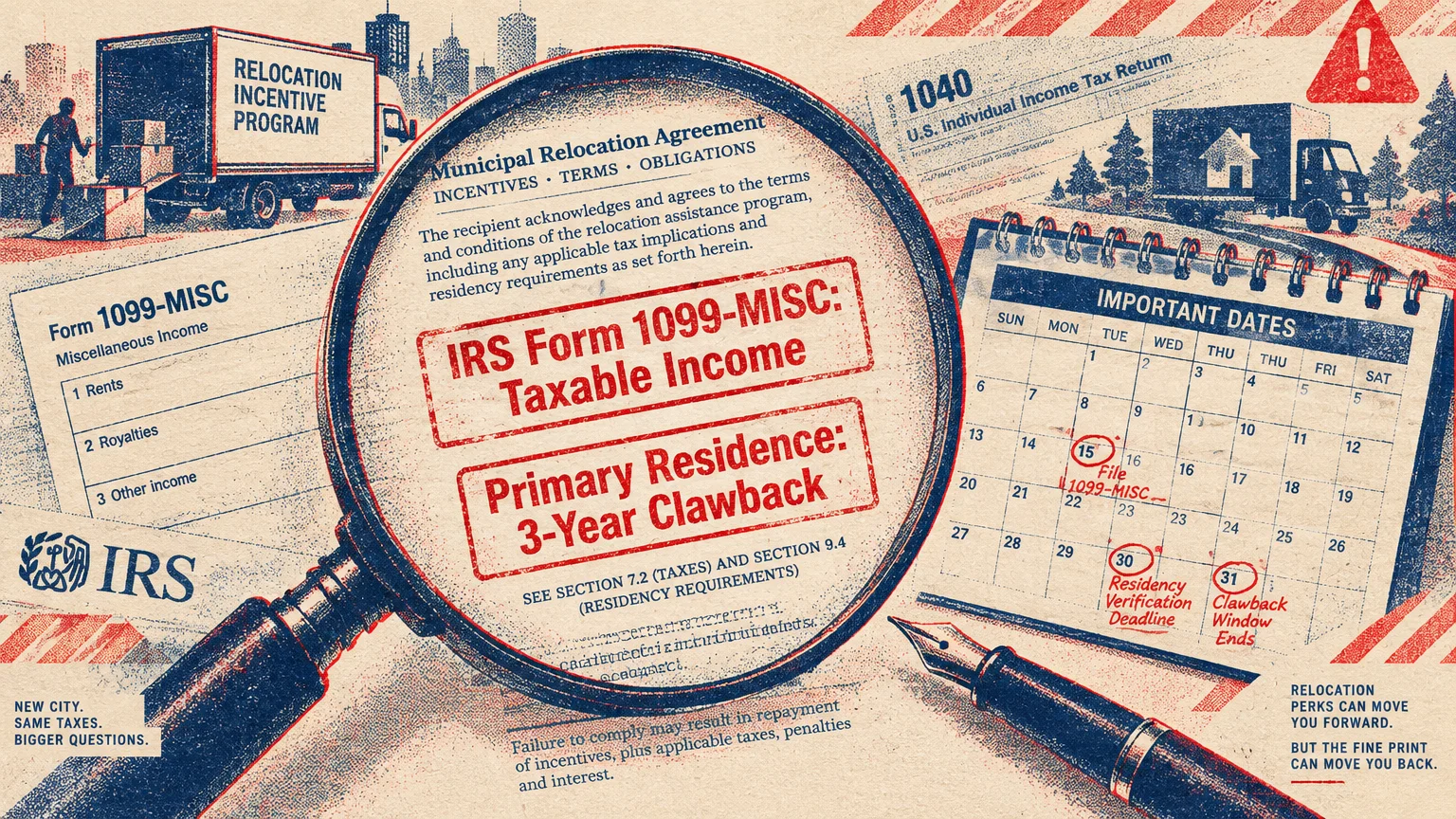
You must also prepare for the tax consequences of municipal bonuses. The Internal Revenue Service (IRS) treats moving grants, cash bonuses, and tuition reimbursements as ordinary taxable income.
Municipalities issue Form 1099-MISC or Form 1099-NEC to newcomers who accept these funds. You will owe federal and applicable state income taxes on that money when filing your annual return.
“Financial planning is about making choices that align your money with the life you truly want to live.” — Jean Chatzky, Financial Educator
1. Pawnee City, Nebraska: Substantial Down Payment Assistance
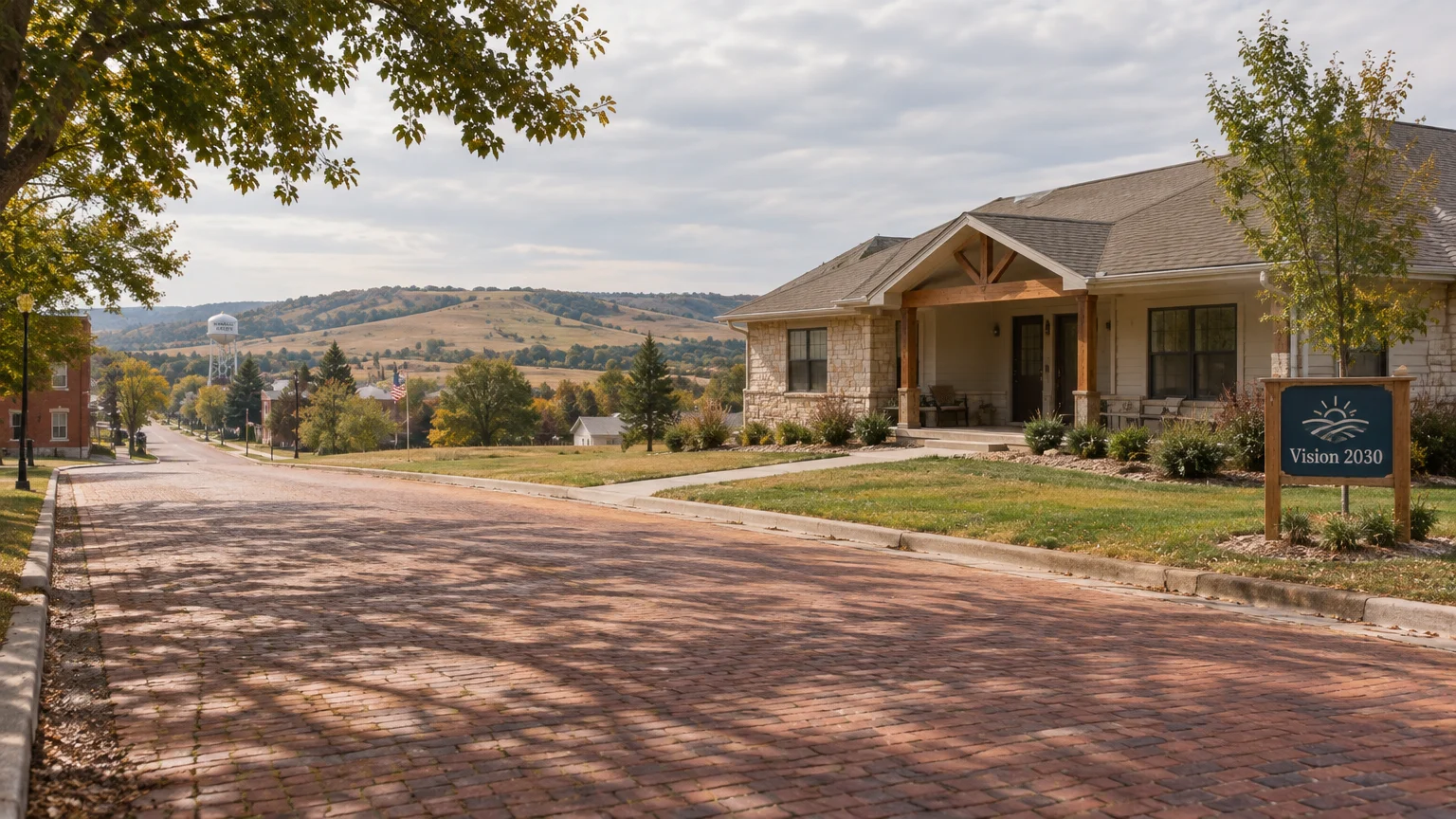
Pawnee City is a welcoming historic community situated in the scenic rolling hills of southeastern Nebraska. The town offers a peaceful atmosphere with low traffic, beautiful brick streets, and deep civic pride.
Under its innovative “Vision 2030” program, Pawnee City provides an impressive $50,000 in down payment assistance. This incentive applies directly toward purchasing one of 25 newly constructed ranch-style single-family homes.
These three-bedroom, two-bathroom homes sell for approximately $325,000, creating an immediate equity cushion for incoming buyers. The one-level floor plan makes them ideal for aging in place safely without navigating stairs.
Unlike programs that exclude retirees, Pawnee City explicitly welcomes non-working seniors alongside younger families. You do not need an active employer or remote work contract to qualify for this funding.
Applicants must satisfy household income limits to receive the grant. A single-person household must have an annual income under $69,450, while larger multi-person households can earn up to $115,100.
The city places a secondary lien against the property for the $50,000 down payment grant. This mechanism prevents real estate speculation and ensures local home prices remain fair for the community.
Pawnee City allows you to lower your monthly mortgage payments while securing a newly built home. It remains one of the most generous homebuyer programs in the country for retirees.
2. Newton, Iowa: Cash at Closing and Welcome Packages
Newton sits roughly thirty miles east of Des Moines, providing easy access to world-class medical facilities and cultural venues. It combines genuine small-town hospitality with the economic stability of central Iowa.
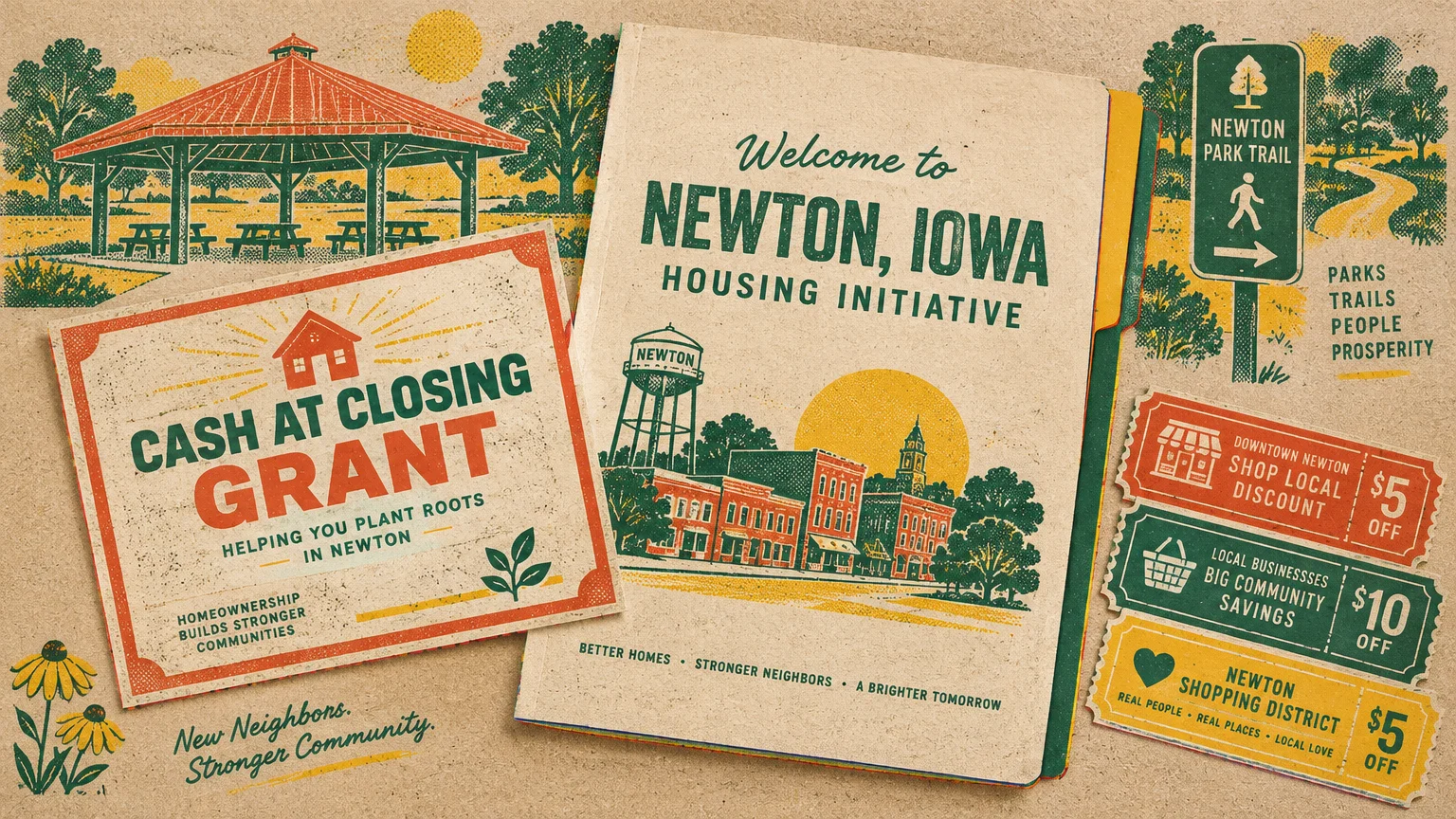
The Newton Housing Initiative delivers a straightforward $10,000 cash incentive upon closing on a newly built home. The city cuts this check directly to you to cover closing costs or furnish your living space.
In addition to direct cash, newcomers receive a “Get to Know Newton” Welcome Package valued at over $2,500. This package features chamber gift cards, memberships to local recreation centers, and seasonal golf passes.
To qualify for the $10,000 grant, you must purchase or build a new single-family residence valued at $240,000 or more. The valuation calculation excludes the purchase price of the underlying parcel of land.
Rental properties and investment homes do not qualify for the cash incentive. You must occupy the newly constructed residence as your permanent primary home.
If you build or buy a home below that threshold, Newton offers property tax abatements through its Urban Revitalization Plan. This abatement shields you from significant property tax hikes during your initial years of residency.
Because Newton enforces no employment or wage mandates, fully retired seniors qualify on equal footing with working professionals. You only need the financing or cash reserves necessary to complete your home purchase.
3. Mankato, Kansas: Free Building Lots for Custom Homes
Mankato is a charming rural county seat in north-central Kansas known for strong neighborly bonds and low living expenses. The community features a clean, safe environment where outdoor recreation and gardening thrive.
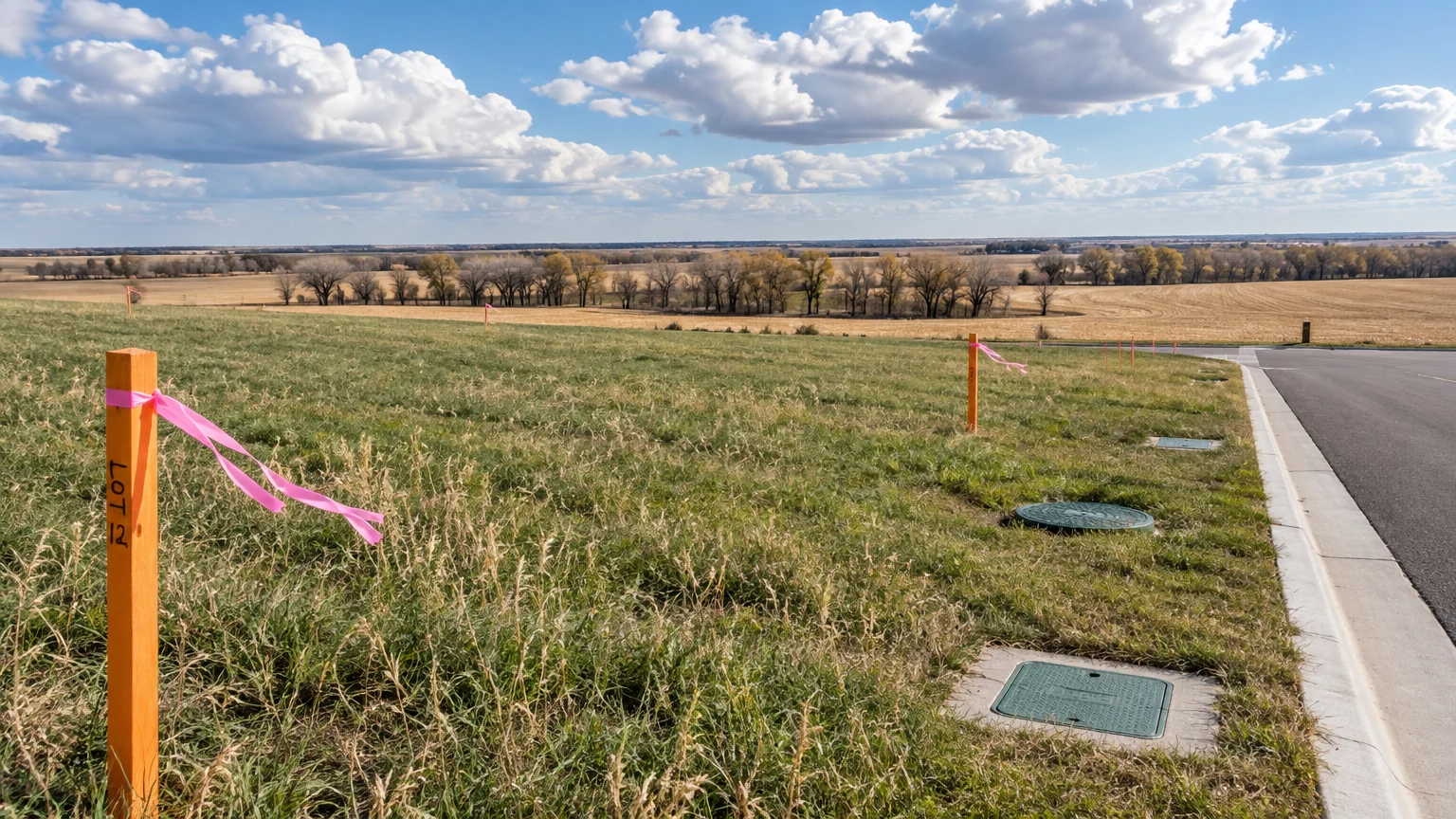
The Mankato Free Land Program offers twenty-six spacious residential lots in the Johnson Addition at zero land cost. These building parcels average 18,000 square feet, providing ample room for single-level living and private yard space.
Land acquisition is often one of the largest expenses in building a customized retirement residence. Eliminating land costs entirely allows you to redirect your retirement nest egg toward accessible, modern home designs.
Mankato does not require applicants to maintain an active job or remote employment contract. Retirees who have private savings, retirement accounts, or home-sale proceeds can acquire these lots freely.
To secure a free lot, you must commit to starting residential construction within six months of receiving the deed. You must also agree to finish construction according to local residential building standards.
The municipal covenants require you to build a primary home with at least 1,200 square feet of finished living space. The architectural plans must include a minimum of three bedrooms and an attached two-car garage.
Living mortgage-free is achievable here if you sell an appreciated home in a costly metro area. Mankato provides an affordable path toward custom homeownership on a predictable retirement budget.
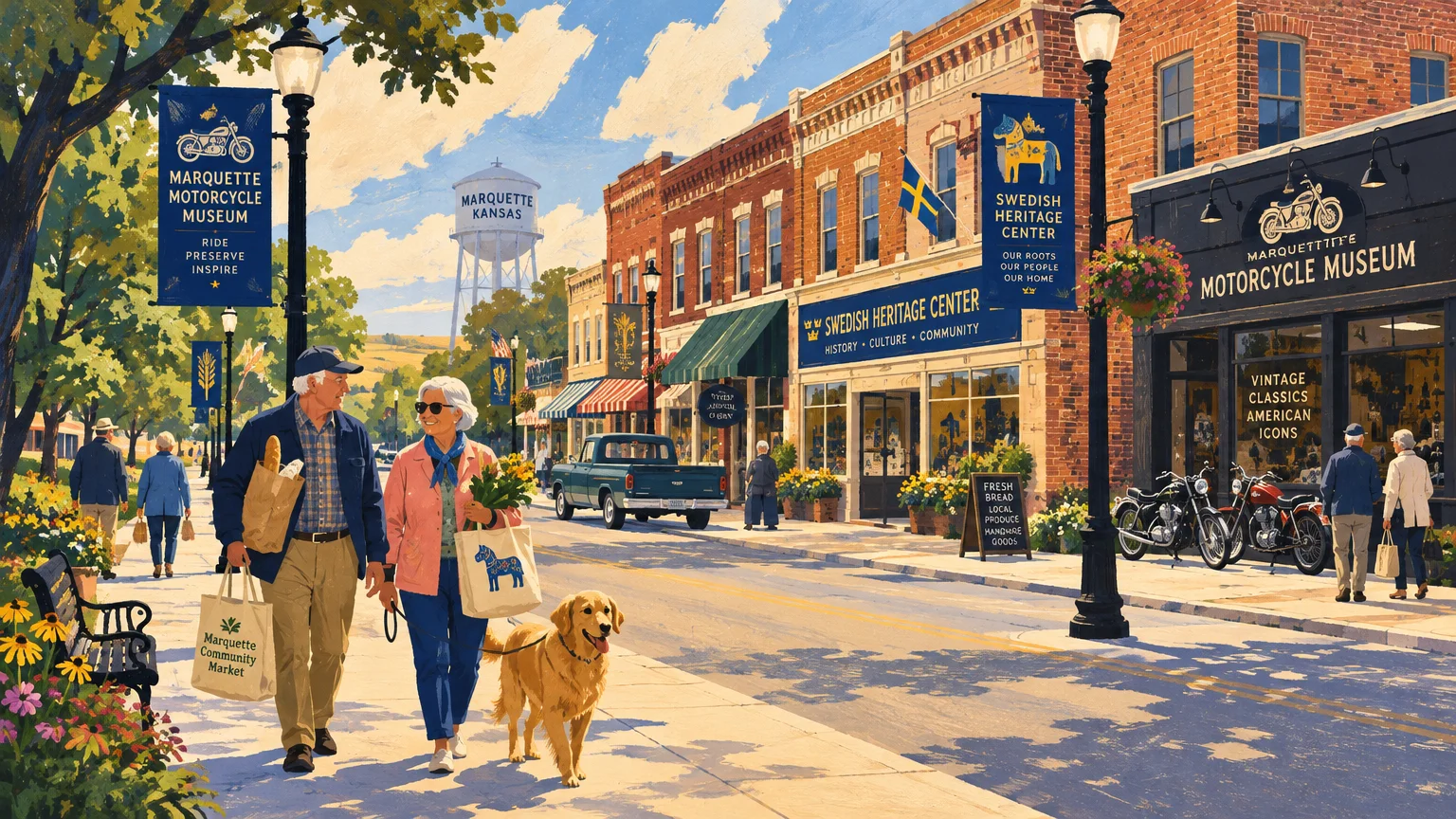
4. Marquette, Kansas: Open Spaces and Community Living
Marquette is an active arts and heritage hub located in the Smoky Hill River valley of central Kansas. The town maintains clean streets, a restored downtown district, and an extraordinary sense of community cohesion.
The Westridge Addition in Marquette offers free residential lots ranging in size from 11,000 to 25,000 square feet. These parcels provide plenty of room for single-story ranch homes, outdoor patios, and personal gardens.
The town welcomes retirees who wish to build a permanent home and participate in local social life. Marquette operates an active community garden program that supplies fresh produce and social engagement to residents.
You must agree to establish legal primary residency in Marquette to secure your building lot. The program requires you to finish home construction within one calendar year of acquiring the parcel.
Homes must contain at least 1,000 square feet of living space and sit atop a permanent foundation. Mobile homes and temporary recreational trailers are strictly prohibited under municipal development rules.
Marquette offers access to local health clinics and nearby regional hospitals in McPherson and Salina. You get peaceful rural living without being completely cut off from necessary healthcare services.
Securing a free lot in Marquette allows you to downsize thoughtfully into a brand-new home. It provides an affordable base for retirees seeking creative outlets and friendly neighbors.
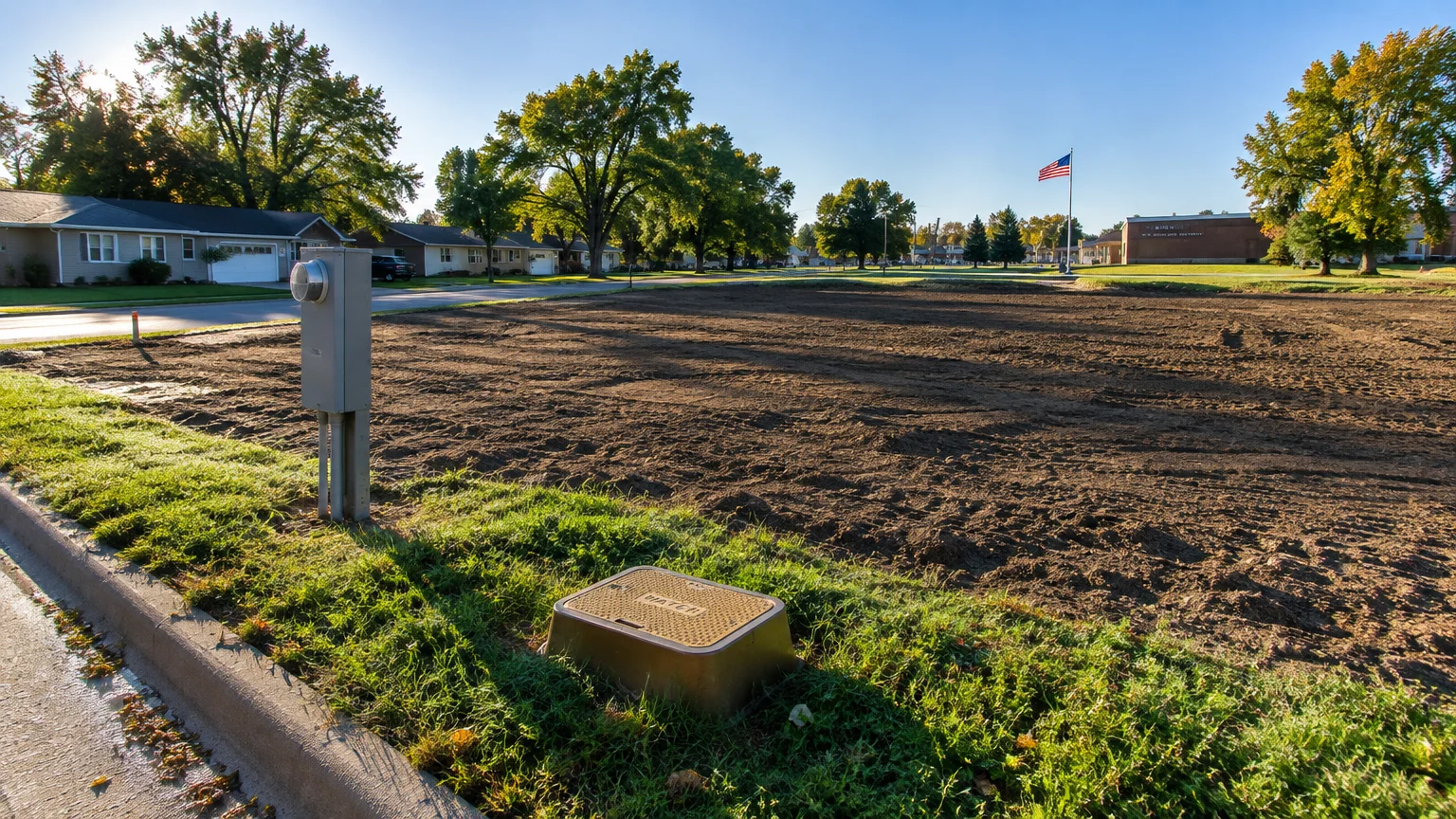
5. Curtis, Nebraska: Free Utility-Ready Home Parcels
Curtis sits in southwestern Nebraska and bills itself as “A Hometown Agency.” The town offers quiet residential neighborhoods surrounded by dramatic prairie scenery, golf facilities, and hunting grounds.
The Curtis Economic Development Corporation offers free residential building lots with municipal infrastructure already in place. City water, municipal sewer lines, and electrical connections run directly to each lot line.
Pre-installed utilities save homebuilders thousands of dollars in initial site development costs. You avoid the expensive excavation and municipal hookup fees that frequently burden custom home construction.
Curtis does not impose employment tests or income requirements on incoming lot applicants. Full retirees with pension or investment income qualify alongside working families looking to relocate.
The program gives you twenty-four months to construct and complete a single-family primary residence. This two-year building timeline provides plenty of flexibility to coordinate architectural designs and hire local contractors.
Recreation in Curtis includes the Arrowhead Meadows Golf Course, a nine-hole municipal course popular with local seniors. Area reservoirs provide convenient fishing and boating opportunities throughout the spring and summer months.
Building your ideal retirement layout in Curtis allows you to optimize energy efficiency and accessibility. You bypass outdated multi-story floor plans in favor of an easily maintained single-level design.
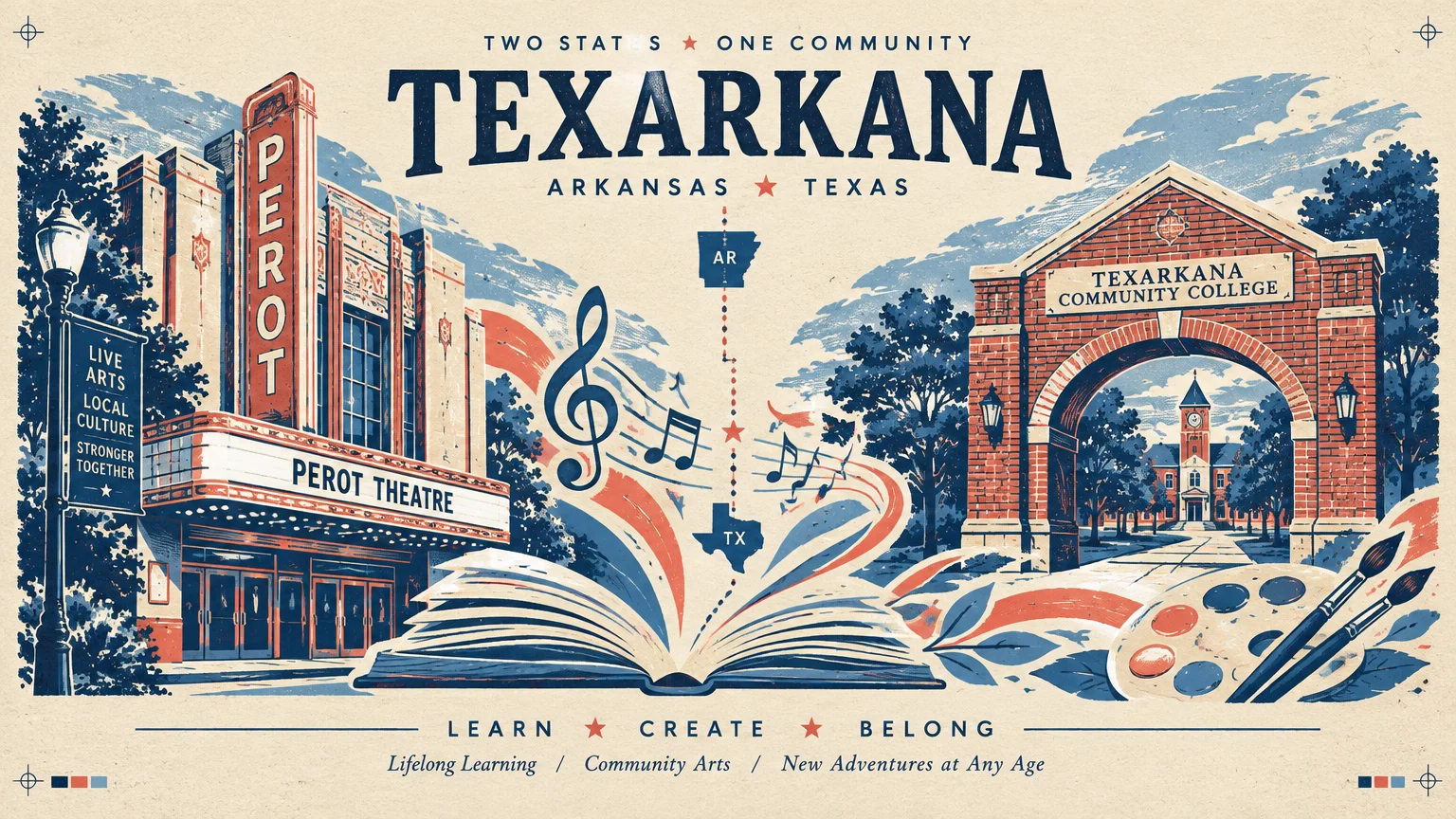
6. Texarkana, Texas and Arkansas: Lifelong Learning and Arts
Texarkana straddles the state border of northeast Texas and southwest Arkansas, offering dual-state cultural amenities. The area delivers an affordable cost of living alongside mature hospital systems and cultural organizations.
The “REDI…set…move!” campaign provides a relocation incentive package valued at $18,900 for qualifying newcomers. This comprehensive package includes a $5,000 upfront cash bonus to offset your moving expenses.
The program includes exciting educational perks for retirees who value personal development and lifelong learning. You receive a 25% tuition discount and one completely free course at Texas A&M University-Texarkana.
Cultural amenities round out the package with two complimentary season tickets to the Texarkana Symphony Orchestra. You also receive an annual membership to the Regional Arts & Humanities Council.
Because Texarkana finances this program through economic development funds, applicants must be full-time remote workers or self-employed individuals. Semi-retirees earning at least $60,000 annually through remote consulting or professional services are fully eligible.
You must move from outside Arkansas or from at least seventy-five miles away within the state of Texas. You must also establish your primary residence in Texarkana within six months of acceptance.
This incentive package offers semi-retirees an ideal balance of financial support and cultural perks. You can wind down your professional career while exploring collegiate courses and regional symphony performances.
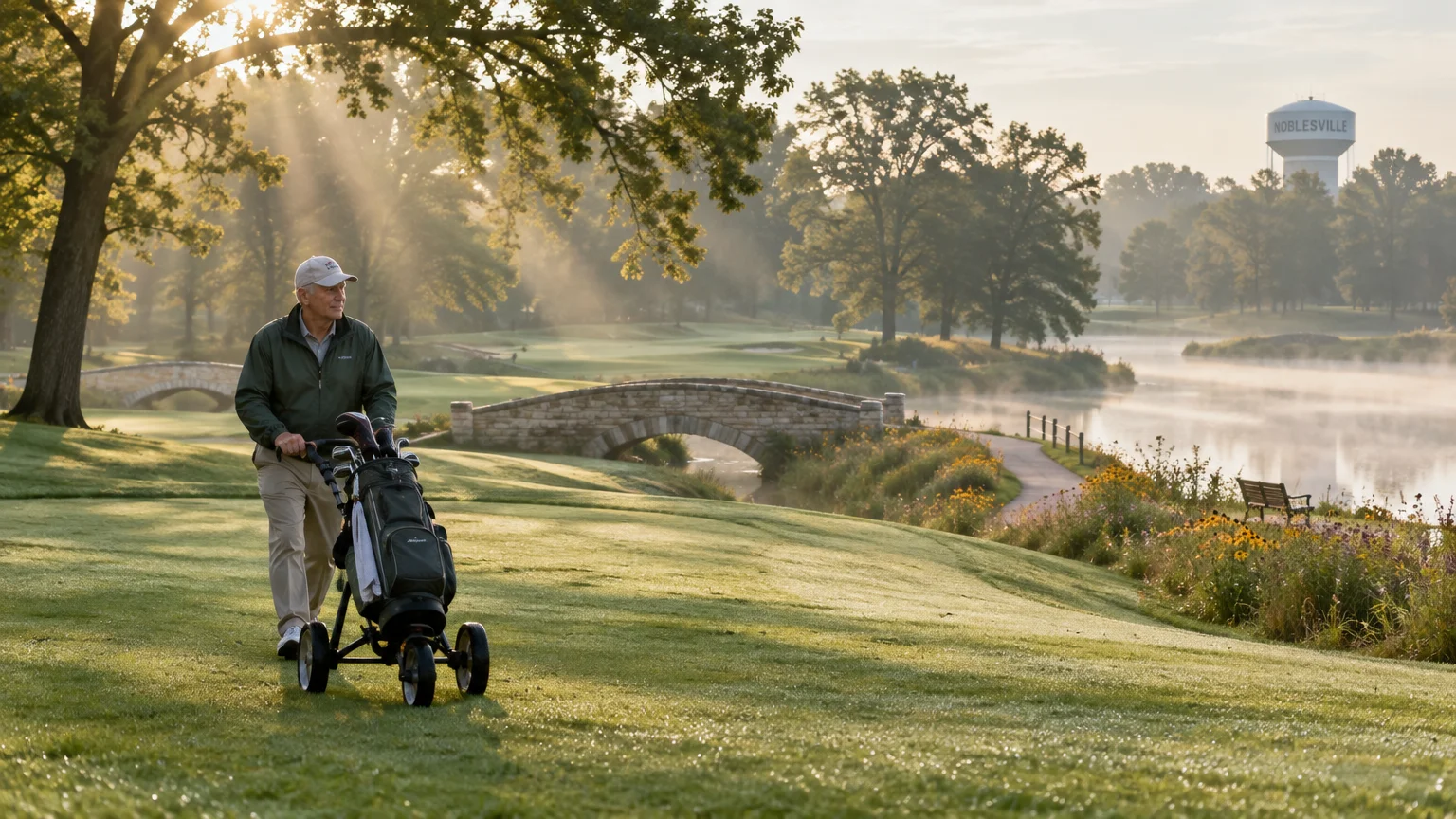
7. Noblesville, Indiana: Health Perks and Golf Access
Noblesville is a historic suburb positioned just north of Indianapolis along the White River. It offers an elegant brick courthouse square, charming boutique shopping, and convenient access to premier healthcare networks.
Through the MakeMyMove platform, Noblesville offers an attractive newcomer package valued between $15,000 and $18,000. The package pairs direct relocation funds with active lifestyle benefits tailored to health-conscious movers.
Qualifying newcomers receive free municipal golf passes alongside a dedicated $500 health and wellness stipend. The town also provides museum memberships, concert tickets, and gift cards to popular local restaurants.
This program requires applicants to work remotely or operate an independent business earning at least $80,000 annually. Semi-retirees managing specialty consulting practices or freelance businesses qualify if they move from outside Indiana.
You must relocate your primary residence to Noblesville within six months of signing your incentive agreement. Rental leases and home purchases both satisfy the municipal residency requirements.
Living in Noblesville places you near Ascension St. Vincent and IU Health medical centers. Having top-tier geriatric specialists and medical facilities nearby provides vital peace of mind as you age.
The combination of golf, wellness grants, and cultural passes makes Noblesville exceptionally appealing. It bridges the gap between active professional consulting and leisurely retirement living.
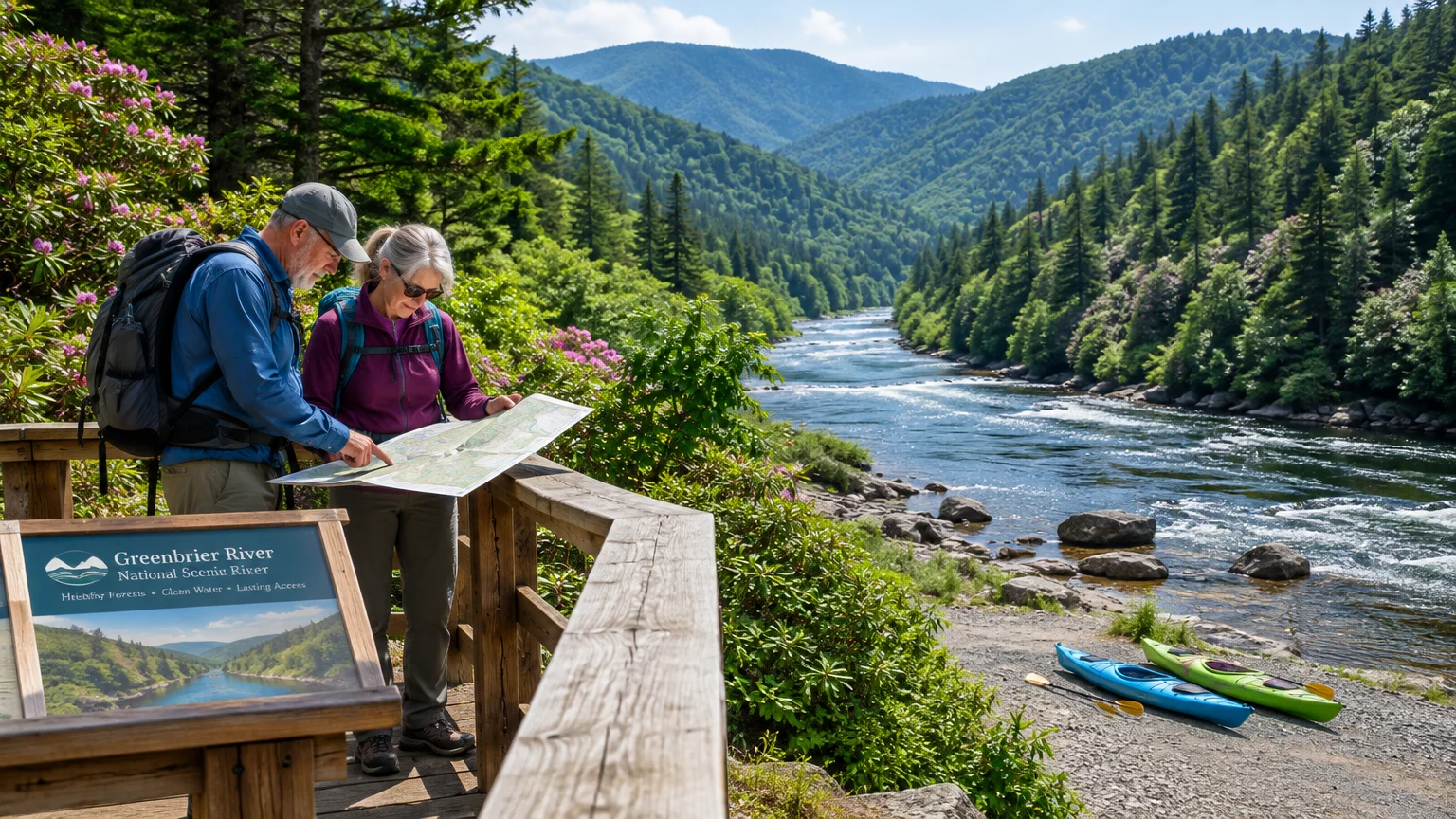
8. Morgantown and Greenbrier Valley, West Virginia: Outdoor Adventure Grants
West Virginia boasts some of the most dramatic mountain scenery, clean air, and outdoor recreation in the eastern United States. Communities like Morgantown and the Greenbrier Valley combine mountain charm with vibrant local traditions.
The statewide “Ascend WV” program delivers an impressive incentive package valued at more than $12,000 in direct cash. You receive $10,000 distributed across your first year of residency, followed by an additional $2,000 in your second year.
Ascend WV adds more than $1,200 in free outdoor recreation gear rentals and guided excursions. Newcomers enjoy complimentary whitewater rafting, downhill skiing, and access to modern coworking spaces.
Participants also gain access to West Virginia University entrepreneurship programs and social networking events. The program has earned a remarkable 96% retention rate across roughly 1,000 participants who have relocated.
To qualify for Ascend WV, you must currently live outside West Virginia and work remotely for an out-of-state company. Semi-retirees who run an independent business or consulting practice with out-of-state clients meet this requirement.
West Virginia also exempts Social Security benefits from state income taxation for most retirees, preserving your monthly budget. You can verify federal benefits through the Social Security Administration (SSA) before finalizing your move.
If you want to spend your retirement hiking, paddling, and skiing, Ascend WV offers unbeatable value. It pays you substantial cash to relocate while providing free access to world-class mountain recreation.
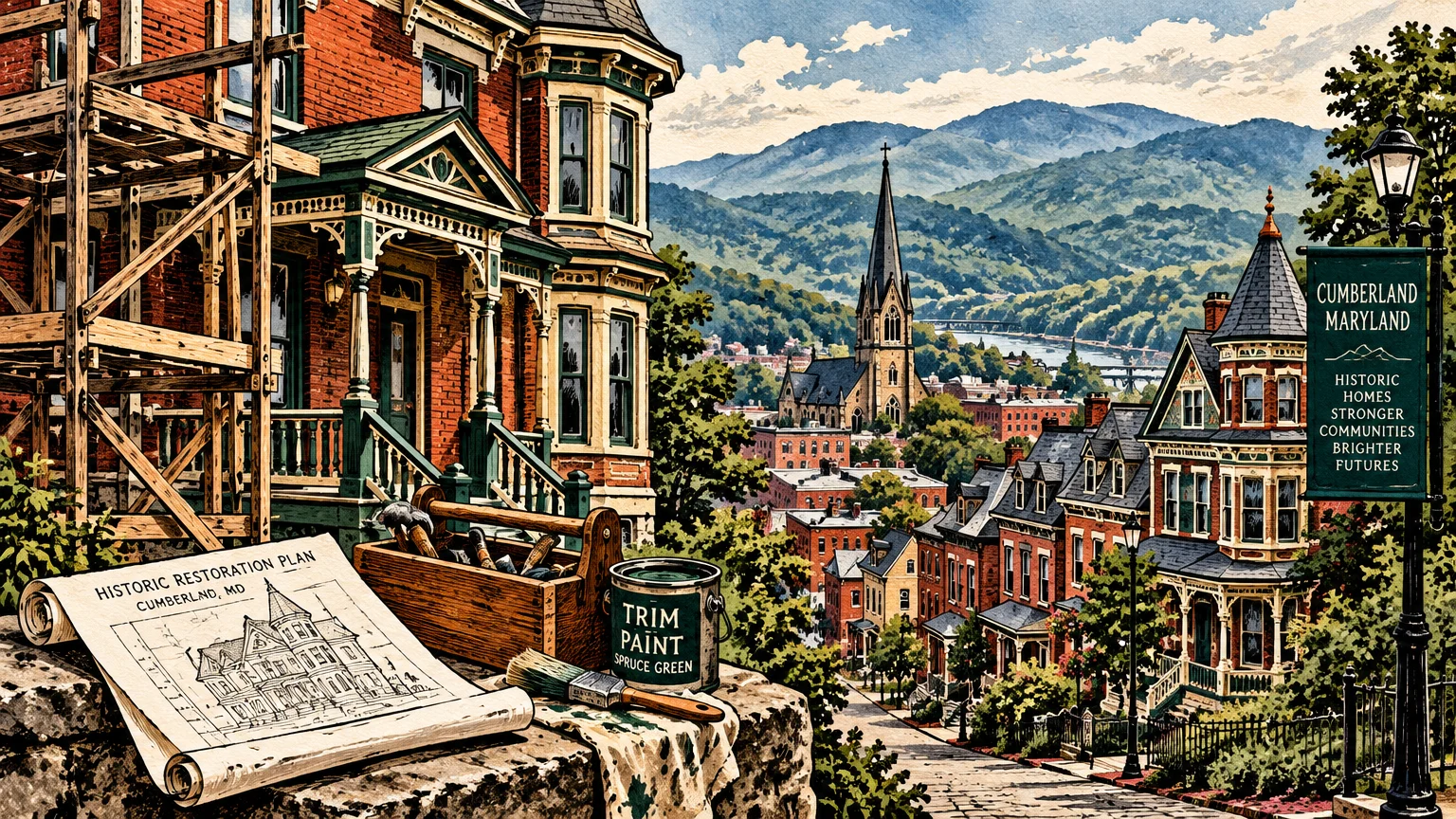
9. Cumberland, Maryland: Renovation Matches and Mountain Charm
Cumberland is a historic mountain town nestled in the Allegheny Mountains of western Maryland. Known as the “Queen City,” it features historic architecture, scenic railroads, and access to the Great Allegheny Passage trail.
The “Choose Cumberland” program offers up to $20,000 in total financial incentives to newcomers moving into the city. This support comes as $10,000 in direct relocation cash alongside a dollar-for-dollar renovation match up to $10,000.
You can apply the $10,000 matching grant toward approved home improvements on an existing historic property. Alternatively, you can allocate the matching funds directly toward a down payment on a newly constructed home.
To qualify, you must move from outside Allegany County and purchase a home valued at $150,000 or more. You must maintain local employment or demonstrate verified full-time remote employment income.
The program requires you to reside in the home as your primary residence for at least five consecutive years. Moving away before five years triggers a prorated clawback requiring you to repay the grant.
Because municipal funding operates on annual budget cycles, application windows occasionally pause and reopen on a rolling basis. You should check the city economic development portal to verify open enrollment periods before relocating.
Cumberland provides an exceptional opportunity for semi-retirees who love historic home restoration and cycling. The combined renovation match makes high-character housing attainable at a fraction of major-metro prices.
“Retirement is not a financial decision; it’s a life transition that requires financial preparation.” — Mitch Anthony, Retirement Lifestyle Author
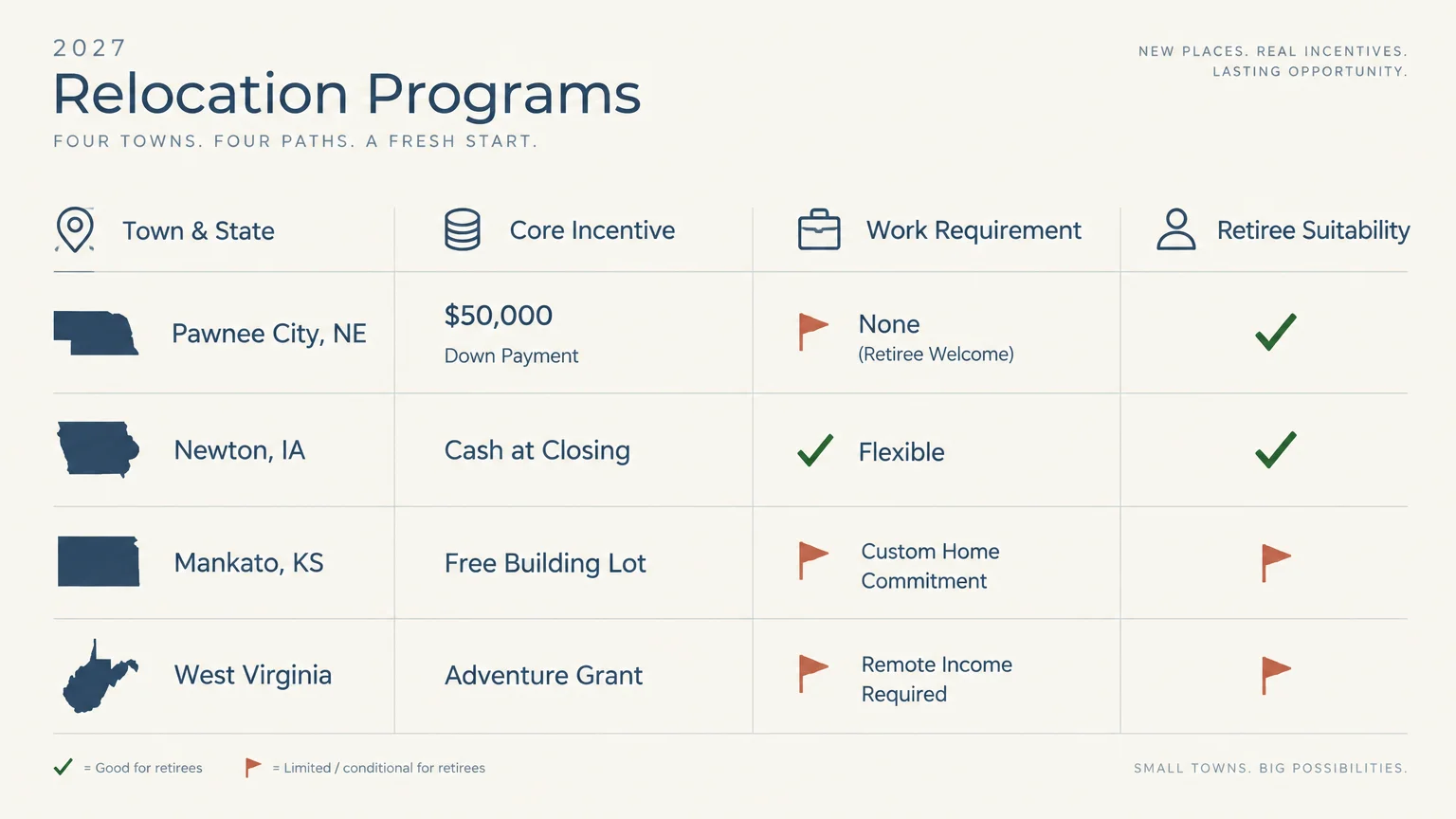
Comparing the Top 2027 Newcomer Programs for Retirees
Reviewing incentive values and residency requirements side by side helps you determine which program fits your retirement timeline. The table below details funding types and retiree eligibility across all nine communities.
| Town & State | Total Incentive Value | Full Retiree Eligible? | Key Perk or Requirement |
|---|---|---|---|
| Pawnee City, NE | $50,000 | Yes | Down payment grant on new ranch homes; income caps apply |
| Newton, IA | $12,500+ | Yes | $10,000 cash at closing plus $2,500 local welcome package |
| Mankato, KS | Free Land | Yes | Free 18,000 sq. ft. lot; build 1,200 sq. ft. home in 6 months |
| Marquette, KS | Free Land | Yes | Free building parcel; access to town community garden |
| Curtis, NE | Free Land | Yes | Free lot with water, sewer, and electric already connected |
| Texarkana, TX/AR | $18,900 | Semi-Retirees | $5,000 cash, free university class, symphony tickets |
| Noblesville, IN | Up to $18,000 | Semi-Retirees | Relocation cash, golf passes, $500 health stipend |
| Ascend WV (Multiple) | $13,200+ | Semi-Retirees | $12,000 cash over two years plus $1,200 recreation passes |
| Cumberland, MD | Up to $20,000 | Semi-Retirees | $10,000 cash plus $10,000 home renovation matching grant |
As shown above, traditional non-working retirees should focus on Nebraska, Iowa, and Kansas. Semi-retirees with professional consulting revenue can tap broader cash packages in Indiana, Maryland, Texas, and West Virginia.
Avoiding Common Errors When Claiming Relocation Perks
Relocating across state lines involves complex logistical and financial hurdles. Making hasty assumptions about town perks can jeopardize your retirement budget.
- Ignoring Tax Liabilities: Failing to withhold taxes on cash grants leaves you with an unexpected IRS bill. Set aside 25% to 30% of any cash bonus to cover federal and state income taxes.
- Underestimating Construction Expenses: Free land does not equal a free home. You must secure construction financing, hire licensed contractors, and pay for soil testing and building permits.
- Violating Clawback Agreements: Leaving an incentive town before meeting the mandatory residency timeline triggers repayment penalties. Make sure you genuinely enjoy the climate, healthcare access, and isolation before signing contracts.
- Applying Without Qualifying Income: Applying for remote worker grants without verifiable earned income leads to immediate disqualification. Relying on passive dividends or pensions does not satisfy remote work wage tests.
Researching mortgage rates and local construction costs through sources like Bankrate ensures your estimates remain grounded in reality. Taking time to run the complete numbers protects your long-term wealth.
When DIY Isn’t Enough
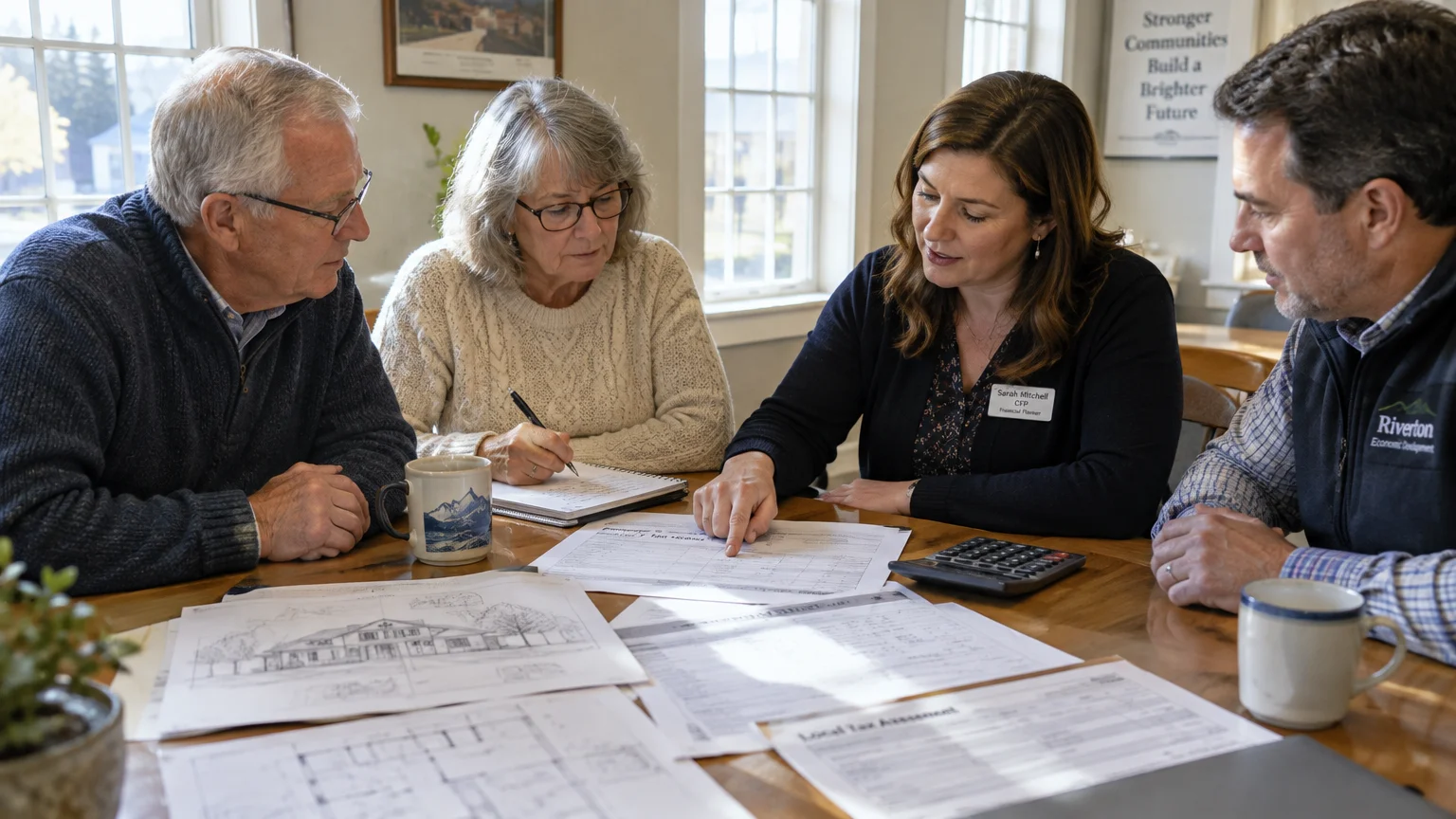
Transitioning into retirement while moving to a new state introduces financial nuances that standard online calculators overlook. Professional guidance protects you against costly tax and legal mistakes.
You should consult a fee-only financial planner if you are liquidating taxable brokerage accounts or selling a primary residence. A financial advisor helps you minimize capital gains taxes and navigate complex state tax brackets.
Working with a local real estate attorney is equally vital when claiming municipal down payment grants or deed-restricted lots. An attorney ensures the city’s second lien or building covenants will not impede future resale opportunities.
Reviewing municipal grant agreements alongside mortgage disclosures prevents sudden default clauses. You can research national lending standards and consumer protections through the Consumer Financial Protection Bureau (CFPB) before entering financing contracts.
Frequently Asked Questions About Newcomer Incentive Programs
Can a fully retired person qualify for remote worker cash grants?
No, remote worker relocation grants require proof of active employment or independent business revenue. Fully retired seniors should target municipal homebuyer down payment grants and free land programs instead.
Are municipal cash relocation stipends taxable?
Yes, municipal cash stipends and moving grants are considered taxable income by the IRS. You will receive a Form 1099-MISC or 1099-NEC and must report the funds on your tax return.
What happens if I move away before the residency term ends?
Most incentive contracts include strict clawback provisions requiring full or prorated repayment if you leave early. Make sure you can comfortably commit to the required three- to five-year residency term before applying.
Do free land programs cover the cost of running utilities?
Some towns like Curtis, Nebraska, provide lots with water, sewer, and electric lines stubbed at the property edge. Other rural programs require the buyer to pay for utility hookups, septic installation, or meter connections.
Next Steps for Your 2027 Relocation Plan
Taking advantage of community perks requires patience, advance research, and careful timing. Start by visiting prospective towns as an extended vacationer to experience the local lifestyle firsthand.
Reach out to municipal program managers directly to verify open application cycles and funding availability for 2027. Securing your spot early positions you to build a comfortable, highly affordable retirement lifestyle.
The information in this guide is meant for educational purposes. Your specific circumstances—including income, health needs, tax situation, and goals—may require different approaches. When in doubt, consult a licensed professional.
Last updated: March 2026. Retirement benefits, tax rules, and healthcare regulations change frequently—verify current details with official sources.








Leave a Reply