
Property taxes often represent the single largest unbudgeted expense threatening your financial independence in retirement. You can slash or freeze these bills by claiming state-level exemptions designed specifically for older homeowners.
Across the country, rising property valuations push tax obligations well beyond standard annual Social Security adjustments. Missing these municipal relief programs forces thousands of older adults to overpay by thousands of dollars every year.
Securing the senior property tax exemption options you qualify for protects your home equity and preserves your cash flow. These ten proven programs offer substantial savings to help you remain comfortably in your home.
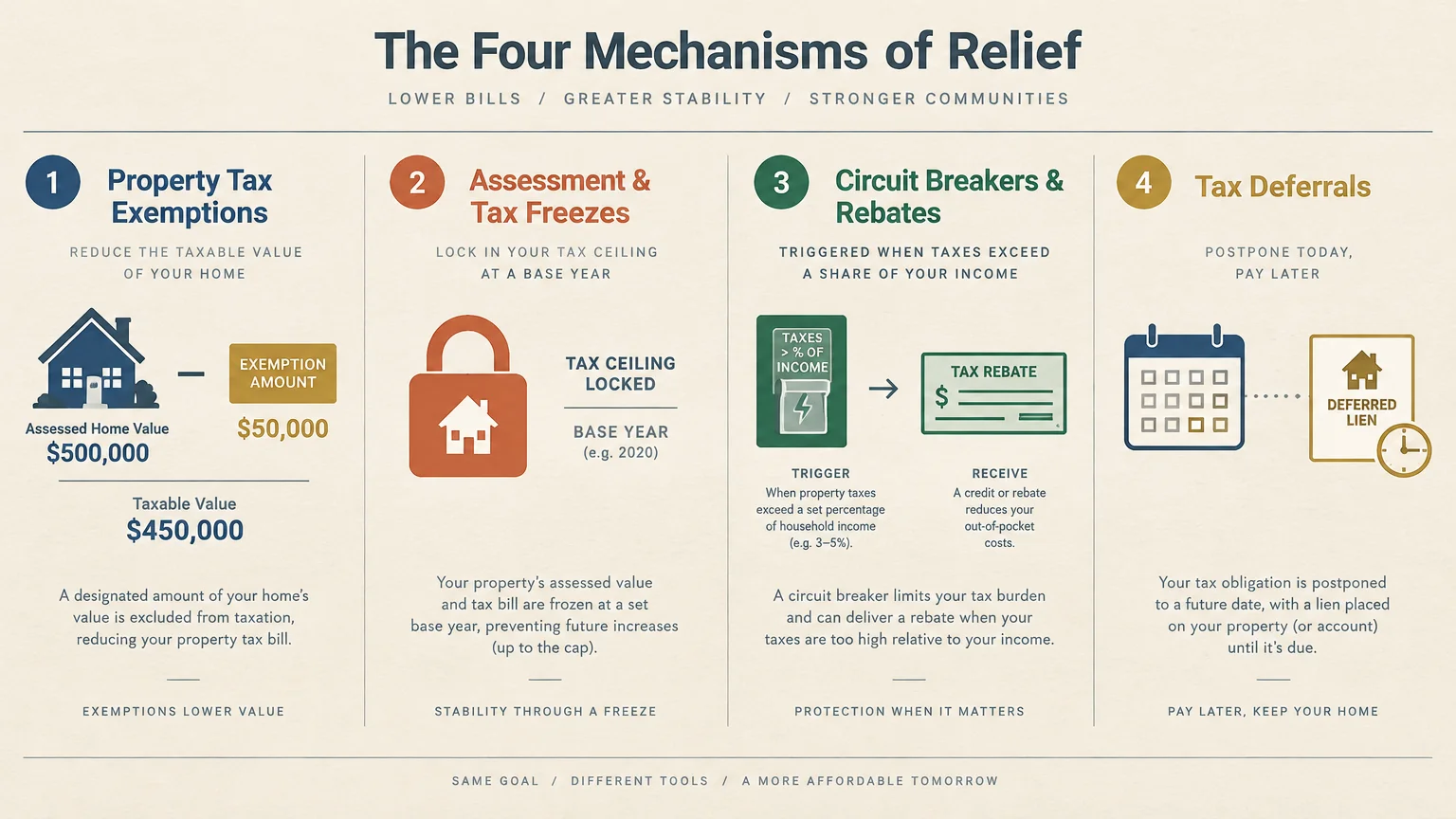
The Four Mechanisms of Senior Property Tax Relief
According to U.S. Census Bureau estimates, the average American household pays roughly $3,200 annually in real estate property taxes. In high-tax states, routine bills range from $4,000 to over $9,000 each year.
Out of 51 jurisdictions, 28 offer a general homestead benefit to all owner-occupants regardless of age. The remaining states restrict meaningful relief to seniors, veterans, and individuals with disabilities.
Understanding how your state structures tax relief older homeowners receive is the first step toward reducing your bill. State legislatures typically rely on four distinct relief mechanisms:
- Property Tax Exemptions: These subtract a specific dollar amount or percentage from your home’s assessed value before local tax rates apply.
- Assessment and Tax Freezes: These lock your property’s assessed value or tax ceiling at a base year to prevent future tax hikes.
- Circuit Breakers and Rebates: These issue direct refund checks or tax credits whenever your property taxes exceed a set percentage of household income.
- Tax Deferrals: These allow you to postpone payments by placing an interest-bearing lien against the property until you sell or pass away.
Each tool functions differently, and many states allow eligible homeowners to combine multiple approaches for maximum savings.

1. Texas Over-65 Exemption and School Tax Ceiling
Texas provides robust tax relief seniors can leverage to shield hundreds of thousands of dollars in value from school taxes. The state pairs a substantial valuation exemption with a permanent property tax freeze.
The state grants a $140,000 base homestead exemption to all primary homeowners across Texas. Homeowners aged 65 and older receive an additional $60,000 exemption, shielding a combined $200,000 from school district taxation.
This senior homestead exemption features no income limit, making it universally available to qualifying homeowners. It applies directly to your primary residence beginning on January 1 of the year you turn 65.
Qualifying also establishes a permanent school district tax ceiling on your property. Your school taxes can never rise above that initial amount, even if your local market value doubles.
To apply, submit Form 50-114 to your local county appraisal district alongside your Texas driver’s license showing your primary address.
2. New Jersey Consolidated Property Tax Relief (Form PAS-1)
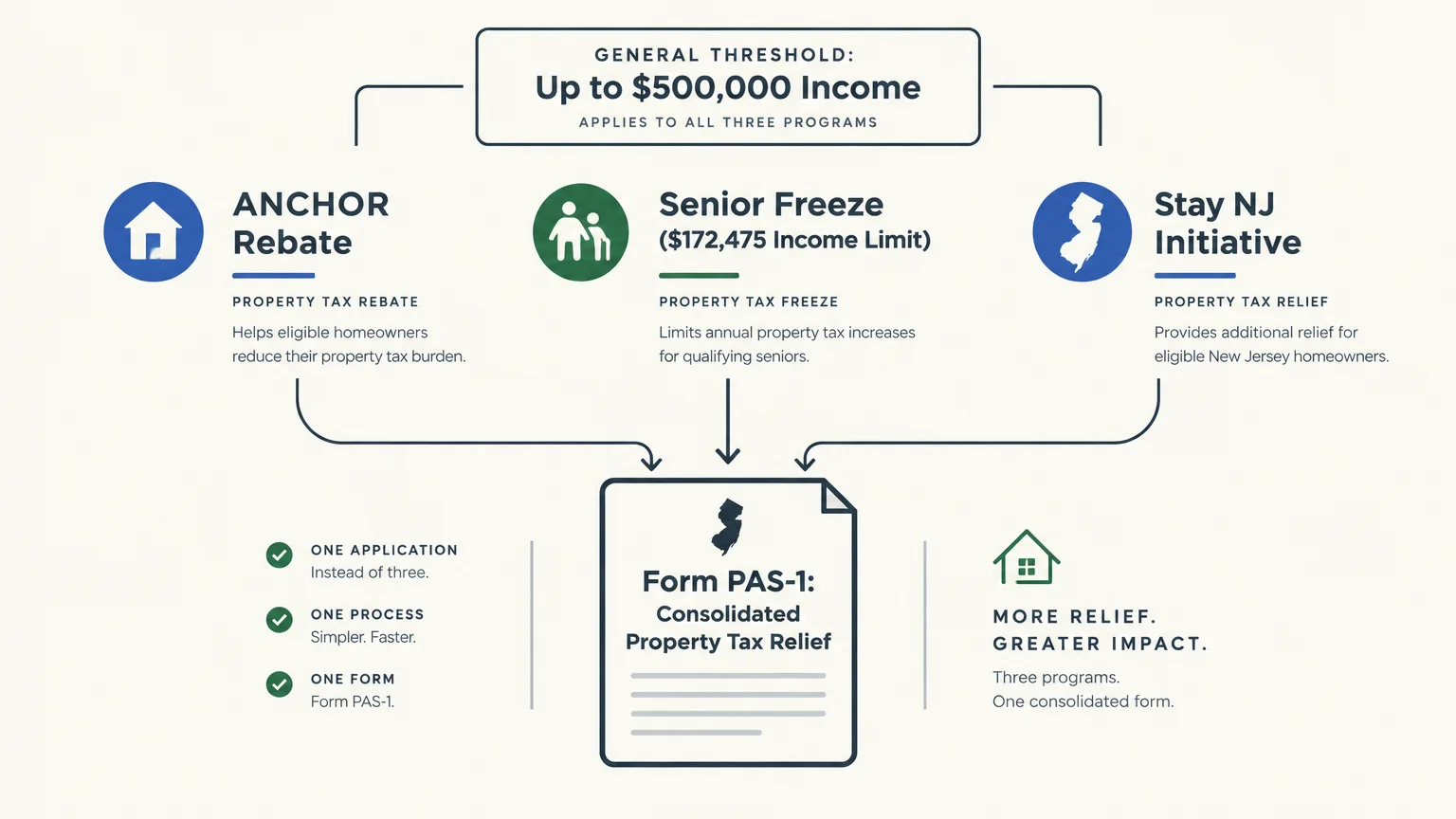
New Jersey restructured its senior assistance programs to reduce paperwork and provide direct financial relief to older residents. Homeowners aged 65 and older can now apply for multiple initiatives using a single consolidated filing.
Form PAS-1 consolidates the popular ANCHOR rebate, the historic Senior Freeze program, and the comprehensive Stay NJ initiative into one streamlined process.
The general income threshold to file Form PAS-1 is $500,000, ensuring broad middle-class eligibility. However, the Senior Freeze component features a specific 2025 income limit of $172,475 to qualify for tax reimbursements.
The Senior Freeze establishes a base year for your municipal and school taxes. The state then reimburses you annually for any subsequent property tax increases above that baseline.
Eligible homeowners must submit Form PAS-1 before the firm deadline of November 2, 2026. The state Division of Taxation processes the forms and distributes payments directly through direct deposit or paper checks.
3. New York Enhanced STAR Exemption
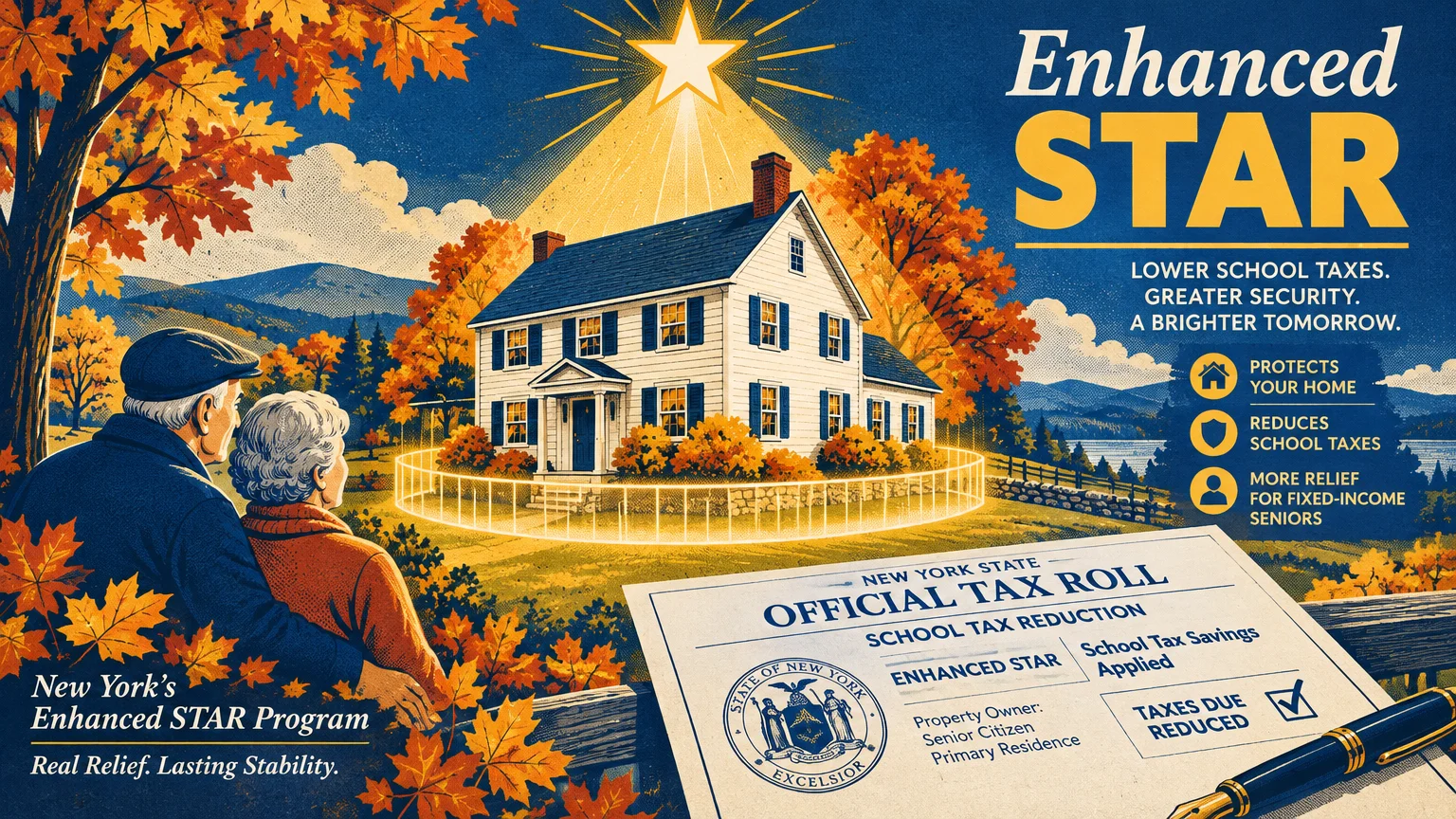
New York homeowners already receive basic school tax relief through the School Tax Relief (STAR) program. The Enhanced STAR exemption dramatically increases these savings for residents aged 65 and older.
For the 2026 benefit year, the household income limit for Enhanced STAR is $110,750, raised from $107,300 in 2025. This threshold reflects state-calculated cost-of-living adjustments based on federal tax data.
Enhanced STAR targets the school property tax portion of your annual real estate bill. The exact dollar reduction varies by county because the state adjusts exemption amounts to equalize local assessment practices.
You can verify current income rules and qualification standards through the USA.gov Benefits directory. The tool helps track state-administered tax relief initiatives across various public agencies.
Once you enroll in the state’s Income Verification Program, the state automatically checks your eligibility annually with tax authorities. This automated verification eliminates the stress of filing complex renewal paperwork every year.
4. California Property Tax Postponement Program
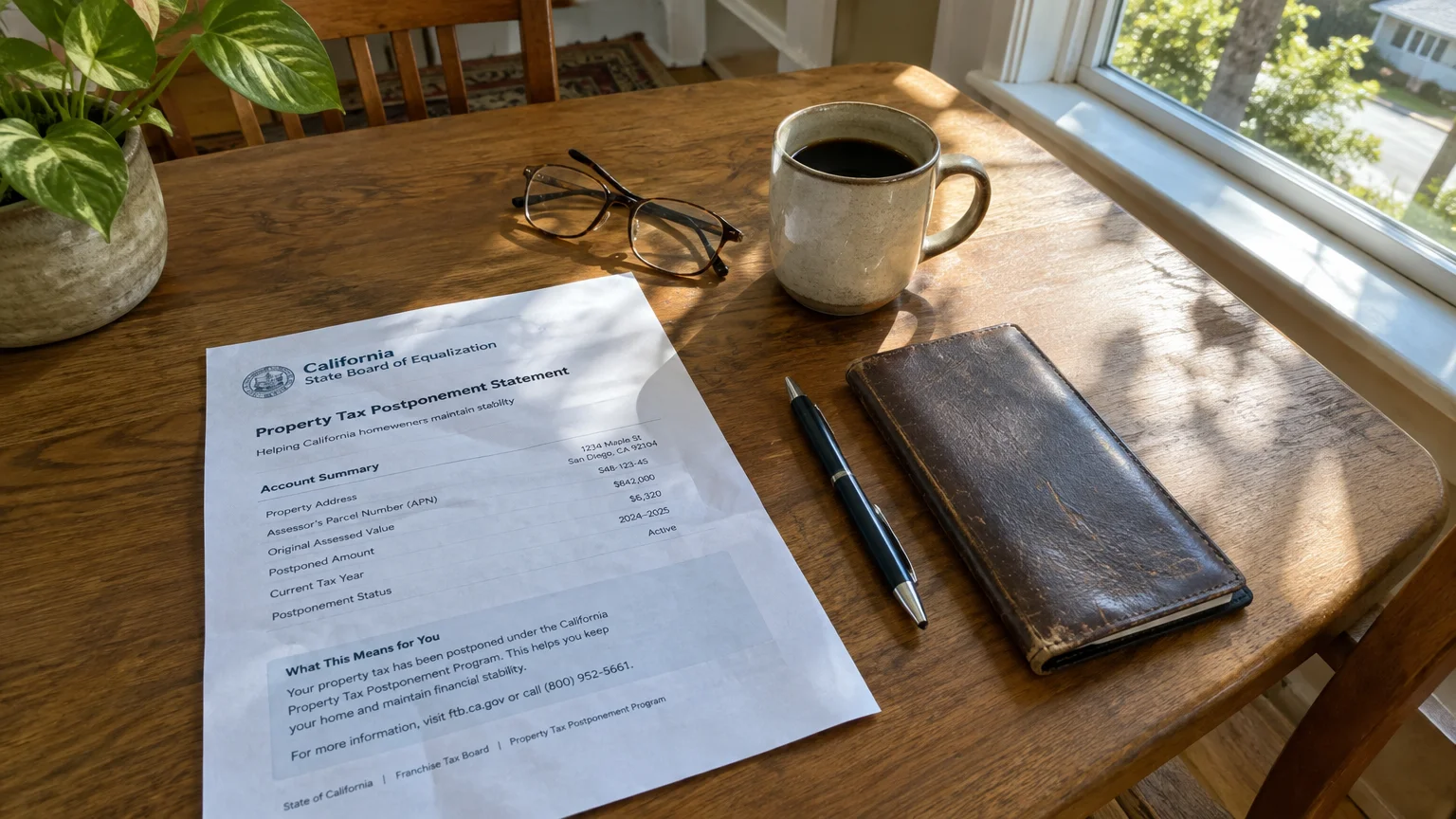
California property taxes are governed by Prop 13, but escalating parcel taxes and local bonds still strain fixed incomes. The California State Controller’s Office administers the Property Tax Postponement (PTP) program to solve this issue.
This program allows homeowners aged 62 and older, as well as blind or disabled residents, to defer current-year property taxes. The state pays your property taxes directly to your county tax collector on your behalf.
To qualify, you must maintain at least 40% equity in your primary residence. You must also demonstrate an annual household income of $57,002 or less.
Deferred taxes become a secure lien against your home, accruing simple interest until you move, sell, or pass away. The filing window for the 2026–2027 cycle opens on October 1, 2026, and closes on February 10, 2027.
Review the program terms carefully through your local tax office before applying to ensure a deferred lien fits your long-term estate goals.
5. Illinois Senior Citizens Assessment Freeze Homestead Exemption
Illinois property taxes rank among the highest in the country, placing immense pressure on retired households. The Senior Citizens Assessment Freeze Homestead Exemption helps older adults stabilize their housing expenses.
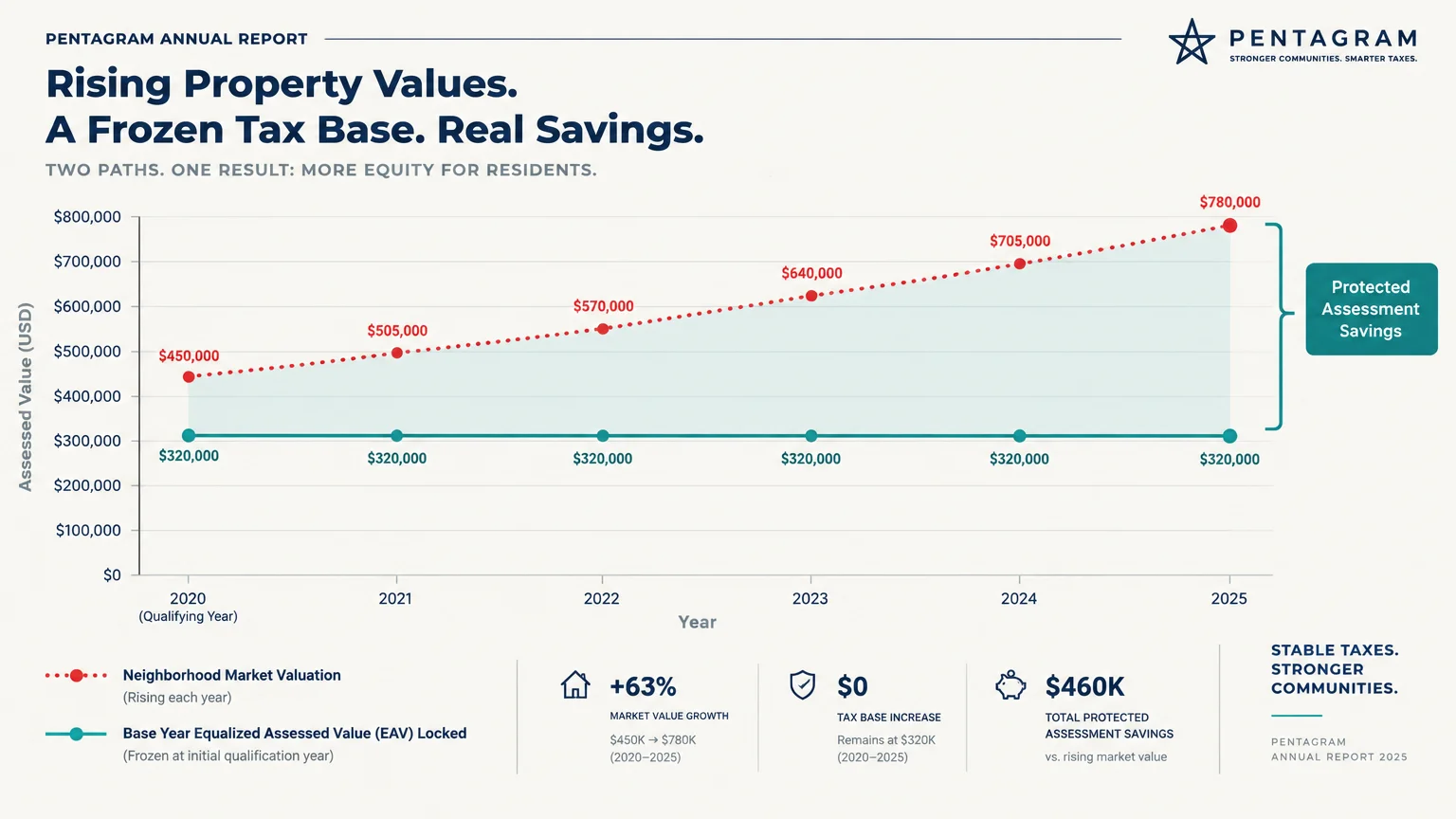
Under state statute 35 ILCS 200/15-172, the program locks in the equalized assessed value of your primary residence. It sets your base valuation year to the tax year immediately preceding your application.
Your property tax freeze prevents valuation hikes from increasing your local tax bill. However, it does not freeze local tax rates, which can still shift depending on local municipal budgets.
State law increased the maximum household income limit to $75,000 for 2026. The income threshold will rise to $77,000 in 2027 and $79,000 in 2028.
Applicants must turn 65 during the tax year and own the property as their primary residence. You must file Form PTAX-340 annually with your local chief county assessment officer.

6. Florida Additional Senior Homestead Exemption and Save Our Homes
Florida provides exceptional baseline protections through its standard $50,000 homestead exemption and the Save Our Homes assessment cap. The Save Our Homes amendment limits annual assessment increases to 3% or the inflation rate, whichever is lower.
Counties and municipalities can also adopt an additional senior homestead exemption worth up to $50,000 in assessed value. This extra benefit applies specifically to the city and county portions of your tax bill.
To qualify for this supplementary deduction, you must be 65 or older and meet strict financial guidelines. For 2026, the Florida Department of Revenue set the inflation-adjusted household income limit at $38,686.
Some Florida jurisdictions also provide an exemption equal to the total assessed value for longtime residents. This full exemption requires 25 years of residency, an assessed value below $250,000, and compliance with income rules.
Submit Form DR-501SC to your local county property appraiser before March 1 to secure your benefits for the upcoming tax cycle.

7. Pennsylvania Property Tax and Rent Rebate Program
Pennsylvania operates a classic circuit-breaker model designed to return cash directly to older residents. The Property Tax and Rent Rebate Program supports homeowners aged 65 and older, widows aged 50 and older, and disabled adults.
The program issues direct rebate payments of up to $1,000 each year to qualifying participants. The standard income ceiling is capped at $45,000 in annual household income.
The state excludes 50% of your Social Security earnings when calculating your qualifying household income. This generous exclusion allows many retirees with modest pensions and standard benefits to fall safely below the income cap.
Eligible homeowners can apply online through the Pennsylvania Department of Revenue myPATH portal or by submitting paper Form PA-1000. Relief funds are funded directly through the Pennsylvania Lottery and gaming proceeds.
You must provide proof of paid local real estate taxes from your municipal and school tax collectors alongside your filing.
8. Washington State Senior Property Tax Exemption and Deferral
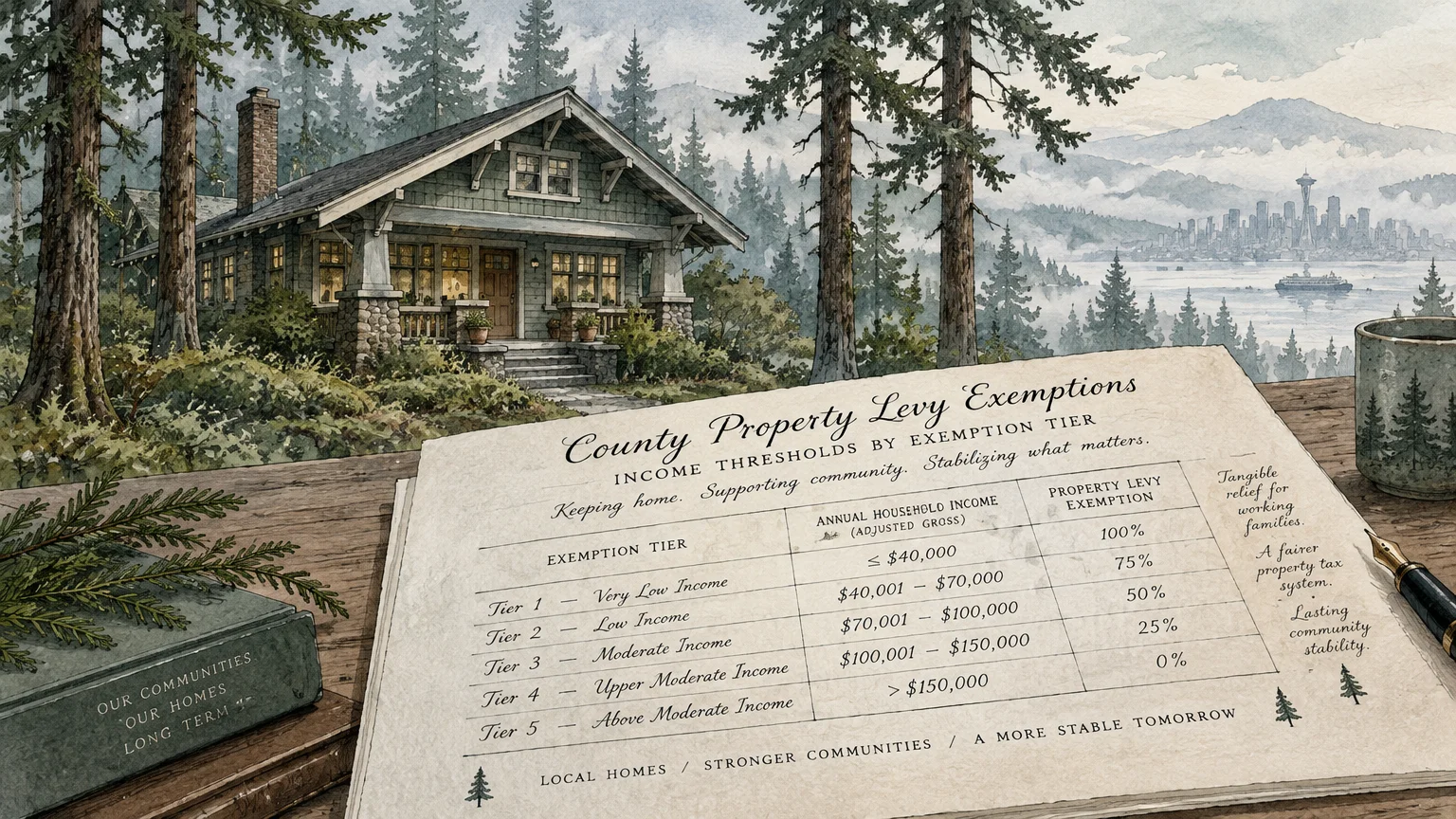
Washington State delivers property tax relief seniors can access earlier than in most jurisdictions. Eligible homeowners can enroll starting at age 61, or earlier if disabled or an honorably discharged veteran.
The program freezes the taxable value of your primary residence and eliminates various local excess levies. Eligibility depends on a tiered income structure pegged to 70% of your specific county median household income.
At the highest relief tier, the state exempts the greater of $60,000 or 60% of your home’s taxable assessed value. This sliding scale ensures residents in high-cost metro regions receive equitable financial protection.
The state also provides an optional property tax deferral program for residents with slightly higher incomes. This deferral accrues a modest 5% simple annual interest charge against the home’s value.
Applications are managed directly through your local county assessor, with income verified using your federal tax filings.
9. Colorado and South Carolina Asset-Based Value Exemptions
Both Colorado and South Carolina offer property tax reductions that evaluate property tenure and age rather than annual household earnings. These programs offer critical stability to homeowners living in areas with fast-appreciating real estate.
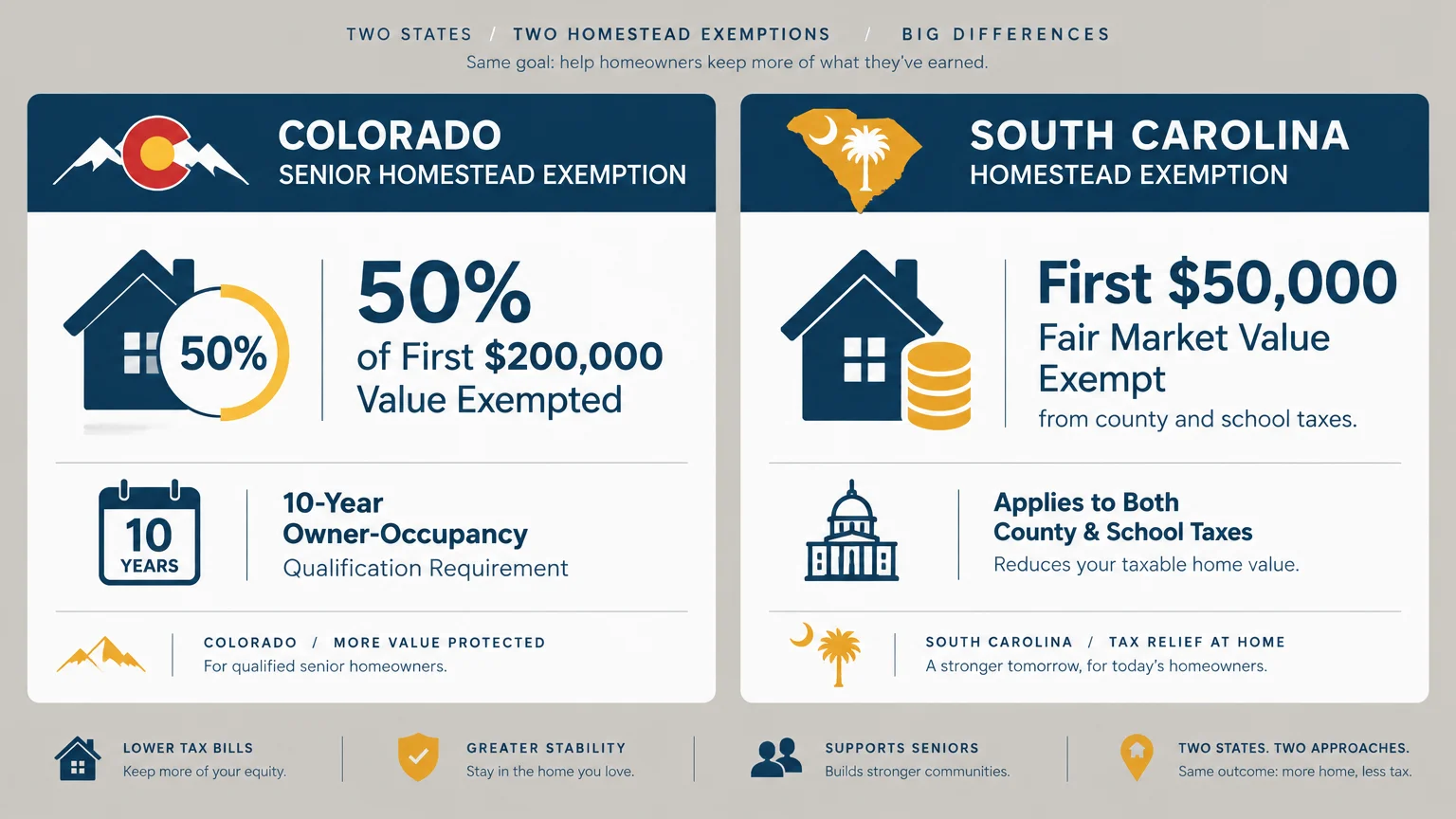
Colorado’s Senior Property Tax Exemption eliminates 50% of the first $200,000 in actual market value from property taxation. This policy effectively shields up to $100,000 in residential value for qualifying older adults.
To qualify in Colorado, you must be at least 65 years old and have owned and occupied your home for 10 consecutive years. The program features no income cap, making it accessible to all qualifying long-term homeowners.
South Carolina provides a straightforward Homestead Exemption that exempts the first $50,000 of fair market value from property taxes. Homeowners must reach age 65 and hold legal primary residency in the state for one full calendar year.
South Carolina also imposes zero income limitations on this benefit. Contact your local county auditor to submit your one-time application.

10. Ohio and Tennessee Senior Homestead and Relief Programs
Ohio and Tennessee provide focused relief programs that adjust their qualification limits annually to track national inflation. Both states shield a significant portion of home value from local taxation.
The Ohio Homestead Exemption allows seniors aged 65 and older to shield $28,000 of their home’s market value from taxation. For the 2026 tax year, the income threshold is $41,000 in Ohio Adjusted Gross Income.
Tennessee operates a property tax relief program that reimburses local property taxes on the first $33,600 of full market value. For 2026, the maximum household income limit is $38,470.
Tennessee homeowners apply through their county trustee or city tax collector between the date bills are mailed and 35 days after delinquency. State funds are credited directly to your local property tax account.
Regularly reviewing program requirements through organizations like the National Council on Aging (NCOA) helps identify updated state limits and supplemental relief programs.
“Controlling your fixed housing costs early gives you the financial breathing room to handle unexpected medical bills and enjoy everyday retirement.” — Jean Chatzky, Financial Educator and Author
Comparing Senior Property Tax Relief Programs
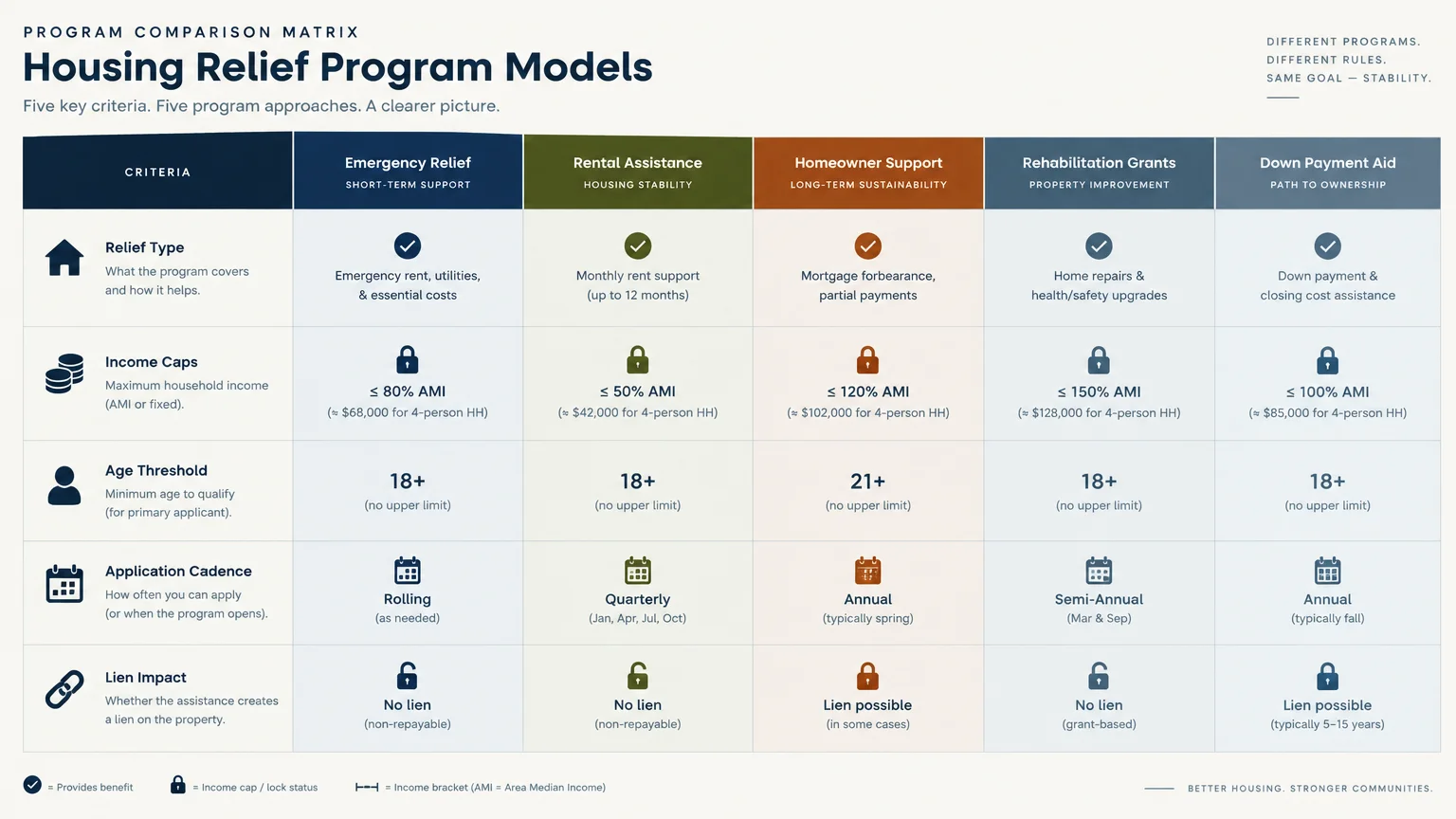
Because state guidelines vary significantly, comparing program mechanisms helps identify which benefits match your household profile. The table below details the rules across several major state initiatives.
| State & Program | Relief Mechanism | 2026 Income Limit | Minimum Age | Core Benefit |
|---|---|---|---|---|
| Texas Over-65 Exemption | Exemption & Ceiling | No Income Limit | Age 65 | $200,000 school value shield plus tax freeze |
| New Jersey Form PAS-1 | Consolidated Rebate / Freeze | $500,000 ($172,475 for Freeze) | Age 65 | Base-year tax freeze reimbursement |
| New York Enhanced STAR | School Tax Exemption | $110,750 | Age 65 | Tiered reduction on school tax assessed value |
| California PTP Program | Tax Deferral Lien | $57,002 | Age 62 | State pays current-year taxes via property lien |
| Illinois Assessment Freeze | Assessment Freeze | $75,000 | Age 65 | Locks equalized assessed value at base year |
| Florida Additional Senior | County / City Exemption | $38,686 | Age 65 | Up to $50,000 reduction in assessed value |
| Pennsylvania Tax Rebate | Circuit Breaker Rebate | $45,000 (excludes 50% SS) | Age 65 (50 for widows) | Cash rebate up to $1,000 annually |
| Washington State Relief | Tiered Exemption & Freeze | Tiered to 70% county median | Age 61 | Exempts up to $60,000 or 60% of assessed value |
| Colorado Senior Exemption | Value Exemption | No Income Limit | Age 65 (10-yr residency) | 50% of first $200,000 in home value exempted |
| Ohio Homestead Exemption | Value Exemption | $41,000 Ohio AGI | Age 65 | Shields $28,000 in market value from taxation |
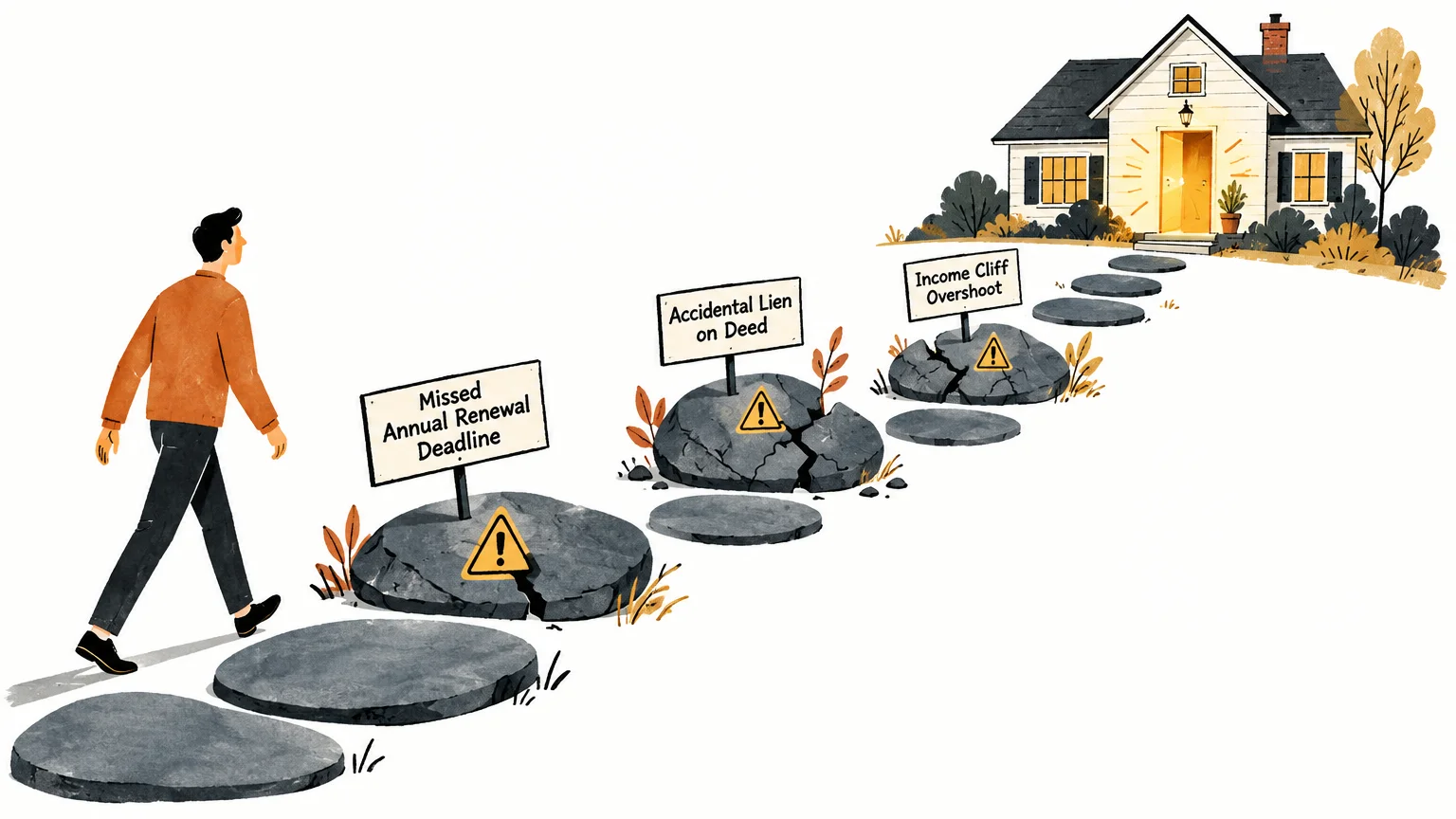
Pitfalls to Watch For
Failing to claim available exemptions ranks among the most expensive mistakes retirees make with their home finances. Avoid these common administrative errors to protect your savings:
- Missing Local Deadlines: Property tax calendars rarely align with federal income tax dates. Many municipal application deadlines fall in early spring or mid-summer.
- Confusing Value with Tax Amounts: An assessment freeze locks your valuation base, not your final tax rate. If local voters approve new municipal bonds, your bill may still fluctuate slightly.
- Overlooking Marital Title Updates: When a spouse passes away, failing to update property records can disrupt your existing homestead protections or survivor transfer rights.
- Neglecting County Piggyback Rules: Many counties and cities offer supplemental exemptions alongside state initiatives. Failing to check municipal rules leaves thousands in local savings on the table.
- Misunderstanding Deferral Liens: Tax deferrals carry compounding interest charges that reduce your home equity over time. Review guidance from the Consumer Financial Protection Bureau (CFPB) before attaching municipal debt to your primary residence.
Carefully auditing your property records each year ensures you never surrender legitimate exemptions to preventable bureaucratic oversight.

Getting Expert Help
Navigating municipal tax codes can become complex, especially when your living situation changes or your household income nears statutory thresholds. You should seek specialized support across several specific scenarios:
When Your Income Approaches the Statutory Threshold: An enrolled agent or certified financial planner can review distributions from traditional IRAs. Strategic timing of capital gains or retirement withdrawals can keep you beneath statutory eligibility cutoffs.
When You Move Your Home into a Living Trust: Transferring real estate into a revocable living trust can accidentally cancel your senior homestead exemption. A qualified estate planning attorney ensures trust language maintains state-compliant beneficial interest.
When Evaluating Deferral Liens Against Reverse Mortgages: A housing counselor certified by the federal government can help evaluate tax deferral liens. They ensure deferred property taxes do not violate reverse mortgage covenants or accelerate debt repayment terms.
When Local Assessment Appraisals Spike Drastically: An independent real estate appraiser or local property tax consultant can help challenge sudden increases. Challenging inflated assessments reduces your baseline before senior tax deductions apply.
Frequently Asked Questions
Can I claim both a regular homestead exemption and a senior exemption?
Yes, most jurisdictions allow qualifying homeowners to combine standard homestead benefits with senior programs. This layering approach shields both a general base amount and an additional senior exemption allowance.
What happens to a senior property tax freeze if my spouse passes away?
Most states permit surviving spouses to retain the existing tax freeze if they meet age minimums, typically age 55 or older. You must file updated paperwork with your county assessor alongside a copy of the death certificate.
Does a property tax deferral program harm my heirs?
Deferred taxes accumulate as a formal lien against the property, accruing simple interest over time. Your heirs must settle this accrued balance using estate assets or home sale proceeds before receiving their inheritance.
Do Social Security benefits count toward statutory income limits?
Inclusion depends entirely on individual state statutes. Some programs count every dollar of gross revenue, while others completely exclude Social Security or discount 50% of retirement benefits.
Protect Your Home and Your Retirement Budget
Escalating property assessments should never force you to sell your home or sacrifice medical care in retirement. Take an afternoon to audit your current property tax bill, identify your assessment baseline, and verify upcoming deadlines.
Contact your local county tax assessor or municipal auditor this week to confirm your qualification status. Claiming every senior property tax exemption you deserve provides immediate peace of mind and permanently lowers your living expenses.
The information in this guide is meant for educational purposes. Your specific circumstances—including income, health needs, tax situation, and goals—may require different approaches. When in doubt, consult a licensed professional.
Last updated: October 2026. Retirement benefits, tax rules, and healthcare regulations change frequently—verify current details with official sources.









Leave a Reply