Rising utility costs are squeezing retirement budgets across the country, with home energy services climbing more than 4% over the past year. When you live on a fixed income, even a modest monthly increase disrupts carefully planned cash flow.
You do not need costly renovations or a freezing living room to lower energy bill expenses right away. Small adjustments to your thermostat, water heater, and home airflow deliver steady savings without sacrificing comfort.
Understanding 2026 energy pricing, winter fuel forecasts, and active state rebate programs helps you save on electricity and heating safely. Here is how to cut waste while protecting your health and budget.
Why Energy Bills 2026 Are Climbing—and What the Numbers Show
If your utility statements feel heavier this year, national inflation data backs up what you are seeing. Piped natural gas prices rose 4.3% year-over-year in July 2026, while residential electricity climbed 4.2% during that same period.
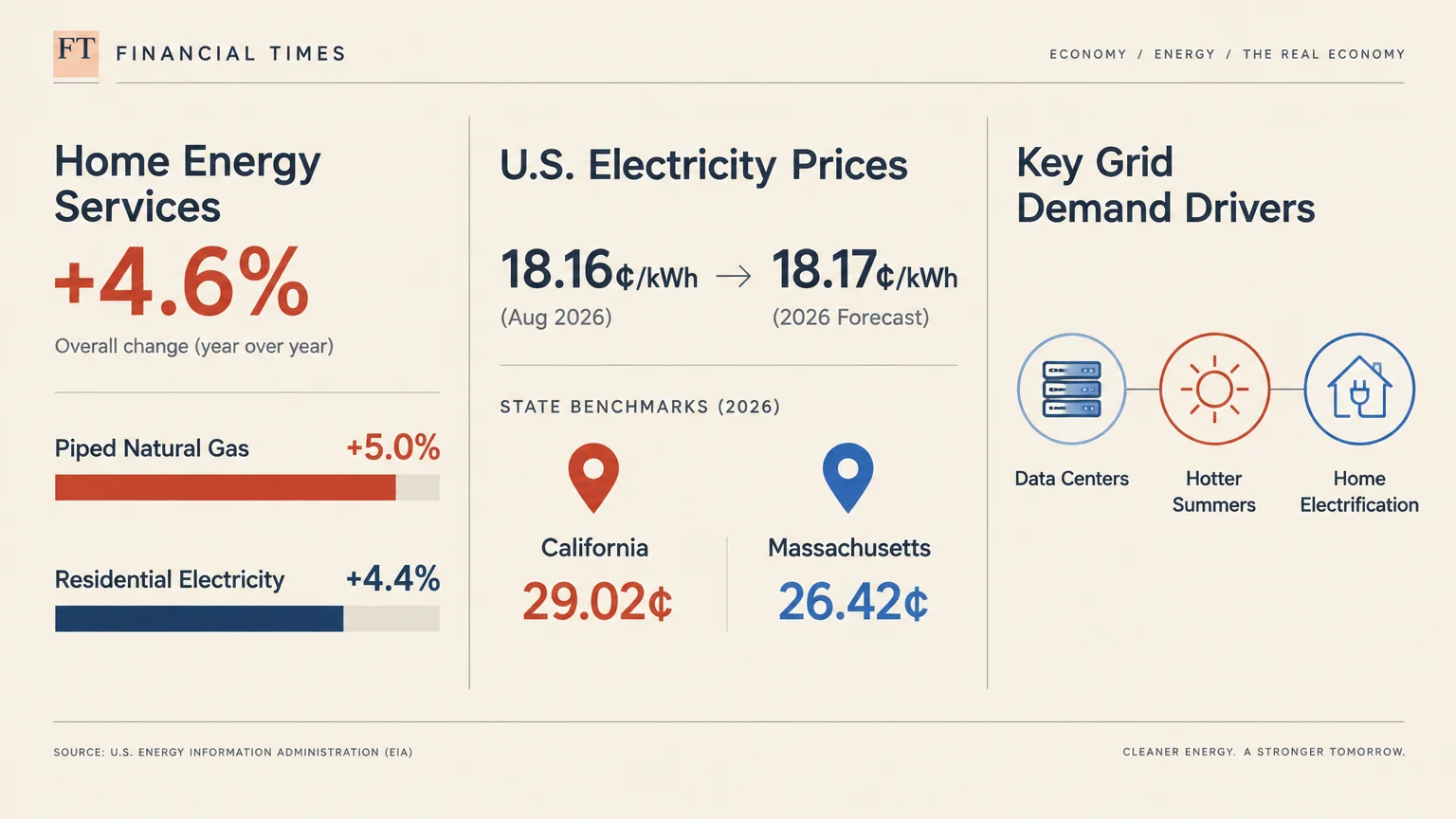
More recent figures from the Bureau of Labor Statistics show even broader pressure on household budgets. Over the 12 months ending September 2026, home energy services—combining electricity and piped natural gas—increased 4.6% nationwide.
Within that September 2026 snapshot, residential electricity rose 4.4% and utility natural gas jumped 5.0%. Month-over-month data from October 2026 showed electricity ticking up another 0.9%, while piped gas edged down 0.8%.
Broader energy costs surged even faster once motor fuels and heating oil entered the picture. The overall Consumer Price Index energy category jumped 20.4% year-over-year in September 2026, driven by a 34.2% spike in gasoline and a 74.2% surge in fuel oil.
Electricity rates also vary sharply depending on where you spend your retirement. According to the U.S. Energy Information Administration (EIA), average U.S. residential electricity reached 18.16 cents per kilowatt-hour in August 2026, up 3.4% from August 2025.
Across all customer sectors combined, rates climbed 5.1% with increases recorded in 46 states and Washington, D.C. Contiguous U.S. averages hit 29.02 cents in California, 26.42 cents in Massachusetts, and 25.34 cents in Rhode Island.
Looking ahead, the November 2026 EIA Short-Term Energy Outlook projects continued upward pressure on your electric meter. Average residential retail electricity prices are forecast to rise from 17.24 cents per kilowatt-hour in 2025 to 18.17 cents in 2026—roughly a 5.4% jump—and 18.68 cents in 2027.
Three structural forces are pushing demand to record highs across the U.S. power grid:
- Commercial data centers: Rapid expansion of artificial intelligence computing facilities requires massive round-the-clock power capacity.
- Hotter summers: Warmer seasonal temperatures force air conditioners to run longer and harder across more regions.
- Home electrification: More households are shifting space heating, water heating, and vehicles onto the electric grid.
Because of those combined pressures, EIA forecasts total U.S. electricity consumption will hit a third consecutive annual record in 2026 at 4,306 billion kilowatt-hours, up from 4,216 billion in 2025. Demand is projected to climb again to 4,371 billion kilowatt-hours in 2027.
You cannot control wholesale power markets or regional grid upgrades. However, knowing which fuel heats your home lets you anticipate seasonal spikes before the coldest bills arrive.
Winter Energy Costs for 2026–2027: What Your Fuel Type Means
Cold-weather heating drives the largest utility swings of the year for most retirees. The National Energy Assistance Directors Association (NEADA) projected in September 2026 that average household winter heating expenses will rise 8.7% to roughly $1,030 this season.
Your actual exposure depends heavily on whether your home runs on electricity, natural gas, propane, or heating oil. The EIA Winter Fuels Outlook 2026–27, covering November through March, shows sharp differences across heating fuels.
| Primary Heating Fuel | Share of U.S. Homes | Projected 2026–27 Winter Bill | Change From Last Winter |
|---|---|---|---|
| Electricity | 43% | $1,196 | +4% (+9% in the West to $1,151) |
| Natural gas | 45% | $640 | -9% (+7% in the West) |
| Propane | Not specified | $1,246 | -3% |
| Heating oil | ~3% (mostly Northeast) | $2,115 | +21% |
If you heat with electricity—as 43% of American households do—expect steady upward pressure, especially in western states where bills could climb 9%. Because electric resistance heating consumes large amounts of power, even small efficiency upgrades pay off quickly.
Natural gas customers, representing 45% of U.S. homes, get welcome relief in most regions this winter. High gas inventories and softer wholesale prices are expected to pull average winter gas bills down 9% to $640, though western households still face a projected 7% increase.
Heating oil users face the steepest shock by far. Tight global distillate supplies and Middle East disruptions pushed EIA weekly delivered heating oil to a record $6.230 per gallon in October 2026 before easing to $5.915 on November 9, 2026—still 59% higher than a year earlier.
At a projected $2,115 for the winter season, Northeast retirees relying on heating oil need a proactive cash-flow plan. Ask your supplier about budget payment plans that spread peak winter delivery costs evenly across 12 months.
Electric and gas utilities offer similar levelized billing programs that smooth out seasonal spikes. While levelized billing does not reduce your total annual usage, it prevents sudden $300 winter surprises from derailing your monthly retirement budget.
Safe Thermostat Strategies That Protect Your Health and Wallet
Turning down the heat feels like the fastest way to lower energy bill totals, yet aggressive setbacks can endanger older adults. As you age, your body produces less heat, loses insulating fat, and responds more slowly to indoor temperature drops.
Certain chronic medical conditions and common prescription medications can also interfere with circulation and cold perception. That means your home can become dangerously chilly before you even realize you feel cold.
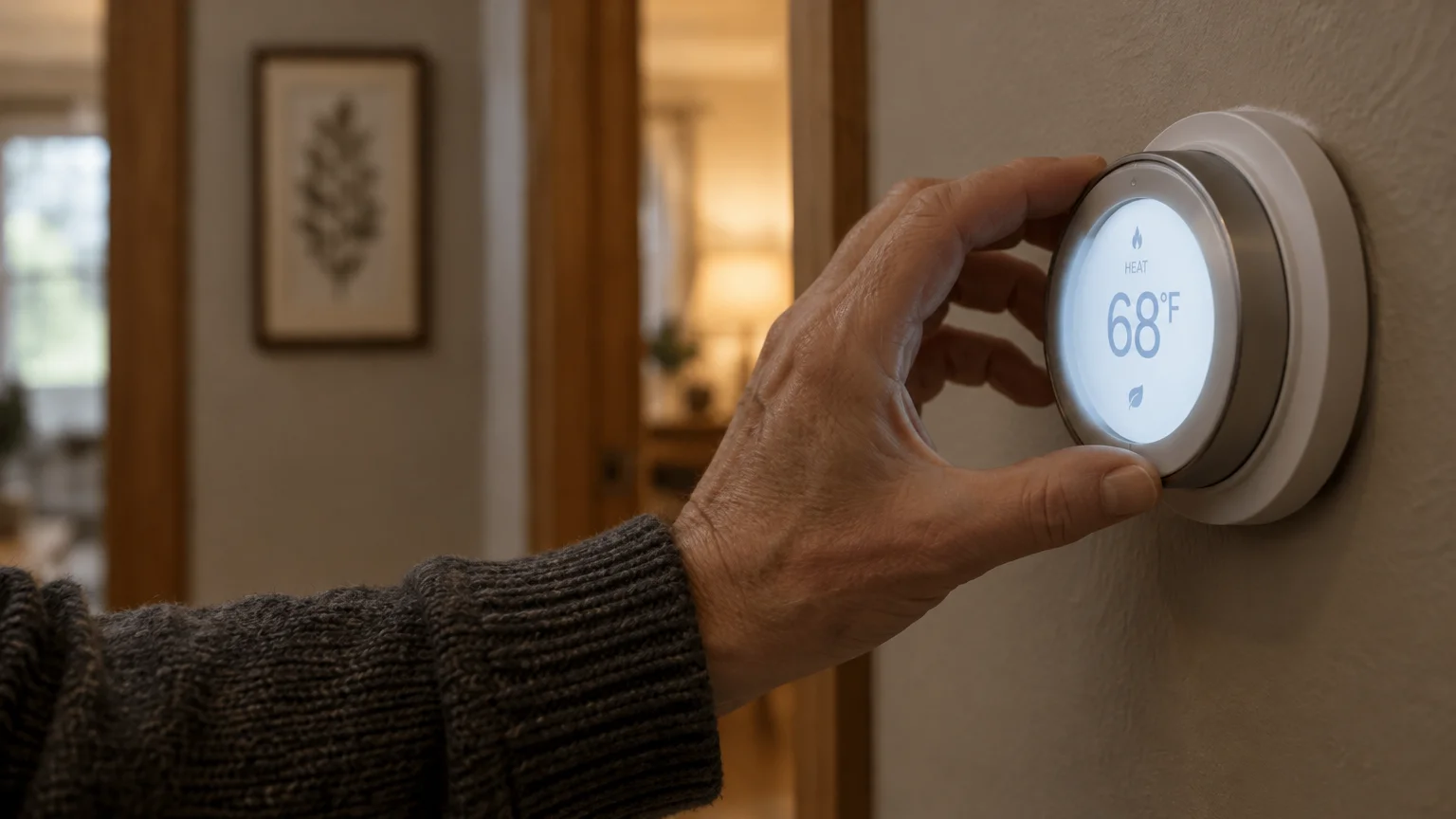
The National Institute on Aging (NIA)—part of the National Institutes of Health—advises keeping your indoor thermostat set to at least 68°F to 70°F during cold weather. Even mildly cool indoor spaces between 60°F and 65°F can trigger indoor hypothermia, where core body temperature drops below 95°F.
Protect your health before chasing extra savings: keep your indoor thermostat at 68°F or warmer during winter, because temperatures between 60°F and 65°F can silently put older adults at risk for indoor hypothermia. — Based on National Institute on Aging (NIA) safety guidance
Within safe boundaries, your thermostat strategy should also match your heating equipment. Utility guidance from Puget Sound Energy notes that traditional furnaces handle deeper setbacks well, while heat pumps require a gentler touch.
If you use a standard gas or oil furnace and everyone in your home is healthy and comfortable, dropping the thermostat 7°F to 10°F while sleeping or away can trim heating use. Just ensure your overnight setting never dips below the 68°F safety floor if you are sensitive to cold.
Heat pumps operate differently and lose efficiency when forced to recover from deep temperature drops. Setting a heat pump back more than 2°F or 3°F often activates expensive electric resistance backup strips that erase your savings.
Keep these practical thermostat habits in mind to stay warm without overpaying:
- Use a programmable or smart thermostat: Automated schedules gently adjust temperatures for daytime and sleeping hours without forcing your system to sprint.
- Dress in breathable indoor layers: Wearing wool socks, a fleece vest, or keeping a throw blanket nearby helps you feel cozy at 68°F instead of nudging the dial to 74°F.
- Keep interior doors balanced: Close doors to unused guest rooms only if your HVAC technician confirms it will not disrupt duct pressure.
- Check thermostat placement: Keep lamps, televisions, and sunny windows away from the thermostat so false warmth does not shut your heat off too soon.
If you leave home for an extended winter trip, remember to protect your plumbing as well as your wallet. Keep heat warm enough to prevent frozen pipes, and ask a trusted neighbor to check inside periodically.
Low-Cost Moves to Lower Your Energy Bill This Week
Once your thermostat is safely dialed in, look at where heated or cooled air escapes your living space. You can capture substantial savings with inexpensive hardware-store fixes before ever considering new appliances.
Seal Drafts and Stop Hidden Air Leaks
According to the U.S. Department of Energy (DOE) Building America program, air leakage accounts for 25% to 40% of heating and cooling energy loss in a typical home. You are essentially paying to heat the outdoors whenever warm air slips through unsealed gaps.
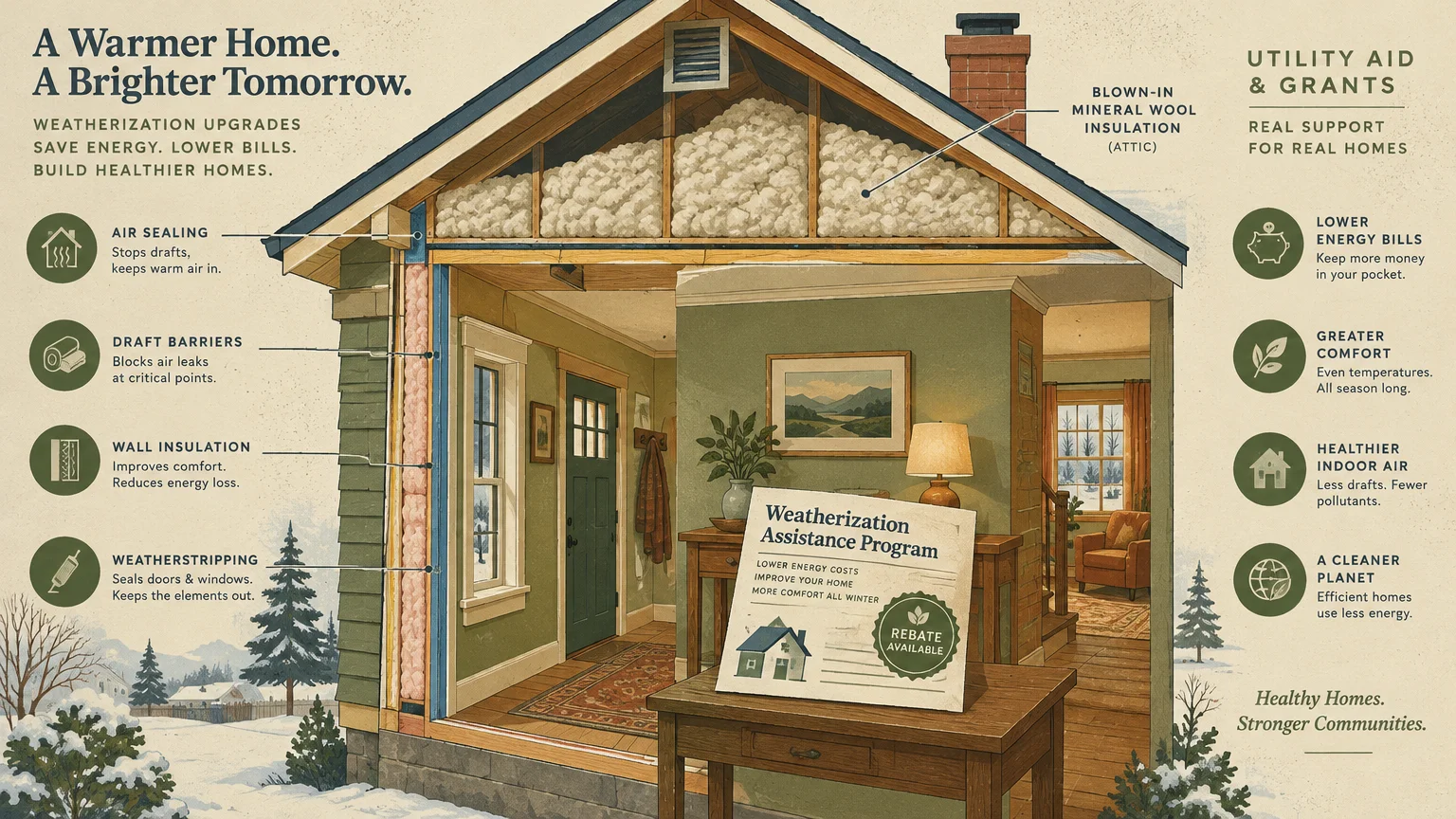
Utility guidance from Piedmont Natural Gas and the DOE notes that caulking, sealing, and weatherstripping cracks and openings can save 10% to 20% on heating and cooling bills. Focus first on exterior doors, window frames, attic hatches, and recessed light fixtures.
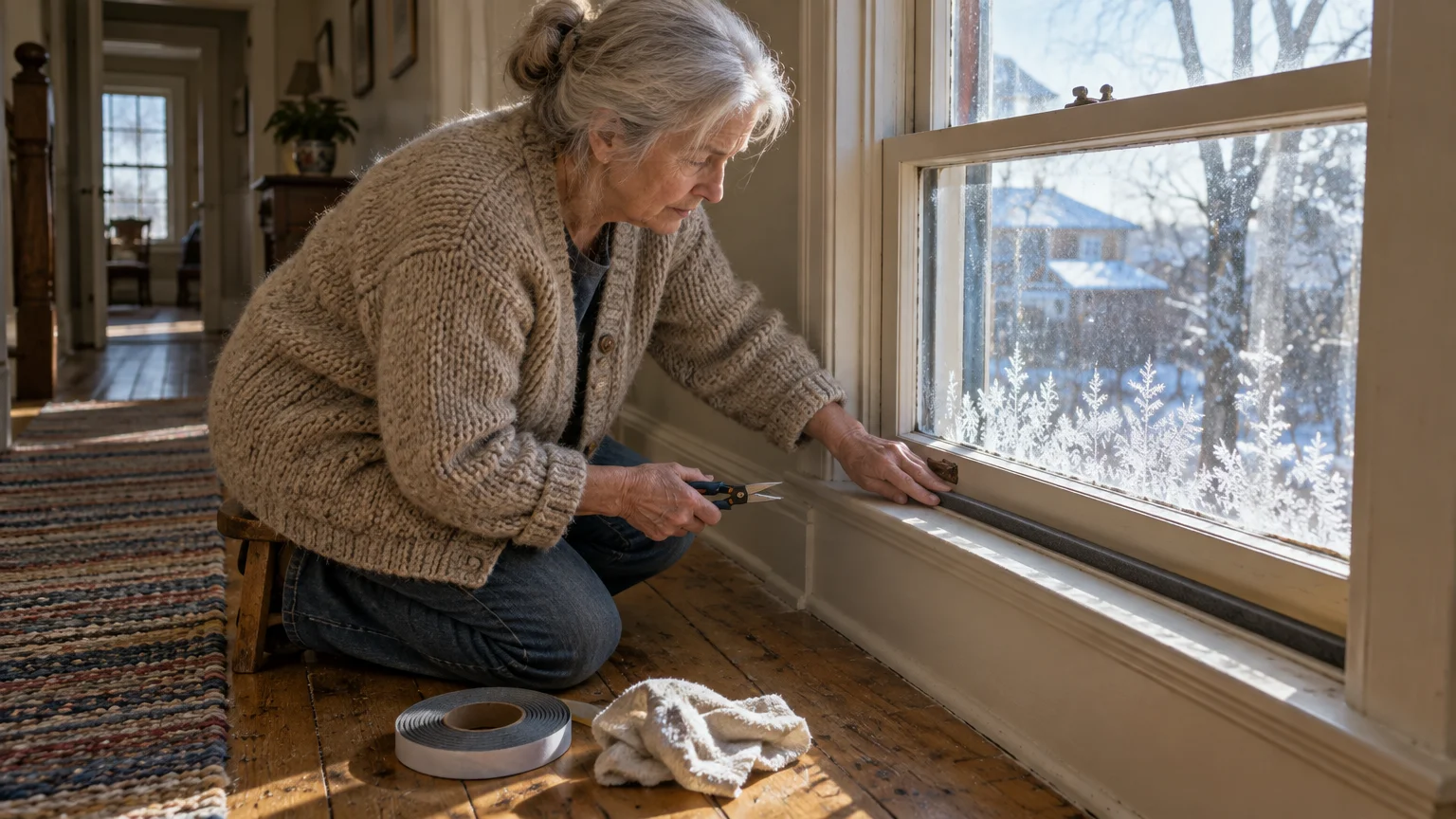
Door sweeps take less than 20 minutes to install and block cold drafts sweeping across floors. Foam gaskets placed behind exterior-wall electrical outlets and switch plates offer another fast, low-cost barrier.
If you plan larger upgrades later, DOE’s Energy Saver guide notes that combining upgraded heating and cooling equipment with insulation, air sealing, and proper thermostat settings cuts heating and cooling bills by about 30%. Starting with air sealing gives you immediate returns while preparing your home for future efficiency.
Dial Back Your Water Heater Safely
Heating water quietly accounts for roughly 18% of a typical home’s total energy use. Many storage water heaters arrive from the factory set at 140°F, which wastes energy and creates a scalding hazard for sensitive skin.
The U.S. DOE recommends lowering your storage water heater thermostat to 120°F. That simple adjustment saves $36 to $61 per year—representing 4% to 22% off annual water heating costs—while keeping showers comfortably hot.
You can boost those savings further by wrapping an older tank with an insulating water heater blanket, provided the manufacturer allows it. Insulating exposed hot-water pipes and the first 3 feet of cold-water pipe near the tank can save another 4% to 9%.
Build High-Impact Daily Energy Habits
Everyday routines around lighting, airflow, and appliances help you save on electricity month after month. Most take only a few minutes to put into motion:
- Swap HVAC filters every 90 days: Dirty filters choke airflow and force furnace blowers to draw extra power during the heating season.
- Use windows for passive solar heat: Open blinds and curtains on south- and west-facing windows during sunny winter afternoons, then close them at dusk to trap warmth.
- Reverse ceiling fan direction: Flip the small switch on your fan housing so blades spin clockwise at low speed, pushing trapped ceiling warmth gently down into the room.
- Upgrade remaining bulbs to LEDs: According to Puget Sound Energy, LED bulbs use at least 80% less energy and last 13 to 25 years longer than traditional incandescent bulbs.
- Eliminate standby power drain: Plug televisions, printers, and chargers into smart power strips so idle electronics stop sipping electricity overnight.
When replacing older bulbs, prioritize fixtures that stay on longest—such as kitchen, living room, and porch lights. Each LED swap cuts electrical load right away and reduces ladder trips for bulb changes in the years ahead.
Utility Assistance, Rebates, and Free Weatherization in 2026
Major rule changes over the past year reshaped how homeowners pay for efficiency upgrades. Before signing any contractor agreement, make sure you understand which federal tax credits expired and which state rebates remain open.
Federal Home Energy Tax Credits Expired After 2025
Under Public Law 119-21—known as the One Big Beautiful Bill Act, enacted July 4, 2025—both major federal residential energy tax credits ended for property placed in service after December 31, 2025. That ends both the Energy Efficient Home Improvement Credit (Section 25C) and the Residential Clean Energy Credit (Section 25D).
Previously, Section 25C offered up to $3,200 per year for qualifying heat pumps, windows, insulation, and electrical panels, while Section 25D provided a 30% credit for solar panels, geothermal systems, and battery storage. No federal tax credit replacement exists for upgrades installed during 2026.
Only projects fully completed and placed in service by December 31, 2025 qualify for claims on 2025 tax returns. Check official guidance at the Internal Revenue Service (IRS) before assuming any equipment purchase lowers your tax bill.
State-Run DOE Home Energy Rebates (HOMES and HEAR)
Although federal tax credits ended, point-of-sale and project rebates funded through the U.S. DOE remain active in states that have launched their programs. Availability varies by state, so confirm your state energy office’s launch status before ordering equipment.
| Program Track | Income Eligibility | Maximum Rebate Caps | What It Covers |
|---|---|---|---|
| HOMES (Home Efficiency Rebates) | Open across income levels (higher amounts for low-income in select states) | Up to $8,000 (or higher in select states for low-income households) | Whole-home retrofits achieving at least 20% modeled energy savings |
| HEAR / HEEHR (Home Electrification and Appliance Rebates) | Under 150% of Area Median Income (AMI) | $14,000 combined household cap | Up to $8,000 heat pump; $4,000 electrical panel; $2,500 wiring; $1,750 heat pump water heater; $1,600 insulation/air sealing/ventilation; $840 electric stove or heat pump dryer |
Under HEAR rules, households earning below 80% of Area Median Income (AMI) can cover up to 100% of eligible project costs within item caps. Households earning between 80% and 150% of AMI can cover up to 50% of project costs.
Because retired households often have lower taxable income than during peak working years, many seniors qualify for generous HEAR tiers even when they own their homes outright. Always verify whether your contractor must be state-approved before work begins.
LIHEAP and Free Weatherization for Retirees
If rising utility costs strain your ability to pay monthly heating bills, federal energy assistance can bridge the gap. On October 13, 2026, the Department of Health and Human Services released $3.6 billion in fiscal year 2027 funds for the Low Income Home Energy Assistance Program (LIHEAP).
Federal law allows states to set LIHEAP income limits between 110% of the Federal Poverty Level (FPL) and the greater of 150% FPL or 60% of State Median Income. Under the 2026 Federal Poverty Guidelines, 150% FPL in the 48 contiguous states equals $23,940 for a one-person household and $49,500 for a four-person household.
The average LIHEAP grant provides roughly $554 per household, with state awards commonly ranging from $200 to $1,200 or more. In Pennsylvania, for example, awards range from $200 to $1,000 for the November 2, 2026 through April 23, 2027 season.
Many states also grant older adults early priority enrollment windows so fixed-income households can lock in aid before funds run low. Illinois opened priority applications on October 1, 2026 for residents age 60 and older, while North Carolina (age 60+) and Georgia (age 65+) open priority windows on December 1, 2026.
Alongside bill payment aid, the U.S. DOE Weatherization Assistance Program delivers free whole-home insulation, air sealing, and safety upgrades to about 32,000 income-eligible homes each year. A DOE national evaluation found participating households save an average of $372 or more annually on energy bills.
You can locate local application offices for LIHEAP, weatherization, and senior utility discounts through USA.gov Benefits. Never hesitate to apply—these programs exist specifically to keep retirees safe and solvent through severe weather.
Pitfalls to Watch For
When utility prices rise, hurried decisions and outdated advice can cost you more than they save. Watch closely for these common mistakes before spending money on winter fixes:
- Budgeting around expired tax credits: Contractors quoting 2025 brochures may still mention the $3,200 Section 25C or 30% Section 25D credits, which no longer apply to 2026 installations.
- Dropping heat pump thermostats too far overnight: Deep setbacks trigger emergency electric heat strips that burn far more electricity than holding a steady temperature.
- Replacing windows before sealing air leaks: New windows carry steep upfront costs and rarely pay back quickly compared with weatherstripping, caulking, and attic insulation.
- Falling for door-to-door utility or rebate scams: High-pressure callers demanding gift cards, immediate bank details, or upfront fees for government rebates are fraudulent—learn how to spot financial scams at the Consumer Financial Protection Bureau (CFPB).
- Using unvented space heaters carelessly: Portable heaters draw heavy wattage on electric circuits and pose fire or carbon monoxide hazards if plugged into extension cords or left unattended.
Taking time to verify any contractor or utility caller protects both your retirement savings and your home’s safety. When in doubt, hang up and call the phone number printed directly on your monthly utility statement.
Getting Expert Help
Some energy decisions require specialized guidance rather than guesswork. Reaching out to the right professional at the right moment saves money and prevents costly missteps.
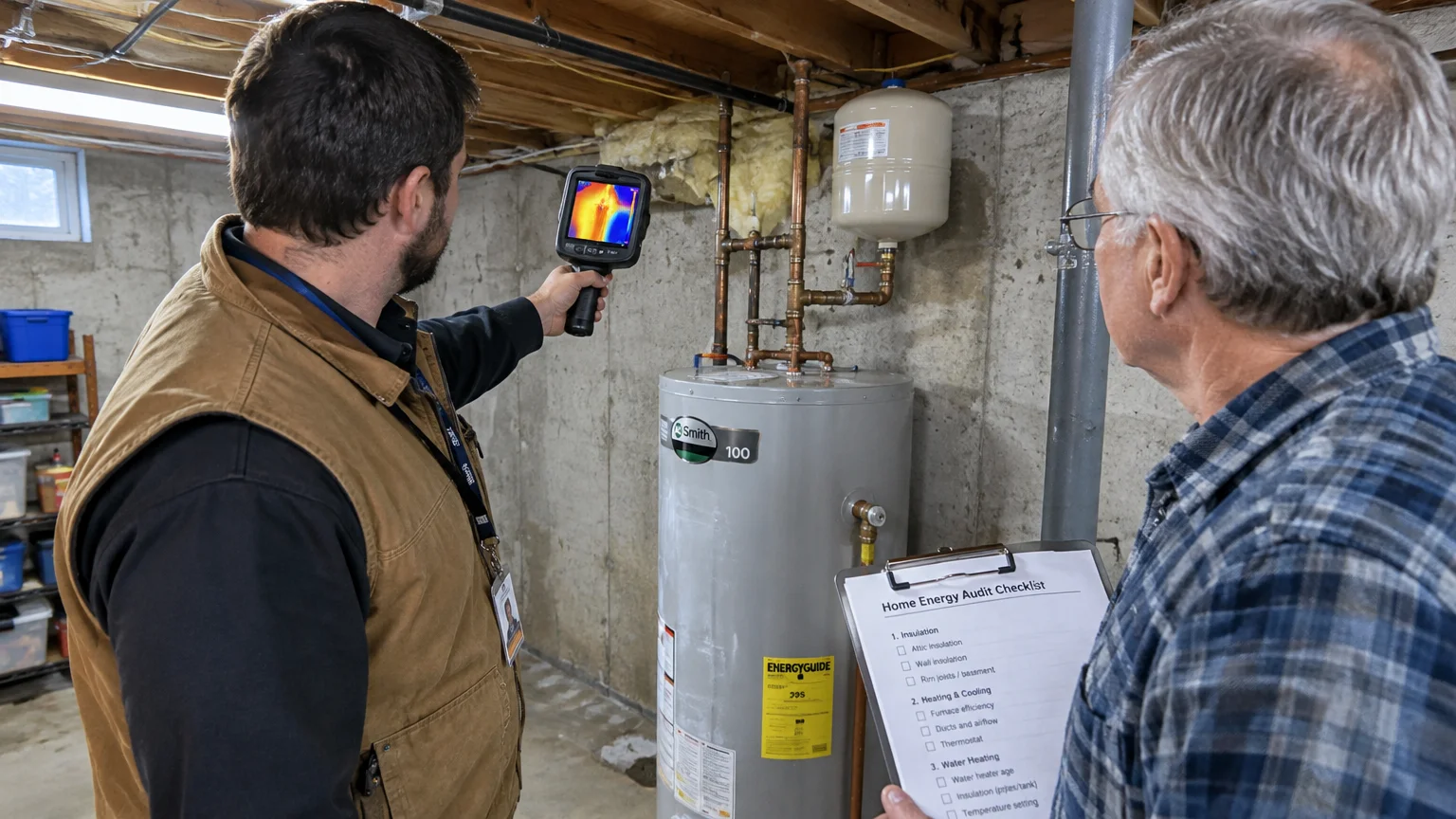
- Before replacing aging heating or cooling equipment: Hire a licensed HVAC technician or certified home energy auditor to inspect ductwork, check airflow, and properly size a replacement unit so you do not overpay for excess capacity.
- When navigating LIHEAP, Weatherization, or HEAR rebates: Contact your state energy office or local Area Agency on Aging for hands-on application help and verified contractor lists.
- If you completed efficiency upgrades by December 31, 2025: Consult a CPA or qualified tax preparer to ensure you properly document and claim eligible Section 25C or 25D credits on your 2025 return.
- If rising utility costs threaten your broader cash flow: Meet with a Certified Financial Planner (CFP) to rebalance monthly retirement withdrawals, review fixed expenses, and stress-test your housing budget.
Good advice pays for itself when it steers you toward genuine rebates and away from unnecessary equipment loans. Ask for written estimates and confirm licensing before authorizing any home work.
Frequently Asked Questions About Lowering Energy Bills in 2026
Did federal home energy tax credits expire for 2026?
Yes. Under Public Law 119-21, both the Section 25C Energy Efficient Home Improvement Credit and the Section 25D Residential Clean Energy Credit ended for equipment placed in service after December 31, 2025. Only state-run DOE rebates (HOMES and HEAR) remain active where launched.
What is the safest winter thermostat temperature for older adults?
The National Institute on Aging advises keeping indoor temperatures at 68°F to 70°F or warmer during cold weather. Homes kept between 60°F and 65°F can place older adults at risk for indoor hypothermia, even when the air feels only mildly cool.
How can I get help paying my winter heating bill on a fixed income?
Apply for LIHEAP through your state or local community action agency, as HHS released $3.6 billion in fiscal year 2027 funding in October 2026. Many states offer priority early enrollment for adults age 60 or 65 and older, plus free DOE weatherization.
Does lowering a heat pump thermostat overnight save electricity?
Only a modest 2°F to 3°F adjustment helps a heat pump save energy. Dropping a heat pump 7°F to 10°F overnight often forces expensive electric backup strips to turn on each morning, driving your winter electricity bill higher instead of lower.
Your Next Step for Lower Energy Bills
You do not have to accept rising utility costs passively this season. Pick one practical step today—check your water heater’s 120°F setting, install a door sweep, or look up your state’s LIHEAP and rebate openings—and build momentum from there.
This article provides general retirement education and information only. Every retiree’s situation is unique—what works for others may not work for you. For personalized advice, consider consulting a qualified financial professional such as a CFP or CPA.
Last updated: November 2026. Retirement benefits, tax rules, and healthcare regulations change frequently—verify current details with official sources.