
You could be leaving hundreds of dollars in healthcare services on the table this year. Medicare Advantage plans bundle dozens of extra perks beyond standard coverage, yet millions of retirees never touch them.
Recent surveys show that thirty percent of enrollees never use a single supplemental benefit. Because insurers no longer send government-mandated mid-year balance reminders, tracking these credits falls squarely on your shoulders.
Checking your coverage documents unlocks funds for groceries, fitness, and dental work that you already pay to access. Here are twelve valuable perks you should start using today.
Why Medicare Advantage Extra Benefits Go Unused
More than 33 million beneficiaries—representing 51.6% of the eligible Medicare population—now enroll in private Medicare Advantage plans. Insurers compete aggressively for your enrollment by advertising extensive supplemental packages.
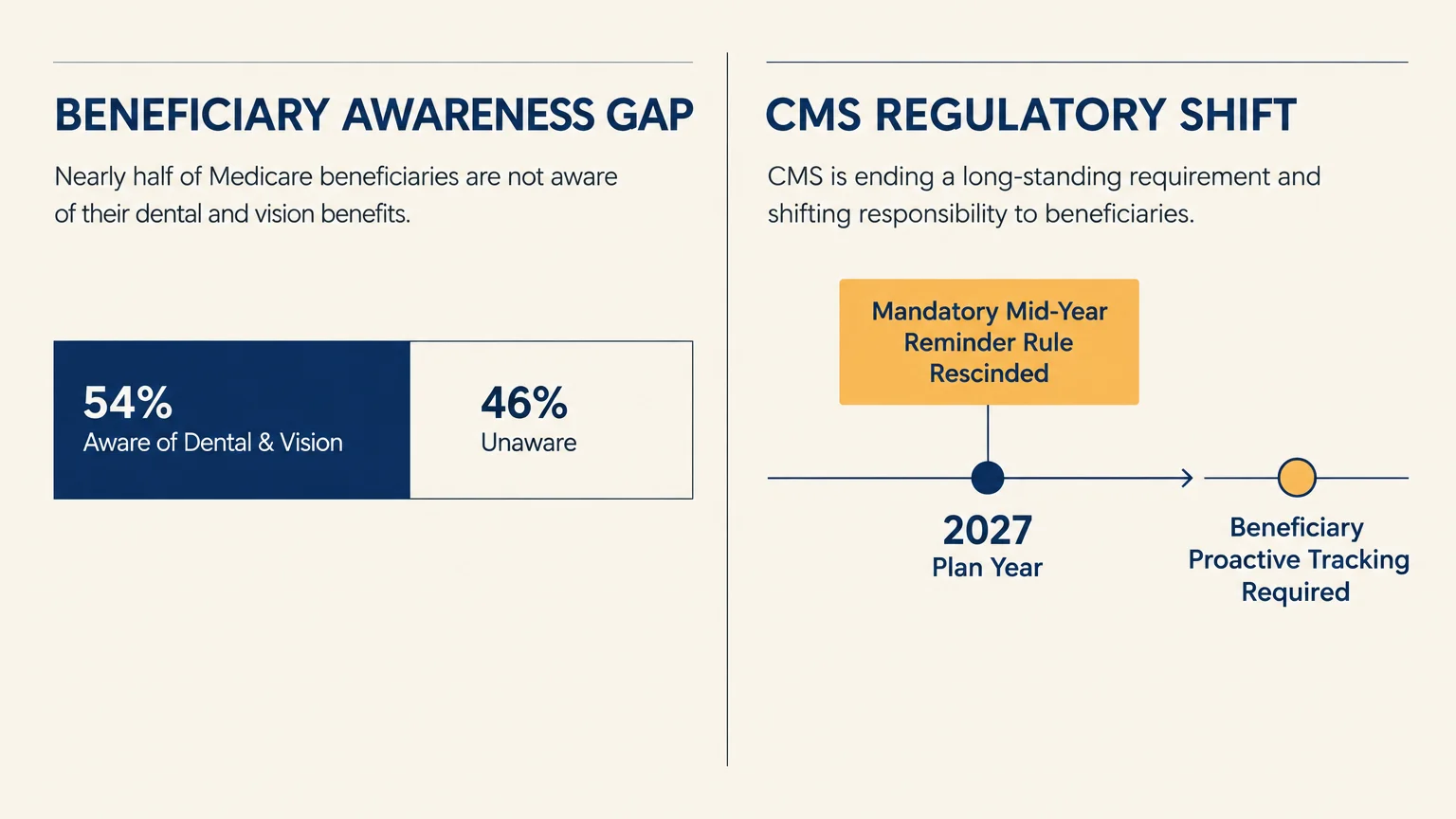
Despite heavy marketing, enrollees often miss out on these allowances entirely. In fact, a recent study revealed that only 54% of beneficiaries were even aware they had dental and vision coverage through their plan.
Federal oversight changes have shifted the responsibility directly to you. The Centers for Medicare & Medicaid Services (CMS) previously proposed mandatory mid-year reminder letters for unused allowances, but officially rescinded that rule for the 2027 plan year.
Insurers will not send automatic nudges warning you about expiring dollars. If you want to maximize your benefits, you must proactively manage your accounts and understand plan timelines.
“A big part of protecting your retirement wealth is taking advantage of every single healthcare dollar you are entitled to receive.” — Suze Orman, Personal Finance Author

1. Over-the-Counter (OTC) Product Allowances
Many private plans deposit a quarterly or monthly cash credit into a designated account for everyday wellness items. Currently, 66% of individual plans provide an OTC allowance to help offset routine personal care costs.
You can use these funds to purchase pain relievers, allergy tablets, compression socks, first-aid kits, and dental supplies. Some carriers even approve sunscreen, diabetic monitors, and incontinence supplies through their catalogs.
The primary pitfall is the strict expiration policy attached to these balances. According to Milliman data, the share of plans allowing members to roll over unused OTC funds dropped from 9.6% down to just 2.4%.
That means virtually every plan operates on a strict use-it-or-lose-it schedule. If your plan deposits $75 on January 1, any unspent funds vanish on March 31.
Log in to your insurer portal to verify your approved retailer network. Major chains like Walmart, CVS, and Walgreens generally accept physical benefit cards directly at the register.

2. Fitness Memberships and Wellness Classes
Staying physically active lowers the risk of chronic conditions and helps preserve independent mobility. Roughly 91% of Medicare Advantage enrollees have access to a fitness benefit through programs like SilverSneakers, Renew Active, or Silver&Fit.
This perk grants you standard access to participating local gyms, municipal recreation centers, and YMCA facilities. You can take water aerobics classes, lift weights, or join senior walking groups at no out-of-pocket cost.
Many retirees overlook the expanding digital components attached to modern fitness perks. If you prefer exercising at home, these programs offer streaming workout videos, live virtual sessions, and brain-training digital puzzles.
Some plans also provide free wearable activity trackers or discounts on smartwatches. Contact your plan administrator to request your unique fitness identification code and locate nearby participating centers.
3. Medicare Part B Premium Givebacks
Healthcare costs represent one of the largest fixed expenses in retirement budgets. To attract cost-conscious retirees, 32% of individual Medicare Advantage plans offer a Part B premium reduction benefit.
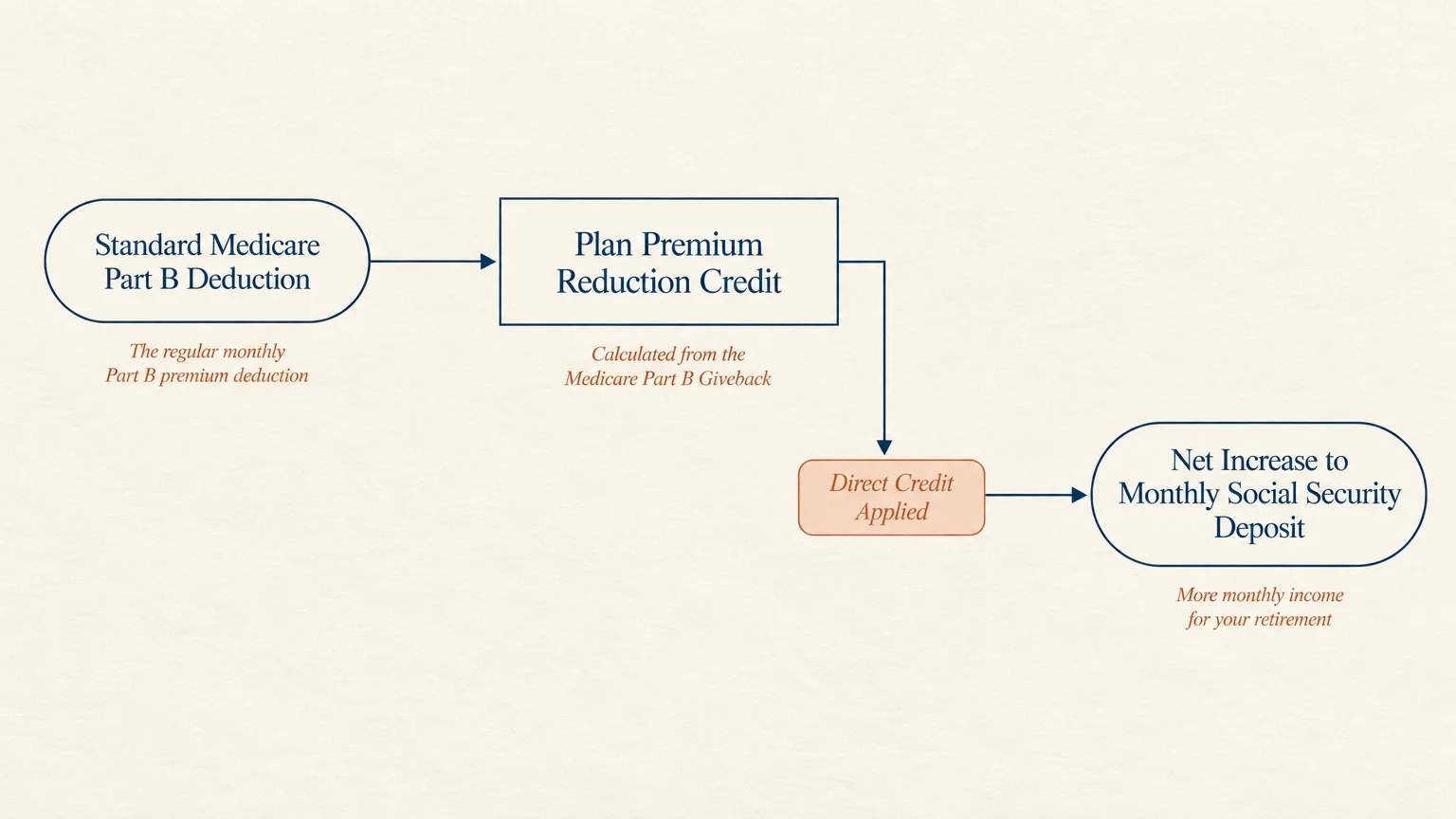
Often referred to as a “giveback perk,” the carrier pays a portion of your monthly Medicare Part B premium directly to the federal government. This adjustment appears automatically as a credit on your monthly Social Security benefit check.
Among plans offering this feature, more than a third credit over $100 per month back into enrollees’ pockets. That translates to more than $1,200 in annual retirement savings without altering your medical treatment access.
Check your monthly Social Security statement or annual plan evidence of coverage to see if your plan includes this rebate. If you enroll in a giveback plan, the payment adjustment takes effect without requiring manual paperwork.

4. Routine and Comprehensive Dental Coverage
Original Medicare excludes almost all routine dental care, leaving seniors exposed to massive out-of-pocket dentistry bills. Fortunately, 98% of Medicare Advantage plans offer dental benefits to bridge this critical healthcare gap.
Most enrollees understand their plans cover biannual cleanings, routine checkups, and diagnostic bitewing X-rays. Yet thousands of retirees forget that many policies also include comprehensive dental allowances.
Comprehensive coverage pays toward costly restorative services like fillings, root canals, crowns, deep periodontal cleanings, and dentures. Many plans assign an annual spending cap ranging from $1,000 to $2,500 for restorative treatment.
Review the specific network structure before scheduling an extensive procedure. Some carriers use narrow dental HMO networks that deny reimbursement entirely if you visit an out-of-network dentist.
5. Annual Vision Exams and Eyewear Credits
Vision care is nearly universal across managed Medicare, with more than 99% of plans providing vision benefits. Even so, many policyholders pay out of pocket for eyeglasses because they forget their plan covers optical hardware.
Standard coverage generally covers one routine annual eye exam with a zero-dollar copayment. Regular exams allow optometrists to detect early signs of glaucoma, macular degeneration, and diabetic retinopathy before symptoms advance.
Beyond preventive checkups, policies typically include an annual eyewear allowance between $100 and $300. You can apply this hardware credit toward designer prescription frames, standard lenses, bifocals, or contact lenses.
Check whether your carrier requires you to order glasses through an approved optical catalog or retail store. Ordering outside the approved network could leave you responsible for the total optical bill.

6. Diagnostic Hearing Screenings and Hearing Aid Subsidies
Age-related hearing loss impacts cognitive health, social engagement, and balance, yet Original Medicare excludes hearing aids. Today, 95% of Medicare Advantage plans feature dedicated hearing coverage.
Your benefit typically includes an annual diagnostic hearing exam with a low or zero copay. If you need corrective devices, plans negotiate discounted copayments for advanced and premium digital hearing aids.
Purchasing hearing aids independently often costs between $3,000 and $6,000 per pair out of pocket. Advantage partnerships with vendors like TruHearing or NationsHearing can reduce that cost to modest set copayments per ear.
Many programs also supply free replacement batteries, routine fitting follow-ups, and a multi-year manufacturer warranty. Schedule your hearing screening through your plan’s specialized hearing administrator to unlock these preferential rates.

7. Post-Hospitalization Delivered Meals
Returning home from an inpatient hospital stay presents physical challenges, particularly when preparing nutritious meals. Currently, 57% of individual Medicare Advantage plans provide a short-term meal benefit following an acute discharge.
This benefit coordinates the direct delivery of fresh or flash-frozen meals directly to your doorstep. Most qualifying policies cover two meals per day for seven to fourteen days following your release.
Insurers tailor these meals to specific medical diets, including lower-sodium, diabetic-friendly, renal-safe, or heart-healthy menus. Consuming nutritious food during recovery reduces physical exhaustion and decreases hospital readmission rates.
Hospital discharge planners frequently fail to initiate this service automatically. Ask your hospital social worker or plan care coordinator to authorize post-discharge meal delivery before you head home.

8. Non-Emergency Medical Transportation (NEMT)
Missing scheduled doctor visits compromises preventive care and can worsen manageable chronic conditions. Many beneficiaries abandon driving due to diminished eyesight, mobility limitations, or cognitive concerns.
Within Special Needs Plans (SNPs), 67% offer dedicated non-emergency transportation benefits. A smaller number of general individual plans also include curb-to-curb ride credits for enrolled seniors.
This service provides pre-scheduled rides to doctor offices, outpatient surgical centers, physical therapy, and pharmacies. Rides operate via commercial rideshare partnerships like Uber and Lyft, local taxi fleets, or specialized wheelchair vans.
Plans generally require booking your transportation 48 to 72 hours in advance through a specialized reservation line. Utilizing this service ensures you attend vital medical appointments without imposing on family members or neighbors.

9. Bathroom Safety Devices and Home Modifications
Accidental falls inside the home represent a leading cause of fatal and non-fatal injuries among older adults. In response, 47% of Special Needs Plans and several standard plans provide allowances for home safety modifications.
This perk covers the purchase and professional installation of durable safety equipment inside your living quarters. Approved hardware includes bathroom grab bars, non-slip shower benches, raised toilet seats, and handheld showerheads.
Some plans partner with occupational therapists who visit your home to conduct a comprehensive fall-risk assessment. The therapist identifies hazardous thresholds, poor lighting, and loose flooring before ordering approved safety equipment.
Explore your plan directory to see if safety devices fall under durable medical equipment or a specialized flex card. Eliminating bathroom slips protects your physical independence and avoids traumatic emergency room visits.

10. In-Home Personal Care and Daily Support
Seniors managing multiple chronic illnesses often struggle with instrumental activities of daily living, such as laundry and meal preparation. Special Needs Plans have expanded offerings here, with 25% now providing in-home support services.
This benefit supplies a certified personal care aide or vetted companion to assist you inside your private residence. Aides can handle light housekeeping, grocery shopping, medication reminders, and basic mobility assistance.
While this benefit does not replace 24-hour nursing care, it provides several hours of monthly hands-on assistance. Accessing in-home support preserves personal dignity while keeping you safe in your familiar environment.
Contact your case manager to determine whether your medical condition meets the clinical thresholds for in-home hours. You can review service options and senior support standards through the National Council on Aging.

11. Caregiver Training and Respite Services
Family members often shoulder overwhelming emotional and physical burdens while caring for aging loved ones. Recognizing this pressure, 16% of Special Needs Plans now feature caregiver support and respite care benefits.
Respite benefits pay for a licensed professional caregiver to step in temporarily, granting the primary family caregiver essential time off. This temporary relief allows caregivers to attend personal medical appointments, run errands, or simply rest.
Additionally, some carriers provide access to professional caregiver coaching, online support groups, and stress-reduction resources. Caregiver training covers practical techniques for transferring loved ones safely and managing dementia-related behaviors.
Ask your plan representative whether your policy extends support resources directly to your designated primary family caregiver. Utilizing respite services prevents caregiver burnout and strengthens long-term family care arrangements.

12. Special Supplemental Benefits for Groceries and Utilities
Social determinants of health play a massive role in overall longevity and medical outcomes. Enrollees facing severe chronic illnesses may qualify for Special Supplemental Benefits for the Chronically Ill (SSBCI).
Among chronic-condition Special Needs Plans, 85% provide allowances for nutritious groceries and fresh produce. Furthermore, 72% of these specialized plans offer financial assistance for living costs, including electric, gas, water, or internet bills.
Only 11% of standard individual Medicare Advantage plans offer food allowances, and just 8% offer utility assistance. However, if you have qualifying conditions like diabetes, heart failure, or chronic lung disease, you could qualify.
Insurers disburse these funds via prepaid debit cards or direct payments to utility companies. Consult your annual plan documents to see if your chronic diagnosis qualifies you for these monthly living subsidies.
Comparing Key Medicare Advantage Extra Benefits
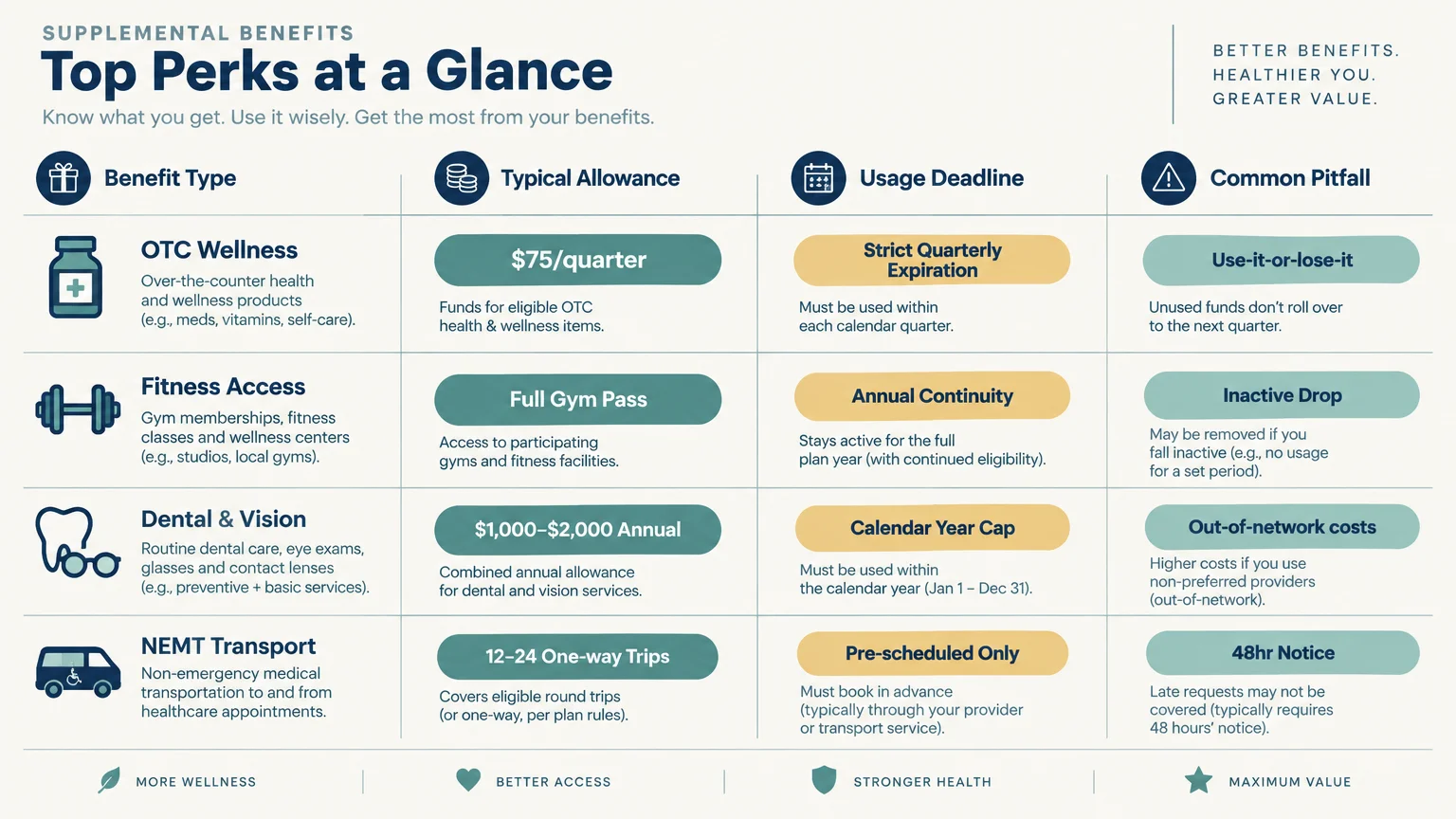
Understanding which perks are common and how they distribute funds helps you prioritize your claims throughout the calendar year. Use this reference table to evaluate typical coverage rules.
| Benefit Category | Estimated Plan Availability | Standard Frequency or Cap | Common Oversight or Trap |
|---|---|---|---|
| OTC Allowance | 66% of individual plans | $25 – $100 per quarter | Strict use-it-or-lose-it policies; only 2.4% allow balance rollovers. |
| Fitness Perks | 91% of enrollees | Unlimited basic gym visits | Requires enrollment at contracted fitness centers or branded portals. |
| Part B Giveback | 32% of individual plans | $10 – $100+ per month | Reductions apply directly to Social Security checks, not cash payouts. |
| Comprehensive Dental | 98% of plans (routine/comp) | $1,000 – $2,500 annual cap | Exceeding annual spending caps leaves you liable for major balance bills. |
| Vision Hardware | >99% of plans | $100 – $300 per year | Benefits frequently require ordering frames through specific plan catalogs. |
| Hearing Aid Subsidies | 95% of plans | Copayments per ear device | Must schedule exams through contracted hearing network vendors. |
| Post-Discharge Meals | 57% of individual plans | 14 – 28 meals per event | Requires formal authorization by medical staff following an inpatient stay. |
| Medical Rides (NEMT) | 67% of SNPs | 10 – 30 one-way rides yearly | Requires booking rides 48 to 72 hours prior to medical appointments. |
| Bathroom Safety | 47% of SNPs | Annual hardware credit | Covers approved medical devices, not general cosmetic home remodeling. |
| In-Home Support | 25% of SNPs | Specified monthly hours | Requires clinical verification of chronic activities-of-daily-living deficits. |
| Caregiver Respite | 16% of SNPs | Short-term relief blocks | Must coordinate through designated home care agency partners. |
| Food and Utilities | 85% of SNPs / 11% standard | $25 – $150 monthly credit | Strictly limited to members meeting complex chronic illness criteria. |

What Can Go Wrong: Traps and Deadlines
Failing to understand benefit fine print can lead to unexpected out-of-pocket bills or wasted allowances. Protecting your wallet requires vigilance when navigating private carrier restrictions.
- Quarterly Expiration Dates: Most OTC allowances expire at the end of each calendar quarter. If you do not spend your allocated funds before the deadline, the balance resets to zero.
- Narrow Provider Networks: Visiting an out-of-network dentist, optometrist, or audiologist often triggers complete claim denials. Always confirm active network participation before receiving treatment.
- Complex Catalog Restrictions: OTC cards often work solely on specific approved items. Scanning an ineligible brand at checkout requires you to pay the difference out of pocket.
- Prior Authorization Requirements: High-tier perks like home modifications and specialized therapies often require direct physician certification. Undertaking work before receiving carrier approval results in denied claims.
- Impending Plan Terminations: For the 2027 plan year, approximately 3.1 million enrollees face complete plan terminations, while 1.4 million face consolidations. Insurers are altering or eliminating supplemental benefit packages across multiple regions.
Monitor your mailbox each autumn for the Annual Notice of Change (ANOC). This vital document outlines which extra benefits your insurer will modify, trim, or cancel for the coming calendar year.
You can verify current enrollment options and explore alternative plan designs directly at Medicare.gov during the annual open enrollment period.

When to Consult a Professional
While managing routine perks is straightforward, certain health and financial situations require professional guidance. Consider consulting a State Health Insurance Assistance Program (SHIP) counselor or licensed broker in these circumstances:
- Your Plan Is Discontinued: If your policy terminates for 2027, an independent broker can help you locate a new plan maintaining your doctors and supplemental perks.
- Developing a Severe Chronic Condition: A certified advisor can determine if your new diagnosis qualifies you for a Chronic Special Needs Plan offering grocery and utility subsidies.
- Extensive Dental or Hearing Needs: If your treatment plan exceeds your Advantage plan’s maximum benefit caps, an expert can evaluate whether switching policies saves you money.
- Switching Back to Original Medicare: Leaving Medicare Advantage for traditional Medicare and a Medigap policy involves medical underwriting in most states. A professional ensures you do not inadvertently lose access to supplemental coverage.
Independent advocacy groups like AARP offer educational resources to help seniors decipher Medicare policy transitions and protect consumer rights.
Frequently Asked Questions
Why did I stop receiving reminder letters about my unused Medicare Advantage balances?
CMS officially rescinded the rule mandating mid-year unused benefit notices for the 2027 plan year. Insurance companies are no longer legally required to send balance alerts, meaning you must monitor your remaining credits yourself.
Can I convert my unused OTC allowance into cash?
No. Medicare Advantage supplemental benefits, including OTC and flex card credits, carry zero cash value. Unused balances expire based on your plan schedule and cannot be transferred to a standard bank account.
How do I find out which extra benefits my specific plan offers?
Review your plan’s Evidence of Coverage (EOC) document or log in to your member portal. You can also call the customer service phone number printed on the back of your member identification card.
Do all Medicare Advantage plans include grocery and utility credits?
No. Healthy food and utility allowances fall under Special Supplemental Benefits for the Chronically Ill (SSBCI). They are available primarily through Special Needs Plans (SNPs) and require a documented qualifying chronic medical condition.
Start Using Your Benefits Today
Leaving supplemental healthcare benefits unused costs you real money every single month. Your Medicare Advantage premium structures already account for these perks, whether you take advantage of them or not.
Pull out your member card today, register your online account, and check your remaining OTC and dental balances. Scheduling an eye exam, visiting the gym, or ordering approved home remedies puts your healthcare dollars back to work for you.
The information in this guide is meant for educational purposes. Your specific circumstances—including income, health needs, tax situation, and goals—may require different approaches. When in doubt, consult a licensed professional.
Last updated: October 2026. Retirement benefits, tax rules, and healthcare regulations change frequently—verify current details with official sources.









Leave a Reply