
Planning your retirement around Social Security requires separating stubborn fiction from federal reality. Believing outdated rumors about benefit formulas or program insolvency can cost you tens of thousands of dollars over your lifetime.
Every year, millions of Americans claim their monthly checks at the wrong moment due to widespread bad advice. Making informed claiming decisions protects your household cash flow against inflation and unexpected healthcare expenses.
Understanding how your monthly benefit is actually calculated and taxed gives you total control over your financial future. Here are the verified facts behind the seven most persistent Social Security myths today.
The Essentials: Key Realities at a Glance
Social Security remains a foundational pillar for American retirees, yet persistent rumors cause unnecessary panic. Reviewing core program facts helps you make sound choices for your retirement timeline.
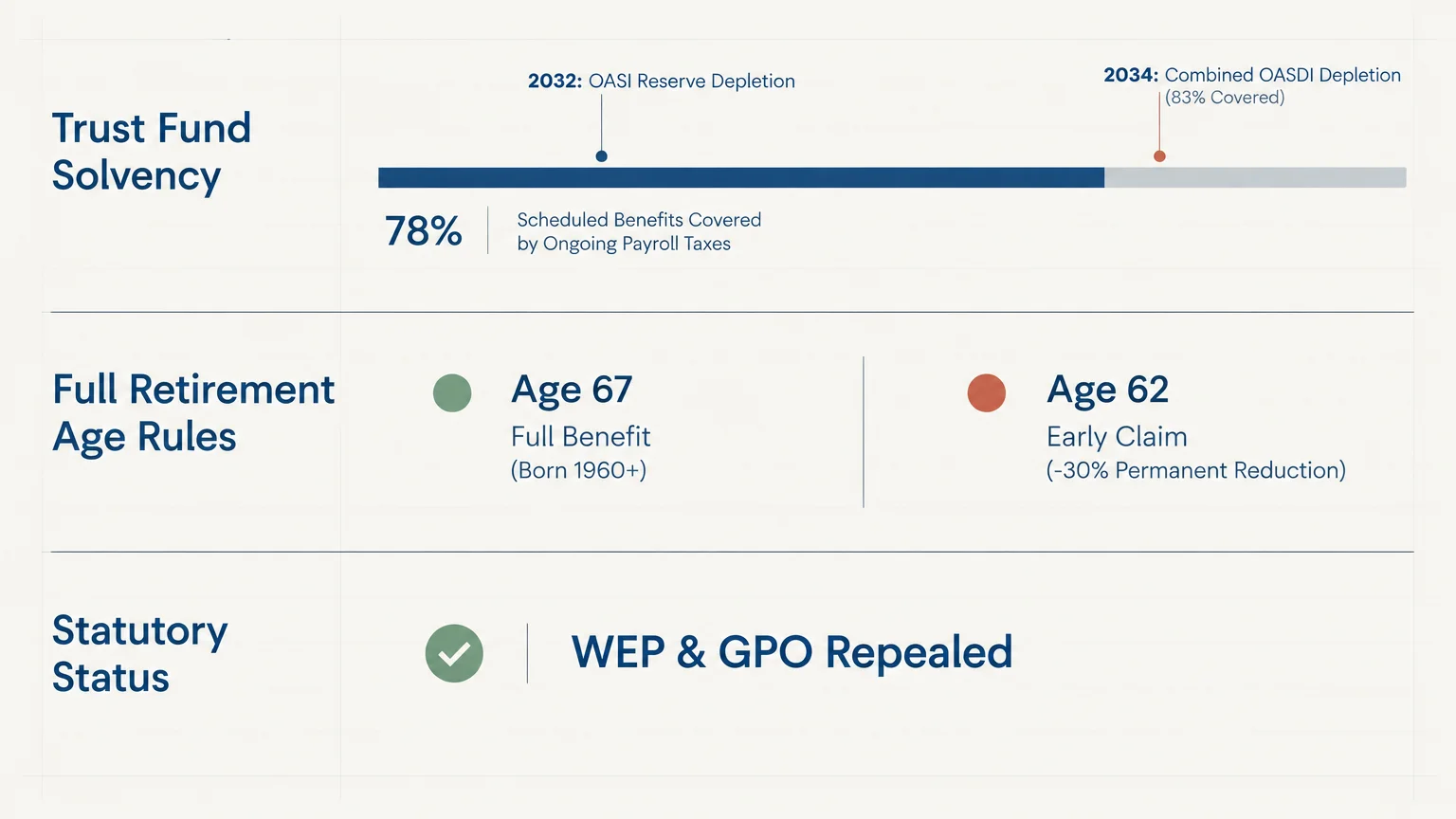
- The OASI trust fund is projected to pay full benefits until late 2032, after which tax revenues still cover 78% of scheduled payments.
- Full Retirement Age is 67 for everyone born in 1960 or later, making early claims at 62 subject to a 30% permanent cut.
- Temporary benefit withholdings from working before Full Retirement Age are not lost forever; the government recalculates your benefit upward at your full age.
- Recent senior tax deductions shield most retirees from taxes through 2028, but the statutory tax brackets remain federal law.
- Public sector workers no longer face benefit reductions from government pensions thanks to the repeal of WEP and GPO.
Myth 1: Social Security Is Going Broke and Won’t Be There for You
Headlines often claim that Social Security is going broke, causing workers to file for benefits prematurely. Panic claiming can permanently lock you into a diminished monthly income for life.
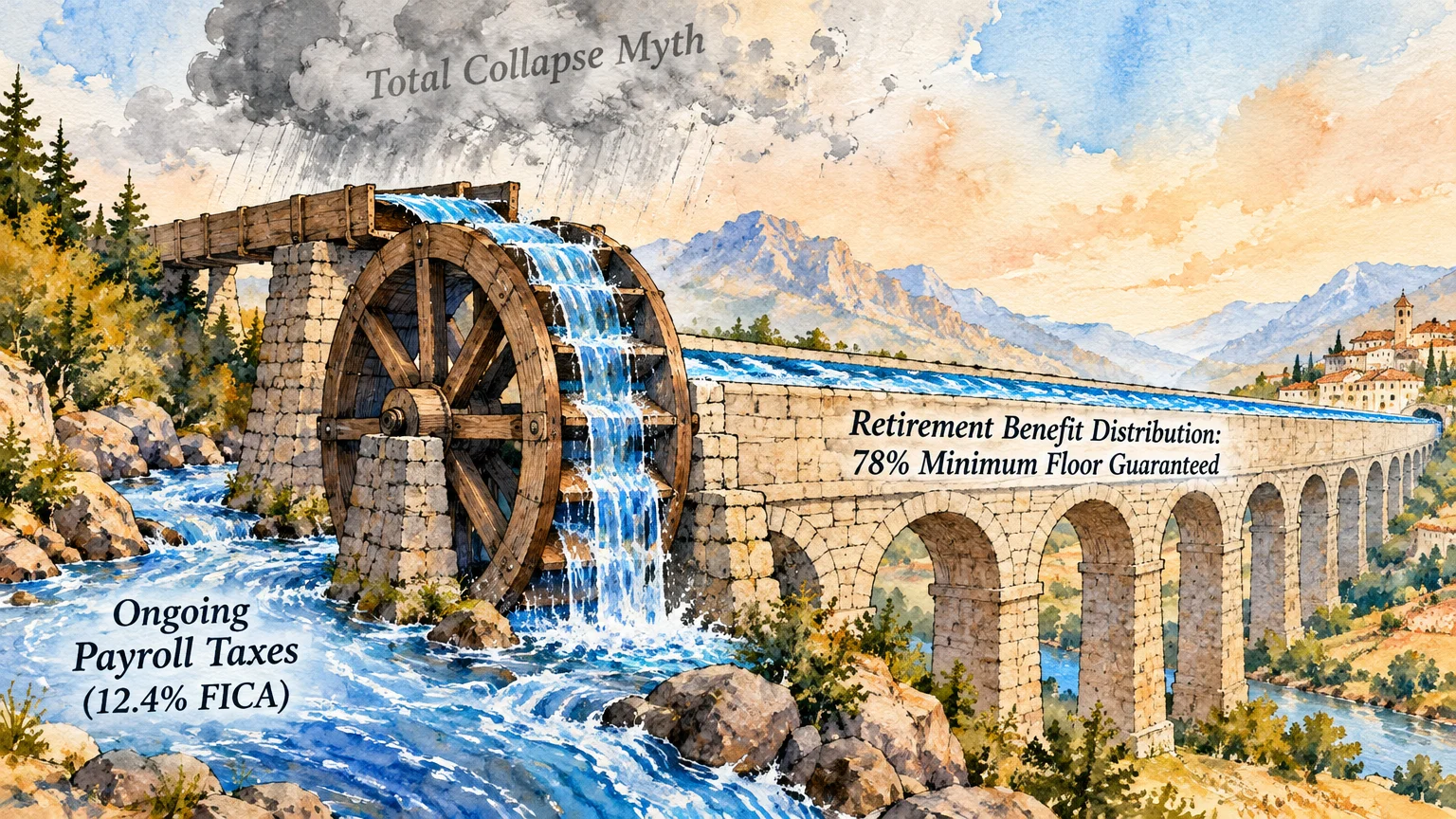
The program is not facing imminent collapse or bankruptcy. As long as American businesses and employees generate wages, payroll taxes will continuously fund monthly benefit checks.
Under federal law, workers contribute 6.2% of their covered wages, matched by 6.2% from employers, while self-employed individuals pay the full 12.4%. This steady revenue stream never runs dry.
According to the 2026 Social Security Trustees Report released on June 9, 2026, the Old-Age and Survivors Insurance (OASI) Trust Fund will deplete its cash reserves in the fourth quarter of 2032.
Depletion of the reserve fund is fundamentally different from program insolvency. When the OASI reserve reaches zero, continuing tax revenues will still cover 78% of all scheduled retirement and survivor benefits.
That hypothetical 22% automatic reduction would only take effect if Congress takes zero legislative action before late 2032. Lawmakers have historically resolved trust fund shortfalls well before deadlines to protect retirees.
When combining the OASI fund with the Disability Insurance (DI) fund, the combined OASDI depletion date shifts outward to 2034. At that point, 83% of scheduled benefits remain fully payable from ongoing revenues.
Additionally, the Disability Insurance Trust Fund is projected to remain 100% solvent through 2100. This fiscal strength provides federal budget flexibility should lawmakers combine or reallocate payroll tax allocations.
You can inspect official trust fund projections on the Social Security Administration website. Claiming early out of fear simply sacrifices guaranteed income to avoid a reduction that may never occur.
Myth 2: Your Full Retirement Age Is Still 65
Many workers still believe that reaching age 65 automatically entitles them to their unreduced retirement benefit. That assumption is decades out of date and results in an immediate, irreversible monthly penalty.
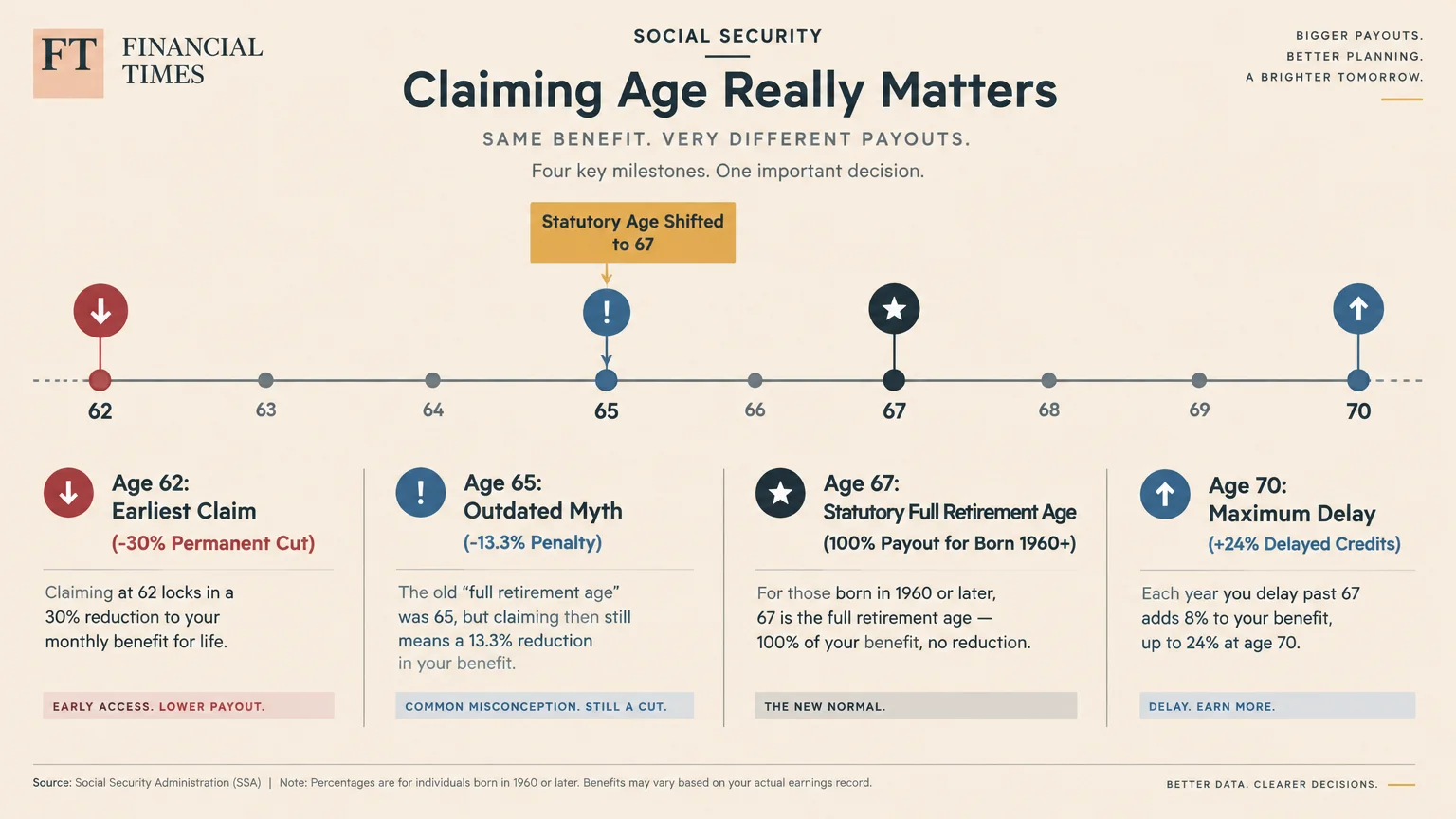
Congress restructured retirement milestones back in 1983 to reflect longer American lifespans. For anyone born in 1960 or later, your Full Retirement Age (FRA) is exactly 67.
Every individual reaching age 66 in 2026 was born in 1960. Consequently, age 67 is now the standard baseline for every single worker approaching retirement today.
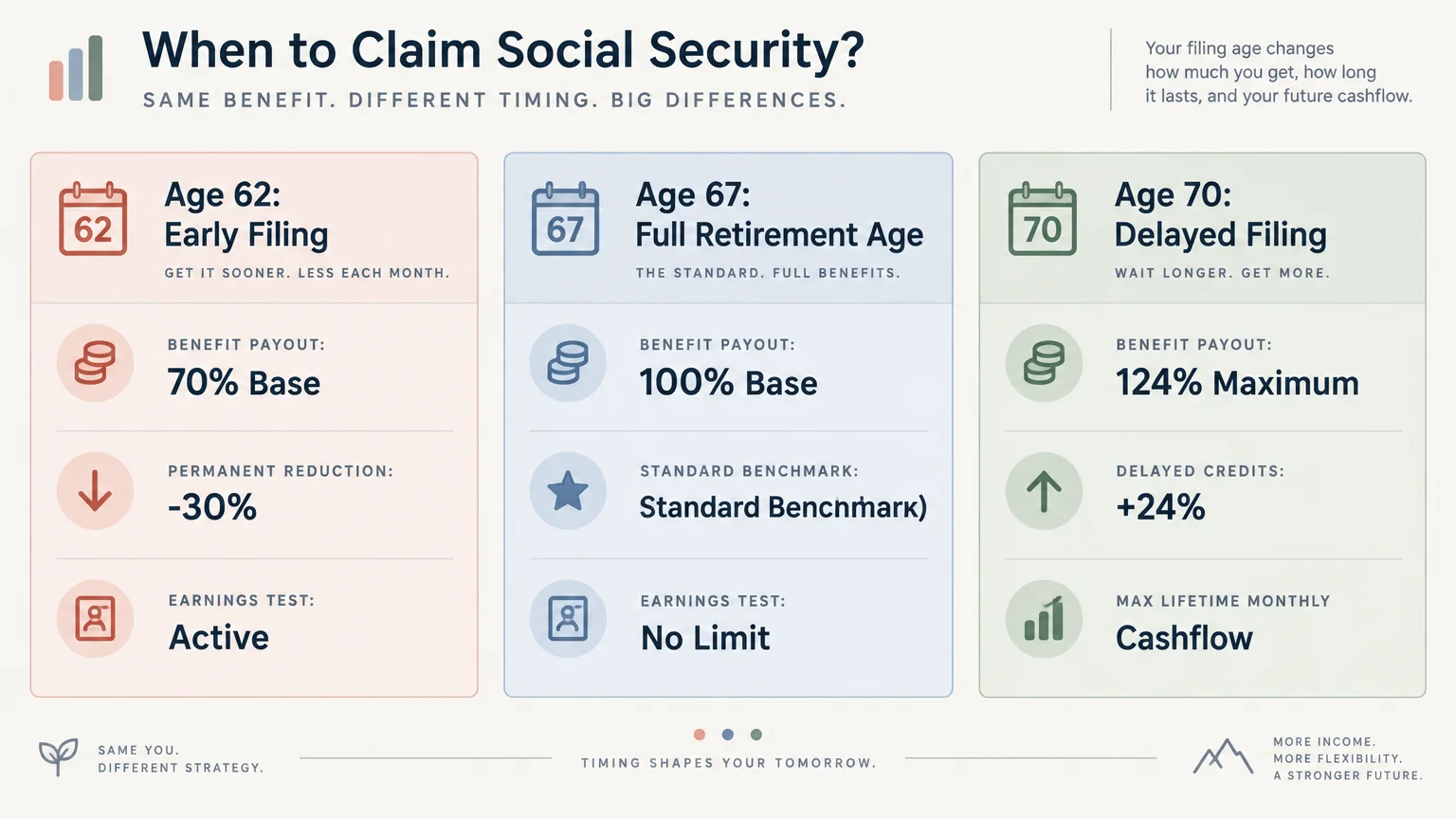
Choosing to start your benefits at the earliest eligible age of 62 imposes a permanent 30% reduction. If your FRA benefit is $2,000 monthly, filing at 62 permanently slashes your check to $1,400.
Spousal benefits claimed at age 62 face an even steeper permanent haircut of 35%. That reduced payment ceiling remains locked in for the rest of your spouse’s lifetime.
Delaying your claim past Full Retirement Age produces the opposite effect by generating Delayed Retirement Credits. For every year you delay beyond age 67 until age 70, your benefit increases by 8%.
Waiting until age 70 locks in a permanent 24% raise above your Full Retirement Age benefit. That increased income also compounds with future annual cost-of-living adjustments throughout your entire retirement.
“A great way to give yourself a guaranteed pay raise in retirement is to simply wait to claim your Social Security benefits.” — Suze Orman, Personal Finance Author
In 2026, the maximum monthly check for a worker retiring at FRA is $4,152, increasing to $4,188 in 2027. For a worker waiting until age 70, the maximum rises to $5,181 in 2026 and $5,358 in 2027.
Credits stop accumulating once you reach age 70. Delaying past your 70th birthday provides zero additional benefit and simply forfeits checks you have rightfully earned.

Myth 3: Working While Claiming Early Permanently Destroys Your Benefit
A frequent retirement rumor claims that working while collecting early benefits forfeits your monthly checks permanently. In reality, the retirement earnings test operates as a temporary benefit hold, not a financial penalty.
The Social Security Administration only evaluates your earned wages from employment or self-employment. Investment returns, pension distributions, capital gains, and interest payments never count against your earnings limits.
Beneficiaries younger than Full Retirement Age for the entire year can earn up to $24,480 in 2026 ($2,040 per month). In 2027, that baseline earnings limit rises to $25,560 ($2,130 per month).
If your earned income exceeds those caps, the government withholds $1 in benefits for every $2 earned above the limit. The agency withholds entire monthly checks until the required dollar offset is satisfied.
During the calendar year you finally reach Full Retirement Age, the earnings ceiling rises substantially. You can earn up to $65,160 in 2026 ($5,430 per month) and $67,920 in 2027 ($5,660 per month).
In that transition year, the SSA only withholds $1 for every $3 earned above the higher limit. Furthermore, the agency only counts earnings generated in the months prior to your actual birth month.
Once you celebrate your birthday month and reach Full Retirement Age, the earnings test vanishes completely. You can earn an unlimited income without losing a single cent from your monthly benefit checks.
More importantly, withheld benefits are returned to you over time. At Full Retirement Age, the SSA recalculates your monthly benefit upward to credit back every month where benefits were withheld.
You can review guidance on early retirement cash management from the Consumer Financial Protection Bureau. This automatic adjustment ensures you eventually recover your withheld funds over your expected lifespan.
Myth 4: Federal Income Taxes on Benefits Were Permanently Repealed
Recent news stories caused many retirees to celebrate the supposed death of federal taxes on Social Security. Unfortunately, believing your benefits are exempt from federal taxation can result in an unwelcome tax bill.
Federal taxation of benefits remains active law under Internal Revenue Code Section 86. Benefit taxation depends on your “combined income,” calculated as your adjusted gross income, nontaxable interest, and half your Social Security.
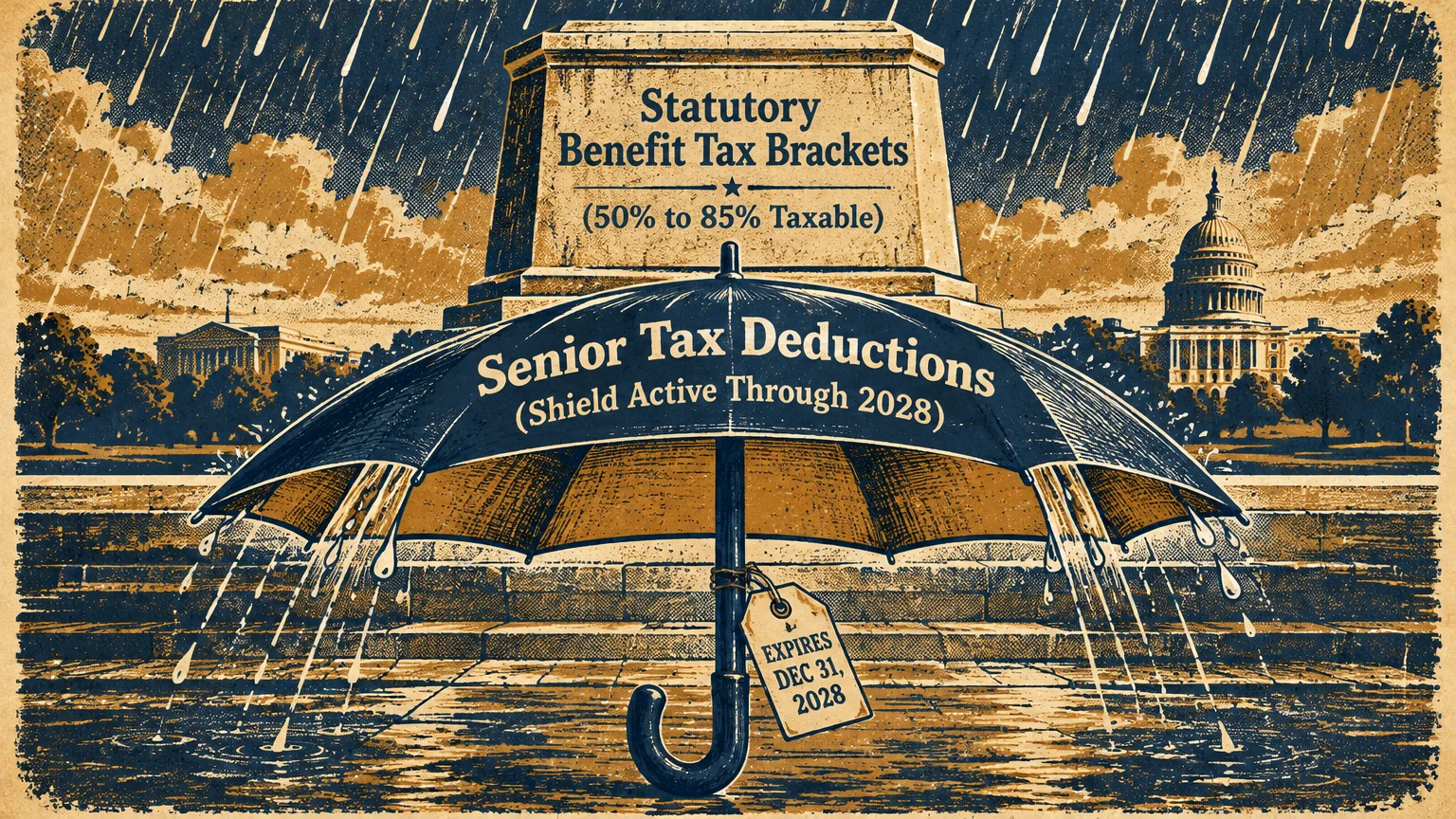
Single filers with combined income between $25,000 and $34,000 owe federal income tax on up to 50% of their benefits. If single combined income exceeds $34,000, up to 85% becomes taxable.
Married couples filing jointly face a 50% taxable threshold between $32,000 and $44,000 of combined income. Joint combined income above $44,000 exposes up to 85% of benefits to regular tax rates.
Congress has never adjusted these statutory thresholds for inflation since enacting them decades ago. As COLAs increase benefit checks, more retirees gradually drift across these fixed thresholds each year.
The misconception that taxes disappeared originated with the One Big Beautiful Bill Act (OBBBA), passed in July 2025. Rather than repealing benefit taxation, OBBBA created a temporary senior tax deduction for tax years 2025 through 2028.
Single filers age 65 and older with modified adjusted gross income below $75,000 receive a deduction up to $6,000. Married couples filing jointly with income under $150,000 receive a deduction up to $12,000.
This temporary deduction eliminates federal tax liability on benefits for roughly 88% to 90% of recipients today. However, the underlying statutory tax rules remain active and will apply fully once the deduction sunsets.
Review your current tax bracket guidelines directly through the Internal Revenue Service. Proactive tax planning prevents surprise liabilities when required minimum distributions push your combined income upward.
Myth 5: Social Security Replaces Most of Your Pre-Retirement Paycheck
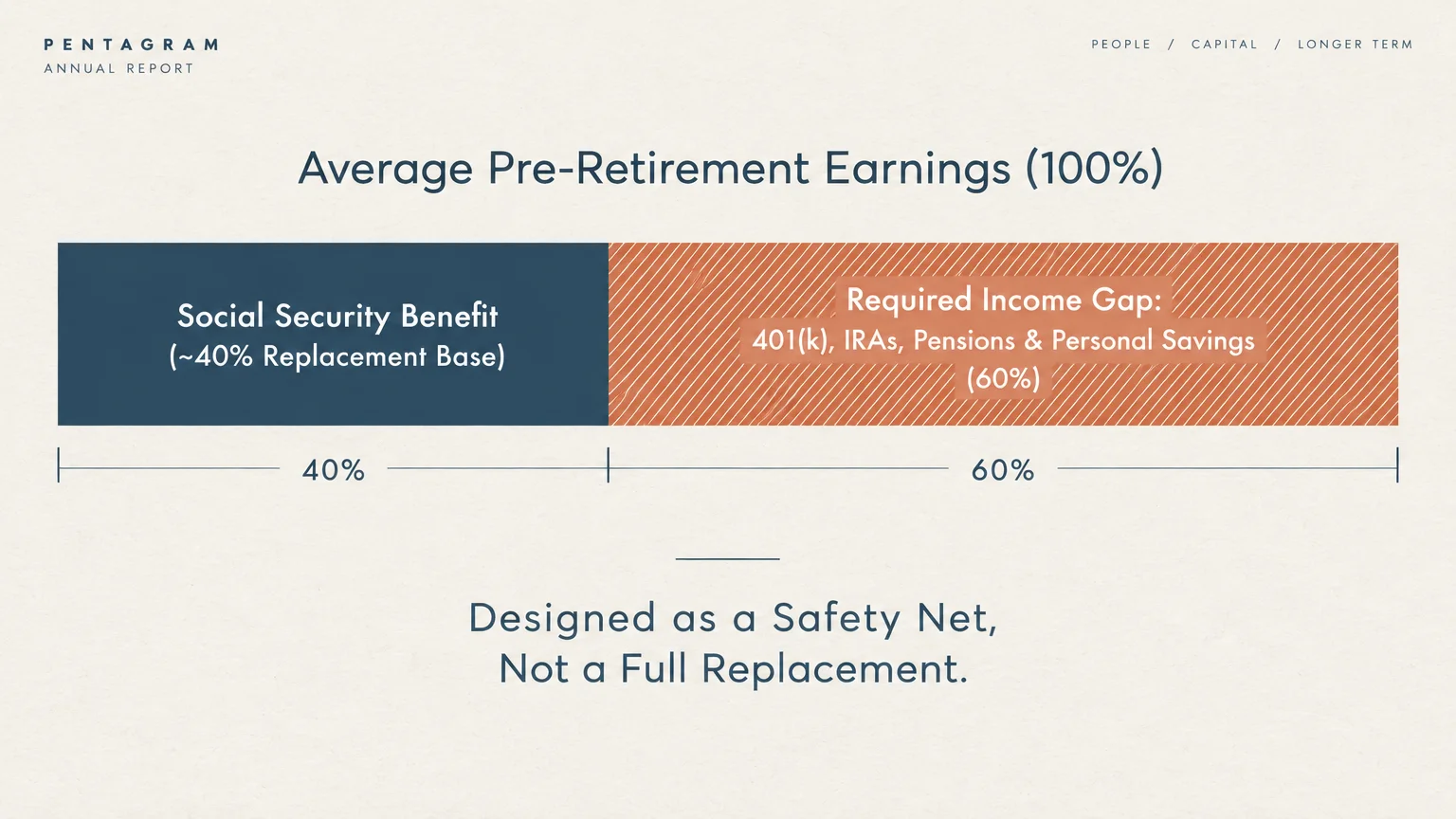
Many workers mistakenly treat Social Security as a full pension plan that will replace their standard workplace income. In truth, the system was engineered to replace only a foundational portion of your career earnings.
For an average wage earner, Social Security replaces roughly 40% of pre-retirement earnings. Higher earners receive a significantly lower replacement rate, often seeing benefits replace less than 25% of their peak compensation.
The average monthly benefit for retired workers in late 2026 is approximately $2,095. Following the 3.6% COLA announced on October 14, 2026, the average check climbs by $75 to $2,170 in January 2027.
While an extra $75 per month offers welcomed breathing room, annual adjustments merely mirror inflation rather than growing purchasing power. The prior year COLA for 2026 stood at 2.8%.
Moreover, rising Medicare Part B premiums are typically deducted directly from your monthly benefit check before deposit. Significant healthcare inflation can swallow a noticeable fraction of your annual COLA increase.
Maximum payouts remain capped regardless of how much you earned throughout your working life. At Full Retirement Age, the maximum monthly check is $4,152 in 2026 and $4,188 in 2027.
Even delaying until age 70 caps benefits at $5,181 in 2026 and $5,358 in 2027. Building dedicated personal savings remains vital to closing the gap between your benefit and actual living expenses.

Myth 6: Your Benefit Is Based on Your Last Five Working Years
Workers frequently assume their benefit calculation focuses on their final five years of employment, mirroring traditional defined-benefit pensions. Social Security uses a completely different formula based on your lifetime career history.
The Social Security Administration indexes your historical earnings to reflect general wage growth over time. It then extracts your highest 35 earning years to establish your Average Indexed Monthly Earnings (AIME).
If you spent only 28 years in the workforce, the SSA inserts seven years of zero earnings into your calculation. Those zeroes dilute your average, permanently dragging down your eventual monthly check.
Replacing zero-earning or low-earning years with higher modern earnings directly boosts your baseline retirement benefit. Every additional year of strong wages can push an early low-earning year out of your top 35.
You only pay payroll taxes up to the annual maximum taxable wage base. In 2026, that cap is set at $184,500, increasing to $192,300 in 2027.
Earnings above those annual thresholds are exempt from the 6.2% payroll tax and do not increase your benefit. The system prevents ultra-high earners from accumulating disproportionate government payouts.
Qualifying for retirement benefits requires accumulating at least 40 work credits over your lifetime. In 2026, you earn one credit for every $1,890 in covered wages, up to four credits annually at $7,560.

Myth 7: Teachers and Public Workers Lose Benefits to WEP and GPO
For decades, state and municipal employees who earned non-covered public pensions faced severe reductions to their Social Security checks. Many teachers, police officers, and firefighters still believe these harsh rules will eliminate their retirement benefits.
Historically, the Windfall Elimination Provision (WEP) slashed earned Social Security benefits for public workers receiving separate government pensions. That formula reduced monthly checks by up to half of the worker’s public pension amount.
Simultaneously, the Government Pension Offset (GPO) reduced spousal and survivor benefits by two-thirds of the worker’s government pension. In many instances, the GPO completely wiped out spousal benefits for widowed civil servants.
That decades-long penalty officially ended when the Social Security Fairness Act was signed into law on January 5, 2025. This landmark legislation permanently repealed both the WEP and GPO provisions nationwide.
The repeal was enacted retroactively to January 2024, ensuring full restitution for impacted public servants. Eligible workers and their spouses now collect their full statutory Social Security benefits alongside their state pensions.
If your benefits were previously trimmed under WEP or GPO, the SSA has restored your payments to full value. Surviving spouses of public servants can now access unreduced survivor benefits without penalty.
Comparing Claiming Ages, Earnings Caps, and Benefit Impacts
Deciding when to claim Social Security requires balancing immediate income needs against lifetime cumulative value. Evaluating verified statutory figures helps you choose the most advantageous claiming milestone.
| Category or Metric | 2026 Threshold | 2027 Threshold | Financial Impact |
|---|---|---|---|
| Earliest Claiming Age (Age 62) | 30% reduction | 30% reduction | Permanent 30% cut compared to Full Retirement Age baseline |
| Full Retirement Age (Born 1960+) | Age 67 | Age 67 | Receive 100% of earned Primary Insurance Amount |
| Delayed Claiming (Age 70) | +24% increase | +24% increase | Earns 8% annual delayed retirement credits past age 67 |
| Maximum Monthly Benefit at Age 70 | $5,181 | $5,358 | Highest possible monthly payment for high-wage earners |
| Under FRA Earnings Limit | $24,480 / yr | $25,560 / yr | $1 withheld for every $2 earned above threshold |
| Year of Reaching FRA Earnings Limit | $65,160 / yr | $67,920 / yr | $1 withheld for every $3 earned above threshold |
| Maximum Taxable Wage Base Cap | $184,500 | $192,300 | Wages above this cap are exempt from OASDI taxes |
Claiming early provides immediate cash flow but permanently suppresses your monthly checks and lifetime inflation adjustments. Waiting until Full Retirement Age or age 70 maximizes guaranteed income for your later retirement years.
You can explore comprehensive retirement modeling strategies on Investopedia to see how delaying benefits enhances portfolio longevity. Comparing your distinct family longevity history against these thresholds clarifies your best claiming window.

What Can Go Wrong: Critical Claiming Mistakes
Making an uninformed Social Security decision can cost a household over $100,000 in missed lifetime income. Avoiding common strategic traps protects both you and your surviving spouse from financial vulnerability.
The most frequent mistake is claiming benefits at age 62 while continuing to work a full-time job. You absorb an unnecessary 30% permanent reduction while triggering immediate benefit withholdings under the earnings test.
Failing to coordinate claiming strategies between spouses represents another costly error. When the higher-earning spouse claims early, they permanently depress the survivor benefit available to the surviving partner later in life.
Neglecting tax bracket management when pulling retirement money can trigger unexpected benefit taxation. Large lump-sum withdrawals from traditional IRAs can push your combined income directly into the 85% taxable tier.
Ignoring your annual Social Security earnings statement can also diminish your monthly benefit. Failing to catch and correct an employer wage-reporting error within three years leaves incorrect zeroes on your record.

When to Consult a Professional
Navigating Social Security rules alongside your tax strategy and portfolio withdrawals can become highly intricate. Consulting a qualified fee-only Certified Financial Planner (CFP) or CPA proves critical in specific financial situations.
- Sizable age differences between spouses: A planner coordinates claiming timelines to maximize cumulative household benefits and preserve survivor payouts.
- Substantial traditional retirement accounts: A CPA designs tax-efficient withdrawal sequences to manage provisional income and reduce benefit taxation.
- Transitioning between public and private employment: An advisor confirms the restored benefit amounts following the repeal of WEP and GPO.
- Chronic health issues or altered life expectancy: A financial professional models break-even ages to determine if early claiming makes mathematical sense.
Objective financial planners model your entire wealth picture rather than evaluating your government benefit in a vacuum. Their analysis ensures your claiming timing integrates smoothly with your retirement lifestyle goals.
Educating yourself before initiating a claim prevents lifelong financial consequences for your household budget. Knowledge remains your most profitable asset when mapping your transition into retirement.
“An investment in knowledge pays the best interest.” — Benjamin Franklin, Statesman and Author
Frequently Asked Questions About Social Security
Can I change my mind after claiming Social Security early?
Yes, you can cancel your claim within 12 months of approval through a formal withdrawal of application. However, you must repay all benefits received to date, including spousal and family payments, before refiling later.
How does the 2027 COLA affect my monthly check?
The 3.6% COLA announced in October 2026 takes effect with benefits paid in January 2027. It raises the average retired worker benefit from approximately $2,095 per month to roughly $2,170 per month.
Do my benefits increase if I continue working past age 70?
Delayed retirement credits stop accumulating once you reach age 70. However, if your current earnings rank among your top 35 wage years, the SSA will automatically increase your base benefit.
Can I collect benefits based on an ex-spouse’s work record?
You can claim divorced spousal benefits if your marriage lasted at least 10 consecutive years and you remain unmarried. Collecting on an ex-spouse does not impact their benefit or their current spouse’s payments.
Do benefits pause if I travel or move abroad in retirement?
United States citizens can generally receive Social Security payments while living in most foreign countries without restrictions. Specific Treasury sanctions prohibit sending payments to a few designated nations, so verify foreign residency regulations beforehand.
Next Steps for Your Claiming Strategy
Take time to create or log in to your personal profile on the official Social Security portal today. Reviewing your recorded wage history guarantees every year of hard work counts toward your eventual monthly check.
Integrating your projected benefits into a holistic retirement spending plan provides lasting peace of mind. Making fact-based claiming decisions ensures you extract maximum value from the benefits you spent decades funding.
This article provides general retirement education and information only. Every retiree’s situation is unique—what works for others may not work for you. For personalized advice, consider consulting a qualified financial professional such as a CFP or CPA.
Last updated: October 2026. Retirement benefits, tax rules, and healthcare regulations change frequently—verify current details with official sources.









Leave a Reply