
A single compromised Social Security account can disrupt your retirement income in seconds. Criminals actively target your benefits because guaranteed monthly direct deposits offer reliable payouts.
Spotting warning signs early protects your hard-earned funds before thieves siphon away cash. Routine security checks keep you in control of your federal benefits record.
Review these critical red flags to determine whether your online profile requires immediate intervention. Timely action prevents painful administrative headaches with federal agencies.
The Rising Threat to Retiree Social Security Accounts
Retirees face aggressive digital threats from organized cybercriminals worldwide. Fraudsters focus heavily on older Americans due to their accumulated savings and predictable retirement benefit deposits.
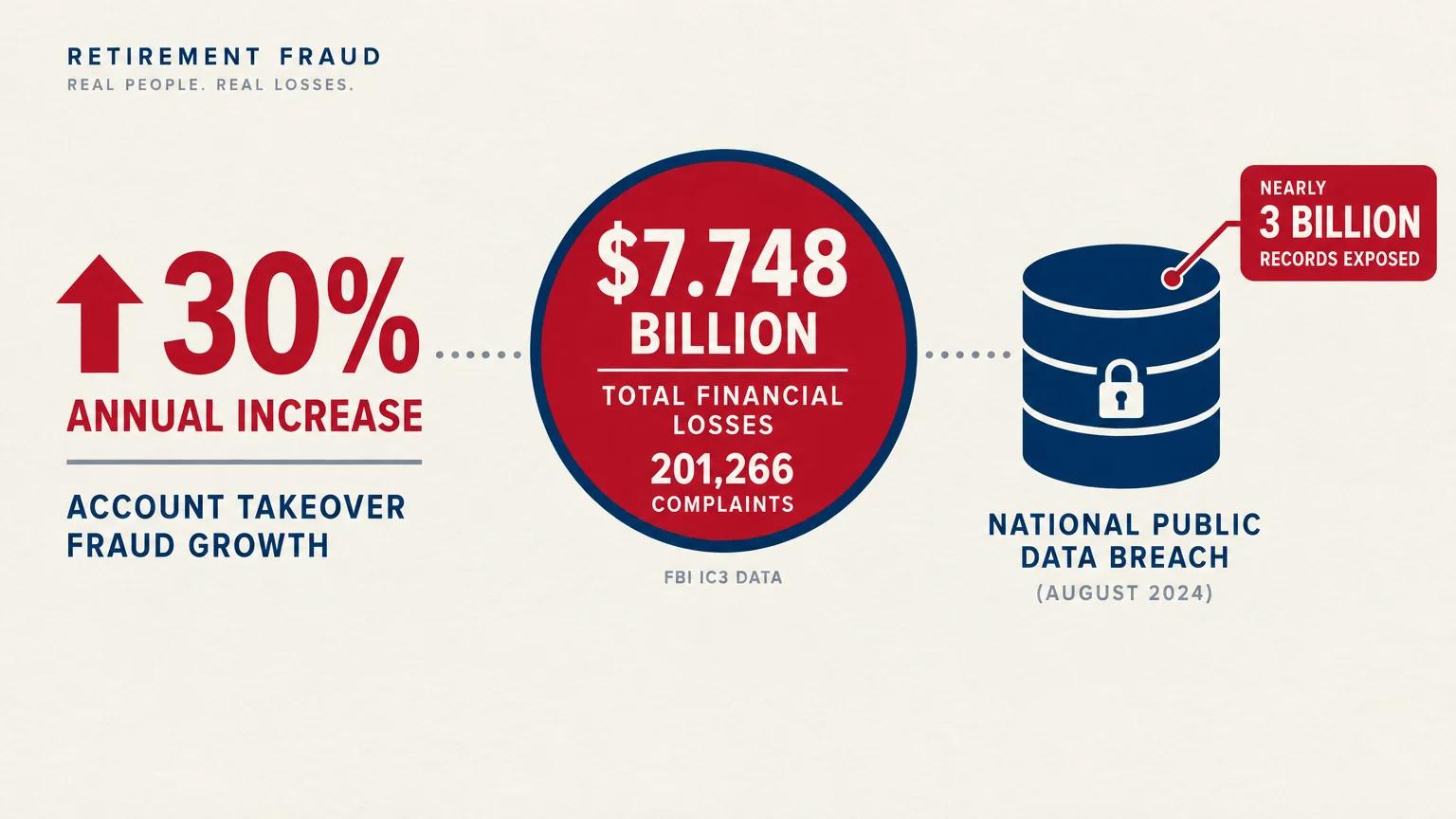
Industry data shows that Account Takeover fraud is expanding at an alarming 30% annual increase. Criminals weaponize stolen personal details to seize existing accounts and divert electronic payments.
The scale of this financial devastation is documented in federal law enforcement records. Older Americans reported $7.748 billion in financial losses across 201,266 complaints in the FBI Internet Crime Complaint Center 2025 report.
Much of this vulnerability stems from historic data breaches that released sensitive records into criminal hands. In August 2024, the National Public Data breach exposed nearly 3 billion records containing Social Security numbers.
If you have not audited your profile recently, your identity may already sit on cybercriminal marketplaces. Routine monitoring through the Consumer Financial Protection Bureau and federal portals remains your strongest line of defense.
Proactive retirees inspect their online records systematically rather than waiting for an emergency. Understanding the key signals of compromise lets you act before payments vanish.
Sign 1: Unsolicited Multi-Factor Authentication Codes
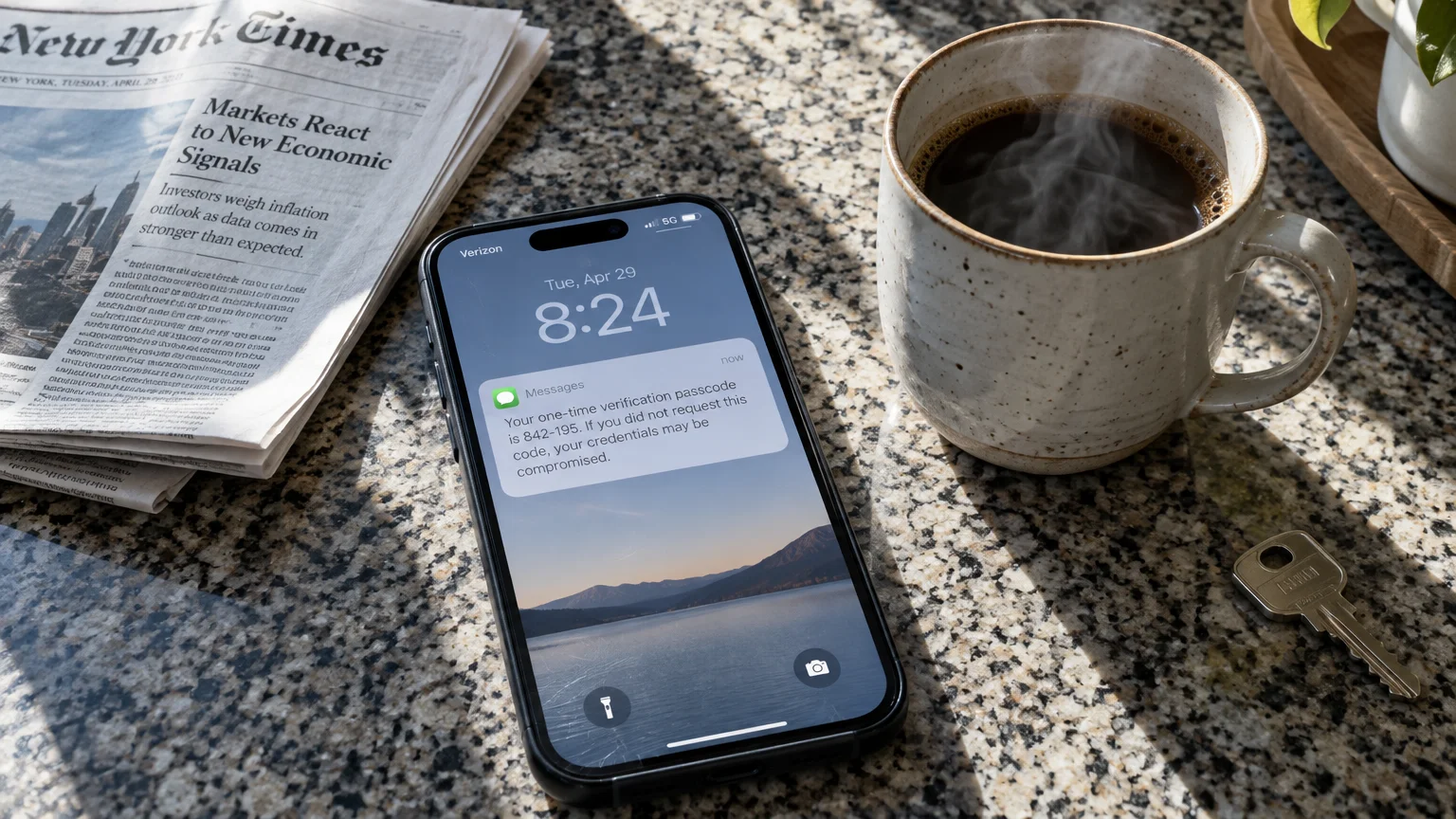
You sit down with morning coffee and your smartphone buzzes with a one-time verification passcode. If you did not attempt to sign in, an unauthorized intruder is actively entering your credentials.
Federal digital standards require robust security for every online government account. Both approved credential platforms operate under strict NIST 800-63 identity guidelines and Executive Order 14028.
These authentication systems send an alert whenever someone provides your correct username and password. Receiving a prompt means the attacker already cleared your primary login defense.
Criminals frequently acquire stolen logins through automated credential-stuffing attacks across the internet. They purchase compromised passwords on dark web forums and test them on federal agencies.
Never ignore a random security code delivered by text message, email, or an authenticator application. Treat an unexpected multi-factor prompt as proof that an intruder knows your primary credentials.
Change your master login password immediately whenever an unprovoked authorization message arrives on your screen. You should also audit the mobile telephone number registered to receive those backup codes.
Sign 2: Unexpected Profile Mailings or Confirmation Notices
The Social Security Administration relies on automated notices whenever profile details shift. You must treat any surprise communication from the agency as an urgent administrative alert.
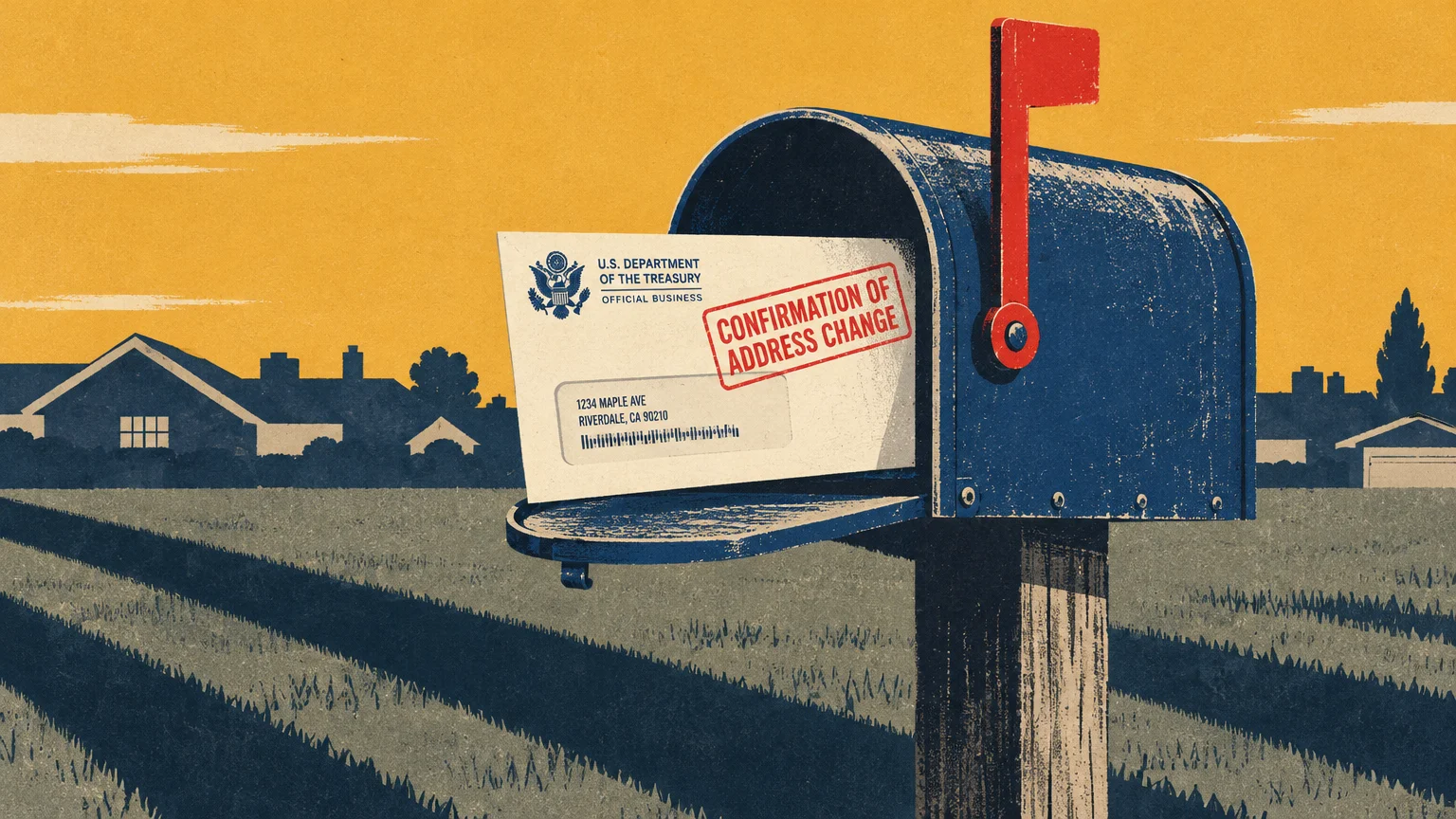
If you receive a letter confirming a change of address you never requested, take immediate action. Criminals redirect postal mail to prevent legitimate owners from seeing subsequent fraud warnings.
The agency also transmits automated electronic notifications whenever someone alters an email address or direct deposit routing number. Fraud syndicates attempt to adjust contact settings so you stay uninformed.
Federal security procedures dictate that confirmation notices go to both old and new addresses during updates. That safety protocol gives victims a narrow window to stop ongoing unauthorized transactions.
Always open envelopes bearing official federal insignias right away rather than setting them aside with casual mail. Swift intervention minimizes lasting damage to your federal earnings record and retirement checks.
“Financial security is not just about growing your savings; it is about defending what you have already earned.” — Elizabeth Warren, U.S. Senator

Sign 3: Missing, Delayed, or Re-Routed Direct Deposit Payments
A missing direct deposit check represents the most damaging sign of account theft. Thieves compromise online portals specifically to alter bank routing information and steal monthly benefit payments.
Social Security benefits arrive on predictable schedules tied to your birth date each month. When your deposit fails to hit your bank account on its scheduled Wednesday, investigate immediately.
Fraud syndicates rarely alter your whole account at once; they quietly change banking details days before distribution. They funnel stolen cash into prepaid debit cards or non-traditional online banking accounts.
By the time you discover the missing transfer, criminals have often withdrawn the funds from automated teller machines. Recovering redirected government funds requires weeks of administrative investigation and identity validation.
Review your direct deposit information inside your profile to verify your account and routing numbers. Ensure your monthly checks deposit exclusively into your verified, local checking or savings institution.
Sign 4: Sudden Lockout from Your Online Portal
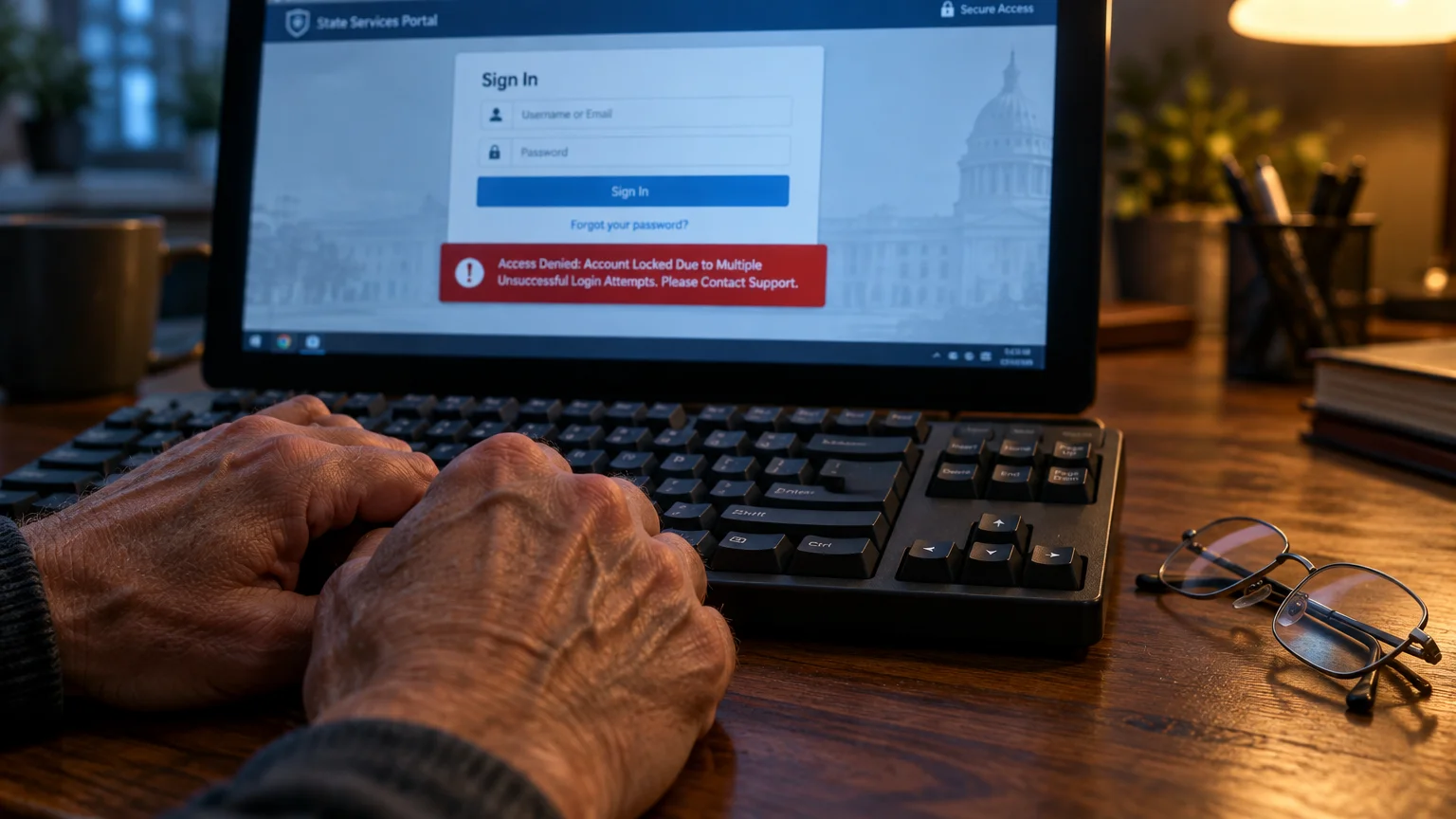
Attempting to access your account only to face rejected credentials indicates severe security trouble. When normal passwords fail repeatedly, an unauthorized individual may have seized and reconfigured your profile.
Lockouts also happen when retirees miss mandatory federal technical transitions. On June 7, 2025, the Social Security Administration permanently retired traditional legacy usernames and passwords.
Anyone among the roughly 46 million users who created an online account prior to September 18, 2021, must transition. If you neglected this update, your access remains frozen until you verify through modern portals.
Leaving an old profile unmigrated creates dangerous exposure for senior citizens. Thieves capitalize on neglected records by registering modern credentials using stolen identifying details before legitimate owners can.
If the system reports that an account already exists under your identity, criminals beat you to registration. You will need manual agency intervention to reclaim administrative ownership of your record.
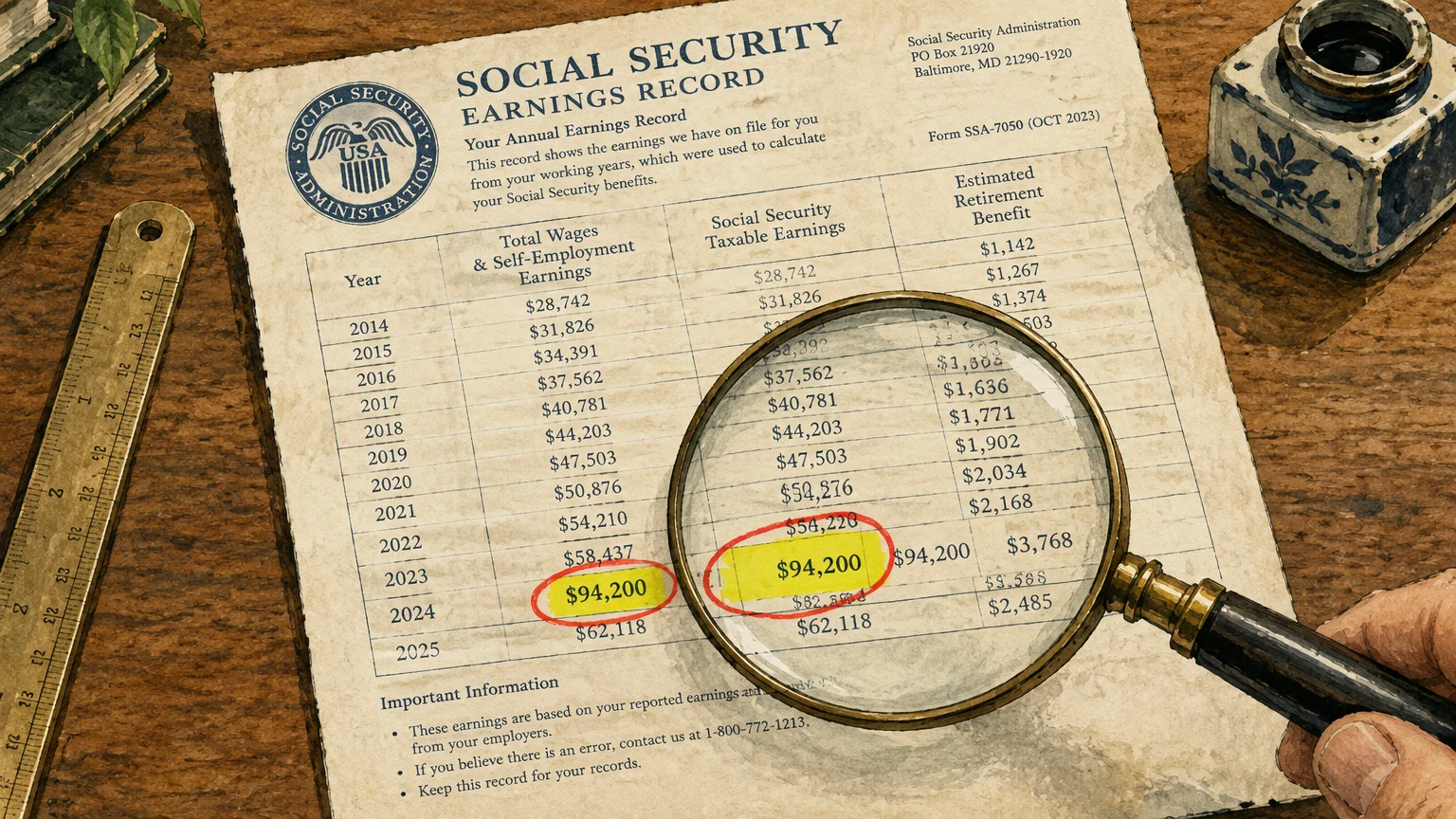
Sign 5: Inaccurate or Inflated Earnings Records
Your online portal maintains a complete ledger of your lifetime employment history. Reviewing this earnings ledger regularly uncovers synthetic identity theft and unauthorized workplace employment.
Identity thieves frequently use stolen numbers to secure employment when they lack lawful work authorization. When an employer reports wages under your number, your official earnings ledger rises abnormally.
Inflated earnings distort future benefit calculations and cause severe downstream consequences with federal authorities. Unauthorized income reports can cause the agency to dispute your eligibility for income-tested benefits.
Examine your lifetime record annually to ensure every annual earnings figure matches your historical tax returns. Any unearned wage entry demands immediate correction through official federal reporting channels.
Correcting an inaccurate earnings record requires tax documentation like historical W-2 forms or complete returns. Resolving workplace fraud early saves enormous effort during your active retirement years.
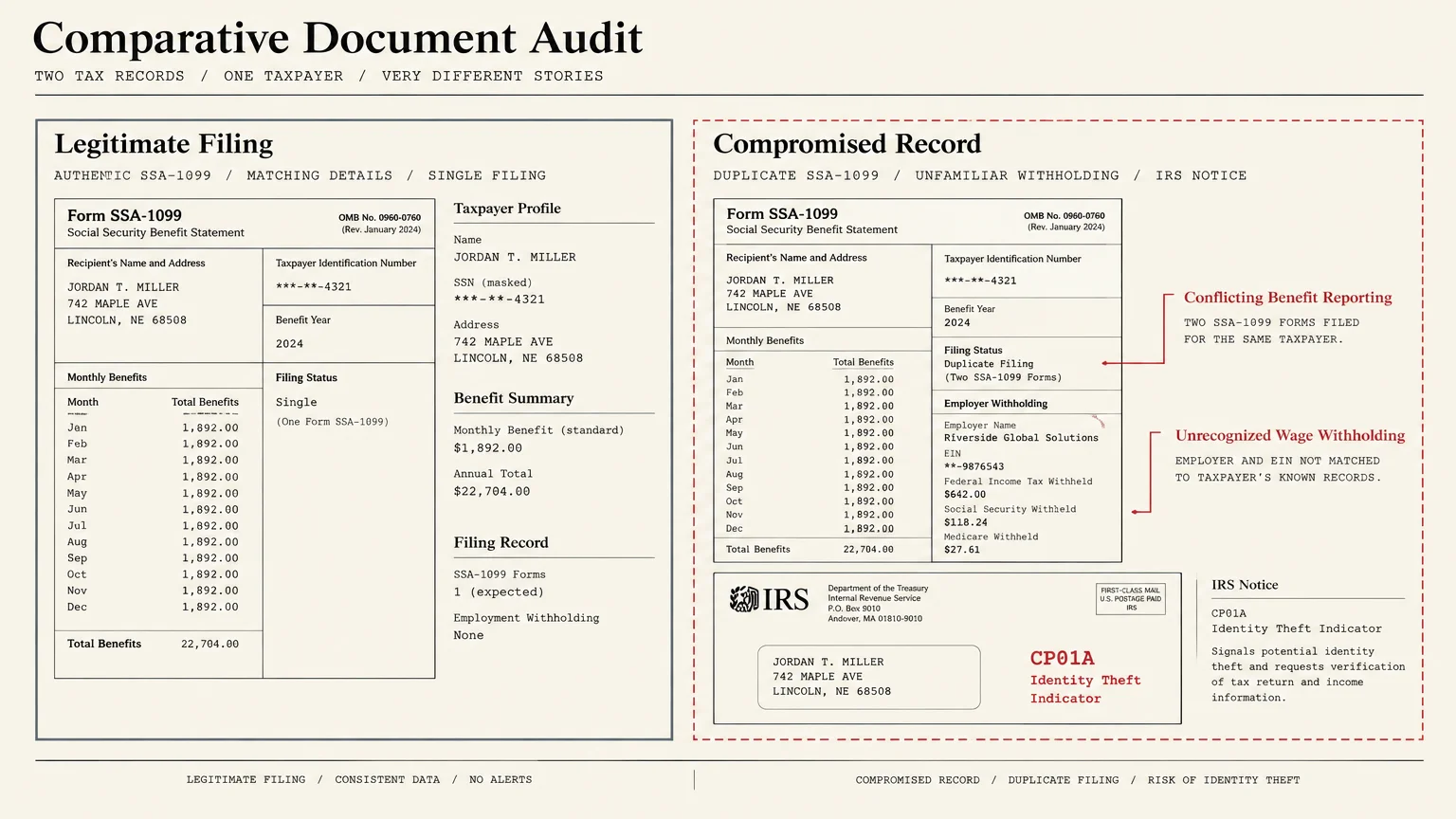
Sign 6: Duplicate or Unfamiliar Tax Forms and IRS Warnings
Identity theft often manifests on your tax returns before appearing anywhere else. Fraudulent wage reporting and identity schemes inevitably produce conflicting records between federal collection agencies.
During 2025, the Internal Revenue Service flagged 2 million tax returns for possible identity fraud. Many of these flagged returns involved compromised numbers linked to fraudulent wage statements.
Watch for unexpected copies of Form 1099 or Form W-2 arriving from companies you never worked for. Receiving tax documents from unfamiliar corporations means someone is working under your identity.
You might also receive an IRS notice stating that someone already submitted a tax return using your number. You can monitor filing anomalies directly through the Internal Revenue Service web portal.
Discrepancies identified on federal tax forms indicate widespread identity exploitation that extends far beyond retirement benefits. Address tax issues quickly to avoid refund freezes and administrative liens.
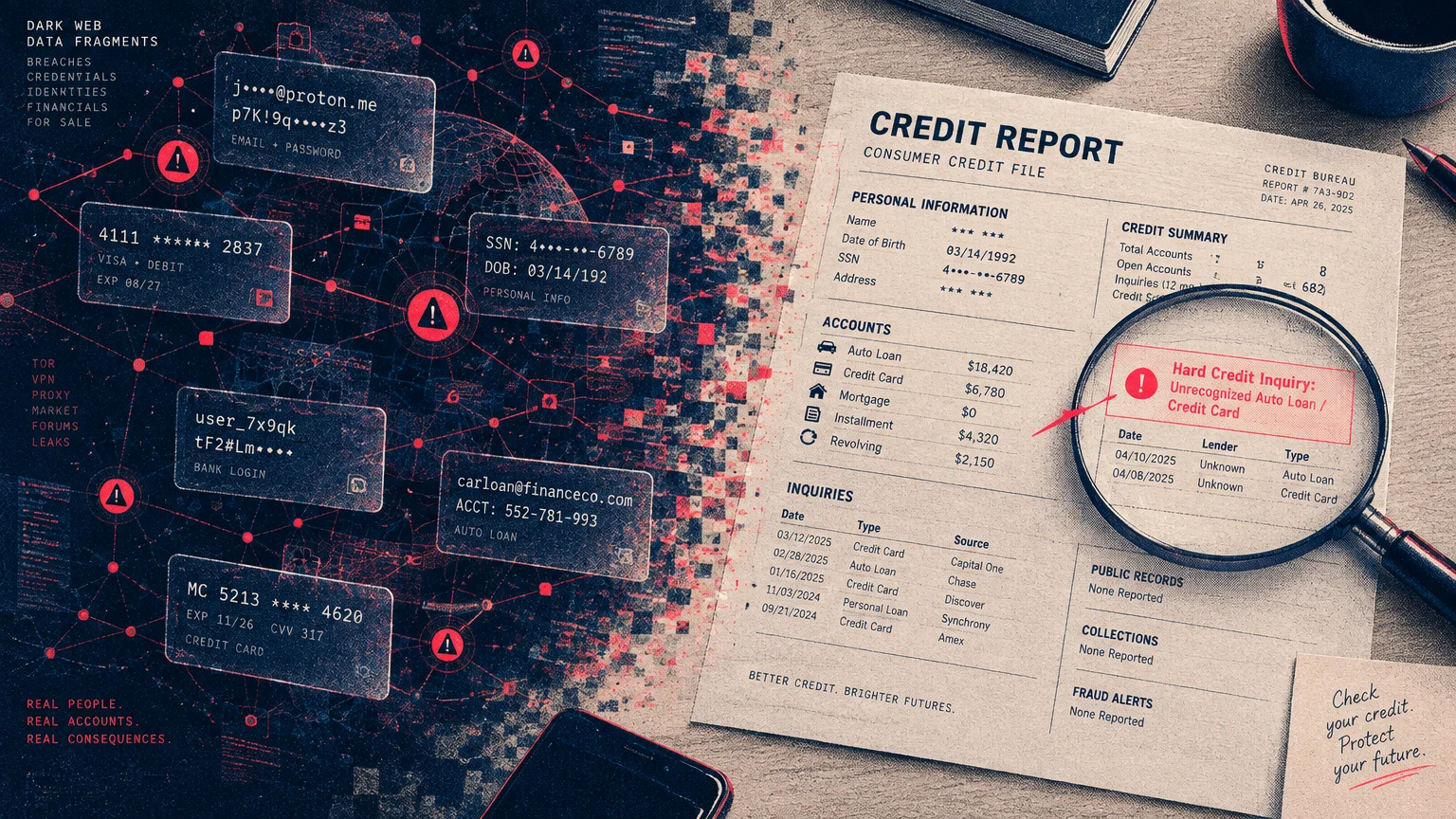
Sign 7: Suspicious Credit Inquiries and Dark Web Breaches
Your Social Security number acts as the master key for American consumer credit systems. If thieves breach your credit, your retirement benefit profile faces imminent takeover risk as well.
Unexplained hard inquiries on your credit reports indicate that someone is seeking loans or credit cards in your name. Criminals leverage the same stolen personal dossiers to compromise multiple financial targets simultaneously.
Identity monitoring alerts signaling that your credentials surfaced on dark web markets require prompt defensive action. High-profile national data breaches have exposed baseline identity records for hundreds of millions of citizens.
Educational resources from advocacy organizations like AARP highlight how credit compromises correlate with benefit diversion. Thieves test stolen credentials on retail credit applications before attacking federal benefit records.
Placing immediate freezes on major credit bureaus blocks attackers from opening new borrowing lines. Freezing credit also shields the auxiliary personal information used to bypass secondary security questions.
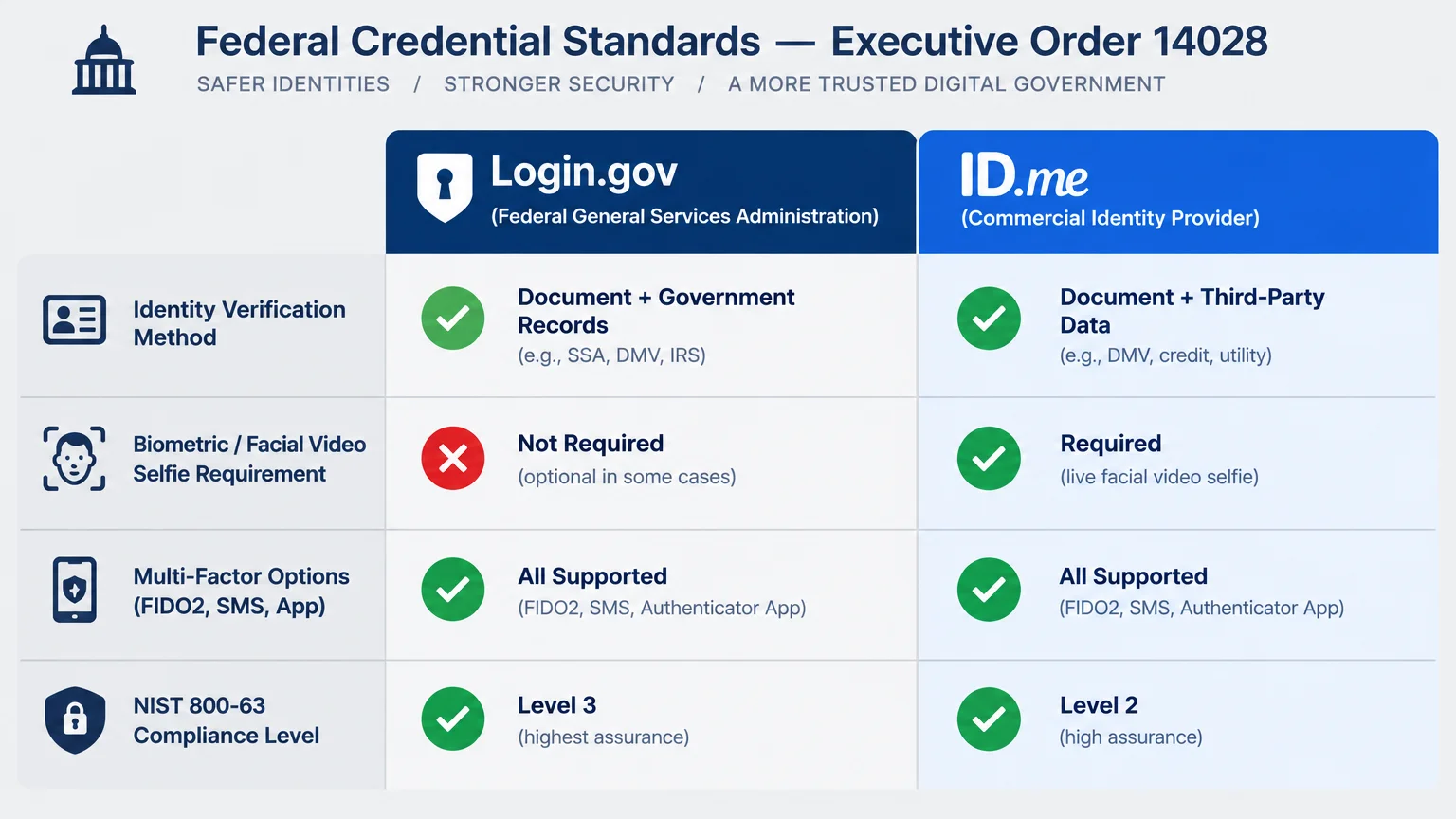
Credential Options Compared: Login.gov vs. ID.me
Modern access to federal services requires selecting an authorized digital identity credential. Understanding how each platform functions helps you pick the right system for your situation.
| Feature | Login.gov | ID.me |
|---|---|---|
| Operating Entity | U.S. General Services Administration | Private Commercial Technology Vendor |
| Best Suited For | Domestic U.S. Residents with Standard IDs | Individuals Living Abroad or Complex ID Situations |
| International Mailing Addresses | Not Supported for Certain Services | Required for Users Outside the U.S. |
| Verification Methods | State ID, Credit History, Phone Verification | Document Upload, Video Selfie, Live Agent Calls |
| Federal Standards Compliance | Compliant with NIST 800-63 & EO 14028 | Compliant with NIST 800-63 & EO 14028 |
| Cross-Agency Use | Broad Federal Use (VA, USAJOBS) | State Agencies, IRS, VA, Private Sector |
Login.gov represents the standard government-run credential provider recommended for most domestic retirees. It provides a simple, clean interface that protects account holders without requiring extensive biometric uploads.
Retirees residing abroad without domestic residential addresses must use ID.me for identity proofing. ID.me accommodates international paperwork and offers live video agent verification for complex cases.
Both platforms fulfill federal cybersecurity mandates to block automated account takeovers. Whichever provider you select, activate multi-factor authentication using a secure authenticator application rather than SMS messages.
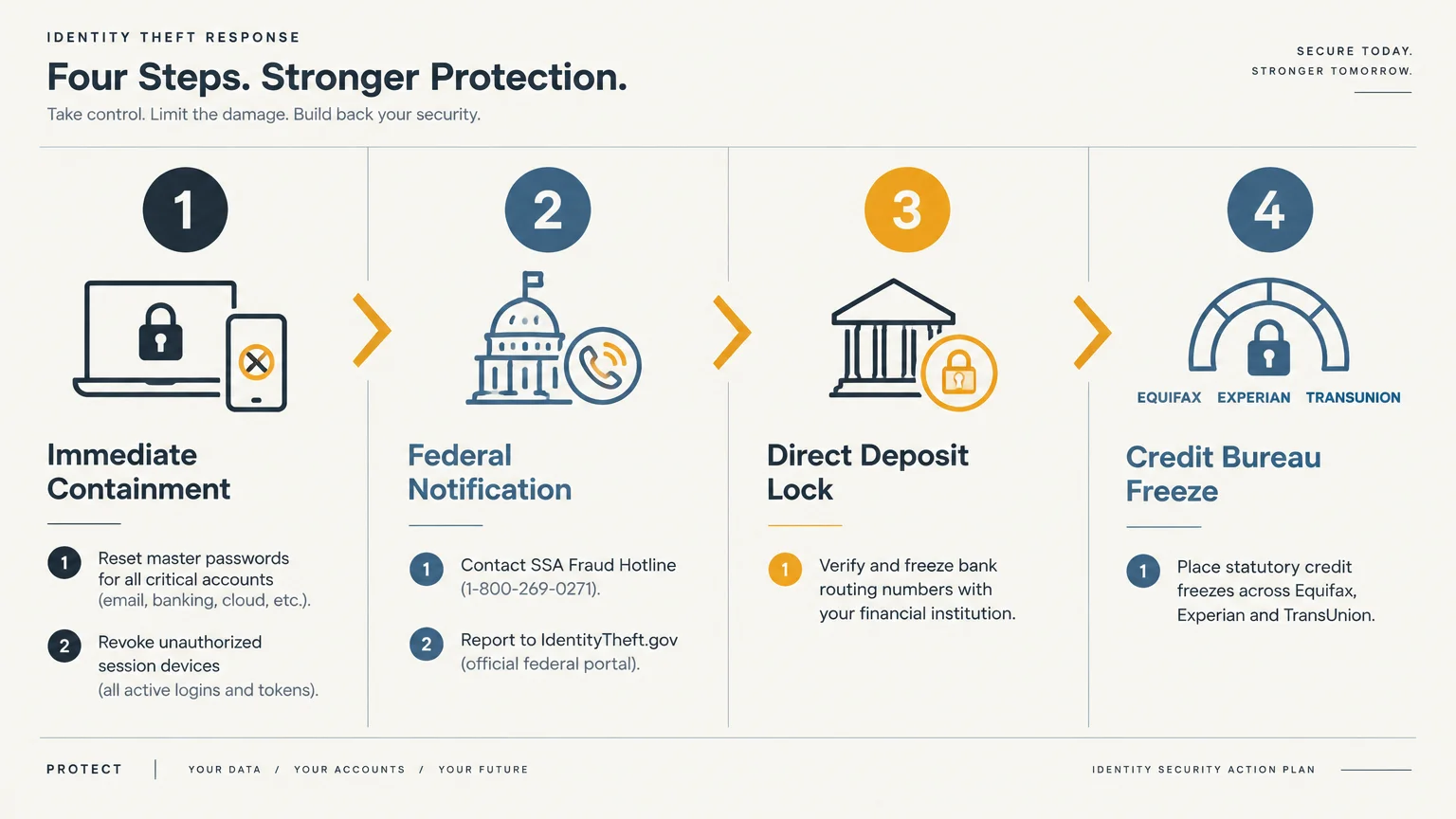
Immediate Action Plan: How to Contain Account Breaches
Discovering evidence of unauthorized activity requires swift, disciplined execution. Follow these direct steps to secure your benefits and limit ongoing financial exposure.
- Contact the SSA National Call Center: Call 1-800-772-1213 (TTY 1-800-325-0778) Monday through Friday, between 8 a.m. and 7 p.m. local time. Inform the representative that unauthorized parties altered your benefit records.
- Request an Electronic Access Block: Instruct the agency to implement an official Block Electronic Access order on your file. This measure disables all online and automated telephone access to your records completely.
- Submit an Official Scam Report: File an administrative complaint through the official portals at ssa.gov/scam and the Office of the Inspector General at oig.ssa.gov. These reports document the crime for benefit restoration.
- Notify Your Financial Institution: Inform your bank fraud department that someone attempted to alter your federal direct deposits. Request alerts on incoming transfers and review account numbers for safety.
- Update Your Identity Credentials: Access your Login.gov or ID.me profile from a secure computer to reset master passwords. Revoke recognized devices and replace compromised secondary phone numbers.
Implementing an Electronic Access Block remains the most potent tool for ending an active compromise. The block remains active until you personally verify your identity with agency representatives to remove it.
Official reporting through Social Security Administration portals creates a formal paper trail. That official record is mandatory when requesting reimbursement for stolen monthly payments.
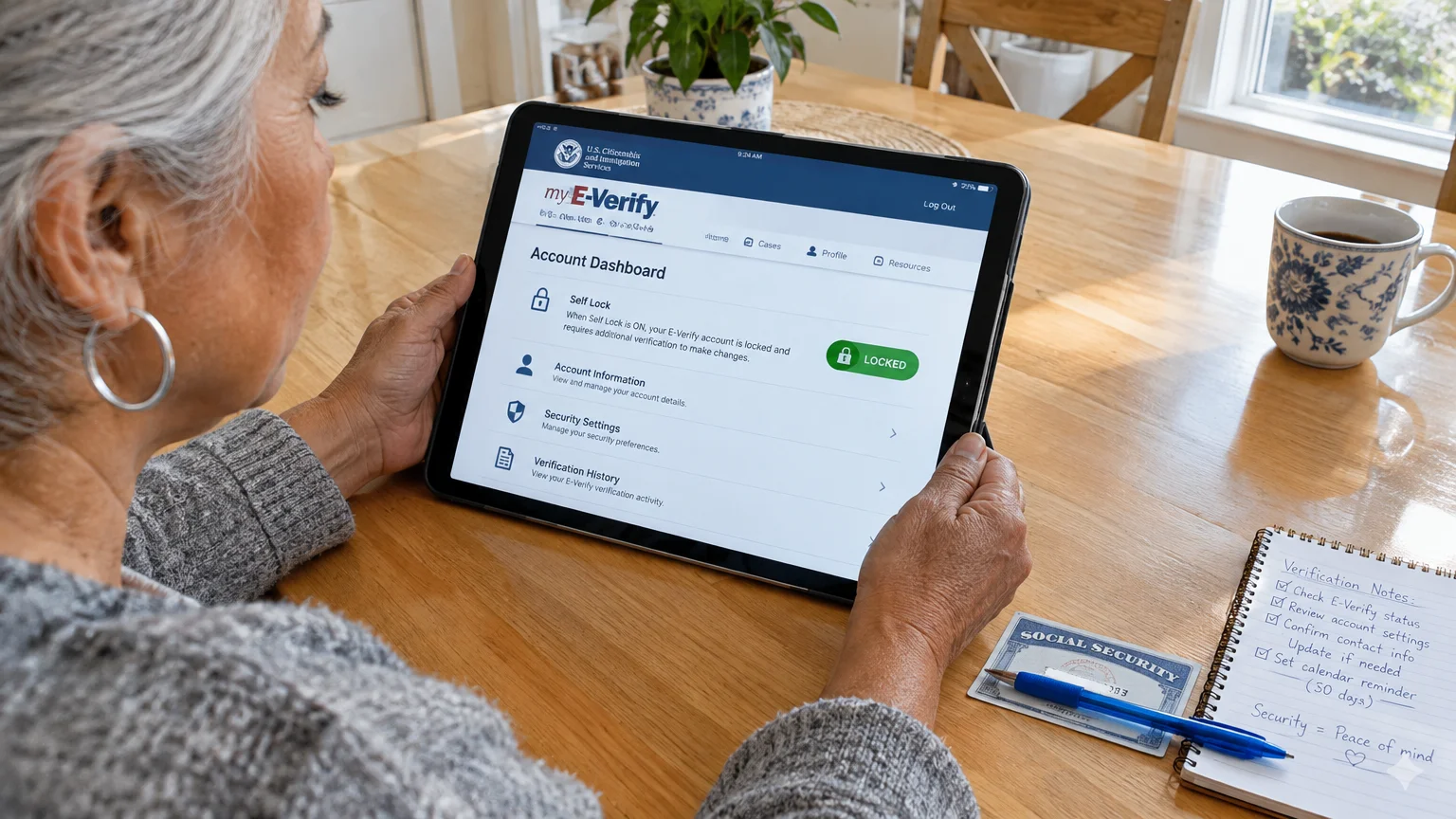
Defending Your Number with E-Verify Self Lock
Protecting your retirement profile also requires stopping unauthorized employment usage of your credentials. Criminals frequently misuse retirement-age identifiers to clear basic hiring background checks.
The federal government provides a powerful, free protective mechanism known as E-Verify Self Lock. This service enables workers and retirees to prevent employers from verifying employment eligibility with their number.
You can activate this defensive safeguard online by visiting myeverify.uscis.gov. Creating a profile lets you lock your number against fraudulent workplace onboarding in minutes.
The E-Verify Self Lock remains valid for 1 year from the date of activation. The system sends an automated renewal alert 30 days prior to expiration so protection never lapses.
If you re-enter the workforce, you can easily unlock the account to clear legitimate hiring checks. Maintaining this lock shuts down employment identity theft and protects your official earnings statement.
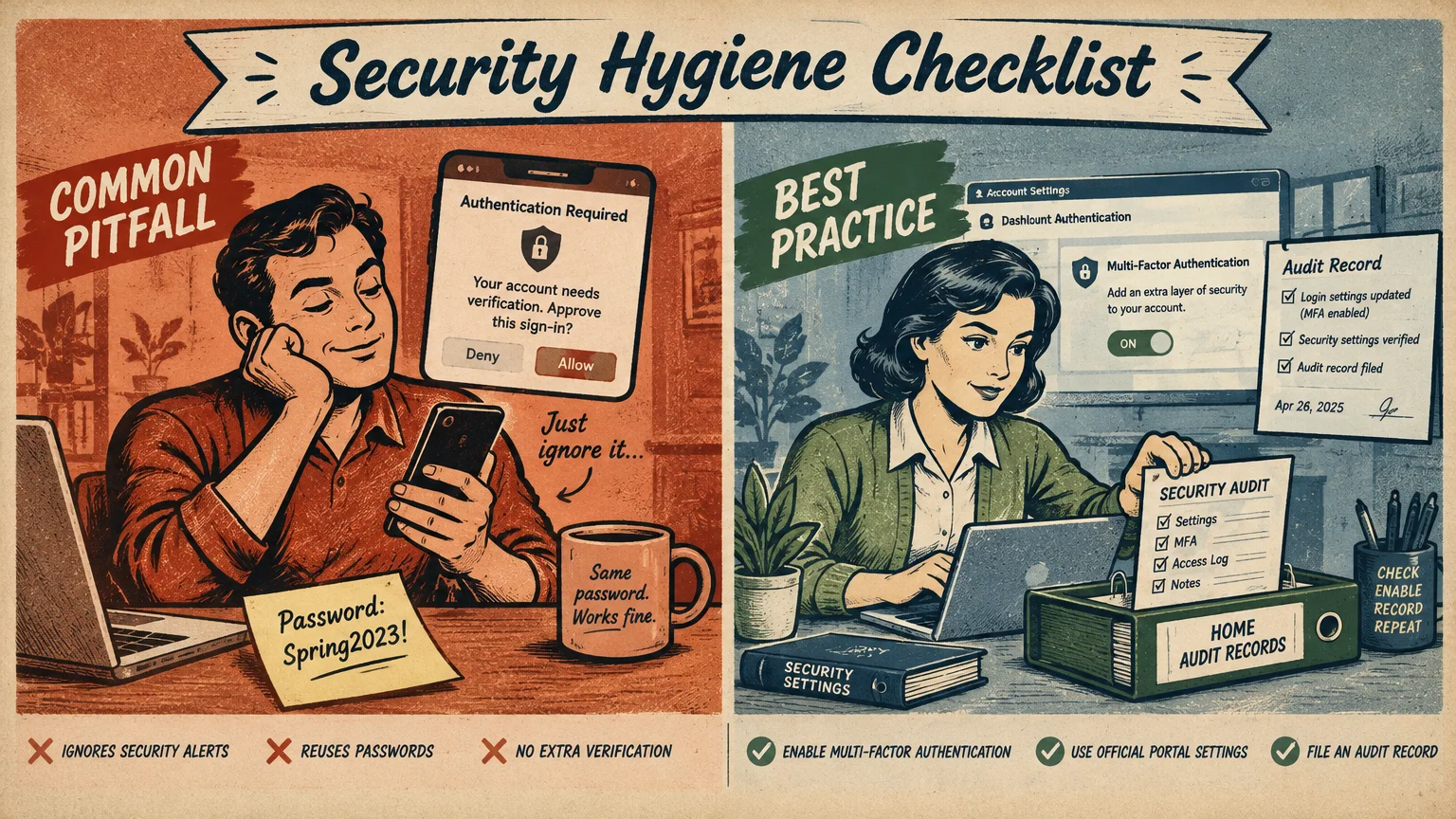
Avoiding Common Errors
Many retirees accidentally expose their benefit profiles through simple oversights. Avoid these common mistakes to keep your federal accounts safe from digital predators.
- Failing to Claim Your Online Profile: If you do not create your modern login, criminals will create one for you. Establishing your account locks your identity to your verified credentials.
- Trusting Incoming Phone Inquiries: Federal employees will never call unexpectedly demanding gift cards, wire transfers, or immediate payments. Hang up immediately on anyone threatening account suspension over the telephone.
- Relying on Weak SMS Verification: Text-message codes remain vulnerable to sophisticated SIM-swapping schemes by mobile phone scammers. Use dedicated hardware tokens or mobile authenticator apps whenever possible.
- Reusing Passwords Across Services: Using the same password for personal email and federal profiles creates extreme risk. A breach at an online retailer could expose your retirement credentials to criminals.
- Discarding Paper Mail Unopened: Federal notices contain vital alerts about system updates and profile modifications. Always inspect correspondence from federal agencies to identify unauthorized activity promptly.
Treating your account with the same discipline as private investment accounts reduces vulnerabilities. Consistent digital hygiene stops most automated cyber attacks before they begin.

When DIY Isn’t Enough
Most account maintenance tasks remain straightforward for individuals using modern internet tools. However, severe identity compromises require outside professional and legal assistance.
Seek specialized assistance if you face complex circumstances beyond basic password resets. Navigating layered federal bureaucracies often requires experienced professional support.
- Diverted Payments Totaling Thousands of Dollars: When criminals successfully cash multiple benefit payments, recover funds through legal counsel or specialized senior advocacy representatives.
- Simultaneous Tax and Benefit Fraud: Dealing with concurrent fraud across the IRS and retirement systems warrants hiring an experienced Certified Public Accountant.
- Incapacitated Family Members Under Guardianship: Managing compromised records for parents with cognitive decline requires legal assistance to establish authorized representative payee status.
- Synthetic Identity Compromise: When criminals use your number alongside another person’s name, work directly with federal law enforcement to untangle records.
Professional intervention protects your legal rights when institutional policies stall. Never hesitate to enlist qualified advocates when large sums of money are involved.
Frequently Asked Questions
Can someone redirect my benefits without knowing my password?
Criminals cannot divert funds without gaining access to your online profile or presenting forged documents. They accomplish this by creating fresh profiles using stolen credentials or intercepting legacy logins.
How does an Electronic Access Block protect me?
An Electronic Access Block completely shuts down online and automated telephone access to your records. No one can view earnings or alter direct deposits until you visit an office.
What is the difference between Login.gov and ID.me?
Login.gov is the official government platform suited for domestic citizens with standard identification. ID.me is a commercial partner required for users living abroad without domestic mailing addresses.
Will a compromised account ruin my credit rating?
A breach of your retirement account does not directly alter credit scores. However, the stolen personal data used to breach your profile can enable fraudulent loan applications.
Protecting Your Hard-Earned Retirement
Safeguarding your retirement requires regular attention and proactive habits. Establish your modern digital credentials immediately and audit your earnings records every twelve months.
Act swiftly whenever suspicious text messages, letters, or direct deposit delays appear. Decisive intervention protects your financial stability and ensures your earned monthly benefits remain secure.
This article provides general retirement education and information only. Every retiree’s situation is unique—what works for others may not work for you. For personalized advice, consider consulting a qualified financial professional such as a CFP or CPA.
Last updated: October 2026. Retirement benefits, tax rules, and healthcare regulations change frequently—verify current details with official sources.








Leave a Reply