
Medicare covers dozens of preventive health screenings at zero out-of-pocket cost, yet millions of retirees leave these valuable benefits untouched every year. Scheduling the right tests early can detect chronic conditions before noticeable symptoms appear.
Taking full advantage of these benefits protects both your physical vitality and your retirement savings. Catching a condition early can spare you thousands of dollars in avoidable medical treatments down the road.
Here are nine essential medical screenings you can discuss with your doctor, including eligibility rules, coverage schedules, and tips to avoid unexpected bills.
The Medicare Prevention Advantage: How Part B Covers Screenings
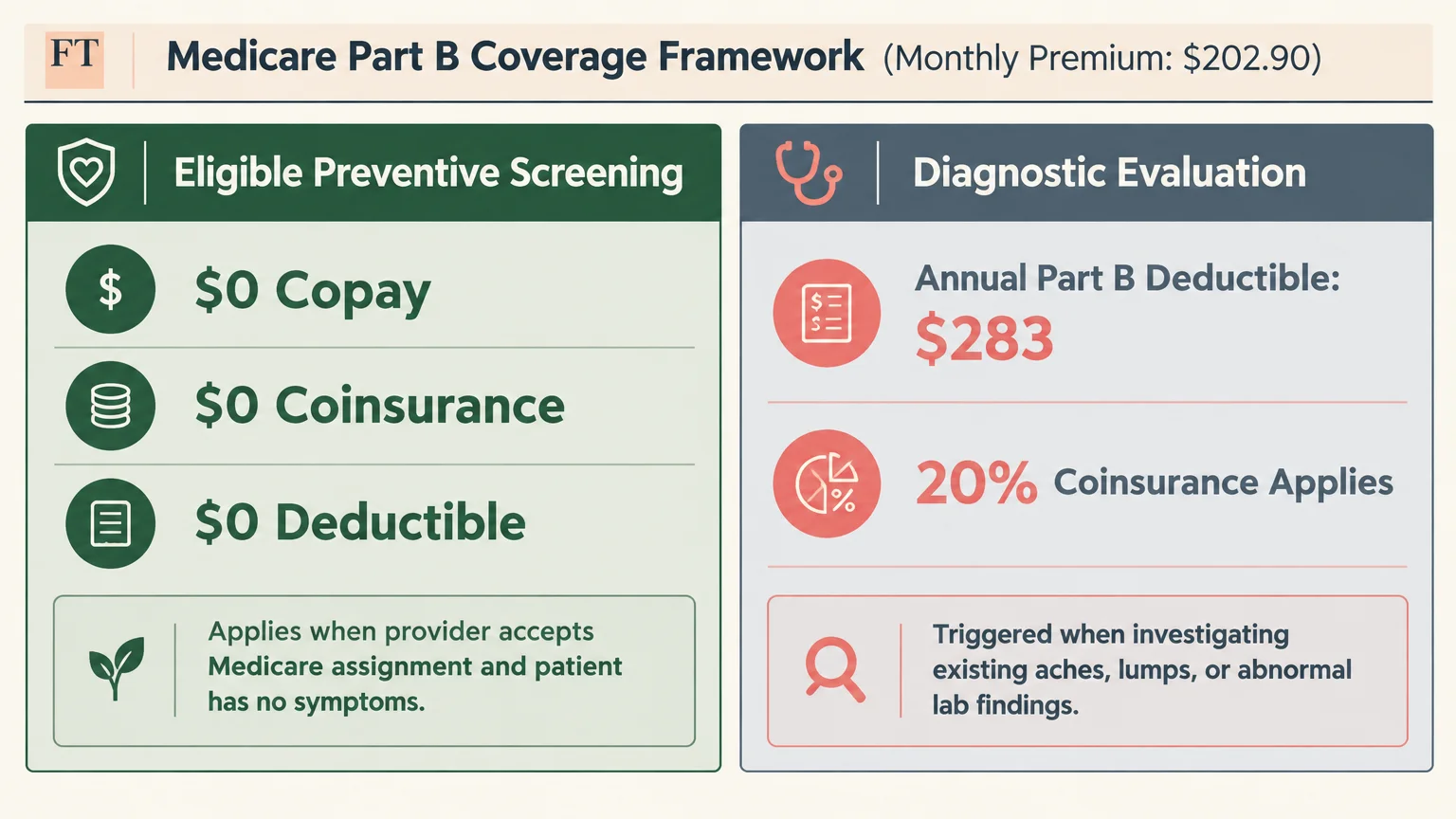
Medicare Part B covers medical services, doctor visits, and an extensive list of outpatient preventive screenings. In 2026, the standard monthly Part B premium is $202.90.
Under the Affordable Care Act and regulations from the Centers for Medicare & Medicaid Services (CMS), eligible preventive screenings cost you nothing out-of-pocket. You pay no copayment, no coinsurance, and no deductible.
However, this full coverage applies only when your healthcare provider accepts Medicare assignment. Accepting assignment means your physician agrees to accept the Medicare-approved amount as payment in full.
You must also understand the crucial distinction between a preventive screening and a diagnostic test. A preventive screening checks your body when you have no symptoms or prior history of the illness.
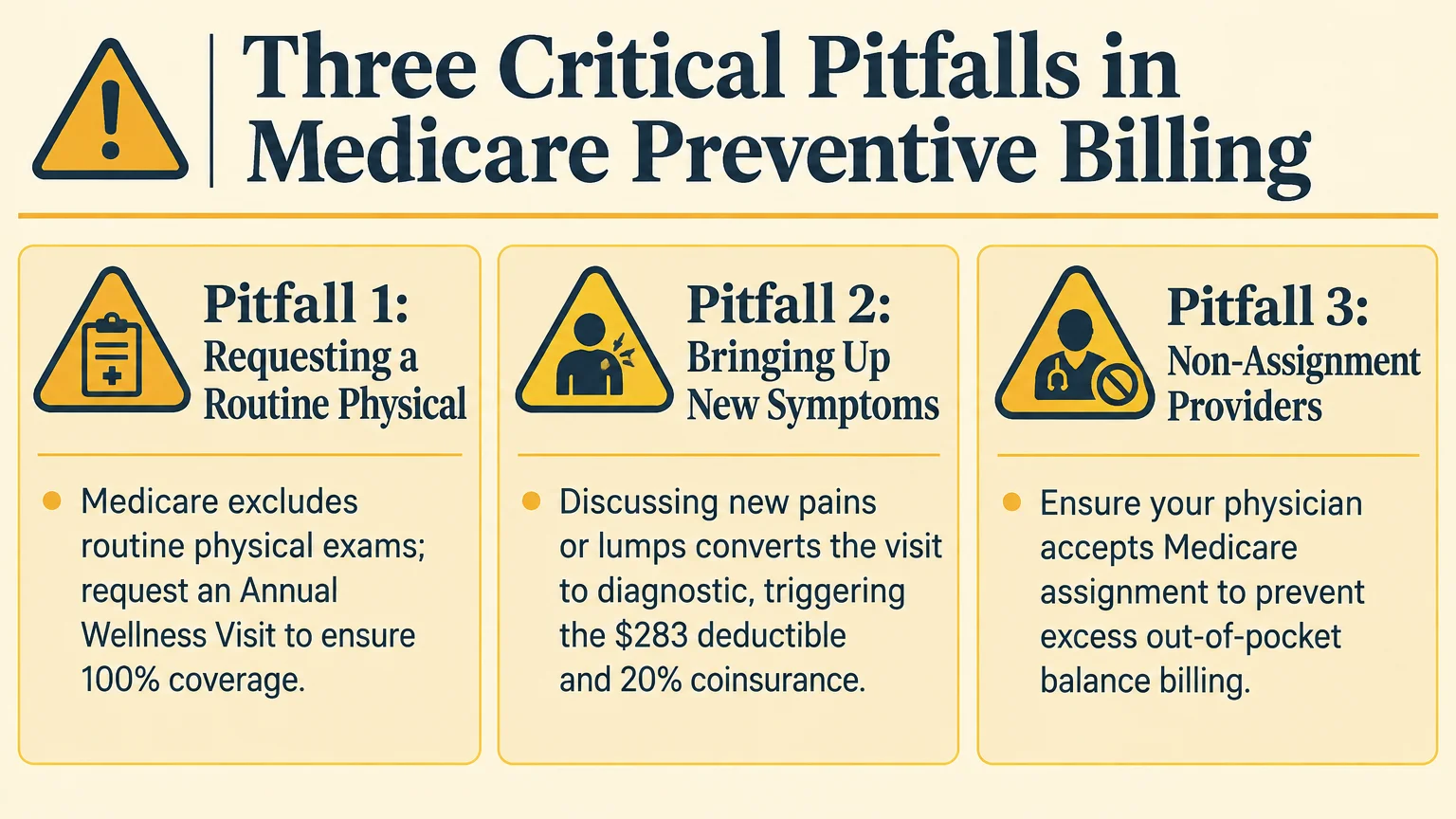
If your doctor orders a test to evaluate an existing ache, lump, or abnormal lab result, the test becomes diagnostic. Once a test shifts to diagnostic, the $283 annual Part B deductible and standard 20% coinsurance apply.
“Protecting your health is the most effective wealth-preservation strategy you have in retirement.” — Jean Chatzky, Financial Educator and Author
The Gateway: Welcome Visit vs. Annual Wellness Visit
You cannot schedule all preventive tests on your own; many require an order from your physician. Your primary gateway to accessing these free tests is Medicare’s wellness visit framework.
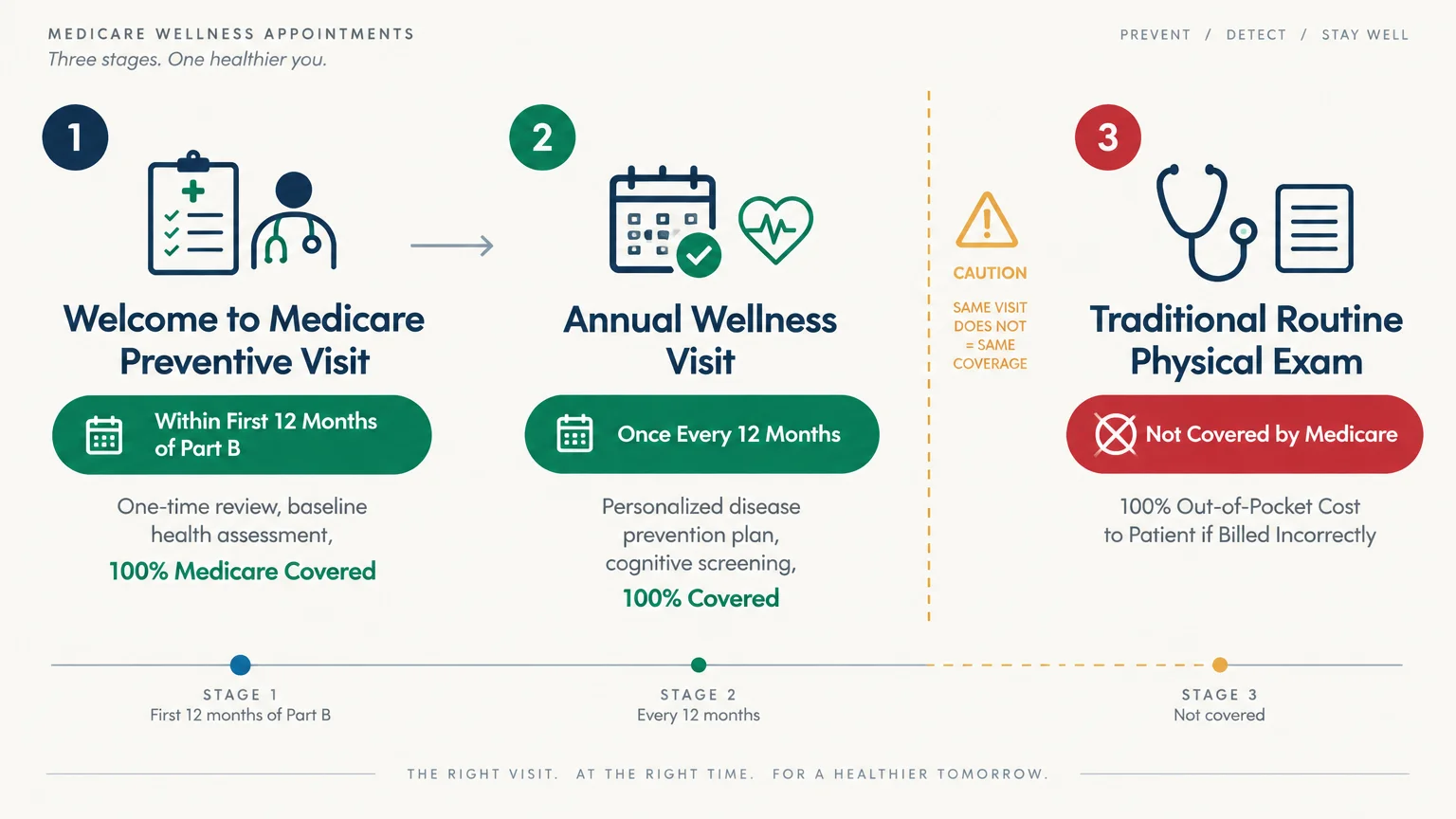
When you first join Medicare Part B, you qualify for a one-time “Welcome to Medicare” preventive visit. You must schedule this visit within your first 12 months of Part B enrollment.
After your first year on Part B, you qualify for an Annual Wellness Visit once every 12 months. This appointment allows your doctor to create or update a personalized disease prevention plan.
During the wellness visit, your provider reviews your medical history, assesses cognitive function, checks blood pressure, and recommends relevant screenings. Medicare covers this comprehensive planning consultation at 100%.
Be aware of a critical billing distinction that catches many retirees off guard. Medicare does not cover a traditional, hands-on annual physical exam.
If your provider bills your appointment as a routine physical exam rather than an Annual Wellness Visit, Medicare denies the claim. You then face 100% of the bill out-of-pocket.

1. Colorectal Cancer Screenings
Colorectal cancer is one of the most preventable cancers when detected early through routine screening. Medicare offers several zero-cost options to screen for polyps and abnormal cell growth in your digestive tract.
The minimum eligibility age for average-risk colorectal screenings is 45 years old. Medicare enforces no upper age limit for screening colonoscopies if your physician recommends the procedure.
If you have an average risk of colorectal cancer, Medicare covers a screening colonoscopy once every 10 years. Beneficiaries at high risk qualify for a screening colonoscopy every two years.
Non-invasive tests are also available without cost. Medicare covers take-home Fecal Occult Blood Tests annually, and multi-target stool DNA tests like Cologuard once every three years.
Medicare also covers virtual colonoscopy—known clinically as screening CT colonography—once every five years for average-risk individuals. High-risk beneficiaries qualify for CT colonography every two years.
If your non-invasive stool test or blood biomarker test returns an abnormal result, do not panic about costs. Medicare covers the necessary follow-up colonoscopy as a preventive service at zero out-of-pocket cost.
A specific financial rule applies if your doctor finds and removes tissue during a free screening colonoscopy. When a doctor removes a polyp or takes a biopsy, the procedure shifts from preventive to diagnostic.
Fortunately, CMS regulations waive the Part B deductible for this procedure. In 2026, your coinsurance for polyp removal during a screening colonoscopy is capped at 15%, phasing down toward 0% by 2030.

2. Cardiovascular Disease Screening Blood Tests
Heart disease remains the leading cause of death among older adults in the United States. Routine cardiovascular blood panels allow you to monitor changes in your blood vessels before a crisis occurs.
Medicare covers a comprehensive cardiovascular screening blood test once every five years at zero cost to you. This panel measures your total cholesterol, lipid profiles, and triglyceride levels.
These laboratory tests help your doctor calculate your risk for heart attack, coronary artery disease, and stroke. Early detection of lipid imbalances lets you implement lifestyle changes or begin medication before arterial damage occurs.
You do not need a prior diagnosis of heart disease to qualify for this five-year screening panel. In fact, if you already have a diagnosed cardiac condition, your doctor will order diagnostic tests instead.
Always confirm the five-year timing with your doctor’s office before drawing blood. If you repeat this specific preventive screening before five full years elapse, Medicare will reject the claim.

3. Bone Mass Measurements (DEXA Scans)
Osteoporosis weakens bones silently, leaving seniors vulnerable to severe fractures from minor falls. Bone mass measurement tests use low-dose X-rays to assess bone density, primarily at your hip and spine.
Medicare Part B covers a dual-energy X-ray absorptiometry scan, commonly called a DEXA scan, once every 24 months. You pay zero coinsurance and no deductible if you meet Medicare’s clinical criteria.
Qualified individuals include estrogen-deficient women at clinical risk for osteoporosis, based on their medical history. You also qualify if an X-ray reveals possible vertebral abnormalities or osteoporosis.
Retirees receiving long-term steroid therapy also qualify for covered bone density scans. Steroid medications can rapidly deplete bone mineral density over prolonged treatment courses.
Finally, Medicare covers DEXA scans to monitor the effectiveness of FDA-approved osteoporosis drugs. If your physician documents medical necessity, Medicare may approve scans more frequently than the standard 24-month interval.

4. Mammograms for Breast Cancer Screening
Routine mammography detects breast tumors years before they can be felt during a physical examination. Early intervention significantly improves treatment outcomes and survival rates for older women.
Medicare covers a screening mammogram once every 12 months at no out-of-pocket cost for women age 40 and older. Beneficiaries between ages 35 and 39 can also receive one baseline mammogram.
Medicare’s zero-cost coverage extends to modern 3D mammography, clinically known as digital breast tomosynthesis. 3D mammograms provide layered imaging that helps radiologists spot abnormalities in dense breast tissue.
To avoid billing complications, make sure a full 11 months pass between your screening appointments. Medicare strictly enforces the 12-month interval between routine screening mammograms.
If you discover a lump or experience breast pain, inform your physician immediately. Your doctor must order a diagnostic mammogram instead, which requires the standard 20% Part B coinsurance.

5. Diabetes Screening Tests
Type 2 diabetes affects millions of older Americans and often develops without noticeable warnings. Uncontrolled blood sugar can damage your kidneys, vision, peripheral nerves, and cardiovascular system.
Medicare Part B covers up to two diabetes screenings per year at zero cost for beneficiaries with documented risk factors. Covered tests include fasting plasma glucose tests and post-glucose challenge tests.
You qualify for covered diabetes testing if you have hypertension, high cholesterol, a history of elevated blood sugar, or obesity. You also qualify if you meet two or more secondary risk factors.
Secondary factors include being age 65 or older, having a family history of diabetes, or carrying excess weight. Your physician can quickly review these criteria during your Annual Wellness Visit.
If your screening tests indicate prediabetes or diabetes, Medicare provides access to medical nutrition therapy. These counseling sessions help you adjust your daily nutrition to stabilize your blood sugar.

6. Low-Dose CT Lung Cancer Screenings
Lung cancer frequently progresses without symptoms until reaching advanced stages. Low-dose computed tomography scans can spot malignant nodules in lung tissue when surgical intervention remains highly effective.
Medicare covers a low-dose CT lung cancer screening once every 12 months at zero cost for qualifying beneficiaries. You must be between the ages of 50 and 77 and show no signs of lung disease.
You must also have a tobacco smoking history of at least 20 pack-years. A pack-year equals smoking one pack of cigarettes per day for one full year.
Eligible individuals must currently smoke or have quit smoking within the past 15 years. If you quit more than 15 years ago, you no longer qualify for covered screening scans.
Before your first scan, Medicare requires a shared decision-making visit with your healthcare provider. During this conversation, your doctor reviews the benefits, potential risks, and diagnostic follow-up steps.
7. Prostate Cancer Screenings
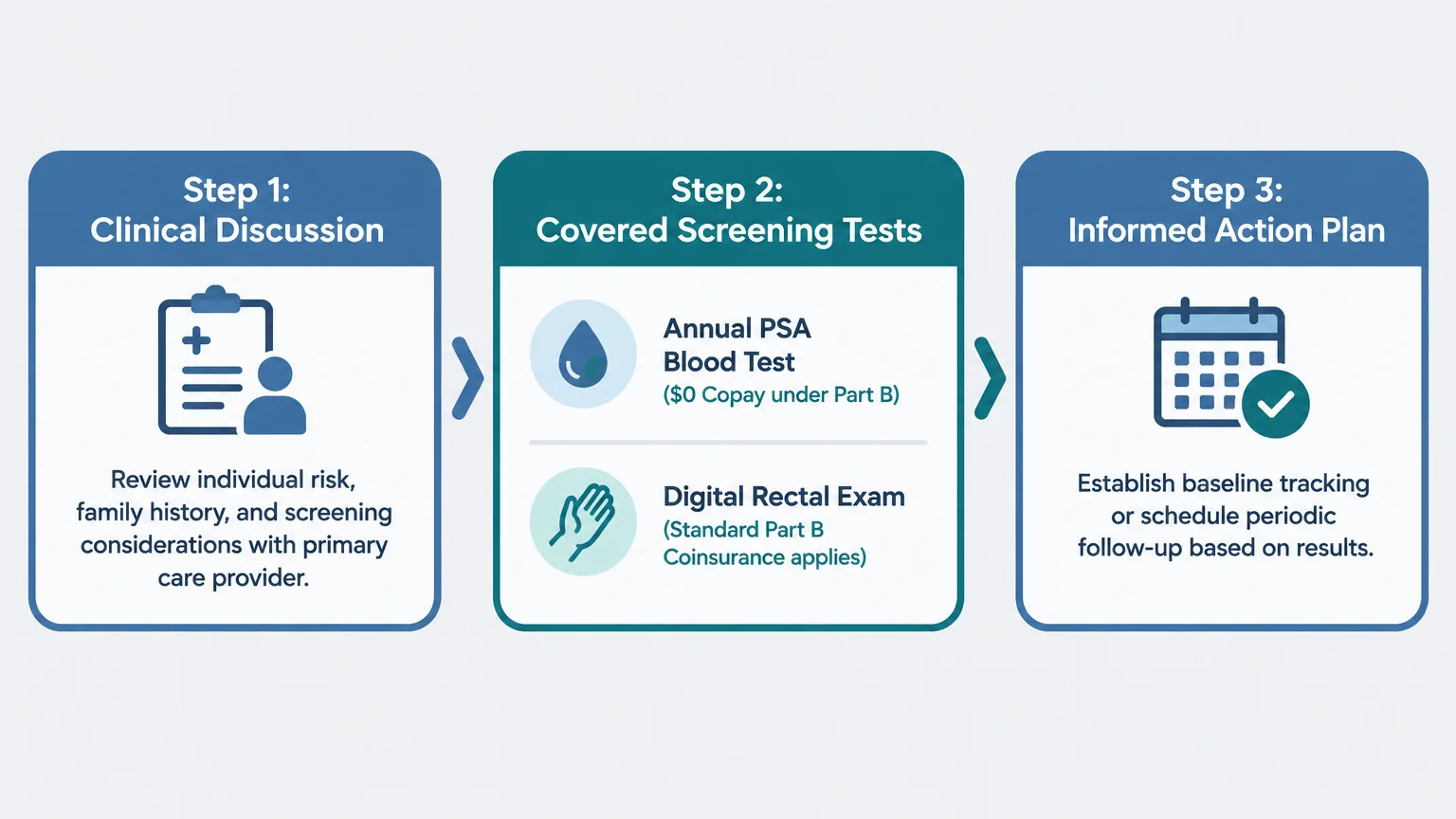
Prostate cancer is the most common non-skin cancer among men in the United States. Medicare covers annual prostate cancer screenings for all male beneficiaries age 50 and older.
Eligibility begins the exact day after your 50th birthday. Medicare covers two distinct screening methods, but their out-of-pocket costs differ significantly.
The first method is the Prostate-Specific Antigen blood test, commonly known as a PSA test. Medicare covers your annual PSA screening blood draw at 100%, meaning you pay nothing.
The second screening method is a Digital Rectal Exam, or DRE. Unlike the PSA blood test, the DRE is not free under Medicare rules.
For a screening DRE, you must pay 20% of the Medicare-approved amount after meeting the $283 Part B deductible. If your doctor performs the exam in a hospital outpatient clinic, an additional copayment applies.

8. Abdominal Aortic Aneurysm (AAA) Ultrasound
An abdominal aortic aneurysm occurs when the large blood vessel supplying the abdomen and lower body weakens and bulges. A ruptured aneurysm causes severe internal bleeding and is fatal in most instances.
Medicare covers a one-time screening ultrasound of the abdominal aorta at zero out-of-pocket cost. This painless test uses sound waves to measure the diameter of your aortic vessel.
To qualify, you must obtain a referral from your doctor during a covered wellness visit. You must also satisfy one of two specific clinical risk categories.
The first category includes men and women who have a documented family history of abdominal aortic aneurysms. The second category covers men aged 65 to 75 who have smoked at least 100 cigarettes in their lifetime.
Because Medicare covers this vital ultrasound only once in your lifetime, coordination with your doctor is essential. Check your past medical records so you do not order a duplicate scan.

9. Annual Depression Screenings
Mental wellness is just as critical to healthy aging as cardiovascular or bone health. Retirement transitions, bereavement, and chronic physical health challenges can contribute to senior depression.
Medicare covers one depression screening every 12 months at zero cost to you. The screening must take place in a primary care setting, such as your family physician’s office.
The clinic must have the capability to provide direct follow-up treatment or arrange appropriate behavioral health referrals. Specialized psychiatric clinics cannot bill this initial screening under the zero-cost preventive benefit.
During the screening, you complete a standardized questionnaire about your mood, energy, sleep patterns, and daily interests. Your doctor uses these answers to identify early signs of clinical depression.
In addition to depression screenings, ask your physician about one-time screening for Hepatitis C. Medicare covers Hepatitis C blood tests at zero cost for adults born between 1945 and 1965.
“Retirement is not just about financial wealth; it is about life wealth and health wealth.” — Mitch Anthony, Author and Retirement Coach
Comparing Medicare Preventive Tests: Coverage, Frequency, and Costs
Keeping track of varying testing intervals and cost-sharing rules can feel overwhelming. Reviewing the rules before booking appointments prevents unexpected medical bills.
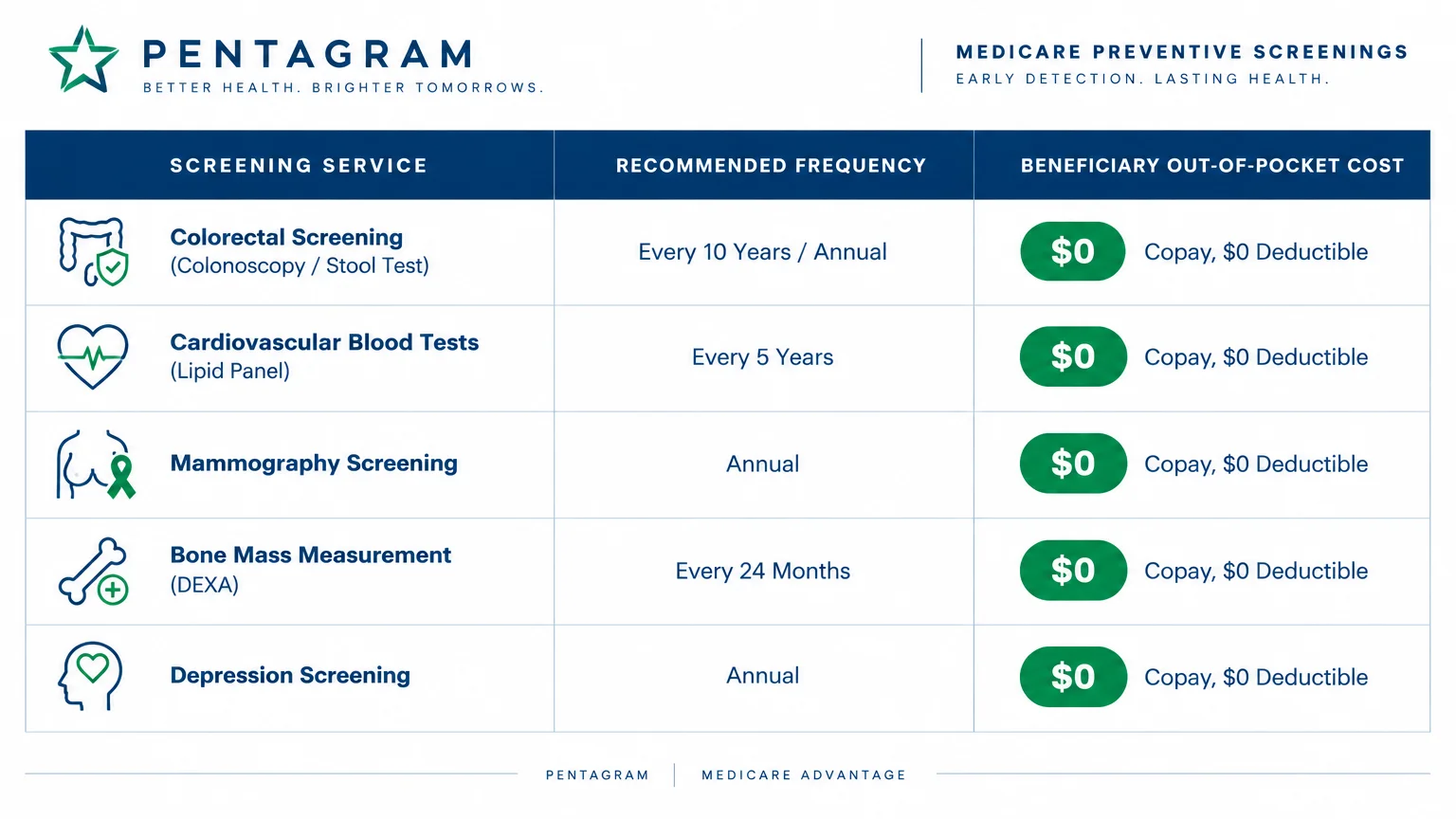
Use the comparison table below to verify your eligibility, standard frequency intervals, and 2026 cost-sharing requirements for each screening.
| Medical Test | Standard Frequency | Target Beneficiary Group | Your Cost in 2026 |
|---|---|---|---|
| Colorectal Screening (Colonoscopy) | Every 10 years (average risk); every 2 years (high risk) | Age 45 and older; no upper age limit | $0 (15% coinsurance if polyp removed) |
| Cardiovascular Blood Panel | Every 5 years | All Medicare beneficiaries | $0 (no deductible or copay) |
| Bone Mass Scan (DEXA) | Every 24 months | Estrogen-deficient women, high fracture risk, steroid therapy | $0 (no deductible or copay) |
| Screening Mammogram (2D or 3D) | Every 12 months | Women age 40 and older (one baseline ages 35–39) | $0 (no deductible or copay) |
| Diabetes Screenings | Up to 2 times per year | Beneficiaries with diabetes risk factors or prediabetes | $0 (no deductible or copay) |
| Low-Dose CT Lung Cancer Scan | Every 12 months | Ages 50–77 with 20 pack-year smoking history | $0 (requires doctor counseling visit) |
| Prostate Cancer Screening (PSA Blood Test) | Every 12 months | Men age 50 and older | $0 (no deductible or copay) |
| Prostate Screening (Digital Rectal Exam) | Every 12 months | Men age 50 and older | 20% coinsurance after $283 deductible |
| Abdominal Aortic Aneurysm Ultrasound | Once per lifetime | Men 65–75 who smoked 100+ cigarettes; family history | $0 (referral required) |
| Depression Screening | Every 12 months | All Medicare beneficiaries in primary care setting | $0 (no deductible or copay) |

How to Schedule Screenings Without Triggering Surprise Bills
Scheduling a preventive test requires careful communication with both your physician and their administrative staff. Small misunderstandings in how a service is scheduled can create unexpected out-of-pocket bills.
When booking your appointment, clearly state that you are scheduling a preventive screening. Never use the phrase “routine annual physical” when speaking with receptionists or scheduling coordinators.
Always verify that your doctor accepts Medicare assignment before the appointment begins. If your provider does not accept assignment, they can bill excess charges above the Medicare-approved rate.
Confirm the precise date of your prior screening before booking a new one. Medicare calculates its coverage intervals down to the exact calendar month or day.
For example, if you received a screening mammogram on October 15 of last year, do not schedule the next one on October 10. Booking even five days early causes Medicare to deny the claim as premature.
Ask your physician how they intend to code the procedure in their billing software. The clinic must submit the claim with specific preventive healthcare billing codes.

Professional vs. Self-Guided: Navigating Your Preventive Care
Deciding how to manage your preventive healthcare schedule depends on your overall health, insurance model, and personal preferences. Certain situations benefit from professional guidance, while others allow self-directed planning.
Review the scenarios below to decide when to lean on professional care coordinators versus managing tests independently.
- Managing Multiple Chronic Conditions (Professional Guidance Recommended): If you manage diabetes, hypertension, and arthritis simultaneously, work closely with a primary care doctor. Your provider will balance routine screenings with ongoing disease management so diagnostic codes do not trigger surprise fees.
- Standard Screening Schedules for Healthy Retirees (Self-Guided Strategy): If you have no chronic illnesses and take no daily prescriptions, self-tracking is straightforward. You can easily track your calendar dates for mammograms, colonoscopies, and cardiovascular blood panels using a personal health binder.
- Navigating Medicare Advantage HMO Networks (Professional Guidance Recommended): Beneficiaries enrolled in Medicare Advantage plans must follow network rules and obtain referrals. A clinic care manager ensures your imaging facilities and labs participate in your specific plan network to prevent claim denials.
- Resolving Inaccurate Medical Billing Claims (Self-Guided Strategy): If a clinic mistakenly bills a preventive screening as a diagnostic service, you can resolve it directly. You can compare the bill against your Medicare Summary Notice and ask the billing department to submit a corrected coding claim.
Common Mistakes to Avoid
Many seniors incur unnecessary healthcare expenses simply because they overlook Medicare’s complex administrative guidelines. Avoiding common scheduling and billing mistakes keeps your preventive care entirely cost-free.
The most frequent error is asking for a routine annual physical examination. Because Medicare does not cover physical exams, request an Annual Wellness Visit instead.
Another common mistake involves discussing new health complaints during your wellness appointment. If you ask your doctor to examine a painful joint or skin rash, the visit splits into two billing codes.
Medicare covers the wellness portion at zero cost, but charges the 20% coinsurance for the diagnostic evaluation. Save separate medical issues for a dedicated sick visit to avoid surprise co-pays.
Retirees also make mistakes with non-invasive colorectal screenings. If an at-home stool test returns a positive result, never delay booking the recommended colonoscopy.
Some seniors skip the follow-up colonoscopy out of fear that it will trigger large diagnostic bills. However, Medicare covers this follow-up colonoscopy as a preventive service at zero out-of-pocket cost.
Do not assume that every component of every recommended cancer screening carries zero cost. Remember that while a PSA blood test is free, a digital rectal exam requires meeting your Part B deductible.
Finally, always check that the laboratory analyzing your blood or tissue samples participates in Medicare. A participating doctor might inadvertently send blood work to an out-of-network independent lab.
Frequently Asked Questions About Medicare Tests
Does Medicare cover routine annual physical exams?
No, Original Medicare does not cover routine annual physical exams. Medicare Part B covers an initial “Welcome to Medicare” visit and subsequent Annual Wellness Visits, which focus on preventive care planning.
What happens if my doctor finds a polyp during a free colonoscopy?
The procedure shifts from preventive to diagnostic for billing purposes. The Part B deductible is waived, and under current CMS rules, you pay a reduced 15% coinsurance in 2026.
How do Medicare Advantage plans handle these preventive screenings?
Medicare Advantage plans must provide the same zero-cost preventive screenings as Original Medicare. However, you must use in-network healthcare providers and follow your plan’s prior authorization or referral rules.
Can you receive a screening earlier than Medicare’s scheduled timeframe?
Medicare strictly enforces its screening frequency limits. If you schedule a preventive test before the required interval elapses, Medicare will deny the claim and you must pay out-of-pocket.
Take Charge of Your Preventive Health
Preventive screenings offer you an invaluable opportunity to protect your health and catch potential medical issues before they escalate. Consult your primary care physician during your Annual Wellness Visit to establish a personalized screening calendar that fits your personal medical history.
You can verify your specific eligibility dates by logging into your account at Medicare.gov or reviewing educational guidelines from the National Institute on Aging. Being an active, informed participant in your healthcare ensures you receive the full benefits you earned throughout your working life.
This is educational content based on general retirement and financial principles. Individual results vary based on your situation. Always verify current benefit rules, tax laws, and eligibility requirements with official sources like SSA, Medicare.gov, or the IRS.
Last updated: October 2026. Retirement benefits, tax rules, and healthcare regulations change frequently—verify current details with official sources.









Leave a Reply