
Winter brings higher utility bills, holiday travel, and long indoor days that make extra income retirement goals feel especially practical. In 2025, 19.1% of Americans age 65 and older remained in the labor force.
Choosing from the right part time jobs retirees can start this season lets you boost cash flow without giving up your flexibility. Whether you want quiet remote work or lively community shifts, employers step up hiring from November through tax season.
These 12 winter jobs seniors can start quickly pair verified pay benchmarks with clear Social Security and tax guidelines.
Why Winter Hiring Fits Your Retirement Schedule
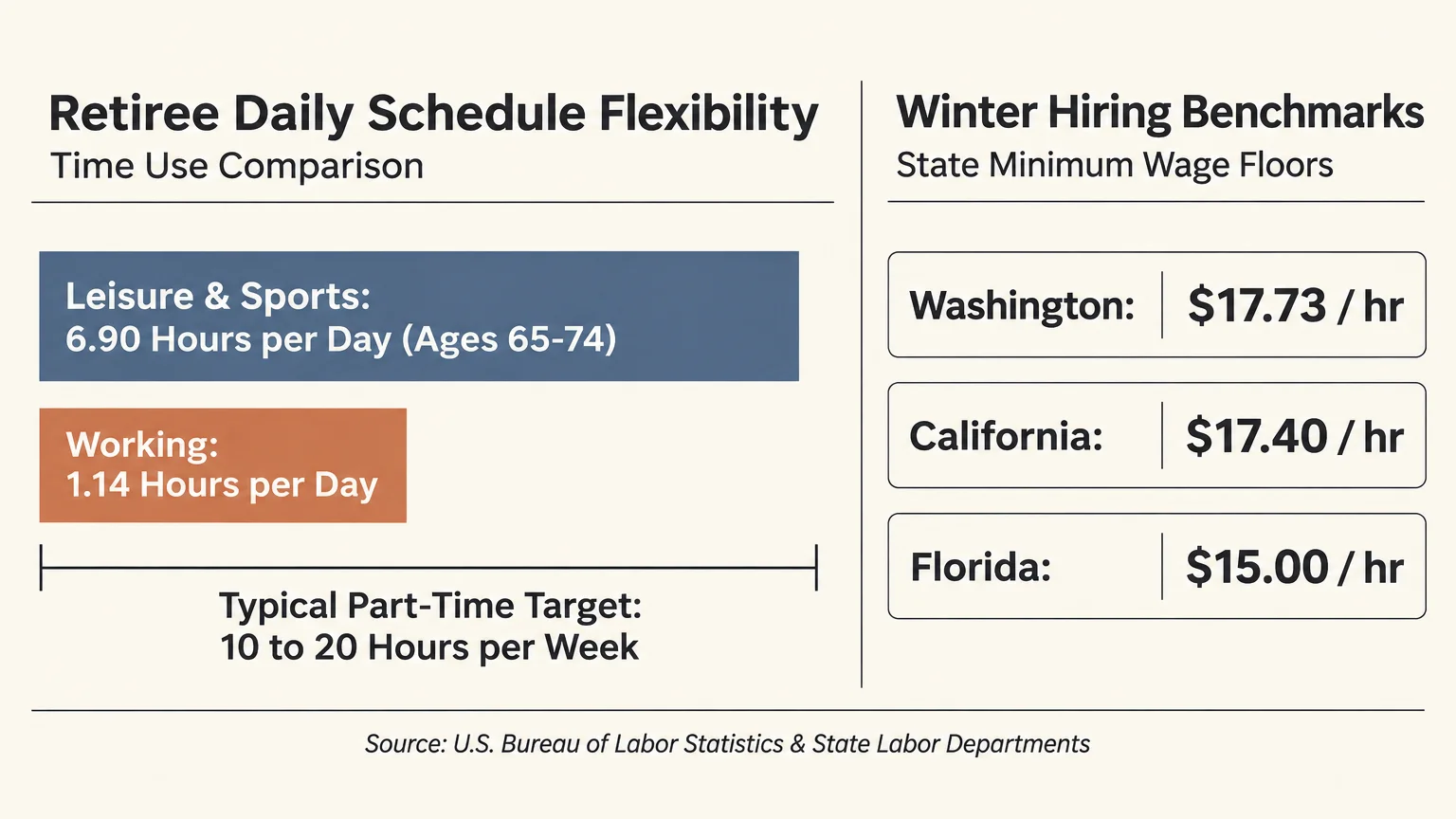
Seasonal work over 60 works well because peak winter demand aligns with shorter, predictable commitments. According to the U.S. Bureau of Labor Statistics (BLS), Americans ages 65 to 74 spend an average of 6.90 hours per day on leisure and sports versus 1.14 hours working.
Picking up 10 to 20 hours a week still leaves most of your day free for family, fitness, and rest. Many employers also rely on older workers for reliability during busy holiday weeks and year-end administrative crunches.
For the late-2026 season, the National Retail Federation (NRF) projects November through December retail sales to climb 4.2% to $1.013 trillion, driving 325,000 to 375,000 seasonal retail hires. Meanwhile, Challenger, Gray & Christmas forecasts roughly 450,000 fourth-quarter retail job additions.
Pay floors are rising in several states right as winter unfolds. On January 1, 2027, California raises its minimum wage to $17.40 per hour and Washington moves to $17.73 per hour, following Florida reaching $15.00 per hour on September 30, 2026.
12 Winter Jobs for Retirees to Start Right Away
1. Seasonal Tax Preparer or Client Intake Specialist
Major tax-preparation firms run training classes from September through December and ramp up hiring in December and January. You do not need a CPA license to prepare basic returns or greet clients at the front desk.
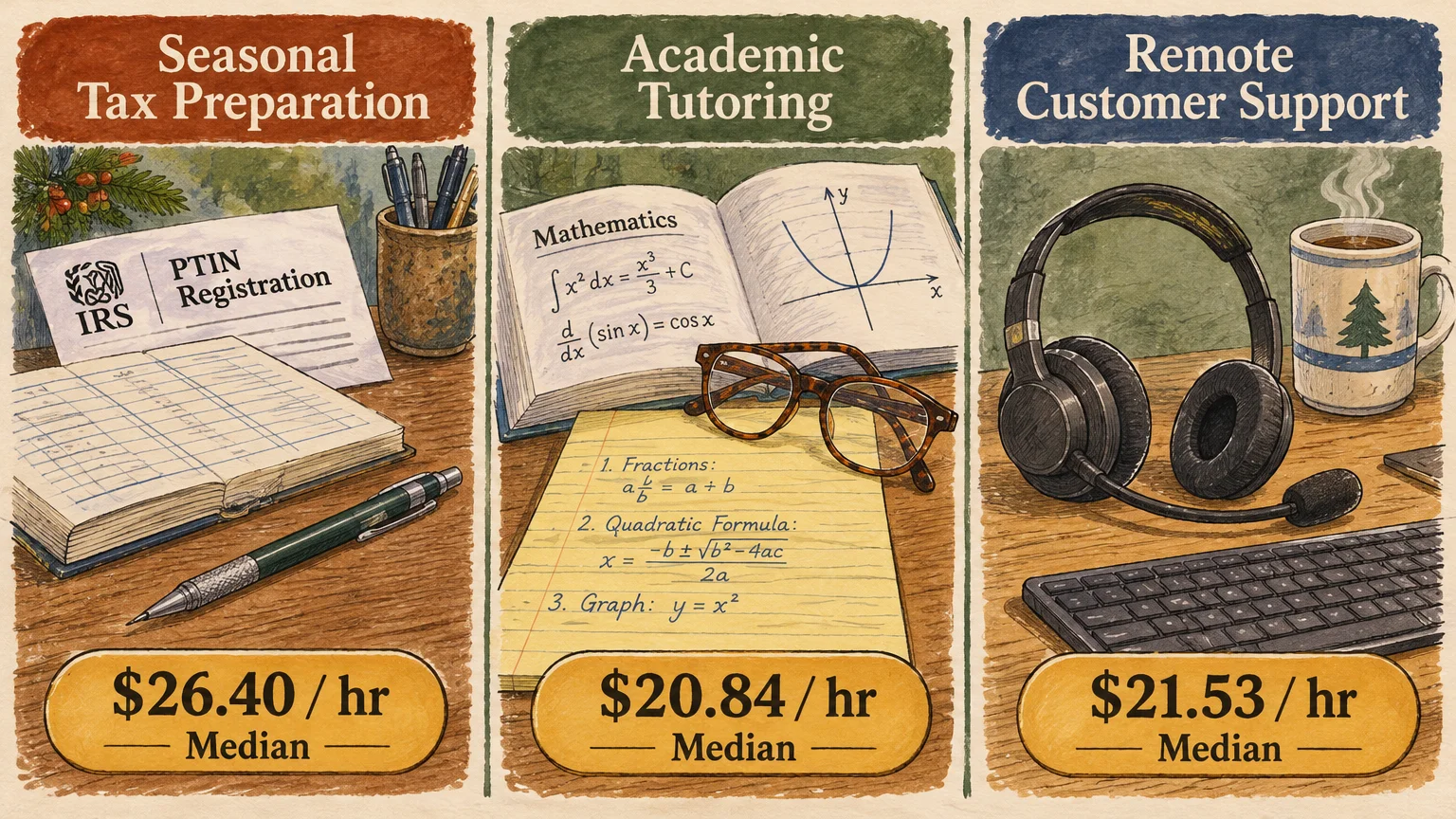
BLS data shows tax preparers earn a national median wage of $26.40 per hour, or $54,920 per year across full- and part-time workers. Most winter offices value clear communication, patience, and attention to detail over prior accounting experience.
Anyone paid to prepare or assist with federal tax returns must register with the Internal Revenue Service (IRS) for a Preparer Tax Identification Number (PTIN) and sign each return. Starting your PTIN registration early lets you step smoothly into January shifts that wrap up in April.
2. Online or In-Person Tutor
Winter marks the middle of the school year, when families seek steady academic support before spring exams. Tutors earn a national median wage of $20.84 per hour ($43,350 annually), and BLS projections point to roughly 34,200 annual openings through 2035.
Most tutors work part-time during late afternoons, evenings, or weekends, which makes scheduling around medical appointments or travel effortless. Former teachers, engineers, writers, and bilingual professionals often attract students quickly.
You can work remotely through established tutoring platforms or connect with local school districts and community learning centers. Setting a flat hourly rate and choosing subjects you already know keeps preparation time minimal.
3. Remote Customer Service Representative
If icy sidewalks or dark evening commutes sound unappealing, remote customer service keeps you working from a warm home office. Customer service representatives earn a median wage of $21.53 per hour ($44,770 per year) nationwide, according to BLS wage figures.
Retailers, travel companies, insurance providers, and healthcare portals expand phone and chat support during winter weather disruptions and holiday returns. Many seasonal positions offer paid remote training and provide standard headsets or software access.
Before applying, verify that your home internet connection meets the employer’s speed requirements and check whether weekend shifts are mandatory. Clear phone etiquette and calm problem-solving often matter more than advanced technical skills.
4. Part-Time Bookkeeping or Accounting Clerk
Small businesses, nonprofits, and local contractors face heavy year-end invoicing, payroll reconciliations, and vendor audits from November through February. Bookkeeping, accounting, and auditing clerks earn a median salary of $50,670 per year, based on BLS data.
While BLS projections show a 6% overall employment decline in this category from 2025 to 2035, experienced human reviewers remain valuable for small firms. Many business owners prefer hiring a dependable part-timer for 10 to 15 hours a week rather than carrying full-time overhead.
Refresh your familiarity with common cloud bookkeeping tools before reaching out to local accountants, churches, or property managers. Offering short-term winter cleanups can turn into ongoing monthly retainer work if you enjoy the arrangement.
5. Seasonal Retail Associate
Department stores, hobby shops, sporting goods chains, and specialty boutiques continue recruiting part-time floor staff, cashiers, and gift-wrapping helpers throughout the holidays. Retail salespersons earn a national median wage of $17.03 per hour, per BLS figures.
Large chains still post substantial winter rosters despite tighter overall seasonal hiring. For late 2026, Michaels announced more than 10,000 seasonal hires—noting nearly half of the prior year’s seasonal store roles converted into regular jobs—while Dick’s Sporting Goods and Foot Locker plan over 11,000 combined additions.
Ask during your interview about store discounts, seated cashier options, and shift lengths so standing requirements match your comfort level. Staying through January inventory counts can extend your paycheck after holiday crowds thin out.
6. Warehouse Fulfillment or Seasonal Package Helper
If you enjoy staying physically active and prefer working behind the scenes rather than assisting shoppers, seasonal logistics offers fast onboarding. Amazon announced plans to hire more than 300,000 seasonal workers for late 2026, and UPS plans 100,000 seasonal roles.
Options range from sorting small parcels inside climate-controlled warehouses to riding along as a seasonal driver helper who delivers lightweight packages to doorsteps. Morning, midday, and overnight shifts let you match work hours to your natural energy peaks.
Check weight-lifting requirements carefully before accepting an offer, since package handling involves repetitive bending and walking. Wearing supportive footwear and choosing roles focused on small-item sorting helps protect your back and joints.
7. Home Health or Companion Care Aide
Winter isolation hits homebound older adults hard, driving strong year-round demand for dependable caregivers. Home health and personal care aides earn a national median wage of $17.21 per hour ($35,800 annually), and BLS projects 18% job growth from 2025 to 2035.
You do not always need clinical nursing credentials to enter this field. Many licensed home care agencies hire non-medical companion aides for light housekeeping, meal preparation, grocery runs, and friendly conversation.
Older workers often excel in companion roles because shared generational references build instant trust with clients and families. Confirm whether the agency covers mileage between client homes and provides liability insurance before signing on.
8. Winter Recreation or Community Center Staff
Municipal recreation departments, indoor aquatics centers, YMCAs, and ski areas hire part-time desk attendants, equipment rental helpers, and activity coordinators every winter. Recreation workers earn a median wage of $17.58 per hour nationwide, according to BLS data.
These roles keep you plugged into neighborhood life without the pressure of retail sales quotas. Typical tasks include checking membership passes, supervising indoor pickleball courts, organizing senior card clubs, or handing out ski rental gear.
Many facilities include complimentary facility memberships or lift passes as an employee perk, saving you money on winter fitness. Check your city or county parks department portal in November for mid-winter openings.
9. Museum, Historic Site, or Winter Tour Guide
Indoor cultural venues—including art museums, botanical conservatories, aquariums, and historic homes—schedule holiday light displays, winter lectures, and school field trips. Tour and travel guides earn a national median wage of $18.33 per hour, based on BLS data.
Docent and visitor-services staff welcome guests, scan tickets, lead short gallery talks, and keep exhibit halls running smoothly. If you love local history, architecture, or horticulture, these shifts feel closer to paid socializing than traditional work.
In warmer winter destinations, outdoor walking tours and coastal sightseeing boats also peak between December and March. Start by checking job boards at regional museums, state parks, and municipal visitors bureaus.
10. Veterinary Assistant or Holiday Pet Sitter
Holiday travel and winter weather push boarding kennels, grooming salons, and veterinary clinics to capacity from Thanksgiving through New Year’s. Veterinary assistants and laboratory animal caretakers earn a median wage of $18.34 per hour ($38,150 annually), per BLS figures.
Animal hospitals often need dependable part-time help at reception desks, restocking supplies, sanitizing exam rooms, or walking boarded dogs. Independent pet sitting and house sitting also spike whenever families fly out of town for winter holidays.
If you work independently, clarify feeding schedules, emergency veterinary contacts, and home-security expectations in writing before owners depart. Caring for calm senior pets inside quiet homes can be especially rewarding for retirees.
11. Local Errand Runner, Courier, or Rideshare Driver
Driving for grocery delivery apps, pharmacy couriers, or rideshare platforms lets you set your own hours down to the minute. You can log on during clear daytime weather and stay home whenever snow or sleet hits the roads.
Keep detailed mileage logs if you work as an independent contractor. Under IRS Announcement 2026-11, the standard business mileage rate is 76 cents per mile from July 1 through December 31, 2026, up from 72.5 cents per mile during the first half of 2026.
Remember that business parking and tolls are separately deductible, though claiming the standard mileage rate prevents deducting actual fuel and repair expenses for the same vehicle that year. Factor in winter tire wear and commercial rideshare insurance endorsements before calculating your net hourly profit.
12. School Substitute or After-Hours Event Staff
Public and private school districts face frequent winter illnesses among faculty and staff, creating steady openings for substitute teachers, classroom aides, cafeteria monitors, and crossing guards. Arena venues, theaters, and college basketball programs also hire part-time ushers and ticket scanners throughout winter.
Substitute and event roles give you total control over which dates you accept, making it easy to take a week off for family visits. School districts often waive traditional teaching certificates for substitute paraprofessionals or emergency substitute pools after a background check.
Apply through your local school district human resources page or regional stadium management company early in the season. Once cleared through fingerprinting and orientation, you can pick up single-day assignments whenever your calendar is open.
Comparing Your Winter Part-Time Options at a Glance
Seeing pay benchmarks alongside workplace settings helps you narrow down the best jobs for retirees based on your health, commute tolerance, and income goals. All dollar figures below reflect national BLS median wages across full- and part-time workers.
| Winter Role | Typical Setting | Verified Benchmark | Best Fit For |
|---|---|---|---|
| Seasonal Tax Preparer | Office or hybrid | $26.40/hour median | Detail-oriented organizers with PTIN registration |
| Remote Customer Service | Home office | $21.53/hour median | Clear communicators avoiding winter commutes |
| Tutor | Online or local centers | $20.84/hour median | Former educators and subject-matter pros |
| Bookkeeping Clerk | Small office or remote | $50,670/year median | Retirees with accounting or spreadsheet skills |
| Veterinary Assistant / Pet Care | Clinics or client homes | $18.34/hour median | Animal lovers open to active, hands-on shifts |
| Museum / Tour Guide | Museums and historic sites | $18.33/hour median | Storytellers who enjoy indoor public interaction |
| Recreation Worker | Community centers and resorts | $17.58/hour median | Active retirees seeking local facility perks |
| Home Health / Companion Aide | Client residences | $17.21/hour median | Empathetic helpers seeking growing local demand |
| Seasonal Retail Associate | Stores and boutiques | $17.03/hour median | Social shoppers wanting employee discounts |
| Warehouse / Package Helper | Fulfillment hubs or routes | Major 2026 hiring waves | Retirees comfortable with lifting and standing |
| Courier / Rideshare Driver | Personal vehicle | 76 cents/mile IRS rate (H2 2026) | Drivers wanting on-demand schedule control |
| School Substitute / Event Staff | Schools and indoor venues | Per-diem or shift-based | Retirees wanting day-by-day calendar freedom |
How Winter Earnings Affect Social Security and Taxes
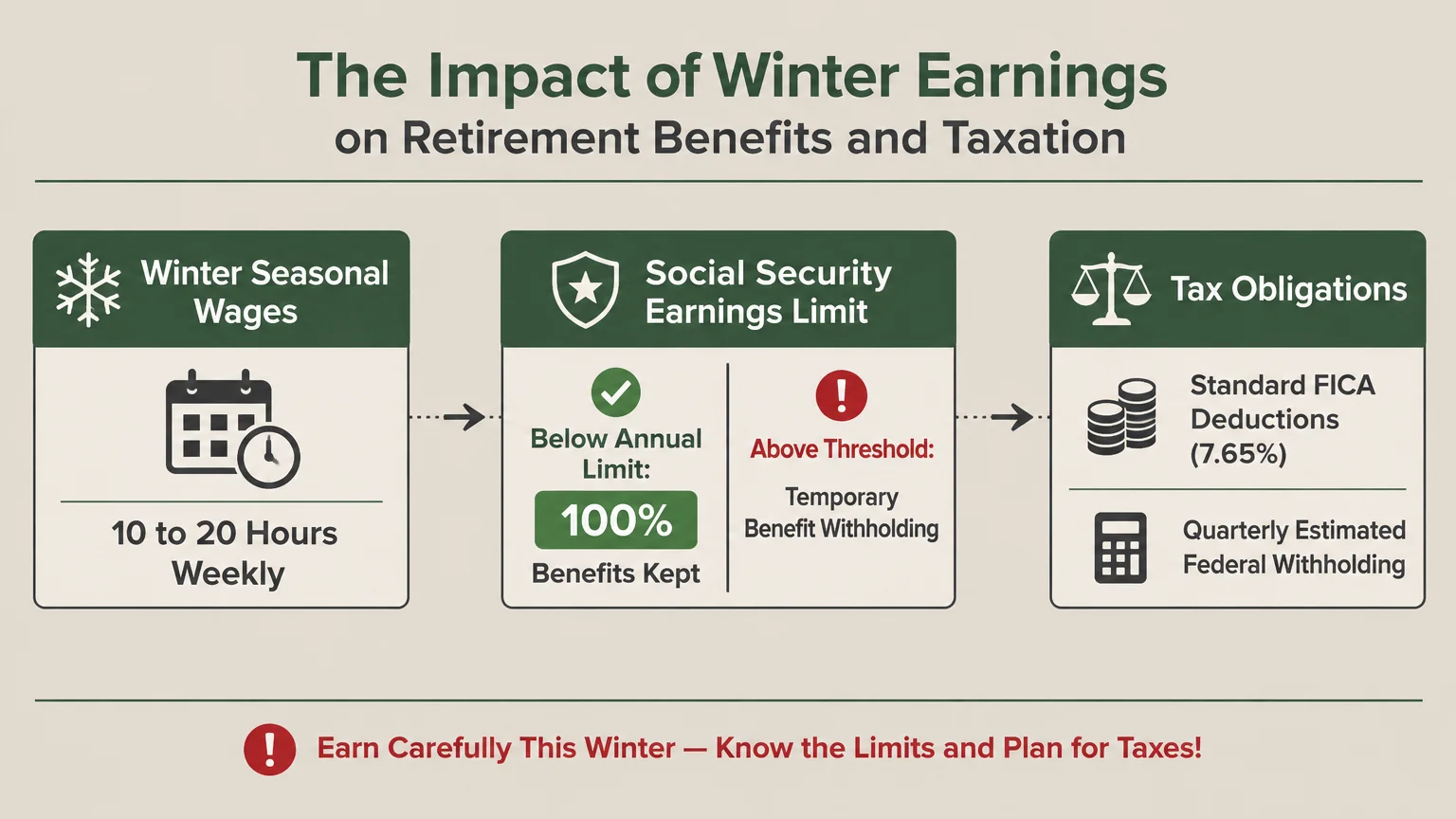
Before accepting a winter paycheck, check how your age and filing status interact with federal benefit rules. Reviewing the Social Security Administration (SSA) earnings test prevents unexpected benefit withholding if you collect retirement checks early.
If you are under Full Retirement Age (FRA) for all of 2026, SSA sets an annual earnings limit of $24,480 ($2,040 per month) and withholds $1 in benefits for every $2 earned above that threshold. If you reach FRA during 2026, the limit rises to $65,160 ($5,430 per month) prior to your FRA month, with $1 withheld per $3 over.
Starting in January 2027, those thresholds increase for the new calendar year—helpful if your winter job spans December and January. Here is how the 2027 SSA earnings limits compare:
- Under FRA for all of 2027: $25,560 annual limit ($2,130 per month), withholding $1 for every $2 earned over the cap.
- Reaching FRA during 2027: $67,920 annual limit ($5,660 per month) before your FRA month, withholding $1 for every $3 earned over the cap.
- At or past FRA: No earnings limit applies at all, meaning you can earn any amount without reducing your monthly Social Security payment.
If you retired mid-year, SSA applies a special first-year monthly rule so your earlier salary does not penalize winter part-time work. You receive full checks for any month your 2026 wages stay at or below $2,040 ($5,430 if reaching FRA in 2026) and you avoid substantial self-employment services—generally defined as more than 45 hours monthly in a business, or 15 to 45 hours in a highly skilled field.
Note that a spouse’s paycheck never counts toward your personal earnings limit, and withheld benefits are not lost forever. Once you reach FRA, SSA recalculates your benefit upward to credit withheld months, while 2027 Social Security and SSI benefits also rise 3.6% via the annual cost-of-living adjustment.
On the tax side, review updates from the Internal Revenue Service (IRS) before setting your paycheck withholding. For tax years beginning in 2025 and continuing in 2026, taxpayers age 65 or older can claim an enhanced senior deduction of up to $6,000 per person—or $12,000 if married filing jointly and both spouses qualify—subject to phaseouts starting above $75,000 MAGI ($150,000 joint).
Watch for new reporting rules if you choose gig work, tutoring, or independent pet sitting. For payments made on or after January 1, 2026, the federal Form 1099-NEC and Form 1099-MISC reporting threshold rose from $600 to $2,000, with 2026 forms due by February 1, 2027.

Common Mistakes to Avoid When Taking a Winter Job
Even well-planned extra income retirement strategies can hit snags if you overlook fine print during onboarding. Watch out for these common pitfalls before signing your winter employment paperwork:
- Treating payments under $2,000 as tax-free: Raising the federal Form 1099-NEC threshold to $2,000 does not make smaller contractor earnings exempt from income or self-employment taxes, and some states keep lower reporting limits.
- Forgetting the January calendar reset: Wages earned in late December count toward 2026 earnings limits, while January paychecks count toward 2027 limits.
- Double-dipping on vehicle deductions: If you claim the 76 cents-per-mile standard business rate for late-2026 deliveries, you cannot also deduct actual gas, oil changes, or repairs for that same vehicle in 2026.
- Skipping W-4 withholding adjustments: Part-time employers withhold payroll taxes assuming your job is your sole income, which can leave you owing taxes in April when combined with Social Security or IRA withdrawals.
- Falling for fake work-from-home listings: Never pay upfront fees for training kits or share bank details before verifying an employer directly through trusted senior employment guides like AARP or the National Council on Aging (NCOA).
Frequently Asked Questions About Winter Part-Time Work
Can I earn extra money this winter without reducing my Social Security check?
Yes, especially if you have already reached Full Retirement Age, because no earnings limit applies at or past FRA. If you are younger than FRA, keeping 2026 earnings at or below $24,480 (or $25,560 in 2027) avoids any benefit withholding.
Do I need a CPA license to work as a seasonal tax preparer?
No, major tax-preparation chains train seasonal preparers from September through December without requiring a CPA credential. You only need to register for an IRS Preparer Tax Identification Number (PTIN) and complete the firm’s required training modules.
If I drive for deliveries in late 2026, what mileage rate applies?
The IRS standard business mileage rate is 76 cents per mile for driving done between July 1 and December 31, 2026. Keep a daily trip log separating personal errands from delivery miles, and save receipts for business parking and tolls.
What happens if my Social Security benefits are withheld because I worked too many hours?
Withheld benefits are not permanently forfeited. When you reach Full Retirement Age, SSA recalculates your monthly check to credit the months benefits were withheld, and higher recent earnings can also raise your benefit if they replace a lower year in your top 35 earning years.

Taking Your First Step This Week
Start by picking two or three roles from this list that match your physical comfort, commute preference, and weekly hour budget. Update a concise one-page resume highlighting reliability and communication skills, then submit applications early before peak winter rosters fill up.
Before your first shift, log into your personal Social Security account to verify your Full Retirement Age and remaining earnings room for the year. A quick check today ensures your winter paycheck supports your retirement lifestyle without unexpected tax or benefit surprises.
This article provides general retirement education and information only. Every retiree’s situation is unique—what works for others may not work for you.
For personalized advice, consider consulting a qualified financial professional such as a CFP or CPA.
Last updated: November 2026. Retirement benefits, tax rules, and healthcare regulations change frequently—verify current details with official sources.