
Escaping harsh winters does not require draining your savings account or surrendering your hard-earned pension to high state taxes. You can protect your retirement nest egg while enjoying temperate weather and gentle seasons year-round.
Several southern and coastal communities combine warm climates with generous tax exemptions for seniors. These destinations let you keep more of your monthly income for travel, healthcare, and daily living.
Finding the right fit means balancing income tax breaks against local property rates and general affordability. Here are twelve outstanding low-tax retirement towns that deliver mild winters alongside substantial financial relief.
Evaluating the True Tax Cost in Retirement
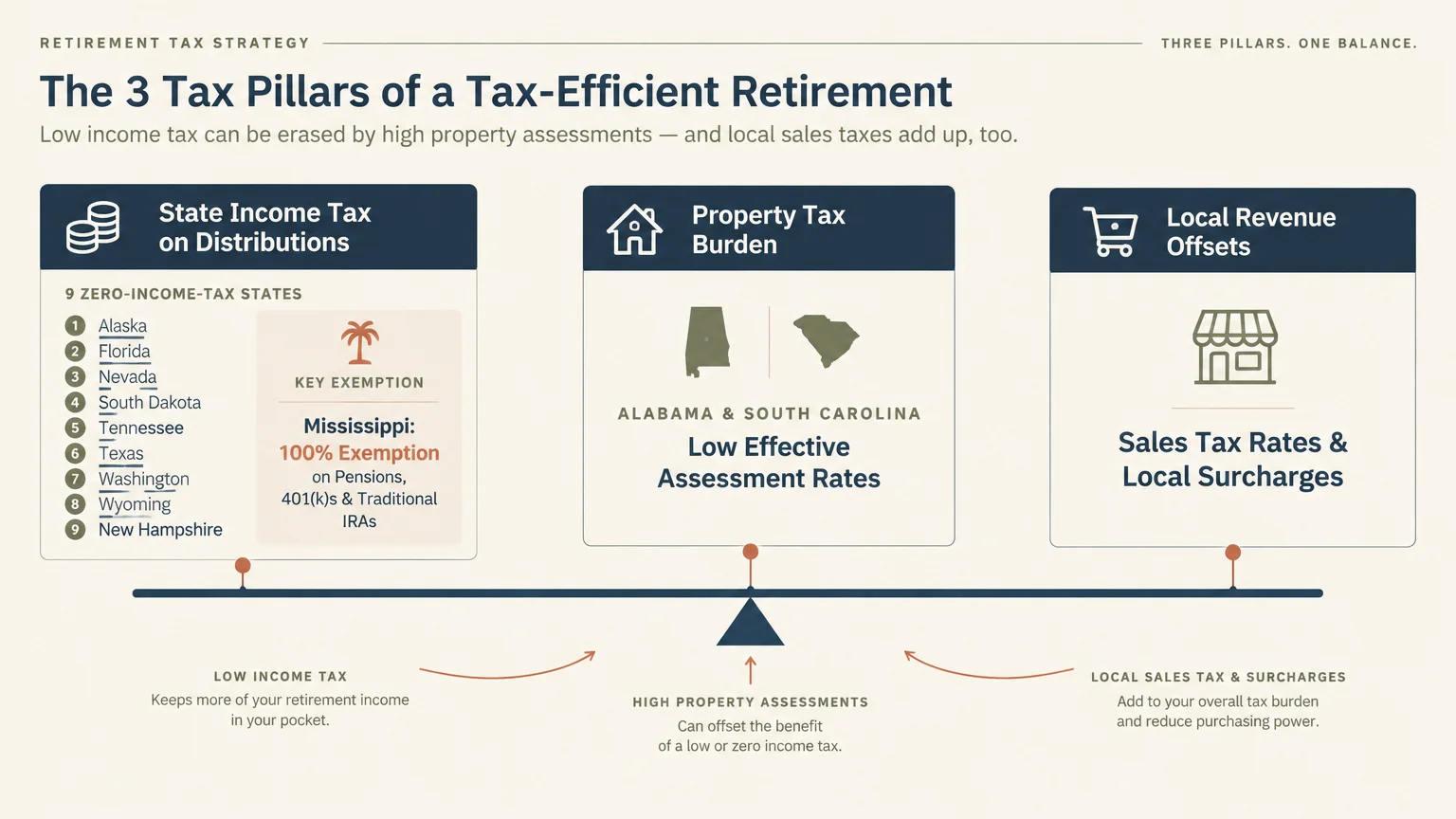
State taxes rarely affect retirees the same way they impact working professionals. While wage earners focus primarily on state income tax brackets, your tax liability shifts toward investment withdrawals, pensions, and homeownership.
A state without personal income tax sounds ideal on paper. However, local jurisdictions often recoup revenue by assessing higher sales taxes or substantial property tax rates on residential real estate.
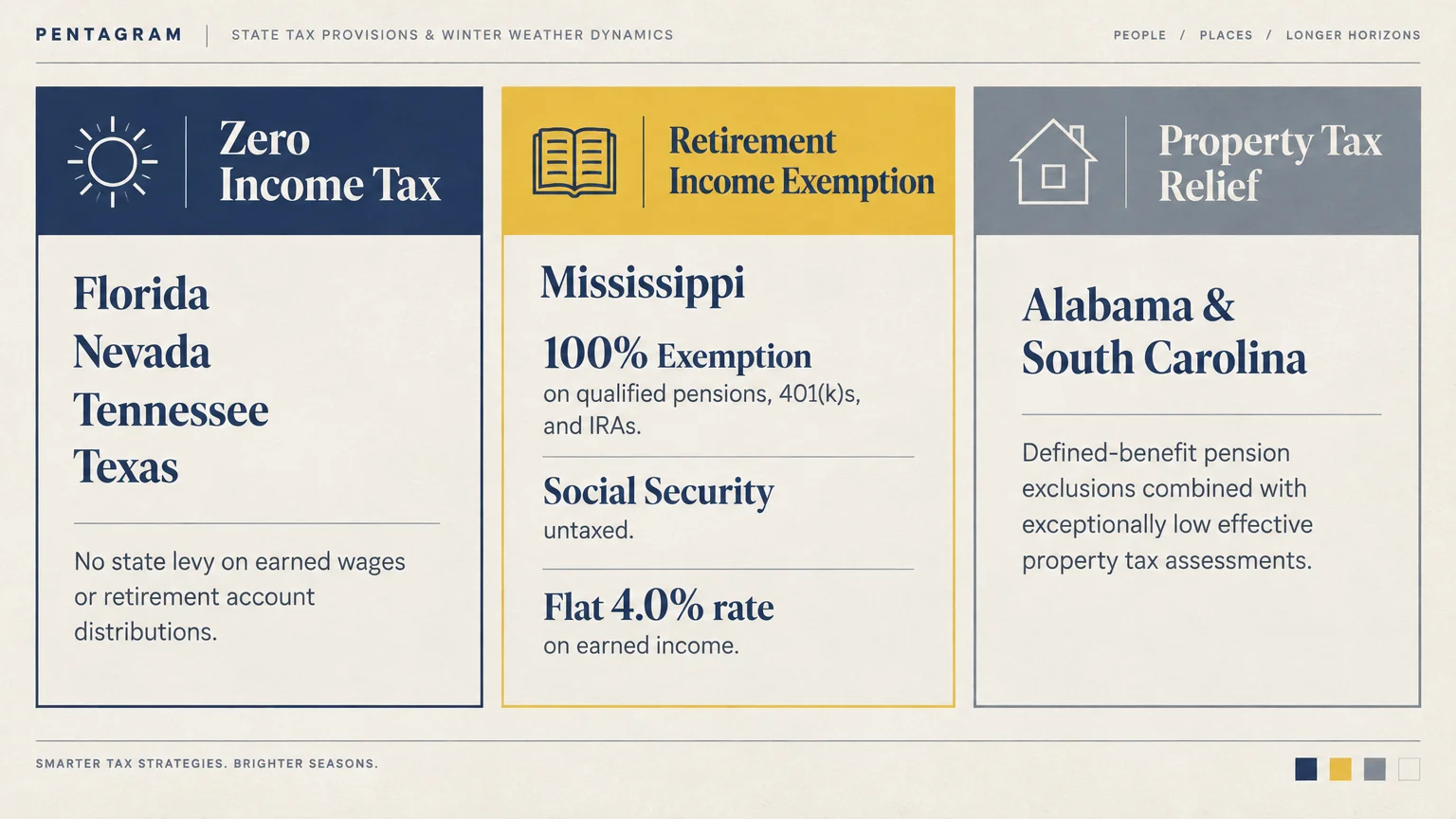
Nine states levy no individual state income tax on wages or distributions: Alaska, Florida, Nevada, New Hampshire, South Dakota, Tennessee, Texas, Washington, and Wyoming. Florida, Nevada, Tennessee, and Texas provide the most accessible mild-winter environments in that group.
Other states levy an income tax on wages but grant sweeping exemptions to retirees. Mississippi, for instance, fully exempts qualified pension payments, 401(k) withdrawals, and traditional IRA distributions from state income tax.
According to the Internal Revenue Service, federal rules treat retirement account withdrawals as ordinary taxable income unless you hold them in designated Roth accounts. Relocating to a tax-friendly municipality prevents state levies from compounding that federal burden.
Property tax policy also commands careful review before purchasing a home. Certain jurisdictions with moderate income taxes, like Alabama and South Carolina, offset those collections with exceptionally low effective property tax assessments.
“A big part of financial freedom is having your heart and mind free from worry about the what-ifs of life.” — Suze Orman, Personal Finance Author
12 Standout Low-Tax Towns With Mild Winters
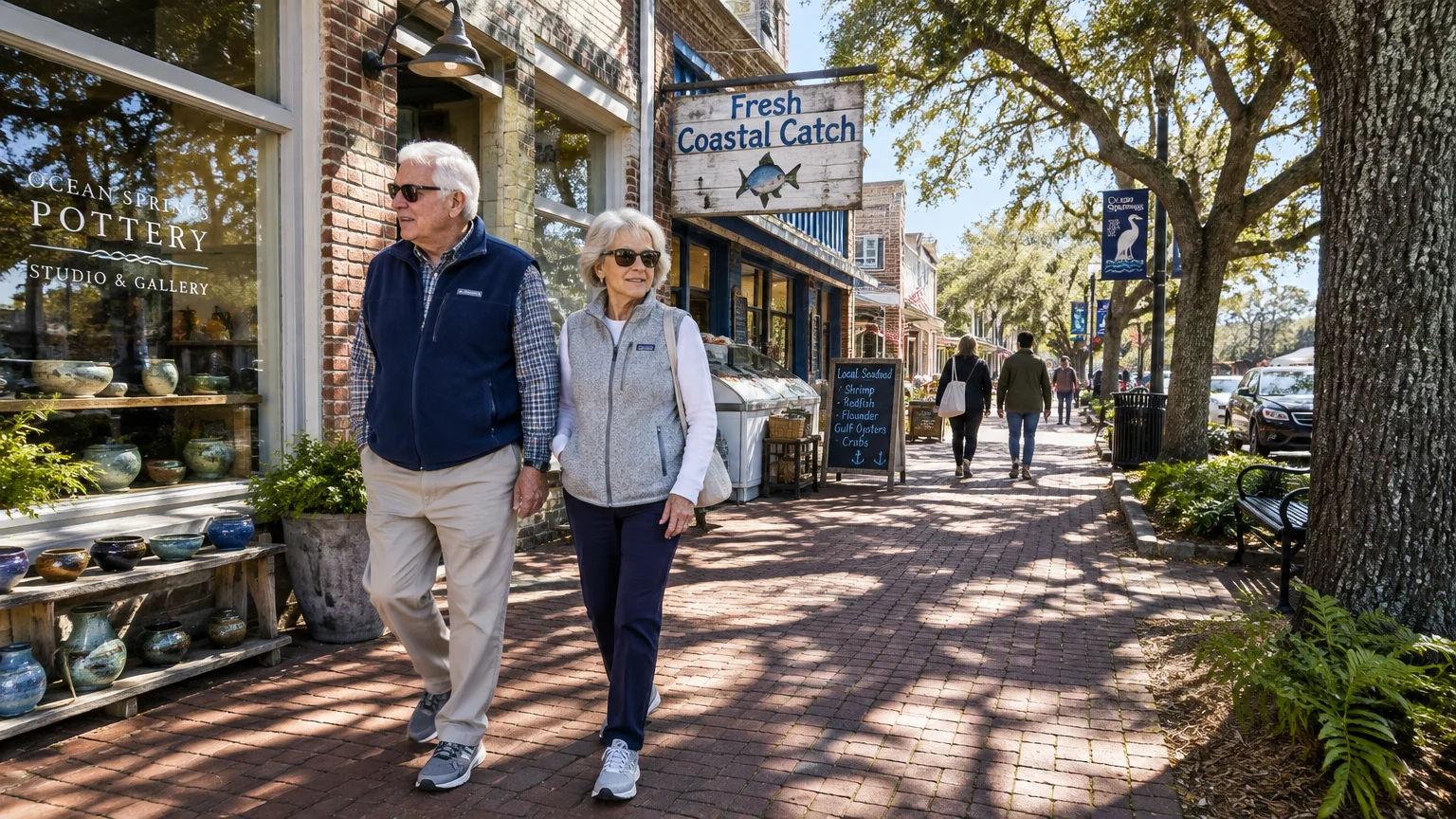
The following twelve communities offer active senior amenities, temperate winter weather, and favorable tax laws that preserve your purchasing power throughout your retirement years.
1. Ocean Springs, Mississippi
Ocean Springs sits along the scenic Mississippi Gulf Coast, surrounded by live oaks, historic cottages, and coastal waters. January temperatures generally reach comfortable daytime highs in the low 60s.
Mississippi offers one of the most generous retirement tax codes in the country. The state completely exempts qualified retirement income, including private pensions, 401(k)s, and traditional IRAs, provided you meet your plan’s age requirements.
Social Security benefits face zero state taxation under Mississippi law. If you decide to work a part-time job during retirement, the state flat income tax rate on earned income sits at 4.0%.
The town features an active arts community anchored by the Walter Anderson Museum of Art. You can walk through the tree-lined downtown to visit neighborhood cafes, seafood markets, and independent galleries.
2. Fairhope, Alabama
Fairhope perches on the bluffs of Mobile Bay, offering sweeping waterfront views and pleasant, breezy winters. The town rarely experiences freezing temperatures, giving you abundant opportunities for outdoor recreation.
Alabama treats traditional defined-benefit pensions exceptionally well. The state exempts Social Security benefits, military retirement pay, and qualifying private and public defined-benefit pensions from state taxation.
For defined-contribution accounts like 401(k) plans and IRAs, retirees aged 65 and older can exempt up to $6,000 annually. Any distribution above that modest threshold faces graduated income tax rates up to 5%.
Fairhope balances this rule with an effective property tax rate between 0.36% and 0.38%, among the lowest in the nation. Keep in mind that the combined state and local sales tax average reaches 9.29%.
3. Beaufort, South Carolina
Beaufort anchors the scenic South Carolina Lowcountry with historic antebellum homes and tidal marshes. Winter afternoons regularly warm into the upper 50s and low 60s.
South Carolina lowered its top marginal personal income tax rate to 5.21%. The state also completely exempts Social Security benefits from personal income taxation.
Residents aged 65 and older can claim a $10,000 retirement income deduction alongside a $15,000 senior standard deduction, capping the total deduction at $15,000 per person. Military retirement pay remains 100% tax-free regardless of your age.
Beaufort also provides modest real estate costs compared to Charleston or Hilton Head. The state maintains an effective property tax rate between 0.45% and 0.53%, complemented by a $50,000 homestead exemption for seniors.
4. Aiken, South Carolina
Aiken offers a mild winter climate in western South Carolina, surrounded by equestrian farms and historic pine forests. The city avoids intense coastal humidity while maintaining warm, gentle winters.
Retirees enjoy the same South Carolina tax benefits, including total exemption for Social Security income. The combined $15,000 deduction for seniors significantly reduces state tax exposure on retirement account withdrawals.
Downtown Aiken features wide avenues separated by landscaped medians, parklands, and local boutiques. The community hosts year-round polo matches, steeplechase events, and outdoor walking tours.
Low local property taxes allow retirees to downsize or purchase acreage without facing steep recurring tax burdens. Healthcare access remains robust through regional medical centers situated close to downtown.
5. Athens, Georgia
Athens lies northeast of Atlanta in Georgia’s Piedmont region. Winter brings crisp mornings and mild afternoons, offering four distinct seasons without prolonged freezing spells.
Georgia recently lowered its flat individual income tax rate to 4.99% under state legislation. Standard deductions provide substantial initial relief, reaching $15,000 for single filers and $30,000 for married couples.
The state does not tax Social Security benefits under any circumstances. Furthermore, Georgia grants a retirement income exclusion of up to $65,000 per person aged 65 and older, covering investment income and pensions.
The University of Georgia provides senior auditing programs, college athletics, and cultural performances. You will find affordable housing alongside comprehensive regional healthcare networks.
6. St. Simons Island, Georgia
St. Simons Island provides a coastal lifestyle defined by moss-draped live oaks, salt marshes, and Atlantic beaches. Winter daily temperatures hover pleasantly in the low-to-mid 60s.
Residents enjoy Georgia’s senior-friendly 4.99% flat tax structure and total Social Security exemption. Married couples over 65 can exclude up to $130,000 in joint retirement income from state taxation.
The island offers miles of dedicated biking trails, golf courses, and quiet beaches. While real estate costs run higher than inland Georgia, the state median effective property tax rate remains low at roughly 0.74% to 0.79%.
A regional airport in nearby Brunswick simplifies visits from family. You can enjoy oceanfront living without paying punitive state taxes on your investment portfolio.
7. Green Valley, Arizona
Green Valley sits twenty miles south of Tucson in the dry, sun-drenched Santa Cruz Valley. Winter days reliably deliver clear skies and temperatures in the mid-to-upper 60s.
Arizona operates a simple flat individual income tax rate of just 2.5%. The state completely exempts Social Security benefits and provides a subtraction of up to $2,500 for public and military pensions.
Withdrawals from traditional 401(k) plans and IRAs incur the low 2.5% flat tax. Arizona levies no estate or inheritance taxes, helping you preserve family wealth across generations.
Green Valley operates as an unincorporated collection of age-restricted subdivisions centered around shared recreation centers. A single membership gives you access to numerous swimming pools, fitness centers, and hobby clubs.
8. St. Augustine, Florida
St. Augustine stands as the nation’s oldest continuously occupied European settlement, located on Florida’s northeast Atlantic coast. Winters are mild and pleasant, averaging highs around 68 degrees.
Florida charges no state personal income tax on any revenue source. Your private pensions, 401(k) withdrawals, individual stock dividends, and Social Security checks enter your account completely untouched by state levies.
Guidance from AARP suggests evaluating health systems alongside local housing expenses. St. Augustine provides multiple regional hospitals and clinics within convenient driving distance of residential neighborhoods.
You can spend winter afternoons walking through the historic Spanish colonial quarter or strolling along Anastasia State Park beaches. Modest property tax homestead exemptions help ease real estate holding costs.
9. Venice, Florida
Venice is located along Florida’s southwestern Gulf Coast, just south of Sarasota. Subtropical breezes maintain winter daytime highs in the low to mid-70s.
Like all Florida cities, Venice levies zero state income tax on retirement withdrawals or pensions. You also avoid state-level taxes on capital gains, interest income, and estate assets.
The city features Northern Italian architecture, broad parkways, and direct beach access known for fossil hunting. Venice Beach and the surrounding waterways offer boating, fishing, and golf throughout January and February.
Medical infrastructure in South Sarasota County provides extensive specialized geriatric and cardiac care. Housing inventory includes quiet residential neighborhoods, golf communities, and beachfront condominiums.
10. New Braunfels, Texas
New Braunfels rests in the Texas Hill Country between Austin and San Antonio. The region experiences brief, mild winters with sunny afternoons generally reaching the low 60s.
Texas constitutionally prohibits personal income tax on individual earnings, pensions, and retirement accounts. You pay zero state tax on Social Security benefits or 401(k) distributions.
The town maintains strong German cultural heritage, visible through historic architecture and annual festivals. Two spring-fed rivers, the Comal and the Guadalupe, flow through the heart of the community.
Property taxes in Texas trend higher than in neighboring states to fund municipal infrastructure. Seniors over age 65 can freeze their school district property tax levies to prevent sharp tax increases.
11. Chattanooga, Tennessee
Chattanooga occupies a mountain-ringed valley along the Tennessee River near the Georgia border. Winters remain relatively mild, offering occasional mountain dustings but few sustained freezing events.
Tennessee levies no individual personal income tax on wages, pensions, 401(k) accounts, or Social Security. The state eliminated its previous Hall Income Tax on dividends and interest, making investment returns entirely tax-free.
The city earned national recognition for municipal high-speed broadband and a revitalized riverfront district. You can explore miles of paved riverwalks, art museums, and local farm-to-table restaurants.
Living costs remain near the national median, offering affordable single-family homes and riverfront condos. Outstanding regional medical centers provide comprehensive clinical care to older adults.
12. Wilmington, North Carolina
Wilmington sits between the Cape Fear River and the Atlantic Ocean in southeastern North Carolina. Ocean currents moderate winter conditions, keeping daily temperatures in the mid-50s to low 60s.
North Carolina applies a flat personal income tax rate of 3.99% across all income brackets. The state completely exempts Social Security benefits from personal taxation.
Traditional pension and retirement account withdrawals face the flat 3.99% assessment without specialized exclusions. However, North Carolina offsets this flat tax with a low median property tax rate of 0.66%.
The city boasts a 230-block historic district, a riverwalk along the Cape Fear River, and access to nearby Wrightsville Beach. You will also find strong healthcare facilities through the Novant Health network.
Tax and Climate Comparison Across the 12 Towns
Evaluating communities side-by-side helps identify the best financial match for your specific income streams. The table below outlines state tax policies and winter characteristics for each location.
| Town | State Income Tax Rate | Social Security Taxed? | 401(k) & Pension Treatment | Average Jan High |
|---|---|---|---|---|
| Ocean Springs, MS | 4.0% flat (earned income) | No | 100% exempt for qualified plans | 61°F |
| Fairhope, AL | Up to 5.0% graduated | No | Pensions exempt; $6k 401(k) cap | 60°F |
| Beaufort, SC | 5.21% top rate | No | Up to $15k senior deduction cap | 59°F |
| Aiken, SC | 5.21% top rate | No | Up to $15k senior deduction cap | 58°F |
| Athens, GA | 4.99% flat | No | $65,000 exclusion per person (65+) | 54°F |
| St. Simons Island, GA | 4.99% flat | No | $65,000 exclusion per person (65+) | 61°F |
| Green Valley, AZ | 2.5% flat | No | Taxed at flat 2.5%; $2.5k pension relief | 66°F |
| St. Augustine, FL | 0% (No income tax) | No | 100% tax-free at state level | 68°F |
| Venice, FL | 0% (No income tax) | No | 100% tax-free at state level | 72°F |
| New Braunfels, TX | 0% (No income tax) | No | 100% tax-free at state level | 62°F |
| Chattanooga, TN | 0% (No income tax) | No | 100% tax-free at state level | 50°F |
| Wilmington, NC | 3.99% flat | No | Taxed at flat 3.99% | 56°F |
Avoiding Common Relocation and Tax Errors
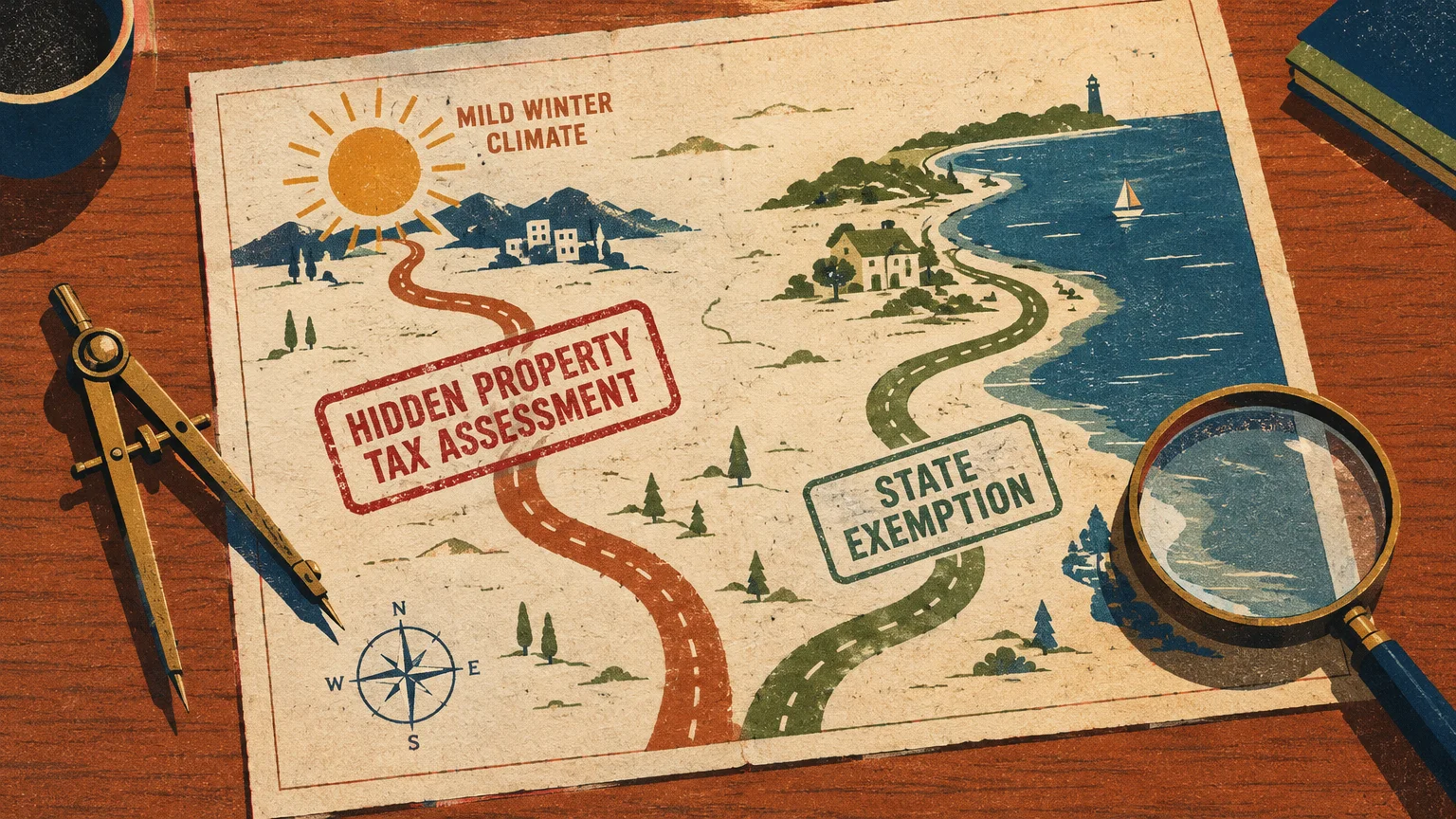
Many retirees focus entirely on state income tax rates while overlooking the broader financial picture. Moving across state lines requires a complete audit of recurring local expenses.
High sales taxes can quickly erode the savings gained from zero-income-tax states. For example, Alabama and Tennessee maintain higher combined sales taxes that increase daily grocery, household, and retail expenses.
Property tax reassessments can also shock newcomers who purchase recently renovated homes. Certain counties reassess real estate values immediately upon sale, eliminating previous assessment caps held by the former owner.
Always verify home insurance availability and cost before making an offer on coastal property. Coastal windstorm and flood coverage in Florida, coastal Mississippi, and coastal South Carolina can alter monthly affordability.
Another frequent mistake involves failing to establish formal state domicile after relocating. To sever tax ties with your former high-tax state, you must take concrete legal steps.
- Register to vote in your new municipality and cancel your previous registration.
- Transfer your driver’s license and vehicle titles within statutory state deadlines.
- File a formal declaration of domicile with the local county clerk if required.
- Update your primary mailing address with financial institutions and the federal government.
Review benefit regulations on the official Social Security Administration website before scheduling your address transition. Ensuring prompt delivery of official communications prevents administrative delays.

When DIY Isn’t Enough
Relocating your primary residence involves complex financial, legal, and estate considerations. Consulting qualified professionals ensures that your relocation achieves genuine long-term tax savings.
Consult a Certified Financial Planner or CPA if you hold substantial non-qualified investment accounts. Multi-state residency rules can trigger surprise tax audits if you retain residential ties in your former state.
You should also hire a local estate planning attorney to review your wills, powers of attorney, and healthcare directives. Estate laws vary significantly across state jurisdictions, potentially rendering older documents ambiguous.
Finally, examine long-term healthcare needs and community resources. Reviewing educational material on Investopedia can help clarify how local tax differences impact specialized insurance and estate transfers.
Frequently Asked Questions
Do any mild-winter states tax Social Security benefits?
Only eight states in the nation tax Social Security benefits, and most southern destinations fully exempt them. Among warm states, New Mexico taxes benefits but exempts single filers earning up to $100,000.
Is Florida cheaper for retirees than Georgia or South Carolina?
Florida charges zero income tax, but homeowners insurance and housing values have climbed significantly. Georgia and South Carolina feature generous senior deductions and lower property tax rates that may offset income taxes.
How does Mississippi handle 401(k) withdrawals for early retirees?
Mississippi exempts qualified retirement withdrawals only if you meet the specific plan retirement criteria. Non-qualified or early distributions face regular state income tax rates.
What happens to my property taxes if I turn 65 after relocating?
Most southern states offer senior homestead exemptions that reduce assessed values or freeze school taxes. You must formally apply through your local county tax assessor after reaching the statutory age.
Finding the ideal retirement destination requires matching your personal lifestyle preferences with a sustainable tax framework. Spend time visiting prospective communities during different seasons to experience local neighborhoods firsthand.
Take deliberate steps to analyze your total tax exposure, healthcare needs, and housing costs before purchasing a home. This is educational content based on general retirement and financial principles. Individual results vary based on your situation. Always verify current benefit rules, tax laws, and eligibility requirements with official sources like SSA, Medicare.gov, or the IRS.
Last updated: November 2026. Retirement benefits, tax rules, and healthcare regulations change frequently—verify current details with official sources.








Leave a Reply