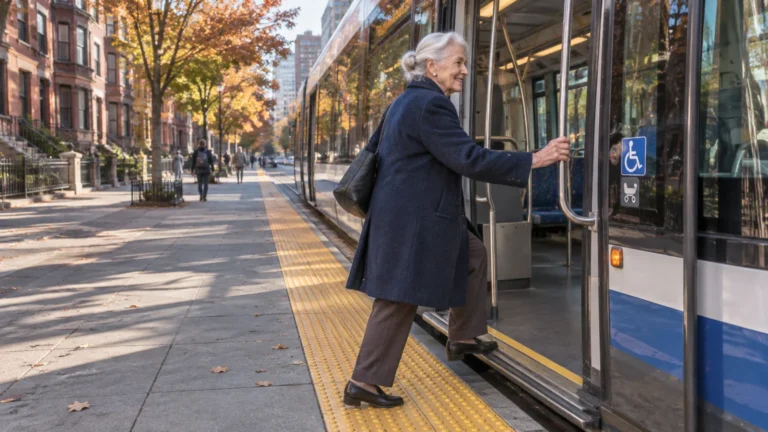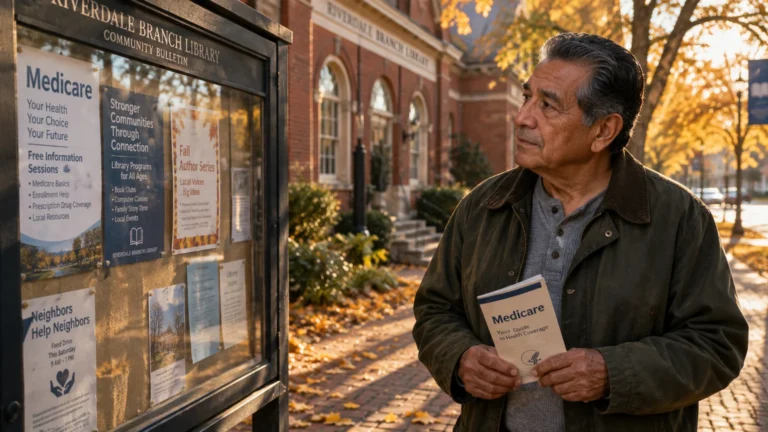

You can retire in Texas on $2,500 a month without sacrificing culture, good healthcare, or active neighborhoods. Zero state income tax and an overall cost of living 6% below the national average stretch fixed retirement checks further.
Across the state, housing runs 18% below U.S. norms, and expanded 2026 property tax exemptions cut bills for older homeowners. Below, you will find 11 lively, affordable Texas cities where $2,500 covers everyday living comfortably.
How $2,500 a Month Works in Texas
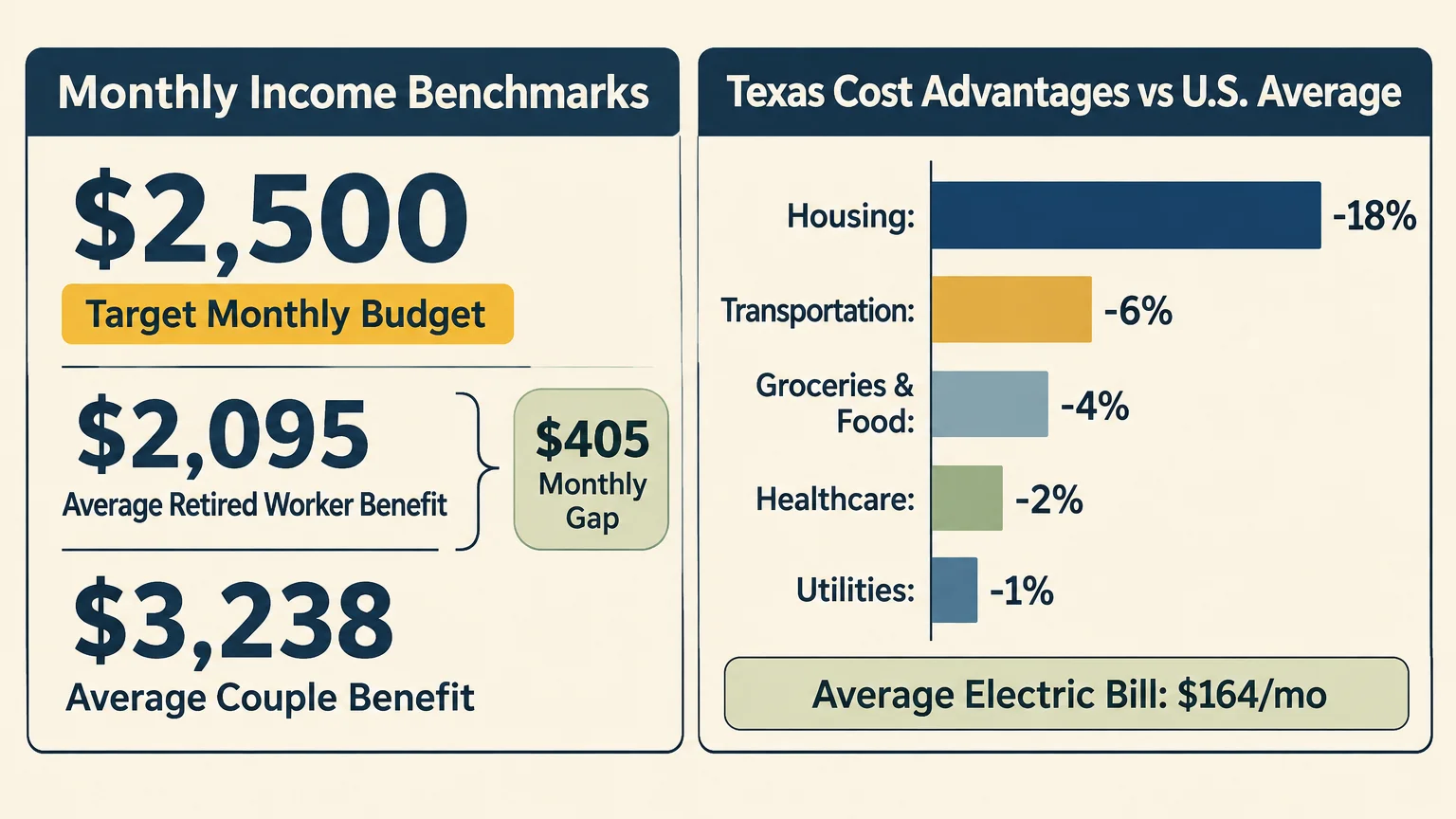
A $2,500 monthly budget fits well with current federal retirement benefits. According to the Social Security Administration (SSA), the average retired worker receives $2,094 to $2,095 per month in late 2026.
That leaves a single retiree needing roughly $405 a month from savings, pensions, or part-time work to reach $2,500. An average retired couple already collects $3,237 to $3,238 monthly, giving them breathing room above this target.
A 3.6% cost-of-living adjustment arrives in January 2027, pushing the average worker check to $2,170 and an average couple’s benefit to around $3,355. That boost helps offset grocery, insurance, and medical inflation.
Statewide price benchmarks explain why your dollars travel further here than in coastal states. RentCafe and C2ER data from September 2026 show Texas beats national averages across nearly every major household category:
- Housing: 18% lower than the U.S. average
- Transportation: 6% lower than the U.S. average
- Groceries and food: 4% lower than the U.S. average
- Healthcare: 2% lower than the U.S. average
- Utilities: 1% lower than the U.S. average
Renters especially benefit when targeting affordable Texas cities outside Austin and Dallas. Apartment List reports a statewide median apartment rent of $1,230 in August 2026, while Apartments.com places the November 2026 average at $1,242.
Single-family house rentals cost more, carrying a statewide median listing price of $1,795 per Realtor.com. Choosing a one-bedroom apartment or a paid-off home keeps housing well below half of your $2,500 budget.
Homebuyers also see softer pricing compared with recent years. Zillow places the typical Texas home value at $302,550, while Realtor.com reports median listings at $355,765, sitting 66 days on market and selling 1.33% below asking.
Electricity stays manageable despite hot summers, averaging 15.88 cents per kilowatt-hour versus 18.31 cents nationally per the U.S. Energy Information Administration. The agency lists Texas’s average monthly residential electric bill at $164.
Your housing choice determines whether $2,500 a month feels tight or comfortable in Texas—pairing a sub-$1,100 rent or mortgage-free home with Texas’s tax exemptions leaves ample room for healthcare, dining, and travel.
Texas Taxes and Homestead Savings for Retirees
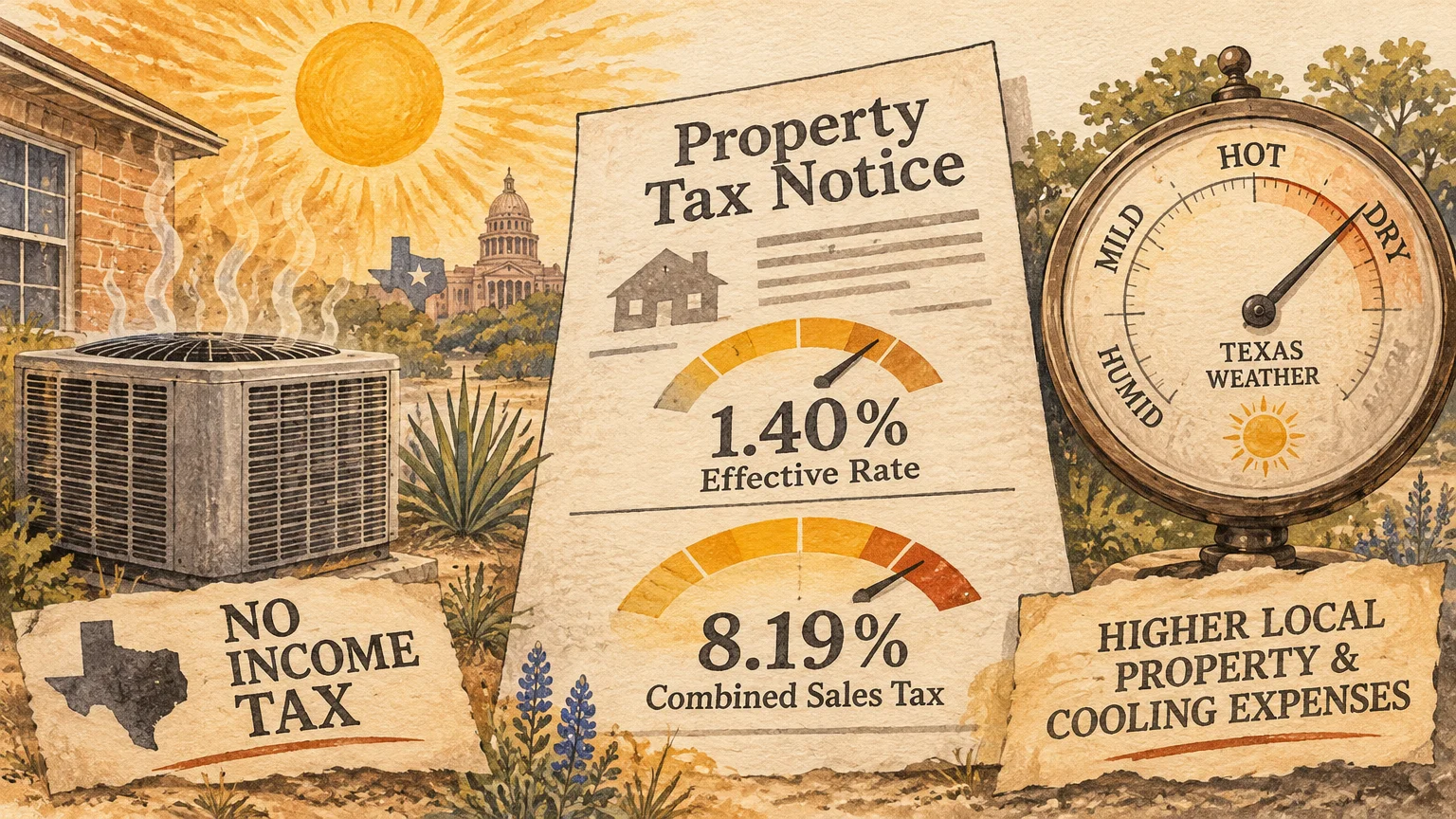
Retiring in Texas eliminates state-level taxes on your retirement income. The Tax Foundation confirms Texas levies a 0% individual income tax, meaning Social Security checks, pensions, and 401(k) or IRA withdrawals face zero state tax.
Texas also imposes no state estate tax and no inheritance tax. However, you will still owe federal income taxes depending on your total income, which you can verify through the Internal Revenue Service (IRS).
Sales and property taxes fund local services instead of income taxes. Texas charges a 6.25% state sales tax and an 8.19% average combined state and local rate, above the 7.53% national average.
On owner-occupied homes, local property taxes average a 1.40% effective rate. Fortunately, major voter-approved tax relief took effect on January 1, 2026, dramatically lowering school tax bills for older homeowners.
- Expanded school exemption: Propositions 11 and 13 raised the mandatory school district residence homestead exemption to $140,000, up from $100,000.
- Over-65 bonus exemption: Homeowners age 65 or older receive an additional $60,000 school district exemption, creating a combined $200,000 exemption under Texas Tax Code section 11.13.
- School tax ceiling: Once you turn 65 and apply, your school district property taxes freeze at that dollar amount, and you can transfer that percentage benefit to another Texas home.
- Tax deferral option: Seniors can defer property taxes until the home sells or passes to heirs, though unpaid balances accrue 8% annual interest.
- Disabled veteran exemption: Veterans rated 100% disabled by the VA pay $0 in property taxes on their primary residence homestead.
Keep in mind that your over-65 exemption and school tax freeze are not automatic. You must file an application with your county appraisal district, typically by April 30 for timely processing.

Comparing 11 Lively, Affordable Texas Cities
To help you weigh lifestyle against expenses, the table below compares verified 2026 cost-of-living and housing numbers across 11 lively Texas cities for retirees. Figures combine RentCafe/C2ER cost indices, Apartments.com or Apartment List rents, and Zillow or local home values.
| City | Cost of Living vs. U.S. Avg | Typical Monthly Rent | Typical Home Value / Sale Price | Top Retiree Draw |
|---|---|---|---|---|
| McAllen | 19% lower | $881 (metro median) | $226,801 | Warm winters and borderland arts |
| Amarillo | 18% lower | $935 (city avg) | Lower than state norm | Canyon parks and Route 66 charm |
| Brownsville | 15% lower | $976 (city avg) | Affordable coastal market | Gulf beaches and birding trails |
| Corpus Christi | 14% lower | $1,008 (city avg) | Moderate coastal prices | Bayfront marinas and island access |
| San Marcos | 14% lower | $1,130 (1-bed avg) | Mid-tier Hill Country | Spring-fed river and walkable square |
| Temple | 13% lower | $1,315 (Downtown avg) | $242,597 | Major medical center and central location |
| El Paso | 12% lower | $1,007 (city avg) | $237,556 | Mountain trails and sunny desert climate |
| Abilene | 12% lower | $881 (Downtown 1-bed) | $224,960 | Storybook museums and college events |
| Waco | 10% lower | $1,187 (Downtown 1-bed) | $191,915 | Riverwalk trails and revived downtown |
| San Antonio | 9% lower | $1,060 (city avg) | $299,275 (median sale) | Historic missions, River Walk, dining |
| Lubbock | 7% lower | $861 (city avg) | $212,419 | Big-name concerts and university sports |
11 Lively Texas Cities Where You Can Retire on $2,500 a Month
1. San Antonio: Big-City Culture and Low Utilities
San Antonio delivers major-metro museums, Fiesta festivals, and historic missions without big-city prices. Its overall cost of living runs 3% below the Texas average and 9% below the U.S. average, while groceries score 93.1 on the C2ER index.
Average apartment rent sits at $1,060 per month, though median rental listings across all home types reach $1,615. Buyers see a median home sale price of $299,275 per the San Antonio Board of REALTORS and $289,450 median listings on Realtor.com.
Municipal utility CPS Energy averaged 13.0 cents per kilowatt-hour from late 2025 through October 2026, roughly 18% under the state average. Neighborhoods near Brackenridge Park, Pearl District, and outer loops give you lively walking paths and extensive medical clinics.
2. El Paso: Mountain Views and High-Desert Calm
Tucked against the Franklin Mountains, El Paso pairs dramatic desert scenery with bilingual festivals and a relaxed pace. Living costs sit 7% below Texas norms and 12% below the U.S. average.
Apartments average $1,007 monthly, and Zillow reports a typical home value of $237,556. That leaves plenty of room in a $2,500 budget for dining, local theater, and regional road trips into New Mexico.
Dry air and mild winters keep outdoor golf, pickleball, and state park hikes active year-round. Strong hospital networks and a major military medical presence also support aging in place.
3. Corpus Christi: Bayfront Living on a Budget
If you want coastal breezes without Florida insurance prices, Corpus Christi belongs on your shortlist. The city’s cost of living stands 8% below Texas and 14% below U.S. averages, with groceries scoring a low 92.8.
Average apartment rent comes in at $1,008 per month, leaving over half your $2,500 budget untouched. You can spend weekends walking the seawall, visiting the Texas State Aquarium, or fishing near Mustang Island.
Coastal humidity and hurricane preparedness require attention when shopping for property insurance. Renting near the bayfront lets you enjoy the shoreline while avoiding unexpected storm roof repairs.
4. McAllen: Warm Winters and the Lowest Metro Rents
McAllen anchors the Rio Grande Valley as a longtime hub for winter retirees seeking warmth, live music, and birding centers. Its cost of living is 13% below Texas and 19% below the U.S. average.
Apartment List ranks McAllen’s $881 median rent as the lowest among all 20 tracked Texas metros, while Downtown McAllen one-bedrooms average $828. Typical home values stand at $226,801, making downsizing financially painless.
Local farmers markets, cultural plazas, and proximity to South Padre Island keep your calendar full. Regional hospitals have expanded steadily to serve the growing retiree community.
5. Brownsville: Subtropical Charm Near the Gulf
Just down the valley from McAllen, Brownsville offers historic architecture, botanical gardens, and easy access to Gulf beaches. Overall living expenses run 9% below Texas norms and 15% below national figures.
Apartments average $976 a month, easily fitting a single Social Security check supplemented by modest savings. Community arts programs, resaca parks, and wildlife refuges foster an outdoorsy retirement routine.
Like McAllen, Brownsville stays warm during northern winters, trimming winter heating bills. Summer heat makes shade, ceiling fans, and mid-morning errands part of daily rhythm.
6. Waco: Revived Downtown Between Austin and Dallas
Positioned along the Brazos River between Austin and Dallas, Waco blends small-city affordability with lively weekend markets and college sports. Its cost of living sits 4% below the Texas average and 10% below the U.S. average.
Zillow pegs typical Waco home values at $191,915, down 0.6% year-over-year, with July 2026 median sales at $235,000. Downtown one-bedroom apartments average $1,187, giving renters walkable access to coffee shops and river trails.
Cameron Park provides wooded trails and scenic overlooks right inside city limits. Living in Central Texas also keeps Austin’s music venues and Dallas’s major airports within an easy drive.
7. Temple: Healthcare Access and Hill Country Proximity
Temple stands out among Texas cities for retirees who prioritize fast medical care alongside small-town convenience. Cost of living runs 7% below Texas and 13% below U.S. benchmarks, with groceries at 93.2.
Typical home values sit at $242,597, down 2.9% year-over-year, while median sale prices reached $261,467 in July 2026. Downtown Temple rents average $1,315, placing higher-end units within reach on $2,500 when paired with low everyday expenses.
Belton Lake offers boating and shaded picnic areas minutes from town. Temple’s large medical center acts as a regional care hub, reducing stressful highway drives for specialist appointments.
8. San Marcos: Riverfront Energy in the Texas Hill Country
Located halfway between Austin and San Antonio, San Marcos gives you Hill Country scenery and a lively, walkable downtown square. Overall living costs are 8% below Texas and 14% below U.S. averages.
Citywide one-bedroom apartments average $1,130, Uptown units average $877, and two-bedrooms average $1,360. That pricing undercuts neighboring Austin sharply while letting you visit Austin’s cultural venues whenever you like.
Retirees enjoy floating or walking along the clear, spring-fed San Marcos River and browsing local markets. University arts performances and lifelong learning classes keep the town buzzing year-round.
9. Lubbock: College-Town Arts and Big Savings
On the High Plains of West Texas, Lubbock combines university arts, wineries, and wide-open skies with rock-bottom housing costs. Cost of living is 1% below Texas and 7% below the U.S. average.
Average apartment rent is $861 per month, the second lowest in Texas on Apartments.com. In Lubbock County, typical home values sit at $212,419, and median property taxes run $3,241 annually—a 1.51% effective rate before over-65 exemptions.
The Buddy Holly Hall brings touring Broadway shows and symphony concerts to town. Major medical centers linked to Texas Tech University keep specialist care close by.
10. Amarillo: Big Canyons and Budget-Friendly Groceries
Amarillo pairs Panhandle hospitality with striking scenery just north of Palo Duro Canyon State Park. Its cost of living ranks 13% below Texas and 18% below the U.S. average.
Apartments average $935 per month, the third lowest in Texas, and groceries score 94.3 on the C2ER index. Route 66 antique shops, botanical gardens, and minor-league baseball games fill weekends cheaply.
Unlike South Texas, Amarillo experiences four distinct seasons, including crisp autumns and occasional winter snow. That cooler climate lowers summer air-conditioning strain.
11. Abilene: Quiet Charm With Active Cultural Life
Abilene delivers storybook sculptures, historic theaters, and three local universities that sponsor lectures, concerts, and galleries. Cost of living sits 6% below Texas and 12% below national averages.
Downtown Abilene one-bedroom apartments average $881 per month. Typical home values reached $224,960 in late 2026, reflecting a 10.8% annual climb as more buyers discover West Central Texas affordability.
Traffic stays light, making errands quick and stress-free. Nearby state parks and lakes give retirees easy spots for camping, fishing, and family cookouts.

Five Bonus Affordable Texas Cities to Consider
If none of those 11 cities match your exact climate or family map, five additional markets stretch a $2,500 budget just as well. Each offers verified cost savings in 2026:
- Harlingen: Ranked the cheapest major Texas city on RentCafe at 15% below Texas and 20% below U.S. averages, with groceries at 92.5.
- Killeen: Offers the lowest average apartment rent in Texas at $847 per month, close to Central Texas lakes.
- Wichita Falls: Features a cost of living 4% below Texas and 10% below U.S. norms near the Oklahoma border.
- Beaumont: Runs 2% below Texas and 8% below U.S. averages for retirees wanting lush East Texas greenery.
- Tyler: Delivers rose gardens, pine forests, a cost of living 1% below Texas and 8% below U.S. averages, and typical home values of $246,235.
Healthcare and Medicare Changes to Watch in 2027
Healthcare can derail a $2,500 retirement budget faster than housing if you overlook annual plan shifts. According to the Centers for Medicare & Medicaid Services (CMS), standard Medicare Part B premiums rise from $202.90 in 2026 to $209.40 in 2027.
The annual Part B deductible increases by $9 to $292 in 2027. Meanwhile, the Medicare Part D out-of-pocket prescription drug cap moves from $2,100 in 2026 to $2,400 in 2027.
Texas remains competitive for Medicare Advantage coverage, offering 421 plans in 2027 compared with 423 in 2026. Every Medicare-eligible Texan has access to at least one $0-premium plan, and average premiums sit at $4.27 monthly in 2027 versus a $12.00 national projection.
However, major insurer exits affect thousands of Texans at the end of 2026. Blue Cross and Blue Shield of Texas, CHRISTUS Health Plan, and Memorial Hermann Health Plan are discontinuing their Medicare Advantage plans on December 31, 2026.
If your plan terminates, you receive a Special Enrollment Period running from December 8, 2026, through February 28, 2027. Humana and UnitedHealthcare continue offering plans across all 254 Texas counties, and you can compare options anytime on Medicare.gov.
Pitfalls to Watch For
Even in affordable Texas cities, hidden expenses can squeeze a fixed income if you plan blindly. Watch closely for these common traps before signing a lease or buying a house:
- Assuming property tax freezes happen automatically: Your county will not apply the $200,000 school exemption or over-65 tax ceiling until you submit proof of age and residency.
- Overlooking rising homeowners insurance: Hail in North and West Texas and Gulf storms near Corpus Christi or Brownsville push insurance higher than national averages, so always request quotes before making an offer.
- Underestimating sales tax on big purchases: An 8.19% average combined sales tax adds noticeable cost when buying furniture, vehicles, or home appliances.
- Choosing an isolated neighborhood: Saving $100 on rent in a car-dependent fringe can backfire through higher fuel costs and fewer local senior activities.
- Missing Medicare Advantage exit deadlines: Failing to switch out of a discontinued plan by February 28, 2027, can leave you back in Original Medicare without standalone drug coverage.
Getting Expert Help
Moving across state lines or shifting from work income to fixed benefits involves interconnected tax and healthcare rules. Consider consulting a qualified professional in these four scenarios:
- Claiming homestead and veteran exemptions: Contact your local county appraisal district—or a VA-accredited representative if you hold a 100% disability rating—to file exemptions accurately before April 30.
- Navigating 2027 Medicare plan exits: Connect with Texas’s free State Health Insurance Assistance Program through the National Council on Aging (NCOA) or a licensed Medicare broker to confirm your doctors remain in-network.
- Coordinating Social Security and IRA withdrawals: Meet with a fee-only Certified Financial Planner to time claiming ages and Roth conversions while Texas keeps state income tax at 0%.
- Evaluating property tax deferrals: Speak with an elder law attorney before using Texas’s 8% property tax deferral program so you understand how accruing interest affects your estate.
Frequently Asked Questions
Can a single person retire in Texas on $2,500 a month?
Yes, especially in affordable cities like McAllen, Lubbock, Amarillo, Abilene, or El Paso where average rents stay near $860 to $1,010. Pairing Social Security with roughly $400 monthly from savings covers housing, utilities, food, and Medicare premiums comfortably.
Does Texas tax Social Security or pension income?
No, Texas levies a 0% individual income tax, leaving Social Security benefits, military or corporate pensions, and 401(k) or IRA distributions untaxed at the state level. You will still pay applicable federal income taxes.
How much is the Texas property tax exemption for seniors in 2026?
Beginning January 1, 2026, homeowners age 65 and older receive a $140,000 standard school district homestead exemption plus an additional $60,000 over-65 exemption. That totals $200,000 off your home’s taxable school district value alongside a school tax ceiling.
Which Texas city is cheapest for retirees?
Harlingen posts the lowest overall cost of living among major Texas cities at 20% below the U.S. average, followed closely by McAllen at 19% below and Amarillo at 18% below. For apartment renters, Killeen and Lubbock offer the lowest average rents.
Your Next Step Toward a Texas Retirement
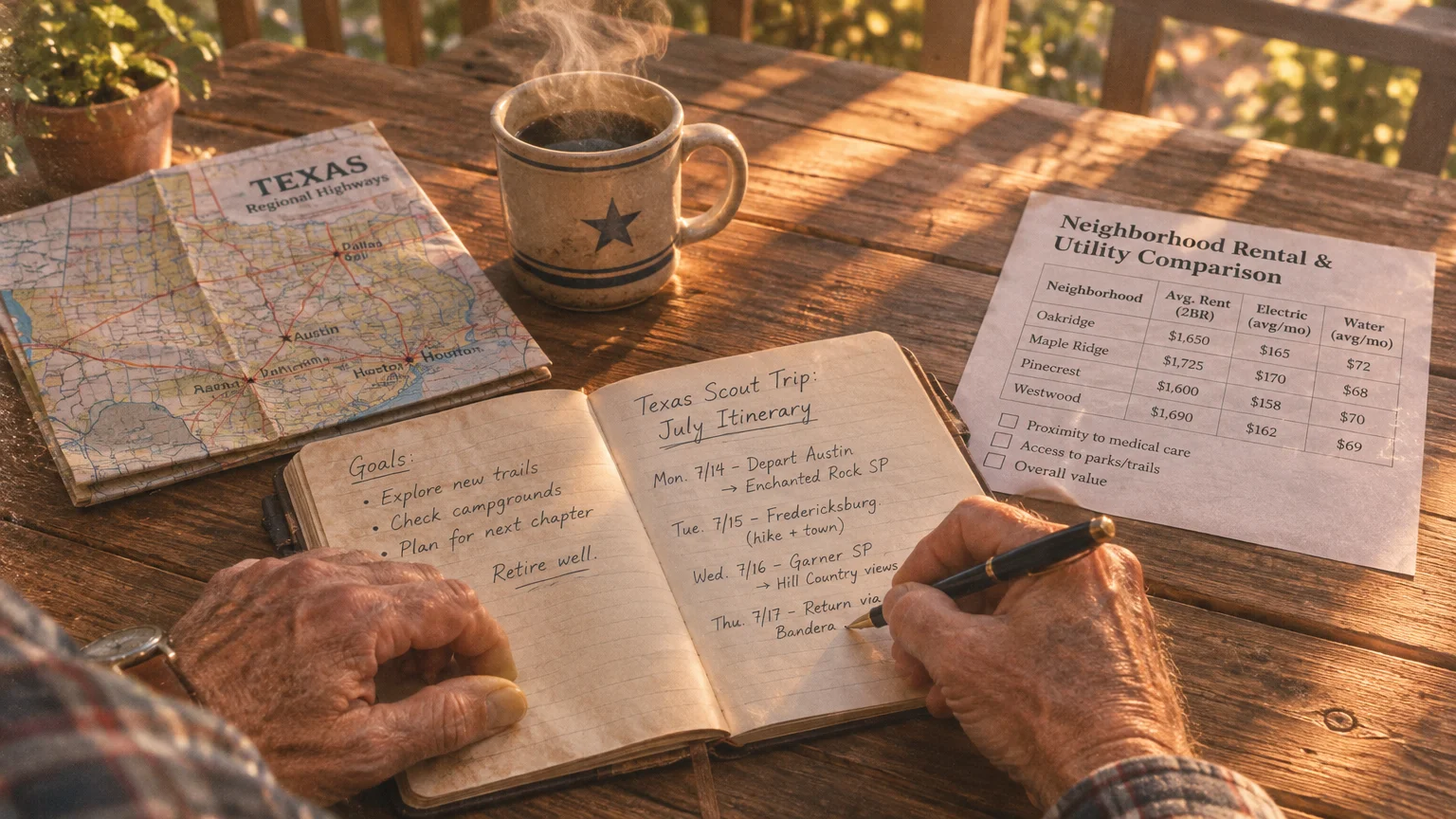
You do not need a luxury budget to enjoy warm winters, live music, and solid healthcare in Texas. Pick two or three cities from this list that match your preferred climate, then test-drive daily life there with a weeklong stay outside peak tourist season.
Check apartment listings, price out Medicare networks in that county, and tour local senior or community centers while you visit. This is educational content based on general retirement and financial principles. Individual results vary based on your situation. Always verify current benefit rules, tax laws, and eligibility requirements with official sources like SSA, Medicare.gov, or the IRS.
Last updated: November 2026. Retirement benefits, tax rules, and healthcare regulations change frequently—verify current details with official sources.