
Re-entering the workforce after age 55 can feel daunting, especially when your personal savings run thin and entry-level roles fail to pay living expenses. Paid training programs provide guaranteed wages while you build modern job skills.
These government and nonprofit initiatives match mature jobseekers with local community employers, paying wages funded through federal, state, or private workforce grants. You earn steady paychecks immediately rather than spending money on expensive classroom tuition.
Whether you need to supplement monthly cash flow or learn modern computer software, structured training programs deliver real financial relief. Here are eight paid training programs designed specifically for low-income workers over 55.

Why Paid Retraining Matters for Low-Income Older Adults
Rising housing expenses, healthcare costs, and grocery bills push millions of older Americans to seek extra income. Traditional job hunting often presents steep hurdles, including digital screening barriers and employer biases against mature applicants.
Paid training older workers initiatives dismantle these barriers by pairing hands-on experience with dedicated skill building. Employers receive wage subsidies or civic volunteer support, which makes them eager to train older candidates.
You gain recent resume experience, earn dependable income, and establish professional connections in your local community. These programs turn your life experience into a practical asset while preparing you for long-term financial stability.
“Financial security in our later years isn’t just about what we saved yesterday; it is about our willingness to earn, adapt, and build new value today.” — Jean Chatzky, Financial Journalist and Author
Enrolling in workforce programs seniors trust allows you to upgrade your capabilities without taking on student debt. You acquire relevant workplace skills while maintaining your household budget.
1. Senior Community Service Employment Program (SCSEP)
The Senior Community Service Employment Program (SCSEP) serves as the cornerstone of federal workforce initiatives for mature jobseekers. Authorized under Title V of the Older Americans Act, the program receives primary funding from the U.S. Department of Labor.
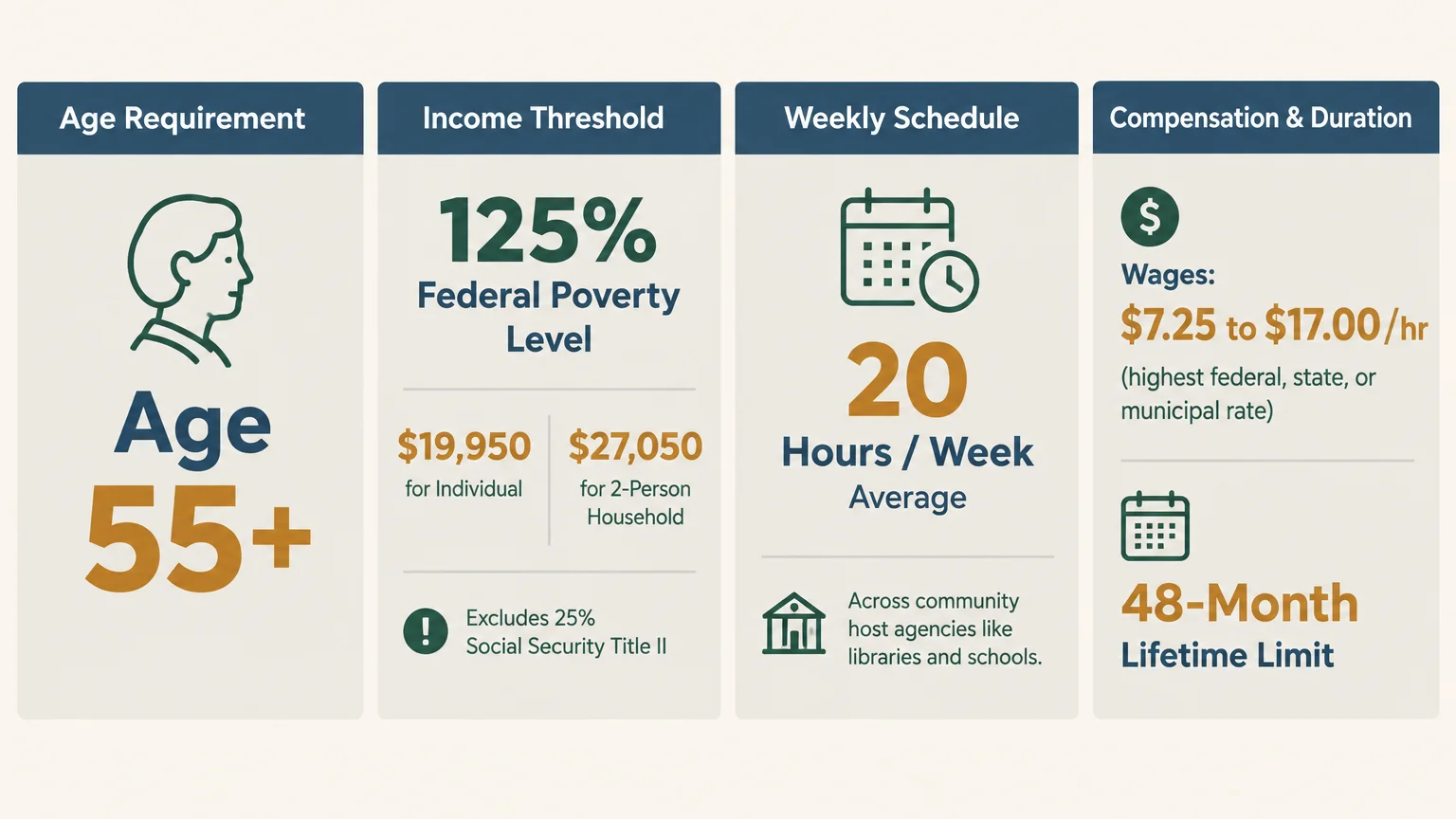
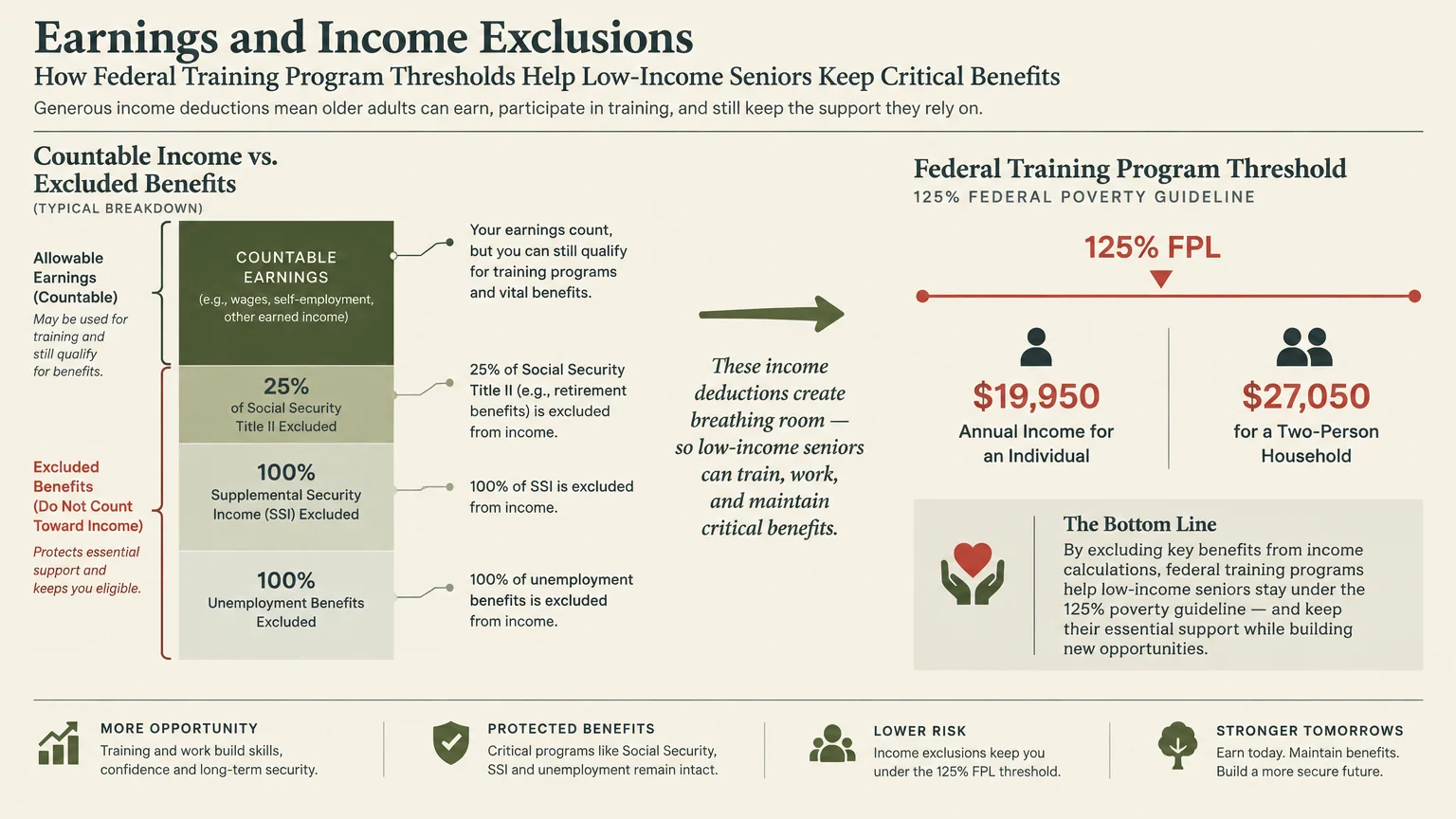
To qualify for the SCSEP program, you must be at least 55 years old, currently unemployed, and have a family income at or below 125% of the Federal Poverty Level. In the 48 contiguous states, that threshold equals $19,950 annually for an individual and $27,050 for a two-person household.
Program administrators use generous income calculations to help you qualify. They exclude 25% of your Social Security Title II benefits, all Supplemental Security Income (SSI), and unemployment compensation when evaluating countable income.
Participants work an average of 20 hours per week at local public or non-profit host agencies. Host locations include public schools, senior centers, daycares, libraries, and government offices.
You earn the highest applicable wage among federal, state, or municipal minimum wage rates. In states like California, Washington, or New York, wages can reach $16 to $17 per hour, while federal minimum wage areas pay $7.25 per hour.
Congress sets a lifetime participation limit of 48 months per worker. This window gives you ample time to build modern proficiencies and transition into permanent, unsubsidized employment.
Priority enrollment goes to veterans, qualified spouses, individuals over age 65, and workers with disabilities or limited English proficiency. Major organizations like the AARP Foundation administer SCSEP across 21 states and Puerto Rico alongside partners like Goodwill and the National Urban League.

2. AmeriCorps Seniors: Foster Grandparent and Senior Companion Programs
AmeriCorps Seniors provides meaningful, stipend-supported community assignments for adults aged 55 and older. While technically classified as national service volunteer programs, the Foster Grandparent and Senior Companion models function as paid experiential training.
Income eligibility reaches up to 200% of the Federal Poverty Level. An individual can earn up to $31,920 annually, while a two-person household can earn up to $43,280.
You can deduct verifiable out-of-pocket medical expenses up to 50% of the poverty guideline when calculating your qualifying income. This provision allows many older adults with high prescription costs to participate comfortably.
Participants serve between 10 and 40 hours per week, with most trainees averaging 20 weekly hours. You receive comprehensive pre-service orientation and ongoing monthly in-service training.
You receive an hourly stipend of $4.00 per hour along with transportation reimbursements and complimentary meals during your shift. While the hourly rate is modest, its legal structure provides exceptional financial advantages.
Under the Domestic Volunteer Service Act, this stipend remains 100% tax-free. Federal and state agencies cannot count these payments against your Social Security, SSI, SNAP food stamps, or Section 8 housing vouchers.
Foster Grandparents assist children with literacy, numeracy, and emotional development in local classrooms. Senior Companions assist frail, homebound older adults with daily tasks, learning care navigation and social support skills.
3. Workforce Innovation and Opportunity Act (WIOA) Initiatives
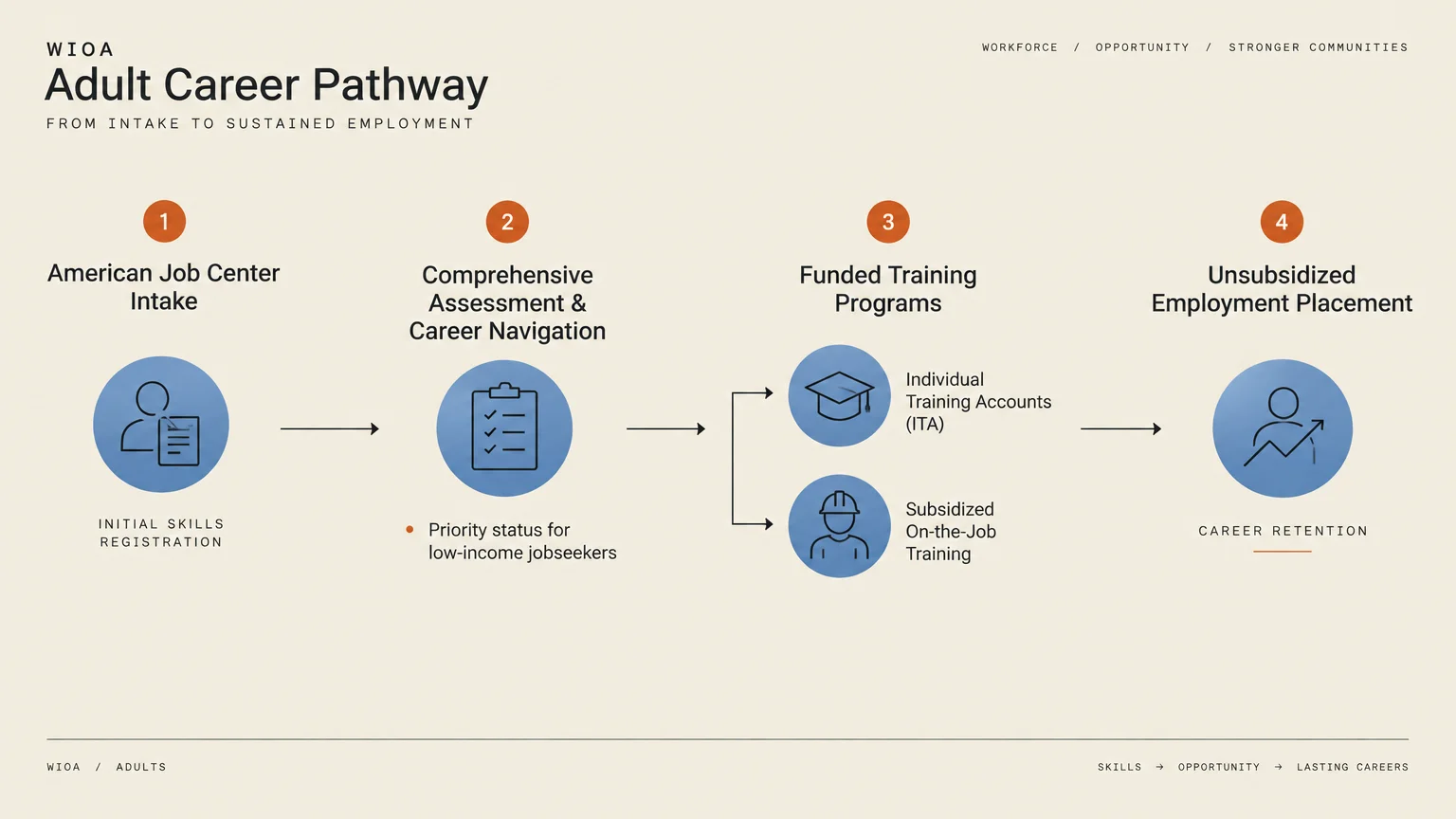
The Workforce Innovation and Opportunity Act funds local public employment offices across the country, known as American Job Centers. WIOA provides dedicated funding tracks for both low-income adults and displaced, laid-off older workers.
If corporate downsizings or plant closures displaced you from your long-term career, WIOA classifies you as a dislocated worker regardless of household income. Low-income older adults also qualify through standard priority-of-service mandates.
One of WIOA’s most effective training models is the On-the-Job Training (OJT) contract. Under an OJT agreement, the local workforce board reimburses private employers up to 50% of your hourly wage while you learn your job duties.
Because the government offsets payroll costs, private companies actively hire mature workers who need software or technical upskilling. You earn full market wages on payroll from your first day on the job.
WIOA also provides Individual Training Accounts (ITAs). These educational vouchers pay for approved tuition, licensing examinations, textbooks, and certifications at local community colleges or trade academies.
Career counselors at American Job Centers also provide supportive services. They can authorize funds for bus passes, specialized work attire, computer tools, and licensing fees so you can finish training successfully.

4. EPA Senior Environmental Employment (SEE) Program
The Environmental Protection Agency operates the Senior Environmental Employment (SEE) Program under the Environmental Programs Assistance Act. This initiative places experienced workers aged 55 and older in administrative, technical, and scientific support positions at EPA offices.
Unlike programs restricted to extreme poverty, the SEE Program does not impose strict low-income limits. This makes it an ideal option for older jobseekers whose small pensions or savings exceed SCSEP thresholds.
Nonprofit partners like National Experienced Workforce Solutions (NEW Solutions), CWI Works, and the National Caucus and Center on Black Aged (NCBA) recruit and manage participants. Trainees support environmental testing, document management, community outreach, and IT support.
Wages fall into three defined skill tiers based on job complexity and educational requirements. Entry-level clerical roles receive competitive hourly wages, while specialized technical positions pay significantly higher hourly rates.
The program provides valuable employment benefits that are rare among part-time senior training roles. Qualified enrollees receive paid health insurance, paid annual leave, federal holidays, and paid sick days.
Positions operate on renewable annual contracts, offering reliable stability. You gain hands-on expertise in environmental administration and government operations while earning regular wages.

5. USDA Agriculture Conservation Experienced Services (ACES) Program
The United States Department of Agriculture operates the ACES Program in partnership with the Natural Resources Conservation Service (NRCS) and the U.S. Forest Service. This program hires experienced workers aged 55 and older to deliver technical and conservation support.
Like the EPA SEE model, ACES does not apply rigid poverty ceilings. It offers temporary part-time and full-time paid assignments ranging from 16 to 40 hours per week.
Nonprofit staffing partners recruit older workers to assist with watershed management, soil surveys, forest conservation, and grant coordination. Trainees work alongside federal agricultural scientists and land managers.
You do not need an agricultural degree to qualify for many ACES positions. Agencies regularly hire administrative assistants, data clerks, customer service specialists, and facility maintenance aides.
Positions pay set hourly wages based on the specialized skills required for the assignment. Trainees also receive paid federal holidays, sick leave, and mileage reimbursements for required travel.
Working in ACES keeps you physically active and connected to natural resource stewardship. It serves as an exceptional bridge career for older adults who enjoy outdoor work, mapping, or administrative support.

6. U.S. Registered Apprenticeship Programs
Apprenticeships are no longer limited to young adults entering construction trades. The federal government and state workforce agencies now aggressively promote registered apprenticeships for mature workers pursuing midlife career changes.
The U.S. Department of Labor mandates that registered apprenticeships cannot establish maximum age cutoffs under age discrimination statutes. Workers aged 55 and older represent a rapidly growing demographic in healthcare, information technology, and advanced manufacturing apprenticeships.
Registered apprenticeships follow an earn-while-you-learn format. Sponsoring employers place you on their regular payroll from day one, paying guaranteed, progressive wages that rise as you master competencies.
Apprentices divide their work week between hands-on, supervised on-the-job training and subsidized classroom instruction. Sponsoring companies or partner community colleges cover your educational tuition costs.
High-demand fields with growing mature apprentice representation include medical billing, pharmacy technology, commercial truck driving, and cybersecurity operations. These positions offer strong post-graduation retention rates and benefits.
Completing a registered apprenticeship awards you a nationally recognized credential certified by the Department of Labor. This portable certification proves your modern technical competence to employers nationwide.
7. Social Security Ticket to Work Program (Ages 55 to 64)
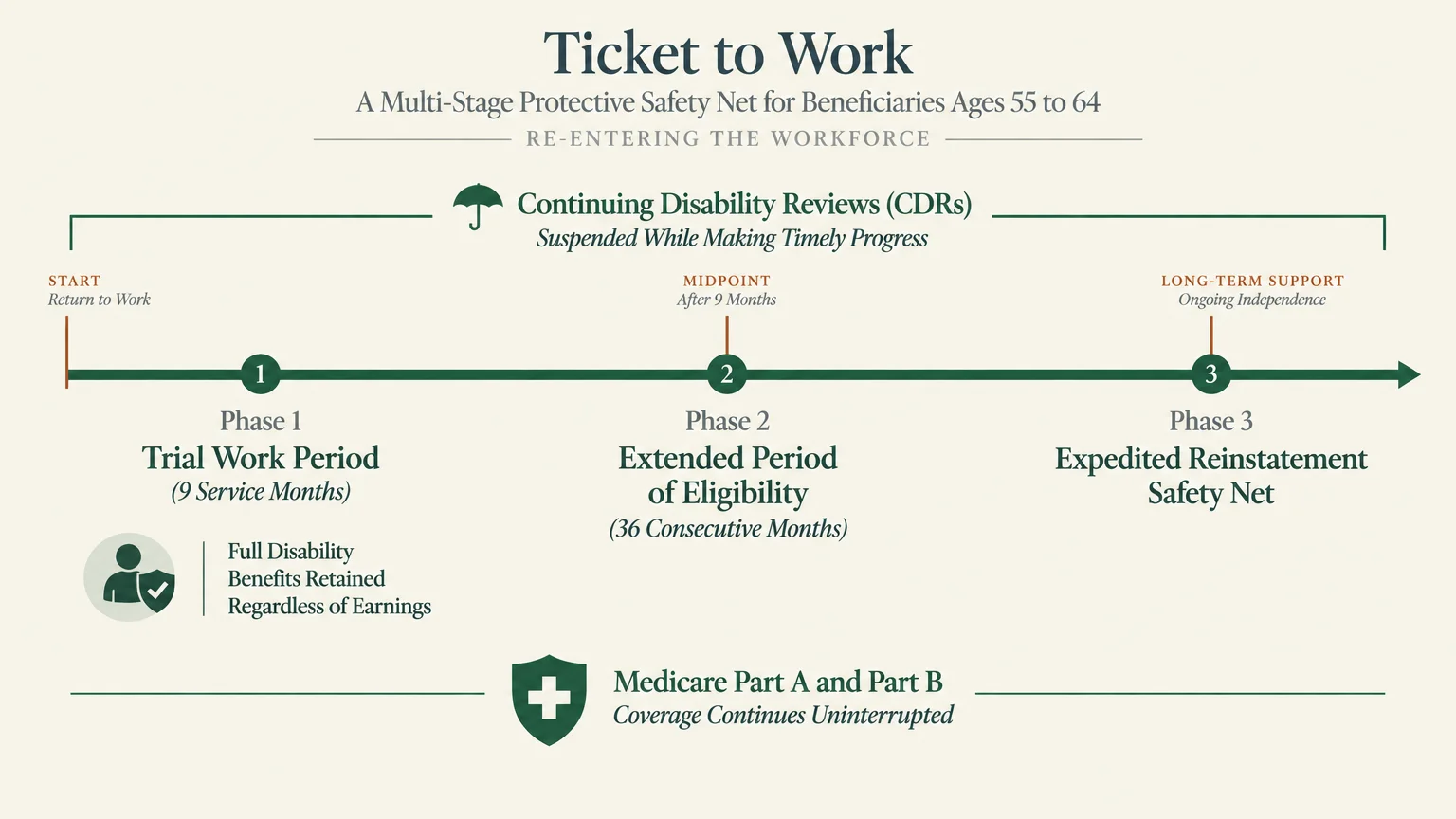
If you are between ages 55 and 64 and currently receive Social Security Disability Insurance (SSDI) or Supplemental Security Income (SSI), the Ticket to Work program offers paid training pathways. The program helps disability beneficiaries test their work capacity without immediately jeopardizing monthly benefit payments.
The Social Security Administration partners with authorized Employment Networks (EN) and state vocational rehabilitation agencies. These organizations deliver free career counseling, resume updates, job placement, and vocational training.
Trainees can utilize Trial Work Months to earn income while receiving full SSDI disability checks. During this evaluation phase, you can test your stamina in a modern work environment with zero risk to your underlying disability claim.
For standard employment, the Substantial Gainful Activity (SGA) earnings threshold stands at $1,690 per month for non-blind beneficiaries and $2,830 per month for blind beneficiaries. Staying below these limits allows you to retain your benefit checks while learning on the job.
Ticket to Work participants also retain continuous Medicare or Medicaid coverage during their training phases. This protection eliminates the fear of losing essential healthcare coverage while attempting to re-enter the workforce.
If your health condition eventually forces you to stop working, expedited reinstatement provisions let you restart disability benefits without filing an entirely new, multi-year application. This safety net provides peace of mind as you build new career skills.

8. National Urban League and Community Workforce Alliances
The National Urban League, along with partner organizations like Goodwill Industries and the National Caucus and Center on Black Aged, operates specialized urban workforce centers. These community programs target low-income mature workers confronting systemic employment challenges.
Funded by private philanthropy, municipal grants, and federal workforce allocations, these initiatives focus heavily on practical digital literacy. Trainees learn cloud computing, office productivity software, electronic medical records, and digital point-of-sale systems.
Many urban workforce programs incorporate paid transitional internships directly into the curriculum. You attend structured computer classes for part of the week while completing paid work assignments at partner local businesses.
These local alliances also offer wrap-around personal support services. Program coordinators assist with professional interview wardrobes, vision care exams, transit passes, and food pantry referrals.
Trainees work closely with job developers who maintain relationships with inclusive, age-friendly regional employers. This hands-on placement support drastically cuts down the time required to secure permanent, unsubsidized employment.
“Retirement is not the end of productive life; it is an invitation to discover new ways your experience can serve the community.” — Mitch Anthony, Retirement Living Author
These nonprofit networks provide peer encouragement alongside technical skills. Training in cohorts with fellow older adults builds confidence and banishes the isolation often felt during a late-career job search.
Side-by-Side Comparison of Paid Training Programs
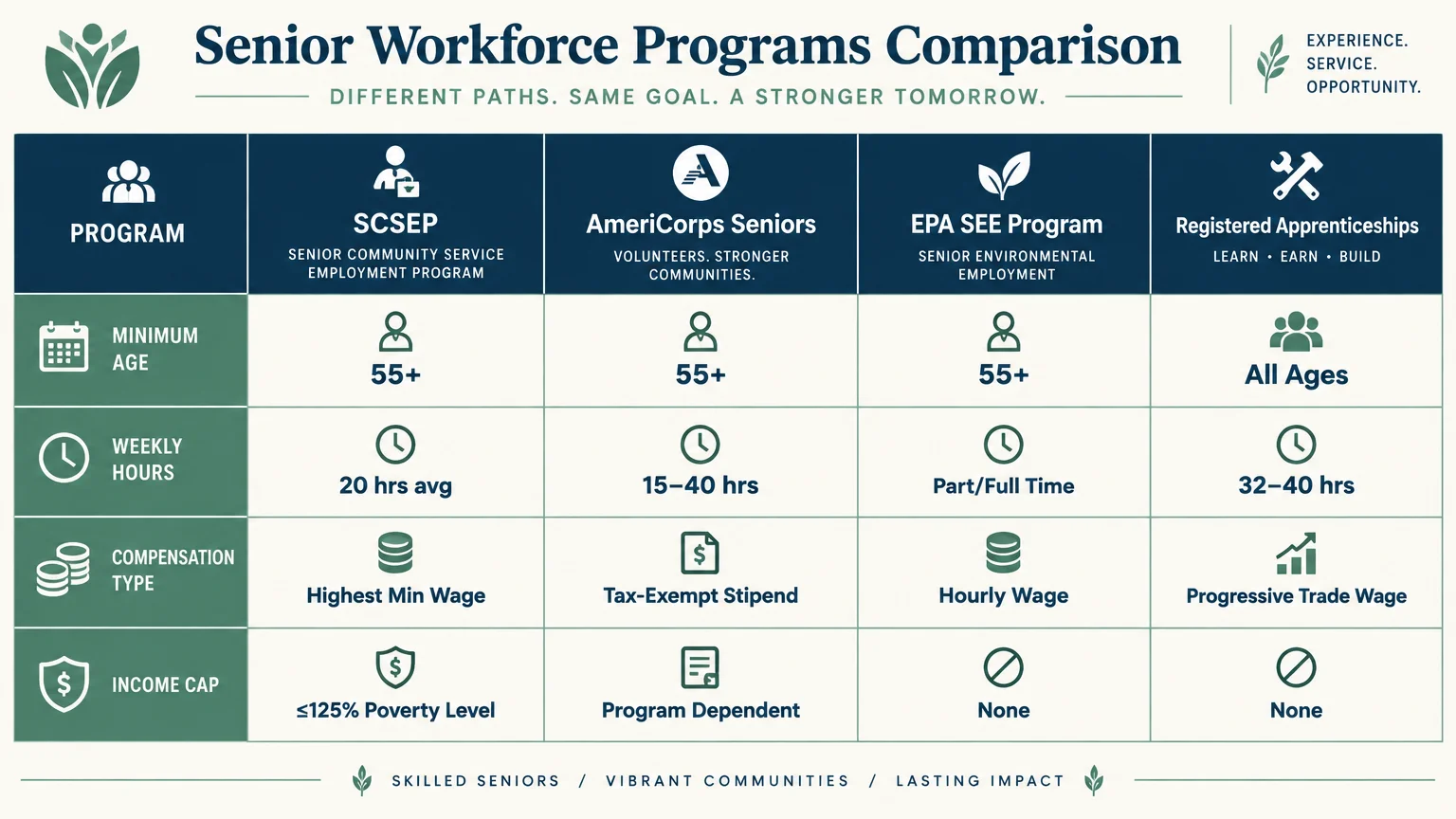
Choosing the right initiative depends on your current household income, health status, and weekly schedule flexibility. Review the key features of each training option below to identify your best personal match.
| Program Name | Minimum Age | Income Eligibility | Hourly Pay / Benefits | Weekly Hours |
|---|---|---|---|---|
| SCSEP | 55 | Up to 125% Federal Poverty Level | Highest of federal, state, or local minimum wage | Average 20 hours |
| AmeriCorps Seniors | 55 | Up to 200% Federal Poverty Level | $4.00/hr tax-free stipend, meals, mileage reimbursement | 10 to 40 hours |
| WIOA On-the-Job Training | 18 (Priority 55+) | Low-income or Dislocated Worker status | Regular employer wages (50% wage subsidy to employer) | 20 to 40 hours |
| EPA SEE Program | 55 | No strict income cap; focuses on 55+ | Tiered hourly wages, paid health insurance, paid leave | 20 to 40 hours |
| USDA ACES Program | 55 | No strict income cap; focuses on 55+ | Standard hourly wages, paid holidays, sick leave | 16 to 40 hours |
| Registered Apprenticeships | 16 (No max age) | No income restrictions | Progressive market hourly wage plus tuition coverage | 30 to 40 hours |
| Ticket to Work | 55 (Cutoff 64) | Must receive SSI or SSDI benefits | Competitive wages; SGA limit of $1,690/month | Flexible part-time |
| Urban League / Goodwill | 55 | Low-income or long-term unemployed | Minimum wage or subsidized internship rates | 15 to 25 hours |
Review the exact eligibility criteria for your target program before submitting application paperwork. Local host agencies can clarify regional wage variations and open enrollment periods.
Navigating Earnings Caps and Social Security Rules
Earning new wages while receiving Social Security requires careful monitoring of statutory income limits. Understanding these rules ensures your training wages enhance your financial security rather than trigger unexpected tax bills or benefit reductions.
If you are between age 62 and your Full Retirement Age (FRA) and claim early Social Security retirement benefits, the Retirement Earnings Test applies. For individuals born in 1960 or later, Full Retirement Age is 67.
If you remain under your Full Retirement Age for the entire year, you can earn up to $24,480 annually ($2,040 monthly) before penalties begin. If you exceed this threshold, the Social Security Administration withholds $1 in benefits for every $2 earned above the limit.
In the specific calendar year you reach Full Retirement Age, the earnings ceiling rises substantially to $65,160 annually ($5,430 monthly). In this period, Social Security withholds only $1 for every $3 earned above the limit until your birthday month.
Once you reach your 67th birthday, the Retirement Earnings Test disappears completely. You can earn an unlimited amount of wages in any paid training program without sacrificing a single penny of your Social Security checks.
Furthermore, benefits withheld due to early earnings are not permanently lost. When you attain Full Retirement Age, the Social Security Administration recalculates your monthly benefit upward to credit back the withheld amounts.
Federal tax treatment also varies significantly across training stipends. AmeriCorps Seniors stipends remain completely exempt from federal and state income taxes, whereas SCSEP and WIOA wages are treated as taxable earned income on Form 1040.
Professional vs. Self-Guided Program Navigation
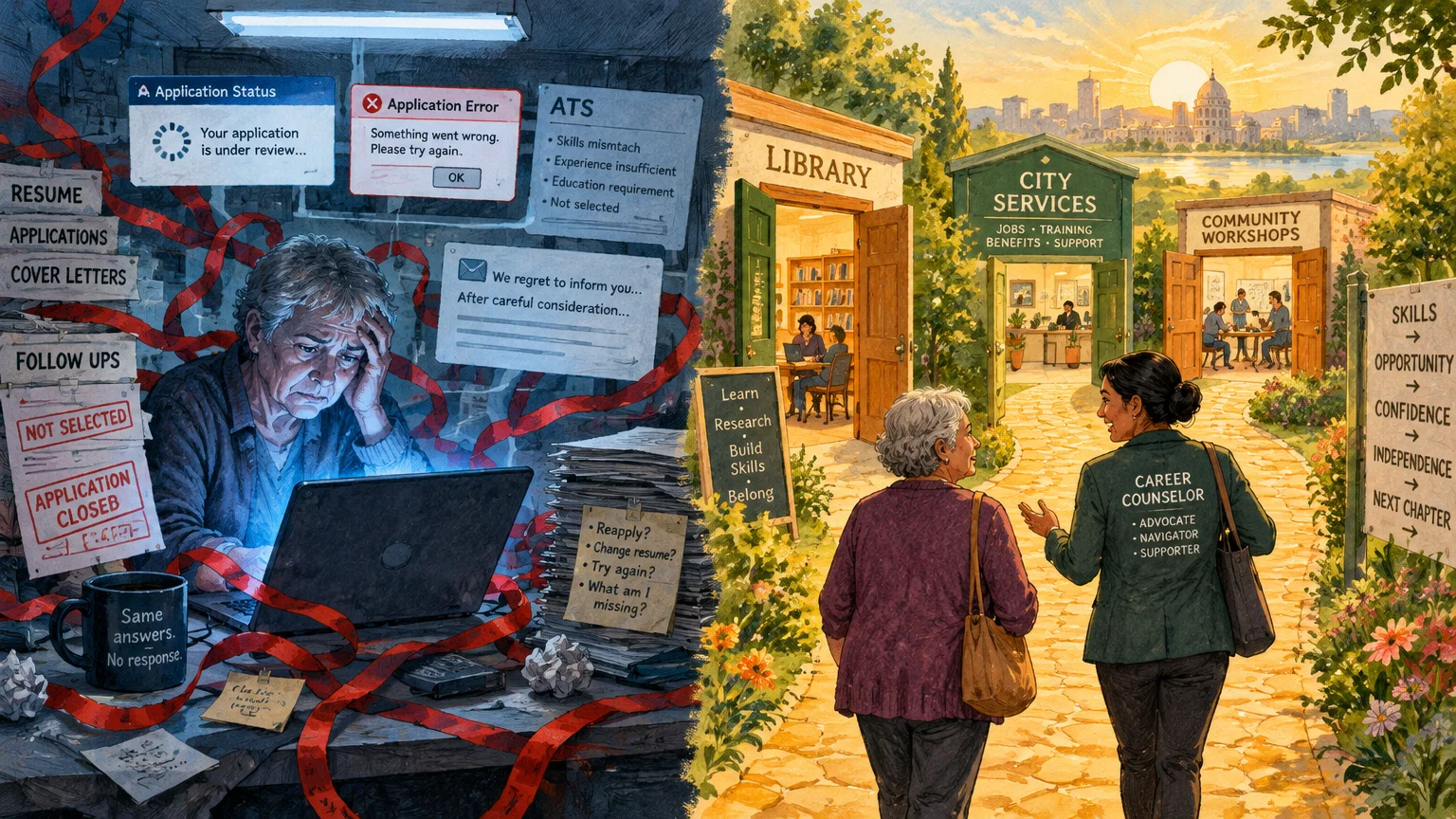
Enrolling in a paid workforce program can be handled independently or with the assistance of a trained benefits counselor. Selecting the right enrollment approach depends entirely on your current financial complexity and benefit mix.
- Disability Beneficiaries (Ages 55 to 64): If you collect SSDI or SSI, you should seek professional assistance from a certified Community Work Incentives Coordinator (CWIC). These specialists map out how training wages interact with medical reviews and cash benefits, protecting your healthcare coverage.
- Early Social Security Retirees (Ages 62 to 66): A self-guided approach works well if your annual training wages remain safely under the $24,480 earnings ceiling. You can track your gross monthly wages through standard payroll stubs without paying for outside financial consultations.
- Former Technical Professionals (Ages 55+): Older workers with prior scientific, engineering, or administrative backgrounds should work directly with specialized nonprofit recruiters like NEW Solutions. These agency caseworkers coordinate direct interviews for EPA SEE and USDA ACES federal openings.
- Low-Income Seniors Needing Food and Housing Aid: If you rely on SNAP, Medicaid, and Section 8 housing, consult a local legal aid advocate or an Administration for Community Living counselor. They will verify whether your training income triggers benefit cliffs that raise rent or lower grocery allowances.
Balancing income thresholds against public benefit formulas prevents costly administrative mistakes. Dedicated counselors can help you select host positions that preserve your net household resources.

Common Mistakes to Avoid When Re-entering the Workforce
Many older adults encounter frustrating setbacks when entering paid workforce programs. Avoiding these frequent missteps will help you maximize your training pay while keeping your public benefits safe.
Overlooking Allowable Medical Deductions: When applying for AmeriCorps Seniors programs, applicants frequently forget that out-of-pocket medical expenses can be subtracted from countable income. Documenting pharmacy co-pays, dental bills, and Medicare Part B premiums can lower your income enough to qualify.
Ignoring the SCSEP 48-Month Lifetime Cap: SCSEP offers exceptional community support, but its 48-month lifetime limit is strictly enforced by federal law. Treat your host placement as temporary, and begin applying for permanent, unsubsidized positions during your first two years in the program.
Assuming Age Limits Exist for Apprenticeships: Many jobseekers assume apprenticeships only accept workers in their twenties. Federal law explicitly prohibits age caps on registered apprenticeships, making mature applicants highly competitive candidates.
Failing to Report Earnings Promptly: If you receive SSI, Medicaid, or SNAP, you must report new training wages to state caseworkers by required monthly deadlines. Delaying wage reports can generate painful overpayment notices that require months of financial repayment.
Choosing Host Agencies Without Transferable Skills: When entering SCSEP or WIOA, request host assignments that utilize modern office technology, inventory software, or digital databases. Spending training hours on manual tasks without technology exposure undermines your long-term employability.
Frequently Asked Questions About Paid Senior Training
Can I participate in SCSEP if I already collect Social Security retirement?
Yes, you can participate if your total countable family income remains below 125% of the Federal Poverty Level ($19,950 for individuals). Because SCSEP excludes 25% of your Social Security Title II retirement benefits from countable income calculations, many early retirees qualify easily.
Will paid training wages eliminate my Medicare or Medicaid benefits?
Medicare eligibility is based on age or disability history and is never affected by earned wages. Medicaid, however, enforces strict income caps; you should evaluate whether training income pushes you above local Medicaid eligibility before starting a position.
Are these training programs open to jobseekers over age 70?
Yes, programs like SCSEP, AmeriCorps Seniors, EPA SEE, and USDA ACES have no upper age limitations. As long as you meet income rules and can perform assigned duties, you can participate well into your seventies and eighties.
Do I have to pay taxes on the wages earned during job training?
Wages earned through SCSEP, WIOA on-the-job training, and registered apprenticeships are taxable earned income subject to standard withholding. AmeriCorps Seniors stipends, however, are non-taxable under federal law and do not require income tax reporting.
Taking Your First Steps Toward Paid Retraining
Returning to work after age 55 provides both mental engagement and essential cash flow. You do not need to navigate the modern job market alone when federal and civic programs will pay you to master valuable skills.
Begin by contacting your local American Job Center or searching local SCSEP providers through the National Council on Aging. Taking immediate action connects you with supportive mentors who value your life experience and want to see you succeed.
This article provides general retirement education and information only. Every retiree’s situation is unique—what works for others may not work for you. For personalized advice, consider consulting a qualified financial professional such as a CFP or CPA.
Last updated: October 2026. Retirement benefits, tax rules, and healthcare regulations change frequently—verify current details with official sources.









Leave a Reply