
Surviving family members often discover that routine bank access vanishes the moment an account holder dies. This sudden freeze locks funds needed for mortgages, utility bills, and immediate funeral costs.
Without deliberate planning, your checking and savings accounts enter the slow, costly probate court system. Fortunately, straightforward titling strategies keep your money completely accessible to your family.
Taking proactive action today ensures your loved ones avoid financial gridlock. You can secure immediate liquidity in just a few minutes at your local bank branch.
Why Banks Freeze Accounts Immediately After Death
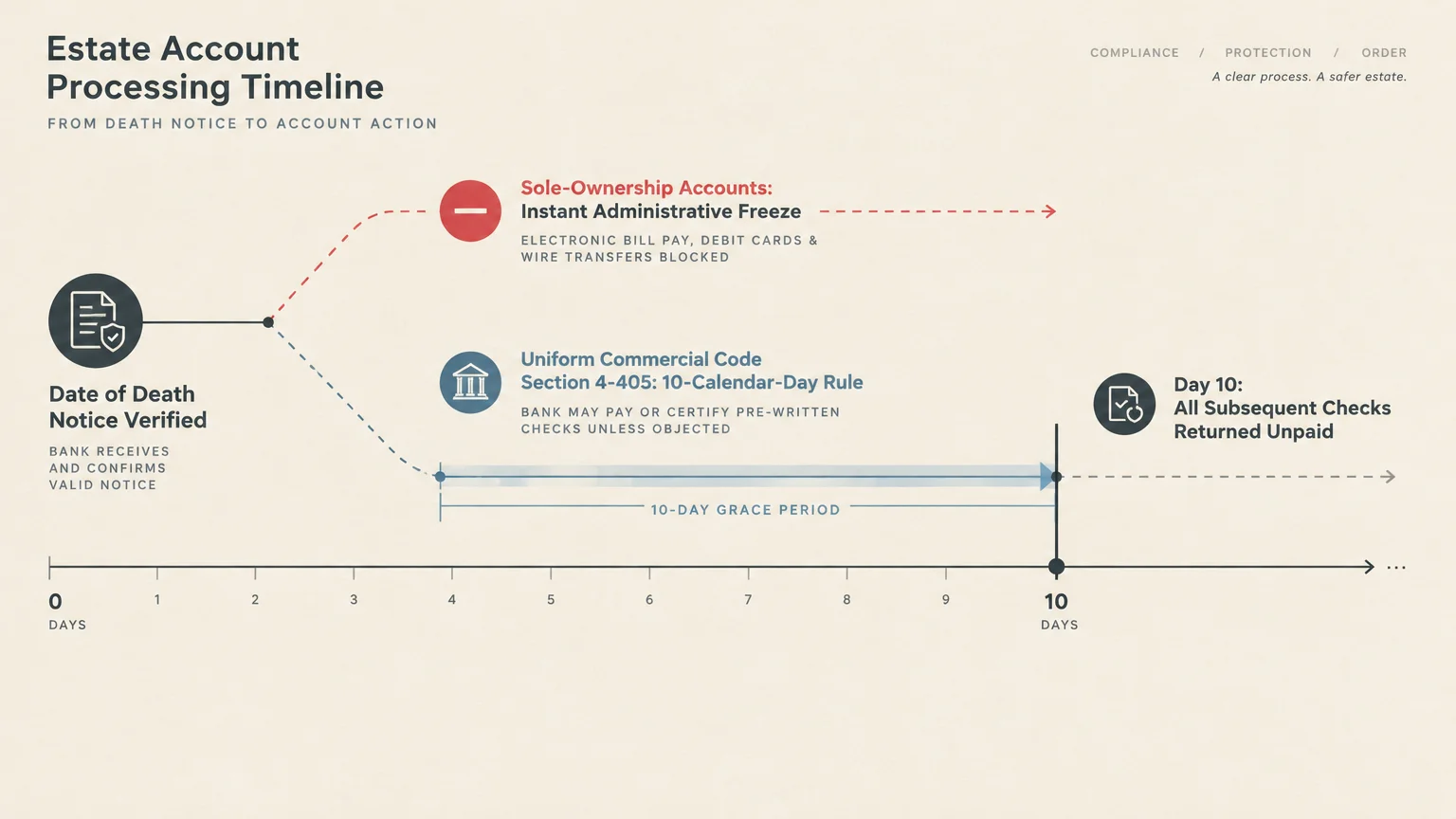
When a depositor passes away, financial institutions act quickly to protect the balance. Experiencing bank accounts frozen after death is standard industry procedure to shield assets from potential theft or fraud.
Banks learn about a customer’s passing through several channels. Family members notify the branch, local obituaries publish notices, or state records transmit data through automated verification networks.
The moment a bank receives verified notice, staff place an administrative lock on sole-ownership accounts. This hold stops outgoing wire transfers, electronic bill payments, debit card transactions, and cash withdrawals immediately.
This automated freeze ensures deposits remain intact until a court confirms legal estate authority. Without this protocol, unauthorized individuals could drain funds before rightful heirs receive their inheritance.
A notable exception exists under Section 4-405 of the Uniform Commercial Code. A bank may continue paying or certifying checks drawn on or before the date of death for up to ten calendar days.
This ten-day grace period applies only if the bank knows about the death and no interested party objects. Once ten days pass, the bank returns all incoming checks unpaid.

The Power of Attorney Trap: Why Financial Authority Stops at Death
Many retirees assume a durable power of attorney allows an adult child to handle final banking tasks. In reality, a power of attorney loses all legal authority the exact second the principal dies.
State laws across all fifty states enforce this strict boundary without exception. The authority granted to your financial agent exists exclusively while you remain alive.
Surviving relatives who attempt to use an existing power of attorney commit unauthorized transactions. Swiping a parent’s debit card or writing checks after death can trigger an instant fraud investigation.
Automated bank security systems routinely flag transactions occurring after an account holder’s death date. These unexpected transactions frequently result in emergency administrative freezes on all linked accounts.
Similarly, adding a relative as an authorized signer or convenience signer does not grant inheritance rights. Their signing authority terminates instantly at death, leaving the underlying account locked.

Payable on Death (POD) Accounts: The Simplest Way to Bypass Court
Establishing a payable on death account offers the easiest path to keeping cash moving. A POD designation lets you name specific beneficiaries who inherit your cash automatically.
Bank accounts with a POD or Transfer on Death (TOD) designation help heirs avoid probate. These designations operate as non-probate contractual transfers that bypass courtroom delays and legal fees.
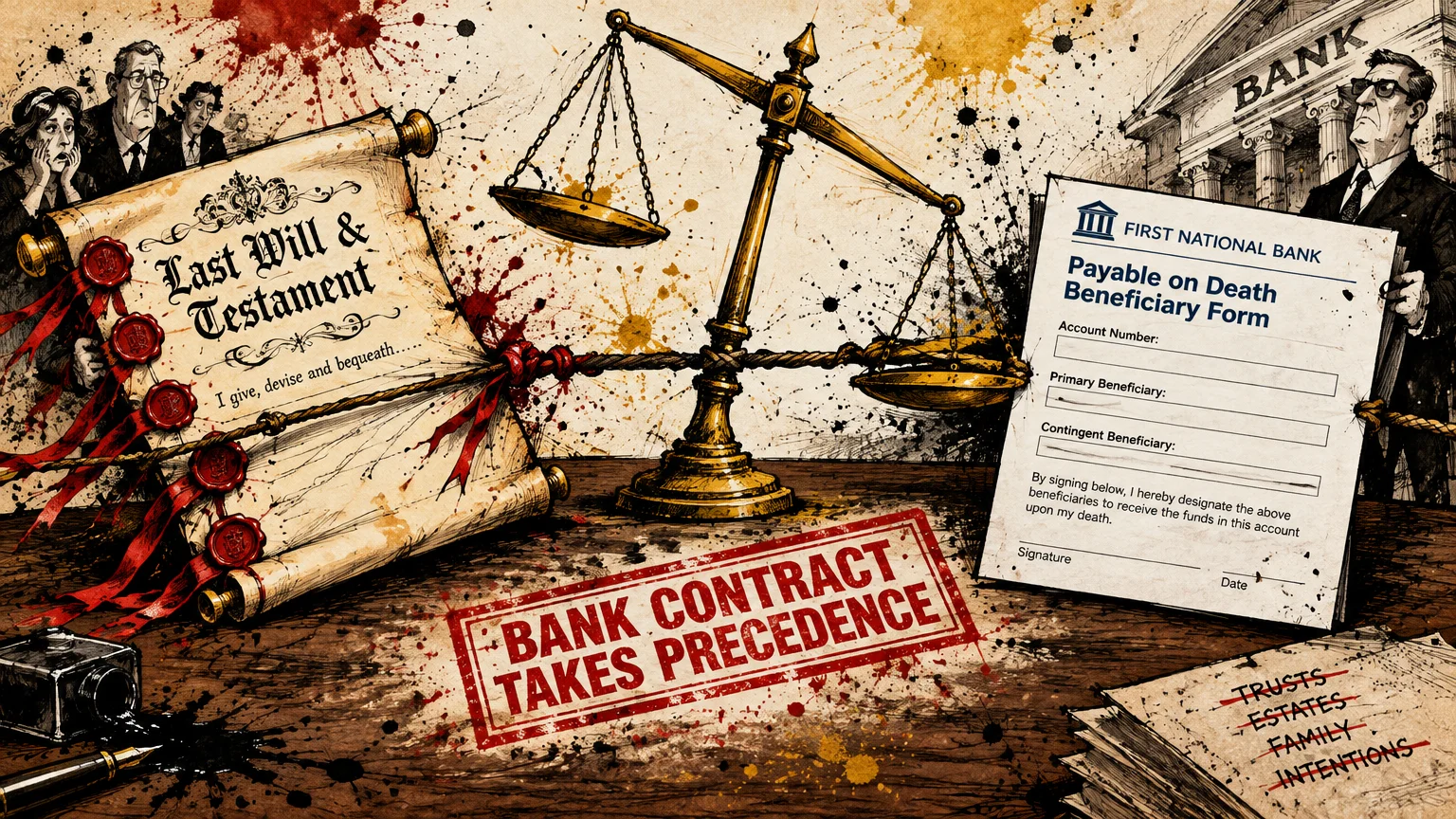
Importantly, a beneficiary form takes precedence over instructions written in your Last Will and Testament. If your will names your daughter but your bank form names your son, the bank pays your son.
Claiming funds from a POD account requires minimal paperwork for your beneficiaries. They simply present an official government photo identification card alongside a certified copy of your death certificate.
Regulatory updates make these beneficiary designations even safer for depositors. Under 12 C.F.R. § 330.10, the Federal Deposit Insurance Corporation simplified deposit calculations for informal trusts and POD accounts.
The FDIC provides up to $250,000 in coverage per unique named beneficiary at each insured bank. Depositors can protect up to $1,250,000 across five eligible beneficiaries within a single institution.
Furthermore, federal regulation 12 C.F.R. § 330.3(h) establishes a six-month grace period following an account holder’s death. This rule maintains existing deposit insurance levels for six months, giving heirs time to restructure accounts safely.
Joint Bank Accounts: Understanding Ownership Titling
Maintaining joint bank accounts represents another common strategy to guarantee surviving family members maintain immediate liquidity. However, the exact legal wording on your bank signature card dictates how funds transfer.
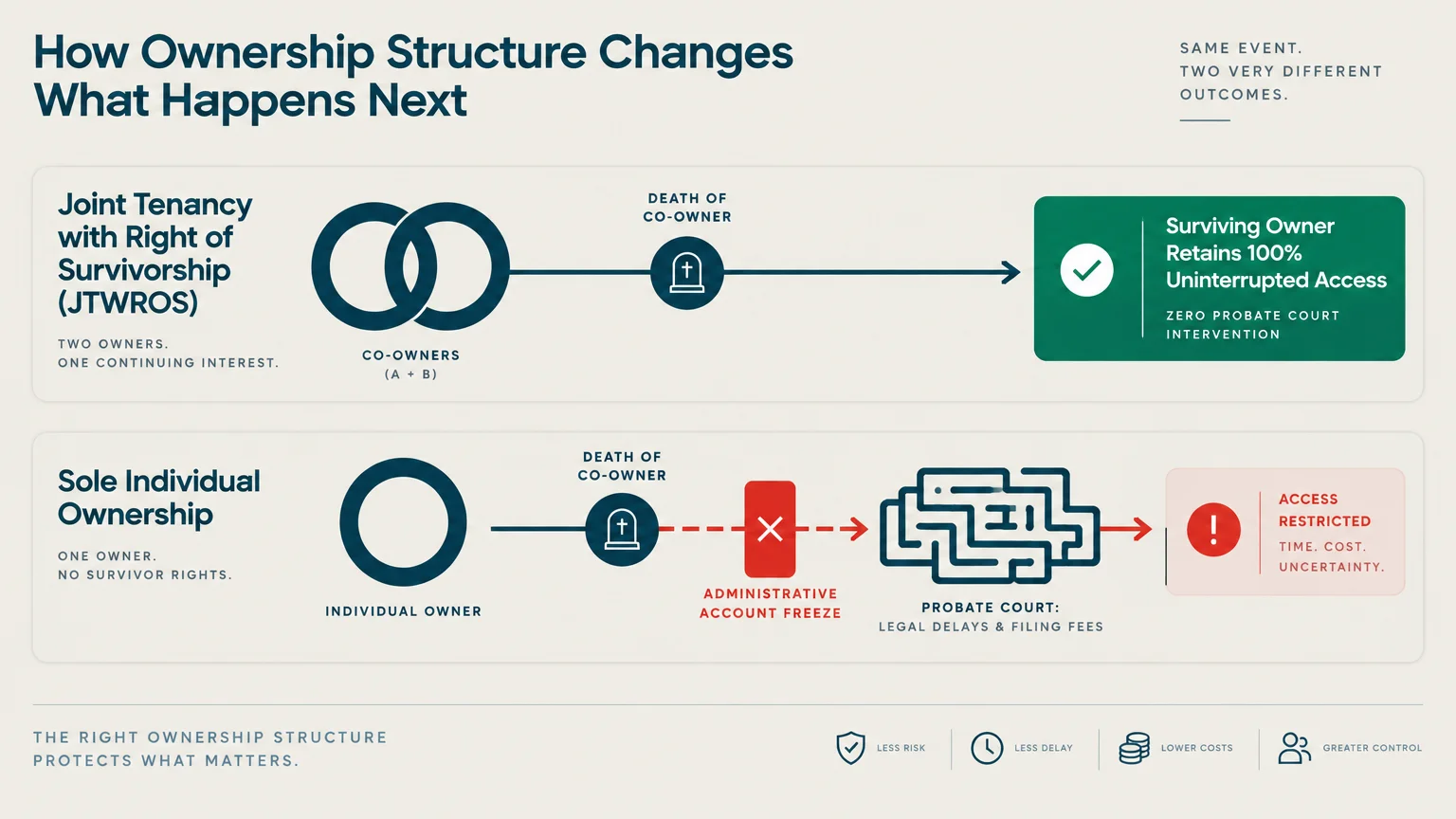
The most protective titling structure is Joint Tenancy with Right of Survivorship, commonly abbreviated as JTWROS. When one co-owner dies, full legal ownership transfers automatically to the surviving owner by operation of law.
The surviving spouse or co-owner continues writing checks, paying utilities, and withdrawing funds without interruption. The account remains fully open while the bank updates the title into the survivor’s sole name.
In contrast, accounts titled as Tenancy in Common create significant complications after death. Under Tenancy in Common titling, the deceased owner’s specific share freezes immediately and must pass through formal probate.
Adding adult children as joint owners to avoid probate can also create unintended hazards. Because joint owners share full legal ownership, your child’s creditors, lawsuits, or divorcing spouse can legally seize your money.
Adding a joint owner also constitutes an immediate financial gift under federal gift tax guidelines. Using POD designations usually provides a much safer alternative for single adult children.
Comparing Account Titling Methods
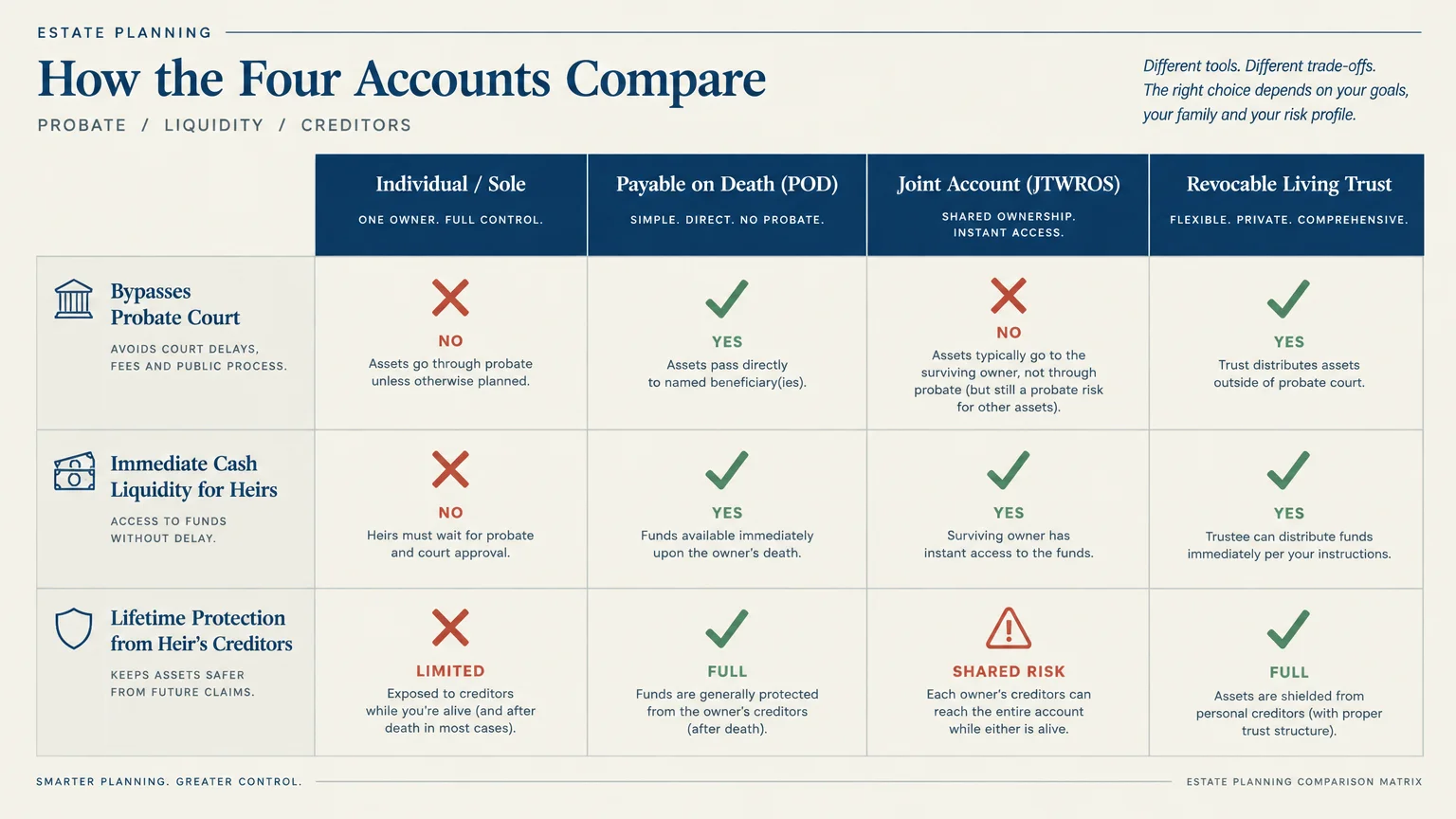
Choosing the right titling method determines how quickly your family accesses your funds. Review this comparison to see how different account setups perform after death.
| Account Structure | Access Speed After Death | Avoids Probate? | Survivor Liability Risk | FDIC Protection Details |
|---|---|---|---|---|
| Sole Owner (No POD) | Months (Requires probate letters) | No | None during lifetime | Standard $250,000 single depositor limit |
| Payable on Death (POD) | Days (Upon presenting death certificate) | Yes | Zero lifetime exposure to beneficiary debts | $250,000 per unique beneficiary up to $1.25M |
| Joint (JTWROS) | Immediate (No interruption) | Yes | High (Subject to co-owner creditors and lawsuits) | $250,000 per co-owner; 6-month grace period post-death |
| Tenancy in Common (TIC) | Months (Deceased share frozen) | No | Moderate (Separate proportional shares) | Proportional share insured under single ownership rules |
| Revocable Living Trust | Immediate (Successor trustee steps in) | Yes | Zero personal liability for trust beneficiaries | $250,000 per unique beneficiary up to $1.25M |
Selecting the appropriate structure protects your cash while preventing unnecessary legal friction. Most retirees find that combining joint accounts for spouses with POD designations for children offers optimal protection.

The Social Security Clawback Trap
Retirees must navigate strict federal rules regarding direct deposits and final entitlement benefits. The Social Security Administration pays retirement benefits one month in arrears.
Federal regulations require a recipient to live through every second of an entire calendar month to earn that benefit. If a beneficiary passes away on May 30, they do not qualify for May’s payment.
When Social Security deposits funds after death, the U.S. Department of the Treasury initiates an automated clawback under 31 C.F.R. Part 210. The Treasury electronically pulls that money back directly from the recipient’s bank.
If surviving family members spend those funds before the clawback occurs, the bank account can become severely overdrawn. Financial institutions routinely place protective holds on remaining balances until federal reclamations clear completely.
To prevent sudden overdrafts, surviving spouses should leave recent benefit deposits untouched. Reporting the passing promptly to federal agencies ensures smooth reconciliations without triggering prolonged account disruptions.

Revocable Living Trusts for Complex Estate Plans
When you manage multiple properties, blended family dynamics, or extensive liquid assets, basic beneficiary forms may prove inadequate. Establishing a revocable living trust provides complete structural control over your estate planning bank accounts.
You open or retitle checking and savings accounts directly into the legal name of your trust. While living, you maintain absolute control over the money as the primary trustee.
When you pass away, your designated successor trustee steps in immediately without seeking probate court permission. The successor trustee presents the trust certificate and death certificate to manage funds seamlessly.
This trust mechanism eliminates delays, prevents public court filings, and ensures your exact distribution instructions occur on schedule. Your successor trustee pays final bills, files taxes, and distributes remaining balances according to your terms.
“A trust is designed to keep your family out of probate court and ensure your assets are distributed exactly as you want, without costly delays.” — Suze Orman, Personal Finance Author & Advisor
Funding your trust represents the critical step that many retirees overlook. Simply creating trust paperwork does nothing until you physically retitle your bank accounts into the trust’s name.

Professional vs. Self-Guided Account Structuring
Deciding between self-directed setup and professional legal counsel depends on your financial complexity. Review these scenarios to select the best strategy for your situation.
Scenario 1: Simple Checking with Adult Children
If your primary assets consist of standard bank accounts and you want funds split equally among adult children, self-guided execution works well. You can complete POD designations directly at your bank branch without legal fees.
Scenario 2: Blended Families and Second Marriages
Blended family structures carry heightened risks of inheritance disputes and disinheritance of biological children. Hiring an estate planning attorney ensures comprehensive trust agreements protect both your surviving spouse and your children.
Scenario 3: Balances Exceeding FDIC Limits
When cash balances exceed $250,000 across accounts, you face potential uninsured losses during bank transitions. A certified financial planner can structure account ownership across multiple institutions to maximize permanent FDIC protection.
Scenario 4: Heirs with Special Needs or Significant Debt
Leaving cash directly through joint ownership or POD designations can disqualify vulnerable heirs from government assistance. An estate attorney can construct a special needs trust to preserve their critical benefits.
Common Mistakes to Avoid
Avoiding administrative errors keeps your banking accounts fully operational when your loved ones need support. Watch out for these frequent oversights during your retirement planning reviews.
- Relying solely on a Last Will and Testament to distribute your bank balances.
- Adding an adult child as a joint owner instead of naming them as a POD beneficiary.
- Failing to designate contingent beneficiaries on payable on death forms.
- Attempting to conduct post-death transactions using an expired durable power of attorney.
- Leaving direct deposit clawback amounts vulnerable to accidental spending.
- Neglecting to notify family members where accounts exist and how records are organized.
A will does not prevent an account freeze because a judge must validate the document first. Relying on POD forms bypasses this lengthy legal delay entirely.
Similarly, naming secondary beneficiaries prevents problems if your primary heir passes away before you do. If a sole beneficiary predeceases you, the account balance falls back into probate.
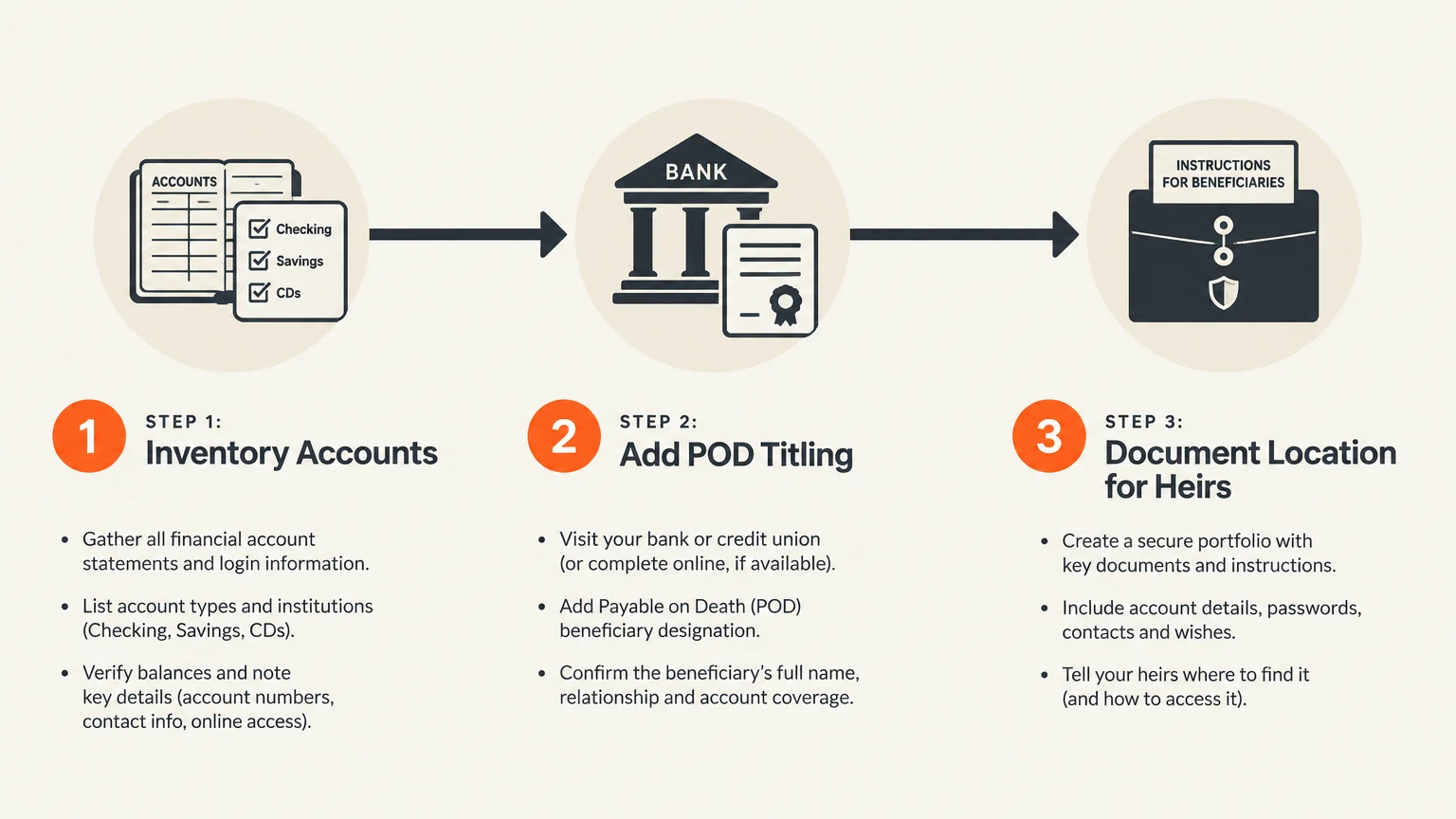
Step-by-Step Action Plan to Protect Your Accounts Today
Protecting your cash deposits requires straightforward administrative steps. Completing these actions now prevents administrative freezes and saves your family significant legal distress.
- List every checking, savings, money market, and certificate of deposit account you own.
- Check the signature card for each account to confirm whether titling reflects sole ownership or JTWROS.
- Request payable on death beneficiary forms from each financial institution.
- Name primary and contingent beneficiaries with full legal names, dates of birth, and Social Security numbers.
- Keep a buffer of funds in a joint account to cover immediate living costs while federal benefit adjustments settle.
- Create an updated inventory list of all accounts and store it in a secure, accessible location.
Review these beneficiary designations every two to three years or following major life milestones. Updating records after marriages, divorces, or births guarantees your funds transfer exactly as intended.
Frequently Asked Questions
Can an executor access a frozen bank account immediately?
No, an executor cannot access a frozen account simply by showing the will. The executor must first obtain official letters testamentary from the probate court, which often takes several weeks or months.
How long does a bank take to release funds to a POD beneficiary?
Most banks release funds within a few business days once the beneficiary submits the required documents. The beneficiary must present an official certified death certificate and a valid government photo identification card.
What happens to automatic recurring bill payments after death?
Once a bank freezes an account, automated clearing house payments and scheduled debit transfers bounce immediately. Setting up POD designations or joint ownership prevents missed mortgage and utility payments.
Does a joint account owner owe taxes on money in the account?
Surviving joint account owners generally do not pay income taxes on inherited cash balances. However, large estates may encounter state inheritance taxes depending on residency and state thresholds.
Taking time to title your bank accounts properly protects your family from unnecessary financial stress during a difficult transition. Updating your beneficiary forms today ensures your hard-earned money remains available when your loved ones need it most.
This is educational content based on general retirement and financial principles. Individual results vary based on your situation. Always verify current benefit rules, tax laws, and eligibility requirements with official sources like SSA, Medicare.gov, or the IRS.
Last updated: March 2026. Retirement benefits, tax rules, and healthcare regulations change frequently—verify current details with official sources.









Leave a Reply