
Presidential headlines about retirement can create serious confusion when you are managing your monthly budget. Knowing whether a political statement is actual law or just campaign rhetoric protects your household income.
Recent policy announcements from President Donald Trump have caused widespread questions regarding benefit taxes, direct payments, and office closures. Separating genuine legislative shifts from speculative proposals helps you avoid costly financial missteps.
Here is an objective, fact-checked breakdown of the eight major statements currently affecting your Social Security checks and retirement plans.

The Essentials: Policy Changes vs. Political Rhetoric
Social Security policy discussions frequently mix aspirational campaign goals with actual statutory changes enacted by Congress.
While headlines often suggest sweeping overhauls, federal entitlement programs require formal legislation to alter benefit formulas or revenue structures.
Understanding what has actually become law helps you distinguish between immediate tax deductions, administrative changes, and future solvency challenges.
1. “We Are Going to Eliminate All Taxes on Social Security Benefits”
During his campaign, President Donald Trump pledged to eliminate federal income taxes on Social Security benefits entirely. Many retirees believed this meant the IRS would completely stop taxing monthly retirement checks.
Congress did not pass a complete repeal of the benefit tax. Instead, President Trump signed the One Big Beautiful Bill Act (OBBBA) into law on July 4, 2025.
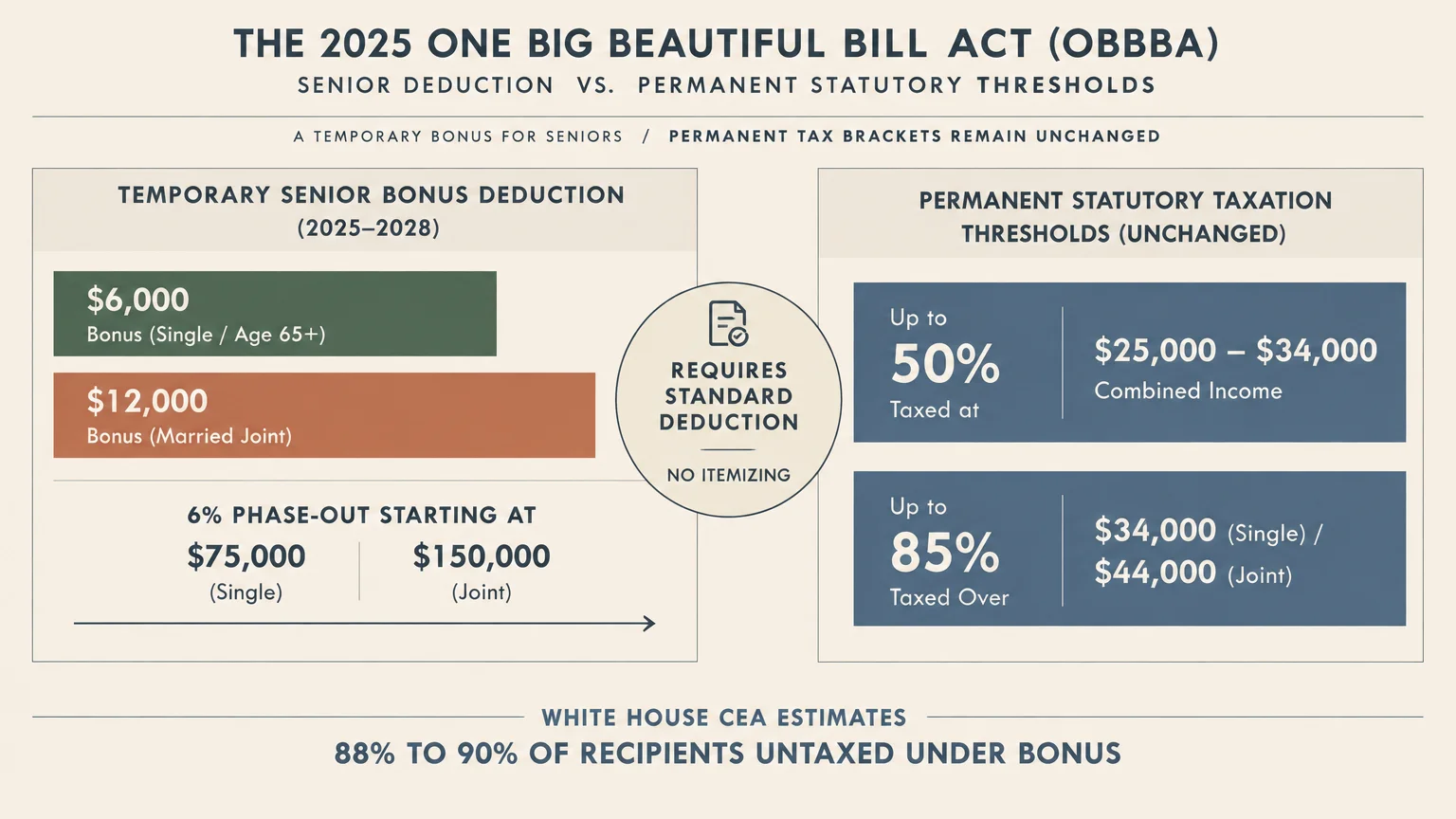
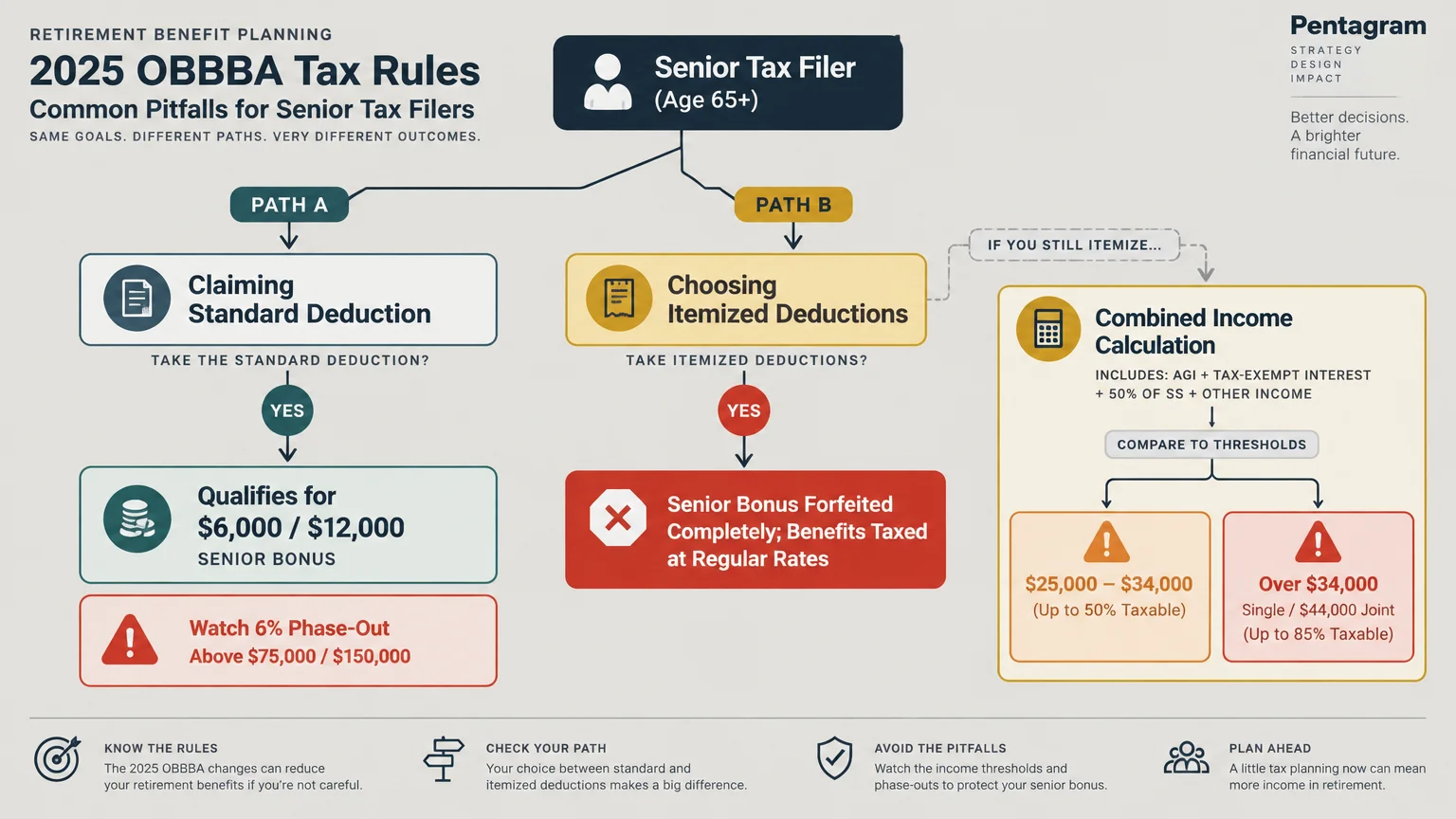
This statute created a temporary $6,000 senior bonus deduction for individuals aged 65 and older. Married couples filing jointly receive a $12,000 deduction if both spouses qualify.
The enhanced deduction applies to tax years 2025 through 2028. It stacks directly on top of the preexisting standard deduction for seniors.
This new deduction phases out at a 6% rate for single filers earning over $75,000. For married couples filing jointly, the phase-out starts at $150,000.
You must claim the standard deduction on your Internal Revenue Service (IRS) tax return to receive this tax break. Taxpayers who choose to itemize deductions cannot claim the bonus amount.
The White House Council of Economic Advisers reports that this deduction eliminates federal income taxes on benefits for roughly 88% to 90% of recipients.
However, statutory taxation thresholds remain completely unchanged in federal law. Single filers with combined incomes between $25,000 and $34,000 still face taxation on up to 50% of benefits.
Combined earnings exceeding $34,000 for single filers and $44,000 for joint filers subject up to 85% of benefits to taxation.
If your income exceeds the phase-out range or you choose to itemize, your benefits remain subject to regular federal taxation.

2. “Social Security Will Never Run Out of Money Under My Watch”
Trump has repeatedly assured voters that Social Security will never run out of money during his presidency. He insists that economic growth will preserve full payments indefinitely.
Official government actuarial data paints a far more urgent fiscal picture. The annual Social Security Trustees Report released on June 9, 2026, projected accelerated depletion for program reserves.
The primary Old-Age and Survivors Insurance (OASI) Trust Fund is now projected to exhaust its cash reserves in the fourth quarter of 2032.
The depletion date moved forward because the 2025 senior tax deductions reduced incoming dedicated tax revenue. Combined OASDI reserves fell by $160 billion in 2025 down to $2.56 trillion.
If the OASI fund depletes in late 2032, continuing payroll taxes will only cover 78% of scheduled benefits. That triggers an automatic 22% benefit cut across the board unless Congress passes corrective legislation.
Combining the retirement fund with Disability Insurance shifts the projected exhaustion window to the third quarter of 2034. Under that combined scenario, incoming revenue would support 83% of scheduled benefit payments.
Relying on executive reassurances alone will not fix the structural deficit. Congress must enact comprehensive revenue increases or structural modifications before late 2032 to avoid automated cuts.
“A tax deduction helps today, but preserving guaranteed income protects your tomorrow.” — Suze Orman, Personal Finance Expert

3. “I Wanted to Put Social Security in the Stock Market”
On October 7, 2026, Trump spoke in the Oval Office while unveiling dedicated investment accounts for American children. During this address, he revealed details about his past policy discussions regarding retirement security.
Trump stated that he wanted to privatize Social Security “so badly” during the first month of his first term in 2017. He envisioned investing the program’s trillions of reserves entirely into the stock market.
Lawmakers and economic advisors quickly dissuaded him from the plan, warning that equity market volatility posed catastrophic risks for guaranteed benefits.
Trump described the newly launched children’s accounts as “a version” of what Social Security privatization could have become. Despite those remarks, Social Security remains an entirely government-administered, pay-as-you-go entitlement system.
Your monthly retirement benefits do not depend on stock market swings or private investment yields. Any move toward market privatization would require massive statutory reform that Congress has consistently rejected.
The core entitlement structure remains backed by the full faith and credit of the United States Treasury.

4. “Everything Is on the Table Regarding the Retirement Age”
Retirees flooded congressional offices with phone calls following television comments made in September 2025. Newly confirmed Social Security Commissioner Frank Bisignano appeared on national television to discuss program finances.
When asked if the administration would support raising the full retirement age to restore solvency, Bisignano responded that “everything’s being considered.”
The comment caused immediate backlash among older workers planning their transitions out of the workforce. Raising the full retirement age acts as an indirect, permanent cut to lifetime benefits.
Both Commissioner Bisignano and the White House issued swift public clarifications within forty-eight hours. The administration formally declared that raising the full retirement age is not under consideration.
Official policy statements reiterated a firm commitment to protect current retirement timelines. For individuals born in 1960 or later, full retirement age remains firmly set at age 67.
You can still claim early retirement benefits starting at age 62, though your monthly check is permanently reduced. Waiting until age 70 continues to earn delayed retirement credits that boost your monthly payout.
5. “Over 10 Million People Over Age 100 Are Receiving Fraudulent Checks”
During a joint address to Congress in March 2025, President Trump highlighted findings from the Department of Government Efficiency (DOGE). He claimed investigators discovered “shocking levels of incompetence and probable fraud” inside federal agencies.
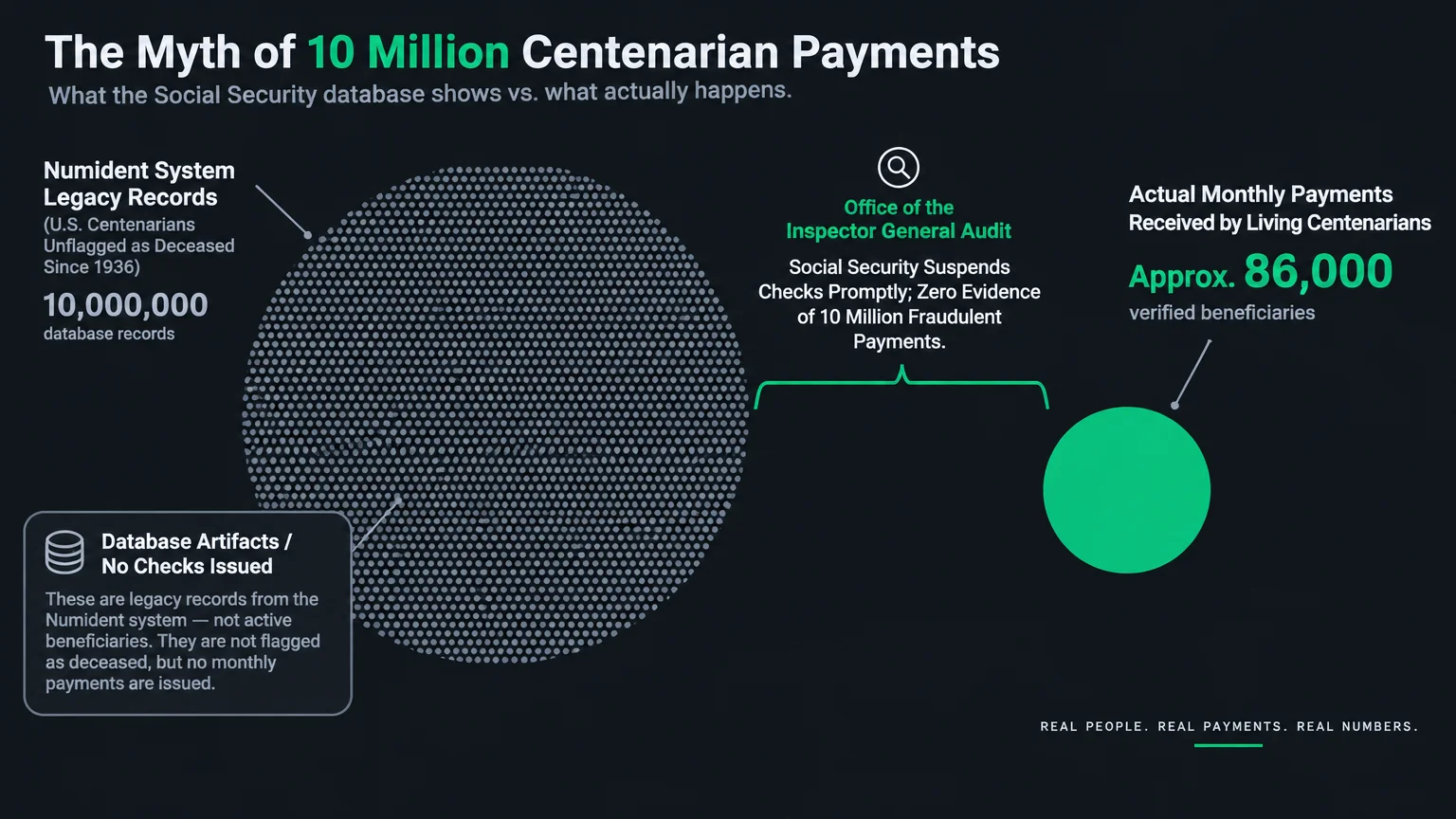
Trump alleged that over 10 million individuals between the ages of 100 and 140 were actively receiving monthly Social Security checks.
Retirees questioned whether rampant fraud was draining program trust funds and threatening their own monthly deposits. Official records from the Social Security Administration (SSA) quickly provided necessary context.
Independent audits confirmed that the vast majority of those numbers represented dormant master death records rather than active payments. Decades-old software systems simply lacked recorded dates of death for long-deceased individuals.
Active monthly checks were not going out to millions of deceased centenarians. While modernizing legacy SSA databases remains an urgent priority, phantom payments were not causing significant drain on program assets.
Ongoing verification audits ensure that living recipients receive their rightful payments without disruption.

6. “DOGE Cost-Cutting Will Never Touch Your Benefits”
President Trump frequently stated that aggressive government cost-cutting would never touch retirement benefits. He promised that the Department of Government Efficiency would streamline operations without degrading services for seniors.
Despite promises to protect customer service, operational cuts generated significant friction for beneficiaries throughout 2025 and 2026. The administration eliminated approximately 7,000 personnel from the agency’s 57,000-person national workforce.
In the spring of 2025, officials permanently closed six of the agency’s ten regional administrative headquarters. Those staffing reductions coincided with rising phone wait times and extended application processing backlogs.
Many retirees experienced extended delays when scheduling in-person identity verification or resolving direct deposit discrepancies. Disability claim appeals faced average wait times stretching well beyond typical historical averages.
While your actual monthly benefit amount was not directly reduced, accessing agency support became notably harder. Planning ahead for routine administrative filings has become an essential strategy for every retiree.
Using online self-service portals at SSA.gov remains the fastest way to replace cards or change banking details.
7. “Every Senior Is Getting a Direct $90 Check From Social Security”
On October 2, 2026, President Trump announced a direct $90 payment designed to provide immediate relief for older Americans. Beneficiaries across the country immediately began looking for extra funds in their checking accounts.
Retirees were confused because the SSA issued the direct deposits starting around October 8, 2026. Many assumed the $90 payment was a universal Social Security bonus check.
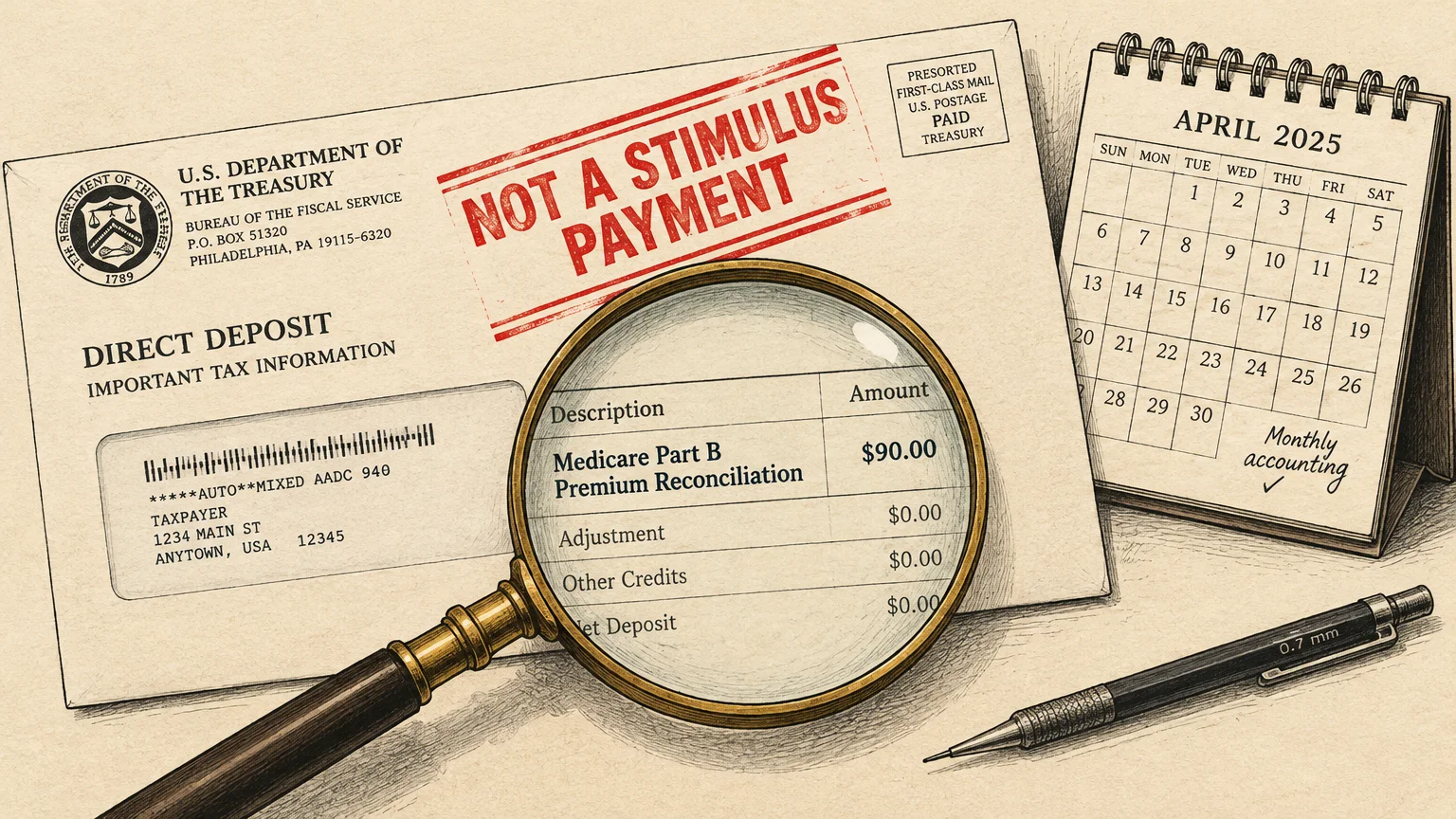
The payment was actually a targeted premium rebate authorized to offset the 2026 standard monthly Medicare Part B premium of $202.90. Funding for the measure tapped $2 billion from the 2008 Medicare Improvement Fund.
Most importantly, the rebate excluded the vast majority of American seniors. Only 20.8 million beneficiaries qualified out of the 62.9 million people enrolled in Medicare Part B.
To receive the $90 deposit, you had to be enrolled in traditional Medicare Part B without paying income-related surcharges or receiving state Medicaid assistance.
Approximately 40 million seniors enrolled in private Medicare Advantage plans were completely excluded from receiving the rebate check. You can verify your enrollment status directly on Medicare.gov to see why you did or did not receive the payment.
Checking your direct deposit records confirms whether you were among the qualifying minority.
8. “Inflation Is Beaten, Delivering Huge Pay Raises for Seniors”
Trump has claimed that cooling consumer inflation rates combined with annual benefit increases have significantly expanded retiree spending power. Evaluating your actual budget requires examining how annual Cost-of-Living Adjustments (COLA) function.
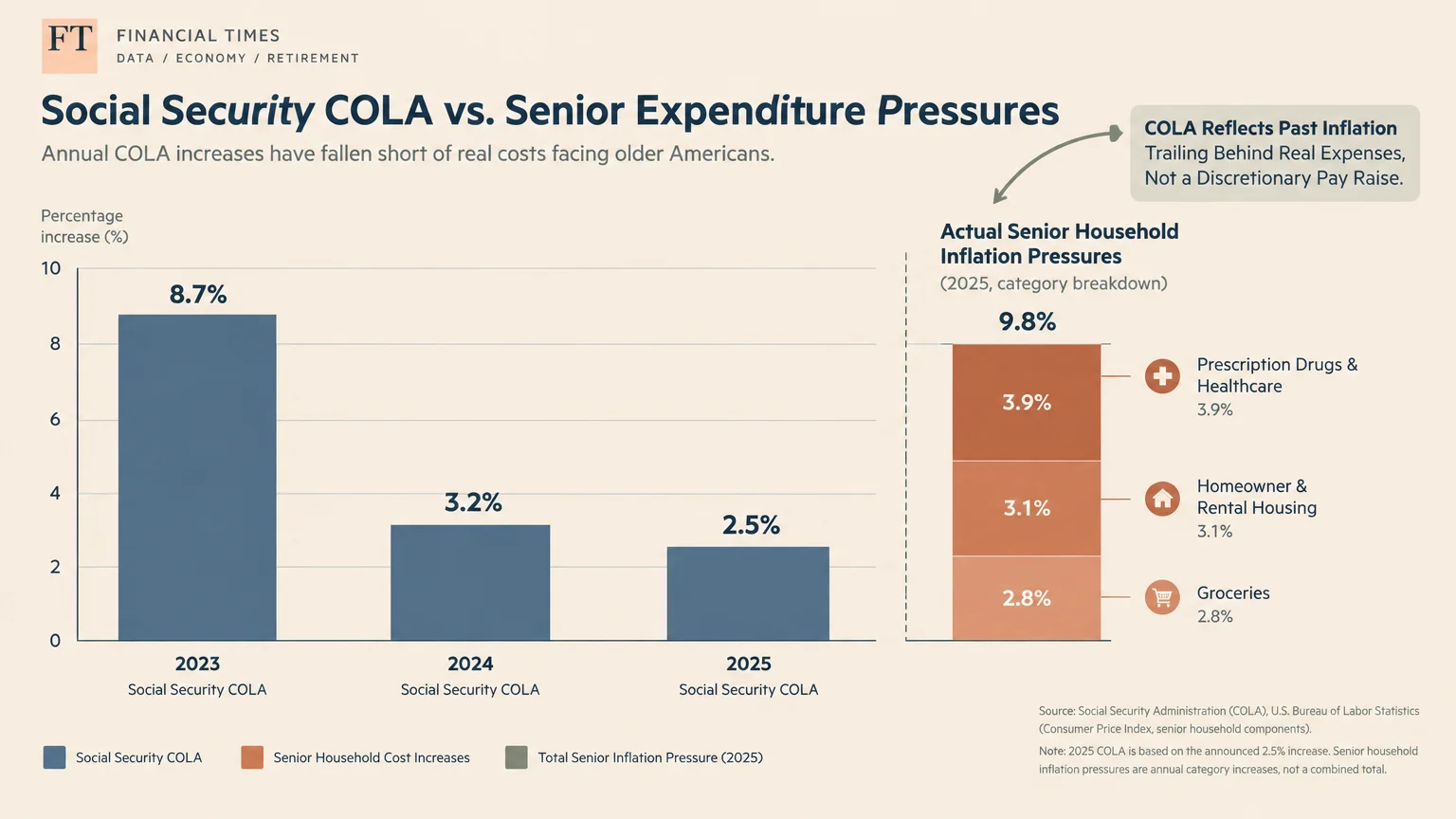
On October 14, 2026, the SSA announced a 3.6% COLA increase for nearly 76 million Americans starting in January 2027. Supplemental Security Income recipients receive their adjusted payment on December 31, 2026.
This 3.6% boost raises the average monthly retired worker benefit by approximately $75, shifting checks from $2,088 in 2026 to $2,163 in 2027.
The 2027 increase follows a 2.8% boost in January 2026 and a 2.5% adjustment implemented in 2025. While higher checks help, rising healthcare and housing expenses continue to consume much of the additional cash.
Higher-earning workers also face larger payroll tax obligations to fund the system. The maximum amount of earnings subject to the Social Security payroll tax rises from $184,500 in 2026 to $192,300 in 2027.
A cost-of-living adjustment protects purchasing power against general inflation rather than functioning as a genuine financial bonus.
“Do not save what is left after spending, but spend what is left after saving.” — Warren Buffett, Chairman and CEO of Berkshire Hathaway

Comparing Trump’s Social Security Statements to Current Law
Sorting through campaign promises and official administrative actions requires comparing rhetoric directly against statutory reality. The following summary shows where key policy statements stand today.
| Topic | Trump Statement or Proposal | Current Policy Reality (2025–2026) | Direct Impact on Your Wallet |
|---|---|---|---|
| Benefit Taxation | Completely eliminate all federal taxes on Social Security benefits. | OBBBA added a temporary $6,000 standard deduction ($12,000 joint) for seniors through 2028. | Zeros out taxes for 88%–90% of recipients; itemizers and higher earners still owe tax. |
| Trust Fund Solvency | Promised Social Security will never run out of funds or suffer cuts. | OASI reserves project depletion in Q4 2032; OASDI combined depletes in Q3 2034. | Automatic 22% benefit cut looms in late 2032 unless Congress passes revenue fixes. |
| Privatization | Wanted to invest funds in the stock market; promoted child investment accounts. | Social Security remains entirely pay-as-you-go; privatization rejected by lawmakers. | Your checks remain guaranteed by the federal government, insulated from market drops. |
| Retirement Age | White House confirmed retirement age changes are not under consideration. | Full retirement age remains firmly set at age 67 for those born in 1960 or later. | No changes to claiming timelines; early claiming at 62 remains fully available. |
| Direct Checks | Announced a direct $90 relief check sent to seniors via Social Security. | Targeted one-time Part B premium rebate using $2 billion from Medicare funds. | Only 20.8 million Original Medicare recipients qualified; Medicare Advantage excluded. |
What Can Go Wrong With Benefit and Tax Planning
Believing political announcements without verifying current IRS rules can create unexpected financial penalties. Assuming your benefits are completely tax-free under recent legislation represents one of the most common errors.
If you fail to adjust voluntary tax withholding from your monthly check, you could face an unwelcome balance due next April. Taking the standard deduction is required to claim the temporary $6,000 bonus deduction.
Retirees also make critical errors by assuming campaign statements represent settled entitlement law:
- Itemizing deductions incorrectly: Electing to itemize medical expenses or mortgage interest forfeits the $6,000 senior bonus deduction entirely.
- Overlooking phase-out thresholds: Earning over $75,000 as a single filer or $150,000 jointly reduces the senior deduction by 6% on excess income.
- Expecting universal rebate checks: Budgeting for direct stimulus deposits when you are enrolled in a Medicare Advantage plan leads to disappointment.
- Delaying routine agency paperwork: Waiting until the last minute to process address updates or claim filings can leave you stranded due to staff cuts.
- Panicking over trust fund headlines: Claiming benefits early at age 62 out of fear of 2032 insolvency permanently reduces your guaranteed monthly payout.
Staying grounded in verified regulations prevents emotional decisions that damage your long-term retirement security.

When to Consult a Professional
While general benefit facts provide a useful baseline, individual tax circumstances often require personalized professional guidance. Navigating overlapping state and federal tax rules requires careful planning.
You should consider speaking with a fee-only financial planner or a certified public accountant in several specific scenarios:
- Your combined income approaches the phase-out limit: If your income sits near $75,000 as an individual or $150,000 jointly, a tax professional can structure withdrawals to preserve your bonus deduction.
- You are executing Roth IRA conversions: Converting pre-tax funds into Roth accounts can inadvertently trigger federal taxation on up to 85% of your Social Security benefits.
- You are deciding when to claim retirement benefits: A comprehensive longevity analysis helps determine whether claiming early or waiting until age 70 delivers the highest cumulative lifetime payout.
- You are coordinating healthcare coverage: Evaluating traditional Medicare against Medicare Advantage ensures you maximize premium rebates while managing out-of-pocket medical liabilities.
Personalized financial modeling provides clarity when balancing complex investment withdrawals with federal benefit formulas.
Frequently Asked Questions About Trump Social Security Policies
Did Trump eliminate federal income taxes on Social Security benefits?
No, the statutory tax on Social Security benefits was not repealed. However, the One Big Beautiful Bill Act created a temporary $6,000 senior bonus deduction ($12,000 for couples) through 2028 that eliminates federal tax liability for roughly 88% to 90% of recipients.
Will Social Security benefits automatically drop in 2032?
If Congress takes no action before the fourth quarter of 2032, the OASI Trust Fund reserves will exhaust. At that point, incoming tax revenue will only support 78% of scheduled benefits, requiring congressional intervention to avert an automatic 22% reduction.
Why didn’t I receive the $90 rebate payment in October 2026?
The $90 direct deposit was a Medicare Part B premium rebate limited to 20.8 million enrollees in traditional Medicare who do not pay IRMAA surcharges. Approximately 40 million seniors enrolled in Medicare Advantage plans were ineligible for this payment.
Is the full retirement age increasing to age 69 or 70?
No, the administration explicitly confirmed that raising the full retirement age is not under consideration. The full retirement age remains capped at age 67 for everyone born in 1960 or later.
How much will my monthly benefit increase in January 2027?
The SSA announced a 3.6% COLA for 2027, which raises the average retired worker’s monthly benefit by about $75, from approximately $2,088 in 2026 to $2,163 in 2027.
Navigating retirement income requires focusing on enacted tax law rather than political discourse. Adjusting your financial strategy to current statutory rules ensures your benefits remain protected and predictable.
This is educational content based on general retirement and financial principles. Individual results vary based on your situation. Always verify current benefit rules, tax laws, and eligibility requirements with official sources like SSA, Medicare.gov, or the IRS.
Last updated: October 2026. Retirement benefits, tax rules, and healthcare regulations change frequently—verify current details with official sources.








Leave a Reply