
Managing a household budget on a fixed income requires deliberate spending habits. Everyday retail loyalty perks can protect your monthly cash flow without forcing you to sacrifice quality.
Modern store loyalty programs deliver much more than basic paper coupons. Top retailers now provide substantial fuel savings, automatic cash rebates, and convenient home delivery services.
Choosing the best rewards programs ensures you maximize every essential dollar spent on groceries, medications, and home maintenance. Learning how to save with loyalty cards can yield hundreds of dollars in annual savings.
The Essentials of Retail Loyalty Savings
Not every customer membership delivers equal value. Maximizing your return requires matching your routine shopping habits with the right reward structures.
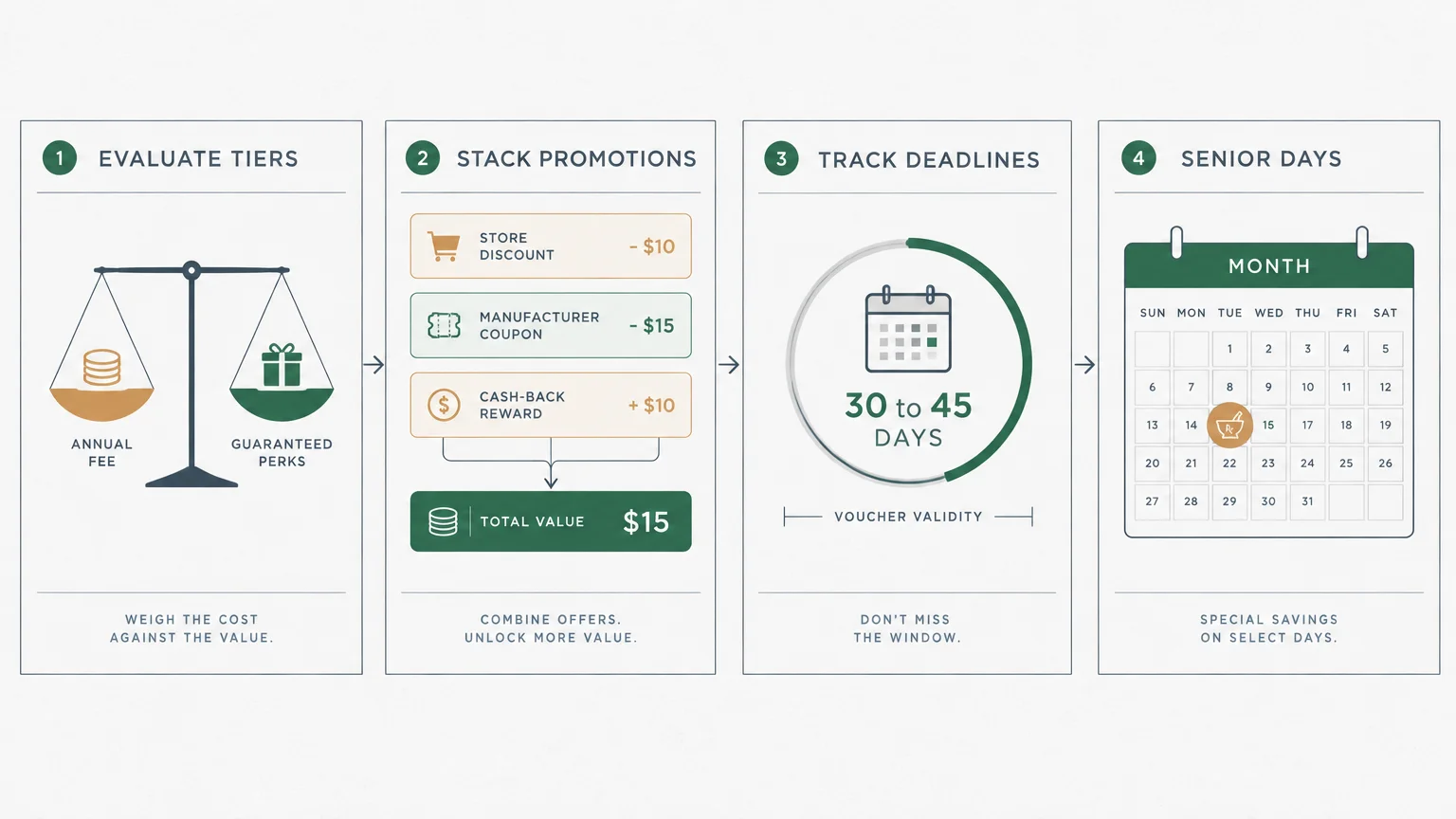
- Evaluate paid versus free tiers: Subscription memberships only make financial sense if guaranteed perks exceed the annual fee.
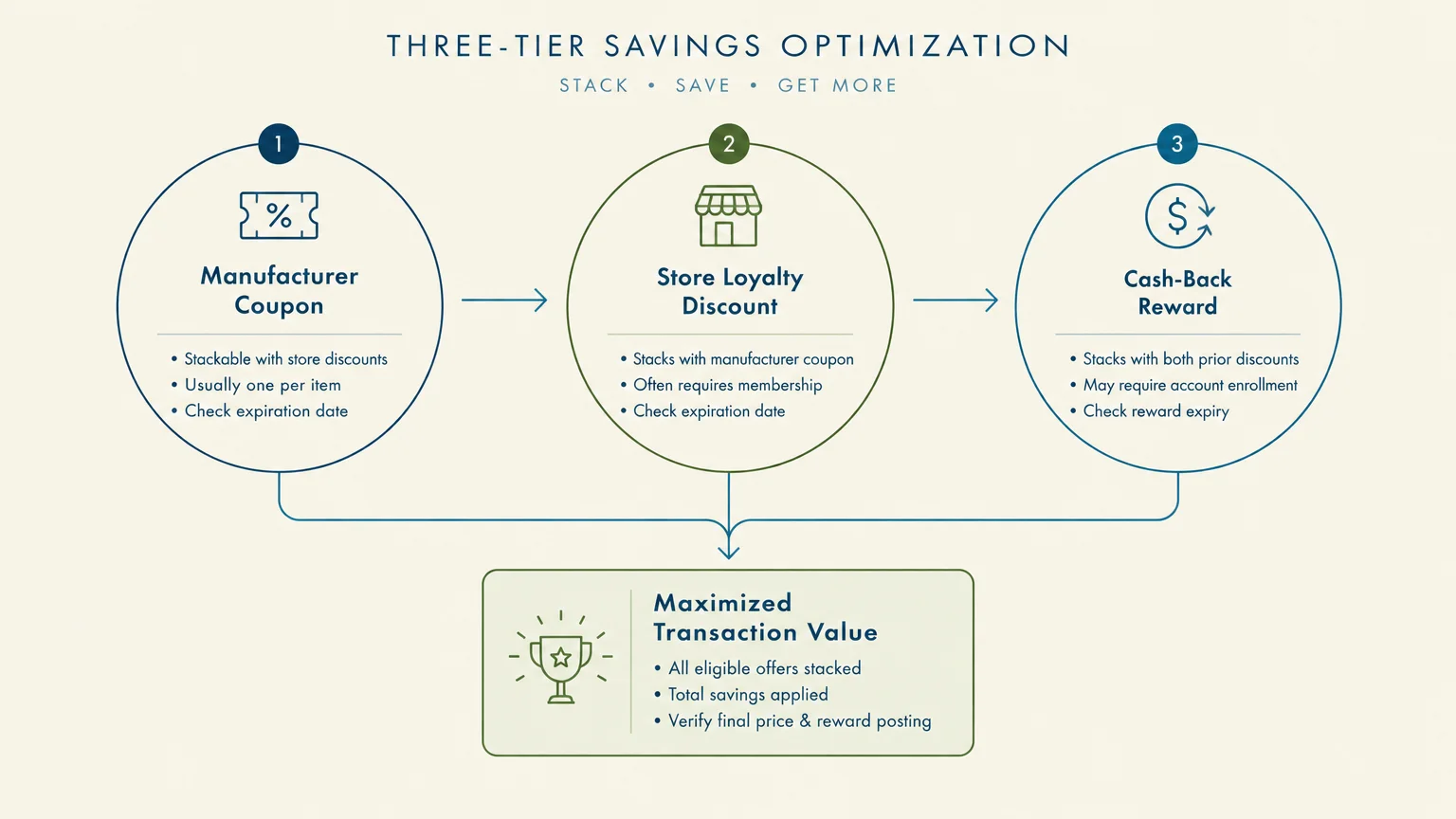
- Stack your promotions: Combine digital manufacturer coupons, store discounts, and cash-back rewards on a single transaction.
- Track expiration deadlines: Store credits and promotional cash vouchers frequently expire within thirty to forty-five days.
- Leverage senior-specific days: Several retail pharmacies offer dedicated monthly discount events for older shoppers.
“Small savings across daily routines compound into significant peace of mind over a long retirement.” — Jean Chatzky, Financial Educator
1. CVS ExtraCare and ExtraCare Plus
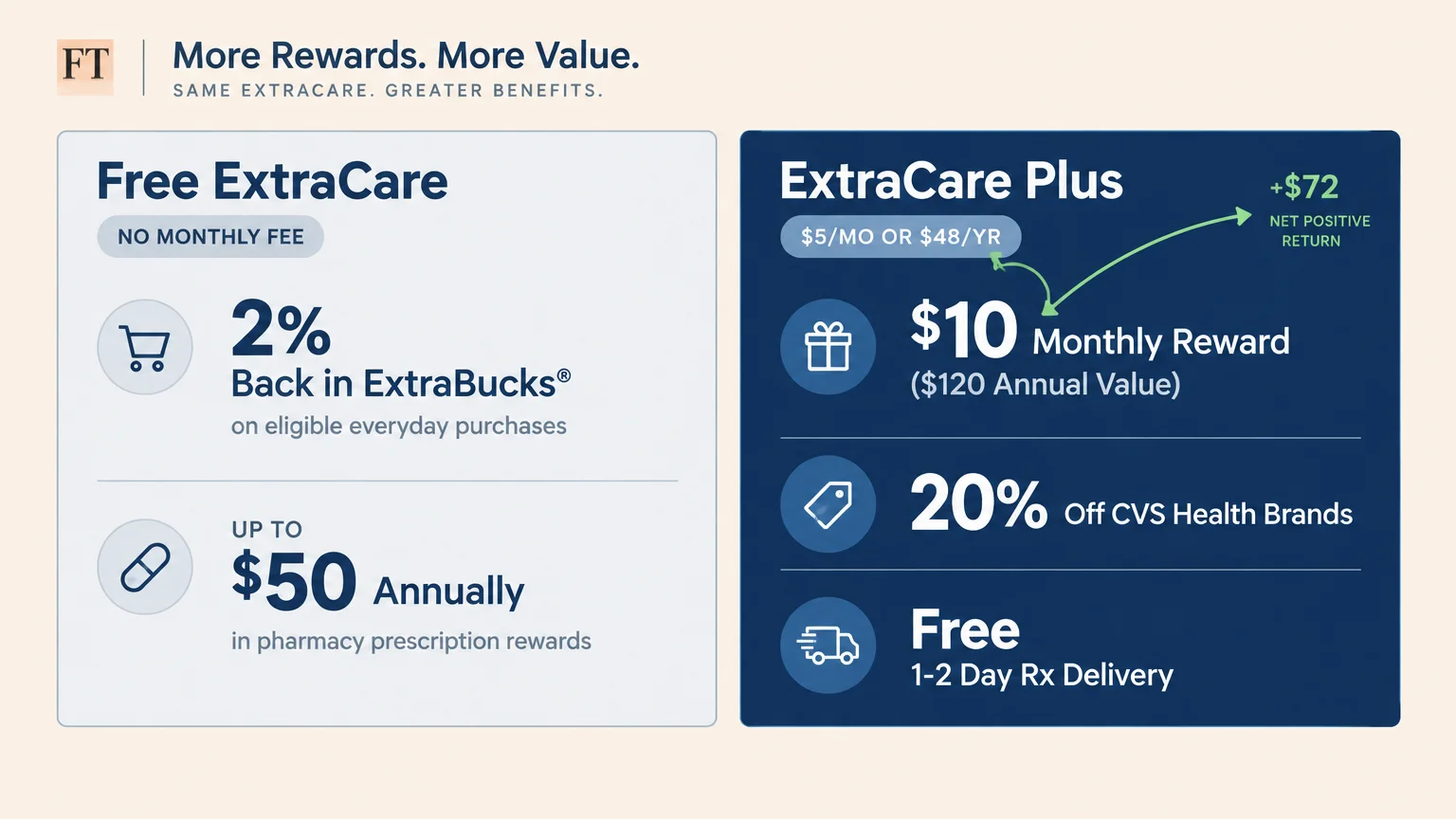
CVS overhauled its loyalty system to provide immediate value on healthcare essentials. The foundational ExtraCare tier remains completely free for all shoppers.
Free members earn 2% back in ExtraBucks on eligible purchases throughout the year. You also earn up to $50 annually in pharmacy rewards by filling prescriptions and receiving routine vaccines.
For shoppers with recurring medical needs, the paid CVS ExtraCare Plus tier costs $5 per month or $48 annually. This program delivers an immediate $10 promotional reward every month, creating an annual return of $120.
ExtraCare Plus members also receive free one-to-two-day delivery on qualifying prescriptions and online orders. Furthermore, CVS grants an everyday 20% discount on all CVS Health-branded products.
If you purchase daily vitamins, pain relief medications, or first-aid supplies, this single benefit pays for the membership quickly. You can explore assistance options through the National Council on Aging to identify additional healthcare budget resources.

2. Walgreens myWalgreens and Seniors Day
Walgreens offers an accessible, zero-cost program designed to reward regular health and wellness spending. The standard myWalgreens loyalty platform requires no upfront subscription fees.
Members earn 1% Walgreens Cash on eligible storewide purchases every day. When purchasing Walgreens-branded wellness and hygiene merchandise, your earnings increase to 5% Walgreens Cash.
Older adults can capitalize on a dedicated monthly promotion called Seniors Day. On the first Tuesday of every month, shoppers aged 55 and older receive a 20% discount on regular-priced items.
You can redeem this savings in brick-and-mortar stores or online all week using the promotional code SENIOR20. Applying this recurring discount to paper products, personal care items, and over-the-counter remedies produces reliable monthly savings.

3. Walmart+ and Walmart+ Assist
Walmart+ delivers practical logistical benefits for households seeking to limit driving and heavy lifting. A standard annual subscription costs $98 per year, or $12.95 on a monthly plan.
Members receive unlimited free grocery delivery from local store shelves on orders of $35 or more. You also get free parcel shipping with no minimum order requirement and complimentary prescription delivery.
The program includes substantial automotive benefits that help lower fuel costs. Members save up to 10¢ per gallon at more than 13,000 participating Exxon, Mobil, Murphy, and Walmart fuel stations.
Your subscription includes access to ad-supported video streaming through Paramount+ Essential or Peacock Premium. These bundled entertainment services eliminate the need for separate streaming expenditures.
Shoppers receiving government assistance can enroll in Walmart+ Assist at a 50% discount. Qualifying individuals enrolled in Supplemental Security Income, SNAP, or Medicaid pay just $49 per year or $6.47 monthly.
This discounted tier offers the exact same shopping rewards and delivery benefits. You can review public support eligibility through the Consumer Financial Protection Bureau to understand how federal benefits integrate with consumer savings.
4. Kroger Plus and Boost Membership
Kroger operates one of the nation’s most versatile grocery networks. The standard Kroger Plus card remains free and serves as your primary tool for lowering grocery and gasoline expenses.
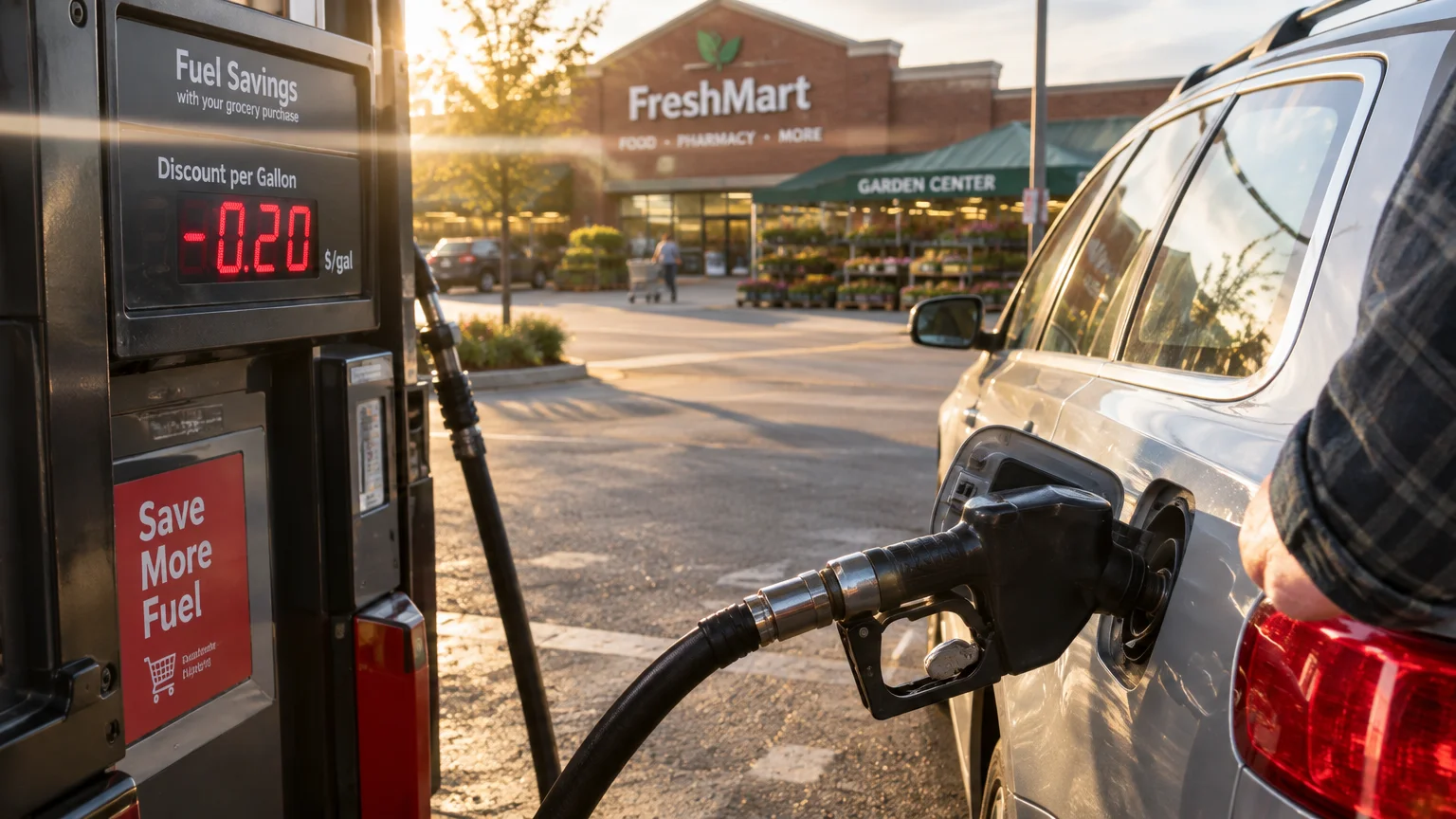
Shoppers earn 1 fuel point for every $1 spent on groceries. Every 100 points converts into a 10¢ per gallon discount at Kroger fuel centers and participating partner stations, up to 35 gallons per fill-up.
Frequent shoppers can upgrade to the Kroger Boost delivery subscription. Boost Essential costs $69 per year and provides free next-day grocery delivery on qualifying orders of $35 or more.
The premium Boost tier costs $99 per year and offers free delivery in as little as two hours. Both Boost plans automatically double your grocery earnings to 2 fuel points per dollar spent.
Doubling your points allows you to earn substantial fuel discounts twice as fast. A household spending $400 monthly on groceries earns 800 fuel points, unlocking an 80¢ per gallon discount every single month.
5. Target Circle and Circle 360
Target restructured its loyalty platform to streamline how shoppers save at checkout. The free Target Circle tier eliminates the need to scan paper coupons manually.
The free program automatically applies clipped digital coupons and personalized discounts directly at the register. Members also receive surprise rewards during their birthday month.
For shoppers desiring home delivery, Target offers a premium subscription called Target Circle 360. This service costs $99 per year or $10.99 per month.
However, Target Circle Card holders can secure Target Circle 360 for a discounted rate of $49 annually. The subscription provides unlimited free same-day delivery via Shipt on orders meeting the $35 threshold.
Holding a Target Circle Card also grants an everyday 5% discount on eligible retail purchases. Combining that 5% discount with automated digital rewards makes Target one of the best rewards programs for household essentials.
6. Costco Wholesale Executive Membership
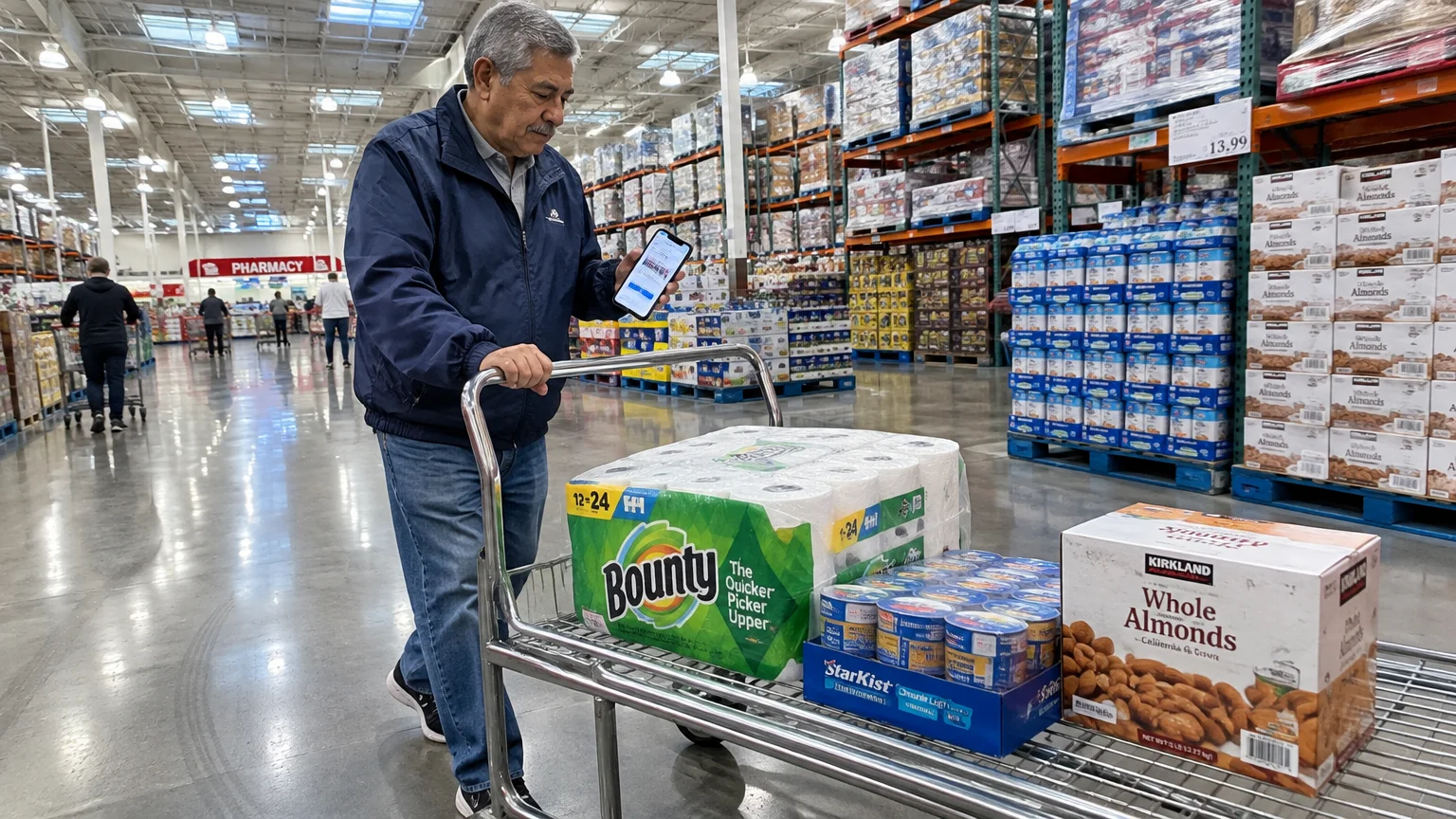
Costco Wholesale provides significant bulk savings on groceries, tires, hearing aids, and optical services. The retailer adjusted its annual membership rates on September 1, 2024.
A standard Gold Star membership costs $65 per year. Upgrading to the Executive Membership costs $130 per year, representing an incremental fee difference of $65.
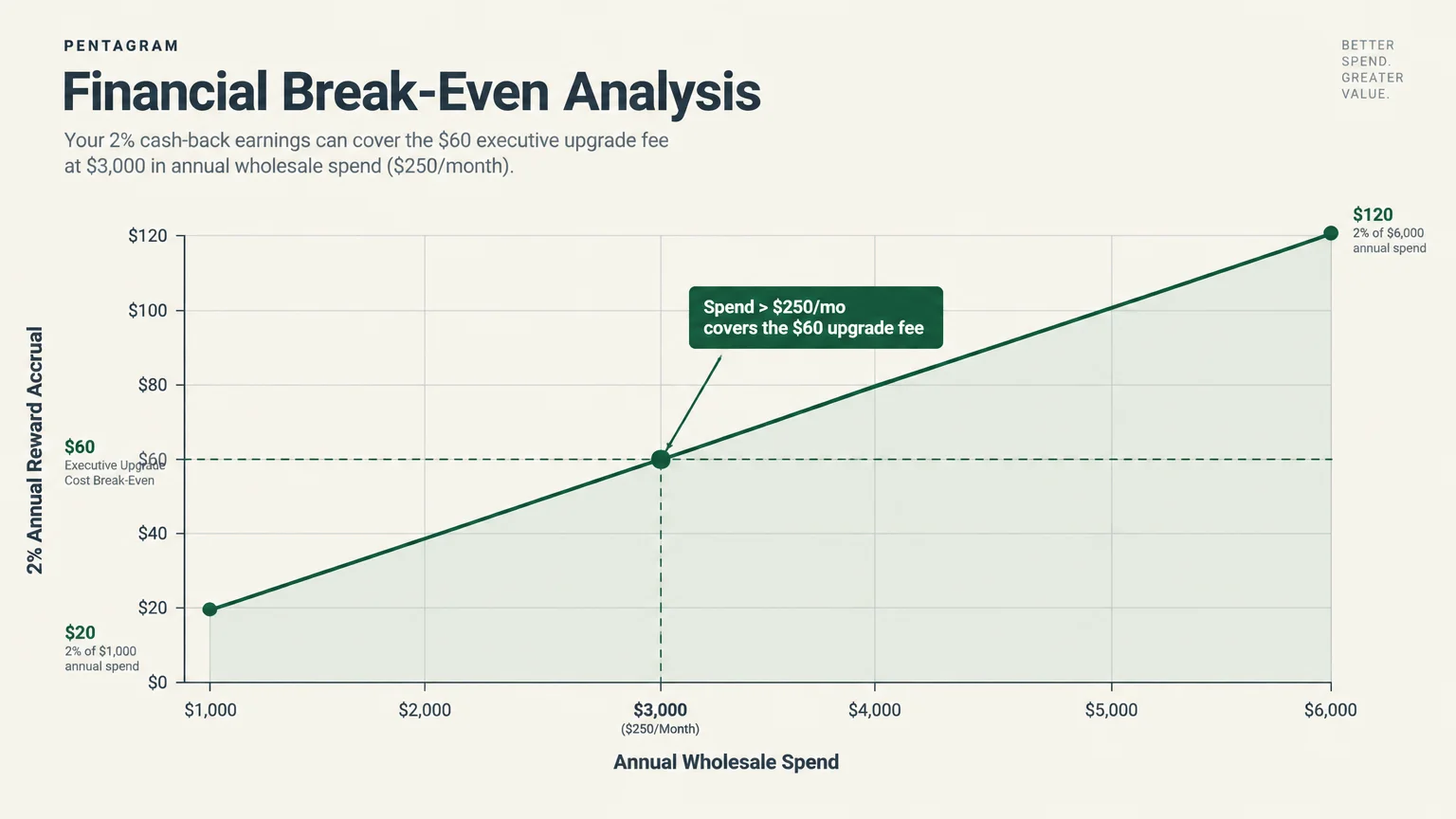
Executive members receive an annual 2% reward on eligible retail purchases up to a maximum cap of $1,250. This annual rebate certificate arrives shortly before your membership renewal date.
Calculating your breakeven threshold determines whether the upgrade makes financial sense. Dividing the $65 upgrade cost by 2% reveals that spending $3,250 annually—roughly $271 per month—completely offsets the higher fee.
If your household spends more than $271 monthly on food, household goods, or pharmacy items, the Executive tier pays for itself. Costco will even downgrade your membership and refund the difference if your earnings fall short.
7. Sam’s Club Plus
Sam’s Club provides a compelling warehouse alternative with distinct digital conveniences. A standard Club membership costs $50 per year, while the Sam’s Club Plus tier costs $110 annually.
Plus members earn 2% back in Sam’s Cash on qualifying in-club purchases, capped at $500 per year. You can apply this accrued cash toward future checkout totals, membership dues, or cash back at customer service.
The Plus tier also includes free shipping on eligible online orders of $50 or more. Furthermore, members enjoy free curbside pickup, saving considerable time and physical effort during busy shopping hours.
Plus members also gain access to exclusive optical discounts and 20% savings on select prescription medications. Evaluating these supplemental healthcare perks helps you determine if the $60 membership difference aligns with your routine spending.

8. MyLowe’s Rewards
Maintaining a home requires regular investments in plumbing, hardware, and safety upgrades. Lowe’s rolled out its nationwide MyLowe’s Rewards program to benefit residential do-it-yourself homeowners.
This zero-cost loyalty program utilizes a tiered structure based on your annual spending. The entry-level Bronze Key tier grants 1 point for every $1 spent at the home improvement retailer.
Spending $500 within a calendar year elevates you to Silver Key status, where you earn 1.25 points per dollar. Reaching Gold Key status requires $2,000 in annual spending and boosts your earnings to 1.5 points per dollar.
Accumulated points convert directly into MyLowe’s Money vouchers for future store credit. Shoppers who pair this program with a MyLowe’s Rewards credit card receive an everyday 5% discount on eligible purchases.
Homeowners planning aging-in-place renovations can utilize these rewards to lower costs. Installing grab bars, ramp materials, and improved lighting becomes much more affordable when redeeming accumulated store points.

9. Kohl’s Rewards
Kohl’s Rewards provides exceptional returns on clothing, bedding, and home kitchen appliances. The foundational loyalty program is free and straightforward to manage.
Members earn 5% back in Kohl’s Cash on everyday purchases across all retail departments. If you pay with a proprietary Kohl’s Card, your earnings increase to 7.5% back.
Kohl’s issues these accrued earnings on the first day of each calendar month in $5 increments. You receive a thirty-day redemption window to spend your earned balance on future retail transactions.
You can stack these regular rewards with traditional promotional Kohl’s Cash events. Earning $10 during special promotion cycles alongside your standard rewards produces substantial retail loyalty perks on seasonal wardrobe updates.
“Do not save what is left after spending, but spend what is left after saving.” — Warren Buffett, Chairman and CEO of Berkshire Hathaway
Comparing the Top Retail Loyalty Perks
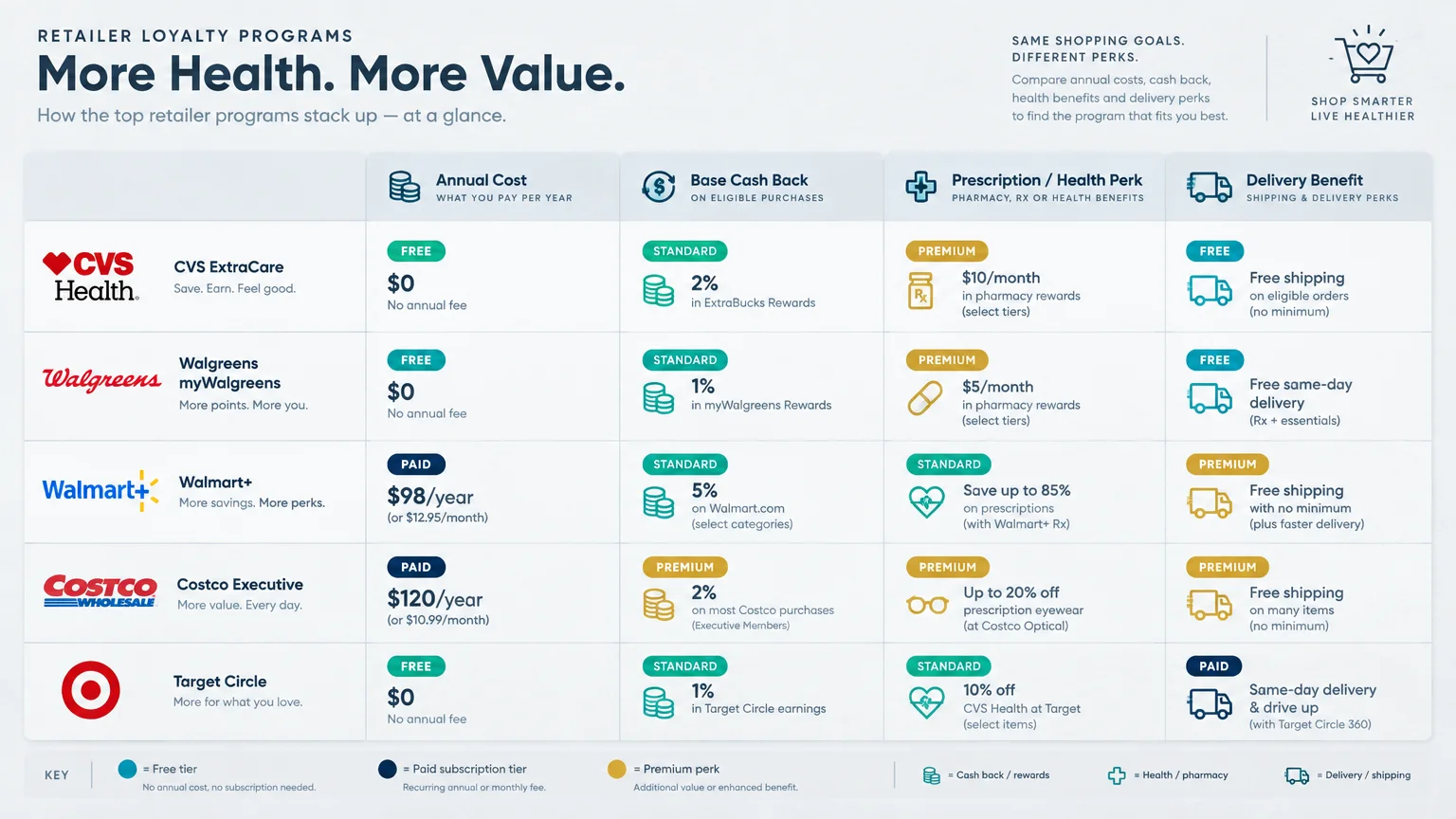
The table below summarizes annual costs, core reward mechanics, and best use cases across all nine programs. Reviewing them side by side clarifies where your household dollars earn the highest return.
| Store Program | Annual Cost | Core Reward Rate | Primary Advantage |
|---|---|---|---|
| CVS ExtraCare Plus | $48/year | 2% back + $10/month reward | Prescription delivery and 20% off brand products |
| Walgreens myWalgreens | Free | 1% storewide; 5% brand items | Monthly 20% Seniors Day discounts |
| Walmart+ | $98/year ($49 Assist) | Fuel discounts + free delivery | Unlimited grocery deliveries and streaming service |
| Kroger Boost | $69 to $99/year | 2x fuel points per dollar | Accelerated gas savings and grocery drop-offs |
| Target Circle 360 | $99/year ($49 cardholders) | 5% card discount + free delivery | Same-day delivery from local Target stores |
| Costco Executive | $130/year | 2% cash back (up to $1,250) | Bulk savings on household goods and gas |
| Sam’s Club Plus | $110/year | 2% Sam’s Cash (up to $500) | Free curbside pickup and bulk shipping |
| MyLowe’s Rewards | Free | 1 to 1.5 points per dollar | Discounts on home repairs and accessibility items |
| Kohl’s Rewards | Free | 5% to 7.5% Kohl’s Cash | High rebate percentages on home goods and apparel |
Strategic Ways to Save With Loyalty Cards
Enrolling in store loyalty programs is only the initial step toward trimming expenses. Applying structured shopping strategies ensures you collect the maximum benefit from every purchase.
Always align your largest shopping trips with promotional point multipliers. Many grocery retailers offer digital coupons that grant 4x fuel points on gift card purchases or weekend grocery hauls.
Download your preferred store apps to your smartphone before walking through the entrance doors. Retailers frequently publish app-only digital coupons that do not apply automatically at the checkout counter.
Organize your digital reward vouchers on your primary calendar to avoid forfeiting earned value. Expired cash vouchers cannot be recovered once their redemption window lapses.
You can review helpful personal finance strategies through trusted retirement publications like Kiplinger. Maintaining consistent financial oversight protects your nest egg from preventable budget leaks.

What Can Go Wrong: Avoiding Loyalty Program Pitfalls
While loyalty clubs offer genuine financial perks, they also carry subtle behavioral traps. Retailers design these incentives specifically to encourage higher overall shopping frequency.
Avoid spending extra money simply to reach an arbitrary reward milestone. Purchasing $40 worth of unneeded merchandise to unlock a $5 cash voucher results in a net financial loss.
Monitor your recurring bank charges to prevent unwanted subscription renewals. If you rarely utilize paid grocery deliveries, cancel the membership before the next annual billing cycle triggers.
Be mindful of the personal data you share during the registration process. Retailers collect detailed purchase histories to deliver targeted marketing campaigns directly to your digital devices.
Before applying for store credit cards to boost loyalty tiers, evaluate the associated interest rates. Carrying a balance on high-APR retail credit cards quickly wipes out any loyalty rewards you earn.
Frequently Asked Questions About Store Loyalty Programs
Are paid retail memberships worth the annual cost for retirees?
Paid tiers are worthwhile if your calculated savings exceed the annual fee. If delivery conveniences save you transportation costs and physical strain, paid programs offer excellent practical value.
Can I stack store loyalty rewards with senior discounts?
Many retailers permit stacking, but policies vary across specific department categories. Walgreens allows seniors to earn standard loyalty points while redeeming the monthly 20% Seniors Day discount.
What happens to my loyalty rewards if I move to a new area?
National retail points remain active in your digital account regardless of physical relocation. However, regional grocery points like Kroger fuel credits only redeem at participating regional fuel centers.
Do store loyalty rewards count as taxable income?
Store rewards earned through merchandise purchases are generally treated as purchase rebates rather than taxable income. Consult official consumer guidance from organizations like AARP for detailed financial lifestyle information.
Putting Your Loyalty Strategy Into Action
Take inventory of where your household spends money each month across groceries, prescriptions, and fuel. Select two or three programs that align closely with those recurring destinations.
Download the corresponding retail mobile applications and link your existing phone numbers to activate automatic discounts. Consistent, disciplined utilization of retail loyalty perks will keep more money in your wallet all year long.
This article provides general retirement education and information only. Every retiree’s situation is unique—what works for others may not work for you. For personalized advice, consider consulting a qualified financial professional such as a CFP or CPA.
Last updated: March 2026. Retirement benefits, tax rules, and healthcare regulations change frequently—verify current details with official sources.









Leave a Reply