
Tax season shifts dramatically once your regular W-2 paychecks end. You must track dozens of scattered retirement income tax forms across multiple institutions instead of receiving a single envelope from an employer.
Knowing which tax forms for retirees arrive each winter keeps you organized and prevents costly filing amendments. Missing even one taxable distribution notice can trigger delayed refunds or unwanted IRS inquiries.
Here is your essential tax documents checklist, detailing the arrival timelines and reporting thresholds for every statement landing in your mailbox this season.
Why Your Tax Mailbox Multiplies in Retirement
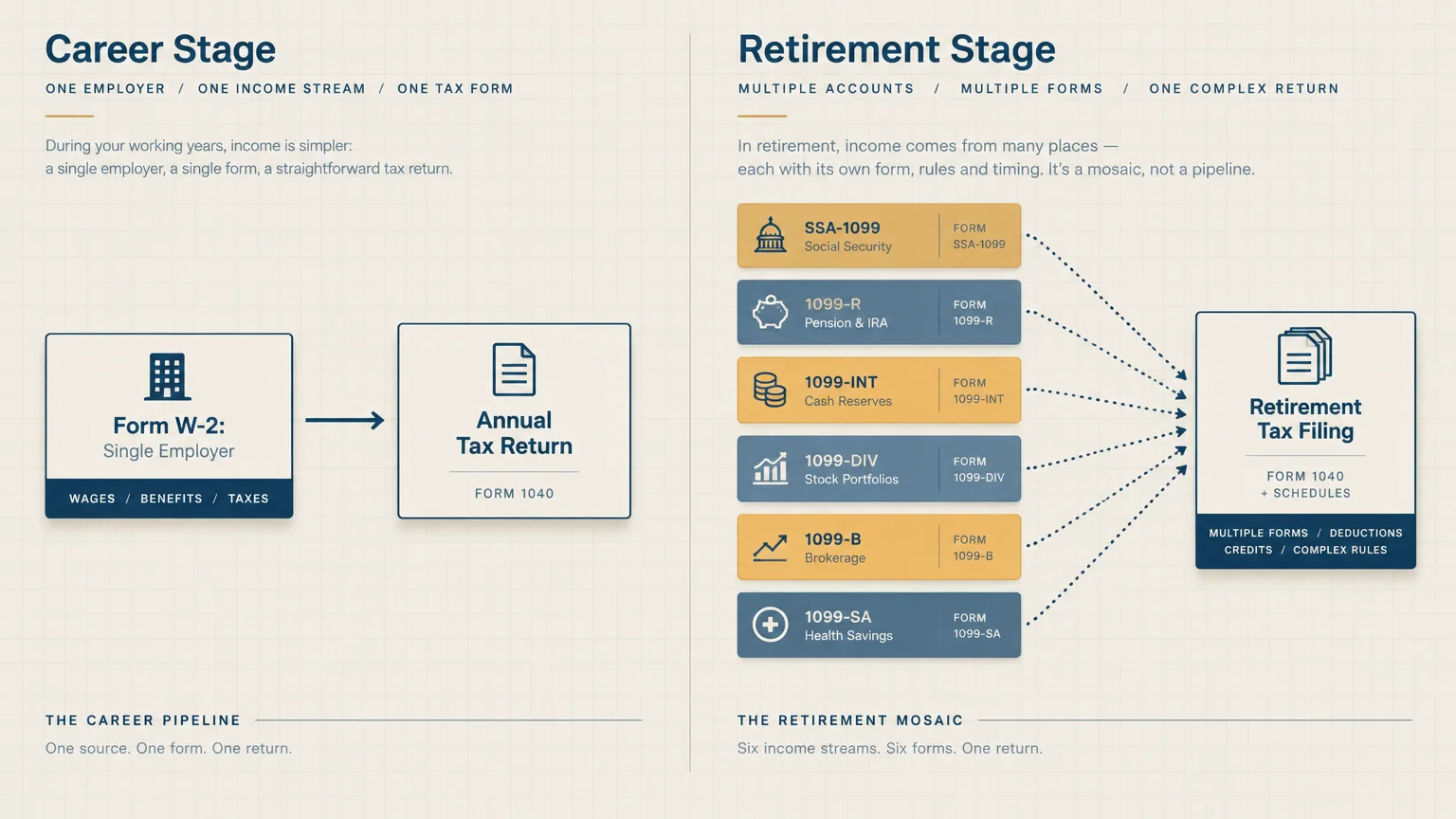
During your working career, preparing annual taxes was likely straightforward. A single Form W-2 from your employer summarized your wages, tax withholdings, and retirement plan contributions.
Retirement replaces that single paycheck with a patchwork of income streams. You might draw funds from pensions, Social Security, tax-deferred accounts, and taxable investment portfolios.
Each financial institution reports these payments independently to you and the government. As a result, your mailbox fills with different tax documents throughout January and February.
Organizing these forms as they arrive protects you against reporting discrepancies. It also ensures you take full advantage of legitimate deductions, credits, and tax-sheltered income rules.
1. Form SSA-1099: Social Security Benefit Statement
Form SSA-1099 arrives in your mailbox by January 31 each winter. The Social Security Administration issues this document to every individual who received retirement, spousal, or disability benefits.
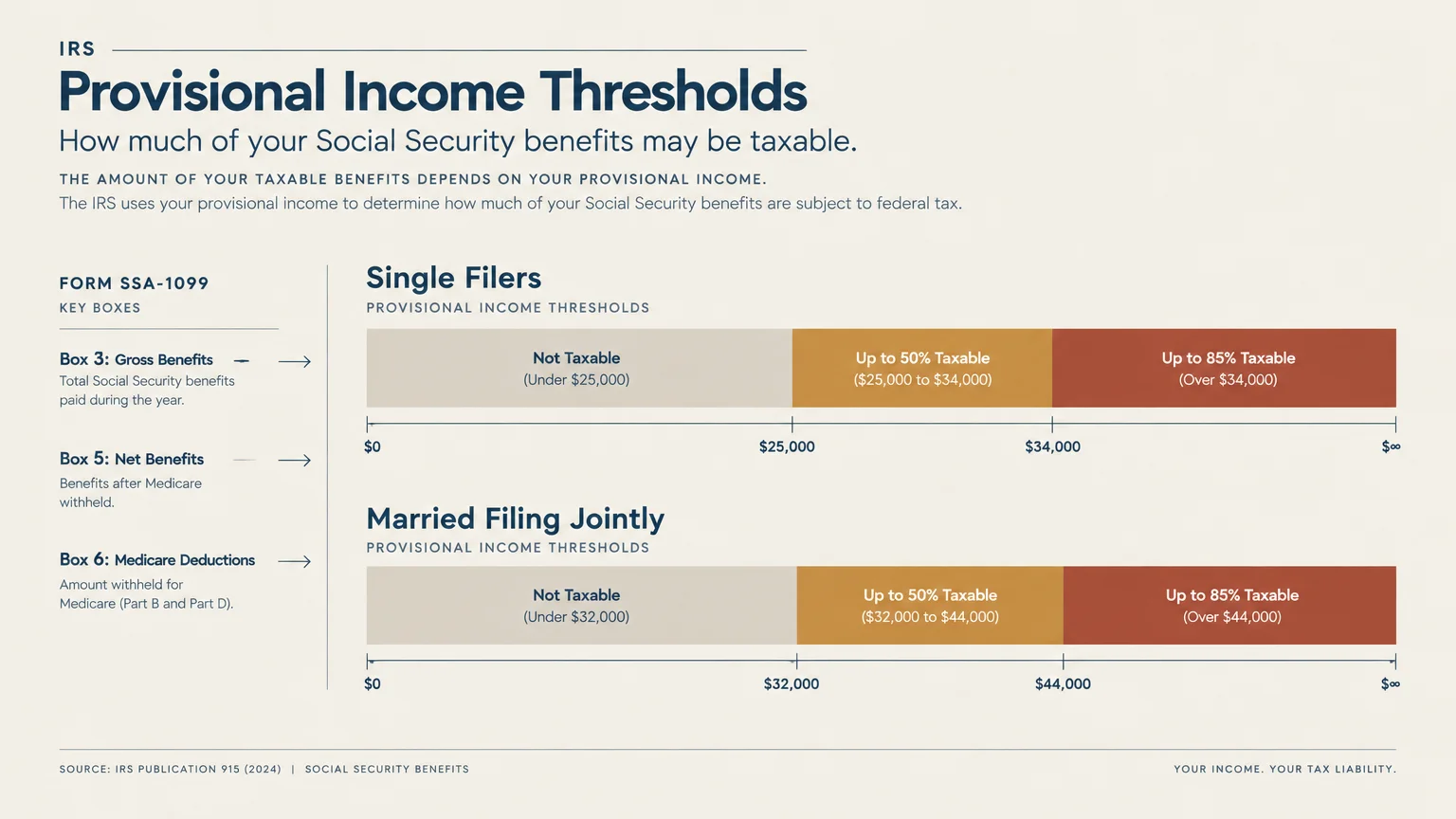
This statement shows your total gross benefits for the calendar year in Box 3. Box 4 indicates any benefits you repaid, while Box 5 reveals your net benefits.
Review Box 6 closely, which reports voluntary federal income tax withheld from your monthly checks. It also details the Medicare Part B and Part D premiums deducted directly from your payments.
You will not necessarily owe income tax on all the benefits shown on Form SSA-1099. The IRS calculates your taxability using a statutory metric known as provisional income.
To calculate provisional income, sum your Adjusted Gross Income, your nontaxable municipal bond interest, and 50 percent of your Social Security benefits.
Single filers with provisional income between $25,000 and $34,000 may owe income tax on up to 50 percent of their benefits. If your provisional income exceeds $34,000, up to 85 percent becomes taxable.
For married couples filing jointly, the 50 percent taxable bracket applies between $32,000 and $44,000. Combined provisional income above $44,000 pushes up to 85 percent of your benefits into taxable territory.
Congress never indexed these statutory thresholds to inflation; consequently, more retirees face taxes on benefits each year. Keep your SSA-1099 handy so your tax preparer can run the precise calculation.
2. Form 1099-R: Distributions from Pensions, Annuities, and Retirement Plans
Among all retirement income tax forms, Form 1099-R is often the most critical document. Plan custodians and administrators must deliver recipient copies by January 31 for qualified plan distributions.
Expect an individual Form 1099-R from every traditional IRA, 401(k), 403(b), pension plan, or commercial annuity that distributed funds. Even direct rollovers and Roth conversions generate this form.
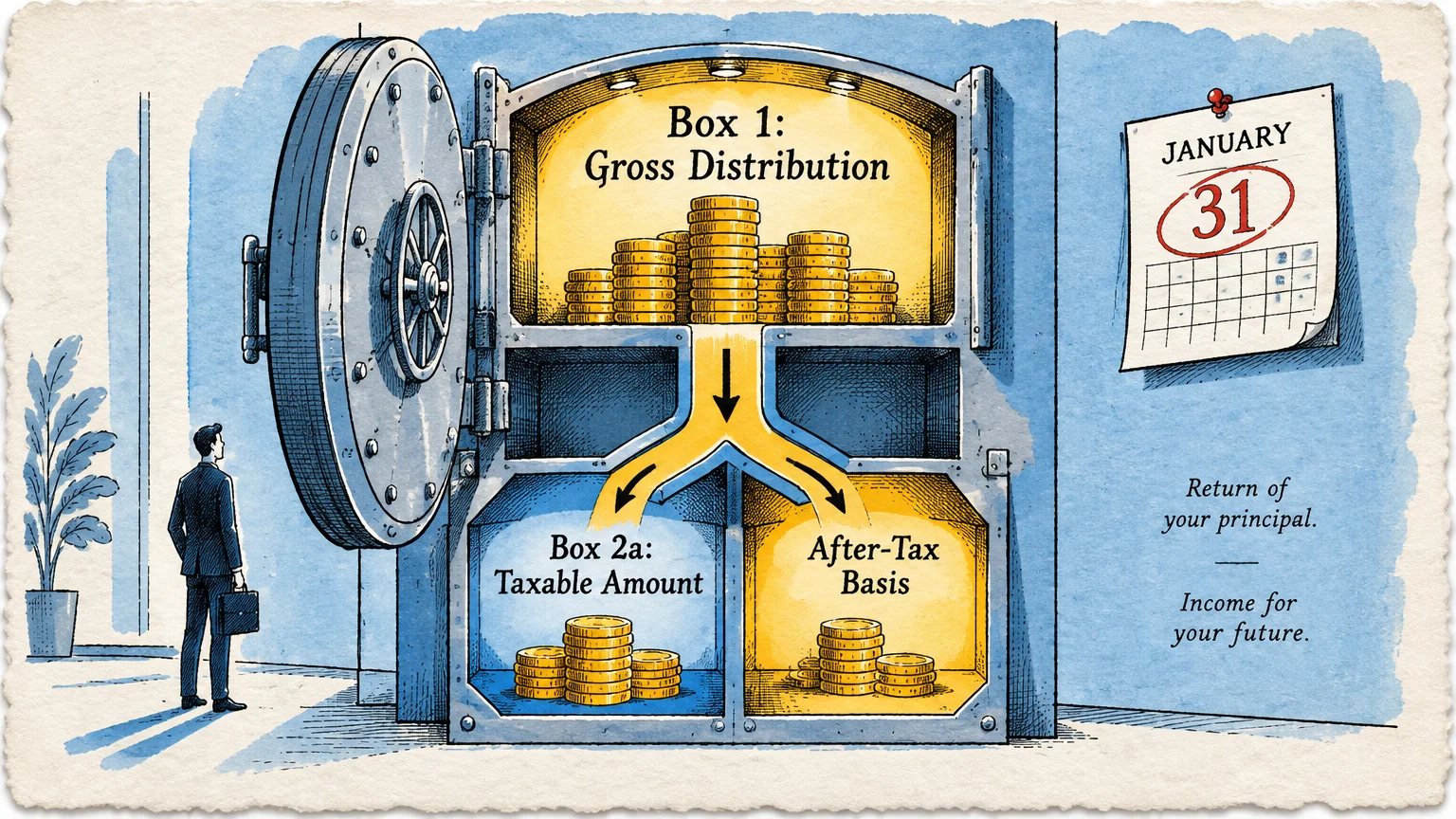
Box 1 displays your gross distribution, reflecting the total cash pulled from your account. Box 2a specifies the taxable portion of that withdrawal.
For pre-tax accounts like traditional IRAs, Box 1 and Box 2a frequently show identical figures. However, distributions containing non-deductible contributions or after-tax basis will show a lower amount in Box 2a.
Always review the alphanumeric code inside Box 7, labeled Distribution Code. This code explains the exact nature of your transaction directly to the Internal Revenue Service.
Code 7 signals a normal, penalty-free distribution taken after age 59½. Code G signifies a direct rollover into another qualified account, confirming that the transfer was non-taxable.
Form 1099-R also documents your Required Minimum Distributions (RMDs). Under the SECURE 2.0 Act, the mandatory RMD starting age is 73 for individuals born between 1951 and 1959.
That mandatory starting age rises to 75 in 2033 for anyone born in 1960 or later. Failing to withdraw your full RMD triggers a 25 percent excise tax on the shortfall.
If you correct that missed distribution within the statutory two-year correction window, that excise penalty drops to 10 percent. Prompt action saves you substantial money.

3. Form 1099-INT: Interest Income from Cash Reserves
Banks, credit unions, and brokerage firms issue Form 1099-INT to report earned interest. Financial institutions must furnish this form by January 31 whenever your interest reaches or exceeds $10.
Retirees often maintain substantial cash reserves in certificates of deposit, high-yield savings accounts, and Treasury money markets. Each of these accounts produces reportable interest income.
Box 1 reports ordinary taxable interest from savings accounts and commercial certificates of deposit. Box 3 identifies interest earned on U.S. Treasury bills, notes, and savings bonds.
Interest recorded in Box 3 is exempt from state and local income taxes. Separating these amounts accurately ensures you do not overpay state income taxes on Treasury returns.
If you earned less than $10 at an institution, you might not receive a paper form. You still hold a legal obligation to report all interest income on your tax return.
4. Form 1099-DIV: Dividends and Capital Gain Distributions
If you hold taxable brokerage accounts, mutual funds, or individual company stocks, expect Form 1099-DIV by January 31. Issuers furnish this statement if your dividend distributions equal $10 or more.
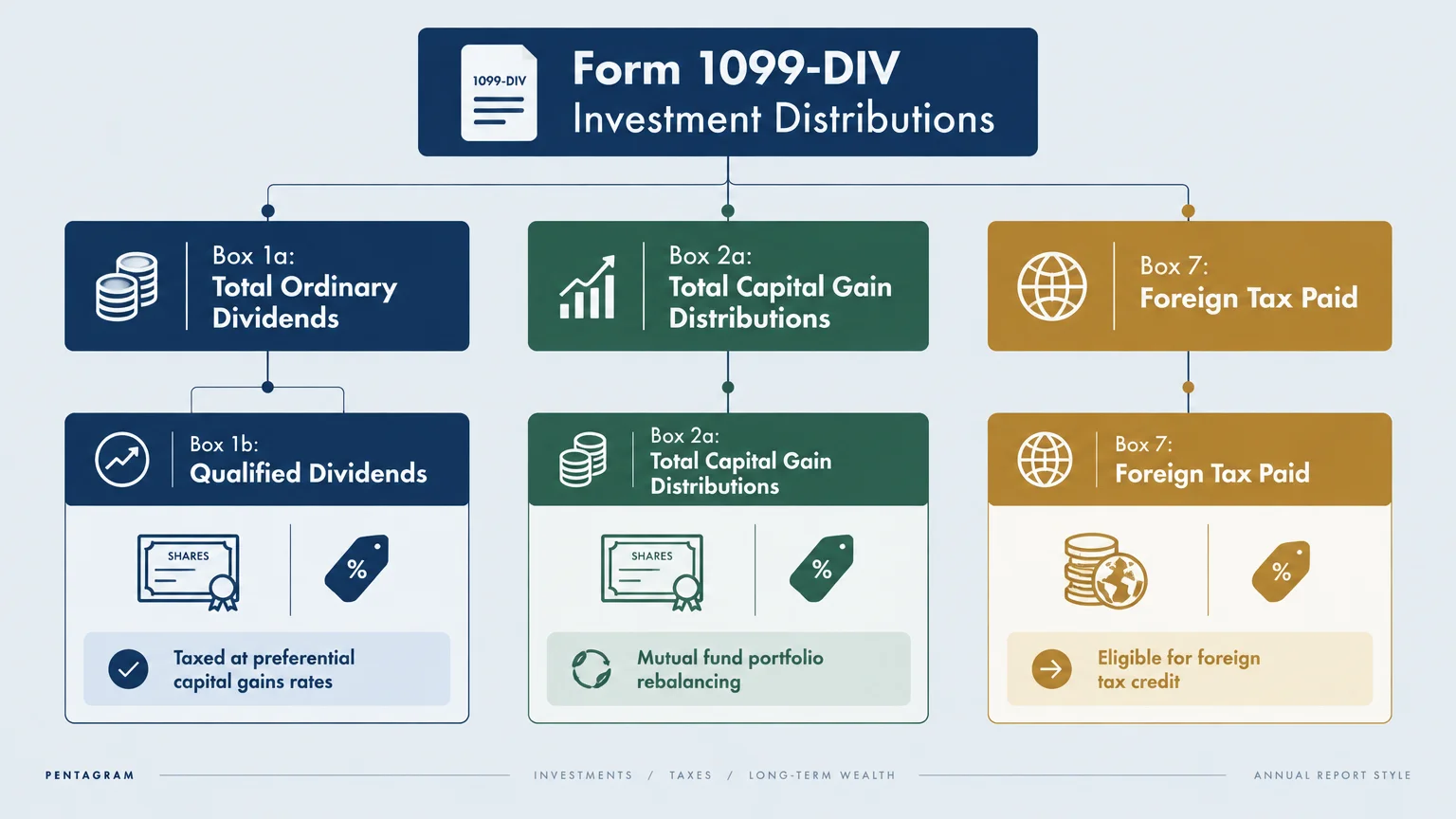
The document breaks down dividend income into specific categories that carry different tax rates. Box 1a displays your total ordinary dividends paid across the tax year.
Box 1b details qualified dividends, which qualify for favorable long-term capital gains tax rates. Depending on your total taxable income, qualified dividends face tax rates of 0, 15, or 20 percent.
Mutual fund investors must also watch Box 2a for total capital gain distributions. These distributions represent net profits from portfolio holdings sold by fund managers during the year.
Even if you automatically reinvest your dividends and capital gains into new shares, the IRS treats them as taxable income. You must report these distributions on Schedule B and Schedule D.
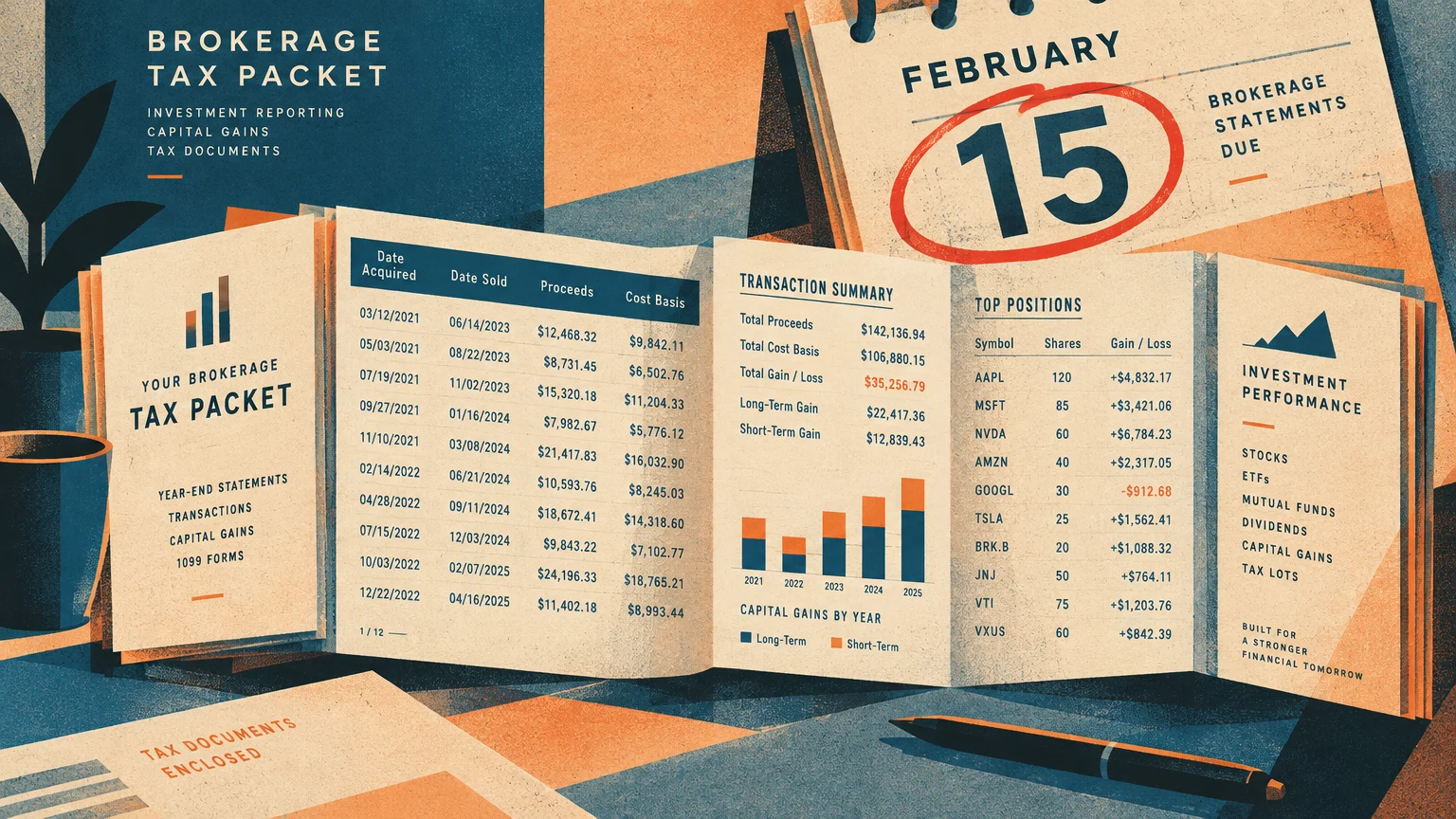
5. Form 1099-B and Consolidated Brokerage Statements
Form 1099-B reports gross proceeds from selling stocks, bonds, mutual funds, and exchange-traded funds. Unlike standard tax documents, brokers operate under an extended deadline of February 15 to furnish this statement.
Most brokerage firms combine Form 1099-B, Form 1099-DIV, and Form 1099-INT into a single consolidated tax package. Do not rush to file your tax return before this consolidated statement arrives.
Form 1099-B details the date of sale, gross proceeds, and your cost basis. It explicitly categorizes sales into short-term holdings held one year or less and long-term holdings held longer.
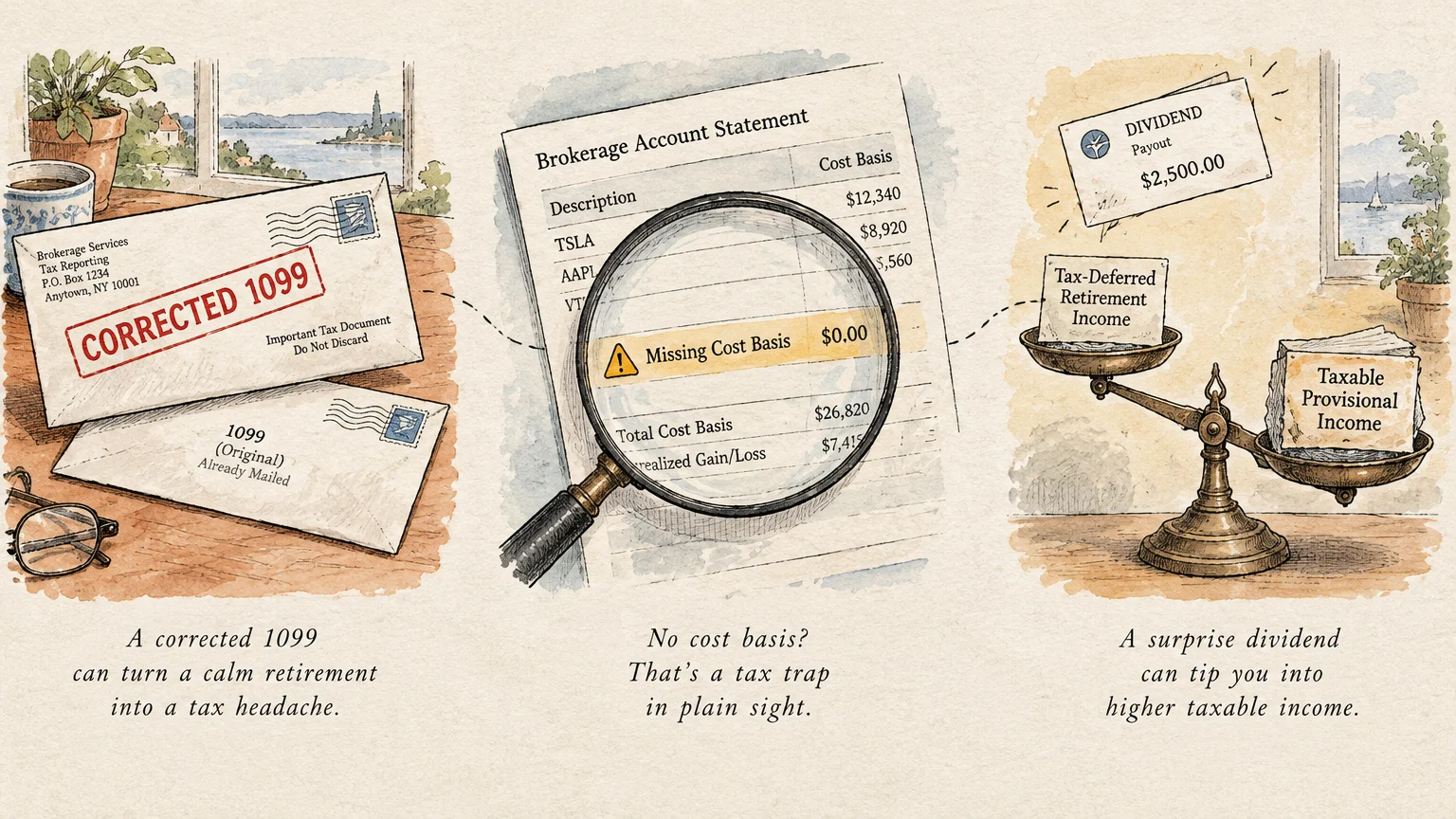
Pay close attention to whether the broker reports your cost basis as covered or noncovered. Covered securities require the broker to report the acquisition cost to the IRS directly.
For noncovered securities purchased decades ago, you must verify the original purchase price yourself. Accurate recordkeeping prevents you from overpaying capital gains taxes on your initial principal.
The form also flags wash sales in Box 1g. A wash sale occurs if you sell a security at a loss and repurchase it within 30 days, disallowing immediate deduction.

6. Form 1099-NEC and Form 1099-MISC: Freelance and Board Income
Many retirees transition into encore careers, consulting arrangements, or corporate board positions. If you performed independent contract work and earned $600 or more from a business, expect Form 1099-NEC by January 31.
Box 1 reports nonemployee compensation subject to ordinary income tax and self-employment tax. You will report this revenue on Schedule C to determine your net taxable business earnings.
Meanwhile, Form 1099-MISC covers other sporadic income sources totaling $600 or more. Companies furnish this form to report rental property payments, royalties, prize winnings, or legal settlements.
Review the amounts on both forms against your personal invoices and bank deposits. Even if an entity fails to issue a form under the $600 threshold, you must report all compensation.
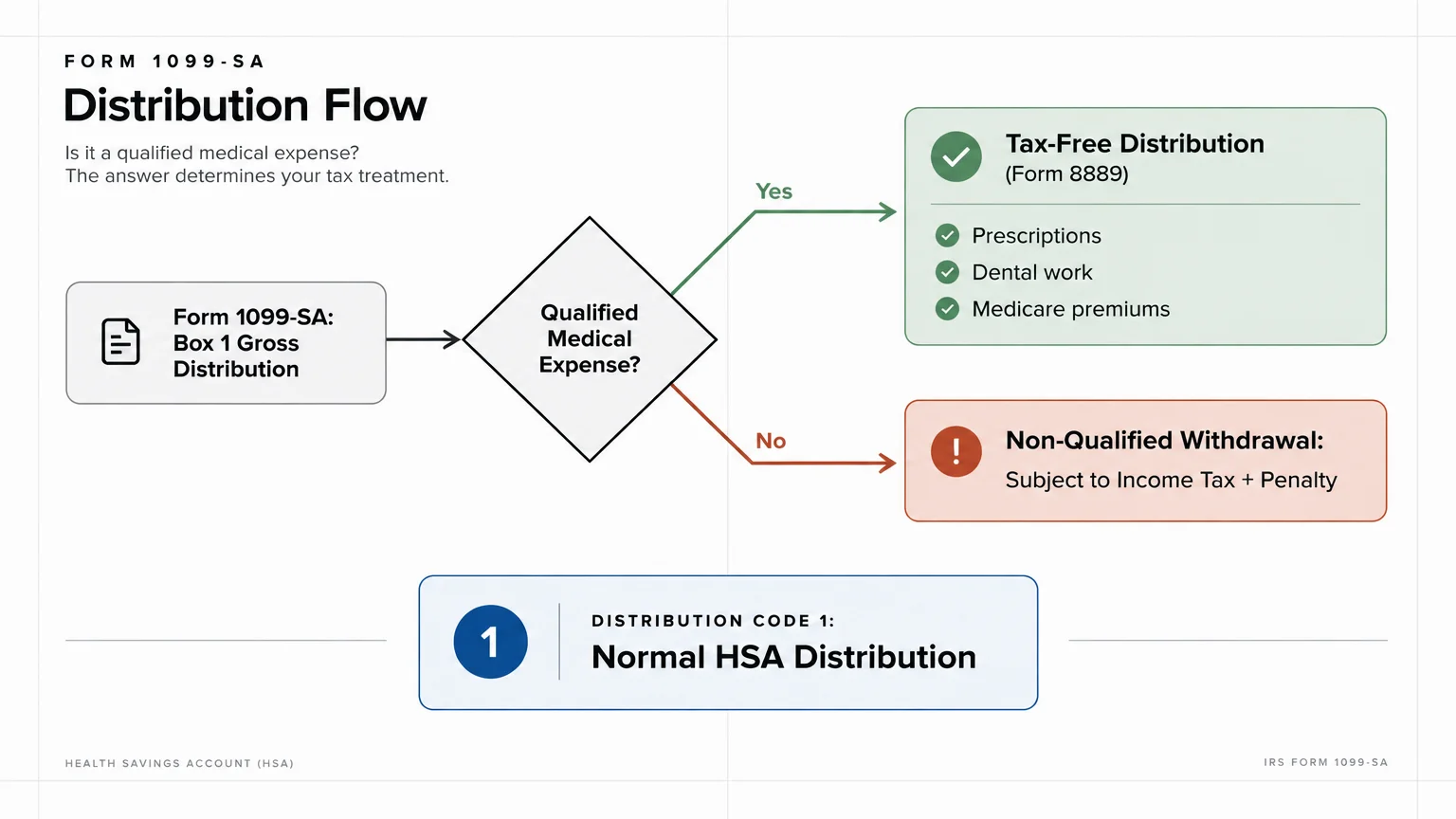
7. Form 1099-SA: Health Savings Account (HSA) Distributions
If you withdrew funds from a Health Savings Account or Medicare Advantage MSA, your custodian issues Form 1099-SA by January 31. This form reports total annual withdrawals.
Box 1 shows the gross distribution pulled from your account during the year. Box 3 provides an IRS distribution code clarifying how the funds were classified.
Code 1 designates standard distributions intended for qualified medical expenses. When spent on qualified healthcare, HSA withdrawals remain entirely free from federal income tax.
However, you must prove those withdrawals covered legitimate healthcare costs by filing IRS Form 8889. Failing to file Form 8889 may prompt the IRS to classify tax-free withdrawals as taxable income.
Once you turn 65, you can use HSA funds for non-medical expenses without the standard 20 percent penalty. However, non-medical distributions will incur ordinary income tax rates.
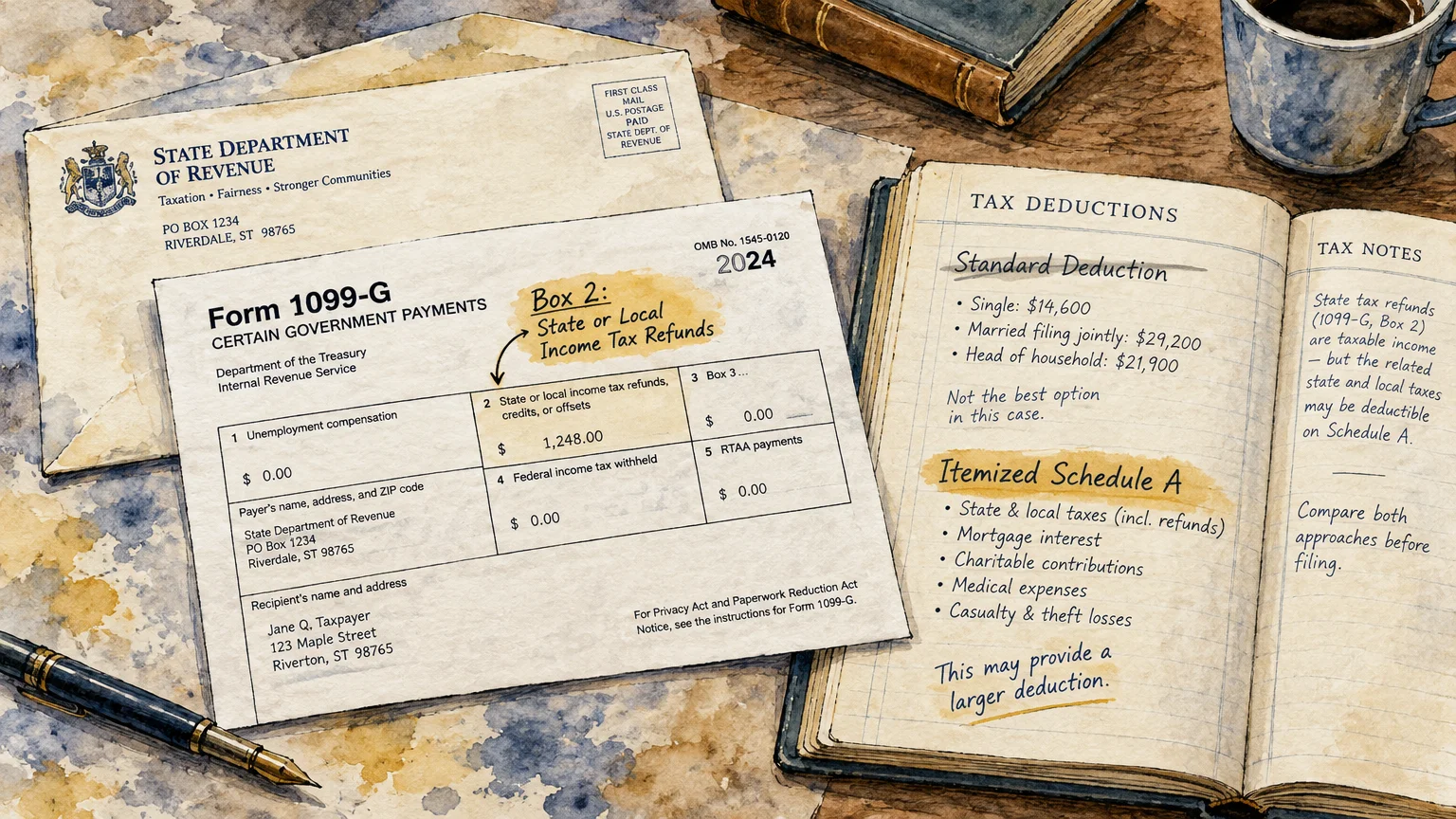
8. Form 1099-G: State Tax Refunds and Government Payments
State and municipal departments of revenue issue Form 1099-G by January 31. It reports state income tax refunds, credits, or taxable grants you received during the preceding calendar year.
Many retirees assume that every state tax refund is federally taxable, but that is rarely true. Your state refund is only taxable if you itemized deductions on Schedule A in the previous year.
If you claimed the standard deduction on your prior federal return, your state refund carries zero federal tax liability. You do not need to report it as income.
Because the vast majority of retirees claim the enhanced standard deduction for seniors, most Form 1099-G statements require no additional tax payment. Still, retain the statement with your records.
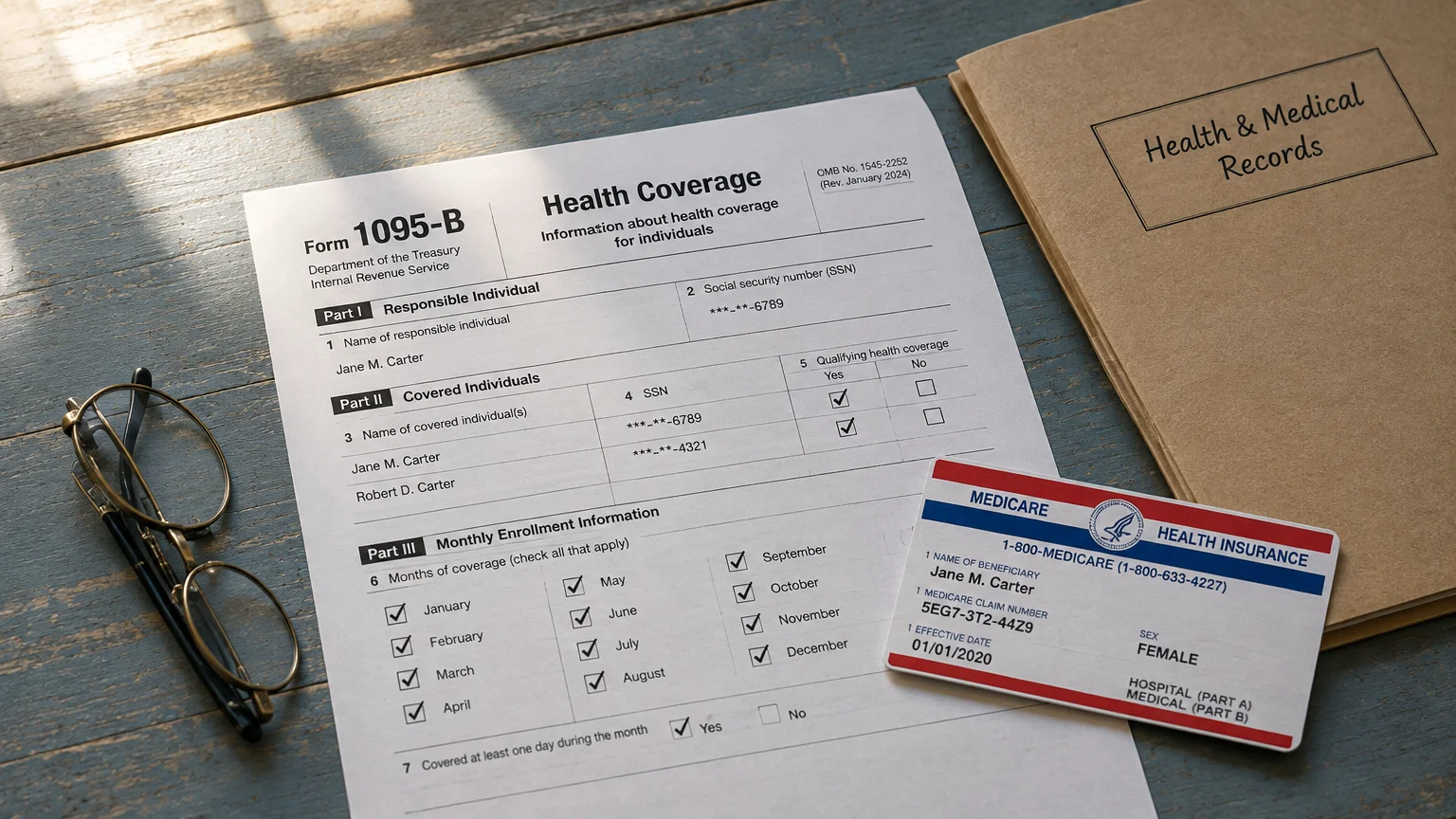
9. Forms 1095-B and 1095-C: Proof of Health Insurance Coverage
Proof of health insurance coverage arrives on Form 1095-B or Form 1095-C in late January or February. These forms verify that you and your dependents maintained qualifying minimum essential health coverage.
The Centers for Medicare & Medicaid Services issues Form 1095-B directly to individuals enrolled in Medicare Part A. You can explore your coverage details directly at Medicare.gov.
If you receive employer-sponsored retiree healthcare benefits, your former employer will furnish Form 1095-C instead. This document confirms the months your employer plan covered you.
You do not need to submit Form 1095-B or 1095-C when filing your Form 1040. Simply store the form with your permanent tax records to document your healthcare coverage history.
The Form You Should Not Wait For: Form 5498
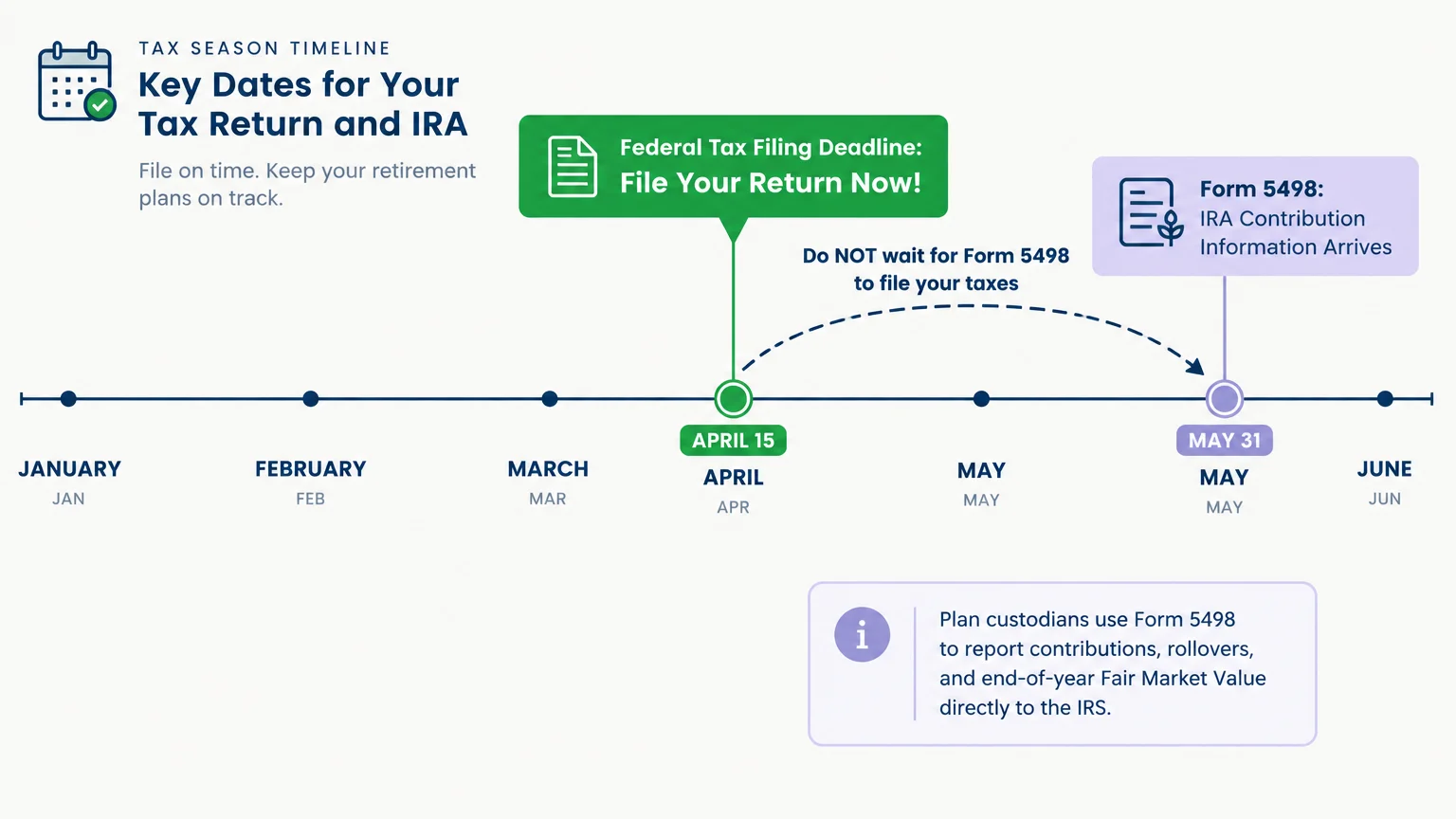
Every spring, retirees contact financial advisors wondering why their annual IRA statements have not arrived. Form 5498 reports IRA contributions, Roth conversions, rollover amounts, and year-end account values.
Custodians face an IRS delivery deadline of May 31 for Form 5498. That deadline falls well past the traditional mid-April tax filing cut-off date.
This extended timeline exists because you can make prior-year IRA contributions up until the April filing deadline. Custodians cannot finalize the document until all contribution windows close.
Do not delay filing your tax return while waiting for Form 5498. This form is strictly informational; the custodian files a copy directly with the IRS, and you do not attach it.
Retiree Tax Forms at a Glance
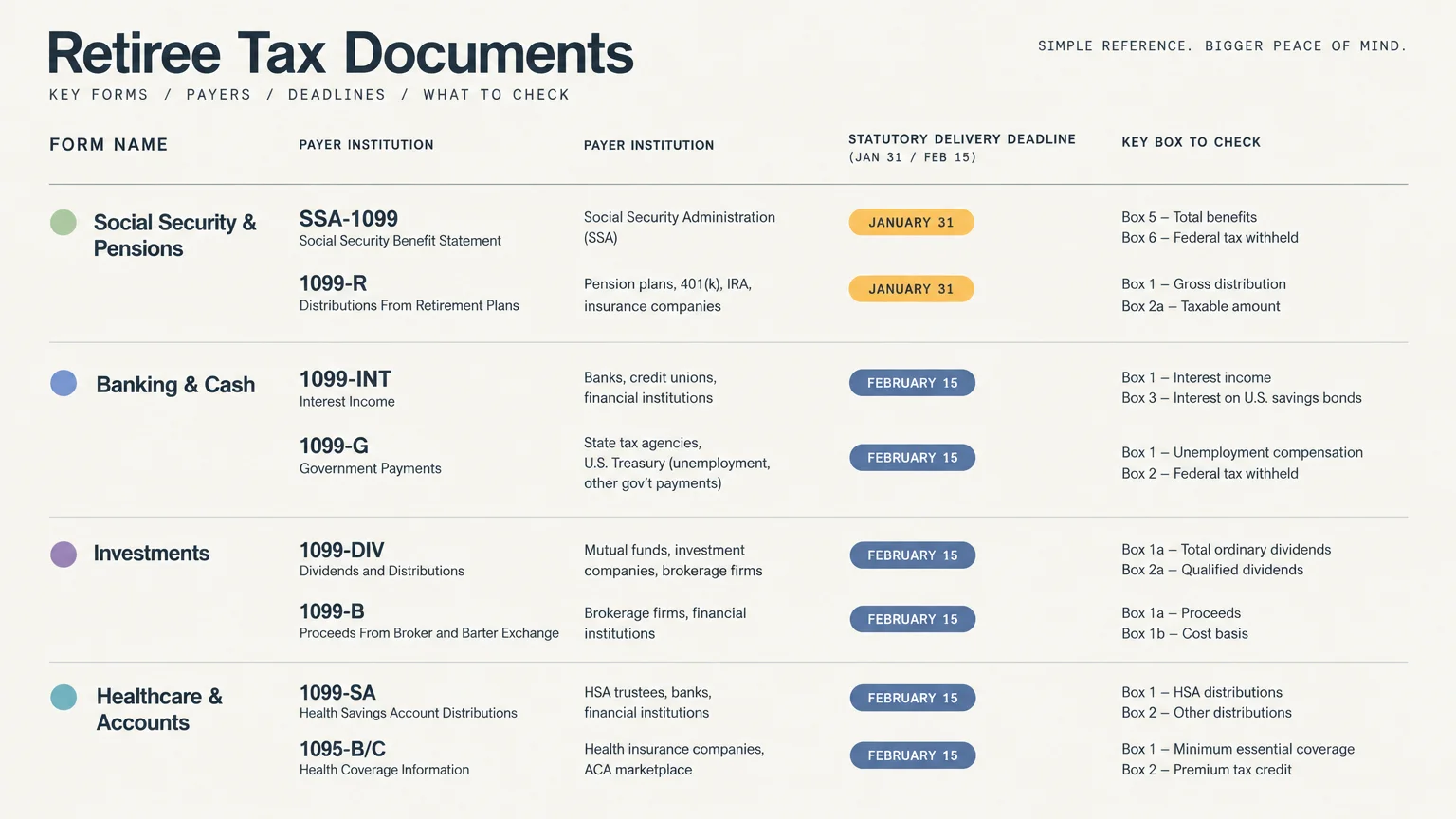
Use this summary table to track your incoming tax forms and verify delivery deadlines across your accounts.
| Tax Form | Reporting Entity | Mailing Deadline | Primary Tax Purpose |
|---|---|---|---|
| Form SSA-1099 | Social Security Administration | January 31 | Social Security benefits, withheld taxes, and Medicare Part B premiums |
| Form 1099-R | Retirement Plan Custodians | January 31 | Pensions, annuities, IRA withdrawals, RMDs, and Roth conversions |
| Form 1099-INT | Banks and Credit Unions | January 31 | Taxable interest income and U.S. Treasury bond interest ($10 or more) |
| Form 1099-DIV | Mutual Funds and Brokerages | January 31 | Ordinary dividends, qualified dividends, and capital gain distributions |
| Form 1099-B | Brokerage Firms | February 15 | Gross proceeds, cost basis, and capital gains from investment sales |
| Form 1099-NEC | Contract Clients or Businesses | January 31 | Nonemployee compensation for consulting or freelance services ($600 or more) |
| Form 1099-MISC | Payers of Miscellaneous Income | January 31 | Rental income, royalties, director fees, or legal settlements ($600 or more) |
| Form 1099-SA | HSA or MSA Custodians | January 31 | Distributions taken from Health Savings Accounts |
| Form 1099-G | State Department of Revenue | January 31 | State income tax refunds and taxable government payments |
| Form 1095-B / 1095-C | CMS or Former Employer | Early February | Proof of qualifying health coverage (Medicare Part A or retiree plan) |
| Form 5498 | IRA Custodians | May 31 | Informational reporting of annual IRA contributions, rollovers, and fair market value |
Pitfalls to Watch For
Filing your tax return too early represents one of the most common retirement mistakes. Waiting until mid-February ensures all consolidated brokerage statements and amended forms arrive safely.
Brokerage firms frequently issue corrected 1099 statements late in February when corporate dividend reclassifications occur. Filing prematurely forces you to submit an amended Form 1040-X.
Another major trap involves Qualified Charitable Distributions (QCDs) made directly from an IRA. Form 1099-R Box 1 reports your full gross withdrawal, including the portion sent directly to charity.
Custodians do not mark charitable gifts separately on the 1099-R. You must manually report the non-taxable gift on line 4b of Form 1040 and enter “QCD” next to the line.
“Taxes do not stop when your career ends; managing your tax brackets is the secret to making retirement savings last.” — Jean Chatzky, Financial Journalist and Author
Watch out for municipal bond interest reporting when computing provisional income. While municipal bond interest avoids federal income tax, you must add it back when calculating Social Security taxability.
Finally, verify your cost basis on securities inherited from a deceased spouse or relative. Inherited assets generally receive a stepped-up basis to the fair market value on the decedent’s date of death.

Getting Expert Help
While many retirees handle tax preparation independently using commercial software, certain complex events warrant professional consultation with a CPA or Enrolled Agent.
- Multi-Year Roth Conversion Ladders: Moving substantial sums from traditional IRAs to Roth IRAs requires precise bracket management to prevent pushing Social Security benefits or Medicare Part B premiums into higher tiers.
- Correcting an Accidental RMD Shortfall: If you miscalculated your RMD, a tax professional can help you file Form 5329 requesting a waiver of the excise tax under reasonable cause guidelines.
- Navigating Multi-State Pension Taxation: If you relocate during retirement or draw pensions across state borders, state sourcing rules can create complex double-taxation dilemmas requiring expert reconciliation.
- Managing Complex Charitable and Estate Gifting: Coordinating large gifts of appreciated securities alongside IRA charitable distributions requires strategic reporting to maximize your deductions without triggering audit red flags.
“A great retirement plan is not just about accumulating wealth; it is about keeping what you have worked so hard to build.” — Suze Orman, Personal Finance Author
Frequently Asked Questions
What should I do if my Form SSA-1099 has not arrived by early February?
If your SSA-1099 has not arrived by February 1, log into your personal account on the Social Security website. You can download and print an official replacement statement immediately.
Do I have to wait for Form 5498 before filing my tax return?
No, you do not need to wait for Form 5498. Custodians issue this form by May 31 purely for informational tracking, and it does not attach to your Form 1040.
Why does my Form 1099-R show my charitable gift as taxable income?
Plan custodians cannot determine whether your transfer satisfied IRS rules for a Qualified Charitable Distribution. You must adjust the taxable amount manually on your Form 1040 return.
Are state tax refunds reported on Form 1099-G always taxable?
No, your state tax refund is only taxable if you itemized deductions on federal Schedule A during the previous year. If you took the standard deduction, the refund is non-taxable.
Next Steps for Tax Season
Gather a dedicated folder for all tax forms for retirees as they land in your mailbox or online portals. Compare every statement against your personal financial records to spot reporting errors early.
Resist the urge to submit your return before late February when brokerage houses finalize their records. Taking a patient, methodical approach keeps your retirement assets safe and your filing penalty-free.
The information in this guide is meant for educational purposes. Your specific circumstances—including income, health needs, tax situation, and goals—may require different approaches. When in doubt, consult a licensed professional.
Last updated: March 2026. Retirement benefits, tax rules, and healthcare regulations change frequently—verify current details with official sources.








Leave a Reply