
Opening a denial letter from the Social Security Administration feels like a devastating financial setback, whether you applied for disability benefits, retirement coverage, or Supplemental Security Income. However, an initial denial is not the end of the road; in fact, it is often just the beginning of the social security appeals process. The agency denies over 60 percent of initial disability applications, yet thousands of claimants secure full benefits by systematically challenging those determinations through four distinct stages of review. By understanding key deadlines, gathering bulletproof evidence, and following the required procedural steps, you can effectively challenge the government’s decision and protect your financial future.

Why Social Security Denies Claims
Receiving an adverse decision notice from the Social Security Administration (SSA) can be alarming, but understanding the underlying reasons for denial equips you to craft a precise appeal. The SSA issues notices of determination for various programs, including Social Security Disability Insurance (SSDI), Supplemental Security Income (SSI), and standard Old-Age and Survivors Insurance (retirement benefits). While retirement benefit disputes usually center on earnings history errors or benefit calculation formulas, disability denials stem from complex medical and vocational criteria.
The agency denies initial applications primarily for two broad reasons: technical non-medical disqualifications and medical non-disability determinations. Technical denials occur when you fail to meet basic administrative requirements. For instance, if your earnings exceed the Substantial Gainful Activity (SGA) threshold, or if you lack sufficient work credits accumulated through FICA taxes, the agency issues a technical denial without evaluating your physical or mental health conditions.
Medical denials account for the vast majority of rejected disability claims. State-level agency evaluators working for Disability Determination Services (DDS) assess whether your medical condition meets specific regulatory criteria. Common reasons for medical denials include:
- Insufficient Medical Evidence: Your treatment files lack longitudinal medical history, objective diagnostic imaging (X-rays, MRIs, CT scans), laboratory results, or formal clinical notes.
- Failure to Follow Prescribed Treatment: The agency determines that you failed to follow treatment recommendations from your treating physician without a valid medical or financial excuse.
- Determination of Work Capacity: Disability Determination Services asserts that despite your physical or mental limitations, you retain the Residual Functional Capacity (RFC) to perform either your past relevant work or alternative jobs existing in significant numbers in the national economy.
- Duration Requirement Unmet: Evaluators conclude that your medical condition will not last for a continuous period of at least 12 months or result in death.
Recognizing the exact rationale stated in your explanation of determination letter is essential. When you know how to appeal a social security decision, you target the precise evidentiary gaps that caused the initial denial rather than simply resubmitting identical documentation.
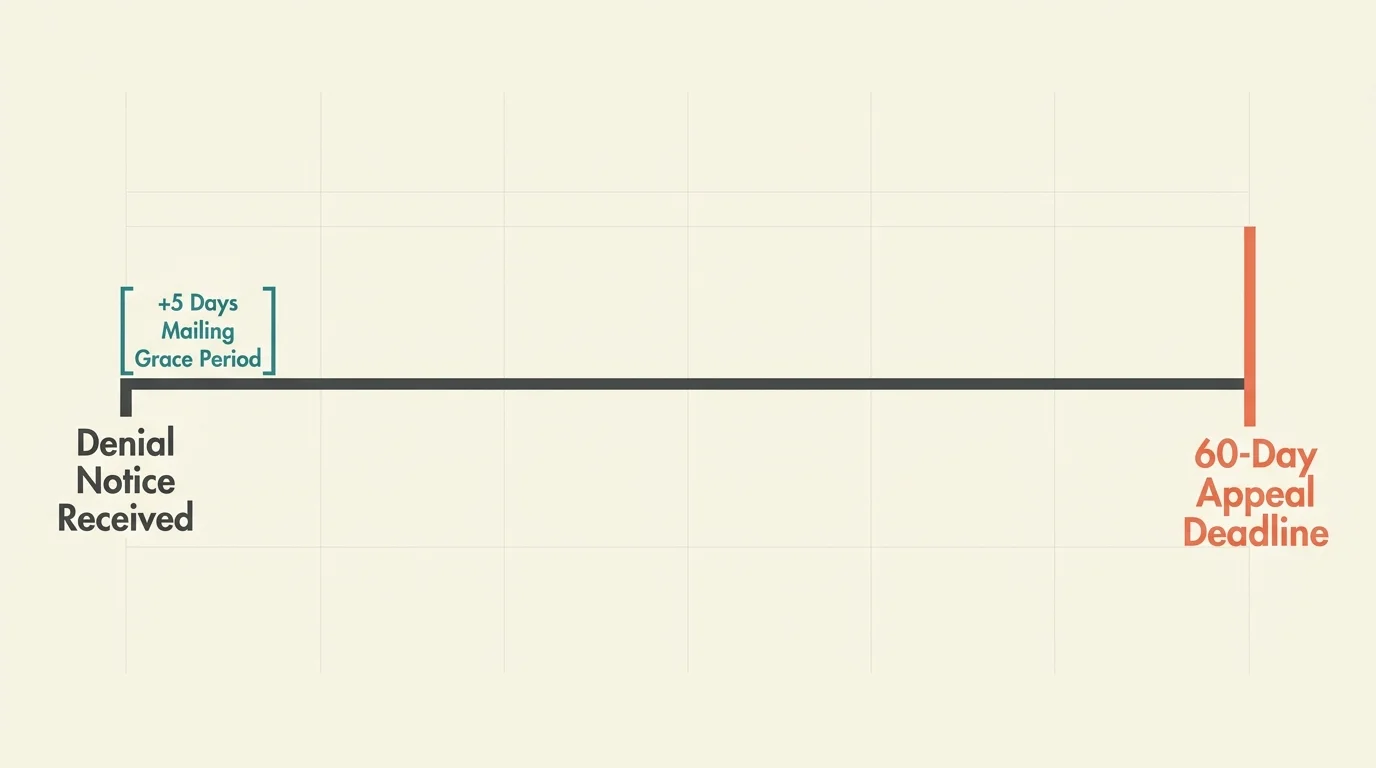
Critical Timelines: The 60-Day Window and 5-Day Rule
Time is your most critical asset when navigating the social security appeals process. The Social Security Administration enforces strict statutory deadlines at every administrative level. Missing a deadline can cause the agency to dismiss your appeal entirely, forcing you to start a brand-new application and potentially forfeiting thousands of dollars in retroactive back pay.
Federal regulations mandate that you must file your appeal within 60 days of receiving your denial notice. To account for delivery timelines, the SSA applies the 5-day mail delivery presumption under 20 CFR 404.901. The agency officially presumes you received the denial letter 5 days after the date printed at the top of the notice. Consequently, you have an effective total window of 65 calendar days from the date stamped on your denial notice to submit your formal appeal paperwork.
“When dealing with government benefits and legal deadlines, promptness isn’t just a virtue—it is a financial necessity. Waiting until the last minute increases risk without adding value.” — Suze Orman, Personal Finance Author and Host
If you fail to submit your appeal within the 65-day window, the SSA will dismiss your request unless you prove “good cause” for missing the deadline. Establishing good cause requires presenting clear written proof of severe mitigating circumstances. Acceptable grounds for good cause include:
- Severe illness or physical incapacitation that prevented you from filing.
- A death or serious illness in your immediate family.
- Destruction or loss of important records due to fire, flood, or natural disaster.
- Documented non-receipt or delayed delivery of the denial letter.
- Misleading guidance provided directly by an official SSA employee.
Do not rely on good cause waivers as a backup plan. Always submit your appeal documentation online through the official Social Security Administration website or send physical filings via Certified Mail with Request Receipt Requested to build a verifiable audit trail.
Stage 1: Social Security Reconsideration Request
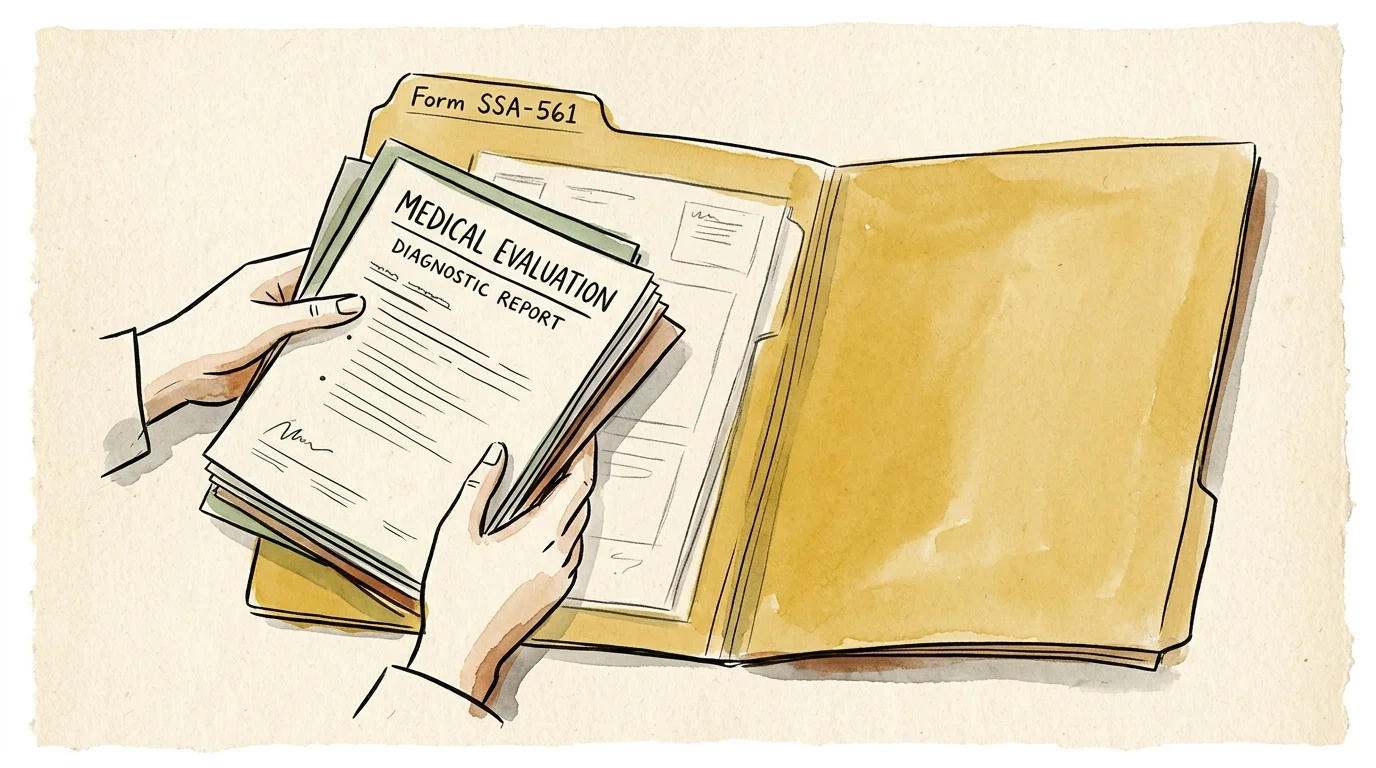
The first formal tier in challenging an adverse decision is the social security reconsideration request. At this stage, your entire file undergoes a comprehensive review by a completely independent examiner and medical team within Disability Determination Services who had no involvement in the initial determination. This fresh evaluation covers all original evidence plus any new medical treatment records, functional assessments, or wage documentation you submit.
To initiate a reconsideration, you must complete and submit specific administrative forms within the mandatory 65-day window. The primary document required is Form SSA-561-U2 (Request for Reconsideration). If you are appealing a disability denial, you must also complete Form SSA-3441 (Disability Report – Appeal) and Form SSA-827 (Authorization to Disclose Information to the Social Security Administration).
Form SSA-3441 requires detailed updates regarding your condition since your initial application. You must detail:
- New physical or mental health diagnoses, worsening symptoms, or functional limitations.
- All medical doctor visits, hospital admissions, emergency room evaluations, and physical therapy sessions.
- Changes in prescribed medications, dosages, and observed side effects.
- Names and contact information for new healthcare providers or specialist clinics.
- Updated work activity records or changes in daily living activities.
Due to widespread agency administrative backlogs, a reconsideration request takes an average of 7 to 8 months (220 to 228 days) to process. Statistically, reconsideration outcomes yield a low allowance rate, with roughly 12% to 15% of claims approved at this level. Many applicants view reconsideration as a frustrating hurdle, but completing this step is legally mandatory before advancing to an independent judicial hearing.
To maximize your chances during reconsideration, do not rely solely on past records. Schedule comprehensive follow-up evaluations with your treating doctors, request detailed functional capacity assessments that document your specific physical restrictions (such as standing, sitting, lifting, and reaching capacity), and ensure all updated treating source notes reach DDS promptly.
Stage 2: The Social Security Hearing Process
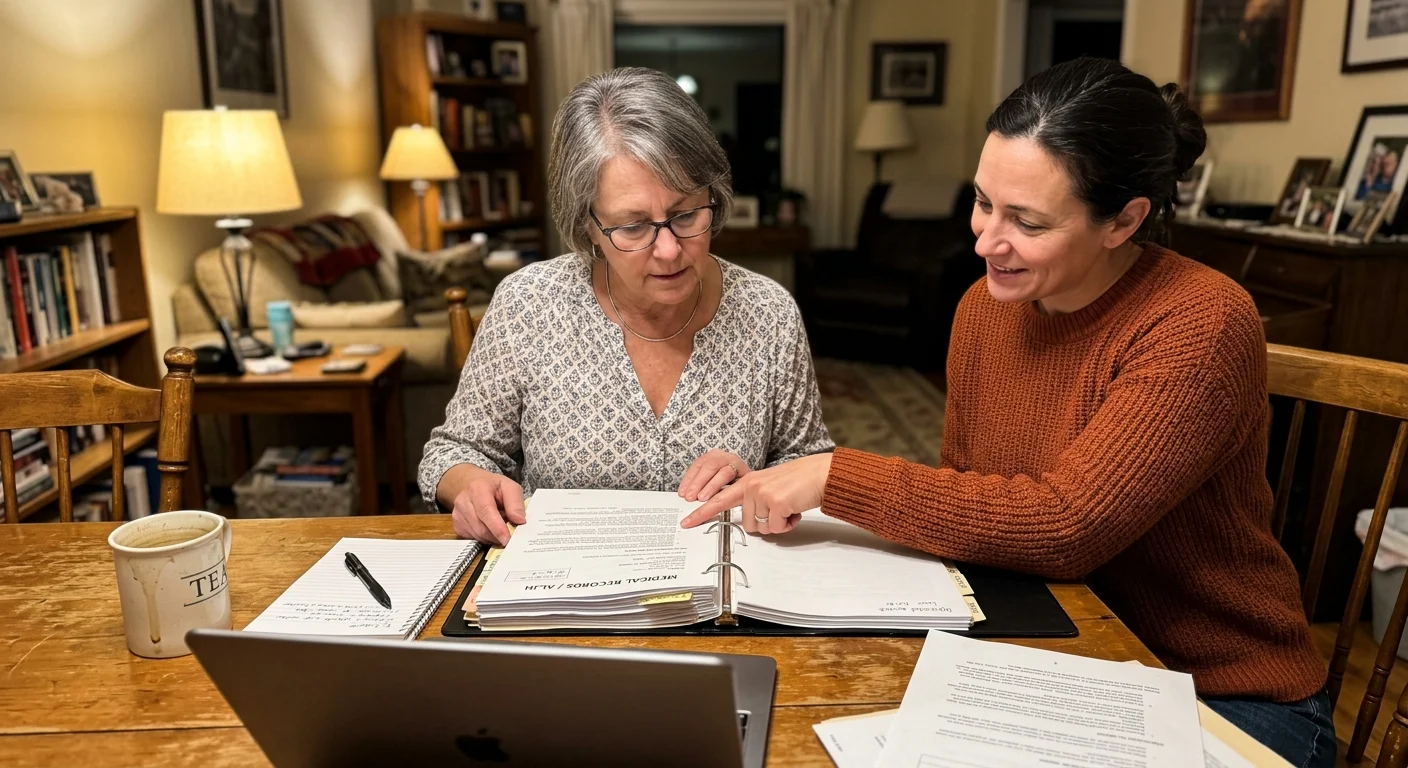
If Disability Determination Services denies your reconsideration request, you have the right to request a formal hearing. This step shifts your case out of state administrative offices and into the Office of Hearings Operations (OHO). You file Form HA-501-U5 (Request for Hearing by Administrative Law Judge) to initiate the social security hearing process.
The hearing stage represents your absolute best opportunity to secure an approval. Unlike previous paper reviews conducted by anonymous bureaucrats, the hearing allows you to present testimony directly to an Administrative Law Judge (ALJ). ALJs operate independently from local SSA field offices and Disability Determination Services, granting them wide latitude to evaluate witness credibility, medical evidence, and expert testimony.
Securing an ALJ hearing date requires patience. Due to system backlogs, requesting a hearing typically adds an additional 10 to 14 months to your timeline. In total, navigating from your initial application through an ALJ hearing decision often takes between 18 and 24 months. Hearings are conducted in one of three formats based on claimant preference and administrative availability: in-person at a regional hearing office, via secure video teleconference (VTC), or over the phone.
During the proceeding, the ALJ presiding over your case evaluates evidence, asks you specific questions about your work history, medical conditions, and daily limitations, and takes testimony from professional expert witnesses. Two types of neutral expert witnesses commonly appear at hearings:
- Vocational Experts (VE): Industrial experts who testify about the physical and skill demands of your past work and identify whether jobs exist in the national economy for someone with your specific functional limitations.
- Medical Experts (ME): Physicians hired by the agency to review your complex medical file, render expert opinions on diagnostic evidence, and clarify whether your impairments meet formal administrative listings.
A critical rule governing ALJ hearings is the 5-day evidence rule under 20 CFR 404.935. You must submit or inform the ALJ about all written medical evidence, specialist reports, and opinion statements at least 5 business days before the scheduled hearing date. If you fail to submit evidence or notify the judge within this window, the ALJ can exclude those medical records from consideration unless specific statutory exceptions apply.
ALJ hearings achieve significantly higher allowance rates than initial or reconsideration reviews, historically ranging from 45% to 50% approval. Thorough preparation—including drafting formal pre-hearing legal briefs, cross-examining vocational expert hypotheticals, and obtaining supportive treating doctor medical source statements—dramatically improves your statistical probability of success.

Stage 3: Appeals Council Review
If the Administrative Law Judge issues an unfavorable or partially favorable decision, your next legal remedy is requesting a review by the Social Security Appeals Council located in Falls Church, Virginia. You initiate this third stage by submitting Form HA-520 (Request for Review of Hearing Decision/Order) within the standard 65-day filing window.
It is crucial to understand that the Appeals Council does not conduct new hearings, take oral testimony, or evaluate your credibility. Instead, the Appeals Council operates strictly as an administrative court of legal review. Its primary purpose is determining whether the ALJ committed procedural errors, misapplied Social Security law and regulations, or issued a ruling unsupported by substantial evidence.
When reviewing your appeal, the Appeals Council evaluates your administrative hearing transcript, written exhibits, and attorney arguments to reach one of three potential outcomes:
- Deny or Dismiss Request: The Appeals Council agrees with the ALJ’s ruling or concludes there was no legal error in the decision, making the ALJ’s ruling the final decision of the Commissioner of Social Security.
- Remand the Case: The Council vacates the ALJ’s decision and remands (sends back) the claim to an Administrative Law Judge—often the same judge who issued the original denial—with specific orders to hold a new hearing, take additional vocational testimony, or properly re-evaluate medical opinions.
- Issue a Favorable Decision: The Council directly reverses the ALJ and grants full benefits. This outcome is exceedingly rare and occurs only when clear, undisputed evidence in the record warrants immediate approval without requiring further testimony.
Processing times at the Appeals Council typically range from 10 to 15 months. The vast majority of Appeals Council filings end in denial of review. However, securing a remand order remains a highly viable legal outcome, giving you a second chance at an ALJ hearing to address procedural deficiencies and introduce updated medical records.
Stage 4: Federal District Court Review
When the Appeals Council denies your request for review or upholds an unfavorable ALJ decision, you have exhausted all administrative appeals within the Social Security Administration. At this point, your recourse shifts outside the agency into the federal judicial branch. You must file a civil lawsuit against the Commissioner of Social Security in the United States District Court serving your geographic jurisdiction.
Filing a federal civil action requires strict adherence to statutory deadlines and federal court rules. You must file your summons and complaint within 60 days from the date you receive the Appeals Council denial letter (plus the standard 5-day mailing presumption). Additionally, you must pay federal filing fees—typically around $400—or submit an application to proceed *in forma pauperis* demonstrating financial hardship.
Federal district court litigation differs fundamentally from administrative proceedings:
- No new medical evidence, doctor notes, or personal testimony may be introduced; the federal judge reviews only the official administrative record compiled during earlier stages.
- The proceeding is governed by the Federal Rules of Civil Procedure and local district court rules, requiring legal representation admitted to practice before the federal bar.
- Your attorney and the Assistant United States Attorney representing the SSA file formal legal briefs arguing whether the ALJ’s decision was supported by substantial evidence and free from legal error.
If the federal judge finds that the SSA committed significant legal errors, failed to weigh medical opinion evidence properly, or disregarded vocational testimony, the court will typically remand the case back to the Social Security Administration for a new hearing. While federal court litigation is lengthy—often taking 12 to 24 months—it provides vital oversight against arbitrary or legally flawed administrative decisions.
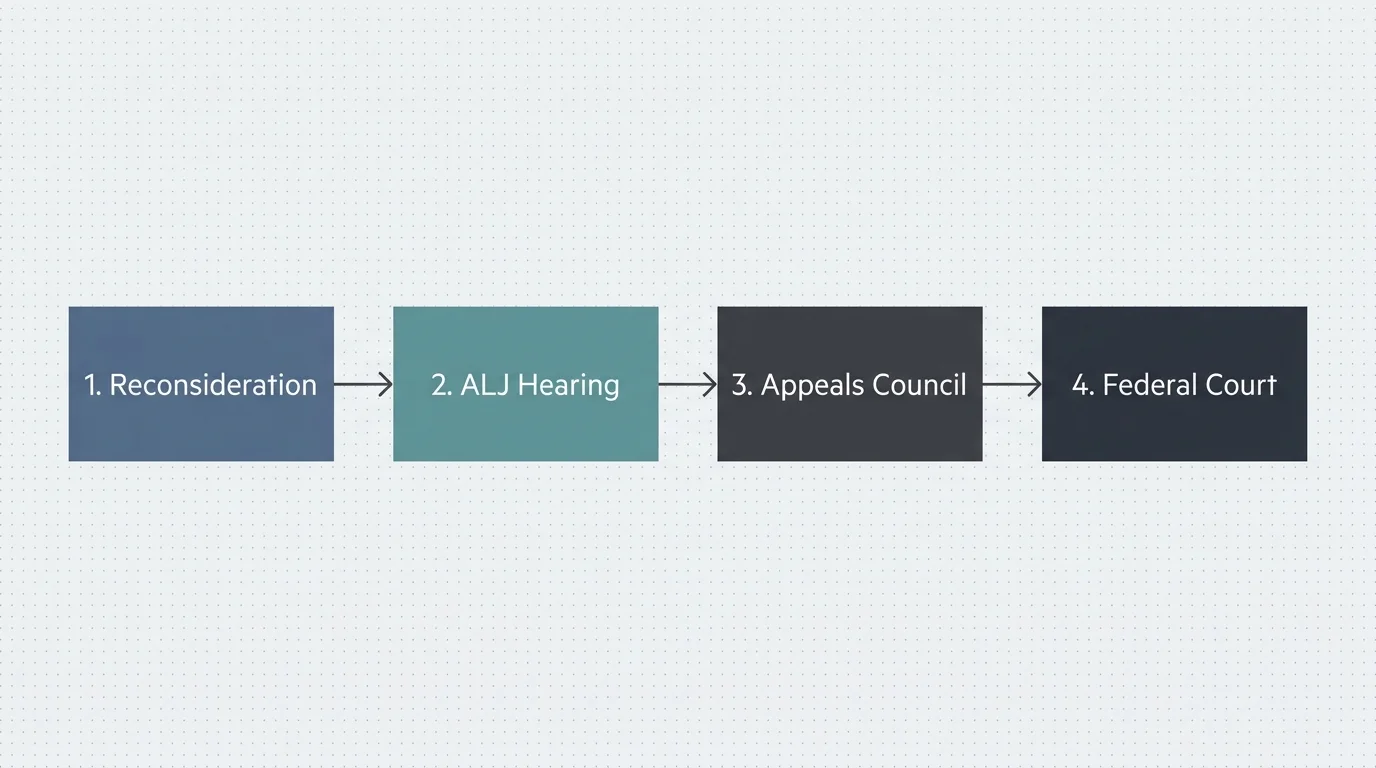
Comparing the Four Levels of Social Security Appeals
Navigating the disability appeal steps requires tracking distinct forms, deadlines, decision-makers, and procedural standards across all four tiers. The comparison matrix below outlines the essential components of each stage in the social security appeals process.
| Appeal Level | Required Forms | Average Processing Time | Decision Maker | Primary Focus & Strategy |
|---|---|---|---|---|
| Stage 1: Reconsideration | Form SSA-561-U2 Form SSA-3441 Form SSA-827 |
7 to 8 months (220–228 days) |
Independent DDS Examiner & Medical Team | Paper review. Submit updated treating doctor notes, objective test results, and functional opinion statements. |
| Stage 2: ALJ Hearing | Form HA-501-U5 | 10 to 14 months (18–24 months total) |
Administrative Law Judge (OHO) | Oral testimony. Present personal witness testimony, cross-examine Vocational Experts, and fulfill the 5-day evidence rule. |
| Stage 3: Appeals Council | Form HA-520 | 10 to 15 months | Appeals Council Panel (Falls Church, VA) | Legal review. Identify procedural errors, misapplication of regulations, or lack of substantial evidence in the ALJ decision. |
| Stage 4: Federal District Court | Civil Complaint & Summons | 12 to 24 months | United States District Court Judge / Magistrate | Judicial lawsuit. Submit legal briefs identifying statutory violations; requires an attorney admitted to the federal bar. |
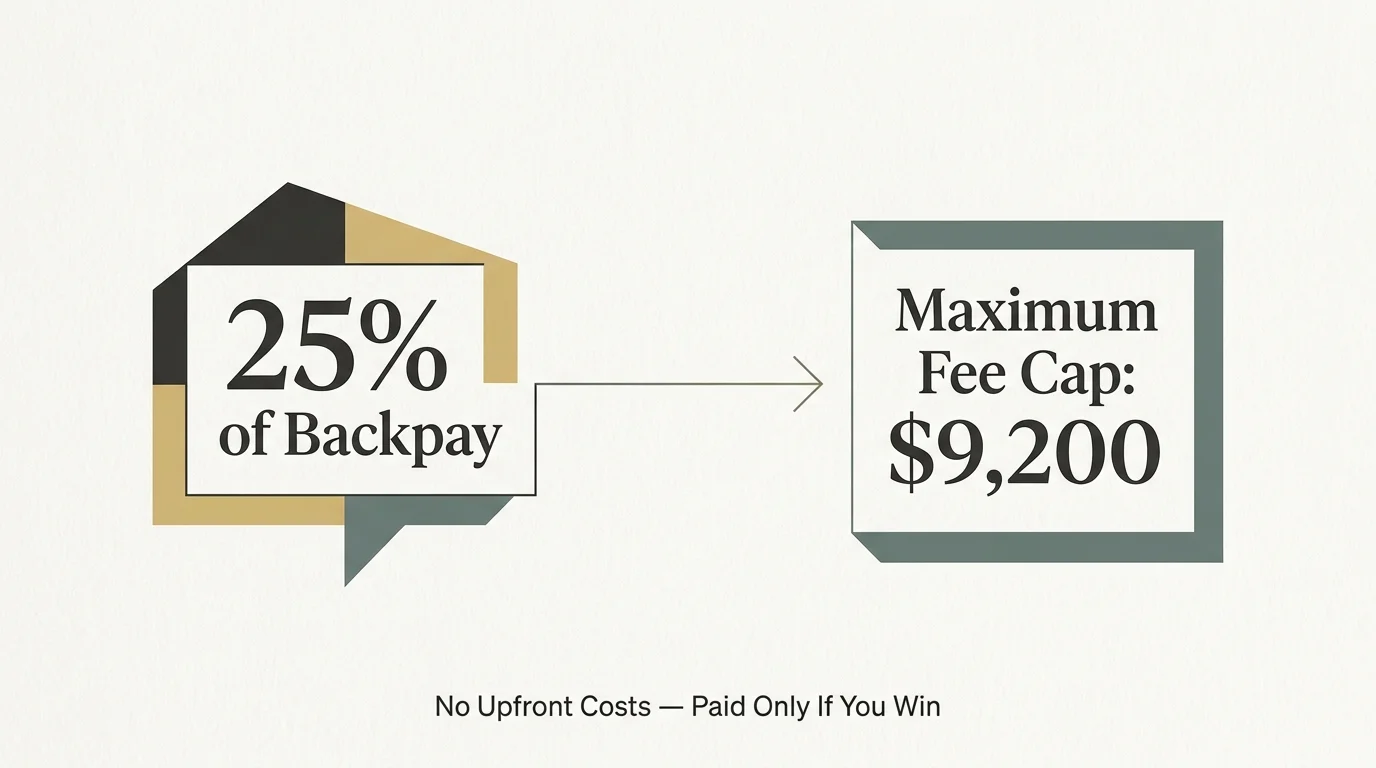
Costs, Attorney Fees, and the $9,200 Fee Cap
Many claimants hesitate to hire professional legal representation because they fear expensive out-of-pocket costs while unable to work. However, federal law regulates legal fees in Social Security cases to ensure access to justice regardless of your personal bank balance.
Social Security representatives—including disability attorneys and non-attorney representatives certified by the SSA—typically operate on a contingency fee agreement. Under this structure, you pay no upfront legal fees or retainers. Your representative gets paid only if the agency approves your claim and awards retroactive past-due benefits.
“True financial security comes from understanding regulatory protections designed to safeguard your rights. Navigating federal systems requires leveraging rules that protect your income.” — Elizabeth Warren, U.S. Senator and Consumer Advocate
Federal law regulates the maximum fee a representative can collect under a standard fee agreement. Effective November 30, 2024, the SSA raised the representative fee cap to $9,200 (up from the previous $7,200 limit). Under this system, the representative fee is strictly capped at the lesser of two amounts:
- 25% of your total past-due (retroactive) benefits accumulated up to the month of favorable approval.
- $9,200 (the maximum statutory fee ceiling set by federal administrative regulations).
For example, if the SSA awards you $20,000 in retroactive back pay, your attorney receives 25% ($5,000). If your back pay total is $50,000, 25% equals $12,500; however, due to the statutory cap, your representative receives $9,200, and you retain the remaining $40,800. The SSA directly deducts approved representative fees from your back pay distribution and remits payment to your lawyer, ensuring complete transparency.
You should note that while attorney fees are contingent upon winning, out-of-pocket administrative expenses are separate. Representatives may charge you for actual costs incurred while building your case file, such as medical record copying fees charged by hospitals or fees for specialized doctor narrative reports. These incidental costs usually total a few hundred dollars, and representatives typically invoice them separately upon case completion.
Managing ongoing living costs while waiting out long administrative appeals presents a significant challenge. If you face severe financial distress, resources available through the Consumer Financial Protection Bureau and local social service organizations can help you locate emergency utility, housing, and food assistance programs while your claim works through the queue.

Getting Expert Help
While you have the legal right to represent yourself throughout the social security appeals process, navigating administrative rules, medical coding, and cross-examinations without professional assistance significantly decreases your probability of success. Enlisting an experienced Social Security disability attorney or advocate is particularly critical in specific complex scenarios:
- Transitioning from Reconsideration to an ALJ Hearing: Preparing for a live hearing requires drafting structured legal briefs, submitting medical exhibits formatted to federal standards, and formulating cross-examination questions for Vocational Experts. An attorney ensures your testimony effectively addresses legal disability criteria.
- Complex or Multiple Medical Conditions: If your claim involves overlapping physical and mental health impairments—such as combining degenerative disc disease with severe depression and chronic fatigue—a representative synthesizes these conditions to establish that your combined impairments equal a listed impairment or eliminate all full-time work capacity.
- Disputes Involving Earnings History or Overpayment Claims: If your appeal centers on complex retirement wage recalculations, alleged SSI overpayments, or earnings posted to incorrect work credits, financial advocates and legal experts navigate internal SSA policy manuals (POMS) to correct administrative mistakes.
- Submitting Appeals Beyond the ALJ Stage: Both Appeals Council reviews and Federal District Court lawsuits require specialized legal briefs citing circuit court precedents, administrative regulations, and constitutional due process standards. Representation by an attorney experienced in federal litigation is essential for these advanced tiers.
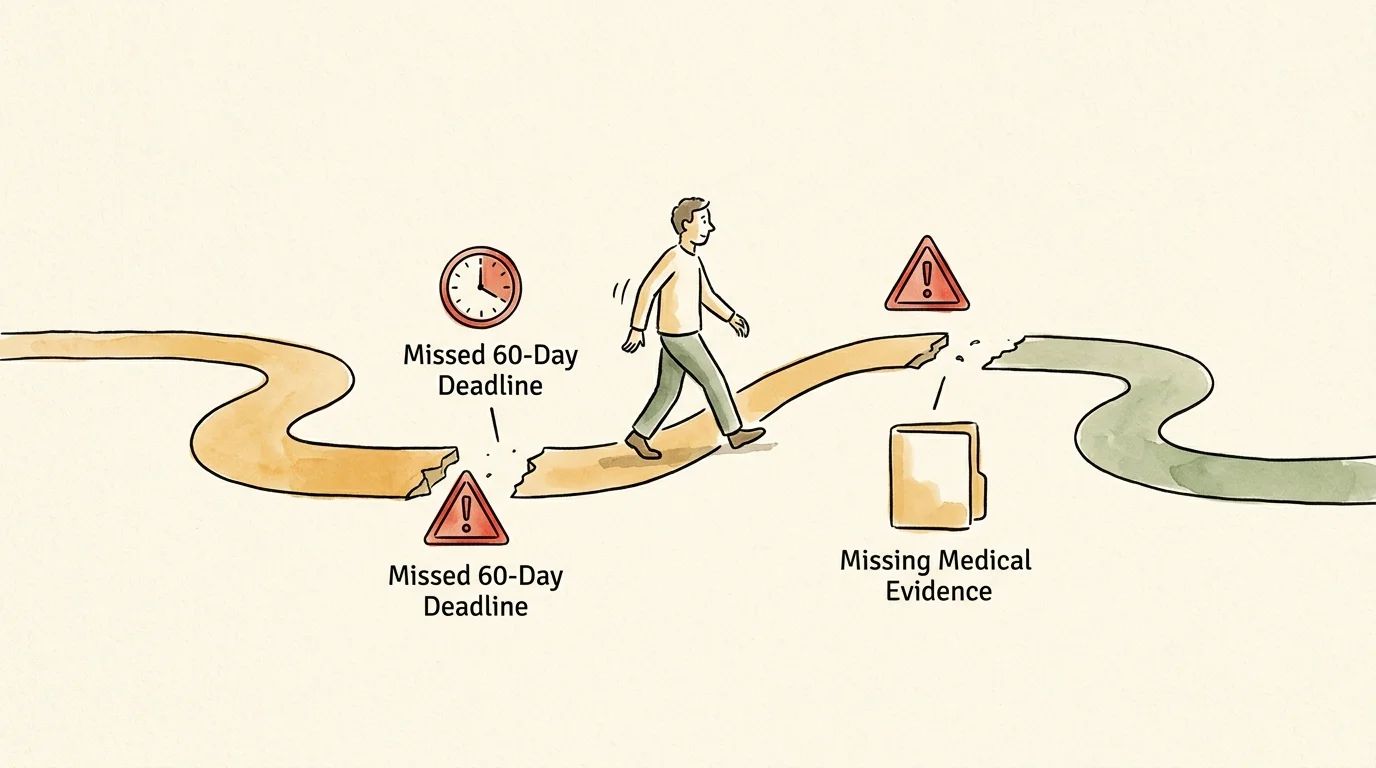
Pitfalls to Watch For
Navigating benefit appeals requires rigorous attention to detail. Even strong claims backed by solid medical records can fail due to procedural mistakes. Protect your rights by avoiding these common mistakes during your appeal:
- Missing the 65-Day Filing Deadline: Assuming the SSA will grant extensions without documented good cause is a critical error. Mark your calendar immediately upon receiving a notice and submit your appeal paperwork well before the cutoff.
- Filing a New Application Instead of Appealing: When faced with a denial, some claimants mistakenly submit a brand-new initial application rather than filing an appeal. This mistake forfeits your right to past-due retroactive benefits tied to your original filing date and usually results in an immediate administrative denial.
- Discontinuing Medical Treatment During Appeals: Long wait times cause some applicants to stop seeing their doctors, especially if they lose health insurance. However, a gap in medical evidence leads judges to infer that your condition improved, undermining your claim. Seek low-cost clinics or community health centers to maintain continuous treatment records.
- Failing to Disclose All Healthcare Providers: Omitting treating physicians, physical therapists, or mental health professionals from Form SSA-3441 leaves vital diagnostic evidence out of your administrative file.
- Ignoring the 5-Day Evidence Submission Rule: Waiting until the day of your ALJ hearing to hand-deliver medical records risks complete exclusion of those documents by the judge under federal regulations.
- Relying on Informal Verbal Statements from SSA Staff: Phone conversations with field office representatives do not constitute formal legal decisions or deadline extensions. Always secure written confirmation for every filing, document submission, and timeline adjustment.
Frequently Asked Questions
How long does the entire Social Security appeal process take from start to finish?
If your claim proceeds through both Reconsideration and an Administrative Law Judge hearing, the entire timeline typically takes between 18 and 24 months. Reconsideration reviews average 7 to 8 months, while scheduling and completing an ALJ hearing adds another 10 to 14 months. Appeals Council and Federal Court reviews can extend the timeline by an additional 1 to 2 years.
Can I collect back pay if my Social Security appeal is approved?
Yes. If the SSA approves your appeal, you are entitled to past-due benefits (back pay) retroactive to your established onset date of disability, minus statutory waiting periods. For SSDI, back pay accrues starting five months after your disability onset date up to the month of approval, often yielding lump-sum payments covering several months or years of accrued benefits.
Should I apply for Social Security retirement while my disability appeal is pending?
If you have reached early retirement age (at least 62) while appealing a disability denial, you can choose to claim reduced early retirement benefits while your disability appeal moves forward. If your disability appeal succeeds, the SSA will adjust your benefit status to full disability benefits and pay the difference between your reduced early retirement checks and your full disability entitlement for the retroactive period.
What happens if I miss the 60-day deadline to file my appeal?
If you fail to submit your appeal within 60 days of receiving your denial (plus 5 days for mail delivery), the SSA will dismiss your appeal request. You must establish “good cause” in writing—such as emergency hospitalization, a death in the family, or non-receipt of the notice—to reinstate your appeal rights. Without proven good cause, you must file a new initial application and lose accumulated back pay.
Taking Control of Your Claim
Facing a Social Security denial can feel overwhelming, but an initial rejection is rarely the final word on your claim. The social security appeals process provides a structured, four-tiered framework designed to protect your rights, re-evaluate questionable determinations, and allow you to present new medical evidence before independent judges. By tracking your deadlines, maintaining continuous medical care, and gathering detailed clinical documentation, you build a compelling case that commands serious review.
Take charge of your appeal today by reviewing your denial letter, noting your 65-day deadline, and gathering your latest medical records. If you feel unsure about managing procedural rules or presenting testimony, consult a qualified representative or research senior advocacy groups through National Council on Aging or AARP. Taking prompt, structured action remains your most powerful strategy for securing the full retirement, disability, or survivor benefits you have earned over a lifetime of hard work.
The information in this guide is meant for educational purposes. Your specific circumstances—including income, health needs, tax situation, and goals—may require different approaches. When in doubt, consult a licensed professional.
Last updated: March 2026. Retirement benefits, tax rules, and healthcare regulations change frequently—verify current details with official sources.









Leave a Reply