
Earning an income overseas can expand your career, but it also alters your future retirement safety net. You can still claim full American benefits if you understand how foreign earnings interact with federal calculations.
Working abroad creates unique coordination rules between domestic taxes and foreign social systems. Knowing these rules ensures you collect every dollar you earned without unexpected government penalties.
From bilateral treaties to foreign pension offsets, specific regulations dictate your ultimate monthly payout. Mastering these seven principles will protect your financial security across international borders.
Rule 1: The 40-Credit Requirement Still Governs Basic Eligibility
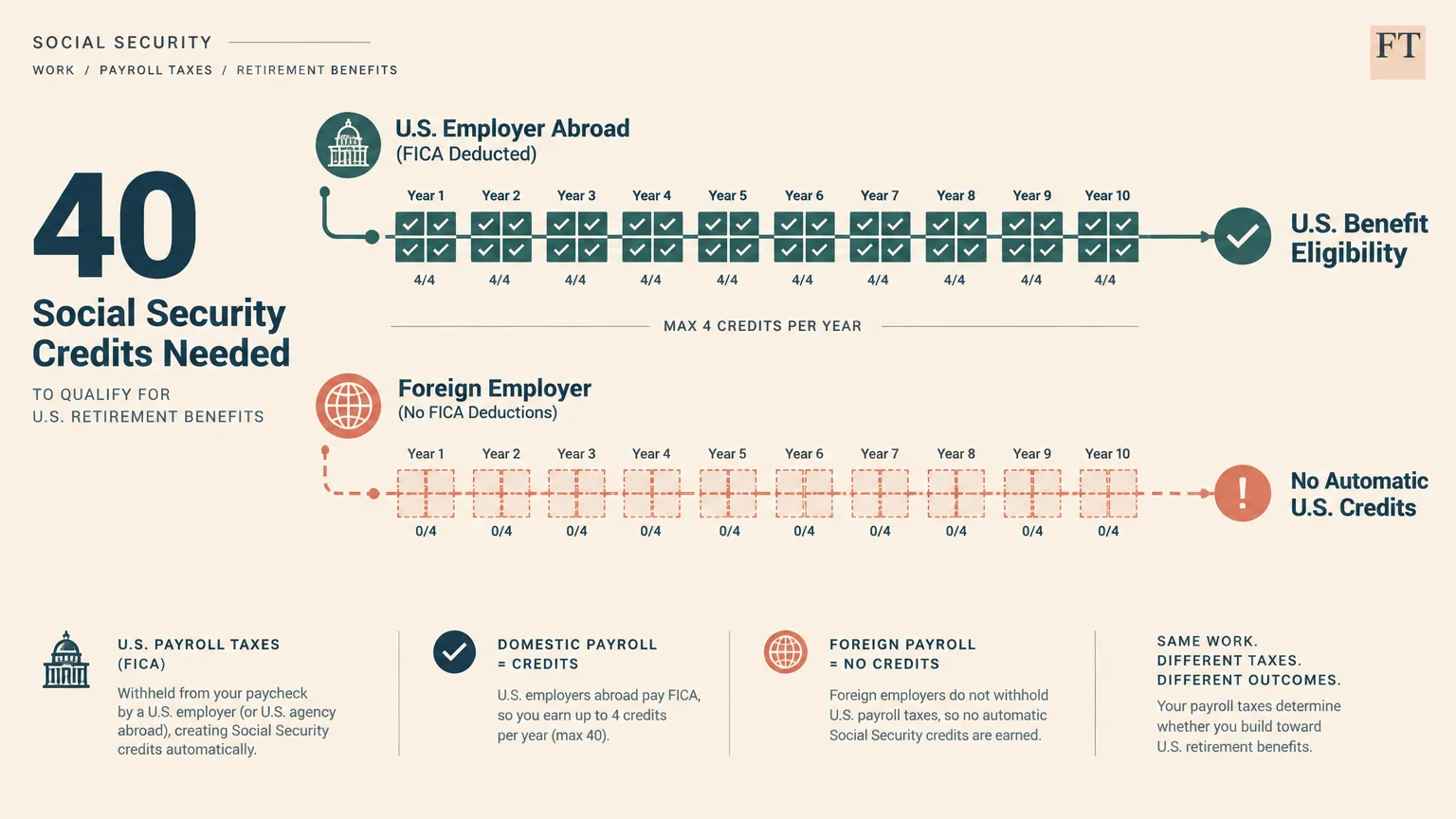
To qualify for retirement benefits, you generally need 40 Social Security credits. You earn up to four credits each calendar year by paying federal payroll taxes on eligible wages.
If you spent decades working for foreign employers, you may lack enough U.S. credits. In that situation, your standard retirement benefit calculation halts until you establish alternative eligibility.
Working abroad for an American company usually keeps you on track. Your employer deducts FICA taxes directly from your paycheck under standard federal guidelines.
Conversely, direct employment with a foreign entity rarely generates U.S. credits. Those foreign earnings remain outside the domestic system unless an international agreement intervenes.
Rule 2: Totalization Agreements Bridge Coverage Gaps
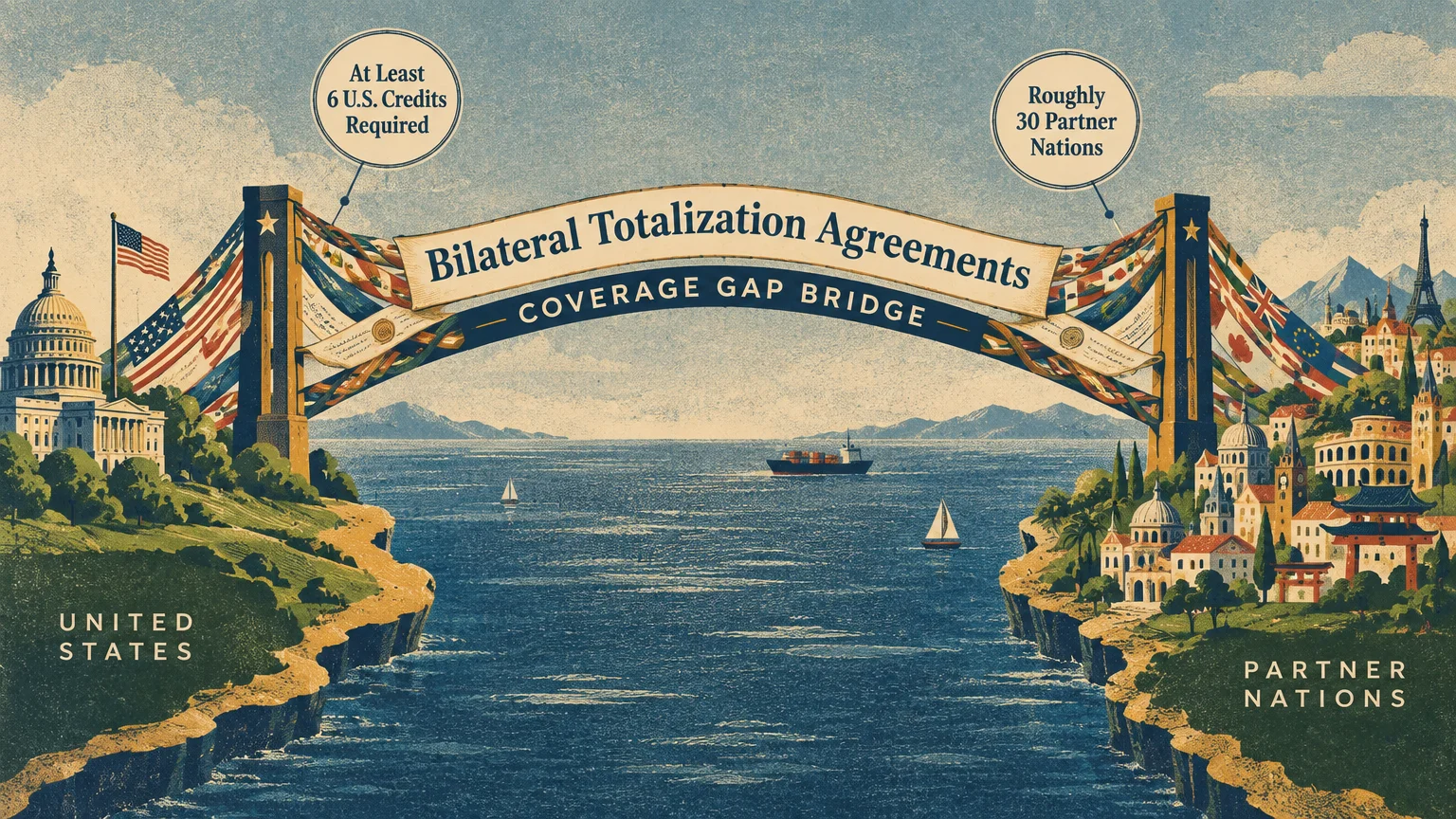
The United States maintains bilateral treaties called totalization agreements with roughly thirty foreign nations. These pacts prevent dual social taxation on identical wages earned overseas.
More importantly, these agreements allow you to combine foreign and domestic work credits. If you fall short of 40 U.S. credits, foreign work periods can help you qualify.
You must possess at least six U.S. work credits to initiate this combination process. The Social Security Administration then computes a prorated monthly benefit based on your domestic earnings history.
This international coordination ensures that your multi-country career produces tangible retirement income. Without these pacts, your foreign tax contributions might yield zero return upon retirement.
Rule 3: The Windfall Elimination Provision May Reduce Your Benefit
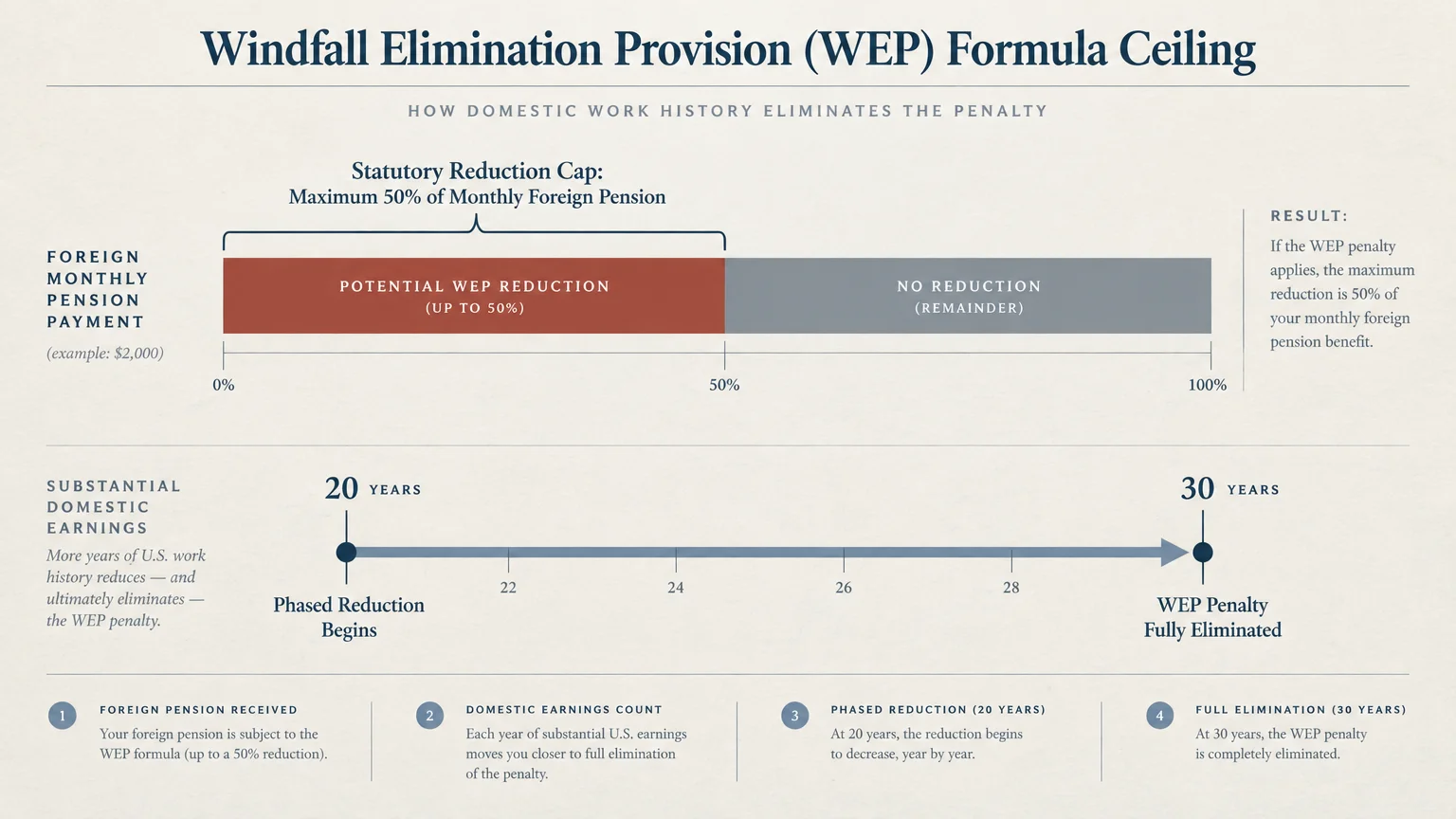
The Windfall Elimination Provision, commonly known as WEP, frequently catches international workers off guard. It applies when you receive a foreign pension derived from work not covered by Social Security.
Congress designed the primary benefit formula to replace a higher percentage of income for lower earners. A foreign pension can make you appear artificially low-income on domestic records.
Consequently, federal rules reduce your primary insurance amount to balance your total benefit package. The reduction has a statutory ceiling and cannot exceed half of your foreign monthly pension payment.
You can eliminate the WEP penalty entirely if you accumulate thirty years of substantial domestic earnings. Reaching twenty to twenty-nine years of substantial coverage will gradually minimize the overall reduction.
“A delay in claiming Social Security can be the difference between just getting by and truly thriving in retirement.” — Suze Orman, Personal Finance Expert
Understanding these reduction formulas allows you to time your benefit claim with maximum precision. Strategic claiming prevents unexpected cash flow shortfalls during your initial retirement years.

Rule 4: Spousal Benefits Face the Government Pension Offset
Spousal and survivor benefits face an even stricter rule called the Government Pension Offset. This regulation targets individuals claiming auxiliary benefits based on their spouse’s domestic work record.
If you receive a foreign pension from non-covered work, GPO drastically cuts your spousal benefit. The agency slashes your spousal entitlement by two-thirds of your gross foreign monthly pension.
In many instances, this steep two-thirds offset wipes out the spousal payment entirely. Survivor benefits face the exact same reduction when you transition to widow or widower status.
Couples must evaluate whether relying on spousal benefits remains realistic alongside a foreign pension. Early planning allows you to structure other retirement assets to absorb any lost benefit income.

Rule 5: Direct Deposit Reaches Most Nations Around the Globe
For retirees exploring Social Security for expats, geography rarely prevents payment delivery. The federal government deposits funds electronically into partner financial institutions in over one hundred countries worldwide.
Direct electronic deposit eliminates the risk of stolen or delayed paper checks overseas. It also converts your U.S. dollars into local currency at competitive institutional exchange rates.
However, federal Treasury sanctions forbid sending payments to specific nations like North Korea and Cuba. Other countries require personal appearances at American embassies to release accrued payments.
Non-citizen spouses residing abroad must satisfy strict physical presence rules to keep receiving monthly benefits. They must reside inside the United States for five full years during their marriage.
Rule 6: U.S. Tax Obligations Follow You Anywhere
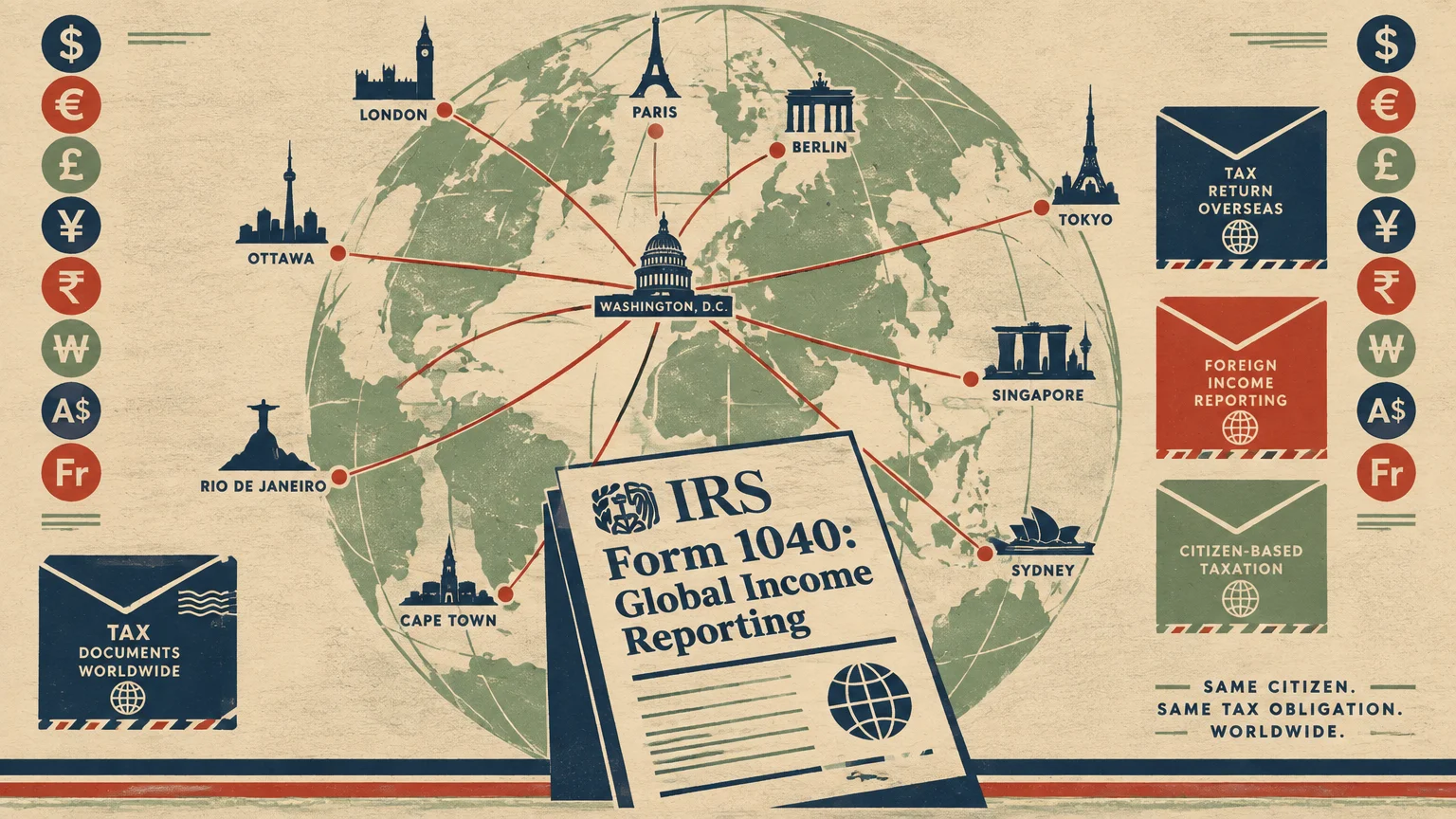
American citizens must file annual returns with the Internal Revenue Service regardless of residency. Your worldwide income remains subject to federal income tax rules even while living abroad.
Up to 85 percent of your Social Security benefits may be taxed depending on your provisional income. International tax treaties sometimes alter this standard treatment depending on your tax residency.
Certain bilateral tax treaties grant exclusive taxing rights on retirement benefits to your country of residence. Other agreements allow both governments to tax distributions while offering offsetting foreign tax credits.
When you have a foreign pension and Social Security income, tax treaties determine which country gets first dibs. Reviewing these agreements prevents double taxation and costly compliance penalties.
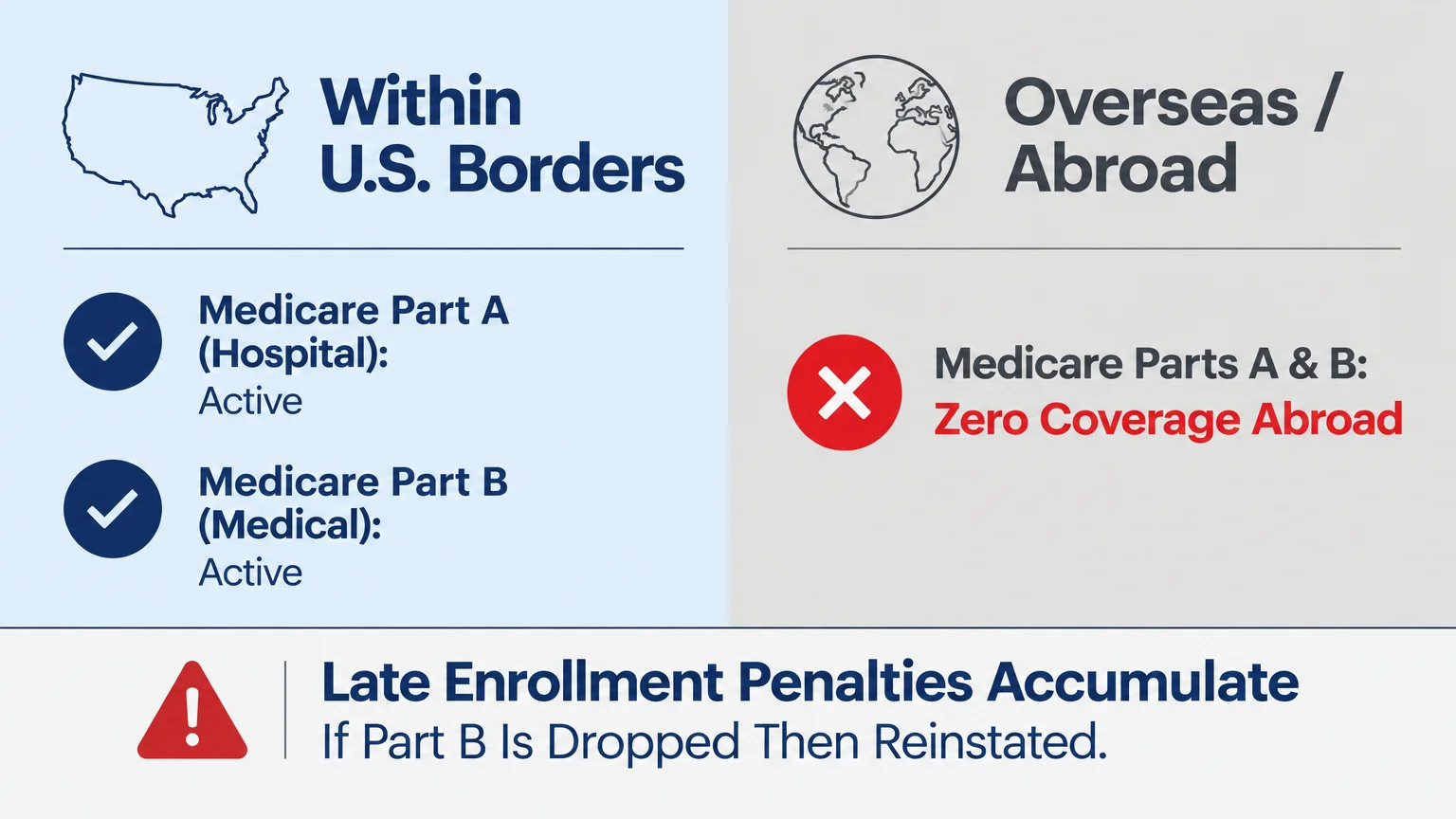
Rule 7: Medicare Parts A and B Do Not Provide Coverage Abroad
Medicare rarely reimburses medical expenses incurred outside the borders of the United States. If you remain overseas permanently, paying Medicare Part B premiums may provide zero medical value.
However, dropping Part B carries significant financial risks if you eventually return to the United States. You will face a permanent ten percent premium penalty for every twelve-month delay in re-enrollment.
Many global retirees maintain premium-free Part A while dropping or deferring Part B during foreign residency. They rely on international private health insurance policies to cover routine local medical care.
Advocacy groups like AARP recommend evaluating your repatriation timeline before declining Medicare. Re-enrollment penalties last for the rest of your life once you re-enter the domestic system.
Comparing Overseas Work Scenarios and Social Security Outcomes
Comparing how your overseas career affects various benefit categories clarifies your long-term income projection. Review the breakdown below to assess how your work history shapes your monthly payment.
| Employment Scenario | Credit Accumulation | Offset Rules Applied | Primary Benefit Impact |
|---|---|---|---|
| U.S. Multinational Transfer | Standard U.S. credits earned via FICA payroll deductions | None; foreign pensions do not trigger WEP if FICA was paid | Full standard monthly benefit based on thirty-five highest earning years |
| Foreign Local Hire (Treaty Country) | Foreign social credits combined via totalization pacts | WEP applies if receiving a separate foreign employer pension | Prorated U.S. benefit calculated alongside foreign social security payments |
| Foreign Local Hire (Non-Treaty Country) | Zero U.S. credits earned; foreign credits cannot combine | WEP applies to any earned foreign employer pension | No U.S. benefit unless forty domestic credits exist independently |
| Dual Career (30+ Years Substantial U.S. Earnings) | Full domestic credits earned across thirty substantial work years | Exempt from WEP reductions despite receiving foreign pensions | Full U.S. monthly benefit plus separate foreign pension distributions |
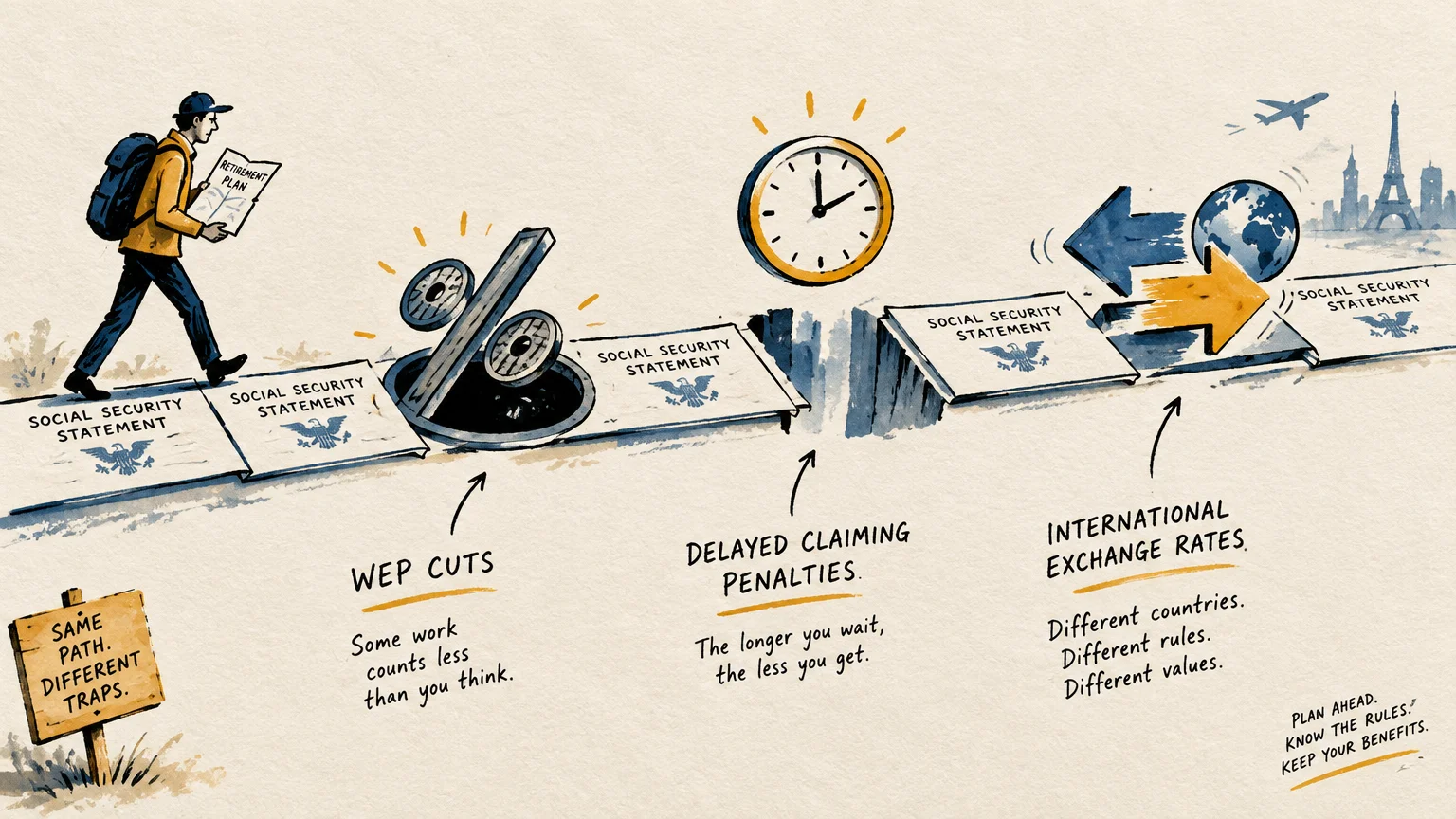
Pitfalls to Watch For
Navigating cross-border retirement rules requires vigilant record keeping and strict calendar management. Several recurring errors can diminish your monthly income or trigger severe tax penalties.
- Failing to request proof of foreign social security contributions before leaving your host nation
- Assuming foreign pensions remain invisible to the Social Security Administration during claims processing
- Neglecting to file foreign bank reporting forms like FBAR and Form 8938 with the IRS
- Dropping Medicare Part B without establishing an emergency repatriation healthcare fund
- Ignoring the five-year U.S. residency rule for non-citizen spouses claiming spousal benefits
Missing the annual SSA foreign questionnaire is another frequent trap for international retirees. The agency suspends benefit payments entirely if you fail to verify your continued eligibility by mail.
Exchange rate volatility also presents a quiet threat to your overseas purchasing power. A weakening dollar can suddenly erode your living standard if you budget solely in foreign currency.

Getting Expert Help
Cross-border retirement planning involves navigating interlocking federal statutes and foreign legal systems. Seeking professional guidance becomes essential when specific financial situations arise.
You should hire a cross-border financial planner if you hold dual national pensions. A specialist calculates the exact Windfall Elimination Provision impact before you submit your formal application.
Engage an international tax CPA if you reside in a country with complex treaty provisions. Professional filing prevents double taxation and ensures proper disclosure of foreign financial accounts to the IRS.
Consult a retirement attorney if your non-citizen spouse plans to claim spousal benefits abroad. Legal counsel confirms whether your spouse meets the five-year U.S. physical presence requirement.
Contact the Federal Benefits Unit at your nearest U.S. embassy for multi-country credit coordination. Embassy specialists streamline totalization applications and confirm foreign credit transfers directly with foreign agencies.
Frequently Asked Questions
These practical answers address common concerns regarding Social Security worked abroad and international benefits coordination.
Can I collect U.S. Social Security while living permanently overseas?
Yes, U.S. citizens can collect Social Security retirement benefits in almost any country worldwide. Only a few sanctioned nations, such as Cuba and North Korea, face payment restrictions.
How does a foreign pension trigger the Windfall Elimination Provision?
A foreign pension triggers the WEP if it comes from earnings exempt from U.S. Social Security taxes. The formula reduces your domestic benefit percentage, but the reduction cannot exceed 50 percent of the foreign pension.
What happens if I have fewer than 40 U.S. work credits?
You can qualify using a totalization agreement if you have at least six U.S. credits and sufficient foreign credits. The agency combines your foreign work periods to pay a prorated monthly benefit.
Do I still have to pay U.S. income tax on my benefits while living abroad?
Yes, the IRS taxes worldwide income for all American citizens regardless of their country of residence. However, bilateral tax treaties may grant exclusive taxing rights or foreign tax credits to prevent double taxation.
International work experience provides incredible professional rewards, but retirement planning requires careful strategic adjustments. Reviewing your credit records and understanding foreign pension offsets early ensures you receive your rightful benefits.
The information in this guide is meant for educational purposes. Your specific circumstances—including income, health needs, tax situation, and goals—may require different approaches. When in doubt, consult a licensed professional.
Last updated: March 2026. Retirement benefits, tax rules, and healthcare regulations change frequently—verify current details with official sources.








Leave a Reply