
A rising cost-of-living adjustment can create a false sense of financial security. Even with an anticipated benefit bump, your net monthly deposit might shrink in 2027.
Escalating healthcare costs, complex tax thresholds, and aggressive federal recovery programs quietly divert dollars before your check hits the bank. Without careful planning, these deductions can derail your household budget.
Learning how these clawbacks and surcharges work allows you to safeguard your retirement income. Here are the seven specific rules that could reduce your Social Security check in 2027.
The Essentials: Key Takeaways for 2027
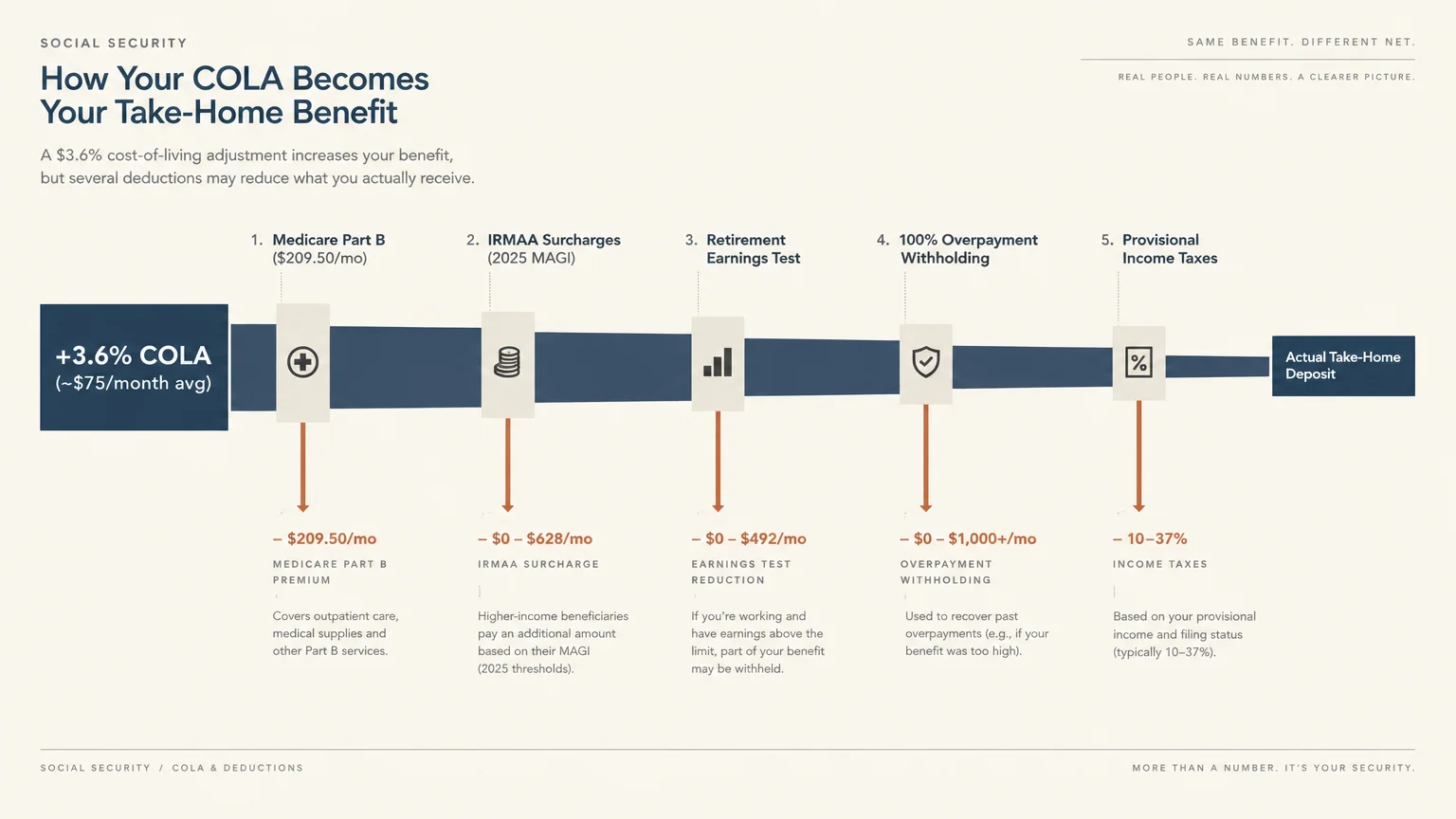
The Social Security Administration announced a 3.6% cost-of-living adjustment for 2027. That increase adds roughly $75 per month to the average retirement benefit.
However, statutory deductions and income thresholds can easily absorb that extra cash. You must track your total earnings and tax liabilities to keep what you earn.
- Medicare Part B premiums automatically come out of your monthly benefit before deposit.
- Prior earnings from 2025 can trigger substantial monthly surcharges known as IRMAA.
- Collecting benefits before full retirement age while working triggers strict earnings caps.
- The government reinstated an aggressive 100% withholding policy for benefit overpayments.
- Federal and state income taxes apply once your provisional income crosses frozen thresholds.

1. Rising Standard Medicare Part B Premiums
Most retirees pay their Medicare Part B premiums directly through automatic deductions from their Social Security checks. When healthcare premiums rise, your take-home retirement pay drops proportionally.
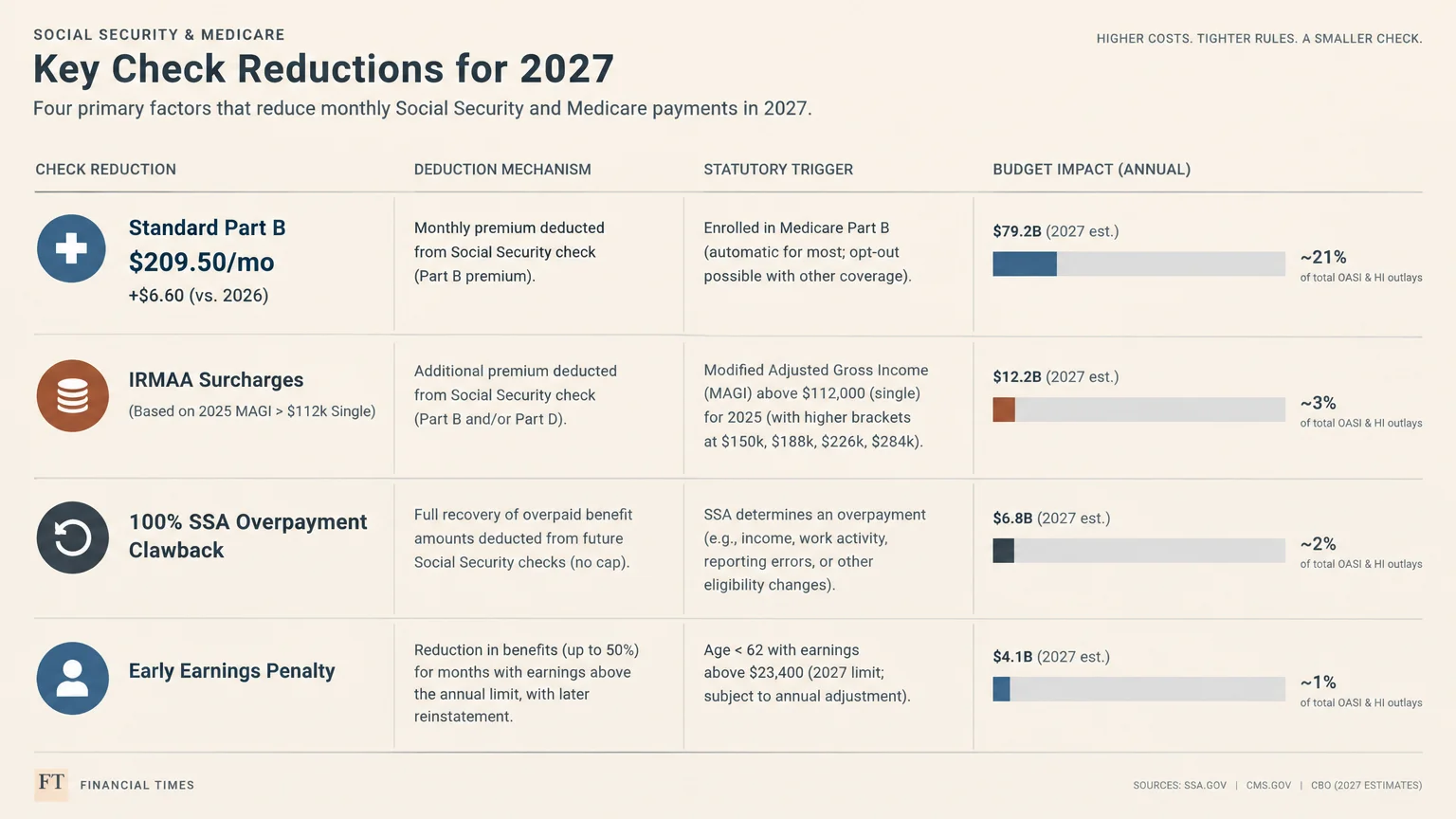
The Centers for Medicare & Medicaid Services projects that the standard monthly Part B premium will rise to $209.50 in 2027. That represents a $6.60 monthly increase from the 2026 rate of $202.90.
Annual medical deductibles are also rising alongside these base premiums. Projections show the annual Part B deductible reaching $292 in 2027, up from $283 in 2026.
The automatic Medicare premium deduction eats into your annual cost-of-living raise immediately. While an average retiree gains $75 monthly from the 3.6% COLA, Medicare takes a portion back right away.
A statutory rule called the hold harmless provision protects some beneficiaries from seeing their net benefit decrease year over year. However, this protection only applies if your COLA dollar increase is smaller than your Part B premium hike.
Because the 3.6% increase provides roughly $75 for average earners, almost all beneficiaries will absorb the full $6.60 premium hike. Your gross benefit grows, but your wallet absorbs higher medical expenses.
Review your personal deduction amounts through your online portal. Beneficiaries must establish a personal account and opt into paperless notices by November 18, 2026, to view personalized deduction statements online.
2. Medicare IRMAA Surcharges for Higher Incomes
If you reported higher income during your working years, you face an additional penalty. The Income-Related Monthly Adjustment Amount, or IRMAA, adds a substantial surcharge to standard Medicare costs.
The government deducts these surcharges directly from your monthly Social Security check for both Medicare Part B and Part D coverage. This deduction blindsides thousands of unsuspecting retirees each year.
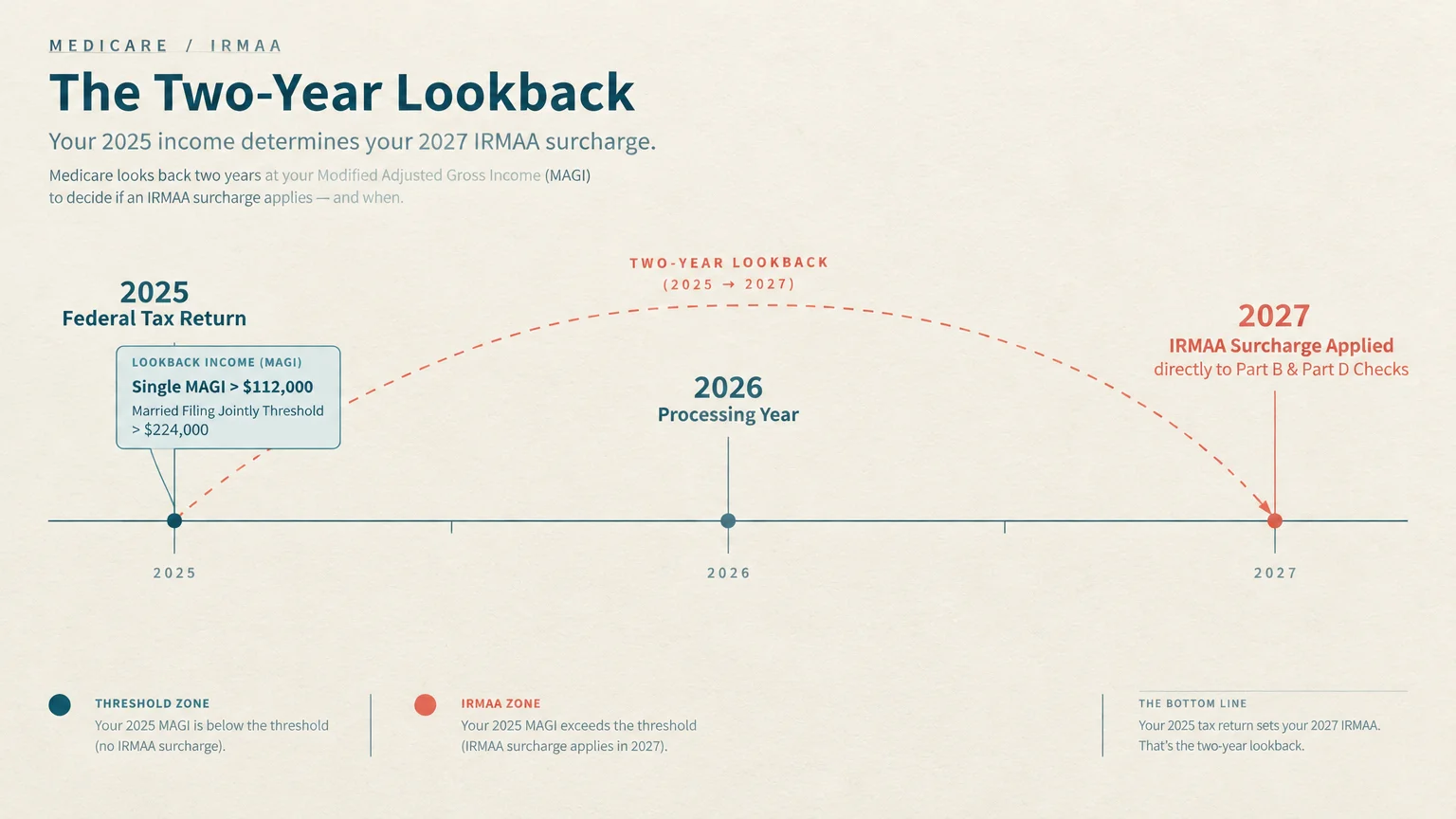
The Social Security Administration calculates your 2027 IRMAA surcharge using your 2025 federal tax return. This mandatory two-year lookback period means your past earnings dictate your current benefit reduction.
Projections from Medicare trustees indicate that single tax filers with 2025 modified adjusted gross income exceeding $112,000 will pay these surcharges. For married couples filing jointly, the surcharge begins at $224,000.
These surcharges raise total monthly Part B premiums to between $293.30 and $712.30 in 2027. Beneficiaries in the highest tax tier lose more than $500 monthly from their checks for Part B alone.
Part D prescription drug coverage includes similar sliding-scale surcharges that deplete your benefit even further. These combined healthcare deductions can erase hundreds of dollars from your check each month.
“A delay in claiming Social Security can be the greatest gift you give your future self.” — Suze Orman, Personal Finance Author
You can appeal an unfair IRMAA surcharge if you experienced a qualifying life-changing event. Events include marriage, divorce, job loss, work reduction, or the loss of income-producing property.
To contest the charge, file Form SSA-44 with documentation proving your recent income reduction. Successful appeals eliminate the surcharge and restore your full monthly Social Security payment.

3. The Social Security Retirement Earnings Test
Many individuals continue working part-time or consulting after they start receiving retirement benefits. If you claim benefits before reaching your Full Retirement Age, your wages can trigger a steep Social Security check reduction.
The retirement earnings test imposes strict statutory limits on what you can earn before benefits face temporary withholding. These caps adjust upward annually to reflect wage inflation across the broader economy.
In 2027, the annual earnings limit rises to $25,560, which equals $2,130 per month. The agency withholds $1 in benefits for every $2 you earn above this threshold.
A separate, more generous limit applies during the calendar year in which you attain your Full Retirement Age. For workers reaching FRA during 2027, the earnings threshold reaches $67,920, or $5,660 per month.
In that transition year, the agency withholds $1 in benefits for every $3 you earn above the cap. The withholding calculation only counts the earnings you accumulate prior to the specific month you reach FRA.
Working retirees must also account for payroll taxes on their current wage income. The maximum amount of earnings subject to the 6.2% Social Security payroll tax increases to $192,300 in 2027.
Fortunately, withheld earnings are not permanently surrendered. Once you reach your Full Retirement Age, the agency recalculates your monthly benefit upward to credit you for the withheld amounts.
However, the immediate cash crunch can disrupt your household budget during your early retirement years. If you plan to earn substantial wage income, consider delaying your initial benefit claim.

4. Aggressive SSA Overpayment Clawbacks
The Social Security Administration periodically identifies errors where it paid beneficiaries more than their statutory entitlement. When the agency discovers an overpayment, it initiates aggressive collection procedures to recover the funds.
On March 27, 2025, the agency reversed a short-lived policy that had capped monthly clawbacks at 10%. The administration reinstated a strict 100% default withholding rate for newly discovered overpayments.
Under this revived policy, the agency can withhold your entire monthly retirement check until it recovers the complete balance. This sudden total loss of income can cause severe financial distress.
Repayment plans formally established before March 27, 2025, remain protected under the older 10% withholding cap. Similarly, Supplemental Security Income overpayments remain capped by law at 10% of monthly payments.
If you receive an overpayment demand notice, act quickly to protect your income stream. You possess the legal right to appeal the calculation or request a complete financial hardship waiver.
Submit Form SSA-632 to request a waiver if the error occurred through no fault of your own. You must demonstrate that repaying the money prevents you from meeting basic living expenses.
You can also propose an alternative monthly repayment plan using Form SSA-634. Proposing a manageable monthly withholding amount prevents the agency from executing a total suspension of your benefits.
5. Federal Income Tax Withholding on Benefits
Retirees often forget that Uncle Sam taxes retirement benefits once your total income passes modest statutory thresholds. Unlike typical tax brackets, these benefit tax thresholds have remained unadjusted for inflation since 1984.
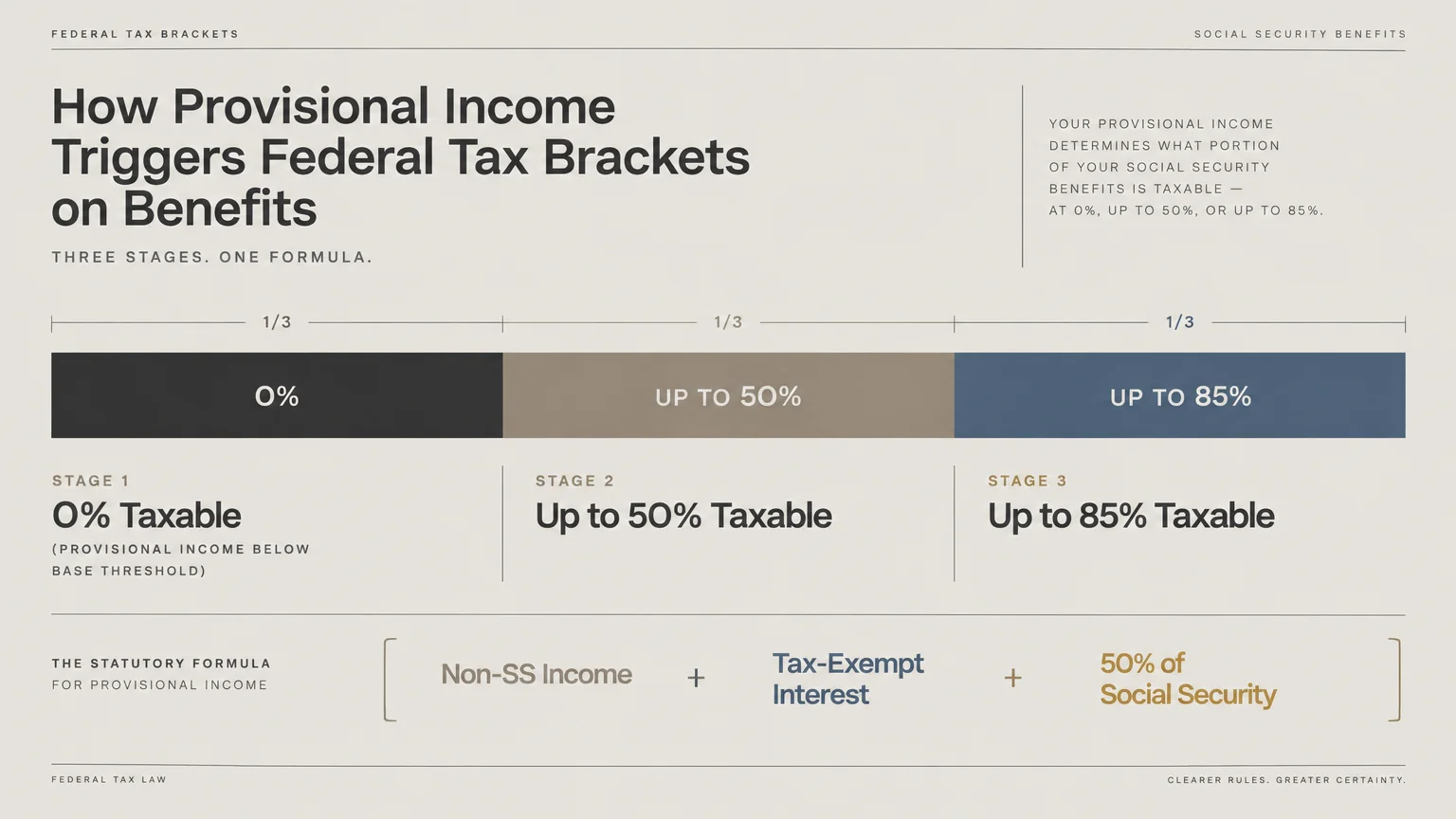
The Internal Revenue Service calculates your tax liability using a metric known as provisional or combined income. This figure equals your adjusted gross income, plus nontaxable interest, plus half of your annual Social Security benefits.
Single tax filers with combined incomes between $25,000 and $34,000 must pay federal income tax on up to 50% of their benefits. If your combined income exceeds $34,000, up to 85% of your benefits become taxable.
For married couples filing jointly, combined income between $32,000 and $44,000 triggers taxation on up to 50% of benefits. Joint filers earning more than $44,000 face taxation on up to 85% of their benefits.
To prevent a surprise tax bill in April, many retirees elect voluntary tax withholding from their monthly checks. The agency allows you to withhold federal taxes at flat rates of 7%, 10%, 12%, or 22%.
Voluntary withholding reduces the dollar amount deposited into your bank account each month. However, setting up withholding prevents expensive underpayment penalties when you file your annual tax return.
Fortunately, legislative relief offers a partial buffer for many retirees. Under the One Big Beautiful Bill Act, an enhanced $6,000 bonus senior deduction remains available through 2028.
This targeted deduction shields lower- and middle-income seniors from hefty tax burdens. Even with this temporary deduction, high-income distributions from traditional IRAs can push you into taxable territory.
“Financial security is not about having a million dollars; it is about understanding how every single dollar works for you.” — Jean Chatzky, Financial Educator
6. State Income Taxes in Eight Remaining States
While the federal government taxes benefits across the nation, state-level taxation has declined significantly. State legislatures have systematically eliminated benefit taxes to retain older residents and protect fixed incomes.
West Virginia completed its multi-year tax phaseout in 2026, making Social Security benefits completely exempt from state taxes going forward. That reform reduced the national total of taxing jurisdictions.
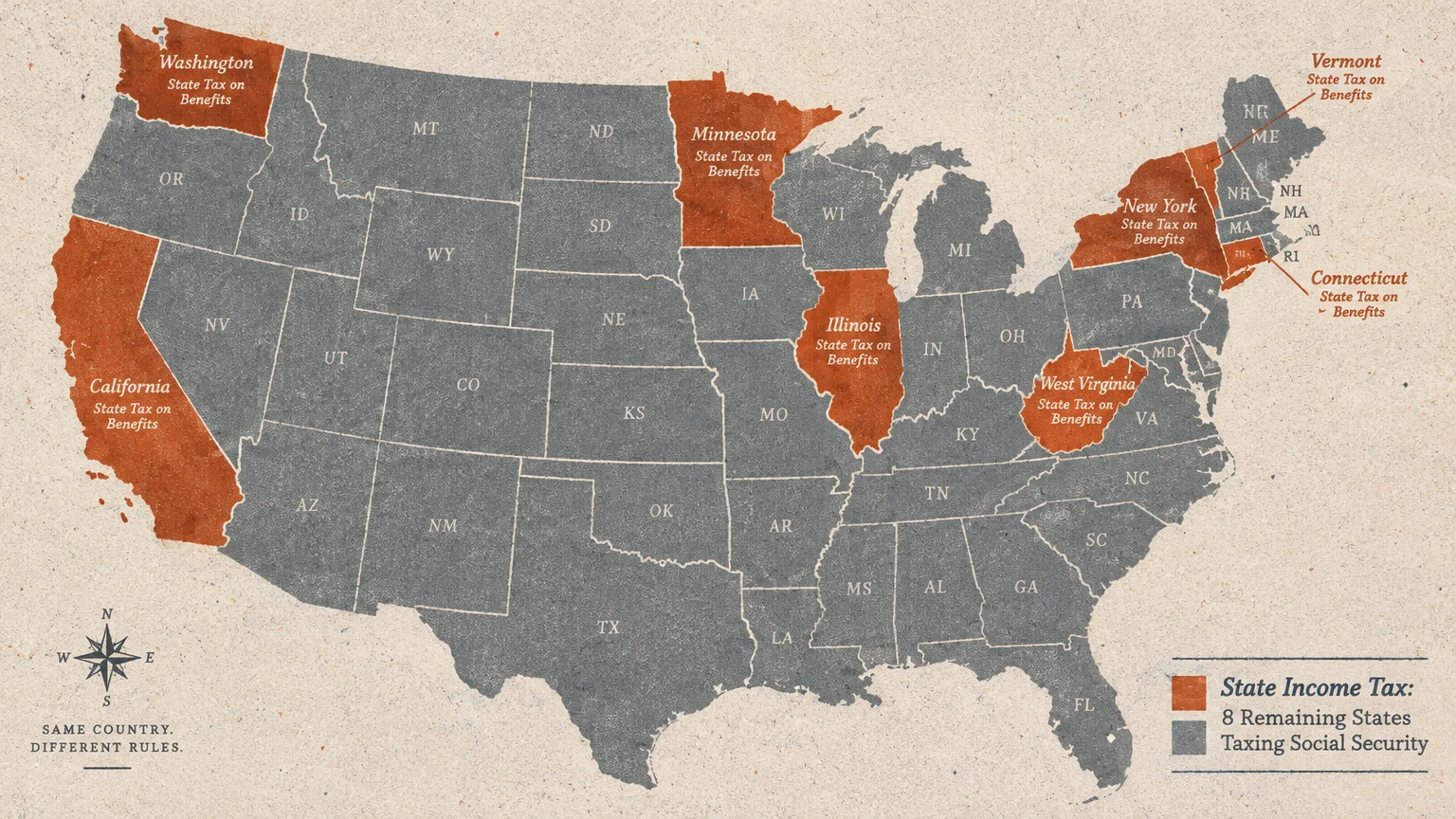
Heading into 2027, only eight states continue to levy state income taxes on Social Security benefits. If you reside in one of these areas, your local tax obligation can diminish your net retirement income.
- Colorado
- Connecticut
- Minnesota
- Montana
- New Mexico
- Rhode Island
- Utah
- Vermont
Most of these eight states offer generous deductions or full exemptions for lower- and middle-income retirees. For example, several states exempt benefits entirely once you reach age 65, provided your overall income remains below state caps.
However, upper-income retirees in these states face genuine tax liabilities on their monthly checks. Failing to prepare for state income tax withholding leads to unexpected shortfalls during tax filing season.
Consult your state department of revenue guidelines to verify your local tax liability. Moving across state lines or adjusting retirement account withdrawals can help you minimize or eliminate these local levies.

7. Benefit Garnishment for Government Debts and Domestic Obligations
Federal law normally shields Social Security benefits from commercial debt collectors and standard consumer creditors. Credit card companies, medical providers, and mortgage lenders cannot seize your monthly retirement check.
However, specific statutory exceptions permit benefit garnishment for certain domestic obligations and debts owed directly to the federal government. These withholdings take effect automatically before funds reach your bank account.
The Internal Revenue Service maintains broad authority to collect unpaid tax debts. Through the Federal Payment Levy Program, the IRS can garnish up to 15% of your monthly benefit until you settle your back taxes.
Court-ordered family obligations trigger even steeper benefit withholdings. Social Security benefits can be garnished up to 50% if you support a second spouse or child, and up to 60% if you do not.
If your child support or alimony payments fall more than 12 weeks delinquent, agencies can seize an additional 5%. These statutory deductions can cut your monthly living allowance in half.
Defaulted federal student loans represent another potential source of benefit garnishment. By law, the federal government can withhold up to 15% of your monthly payment to satisfy defaulted educational debts.
However, involuntary collections on Social Security for student loans have been paused since January 16, 2026. While borrowers remain protected during this administrative halt, collections could legally resume in the future.
Note that Supplemental Security Income payments enjoy total statutory immunity from all garnishment. Creditors cannot touch SSI funds under any circumstances, regardless of the debt origin.
Comparing the Top Check Reductions in 2027
Understanding which reductions apply to your household requires comparing rules, limits, and potential financial impacts. The landscape of Social Security 2027 changes features several distinct reduction categories.
The following comparison table outlines the primary factors that reduce net monthly checks for retirees across the country.
| Reduction Category | Primary Trigger | 2027 Rate or Threshold | Potential Check Impact |
|---|---|---|---|
| Standard Medicare Part B | Automatic healthcare enrollment | Projected $209.50 monthly | Standard $6.60 monthly reduction |
| Medicare IRMAA Surcharges | 2025 income over $112k (single) or $224k (joint) | $293.30 to $712.30 Part B premium | Up to $500+ monthly reduction |
| Retirement Earnings Test | Working before Full Retirement Age | $25,560 annual earnings limit | $1 withheld per $2 earned above limit |
| Overpayment Clawbacks | Prior administrative payment errors | 100% default withholding rate | Complete suspension of monthly check |
| Federal Income Taxes | Combined income over $25k (single) or $32k (joint) | Up to 85% of benefits subject to tax | Voluntary 7% to 22% check withholding |
| State Income Taxes | Residency in one of eight taxing states | Varies by state income thresholds | State-specific withholding percentages |
| Federal Tax Garnishment | Delinquent federal tax obligations | Statutory IRS administrative levy | Up to 15% monthly check garnishment |

Avoiding Common Errors
Protecting your retirement income requires vigilance and proactive tax planning. Many retirees lose substantial portions of their checks simply because they fail to anticipate administrative deadlines.
One common mistake involves ignoring the two-year lookback rule for Medicare IRMAA surcharges. A one-time financial windfall in 2025 can trigger severe monthly check deductions throughout 2027.
Retirees often fail to file Form SSA-44 after experiencing a major reduction in annual income. If you retired or reduced your work hours, notify the agency promptly to appeal erroneous surcharges.
Another frequent error occurs when early claimants ignore the annual earnings limits. Taking on seasonal employment while collecting benefits early can trigger unexpected benefit suspensions that disrupt household budgeting.
Retirees also make the mistake of ignoring official agency correspondence regarding potential overpayments. Failing to appeal an overpayment notice within 30 days can trigger immediate 100% benefit withholding.
Finally, do not overlook your online agency account settings before annual adjustments take effect. Create your portal account and select paperless communications by November 18, 2026, to verify your net benefit amount.

When DIY Isn’t Enough
While many retirement rules appear straightforward, overlapping federal regulations can create complex financial challenges. Managing multiple income streams often requires professional financial and legal guidance.
Navigating benefit garnishment orders from the IRS or family court requires immediate professional assistance. A qualified tax attorney or certified public accountant can negotiate repayment agreements to preserve your monthly cash flow.
Complex Medicare IRMAA appeals also benefit from professional oversight. If your income reduction stems from unusual circumstances, a certified financial planner can help document your case properly.
Business owners and independent consultants nearing retirement face intricate earnings test rules. Working with an experienced retirement advisor helps structure your business income to avoid unnecessary benefit withholding.
Estate planning transitions involving significant asset sales or IRA liquidations also warrant expert input. Professional tax planning prevents sudden taxable distributions that trigger both income taxes and Medicare surcharges.
Frequently Asked Questions
Can Social Security reduce my check below zero?
No, administrative deductions and withholdings cannot reduce your benefit payment below zero dollars. The agency cannot demand out-of-pocket cash payments beyond withholding your scheduled monthly benefit.
However, aggressive clawbacks can reduce your monthly deposit to exactly zero dollars. In those scenarios, you receive no monthly payment until the underlying obligation is resolved.
Does the 2027 COLA increase protect me from check reductions?
The cost-of-living adjustment increases your gross benefit, but it does not protect you from mandatory deductions. Rising Medicare premiums and higher taxes can consume the entire dollar value of your COLA.
The statutory hold harmless rule prevents Medicare Part B from lowering your net payment only in years with tiny COLA bumps. Because the 2027 COLA is 3.6%, most retirees will absorb the full premium increase.
What should I do if the SSA withholds 100% of my check for an overpayment?
Contact the Social Security Administration immediately to request an urgent payment review and appeal the determination. You have the right to request a waiver or negotiate a manageable monthly payment plan.
Filing Form SSA-632 for a waiver or Form SSA-634 for a repayment schedule pauses collection actions. Proposing a small monthly deduction allows your remaining monthly check to resume regular delivery.
Are my benefits safe from credit card debt collectors?
Yes, federal law strictly protects Social Security benefits from private debt collectors and commercial creditors. Credit card issuers, hospitals, and debt collection agencies cannot garnish your monthly retirement benefits.
Only government entities collecting federal debts, delinquent taxes, or court-ordered child support maintain legal authority to garnish benefits. Keep your benefit funds deposited in a separate account to maintain this statutory protection.
Protecting Your Benefit Checks in 2027
Retirement security requires managing the deductions that leave your account just as carefully as the gross benefits you earn. Understanding these seven reduction factors ensures that your monthly cash flow remains steady and predictable.
Take time to review your tax withholdings, monitor your outside wage earnings, and check your Medicare deduction status online. Proactive financial management helps you keep the retirement income you spent decades working to secure.
This article provides general retirement education and information only. Every retiree’s situation is unique—what works for others may not work for you. For personalized advice, consider consulting a qualified financial professional such as a CFP or CPA.
Last updated: November 2026. Retirement benefits, tax rules, and healthcare regulations change frequently—verify current details with official sources.









Leave a Reply