

A mysterious monthly deduction from your Social Security benefit could mean you are paying an unnecessary administrative charge. Many beneficiaries notice missing funds resembling the standard $54 monthly fee established under federal payee guidelines.
While certain organizations legally collect a monthly fee to manage benefits, unauthorized deductions happen frequently across the country. If someone manages your monthly check without proper certification, every dollar deducted may be an improper overcharge.
Knowing your rights under federal law allows you to stop improper fees and recover your rightful retirement income. Here is how representative payee charges work, who can legally charge them, and how to stop unauthorized deductions.

The Mystery Fee: Understanding the Social Security Payee Deduction
Many retirees review their monthly bank statements and spot a deduction that reduces their expected deposit. This charge often mirrors the widespread $54 monthly figure that gained national attention among beneficiaries.
The Social Security Administration itself does not charge monthly account maintenance fees to deliver your benefits. When an unexplained deduction appears on your statement, an external representative payee arrangement is almost always responsible.
A representative payee is an individual or organization appointed to receive and manage payments for someone who cannot manage their own finances. Congress authorized this program to ensure vulnerable citizens have their basic housing and nutritional needs met.
The widely cited $54 social security fee stems from the official 2024 federal limit allowed for organizational payees. Beneficiaries frequently search for this exact dollar amount after noticing reduced deposits on their monthly statements.
Because federal regulations adjust this fee threshold annually, the amount taken from your check may have shifted upward. Understanding these mandatory caps helps you determine whether your current deductions comply with federal law.
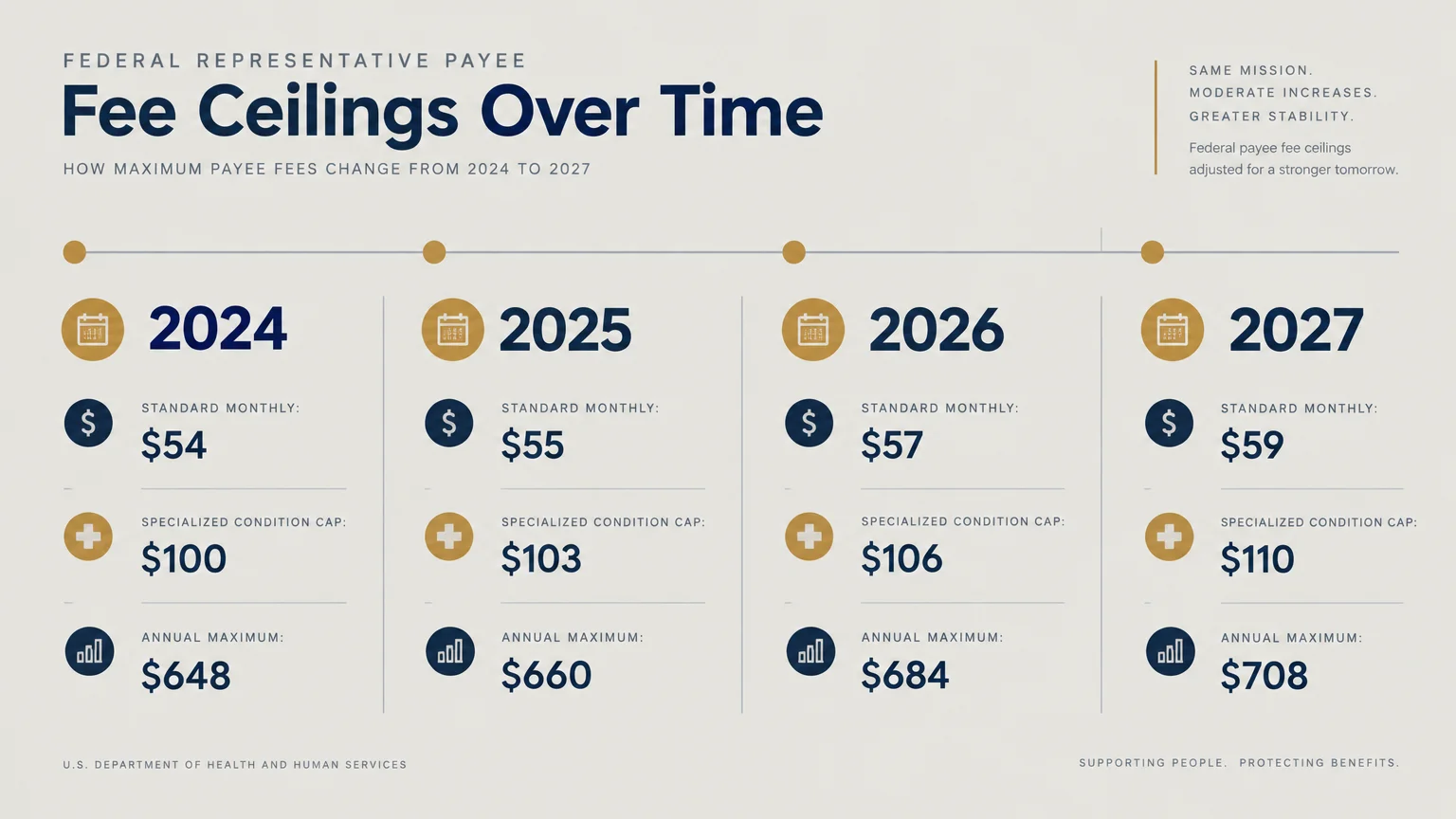
Authorized Fee Caps by Year: Tracking the Shifting Limits
The maximum monthly amount an authorized organization can withhold changes annually through federal Cost-of-Living Adjustments (COLA). An organization cannot arbitrarily choose its own fee schedule or increase charges without federal authorization.
In 2024, the standard representative payee fee ceiling stood at exactly $54 per month. Beneficiaries diagnosed with drug or alcohol addiction conditions faced a separate authorized maximum fee of $100 per month.
The standard allowable maximum increased to $55 per month for the 2025 calendar year. The maximum monthly deduction for beneficiaries with an established addiction condition rose to $103 during the same period.
For 2026, the standard monthly cap reached $57 per month for routine cases; the specialized addiction cap reached $106. Beneficiaries reviewing statements in 2026 should never see an authorized monthly charge higher than these precise figures.
Federal officials announced that starting with January 2027 payments, the standard monthly limit increases to $59 per month. The specialized condition threshold simultaneously rises to $110 per month under the official COLA determination.
| Calendar Year | Standard Monthly Maximum | Specialized Condition Cap (DAA) | Annual Maximum Cost |
|---|---|---|---|
| 2024 | $54 | $100 | $648 |
| 2025 | $55 | $103 | $660 |
| 2026 | $57 | $106 | $684 |
| 2027 | $59 | $110 | $708 |
These published figures represent absolute legal ceilings rather than automatic mandatory charges. Your payee cannot collect more than these amounts under any circumstances; in many cases, they must collect less.