
The 10 Percent Rule: Why Flat Fees Often Violate Federal Law
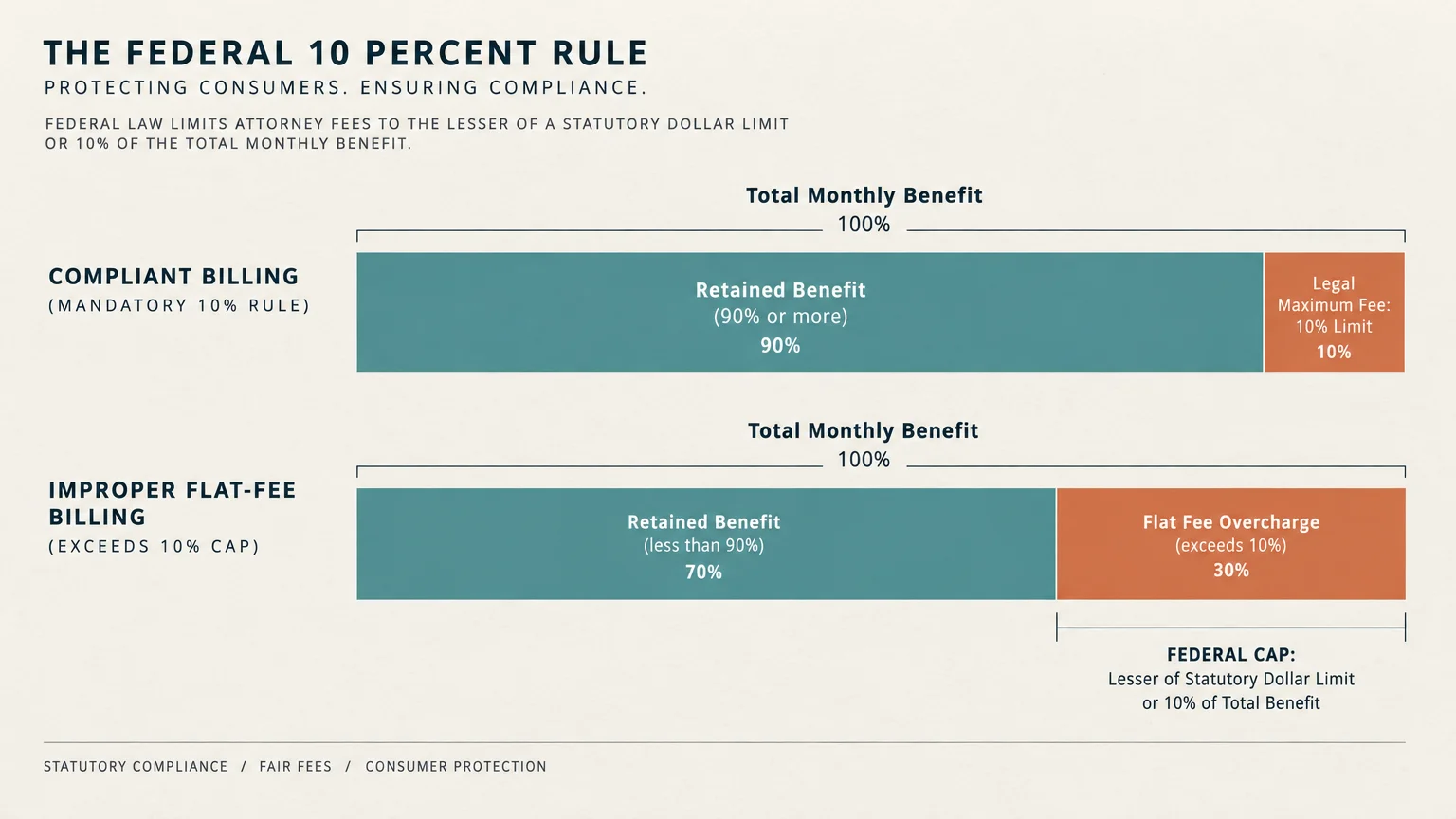
Federal regulations protect low-income recipients through a strict percentage limitation known as the 10 percent rule. An organizational payee cannot simply assess the maximum flat dollar fee against every client they manage.
Under the Social Security Act, the legal monthly charge must equal the lesser of 10 percent of your monthly benefit or the federal cap. If your monthly benefit check is small, deducting the flat maximum constitutes an illegal overcharge.
Consider a beneficiary receiving a modest Supplemental Security Income payment of $450 per month in 2026. A fee-for-service organization can legally deduct only $45—representing 10 percent—rather than the standard $57 ceiling.
When calculating this 10 percent threshold, administrators must exclude specific adjustments from the baseline amount. The calculation uses the net monthly benefit amount rather than the unadjusted gross figure.
Deductions like Medicare Part B premiums or previous overpayment recoveries cannot be inflated to justify a higher payee fee. Any organization charging a flat fee without evaluating the 10 percent ceiling violates federal operating guidelines.
“Nobody should have to worry that their hard-earned Social Security checks are being chipped away by unauthorized fees.” — Elizabeth Warren, U.S. Senator
Who Can Legally Collect Fees and Who Must Serve for Free
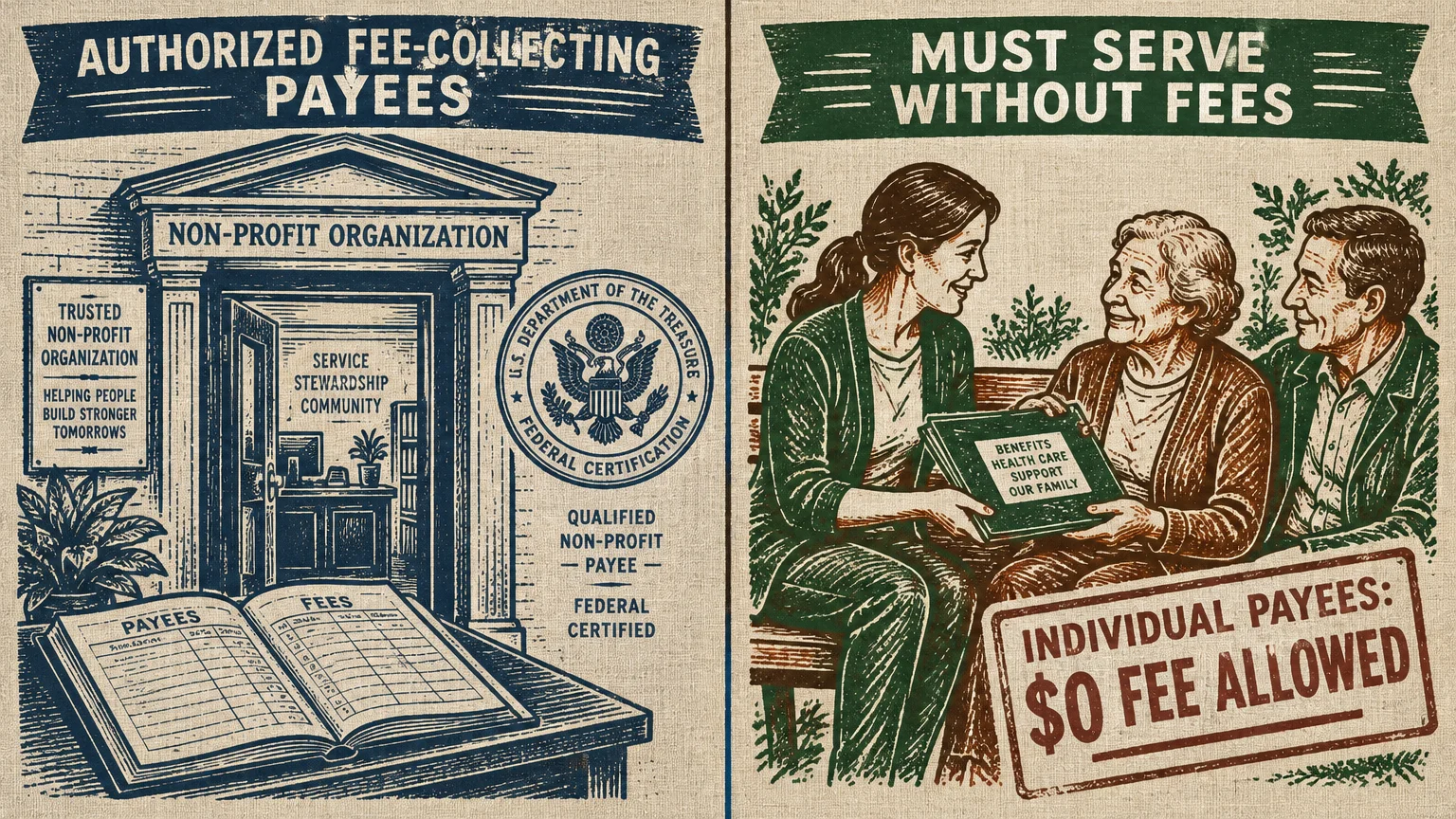
The vast majority of representative payees are legally prohibited from taking any money from your monthly check. Federal law draws a sharp distinction between volunteer individual payees and licensed organizational services.
Individual representative payees—including spouses, adult children, extended relatives, and caring friends—must serve completely free of charge. The law forbids family members from collecting administrative fees, hourly management wages, or bookkeeping compensations.
An individual payee may only seek reimbursement for documented, actual out-of-pocket expenses paid directly on your behalf. If your brother or daughter deducts a monthly management stipend, they are committing a serious federal program violation.
Only authorized Fee-for-Service (FFS) organizations possess legal permission to charge monthly fees. To qualify under federal standards, these organizations must satisfy several rigorous operational requirements established by the Social Security Administration (SSA):
- They must operate as a community-based non-profit social service organization exempt under Section 501(c) of the tax code.
- They can operate as a bonded and licensed state or local government agency providing protective financial services.
- They must regularly serve as a designated representative payee for at least 5 active beneficiaries at all times.
- They cannot function as a creditor of the beneficiary, preventing landlords or lenders from collecting fees while managing accounts.
- They must submit Form SSA-445 and receive formal written approval from the agency before collecting any fees.
An organization cannot begin collecting fees simply because they applied for status. Collecting a single dollar before receiving official agency approval creates a direct overcharge that must be refunded.