
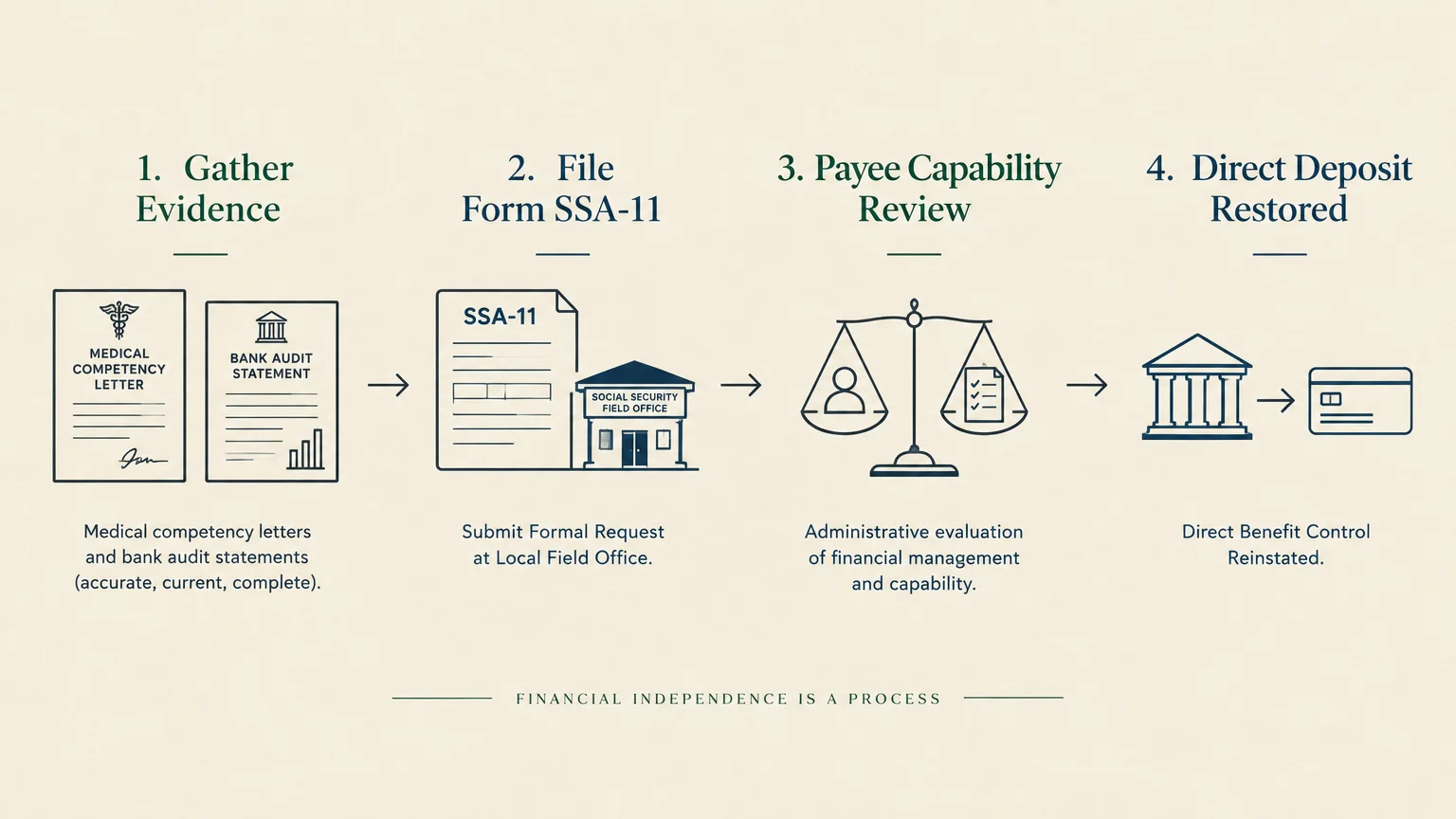
Step-by-Step Guide to Removing an Unnecessary Payee
If you currently pay a monthly fee to an organization you no longer need, you can take practical steps to end the deduction. You can either reclaim direct payments or transfer management duties to an unpaid family member.
Reclaiming control of your benefits requires proving to the government that you are capable of managing your own funds. The agency presumes adult beneficiaries are competent unless clear medical or legal evidence demonstrates otherwise.
- Schedule an evaluation with your physician: Request that your doctor complete a formal capability statement on official letterhead detailing your mental and physical fitness to manage funds.
- Gather supplementary financial records: Collect recent utility receipts, rental records, and banking statements showing your ability to budget and pay routine living expenses responsibly.
- Submit your direct payment petition: Visit your local Social Security field office to deliver your medical evidence and complete an in-person capability interview with an agency claims representative.
- Appoint an unpaid individual alternative: If you still prefer assistance managing daily bills, designate a trusted relative who agrees to serve without charging monthly fees.
- Obtain final escrow account accounting: Require the departing organizational payee to return all conserved funds and accumulated interest back to the agency for transfer to your direct control.
Once the field office approves your capability or transfers duties to an individual, fee deductions cease immediately. The agency will re-route future monthly benefit deposits directly into your personal banking account.

When to Consult a Professional
While many fee disputes can be resolved directly through your local field office, complex financial arrangements require specialized counsel. You should seek qualified assistance when navigating complicated fiduciary or legal challenges.
Consult an elder law attorney or legal aid specialist under these specific circumstances:
- Your current organizational payee refuses to provide accounting records or withholds conserved funds after agency removal.
- A disputed state court guardianship conflicts directly with federal representative payee designations and direct payment petitions.
- You suspect extensive financial exploitation, forgery, or systematic benefit theft spanning several years of payments.
- Complex Medicaid asset eligibility limits are jeopardized by improper handling of conserved funds in payee-controlled custodial accounts.
Advocacy groups like AARP provide community resources and support networks for retirees confronting financial mistreatment. Legal professionals specializing in senior rights can intervene quickly to freeze improper deductions and secure your assets.