
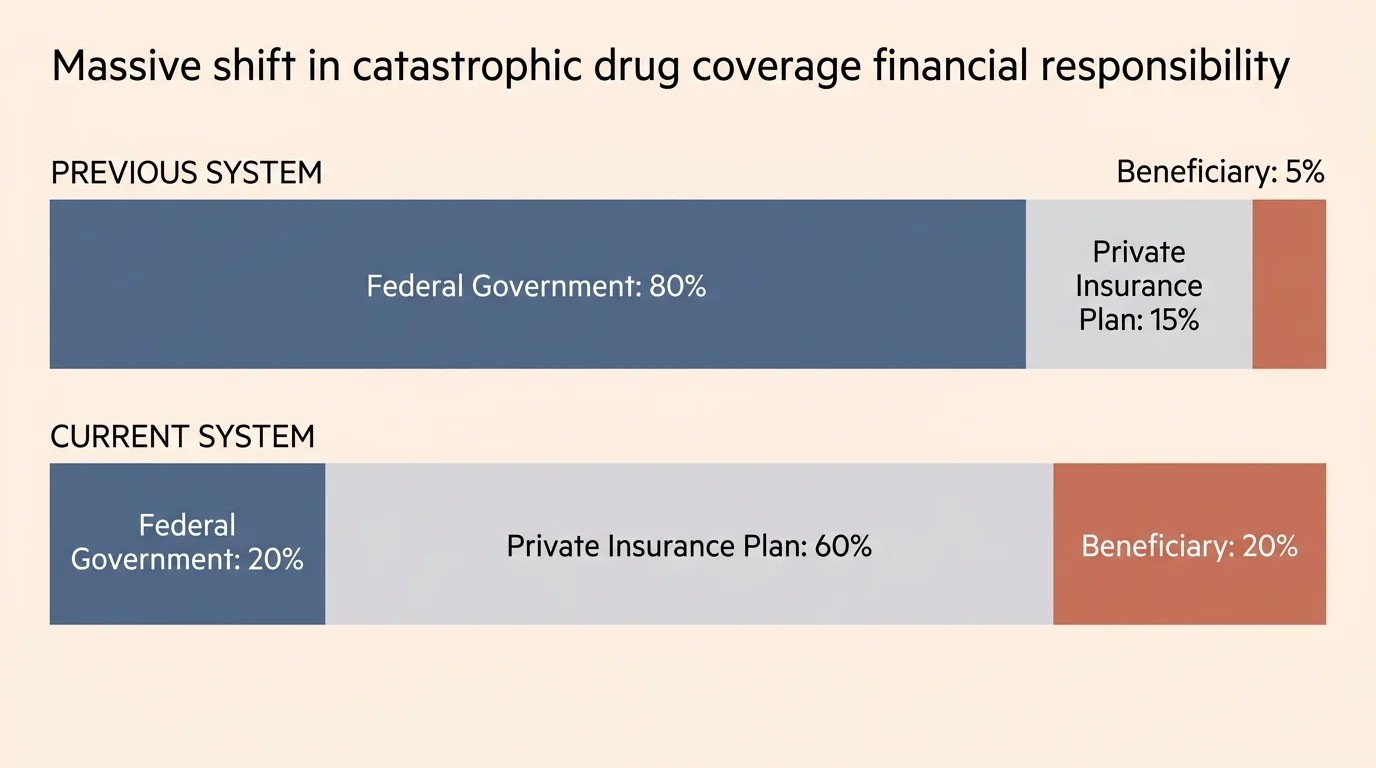
How Federal Cap Regulations Shifted Costs to Insurance Carriers
For decades, the structure of Medicare Part D included a controversial coverage gap known as the Medicare drug coverage gap or “donut hole.” Once you and your plan spent a set amount on medications, you entered a phase where you paid a much higher percentage of drug costs out of pocket until reaching catastrophic coverage. The Inflation Reduction Act permanently eliminated the coverage gap in 2025 and introduced a hard cap on beneficiary out-of-pocket drug spending.
While capping out-of-pocket spending at $2,000 in 2025 and $2,100 in 2026 represents a massive victory for seniors taking expensive specialty medications, it dramatically changed the financial equation for insurance carriers. Previously, when a beneficiary entered catastrophic coverage, the federal government covered 80% of the cost, the plan covered 15%, and the beneficiary paid 5%. Under current rules, Medicare reduced its catastrophic contribution to 20%, forcing private insurance plans to cover 60% of those high-cost drug claims.
This massive realignment created unprecedented financial exposure for insurers. When insurance companies face higher potential losses on expensive brand-name medications, they raise prices across all available coverage levers. The National Average Monthly Bid Amount (NAMBA)—which reflects the actual projected cost for insurers to provide drug benefits—surged 33% to $239.27 for calendar year 2026. Because carriers must make up for this liability, they restructure their products to recapture revenue.
“When we reform complex systems to protect consumers from catastrophic expenses, we must remain vigilant about how corporate insurers recalculate their fees to protect profits.” — Elizabeth Warren, U.S. Senator and Consumer Advocate









Inscribed me . This is terrible website every time I try you won’t let me do it
I’LL NEVER!!!! EVEN CONSIDER ANY OF YOUR PRODUCTS BECAUSE OF THIS!!!!