
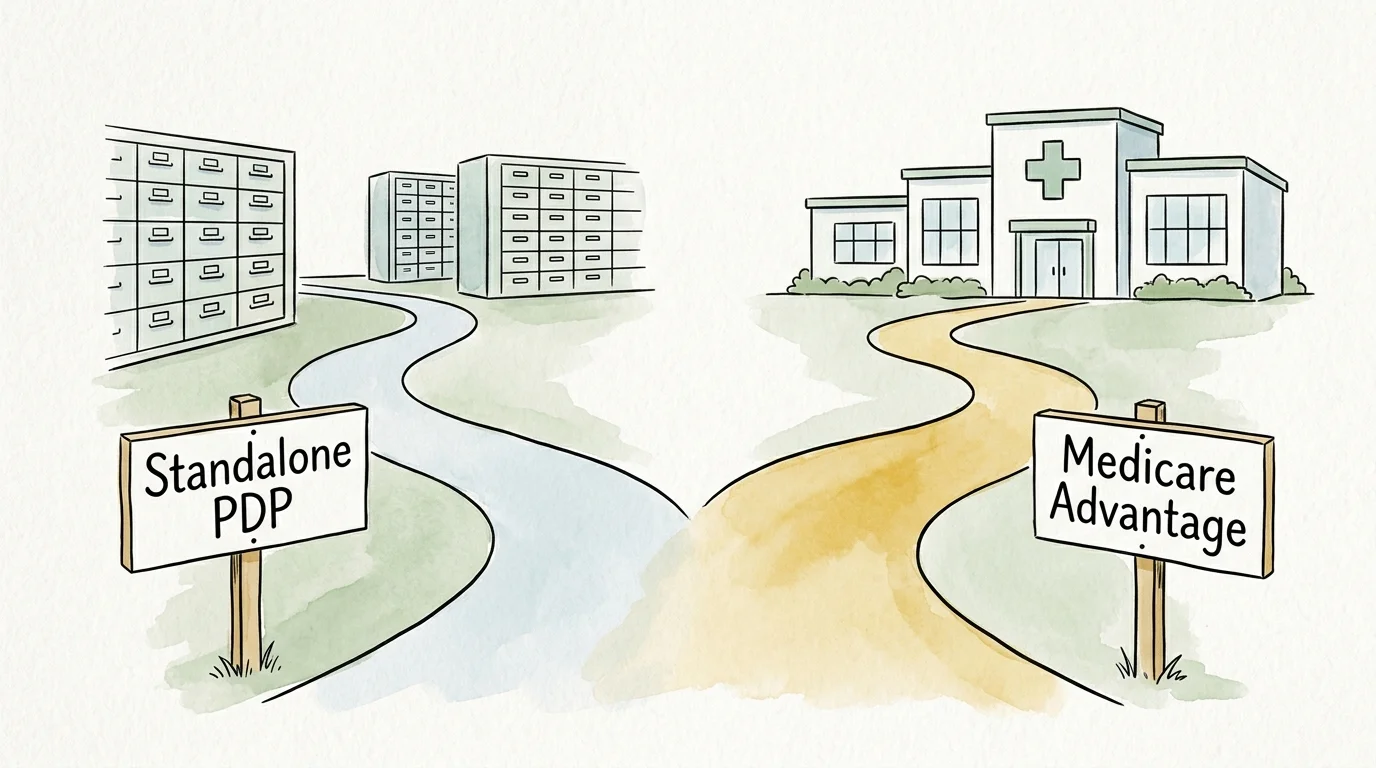
Standalone PDPs vs. Medicare Advantage: The Growing Disparity
The changing economics of Medicare Part D created a stark divide between standalone Prescription Drug Plans (PDPs), which pair with Original Medicare, and Medicare Advantage plans with prescription drug coverage (MA-PDs). Understanding this structural difference explains why standalone plans are getting hit much harder by premium increases.
Standalone Part D plans rely entirely on drug plan premiums and direct federal risk adjustments to cover costs. Because these plans only manage prescription benefits, they have no other revenue streams to absorb high specialty drug claims. As a result, standalone PDP options are shrinking across the country, and their average monthly premiums continue to climb.
In contrast, Medicare Advantage plans integrate medical coverage (Parts A and B) with prescription drug coverage (Part D). Medicare Advantage insurance carriers receive substantial federal capitation payments and medical rebates for managing a member’s full care. If an MA-PD plan manages hospitalizations and routine doctor care efficiently, it can use surplus medical rebates to subsidize its prescription drug operations. This cross-subsidization allows Medicare Advantage sponsors to maintain $0 or low-cost monthly premiums even as drug liability increases.
| Coverage Feature | Standalone Part D Plan (PDP) | Medicare Advantage with Drugs (MA-PD) | Employer / Retiree Group Plan |
|---|---|---|---|
| Typical Monthly Premium | $30 to $120+ (Varies widely) | Often $0 (Subsidized by medical rebates) | Varies (Set by former employer) |
| Maximum Deductible (2026) | Up to $615 maximum | Up to $615 (often lower on Tier 1/2) | Varies by plan design |
| Annual Out-of-Pocket Drug Limit | $2,100 statutory cap | $2,100 statutory cap | $2,100 statutory cap |
| Provider Choice Flexibility | Unrestricted (Original Medicare) | Restricted (HMO or PPO network) | Varies by employer contract |
| Formulary & Tier Risk | High risk of annual tier shifts | Moderate risk; cushioned by plan rebates | Low to moderate risk |









Inscribed me . This is terrible website every time I try you won’t let me do it
I’LL NEVER!!!! EVEN CONSIDER ANY OF YOUR PRODUCTS BECAUSE OF THIS!!!!