
Missing standard Medicare enrollment windows can trigger permanent financial penalties and leave you without essential health coverage when you need it most. Fortunately, federal regulations grant specific qualifying life event medicare provisions that let you sign up or adjust your coverage outside standard open enrollment periods without paying extra. While most retirees know about the initial enrollment period at age 65, few take advantage of hidden medicare enrollment exceptions created for natural disasters, employer errors, plan administrative changes, or unexpected life transitions. Understanding how each medicare special enrollment period works gives you total control over your healthcare timeline, protecting your retirement savings from costly lifetime surcharges like the 2026 Part B premium penalty.
At a Glance: Key Takeaways on Medicare SEPs
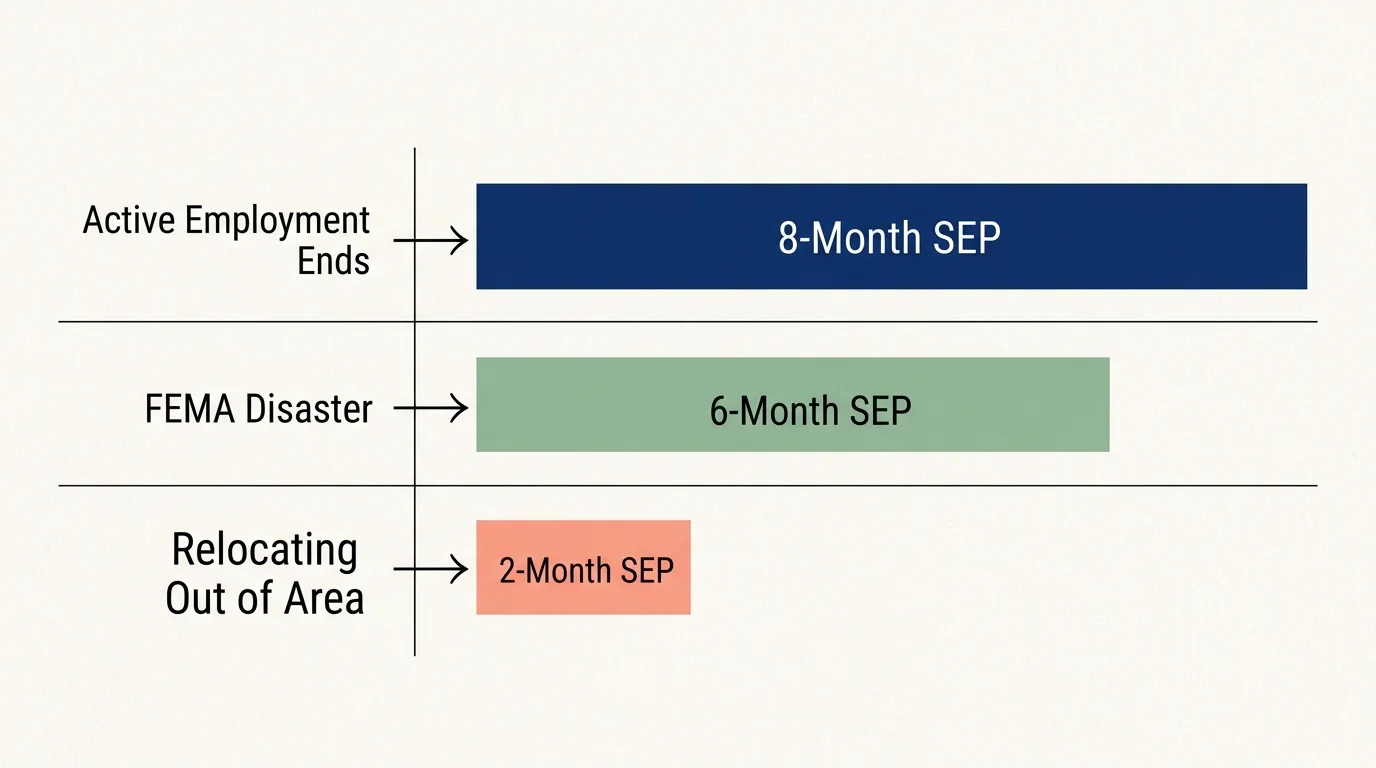
- Active Work vs. COBRA: Working past age 65 grants an 8-month Special Enrollment Period (SEP) after job-based coverage ends, but COBRA and retiree health plans do not qualify as active coverage.
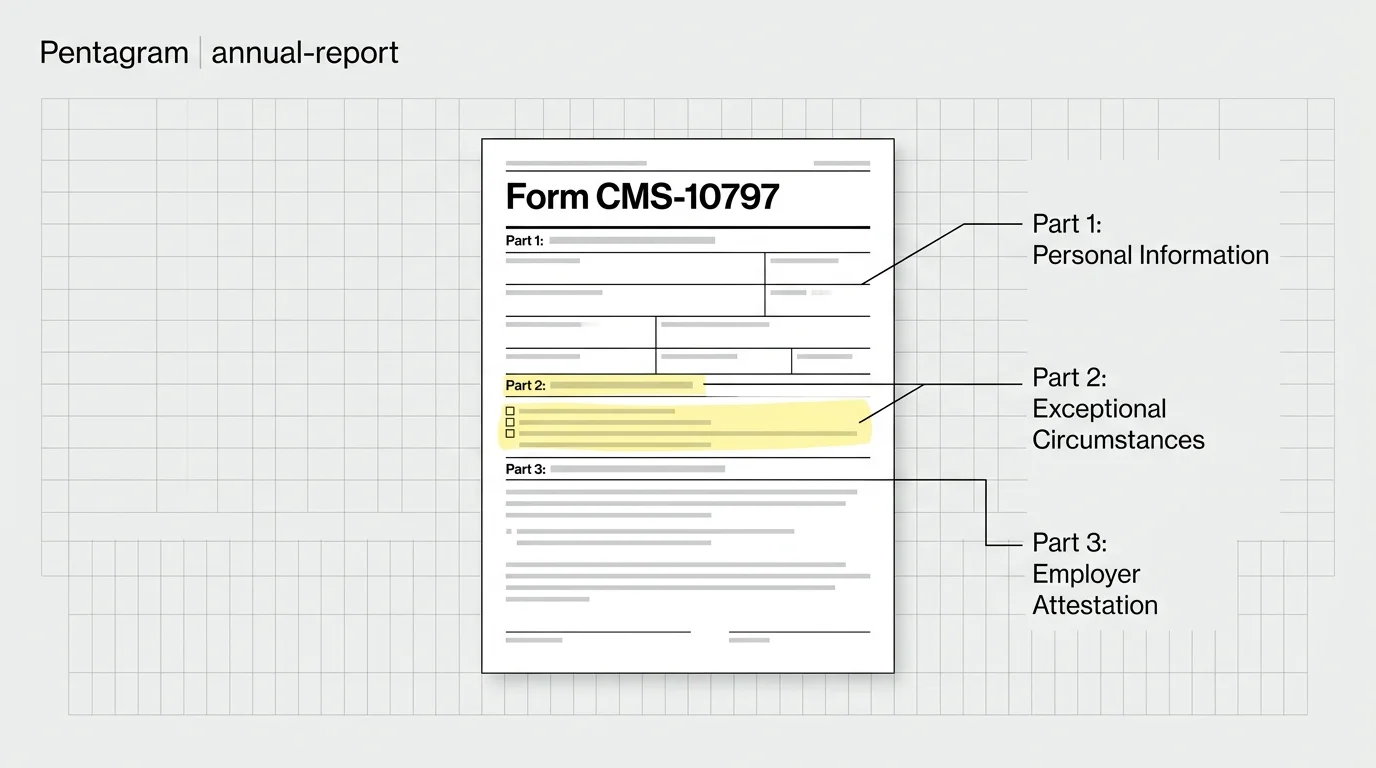
- Exceptional Circumstances Relief: You can request a targeted SEP using CMS Form CMS-10797 if employer misinformation, natural disasters, or administrative errors caused you to miss your deadline.
- Disaster Provisions: A federally or locally declared disaster grants an SEP that lasts until six months after the official emergency declaration ends.
- Relocation Rights: Moving outside your current plan’s service area triggers a 2-month SEP to enroll in a local Medicare Advantage plan or switch back to Original Medicare.
- Financial Protection: Securing an SEP eliminates the 10% annual Medicare Part B late enrollment penalty and prevents coverage gaps.

1. Understanding Medicare Special Enrollment Periods
Medicare guidelines enforce strict timelines for enrolling in health and prescription drug coverage. Most Americans enroll during their Initial Enrollment Period (IEP)—a seven-month window centered around their 65th birthday—or during the Annual Enrollment Period (AEP) that runs from October 15 to December 7 each year. However, life rarely follows a rigid calendar. Recognizing this reality, the Centers for Medicare & Medicaid Services (CMS) maintains specific guidelines for Medicare Special Enrollment Periods (SEPs) that allow eligible individuals to make coverage changes outside routine enrollment windows.
When you qualify for an SEP, you gain the right to sign up for Medicare Part A (Hospital Insurance), Medicare Part B (Medical Insurance), Medicare Advantage (Part C), or Medicare Prescription Drug Coverage (Part D) without waiting for the next general enrollment period. Crucially, an approved SEP waives late enrollment penalties. In 2026, the standard Part B monthly premium is $202.90, and the annual deductible is $283.00. If you delay Part B enrollment without qualifying coverage or an approved SEP, Medicare adds a permanent 10% penalty to your Part B monthly premium for every full 12-month period you delayed. Over a multi-year retirement, these cumulative surcharges add up to thousands of dollars in unnecessary lifetime expenses.
Knowing your medicare sep eligibility status turns what could be a stressful bureaucratic headache into a smooth coverage transition. Federal regulations recognize several distinct qualifying events, ranging from job separations and physical moves to administrative errors made by health plan representatives.

2. Working Past 65: Active Employment vs. The COBRA Trap
As more Americans remain in the workforce past age 65, the transition from group employer coverage to Medicare has become one of the most common enrollment scenarios. If you or your spouse actively work past 65 and maintain coverage under an active employer group health plan (offered by an employer with 20 or more employees), you can defer Medicare Part B without incurring penalties.
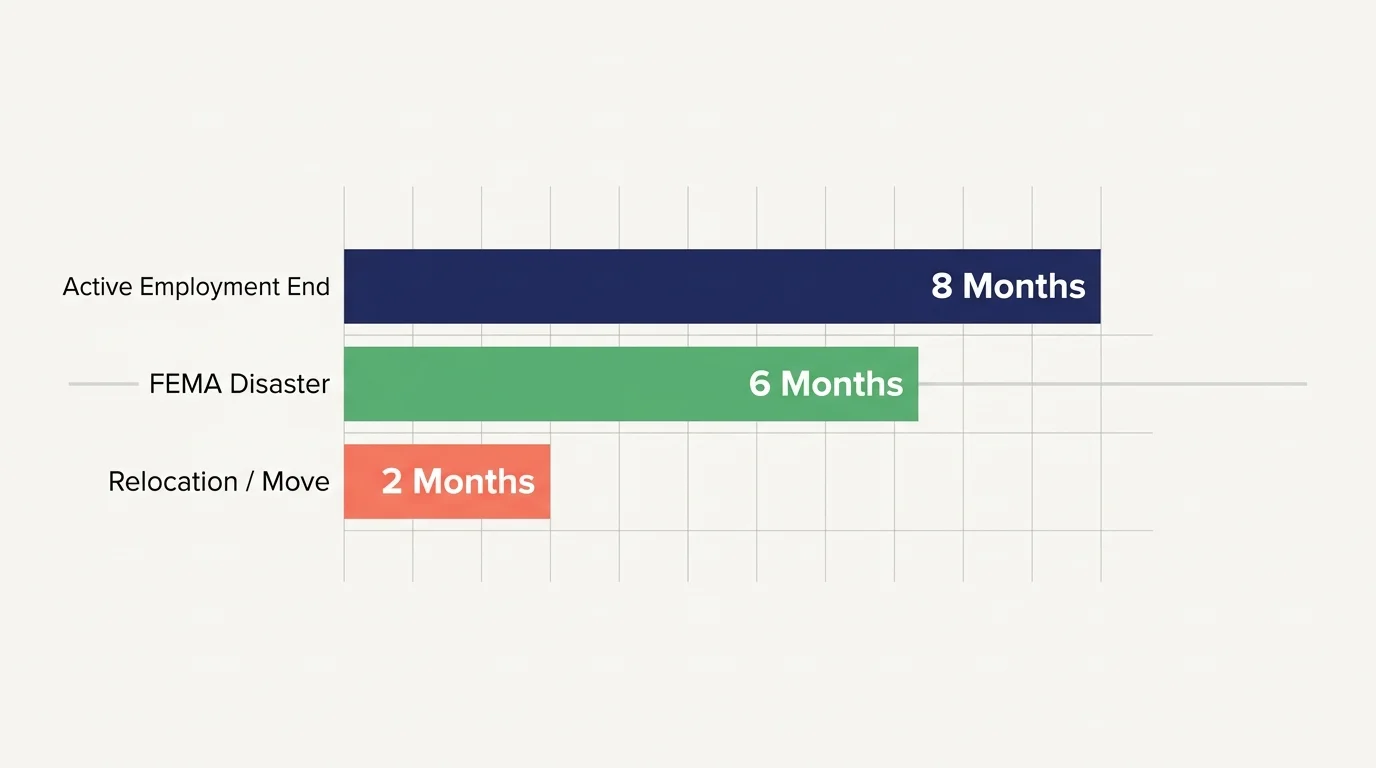
Once active employment ends or active group health coverage terminates—whichever happens first—you enter an 8-month Special Enrollment Period. During this 8-month window, you can enroll in Part A and Part B without any penalty or delay in benefits.
“Navigating financial decisions in retirement isn’t just about accumulating wealth; it’s about eliminating unnecessary risks that erode your hard-earned security.” — Jean Chatzky, Financial Journalist and Author
However, millions of retirees fall into a devastating trap involving COBRA and retiree health plans. Federal rules state clearly that neither COBRA nor retiree health coverage counts as active job-based insurance. If you leave your job at age 66, decline Medicare Part B, and elect COBRA coverage for 18 months, your 8-month SEP begins the month after active employment ends—not when COBRA coverage finishes.
If you wait until COBRA expires to apply for Medicare Part B, your 8-month working SEP will have already closed. You will then have to wait until the next General Enrollment Period (January 1 through March 31), face months without medical insurance, and incur permanent Part B late enrollment surcharges calculated from the month your active employment ended.
3. Exceptional Circumstances SEPs and Form CMS-10797
Historically, beneficiaries who missed their enrollment windows due to catastrophic personal emergencies or government processing delays had very little legal recourse. To address these systemic gaps, CMS established the Exceptional Circumstances Special Enrollment Period under federal regulations 42 CFR 406.27 and 407.23.
If extraordinary conditions beyond your control prevented you from enrolling in Medicare on time, you can apply for an administrative exemption using CMS Form CMS-10797 (Application for Enrollment in Medicare Part A and Part B Special Enrollment Period for Exceptional Circumstances). This powerful form allows you to petition the government for medicare enrollment exceptions based on documented hardship.
CMS evaluates exceptional circumstance requests for several distinct scenarios, including:
- Severe Personal Illness or Incapacity: Medical events that physically or mentally prevented you or your primary representative from completing enrollment paperwork.
- Federal or Local Administrative Errors: Situations where miscommunication, lost mail, or processing errors by Social Security or CMS caused an unintended gap in coverage.
- Inaccurate Guidance from Employers: Documented instances where a company HR department or health plan administrator provided incorrect written advice regarding Medicare rules.
- Incarceration Release: Individuals who were recently released from custody gain a special window to establish primary healthcare coverage.
When CMS grants an exceptional circumstances SEP for Part A or Part B, you also receive a 2-month window starting from your Part A or Part B effective date to enroll in a Medicare Advantage plan or a Part D prescription plan. This secondary window ensures complete coverage coordination across all parts of Medicare.

4. Relocation and Service Area Changes
Medicare Advantage (Part C) and Standalone Prescription Drug Plans (Part D) operate on regional networks tied to specific counties and states. If you move out of your plan’s official service area, federal law grants you a 2-month qualifying life event medicare enrollment window to adjust your coverage.
The timing of your relocation SEP depends directly on when you notify your current health plan provider:
- Notification Before Moving: If you notify your plan before relocating, your SEP opens the month before your move, includes the month of your move, and extends for two full calendar months after you relocate.
- Notification After Moving: If you notify your plan after moving, your SEP begins the month you inform the plan and lasts for two full calendar months following that notification month.
This relocation SEP also grants guaranteed issue rights to purchase a Medicare Supplement (Medigap) policy if you choose to return to Original Medicare rather than joining a local Medicare Advantage plan. Under standard conditions, insurance companies can subject applicants to medical underwriting outside their initial Medigap enrollment period. However, moving out of a Medicare Advantage plan’s service area gives you a protected legal window to secure a Medigap plan without facing pre-existing condition exclusions or health-based premium price hikes.

5. Emergency Declarations and FEMA Disaster SEPs
Natural disasters such as hurricanes, wildfires, severe flooding, or tornadoes can destroy personal records and disrupt government operations. If a emergency or disaster declaration is issued by the Federal Emergency Management Agency (FEMA) or a state or local government entity, affected beneficiaries receive a extended SEP for medicare enrollment outside open enrollment.
This special emergency enrollment period applies if you reside in the designated disaster zone—or if your primary unpaid caregiver lives in the impacted region and assists you with healthcare decisions. The FEMA SEP opens on the exact date the emergency declaration is officially announced and remains open until 6 months after the official end date of the emergency declaration.
During this extended six-month window, you can enroll in Medicare Part A or Part B, join or switch Medicare Advantage plans, or add Part D prescription coverage if you missed another enrollment period (such as the Annual Enrollment Period or your Initial Enrollment Period) due to the disaster. You do not need to prove physical destruction of your home; you simply need to demonstrate that you lived in the affected geographic zone during the emergency timeframe.

6. Employer Misinformation: Regaining Lost Rights
Navigating health insurance rules while planning for retirement is complex, and corporate human resource personnel sometimes inadvertently provide inaccurate guidance. For example, an employer benefits manager might tell a 65-year-old worker that staying on a small company plan or retiree bridge plan eliminates the need to sign up for Medicare Part B. If that company employs fewer than 20 workers, that advice is legally incorrect, and Medicare becomes the primary payer at age 65.
“You must take complete ownership of your medical bills and insurance deadlines, because no one else is going to care about your retirement funds as much as you do.” — Suze Orman, Personal Finance Expert
When retirees rely on flawed employer advice, they often uncover the mistake years later when seeking medical treatment—only to find that Medicare enforces standard late enrollment penalties. However, CMS regulations permit relief if you can establish that an employer, group health plan, or benefits representative provided misleading or incorrect information.
To qualify for an employer misinformation SEP, you must submit evidence showing that you relied on erroneous details provided by an authorized plan source. Useful documentation includes written emails, corporate employee handbooks, signed HR letters, or official union benefit summaries. Once verified under Form CMS-10797, CMS grants an exceptional SEP, waiving back-penalties and granting immediate, seamless coverage enrollment.

7. Involuntary Loss of Creditable Health Coverage
Creditable health coverage refers to any medical or drug coverage that meets or exceeds Medicare’s basic actuarial standards. If you maintain non-Medicare coverage—such as a spouse’s active employer plan, union benefits, or state medical assistance—and that coverage ends involuntarily, you qualify for an SEP.
Common involuntary coverage losses that trigger this SEP include:
- Loss of Spousal Employer Benefits: Death of a working spouse, divorce, or a spouse’s mandatory job separation that terminates dependent health coverage.
- Reduction of Employer Hours: Transitioning from full-time to part-time status, causing health plan termination.
- Plan Cancellation or Loss of Creditable Status: An employer altering prescription benefits so they no longer meet Medicare Part D creditable coverage standards. (Employers must send an annual Notice of Creditable Coverage every October).
- Medicaid / Qualified Medicare Beneficiary Changes: Changes in income or state eligibility rules that end state Medicaid assistance trigger an SEP to adjust Medicare Advantage or Part D plans.
When you suffer an involuntary loss of creditable coverage, your SEP typically spans 2 full calendar months after the month your primary coverage ends. Acting promptly within this window prevents gaps in prescription coverage and eliminates late enrollment calculations.
8. Master Comparison Table of Medicare SEPs
The table below summarizes the key features, eligibility windows, and required documentation for the most underused Special Enrollment Periods under Medicare guidelines:
| SEP Category | Qualifying Event | Available Enrollment Window | Required Documents / Action |
|---|---|---|---|
| Working Aged SEP | Leaving active employment or losing active employer group health coverage past age 65. | 8 calendar months starting the month after employment or active coverage ends. | CMS Form CMS-L564 (Employer Verification) and CMS Form CMS-40B. |
| Exceptional Circumstances | Severe administrative errors, health incapacity, or catastrophic life events. | Case-by-case; established by CMS (typically 2 to 6 months from relief grant). | CMS Form CMS-10797 accompanied by supporting evidence (medical/legal records). |
| FEMA / Declared Emergency | Living in an area subject to a federal, state, or local emergency declaration. | Starts on declaration date; ends 6 months after official declaration end date. | Proof of residency in the affected area during the emergency window. |
| Relocation / Moving | Moving outside your Medicare Advantage or Part D plan’s geographic service area. | 2 full calendar months following the move (or notification) month. | Updated driver’s license, utility bills, or official postal change-of-address form. |
| Employer Misinformation | Missing enrollment due to erroneous advice from an employer or plan administrator. | Timeframe designated by CMS upon evaluating the exceptional relief claim. | Form CMS-10797, written employer communications, or benefit statements. |
| Loss of Creditable Coverage | Involuntary loss of TRICARE, spousal coverage, union benefits, or Medicaid. | 2 full calendar months after the month prior coverage terminates. | Notice of Creditable Coverage Loss or benefit termination letter from insurer. |

9. What Can Go Wrong: Pitfalls That Trigger Penalties
While Medicare enrollment exceptions provide vital protection, small missteps can compromise your eligibility. Review these common mistakes to protect your healthcare access and finances:
1. Relying on Oral Statements from HR: If an employer claims your retiree or severance package covers Medicare requirements, request that policy in writing. CMS rarely grants misinformation SEPs based on unrecorded phone calls or verbal workplace conversations.
2. Assuming COBRA Pauses the Clock: Enrolling in COBRA following retirement does not pause or extend your 8-month working SEP. If you wait until month nine of COBRA coverage to apply for Part B, you will face coverage gaps and permanent lifetime penalties.
3. Missing the Medigap Guaranteed Issue Window: When using an SEP to leave a Medicare Advantage plan after relocating, you have a limited time to secure a Medigap plan with guaranteed issue rights. Missing this window allows insurance companies to review your medical history and deny coverage or charge higher rates based on pre-existing conditions.
4. Confusing the General Enrollment Period with an SEP: If you lack a qualifying life event, applying during the General Enrollment Period (January 1 – March 31) means your coverage starts the month after you sign up, but you will still owe accumulated late enrollment penalties.
10. Step-by-Step Guide to Applying for a Medicare SEP
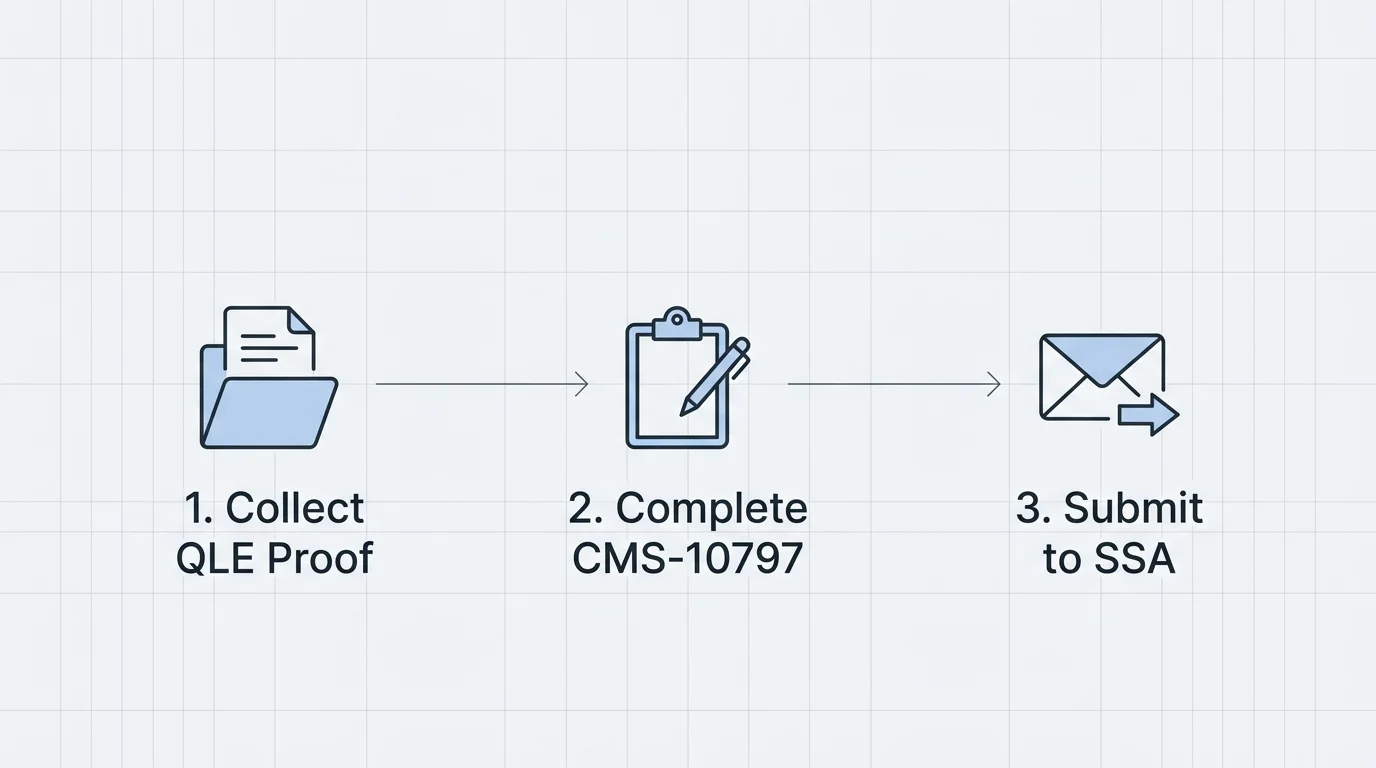
If you meet the criteria for a Special Enrollment Period, take systematic steps to ensure proper handling by federal agencies:
- Document Your Qualifying Event: Gather official proof of your qualifying event. Secure a completed Form CMS-L564 from your employer, formal termination notices, relocation utility bills, or local disaster declarations.
- Obtain the Correct Federal Forms: Download the required application documents from the Social Security Administration or CMS websites. For standard job transitions, use CMS-40B alongside CMS-L564. For administrative relief, complete Form CMS-10797.
- Draft an Explanatory Statement (If Applicable): If filing for an Exceptional Circumstances SEP, include a brief cover letter detailing the timeline, exact dates, and reasons beyond your control that caused the enrollment delay. Attach all supporting evidence.
- Submit to Social Security: Social Security handles Medicare enrollment processing. Submit your paperwork online through SSA.gov, deliver it directly to a local field office, or send it via certified mail with return receipt requested.
- Confirm Part C and Part D Coverage: Once your Part A and Part B enrollment is approved under an SEP, you have 2 full months from your effective coverage date to choose a Medicare Advantage or Part D plan through Medicare.gov or a licensed advisor.

11. When to Consult a Professional
While many Medicare transitions are straightforward, complex individual circumstances often benefit from expert guidance. Consider working with a licensed Medicare specialist, state SHIP advisor, or elder law attorney in the following situations:
- Transitioning from Complex Severance Packages: If your employer offers extended severance pay, retiree health benefits, or health reimbursement accounts (HRAs), an expert can help coordinate your Part B enrollment timeline to avoid penalties.
- Filing an Exceptional Circumstances Appeal: If Social Security initial applications reject your SEP claim, professional counselors help assemble stronger secondary documentation and re-submit Form CMS-10797.
- Managing High-Income IRMAA Surcharges: If your income triggers the Income-Related Monthly Adjustment Amount (IRMAA), timing your Medicare transition alongside your job separation can help lower your overall monthly costs.
- Coordinating Dual Benefits: If you hold VA benefits, TRICARE For Life, or FEHB (Federal Employees Health Benefits), a specialist can help align these programs with standard Medicare Part B and Part D rules.
For independent community support, contact your local State Health Insurance Assistance Program (SHIP) through the National Council on Aging to access free, unbiased counseling from certified specialists.
12. Frequently Asked Questions
Does COBRA health coverage grant an 8-month Medicare SEP?
No. COBRA health coverage is not considered active employment coverage under federal Medicare regulations. Your 8-month working Special Enrollment Period begins the month after your active job or active employment-based group health plan ends, regardless of whether you elect COBRA.
What form do I use to apply for a Medicare SEP under exceptional circumstances?
You must use Form CMS-10797 (Application for Enrollment in Medicare Part A and Part B Special Enrollment Period for Exceptional Circumstances). You will submit this completed form alongside physical evidence detailing the unusual circumstances that prevented standard enrollment.
How long does the FEMA disaster Special Enrollment Period last?
The FEMA emergency SEP starts on the date the emergency or disaster declaration is officially declared and continues until 6 full months after the formal end date of the emergency declaration.
Can I buy a Medigap policy if I move out of my Medicare Advantage service area?
Yes. Relocating outside your Medicare Advantage plan’s service area triggers guaranteed issue rights. These rights allow you to purchase designated Medicare Supplement (Medigap) plans without medical underwriting if you apply within the statutory window.
What happens if my employer gives me wrong advice about enrolling in Part B?
If inaccurate advice from an employer, human resources representative, or plan administrator caused you to miss your Medicare window, you can apply for an Exceptional Circumstances SEP using Form CMS-10797. If approved, CMS waives late penalties and opens an enrollment window.
Managing your healthcare strategy in retirement requires vigilance, but you do not have to memorize every rule to stay protected. By staying aware of key qualifying life events, tracking statutory deadlines, and keeping clear records, you can confidently navigate coverage transitions while safeguarding your financial security. The information in this guide is meant for educational purposes. Your specific circumstances—including income, health needs, tax situation, and goals—may require different approaches. When in doubt, consult a licensed professional.
Last updated: March 2026. Retirement benefits, tax rules, and healthcare regulations change frequently—verify current details with official sources.









Leave a Reply