
The Core Purchase Documents: Establishing Your Starting Basis
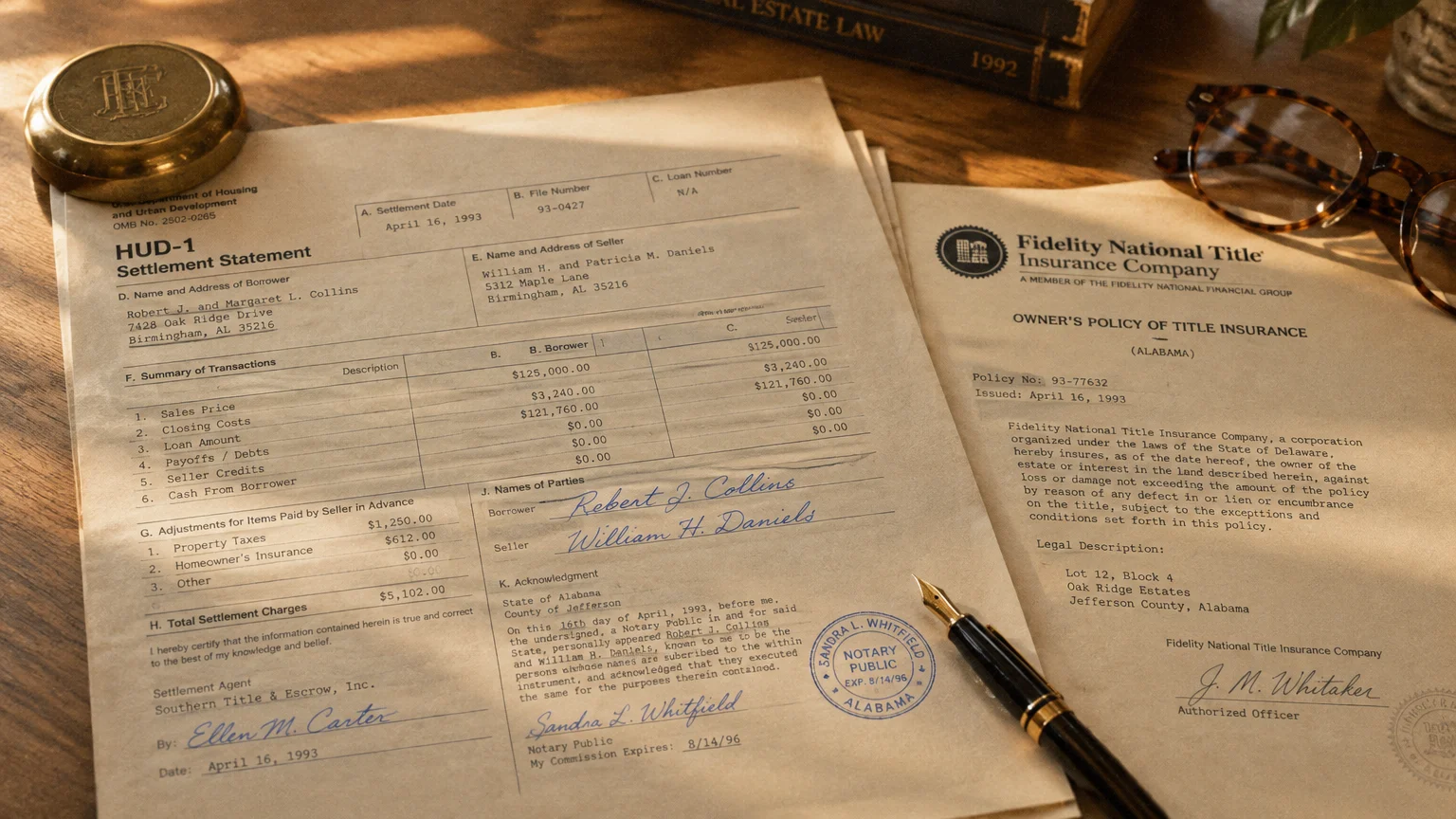
Your home’s cost basis begins on the date you acquire the deed. Your baseline figure includes the original purchase price plus specific capital expenses paid during the transaction.
The primary document establishing this initial figure is your settlement statement. Homes purchased before October 2015 use the HUD-1 Settlement Statement, while newer transactions use the standard Closing Disclosure.
Guidance from the Consumer Financial Protection Bureau outlines the fees listed on your closing disclosure. Several of these settlement costs add directly to your starting cost basis.
Preserve original statements confirming payment of allowable basis additions:
- Abstract of title fees, title search expenses, and owner’s title insurance premiums
- Legal fees for drafting deeds, mortgage contracts, and purchase agreements
- Survey fees required to establish property boundaries
- Transfer taxes and local municipal recording charges
- Utility installation charges paid to connect the home to public municipal grids
Do not confuse these capital closing costs with prepaid deductible items. Prorated property taxes, homeowners insurance premiums, and loan origination fees do not add to your property’s tax basis.





To many pop ups this website is tooooo difficult to read!
How long do you have to keep tax returns and accompanying documents if you DON’T own a home?