
Extended Audit Windows: The 6-Year Rule and State Laws
While the standard audit window expires after three years, statutory exceptions frequently double that duration. Home sales attract heightened scrutiny due to the substantial dollar amounts involved.
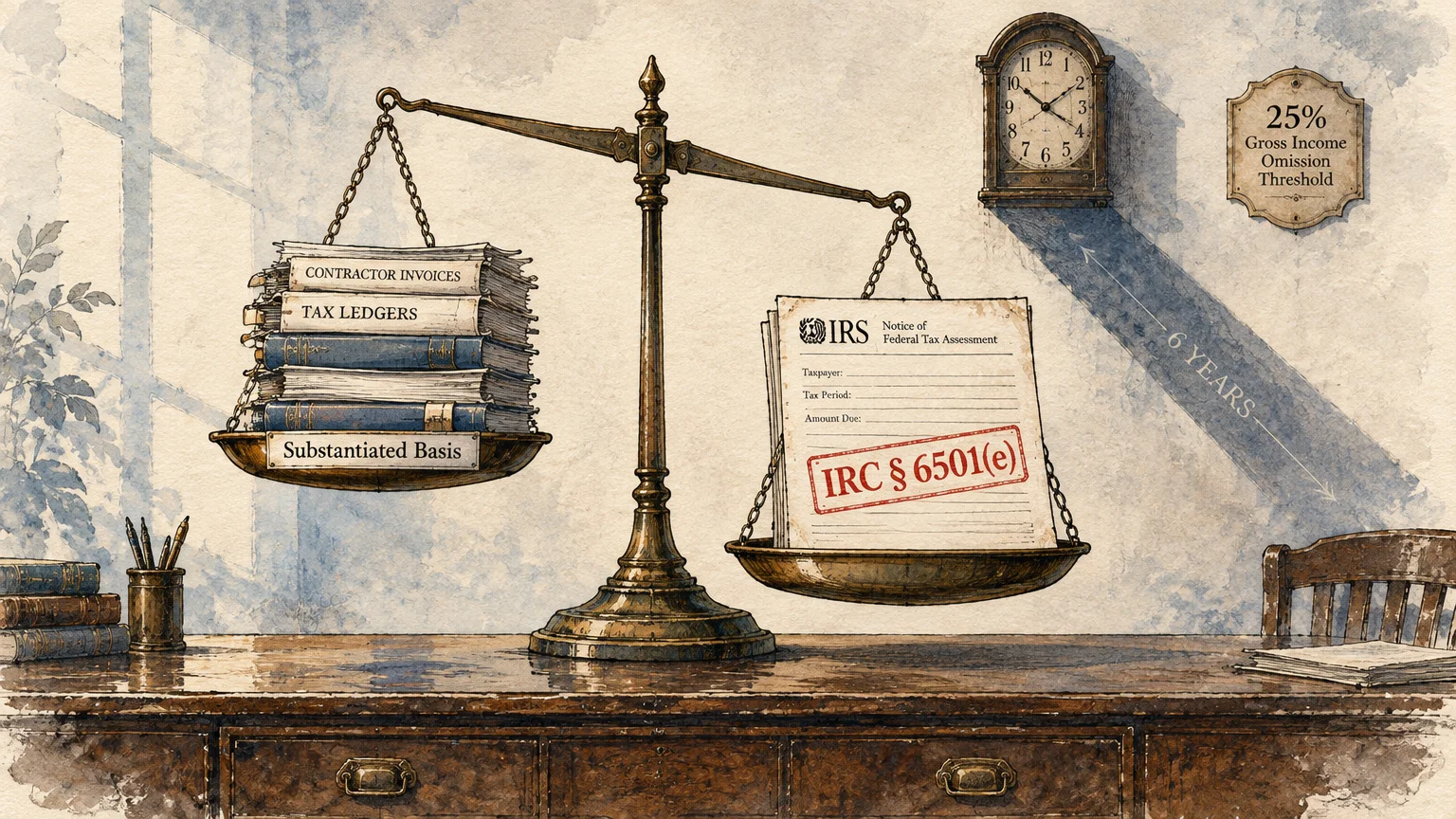
Under IRC Section 6501(e), the IRS has six years to assess back taxes if a taxpayer omits gross income exceeding 25% of the gross income reported on the return.
If you cannot substantiate capital improvements, the IRS disallows those basis additions and inflates your taxable capital gain. That adjustment can easily trigger the 25% gross income omission threshold.
Once the 25% threshold is breached, the IRS gains three additional years to audit your entire return. Keeping records for six years after the sale protects you against this extended lookback.
State revenue departments also enforce independent statutory limitation periods. For instance, the California Franchise Tax Board operates under a four-year statute of limitations for state income tax examinations.
Homeowners residing in states with longer audit windows must align their record retention schedules with the stricter state standard. Retaining records for six years post-sale covers both federal and state mandates safely.









To many pop ups this website is tooooo difficult to read!
How long do you have to keep tax returns and accompanying documents if you DON’T own a home?