
Avoiding Common Errors with Home Ownership Tax Records
Minor oversights during ownership can lead to substantial penalties and disallowed deductions decades later. Avoid these common documentation mistakes to protect your home equity.
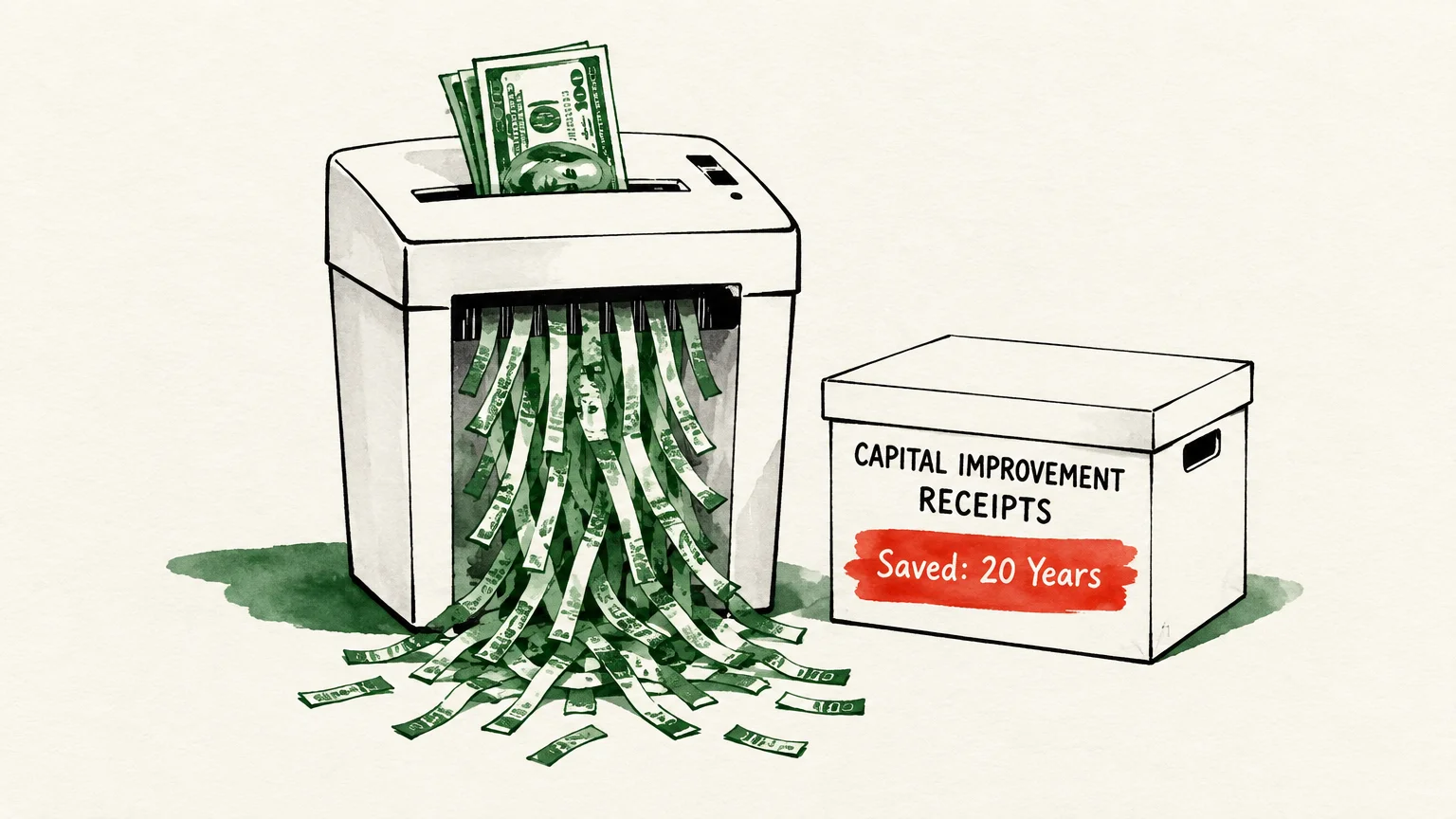
- Throwing Away Purchase Documents After Refinancing: Refinancing replaces your mortgage debt, but it never replaces your original purchase settlement statement. Keep your original purchase Closing Disclosure permanently.
- Claiming Routine Repairs as Capital Basis Additions: Claiming everyday repairs as capital improvements will cause IRS auditors to disallow your basis adjustments. Maintain separate files for routine repairs and genuine capital projects.
- Failing to Obtain Date-of-Death Appraisals: Relying on municipal property tax assessments to establish inherited basis is a costly mistake. Always commission an independent, certified date-of-death appraisal report.
- Discarding Invoices for Work Paid in Cash: The IRS routinely disallows handwritten receipts or canceled checks lacking itemized contractor invoices. Ensure all capital improvement invoices detail materials, labor, and completion dates.
- Purging Records Prematurely During Downsizing Moves: Downsizing into retirement often triggers hasty household purges. Never discard property files until three to six years after filing the final sale return.
Systematic record management prevents these common documentation blunders. Taking time to organize your files annually ensures complete peace of mind when selling your property.








To many pop ups this website is tooooo difficult to read!
How long do you have to keep tax returns and accompanying documents if you DON’T own a home?