
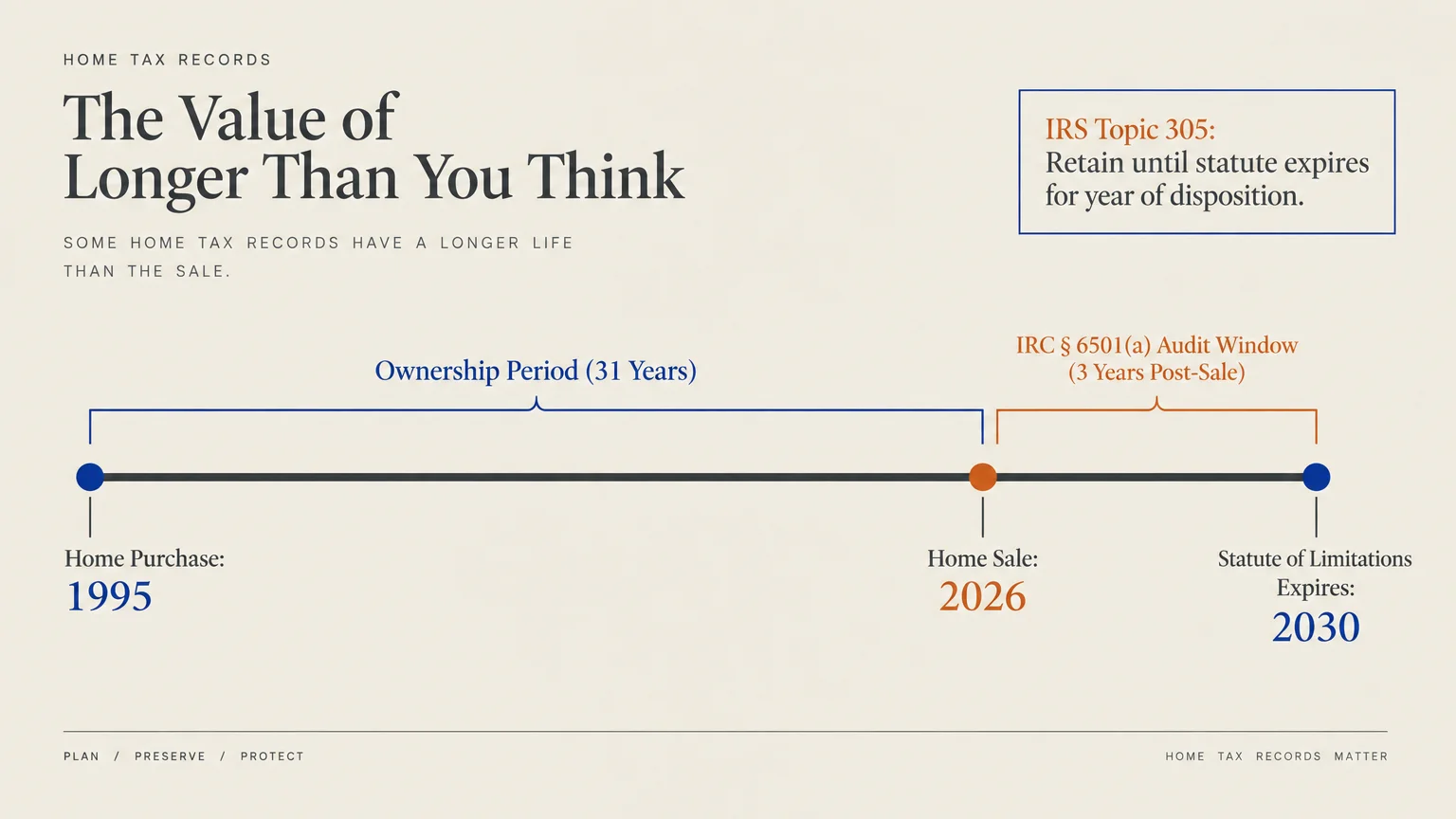
The General Rule: Ownership Duration Plus Three Years
Under Internal Revenue Code Section 6501(a), the standard federal audit window lasts three years from the date you file your return. That clock begins on your filing date or the mid-April deadline, whichever is later.
Many homeowners assume this general three-year statute applies to all home records from the day of purchase. That misunderstanding creates severe financial consequences when selling a long-held property.
According to Internal Revenue Service Topic 305, property records must be retained until the statute of limitations expires for the tax year in which you dispose of the property. This means you must keep records across decades.
If you purchase a home in 1995 and sell it in 2026, your retention clock expires in 2030. Discarding records before that final three-year post-sale window closes leaves you defenseless during an IRS inquiry.
“Owning a home is a keystone of wealth—both financial affluence and emotional security.” — Suze Orman, Personal Finance Expert
Preserving your property records defends that financial security from avoidable capital gains assessments. Meticulous documentation guarantees that your equity remains where it belongs—in your retirement fund.







To many pop ups this website is tooooo difficult to read!
How long do you have to keep tax returns and accompanying documents if you DON’T own a home?