
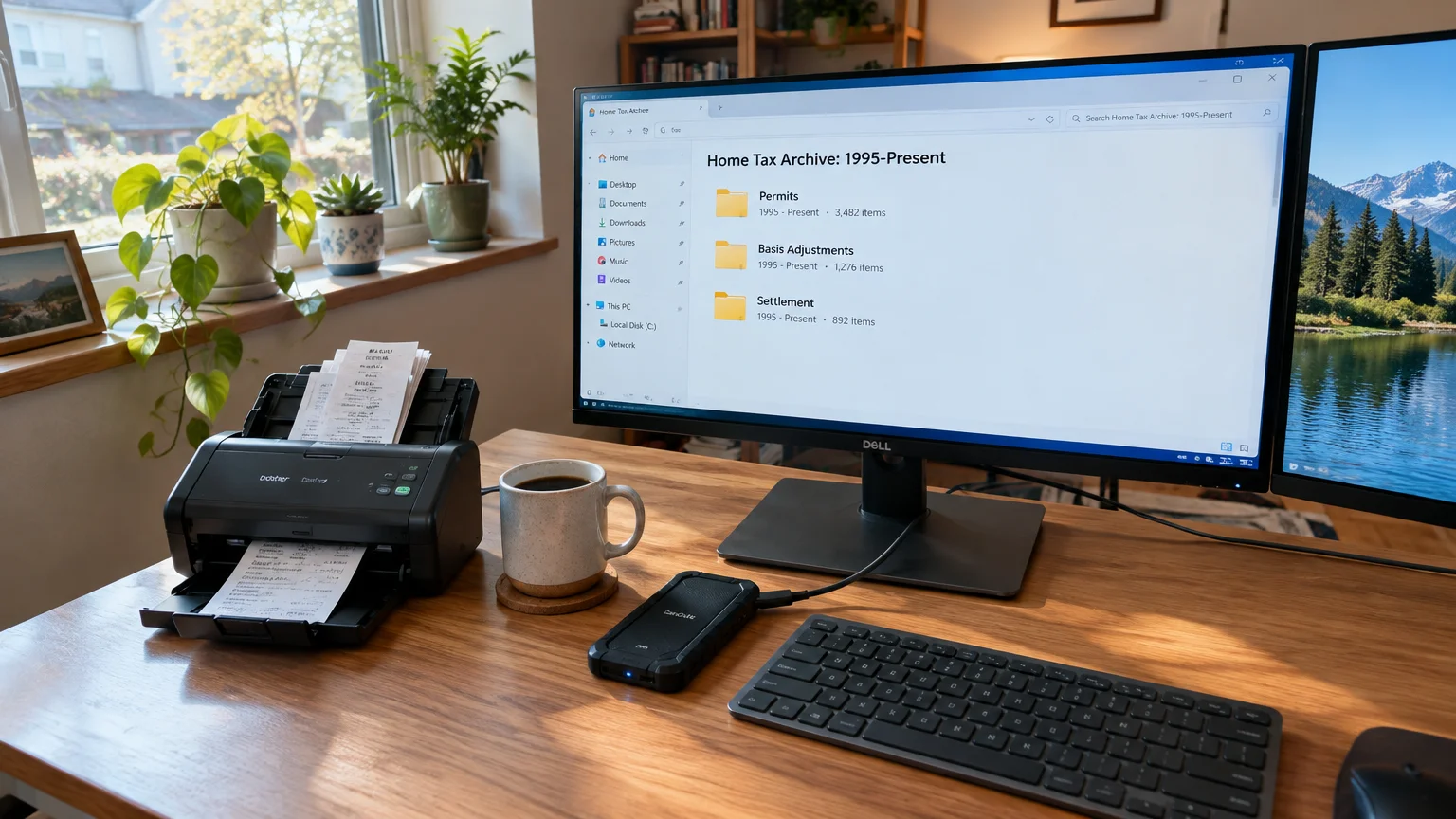
Organizing and Storing Your Home Tax Records Digitally
Paper receipts printed on thermal paper fade within five to seven years, rendering them unreadable during an audit. Modern tax record keeping requires a secure digital preservation strategy.
IRS Revenue Procedure 97-22 confirms that electronic records meet statutory requirements if they are legible, accurate, and easily retrievable. You do not need to preserve boxes of crumbling paper.
Adopt the industry-standard 3-2-1 backup protocol to safeguard your homeowner tax documents:
- Three Total Copies: Maintain three distinct copies of every property document and capital improvement receipt.
- Two Different Media Types: Store files across two separate storage media formats, such as an internal hard drive and an external encrypted solid-state drive.
- One Offsite Location: Safeguard at least one synchronized copy in secure, encrypted cloud storage to protect against fire, flood, or physical theft.
Store original physical deeds, mortgages, and signed closing disclosures in a waterproof, fire-rated home safe. While digital copies satisfy the IRS, title companies and probate courts occasionally require original ink signatures.









To many pop ups this website is tooooo difficult to read!
How long do you have to keep tax returns and accompanying documents if you DON’T own a home?