
Retirement provides the ultimate luxury of controlling your daily calendar. For outgoing retirees, that freedom means filling every week with live music, group sports, and lively neighborhood gatherings.
Isolation poses a measurable threat to senior health and happiness. Scientific research confirms that regular social connection sharpens cognitive vitality and promotes emotional wellbeing as you age.
Finding a neighborhood with an active social infrastructure ensures you never have to search hard for companionship. These nine standout developments cater directly to retirees who thrive around others.
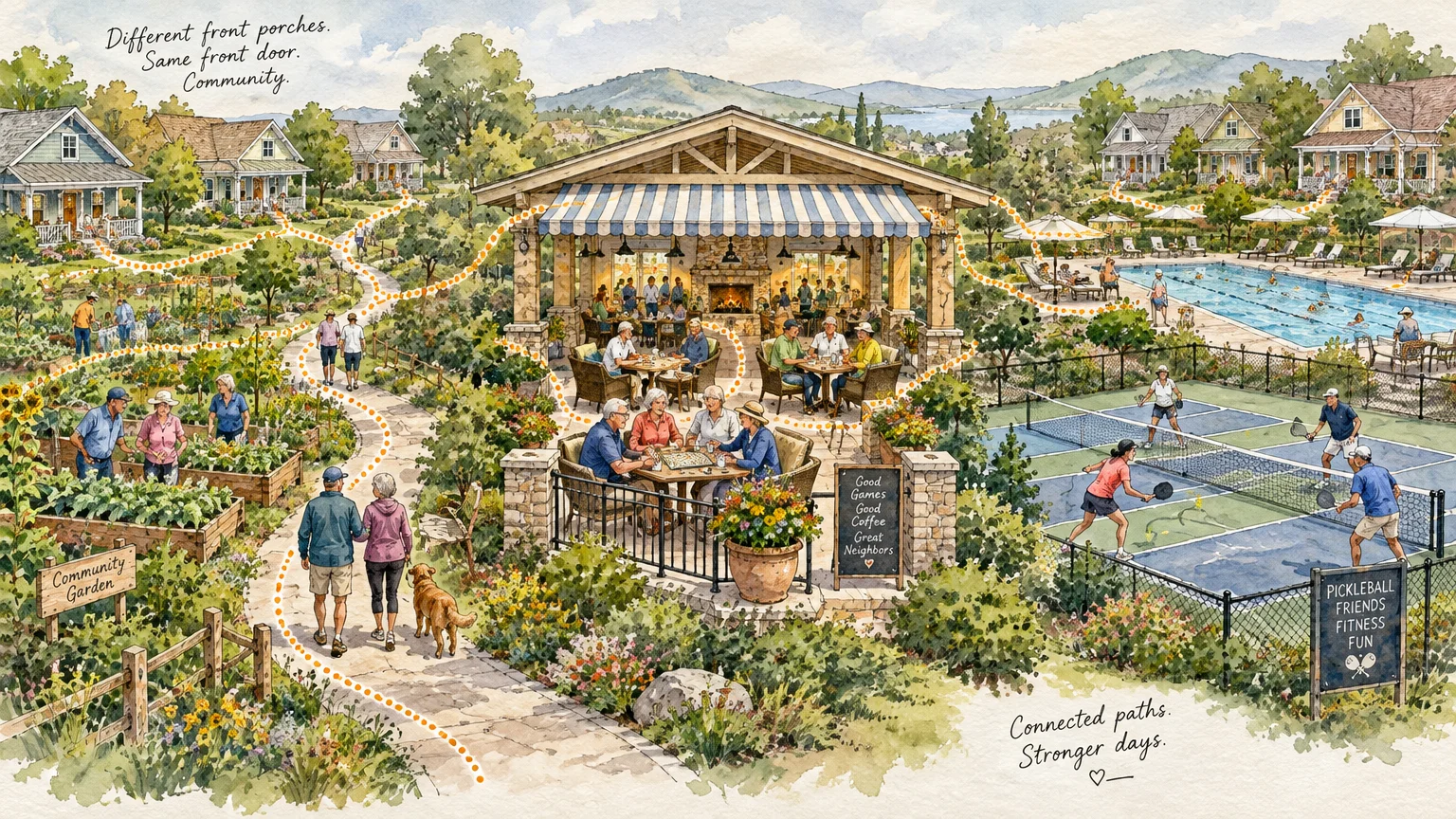
Why Social Infrastructure Matters in Retirement
A successful retirement requires more than a healthy investment portfolio. You also need an environment that fosters genuine friendships and regular social interaction.
Research published by the National Institute on Aging demonstrates that persistent loneliness carries severe health risks. Strong social bonds lower blood pressure, reduce inflammation, and lower dementia risk.
Traditional suburban neighborhoods often empty out during the workday. In contrast, active retirement communities maintain vibrant activity hubs right outside your front door.
These neighborhoods build connectivity directly into their design. Dedicated lifestyle directors coordinate events, manage club rosters, and ensure newcomers quickly feel welcome.
“Retirement is not the end of the road; it is the beginning of an open highway. Purpose and connection fuel the journey.” — Mitch Anthony, Retirement Coach and Author
Surrounding yourself with peers who share your interests makes building a new social circle effortless. Shared pickleball games, dinner dances, and travel clubs turn casual acquaintances into lifelong friends.

Understanding 55+ Community Rules: The HOPA Standard
Before touring neighborhoods, you must understand how age-restricted developments operate under federal law. The Housing for Older Persons Act (HOPA) governs these properties.
Under HOPA guidelines, at least 80% of occupied units must house at least one resident aged 55 or older. Management teams must enforce strict age-verification procedures to maintain this status.
These legal protections preserve the adult-oriented atmosphere residents expect. They keep the social calendar focused on programs that appeal specifically to mature adults.
While adult children and grandchildren can visit, communities restrict the length of their stays. Most properties limit guest visits to 30 or 60 days per calendar year.
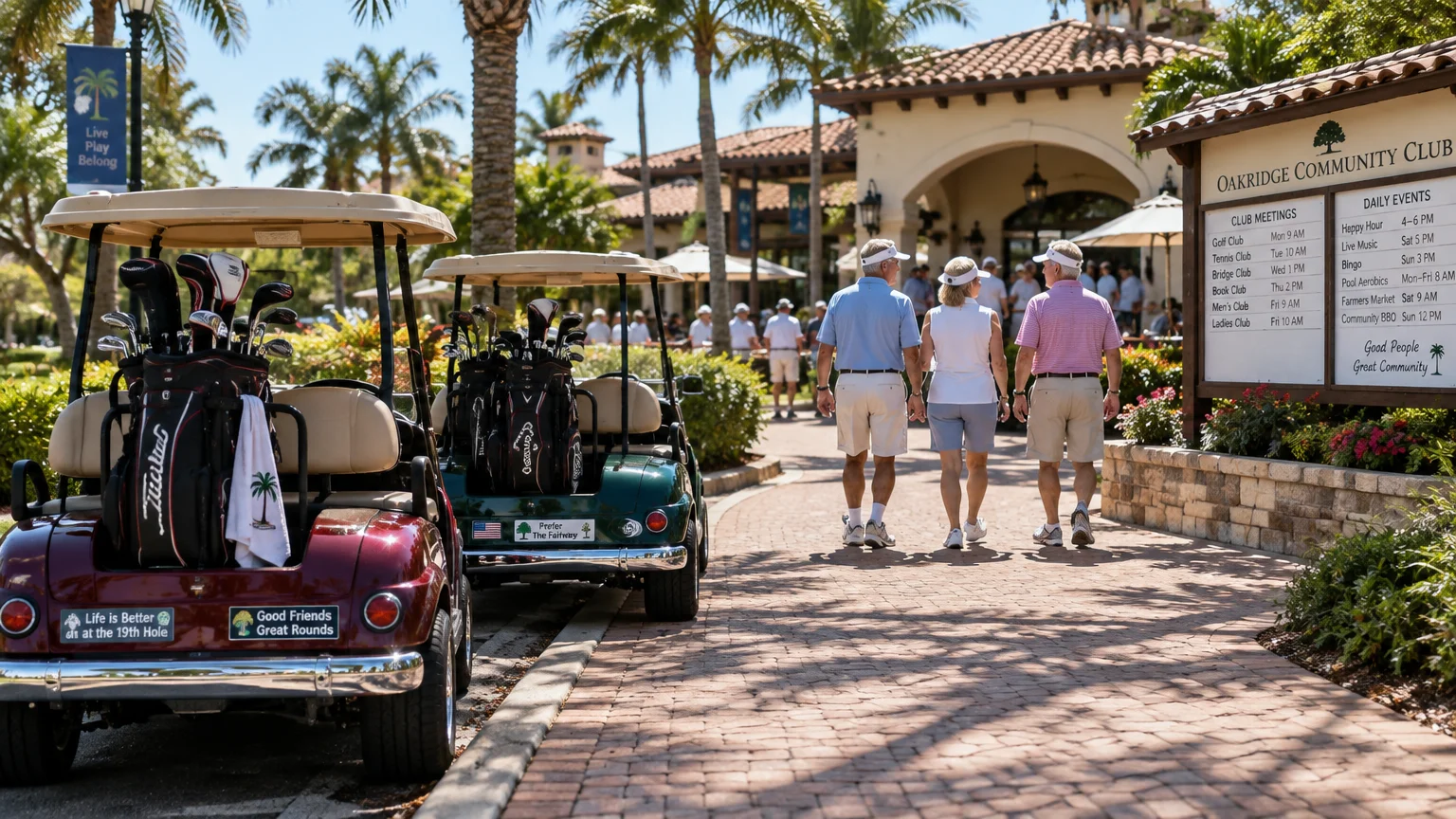
9 Premier Communities for Highly Social Retirees
Certain developments set the national benchmark for retirement living with active social life. These nine communities offer exceptional programming, deep club rosters, and energetic resident cultures.
1. The Villages (Central Florida)
The Villages represents the largest master-planned retirement destination in the world. It provides an unmatched social environment for extroverted retirees.
Residents choose from more than 3,000 chartered clubs and special interest groups. Whatever your passion—from synchronized swimming to foreign policy debates—a welcoming group already meets regularly.
Over 100 recreation centers anchor the community’s neighborhoods. Three distinct town squares host free live musical performances 365 nights a year, drawing energetic crowds of dancing residents.
Residents pay a contractual amenity fee between $199 and $204 per month. County property tax bills also include annual Community Development District (CDD) bond and maintenance assessments.
2. Sun City (Maricopa County, Arizona)
Sun City launched the modern active-adult movement in 1960. Today, over 33,000 residents enjoy its historic charm and vibrant community spirit.
The Recreation Centers of Sun City (RCSC) oversees 120 chartered social and hobby clubs. Members gather daily for ceramics, square dancing, metalworking, and theater productions.
Eight major recreation centers and eight golf courses provide plenty of space for mingling. Because the community is fully built out, it maintains an established, unpretentious social rhythm.
Sun City keeps ongoing ownership costs relatively low. Residents pay an annual RCSC assessment of roughly $600 per property rather than hefty monthly HOA fees.
3. Laguna Woods Village (Orange County, California)
Perched just minutes from the Pacific coast, Laguna Woods Village houses roughly 18,000 residents across 12,000 homes. It stands out as Southern California’s premier social hub.
The development supports over 250 active clubs and organizations. Amenities include seven sprawling clubhouses, an equestrian center, and a professional 800-seat performing arts center.
An internal bus system offers free transit throughout the gated property. This amenity ensures every neighbor can reach happy hours and evening shows safely.
Expect monthly assessments between $820 and $940, which cover building insurance, cable, and transit. Buyers also pay a mandatory one-time $10,000 Golden Rain Foundation trust fee at closing.
4. Sun City Texas (Georgetown, Texas)
Located in the Texas Hill Country near Austin, Sun City Texas spans 5,300 scenic acres. The community currently contains roughly 7,500 homes.
More than 100 organized social clubs keep calendars full. Popular options include the photography club, the nature club, and organized Texas hold ’em tournaments.
Four fitness centers, eight swimming pools, and miles of nature trails encourage spontaneous encounters. The Cowan Creek Pavilion frequently hosts community barbecues and outdoor concerts.
Annual community association dues range between $1,200 and $1,900. Buyers also pay a one-time working capital fee of $650 to $1,000 at purchase.
5. Latitude Margaritaville (Daytona Beach, Florida)
Latitude Margaritaville brings Jimmy Buffett’s carefree island philosophy to retirement living. The community plans for approximately 3,900 colorful single-family homes and villas.
Life revolves around the energetic Town Square bandshell. Residents gather there several nights each week for live concerts, dancing, and frozen cocktails.
Amenities include the Fins Up! Fitness Center, a resort pool, and a private oceanfront beach club. A continuous shuttle connects the main neighborhood to the beach.
Monthly HOA dues range between $340 and $395. These dues cover all fitness amenities, security gates, bandshell entertainment, and beach club maintenance.
6. On Top of the World (Ocala, Florida)
On Top of the World offers some of the most comprehensive hobby facilities in the country. This expansive Ocala community accommodates up to 10,000 homes.
More than 175 resident clubs cater to specialized pursuits like radio-controlled airplanes, woodworking, and ballroom dancing. Three full 18-hole golf courses serve passionate players.
The Circle Square Commons entertainment district serves as the town center. Its 930-seat Circle Square Cultural Center hosts national touring bands and theatrical productions.
Monthly community service and HOA fees run between $390 and $460. Pricing depends on your specific neighborhood and whether your package includes exterior maintenance.
7. Rossmoor (Walnut Creek, California)
Rossmoor sits in the picturesque Trossachs Valley, just 25 miles east of San Francisco. Nearly 10,000 residents live in this prestigious gated enclave.
The community supports more than 200 chartered clubs, political forums, and cultural organizations. Residents enjoy five clubhouses, a modern event center, and 27 holes of championship golf.
A dedicated bus fleet ferries residents between neighborhood valleys and activity centers. The arrangement allows older retirees to stay socially engaged without driving.
Buyers pay a one-time $18,000 entry fee at purchase. Monthly assessments run from $850 to over $1,200, which often bundles cooperative property taxes and building insurance.
8. Sun City Hilton Head (Bluffton, South Carolina)
Sun City Hilton Head brings Lowcountry charm to active senior living. The master-planned property spans 5,000 wooded acres and holds more than 8,000 homes.
Over 150 clubs and interest groups coordinate daily gatherings across the property. Magnolia Hall, a 500-seat performing arts center, hosts resident performances and professional speakers.
Six swimming pools, three golf courses, and a thriving sports complex provide plenty of exercise. The community also features a private kayak launch on the Okatie River.
Homeowners pay affordable annual dues averaging roughly $2,268, which equals about $190 per month. The low fees make it an exceptional value for coastal living.
9. Solivita (Kissimmee, Florida)
Solivita combines Tuscan architectural flair with energetic Central Florida living. This 5,900-home gated community sits southwest of Orlando.
The neighborhood features over 150,000 square feet of dedicated recreational facilities. Highlights include the Palms Complex and the Riviera Spa and Fitness Center.
Residents participate in more than 150 organized clubs. You can easily find companions for wine tasting, bicycling, oil painting, or community theater.
Combined monthly HOA and club amenity fees range from $375 to $450. These fees maintain the expansive recreational spaces and cover professional lifestyle staff.
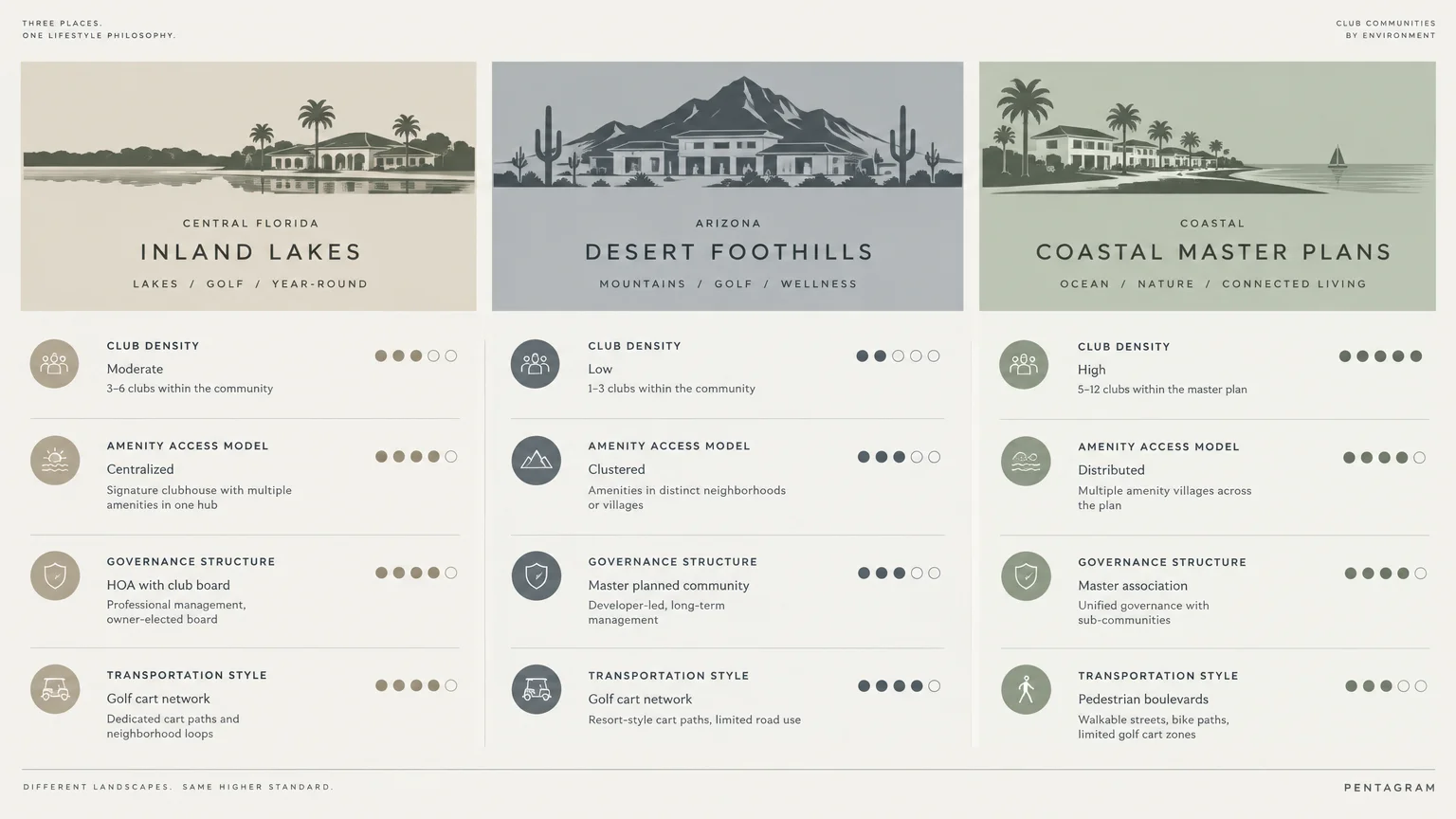
Comparing the Top Social Retirement Communities
Choosing the best retirement communities for social people requires comparing costs, size, and amenities. The following table highlights the core metrics for each location.
| Community | Location | Social Clubs | Approximate Monthly Fees |
|---|---|---|---|
| The Villages | Central Florida | 3,000+ | $199–$204 (plus CDD) |
| Sun City | Maricopa County, AZ | 120+ | ~$50 ($600/year RCSC) |
| Laguna Woods Village | Orange County, CA | 250+ | $820–$940+ |
| Sun City Texas | Georgetown, TX | 100+ | $100–$160 |
| Latitude Margaritaville | Daytona Beach, FL | 75+ | $340–$395 |
| On Top of the World | Ocala, FL | 175+ | $390–$460 |
| Rossmoor | Walnut Creek, CA | 200+ | $850–$1,200+ |
| Sun City Hilton Head | Bluffton, SC | 150+ | ~$190 |
| Solivita | Kissimmee, FL | 150+ | $375–$450 |
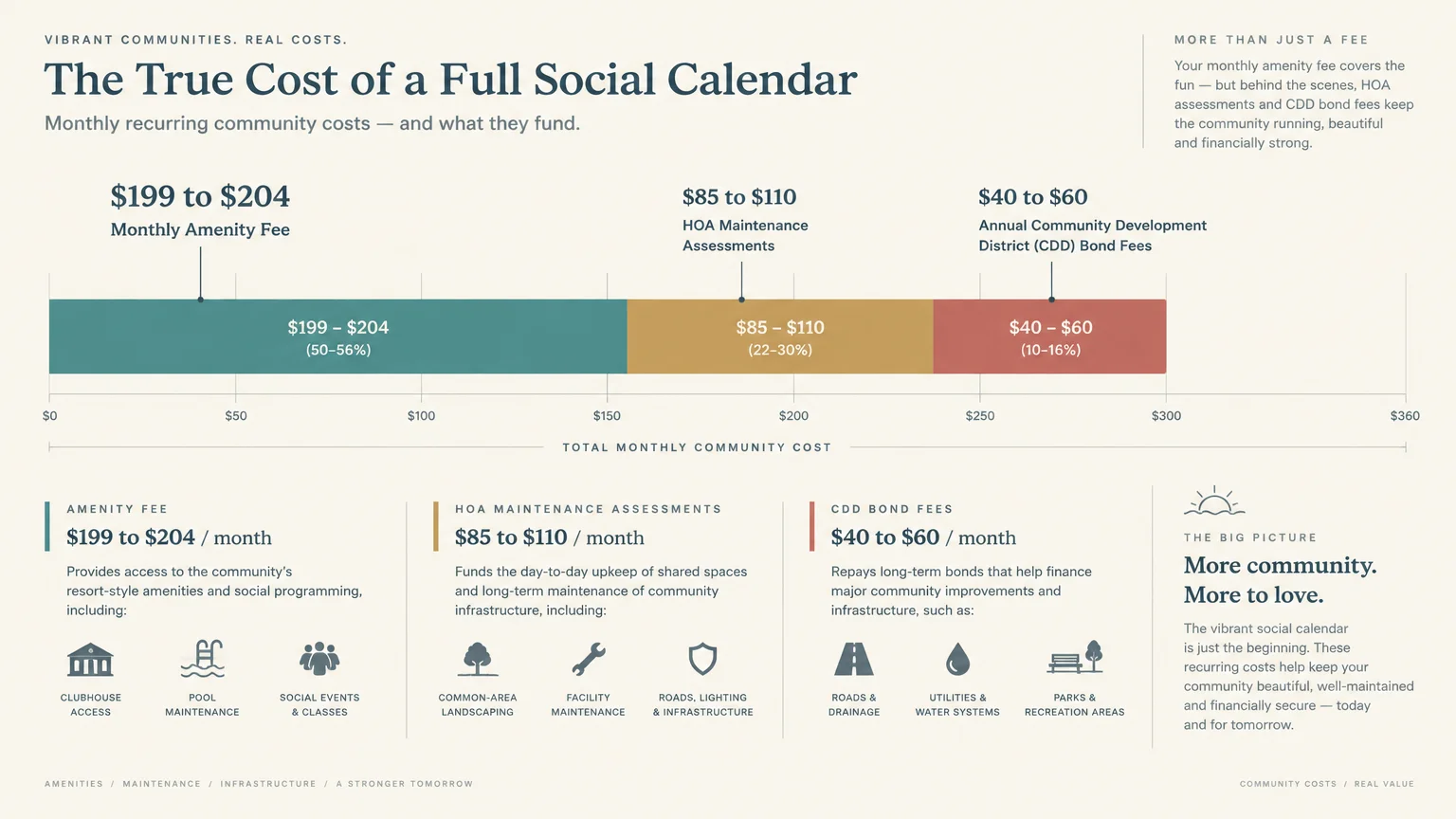
Key Expenses Behind the Social Lifestyle
Retirement communities with social activities require continuous funding to maintain facilities and staff. You must budget for these ongoing assessments when planning your purchase.
Standard HOA dues cover basic landscape care, gate staffing, and common area upkeep. Lifestyle fees specifically fund event directors, entertainment bookings, and clubhouse operations.
According to budget guides on Investopedia, buyers should also prepare for capital reserve funding. Communities raise dues when swimming pools or clubhouses require major repairs.
Carefully review the community’s reserve study before submitting an offer. Healthy reserves protect you from sudden, expensive special assessments down the road.

Common Mistakes to Avoid When Choosing a Community
Excitement can cloud your financial judgment when touring resort-style neighborhoods. Avoid these frequent mistakes to ensure long-term satisfaction.
- Overlooking one-time capital fees: Communities like Rossmoor and Laguna Woods Village charge steep transfer fees ranging from $10,000 to $18,000 at closing.
- Ignoring lifestyle fit: A development known for loud bandshell parties will frustrate a retiree seeking quiet literary salons and birdwatching groups.
- Failing to review club rules: Some popular clubs maintain waitlists or cap their rosters due to facility constraints.
- Skipping trial visits: Moving across the country without spending several nights on-site often leads to relocation regret.
How to Test-Drive a Community Before Buying
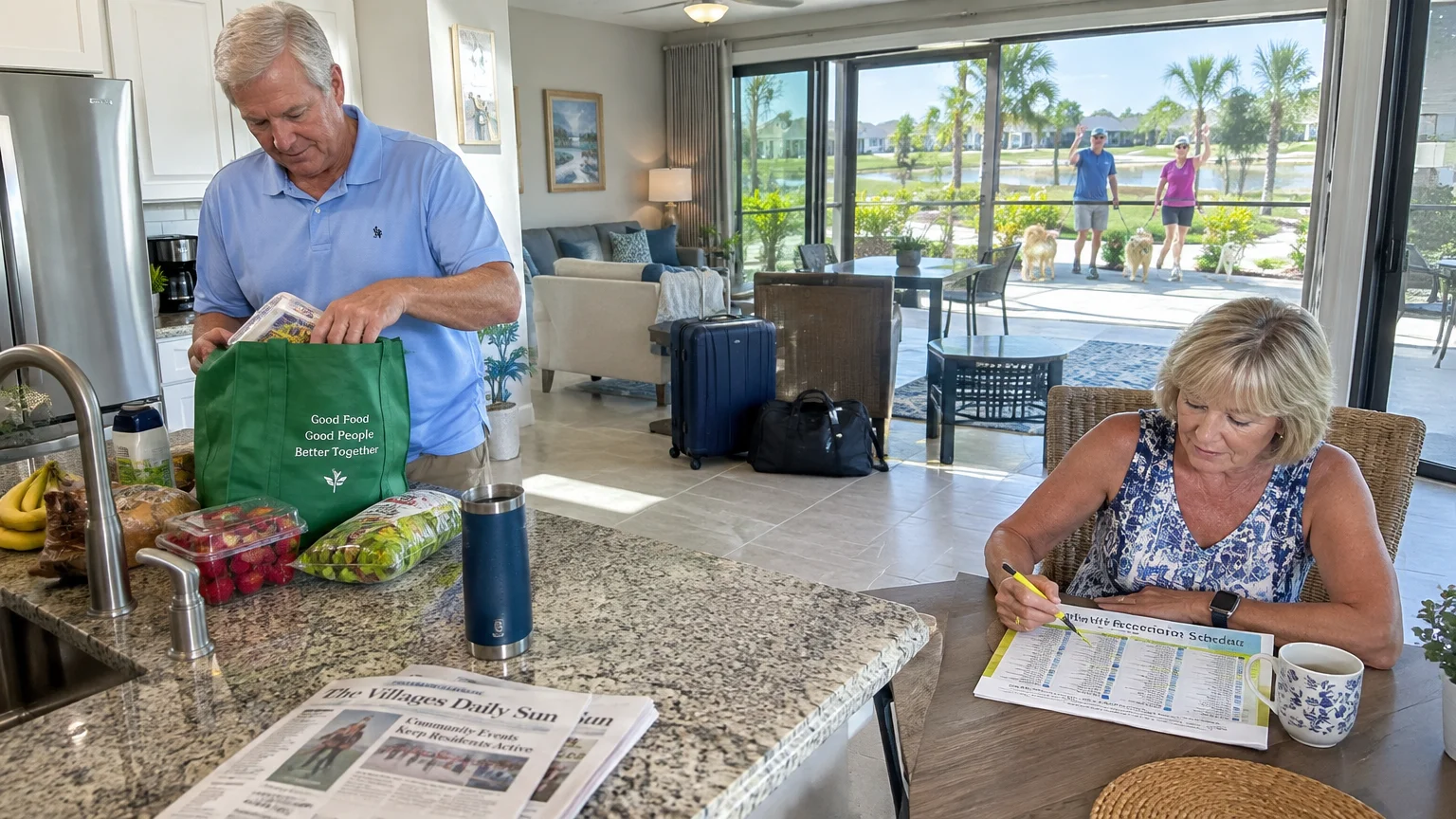
Most master-planned developments offer discovery packages for prospective buyers. These “Stay and Play” programs let you test the neighborhood before signing a contract.
You typically stay in a furnished on-site villa for two to four nights at a discounted rate. Management grants you full resident privileges during your visit.
Take advantage of this access by attending happy hours and fitness classes. Strike up conversations with residents to ask honest questions about community management.
Resources from AARP emphasize evaluating practical daily routines. Check how long it takes to reach grocery stores, hospitals, and major airports.
Frequently Asked Questions About Active Adult Communities
Can non-residents attend events and use the clubhouses?
Most master-planned communities reserve amenities strictly for deeded residents and their registered guests. However, retail areas, golf courses, and cultural centers are often open to the public.
What happens if one spouse is under age 55?
Under HOPA regulations, only one spouse must be 55 or older. Most communities allow the younger spouse to reside there, provided they meet the minimum adult age requirement, usually 40 or 45.
Are golf carts street-legal inside these communities?
Most large active communities feature dedicated golf cart paths and designated lanes. Street legality on main public thoroughfares depends on local municipal codes and vehicle safety equipment.
Do HOA fees increase annually in social communities?
Yes, association dues typically increase to match inflation and rising insurance costs. Boards adjust budgets annually to cover landscaping, utilities, facility maintenance, and lifestyle payroll.
Choosing the best communities for social retirees comes down to personal preferences, budget, and daily passions. Tour multiple developments, review association financials, and talk with future neighbors to discover your perfect retirement match.
This is educational content based on general retirement and financial principles. Individual results vary based on your situation. Always verify current benefit rules, tax laws, and eligibility requirements with official sources like SSA, Medicare.gov, or the IRS.
Last updated: March 2026. Retirement benefits, tax rules, and healthcare regulations change frequently—verify current details with official sources.







Leave a Reply