
The Social Security Earnings Limit Explained
The Retirement Earnings Test applies exclusively to beneficiaries who have not yet reached Full Retirement Age. It sets a cap on your earned income before mandatory withholdings begin.
In 2025, that annual ceiling sat at $23,400. For 2026, the Social Security Administration increased the annual limit to $24,480, which equals $2,040 per month.
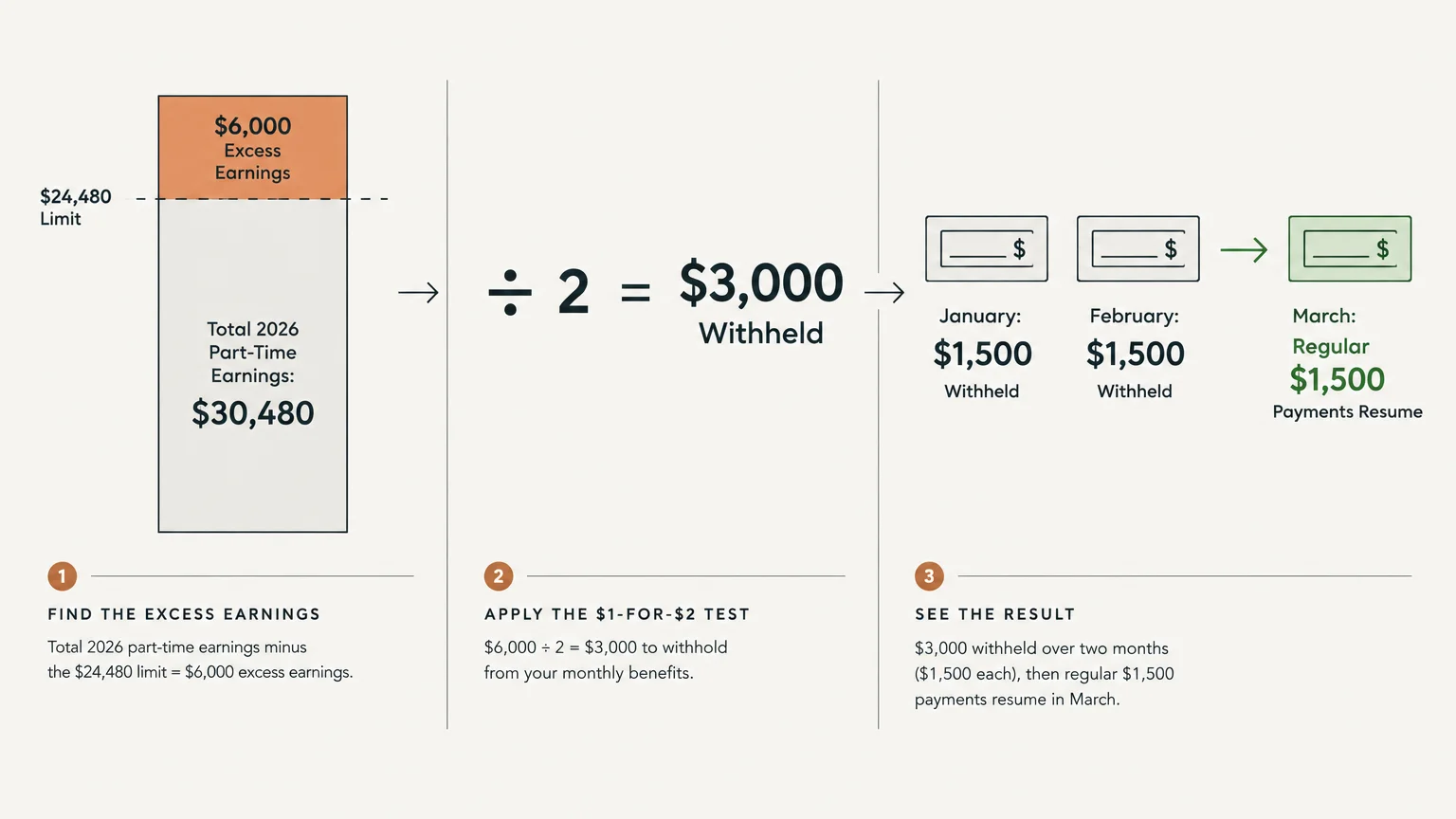
If your annual part-time earnings exceed $24,480 in 2026, the agency withholds $1 of benefits for every $2 you earn over the limit.
Imagine you earn $30,480 working at a local business throughout 2026. Your wages exceed the allowable limit by exactly $6,000.
The government divides that $6,000 excess by two, producing a $3,000 withholding requirement. They satisfy this penalty by withholding your full monthly benefit checks until the obligation is met.
If your monthly check is $1,500, the agency holds back your January and February payments. Regular monthly payments then resume in March.
The First-Year Retirement Grace Period
Transitioning into part-time work mid-year often creates anxiety about hitting the annual earnings threshold too quickly. Fortunately, federal regulations provide a special monthly rule during your first calendar year of retirement.
This grace rule allows you to receive a full monthly benefit for any month you earn $2,040 or less in 2026. The agency ignores your previous full-time salary from earlier months.
For example, retiring from a high-earning corporate career in May will not penalize your autumn benefits. As long as your monthly part-time wages stay under $2,040, you receive your full check.
This special safety provision applies for only one calendar year. After that initial transition, the agency evaluates your total annual earnings.









ok i reached 67 actually 73 now have been working part time continually since so im still adding to my social security does my benefits increase since im still paying in
My rent alone is $2300 a month, so I need to work, I don’t want to end up fuckin homeless you idiots!
Hello I am 61 years old and I will be 62 on 2/5/2027 and I would like to know how soon can I go ahead and apply for my Social Security Benefits. Some say 4 months in advance and some say 3 months in advance.
I have been earning below the poverty amount. So no need to file taxes, but when I register for FRA do I need proof of taxes filed? Do I have to stop working at 67 ? I like working even when If don’t get paid. I quit for a week and almost died of a heart attack
I started my benefits at 62. Which the write move according to AI. I’ve been working full time since.I earn 2400& a month. SSA cut 2000$ from my benefits every year. Not fair. I paid in my SS for 40years!!!!!
I retired at 65 my retirement age is 66. I went to work part time was after I was 66. But they took out over 600 a month on me I feel this is so unfair.