
What Can Go Wrong
Even a highly automated system processing 70 million payments monthly encounters friction. Knowing how to react when the system fails protects your household liquidity and prevents cascading financial consequences.
The “Dead Zone” of Switching Bank Accounts
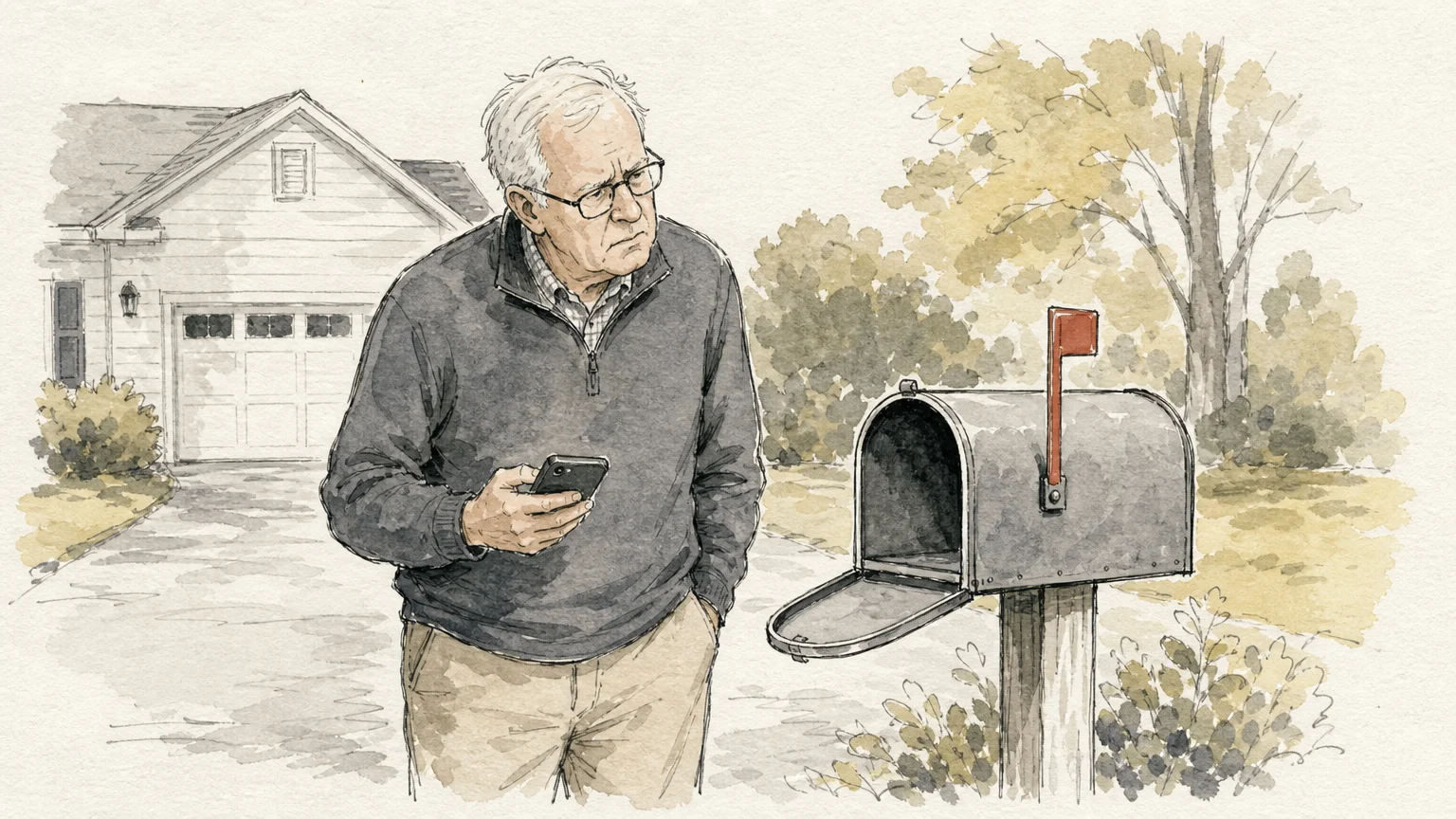
The most common cause of a missing payment is an improperly executed bank account transition. When you update your direct deposit information online, the change takes significant time to propagate through the Treasury’s systems. If you close your old bank account before the first payment successfully lands in your new account, the Treasury will attempt to deposit funds into a closed account.
The bank will immediately reject the transfer, bouncing the money back to the government. This automatically triggers a fraud-prevention freeze on your Social Security record, suspending all future payments until you verify your identity and submit valid routing information. Always leave your old checking account open until you visually confirm the first Social Security deposit has cleared in your new account.
Resolving a Missing or Delayed Payment
If your assigned Wednesday arrives and your account balance remains unchanged, do not immediately panic. The Social Security Administration enforces a strict “three-day mailing rule.” You must wait exactly three full business days after your scheduled payment date before initiating an inquiry. Brief delays frequently occur due to localized banking outages or Federal Reserve routing issues. If the money has not appeared after three business days, call the national SSA hotline or visit your local field office. Representatives can trace the ACH tracking number to determine exactly where the funds stalled.
Navigating Overpayment Notices
Occasionally, the government will calculate your benefit incorrectly and pay you more than you are legally entitled to receive. When the system eventually audits the discrepancy—sometimes years later—they will issue an overpayment notice demanding immediate restitution. Historically, the SSA would forcefully withhold 100% of your monthly benefit until the debt was satisfied, plunging seniors into immediate poverty.
Recent administrative reforms have curtailed this aggressive tactic; the agency now caps automatic clawbacks at a much smaller percentage of your monthly check, ensuring you retain enough income to survive while the debt is resolved. You also maintain the explicit right to file an appeal or request a waiver if repaying the money would defeat the purpose of the benefit program.
The Final Payment After a Beneficiary Dies
Social Security benefits do not prorate, and this rule creates immense confusion for grieving families. A beneficiary must survive for the entire calendar month to be entitled to that month’s benefit. For example, if your spouse dies on September 28th, they are not entitled to the September benefit (which is typically paid in October).
If the Treasury processes the payment before the death is recorded, those funds must be returned. Joint account holders must never spend a deposit received after a beneficiary’s death, as the government will forcefully initiate an automatic clawback directly from the bank account once the death certificate processes. Survivors must instead contact the SSA directly to establish appropriate survivor benefits moving forward.









Thank you for this message. Very much appreciated.
Great article
Thank you for the monthly layout of the S.S. payment schedule.
Thank you very much for your message.
Excellent info thank you.
Thank you for your message .
We appreciate it
Thank you the article was very informative.
Thank you , it helps to see it in writing,
I am extremely grateful to you for such valuable information.
I am 74, I get S.S., but I am now considered permanently disabled, do I get additional money . Someone told me to check. Who do I call.
when does it start
No you do not, once you turn retirement age , disability stops and you are on regular social security.
Thank you for this important information.
When does this change going into effect?
There is nothing new here. If you read the article closely, you’ll notice that this change has been in effect since May 1997.
So what changed? This seems to be a summaru of what has been for a long time.
I would love it if SS went to twice a month. We go all our working lives getting paid twice a month (or once a week) and suddenly you’re down to once a month. I understand that we get them same no matter how many times we get paid but I know my budget would be better if I continued to get my checks on the 1st and 15th but I guess it’s all about saving money and the lowest bidder. Still sucks though.
Thank you for keeping us updated!
It’s already in effect and has been since 1997
Amazing how many people DON’T “read closely”. This is NOT News!!
Me on the sixth and wife on the 13th–do we get separate days for the payment or do we both get paid on my pay date?
“Claiming at age 62, your Full Retirement Age, or delaying until age 70 will still result in your payment landing on your birth-date-assigned Wednesday.”
This statement is incorrect! My husband took his retirement at 62 and was getting his check on the 4th wednesday, but once he turned 65 it started coming on the 3rd.
It’s news to me as I get SS based on my husband’s earnings, but based on my birthday, not his!! His birthday is the 2nd, mine is the 26th!? Big difference in when I receive SS!
thank you for this important message!
i am 92; will be 93 in December – i do not have a pension. Will I continue to receive social security? That is the only income I have.
My b-day is the 19th. I received my ss check on the 3rd Wednesday of the month. All of a sudden, three years ago, the date was changed to the 1st of each month. I do not understand the change since this article clearly provide that my ss payment should be deposited on the third Wednesday.