
Navigating rehabilitation after a serious illness or surgery requires a clear understanding of how Medicare covers short-term recovery. If you or a loved one needs intensive therapy or daily medical monitoring, a skilled nursing facility provides critical support, but strict federal regulations dictate whether Medicare pays the bill. Misunderstanding these coverage criteria can lead to sudden benefit denials and thousands of dollars in unexpected out-of-pocket medical expenses. From hospital admission classifications to daily therapy thresholds, knowing your rights protects both your recovery and your retirement savings. Here are the eight fundamental Medicare rules governing skilled nursing facility stays, along with the 2026 cost-sharing rates you must anticipate.

Understanding Medicare Skilled Nursing Facility Coverage Rules
Medicare Part A covers short-term rehabilitation in a skilled nursing facility (SNF) following an acute medical event, such as a stroke, hip fracture, joint replacement, or severe cardiac episode. However, Medicare does not provide open-ended nursing home coverage. The program strictly distinguishes between short-term medical rehabilitation and long-term residential care. To secure coverage, you must meet exact statutory standards established by the Centers for Medicare & Medicaid Services (CMS).
A Medicare-certified skilled nursing facility provides medical care from licensed professionals, including registered nurses, physical therapists, occupational therapists, and speech-language pathologists. When a doctor determines that you require daily inpatient skilled services, Medicare Part A assists with the expenses—provided you satisfy every eligibility benchmark.
“Healthcare costs in retirement are not an unexpected emergency; they are an inevitable budget line item that requires active management and clear planning.” — Jean Chatzky, Financial Educator and Author
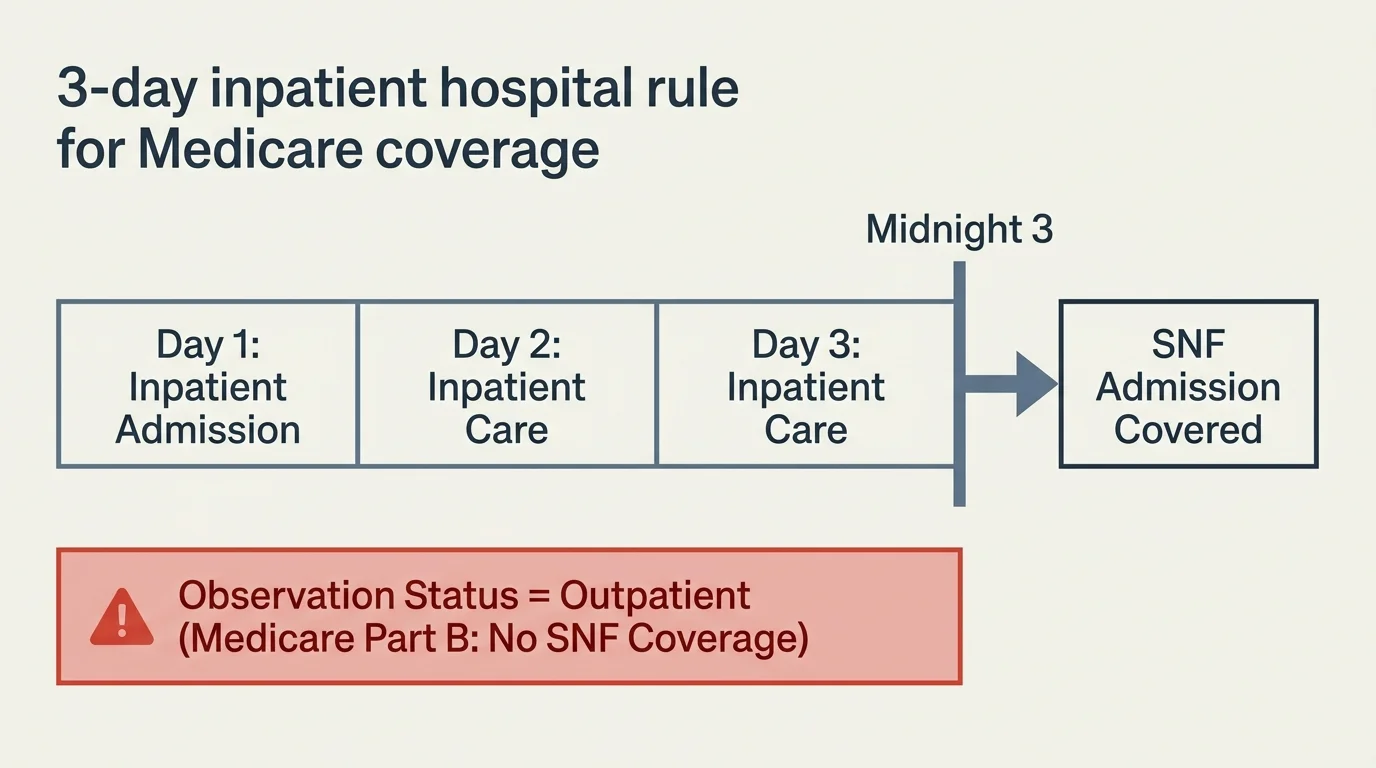
Rule 1: The Mandatory 3-Day Inpatient Hospital Stay
The cornerstone of Original Medicare skilled nursing coverage is the three-day prior inpatient hospital stay requirement. Before Medicare Part A pays for an SNF admission, you must spend at least three consecutive calendar days as a formally admitted hospital inpatient. You cannot count the day of hospital discharge toward this three-day total; you must achieve three consecutive inpatient midnights.
The single greatest financial trap for Medicare beneficiaries involves “observation status.” Hospitals frequently place patients in an emergency department or observation unit for multi-day periods without formally admitting them as inpatients. Under Medicare rules, observation services are outpatient services billed under Medicare Part B. Even if you spend three nights in a hospital bed receiving meals, medications, and nursing care, observation time does not fulfill the three-day inpatient requirement.
Federal law requires hospitals to provide the Medicare Outpatient Observation Notice (MOON) to beneficiaries who receive outpatient observation services for more than 24 hours. The hospital must deliver this written notice within 36 hours of observation beginning. If you receive a MOON, speak with your attending physician immediately to ask if your clinical condition justifies an official inpatient admission order.
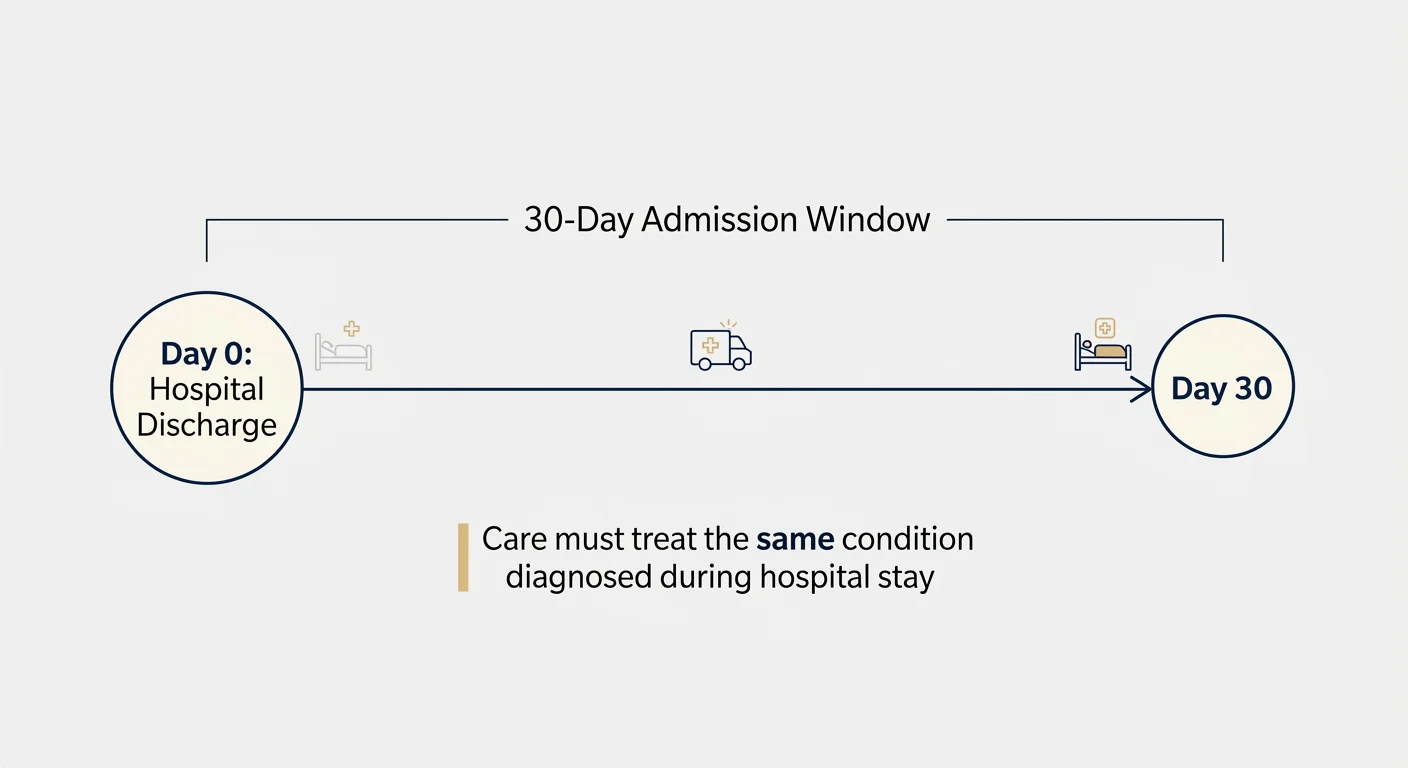
Rule 2: The 30-Day Admission Window
Medicare coverage requires a direct, documented link between your hospital stay and your skilled nursing admission. Under federal guidelines, you must enter a Medicare-certified SNF within 30 calendar days of leaving the hospital. Furthermore, the care you receive in the facility must treat the same condition diagnosed during your inpatient stay, or a condition that arose while you received care in the facility for that primary condition.
CMS allows limited exceptions to the 30-day window under narrow medical circumstances. For example, if your physician determines that immediate rehabilitation is medically inappropriate—such as waiting for a surgical bone graft to heal before beginning weight-bearing physical therapy—Medicare permits a delayed admission beyond 30 days if your doctor documents this medical necessity in advance.

Rule 3: Daily Skilled Care Requirements
Medicare does not pay for a skilled nursing stay simply because you feel weak or need assistance with household tasks. You must require daily skilled services that licensed medical professionals can safely provide only on an inpatient basis. Medicare evaluates this under two distinct operational categories:
- Skilled Nursing Services: You require skilled nursing services seven days per week. Examples include daily intravenous medication administration, complex wound management for surgical incisions, tube feedings, or monitoring unstable vital signs.
- Skilled Therapy Services: You require physical therapy, occupational therapy, or speech-language pathology at least five days per week. The treatment plan must involve skilled interventions designed to achieve specific clinical goals.
If you only need physical therapy two or three days a week, Medicare will determine that your care can occur safely in an outpatient clinic or through home health services. In that scenario, Medicare Part A will terminate SNF coverage, shifting rehabilitation to Part B outpatient therapy.
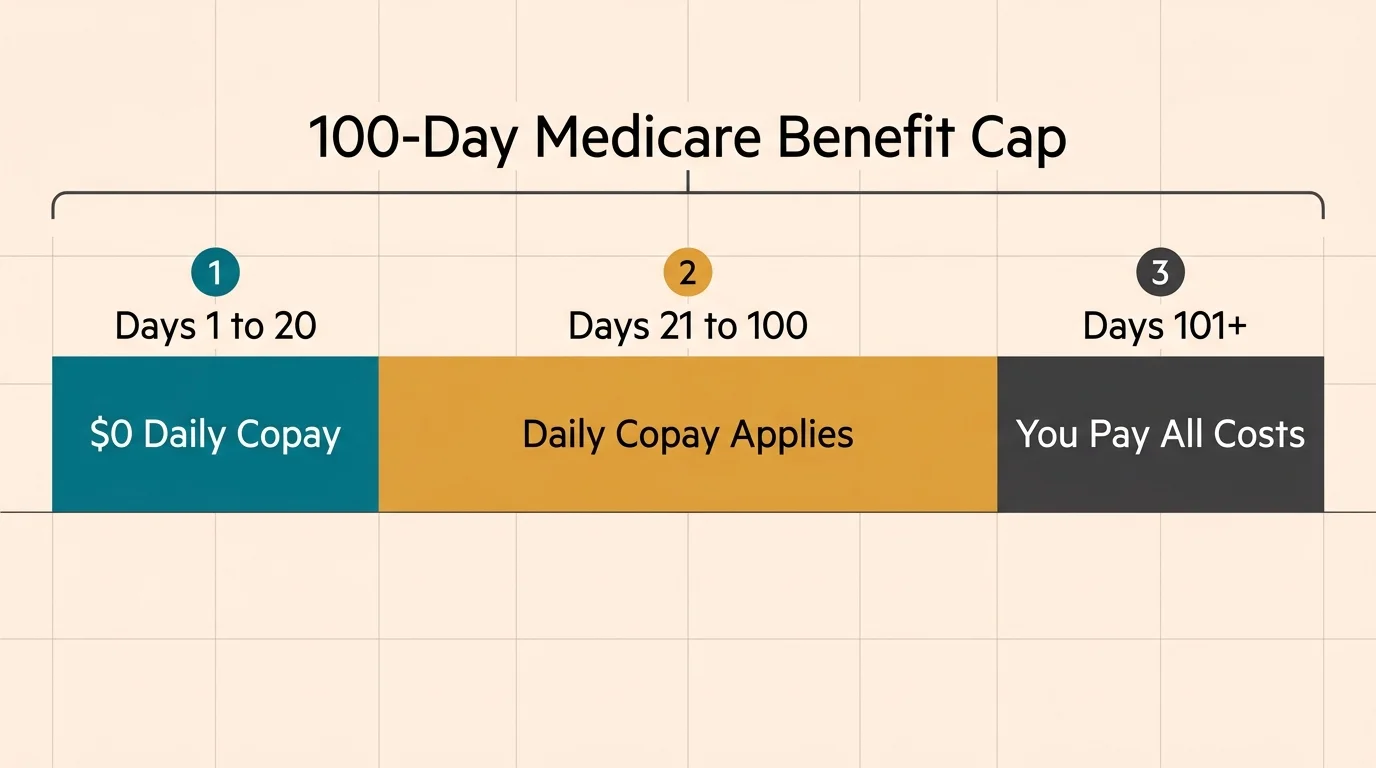
Rule 4: The 100-Day Benefit Cap and 2026 Cost-Sharing Schedule
Medicare Part A covers up to 100 days of skilled nursing care per benefit period. Coverage does not provide 100 fully paid days automatically; instead, costs follow a tiered statutory structure based on how long you remain in the facility.
| Coverage Period | 2026 Daily Out-of-Pocket Cost | Medicare Part A Responsibility | Total Maximum Out-of-Pocket |
|---|---|---|---|
| Days 1–20 | $0 per day | 100% of covered approved charges | $0 |
| Days 21–100 | $217.00 per day (coinsurance) | Remaining covered charges | $17,360.00 (80 days at $217/day) |
| Days 101 and Beyond | 100% of all costs | $0 (Coverage ends) | Unlimited private responsibility |
During days 1 through 20, Medicare Part A covers the full cost of semi-private room accommodations, meals, nursing care, physical therapy, medications, and medical supplies. Beginning on day 21, you become responsible for a daily coinsurance rate of $217.00 in 2026 (up from $209.50 in 2025). If you stay the entire 80 coinsurance days, your out-of-pocket liability reaches $17,360.
Supplemental insurance (Medigap) policies—including Plans C, D, F, G, M, and N—generally cover this daily coinsurance charge for days 21 through 100. However, once day 101 arrives, Medicare coverage stops completely, and Medigap policies no longer pay facility costs.

Rule 5: The 60-Day Wellness Reset for Benefit Periods
Medicare measures your skilled nursing benefits through a mechanism called a “benefit period” (or “spell of illness”) rather than a standard calendar year. A benefit period begins the day you enter a hospital as an inpatient or enter an SNF under covered care.
To reset the 100-day clock and unlock a fresh pool of skilled nursing benefits, you must meet two specific conditions:
- You must remain out of a hospital or skilled nursing facility for at least 60 consecutive days; or
- You must reside in an SNF for 60 consecutive days without receiving any skilled nursing or skilled therapy care.
Once you achieve this 60-day break, your current benefit period ends. If you suffer a new acute medical emergency in the future, you must complete a new qualifying three-day inpatient hospital stay to open a new benefit period and access another 100 days of SNF coverage.

Rule 6: The “Maintenance Standard” (Jimmo v. Sebelius)
One of the most persistent Medicare myths is the claim that patients must show continuous physical improvement to keep receiving skilled nursing coverage. Historically, facilities frequently discharged patients once their recovery slowed, claiming the individual had “plateaued.”
Following the landmark federal settlement in Jimmo v. Sebelius, CMS clarified official regulations: Medicare coverage does not depend on a patient’s potential for improvement. Medicare covers skilled therapy and nursing care when those services are medically necessary to maintain your current condition or prevent or slow further physical or functional decline.
If your physical therapist or physician establishes that stopping therapy will cause your physical capacity to deteriorate, skilled care remains covered under Medicare guidelines up to the 100-day limit. When a facility attempts to discharge you using the “plateau” rationale, you have the legal right to request an immediate, expedited appeal through the regional Quality Improvement Organization (QIO).

Rule 7: The Custodial Care Exclusion
Medicare statutory law strictly prohibits payment for “custodial care” when it is the only type of care you need. Custodial care refers to non-skilled personal assistance that helps individuals with Activities of Daily Living (ADLs), such as:
- Bathing and showering assistance
- Dressing and personal grooming
- Assistance using the toilet
- Help with eating, drinking, or meal preparation
- Routine administration of oral medications or eye drops
- Supervision for cognitive decline, dementia, or memory loss
Once your medical condition stabilizes and you no longer require daily skilled nursing interventions or intensive therapy, Medicare Part A stops paying for the facility stay. Long-term nursing home residency is primarily custodial. Beneficiaries must fund custodial care through private savings, long-term care insurance, or state Medicaid programs after meeting strict financial asset and income limitations. Reviewing resources on Medicare.gov and the National Council on Aging (NCOA) can help families identify localized support options.
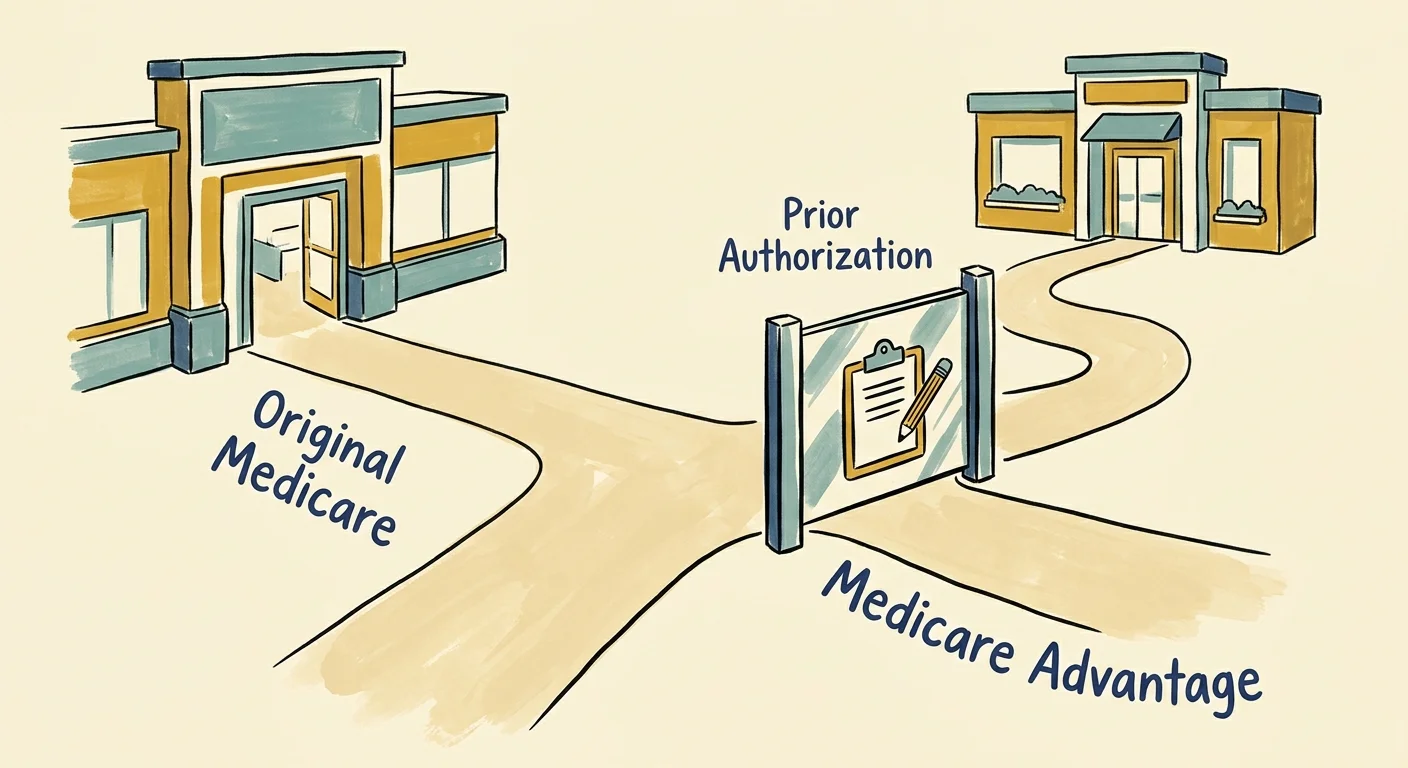
Rule 8: Medicare Advantage (Part C) Differences
If you enroll in a Medicare Advantage plan (Part C) instead of Original Medicare, private insurance carriers manage your benefits. While these plans must offer at least the same standard benefit package as Original Medicare, their operating rules differ substantially:
- Waiver of the 3-Day Rule: Many Medicare Advantage plans eliminate the mandatory three-day inpatient hospital stay requirement. They may authorize an admission directly from an emergency room or even from home if medically warranted.
- Prior Authorization Hurdles: Advantage plans routinely require prior authorization before approving an SNF admission. The plan’s medical directors review clinical documentation and determine how many days they will cover at a time.
- Network Limitations: Advantage plans contract with specific facility networks. If you choose an out-of-network rehabilitation facility, you may face higher cost-sharing or complete denial of coverage.
- Frequent Re-Authorizations: Medicare Advantage plans often authorize stays in short increments (such as three to five days), requiring the facility to repeatedly submit clinical progress notes to avoid sudden coverage terminations.
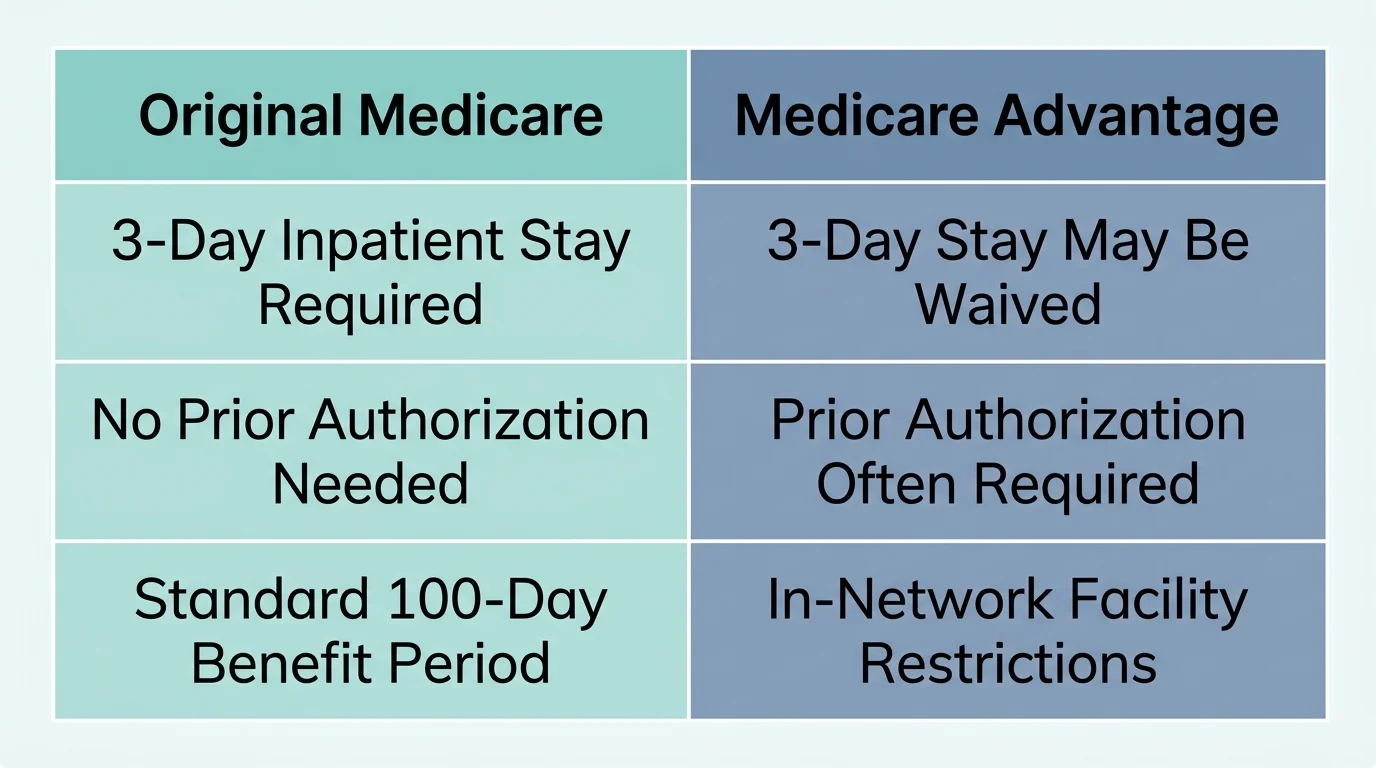
Original Medicare vs. Medicare Advantage: Skilled Nursing Comparison
The differences between Original Medicare and Medicare Advantage impact your access to rehabilitation centers, authorization speed, and out-of-pocket costs.
| Feature | Original Medicare (Part A) | Medicare Advantage (Part C) |
|---|---|---|
| Prior Inpatient Stay | Mandatory 3 consecutive inpatient days | Often waived or modified by plan rules |
| Prior Authorization | No prior authorization required | Mandatory prior authorization and regular reviews |
| Facility Network | Any Medicare-certified SNF nationwide | Restricted to plan-contracted network facilities |
| Days 1–20 Cost | $0 per benefit period | Copay varies by plan ($0 to $50+/day) |
| Days 21–100 Cost | $217.00/day coinsurance in 2026 | Plan-specific daily copay (can be lower or higher) |
| Discharge Appeals | Direct appeal to regional QIO (Acentus/Kepro) | Plan grievance process plus independent QIO review |

Common Mistakes to Avoid During a Skilled Nursing Stay
Families dealing with sudden medical crises often make procedural errors that cause massive financial liability. Watch for these common pitfalls:
- Failing to Verify Admission Status: Never assume a hospital stay is an inpatient admission. Ask hospital case managers directly: “Is the patient classified as an inpatient or on observation status?” Get the answer confirmed in writing before arranging transfer to a skilled nursing facility.
- Accepting an Oral Discharge Notice: Facilities must give you a formal written Notice of Medicare Non-Coverage (NOMNC) at least two days before terminating covered services. Do not vacate a facility based on an informal verbal comment from a staff member.
- Missing the Appeal Deadline: If you receive a NOMNC and believe care remains medically necessary, you must call your regional Beneficiary and Family Centered Care Quality Improvement Organization (BFCC-QIO) by noon of the day following receipt. Filing an on-time appeal extends coverage during the review.
- Assuming Days Reset Annually: Medicare benefits operate on 60-day break-in-care benefit periods, not annual calendar resets. Re-entering a facility without completing a 60-day break continues the prior 100-day countdown.

Professional vs. Self-Guided Management of SNF Stays
Managing the transition from hospital to skilled rehabilitation involves complex medical, legal, and financial decisions. Consider whether self-advocacy is sufficient or if professional assistance offers better protection:
- Elective, Uncomplicated Joint Replacement: Self-Guided. If you undergo a scheduled knee replacement and plan a brief, three-to-five-day rehabilitation stay, managing the process independently is straightforward. Confirm your inpatient admission status in advance and ensure the chosen facility accepts your specific Medicare or Medigap plan.
- Complex, Multi-Condition Hospitalizations (Stroke, Cardiac Event): Professional Guidance. When dealing with prolonged hospital stays, cognitive impairments, or disputable medical necessity, working with an independent Aging Life Care Manager (geriatric care manager) or hospital patient advocate ensures clinical notes accurately reflect daily skilled therapy requirements.
- Disputed Discharges and Benefit Terminations: Professional Guidance. If a facility issues an unexpected NOMNC while the patient remains bedridden, consulting a Medicare legal advocate or elder law attorney helps build a solid appeal under the Jimmo maintenance standard. Resources from organizations like AARP provide consumer guidance for filing appeals.
- Long-Term Care Planning and Asset Protection: Professional Guidance. When skilled rehabilitation reaches day 80 or 90 and the patient cannot safely return home, transition planning becomes urgent. A Certified Financial Planner (CFP) or elder law attorney helps structure assets to prepare for long-term custodial costs or Medicaid eligibility without violating look-back rules.
Frequently Asked Questions About Medicare SNF Rules
What happens if I leave the SNF and need to return a few days later?
If you leave a skilled nursing facility and need to return within 30 days for the same condition, you do not need another three-day inpatient hospital stay. You will resume your remaining benefit days from your existing 100-day benefit period.
Can Medicare drop my coverage if I am not improving?
No. Under the Jimmo v. Sebelius settlement, Medicare cannot terminate coverage solely because your functional abilities have reached a plateau. If skilled nursing or therapy services are required to maintain your physical baseline or prevent deterioration, coverage remains valid up to your 100-day limit.
Does Medicare pay for a private room in a skilled nursing facility?
Medicare Part A covers semi-private rooms (sharing a room with another patient). Medicare covers a private room only if your treating physician documents that a private room is medically necessary—for instance, if you have an active, highly contagious infection requiring strict medical isolation.
Will Medigap cover the daily coinsurance for days 21 through 100?
Yes. Standardized Medigap Plans C, D, F, G, M, and N cover the daily skilled nursing coinsurance rate ($217.00 per day in 2026) in full. Plan K covers 50% of the coinsurance, and Plan L covers 75%. However, no Medigap policy pays for care beyond day 100.
Securing Your Care and Protecting Your Retirement
Understanding Medicare skilled nursing facility coverage rules gives you the leverage needed to advocate for proper rehabilitation without facing catastrophic out-of-pocket bills. Track your inpatient hospital days carefully, monitor the 100-day coverage timeline, and never hesitate to invoke your formal appeal rights if a facility issues an inappropriate discharge notice. Being proactive during hospital discharge planning ensures that you receive the medical care you earned while protecting your hard-won financial security.
This article provides general retirement education and information only. Every retiree’s situation is unique—what works for others may not work for you. For personalized advice, consider consulting a qualified financial professional such as a CFP or CPA.
Last updated: March 2026. Retirement benefits, tax rules, and healthcare regulations change frequently—verify current details with official sources.









Leave a Reply