
Trading snow shovels for endless sunshine and lower living costs is why desert retirement remains a highly popular choice for seniors. When you live on a fixed income, stretching your savings while maintaining a high quality of life is a top priority. Budget-friendly retirement destinations in the American Southwest offer the perfect combination of dry heat, stunning scenery, and affordable housing. While famous spots like Scottsdale have priced out many retirees, dozens of lesser-known communities provide that same vibrant desert living experience at a fraction of the cost. Finding the perfect affordable desert towns requires looking just off the beaten path, where your retirement savings can easily fund both comfortable housing and active daily adventures.
Why the Desert Makes Financial Sense for Retirees
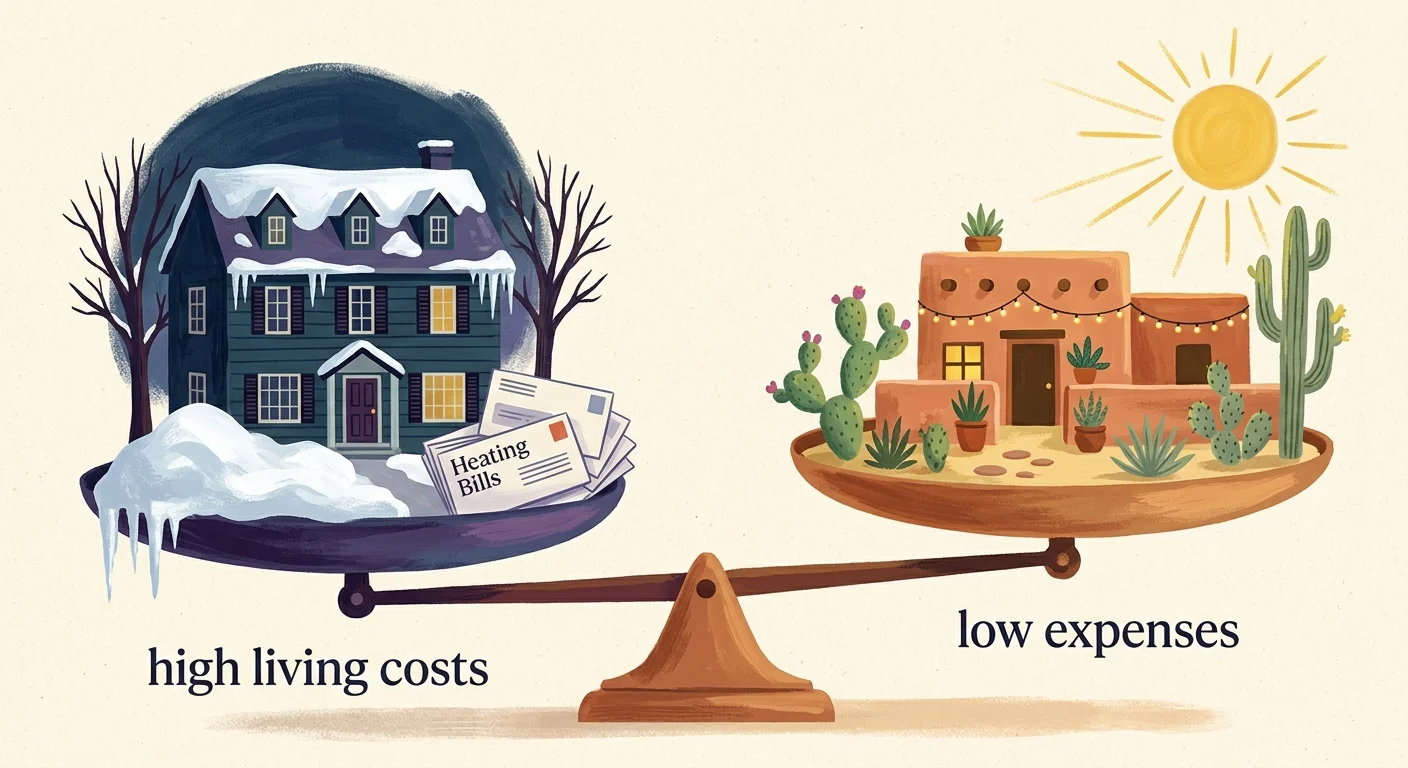
Moving to a desert climate is not merely a lifestyle upgrade; it represents a strategic financial maneuver. Coastal states and major metropolitan areas carry steep property taxes, expensive utility bills during long winters, and high daily living costs. The desert flips this script. You trade expensive heating oil for localized air conditioning and high property taxes for sensible municipal rates.
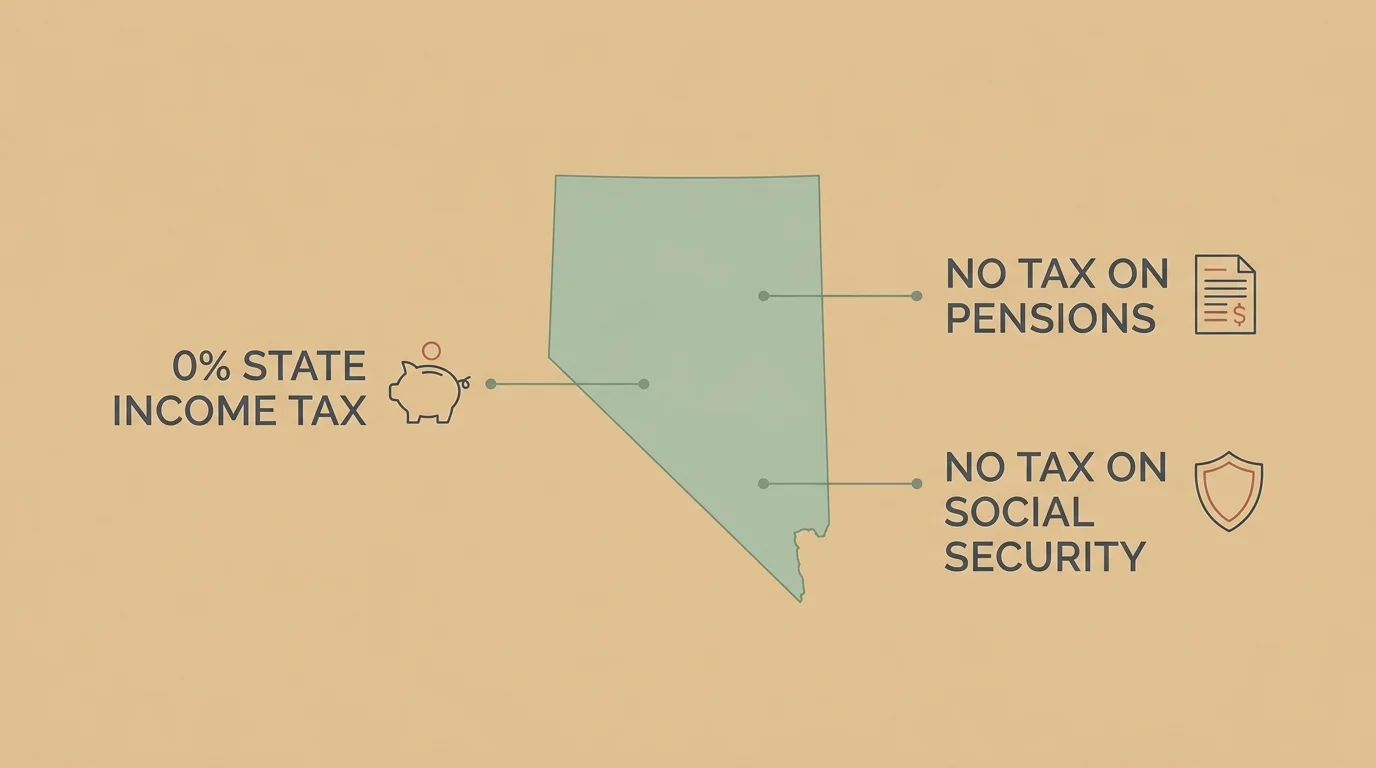
Furthermore, many desert states offer favorable tax structures for retirees. Nevada and Texas levy no state income tax, meaning your pension, 401(k) withdrawals, and Social Security stretch much further. Arizona and New Mexico offer significant exemptions for retirement income, allowing you to keep more of the money you spent decades saving. Beyond the tax advantages, the dry climate often reduces maintenance costs on homes and vehicles—you will not worry about salt rusting your car or ice dams destroying your roof.
“The absolute most important thing you can do for your retirement is to keep your everyday living expenses as low as possible.” — Suze Orman, Personal Finance Expert

Arizona: The Original Desert Retirement Haven
Arizona practically invented the modern retirement community. While Phoenix and Sedona demand premium pricing, the state hides several highly affordable gems that offer exceptional medical care and robust senior infrastructure.
1. Yuma
Holding the Guinness World Record as the sunniest city on earth, Yuma offers an unbeatable climate for sun-seekers. Situated near the California and Mexico borders, the city is famous for its massive winter population of “snowbirds.” This seasonal influx means the town features top-tier medical facilities, countless RV parks, and a thriving social scene catered specifically to seniors. Housing remains incredibly affordable, with plenty of single-story homes and active adult communities priced well below the national average.
2. Green Valley
Located just south of Tucson, Green Valley is not a traditional town but a massive, unincorporated master-planned retirement community. It requires at least one resident in most households to be 55 or older. Golf carts serve as a primary mode of transportation here. For a modest annual fee, residents gain access to Green Valley Recreation (GVR), which operates dozens of swimming pools, fitness centers, and hobby clubs. It offers country club living on a middle-class budget.
3. Sierra Vista
If you fear the intense summer heat of the low desert, Sierra Vista provides a brilliant alternative. Sitting at an elevation of 4,600 feet, this “high desert” town enjoys cooler summers while avoiding harsh winters. Known as the Hummingbird Capital of the United States, it offers spectacular bird watching and hiking. Because of the nearby Fort Huachuca military base, the town features robust infrastructure, excellent healthcare, and a highly secure environment.
4. Kingman
Nestled along historic Route 66, Kingman offers rugged desert charm and incredibly low real estate prices. It sits in a strategic location—close enough to Las Vegas for major medical needs and entertainment, but far enough away to maintain a quiet, small-town atmosphere. The surrounding mountains offer excellent outdoor recreation, and the cost of daily groceries and services consistently ranks below the national average.
5. Casa Grande
Positioned exactly halfway between Phoenix and Tucson, Casa Grande lets you enjoy the amenities of two major metropolitan areas without paying city prices. Originally an agricultural hub, it has transformed into a vibrant community with modern retail centers, excellent local healthcare, and numerous budget-friendly active adult communities. You can easily drive to a major international airport in under an hour.
6. Cottonwood
Sedona features world-class red rock views and multi-million dollar price tags. Just 20 miles away, Cottonwood offers similar stunning scenery for a fraction of the cost. Located in the heart of the Verde Valley, this town has evolved into a sophisticated but affordable wine country. The historic downtown features tasting rooms, antique shops, and excellent dining, making it a perfect spot for culturally minded retirees on a budget.
New Mexico: The Land of Enchantment and Affordability
New Mexico combines rich cultural history, unique architecture, and sweeping desert landscapes with a cost of living that makes retirement dreams easily achievable. The state actively works to attract seniors, offering numerous community programs designed for aging residents.
7. Las Cruces
Tucked against the spectacular Organ Mountains, Las Cruces blends a vibrant Hispanic heritage with a thriving university town atmosphere. New Mexico State University provides retirees with opportunities for lifelong learning and collegiate sports. The city features a walkable historic downtown, award-winning farmers markets, and highly affordable Adobe-style homes. The mild winters and relatively cool summer nights make the climate exceptionally comfortable.
8. Alamogordo
Famous for the nearby White Sands National Park, Alamogordo is a quiet, exceptionally safe community. The town has a strong military retiree presence due to the nearby Holloman Air Force Base, which helps foster a deeply patriotic and welcoming culture. Property taxes here are remarkably low, and the majestic Sacramento Mountains provide a stunning daily backdrop and a quick escape to cooler alpine air during the peak of summer.
9. Roswell
Beyond its famous alien lore, Roswell serves as a regional hub for southeastern New Mexico. The cost of living is startlingly low; you can often purchase a comfortable, multi-bedroom home here for less than the cost of a small condominium in most coastal states. The town features a surprisingly robust arts scene, excellent local museums, and a deeply community-focused atmosphere that makes newcomers feel instantly welcome.
10. Silver City
Similar to Sierra Vista, Silver City offers high-desert living. Sitting at 6,000 feet, it experiences four mild seasons. Originally a rugged mining town, it has gracefully transitioned into a haven for artists, writers, and retirees. The historic downtown is packed with galleries and cafes. Surrounded by the massive Gila National Forest, it is an absolute paradise for active retirees who love hiking and outdoor exploration.
11. Truth or Consequences
Often referred to simply as “T or C,” this quirky town sits along the Rio Grande and is famous for its natural hot springs. Many retirees move here specifically for the therapeutic mineral waters, which are believed to ease joint pain and arthritis. Real estate is highly affordable, and the town maintains a slow, relaxed pace of life. It provides an authentic, unpretentious desert experience.
Nevada: Tax-Free Desert Living
Nevada represents the ultimate financial haven for retirees due to its complete lack of a state income tax. While Las Vegas attracts the tourists, the surrounding smaller towns offer peaceful, budget-friendly retirement living.
12. Mesquite
Located on the Arizona border about 80 miles northeast of Las Vegas, Mesquite is a golfer’s paradise. The town features numerous championship golf courses and resorts, but maintains a distinctly small-town feel. Retirees make up a massive portion of the population, meaning local businesses and healthcare facilities cater heavily to older adults. The housing market offers a wealth of affordable, single-story homes in master-planned communities.
13. Pahrump
Situated in a valley between Las Vegas and Death Valley, Pahrump offers wide-open spaces and a fiercely independent spirit. If you want a large lot for your RV, a workshop, or desert toys without restrictive Homeowner Association (HOA) rules, Pahrump is the place. It also features a growing local wine industry. The lack of state income tax combined with dirt-cheap property prices makes it one of the most economical choices in the West.
14. Boulder City
Originally built to house the workers who constructed the Hoover Dam, Boulder City holds a unique distinction: it is one of the only cities in Nevada that prohibits gambling. This ordinance preserves a quiet, historic atmosphere that feels totally disconnected from the neon of nearby Las Vegas. Overlooking Lake Mead, it offers excellent boating and fishing, walkable streets, and a charming historic downtown.
Utah: Red Rock Beauty on a Budget
Southern Utah offers some of the most dramatic landscapes on earth. While hubs like St. George have seen a spike in housing costs, neighboring communities still offer budget-friendly access to this outdoor paradise.
15. Hurricane
Pronounced “Hur-a-kin” by the locals, this town serves as the gateway to Zion National Park. Just 20 minutes from the increasingly expensive St. George, Hurricane offers the exact same stunning red rock views and recreational access at a significantly lower price point. It boasts world-class hiking, mountain biking, and ATV trails. The community is tight-knit, safe, and heavily focused on outdoor, active living.
16. Cedar City
Known as “Festival City USA,” Cedar City hosts the famous Utah Shakespeare Festival. At roughly 5,800 feet in elevation, the city provides a true four-season climate with a high-desert feel—you will see a bit of snow in the winter, but it melts quickly under the desert sun. Southern Utah University brings cultural events, lectures, and excellent medical infrastructure to the area. Real estate remains highly accessible for retirees on a budget.
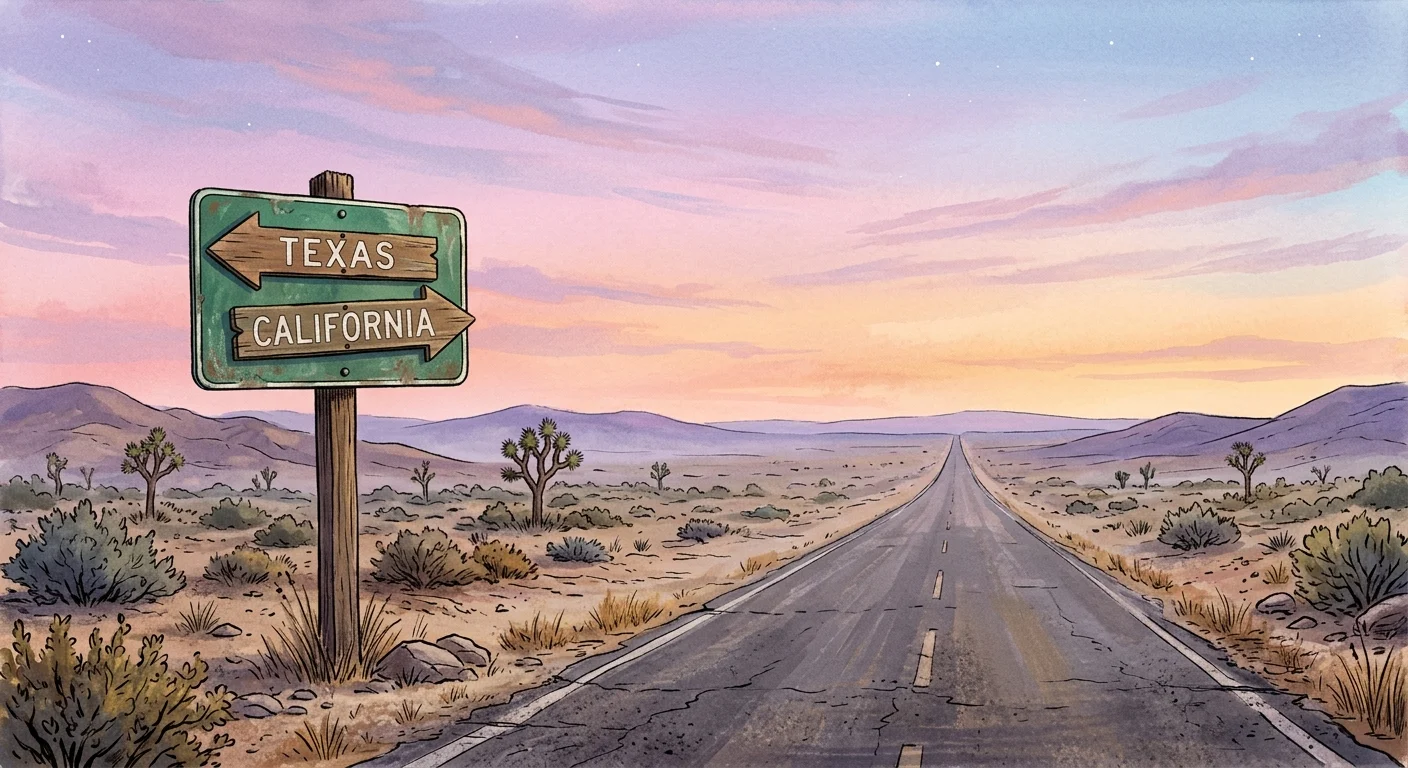
Texas and California: Hidden Gems
Texas offers zero state income tax, while California offers unparalleled scenery. Finding affordable desert spots in these states requires knowing exactly where to look.
17. El Paso, Texas
El Paso consistently ranks as one of the safest cities in the United States. Nestled against the Franklin Mountains on the borders of Mexico and New Mexico, it offers the amenities and top-tier healthcare of a major city with the living costs of a small town. The cultural scene is vibrant, the food is legendary, and the housing market is incredibly favorable for buyers coming from out of state.
18. Alpine, Texas
Located in the high desert of Far West Texas, Alpine sits in the breathtaking Big Bend region. It is remote, deeply peaceful, and highly affordable. Sul Ross State University anchors the town, providing cultural and educational events. If you want to escape traffic, pollution, and the noise of modern life while keeping your living costs extremely low, Alpine offers an idyllic sanctuary.
19. Desert Hot Springs, California
If you want to retire in Southern California’s Coachella Valley without paying Palm Springs prices, Desert Hot Springs is the answer. Built over natural aquifers, the town is famous for its boutique mineral spas. You get the exact same majestic views of the San Jacinto Mountains and the same glorious winter weather as your wealthy neighbors to the south, but median home prices here are drastically lower.
20. Twentynine Palms, California
Serving as the gateway to Joshua Tree National Park, Twentynine Palms offers vast, sprawling desert landscapes. The presence of a massive Marine Corps base provides economic stability and infrastructure to this remote area. Housing is remarkably cheap for California. It is a haven for artists, nature lovers, and retirees who want to experience the haunting beauty of the Mojave Desert without draining their retirement accounts.
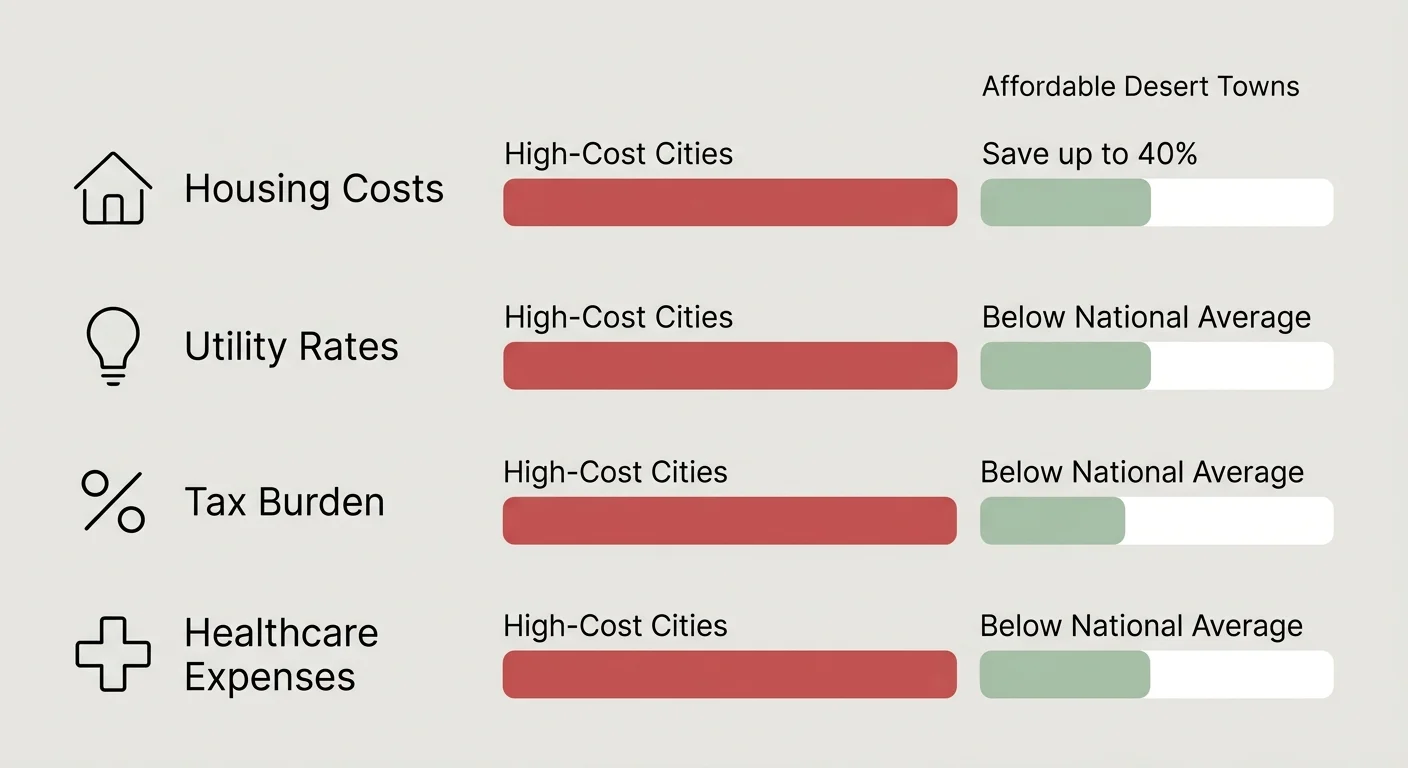
Comparing Living Costs in Popular Desert Towns
To help you visualize how these towns stack up, here is a comparison of five popular destinations across different states. Note: Median home prices are estimates for early 2026 and fluctuate based on market conditions.
| Town & State | Estimated Median Home Price | State Income Tax on Social Security? | Primary Vibe |
|---|---|---|---|
| Yuma, AZ | Mid $200,000s | No | Sun-drenched, active RV culture, agricultural |
| Las Cruces, NM | Upper $200,000s | No (for most retirees) | Cultural, collegiate, historic Adobe charm |
| Mesquite, NV | Low $300,000s | No (No state income tax) | Golf-centric, resort style, tax-friendly |
| Hurricane, UT | Mid $400,000s | Yes (with credits available) | Outdoorsy, red rock adventures, quiet |
| Desert Hot Springs, CA | Low $400,000s | No | Spa culture, stunning peaks, California sun |
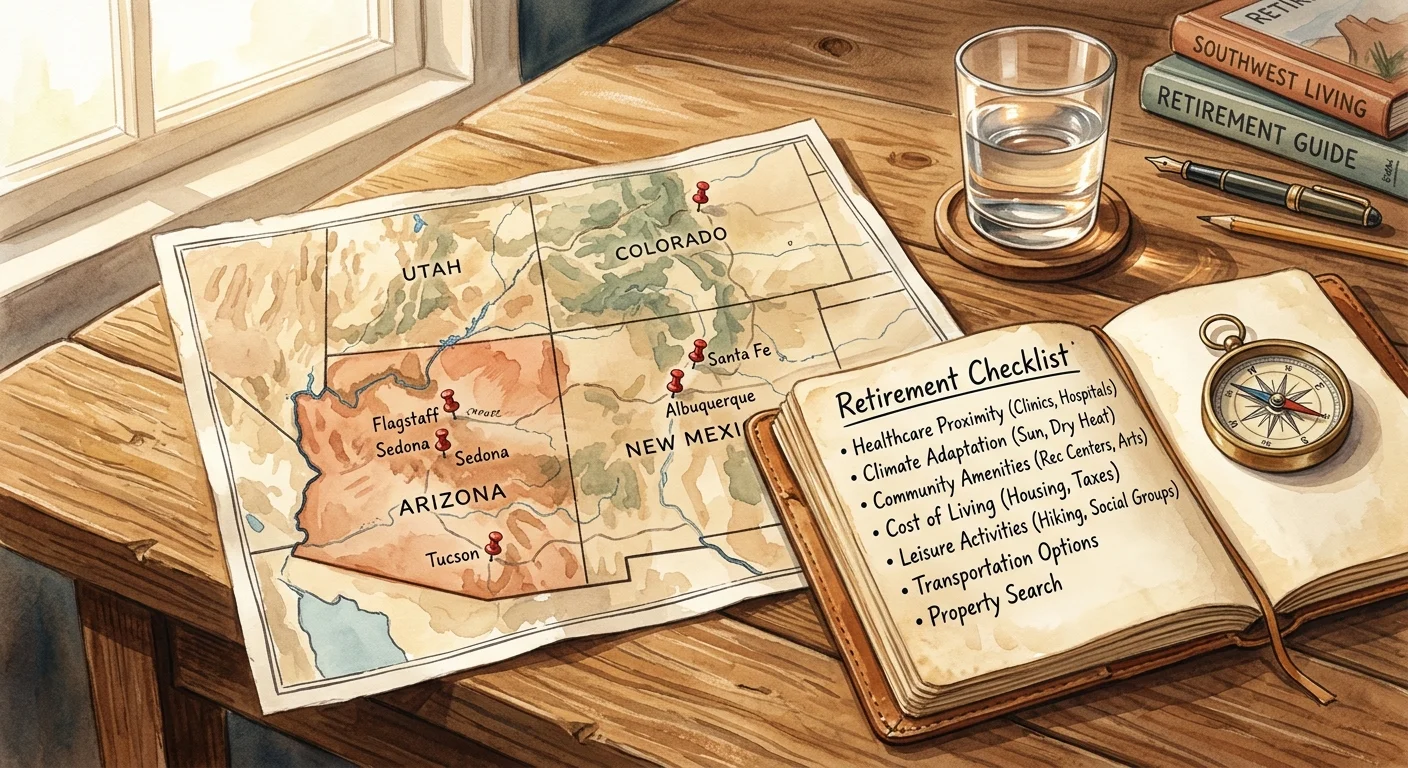
Essential Factors to Consider Before Moving
Uprooting your life to move to the desert involves more than just packing boxes and buying sunglasses. You must strategically plan your finances and healthcare to ensure a smooth transition.
- Review Your Tax Profile: State tax laws vary drastically. Review the official guidelines on the IRS website to understand how your retirement income is taxed at the federal level, then compare it to your chosen state’s specific laws regarding pensions and 401(k) withdrawals.
- Transfer Your Healthcare: If you use Original Medicare (Parts A and B), your coverage travels with you nationwide. However, Medicare Advantage (Part C) and Part D prescription plans are regional. When relocating to a new state, you must update your information with Medicare.gov to ensure your coverage smoothly transfers and you avoid gaps in care.
- Evaluate Aging in Place: Consider the long-term viability of the town. The National Council on Aging (NCOA) provides excellent resources on evaluating a community’s walkability, access to specialists, and local senior transportation services.

Common Mistakes to Avoid When Relocating
Moving to a desert climate requires adaptation. Many retirees make costly mistakes simply because they do not understand the unique environment.
Buying Before Experiencing the Summer: January in Arizona is paradise; August is a completely different reality. Never purchase a home in a desert town without first spending a few weeks there during the peak heat of summer. You need to know if you can tolerate days when the temperature exceeds 105 degrees.
Ignoring Utility Costs: While you will save a fortune on winter heating, your summer air conditioning bills can easily offset those savings if you buy an older, poorly insulated home. Always ask for utility bill history before purchasing a property.
Underestimating Hydration and Health Impacts: The dry heat evaporates sweat instantly, meaning you often do not realize how much water you are losing. Dehydration can interact dangerously with certain blood pressure and heart medications. Always consult your doctor about adjusting your health routines for an arid environment.
Frequently Asked Questions
Do I have to pay state taxes on my Social Security income in these desert states?
Nevada and Texas feature no state income tax whatsoever, meaning your Social Security is entirely untouched at the state level. Arizona and California do not tax Social Security income. New Mexico recently changed laws to exempt Social Security for the vast majority of retirees. Utah does tax Social Security, but offers a retirement tax credit that offsets the burden for many lower-to-middle-income seniors.
Is the intense desert heat safe for older adults?
Yes, provided you adapt your lifestyle. Desert residents handle the heat by doing their outdoor activities early in the morning, relying on reliable air conditioning during the afternoon, and staying strictly hydrated. The lack of humidity actually makes high temperatures feel far less oppressive than the muggy heat found in the South or Midwest, and many seniors find the dry air vastly improves their joint pain and respiratory issues.
Will I miss having four seasons?
If you love autumn leaves and winter snow, stick to the “high desert” towns on this list, such as Sierra Vista, Silver City, or Cedar City. These locations sit at higher elevations, providing distinct seasonal changes, cooler summers, and occasional light snowfall, giving you the best of both worlds.
Finding the perfect desert town allows you to protect your nest egg while upgrading your daily lifestyle. By exploring these 20 budget-friendly destinations, testing out the climate, and carefully reviewing your healthcare options, you can secure a bright, sun-drenched retirement. Take your time, rent an Airbnb in your top choices, and discover which desert landscape feels like home.
The information in this guide is meant for educational purposes. Your specific circumstances—including income, health needs, tax situation, and goals—may require different approaches. When in doubt, consult a licensed professional.
Last updated: March 2026. Retirement benefits, tax rules, and healthcare regulations change frequently—verify current details with official sources.









Leave a Reply